Energy
compo
P E D R O P É R E Z , I R E N E G R O S S O ,
A L E J A N D R A C A S T I L L A , C L A U D I A
V A L D É S , D A N I E L P É R E Z , D A V I D E G E A ,
M A N U E L E S T É V E Z , G A B R I E L M A R T Í N ,
M A R T I N A G O N Z Á L E Z & M A R Y A M
C O L E T T I
In colaboration with:
Germán Tortosa
Introduction
Biological activity hides richnesses in terms of
obtaining energy. So why not investigated further?
When plants photosynthesize, they generate a
degradation which creates a flow of electrons,
creating a natural battery. This can be used to
obtain energy.
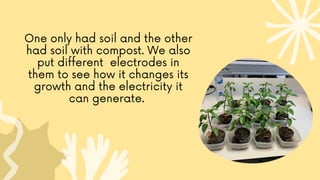
One only had soil and the other
had soil with compost. We also
put different electrodes in
them to see how it changes its
growth and the electricity it
can generate.
Ohm's law
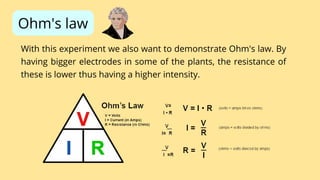
With this experiment we also want to demonstrate Ohm's law. By
having bigger electrodes in some of the plants, the resistance of
these is lower thus having a higher intensity.
Previous studies
PREVIOUS STUDIES
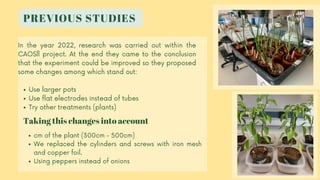
Use larger pots
Use flat electrodes instead of tubes
Try other treatments (plants)
In the year 2022, research was carried out within the
CAOSll project. At the end they came to the conclusion
that the experiment could be improved so they proposed
some changes among which stand out:
cm of the plant (300cm - 500cm)
We replaced the cylinders and screws with iron mesh
and copper foil.
Using peppers instead of onions
Taking this changes into account
Objectives +
Hypothesis
By increasing the biological activity of the soil by adding
compost and a plant, we will obtain a higher current
intensity.
By using electrodes with a larger surface area, we will obtain
a greater flow of electrons.
To improve previous experimental methods to further investigate
how we can harness electricity in the process of plant cultivation.
To check how the growth of bell pepper plants and the biological
activity of the soil are positively affected by bio-waste compost.
To test whether the compost increases photovoltaic energy
production.
Hypothesis
Objectives
Materials & Methods
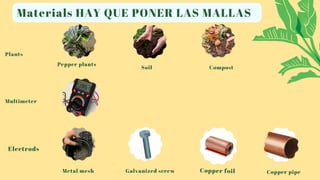
Materials HAY QUE PONER LAS MALLAS
Pepper plants
Soil
Galvanized screw
Compost
Copper pipe
Electrods
Copper foil
Metal mesh
Multimeter
Plants
Method
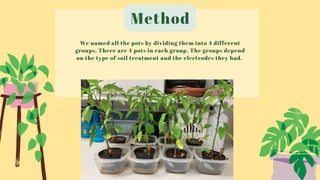
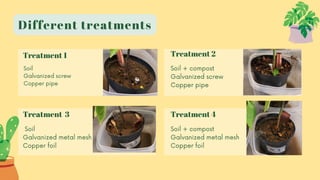
We named all the pots by dividing them into 4 different
groups. There are 4 pots in each group. The groups depend
on the type of soil treatment and the electrodes they had.
Treatment 2
Soil + compost
Galvanized screw
Copper pipe
Different treatments
Treatment 1
Treatment 3 Treatment 4
Soil
Galvanized screw
Copper pipe
Soil
Galvanized metal mesh
Copper foil
Soil + compost
Galvanized metal mesh
Copper foil
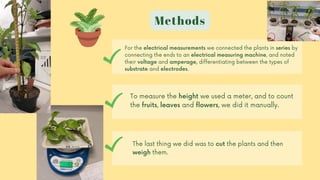
Methods
For the electrical measurements we connected the plants in series by
connecting the ends to an electrical measuring machine, and noted
their voltage and amperage, differentiating between the types of
substrate and electrodes.
To measure the height we used a meter, and to count
the fruits, leaves and flowers, we did it manually.
The last thing we did was to cut the plants and then
weigh them.
Results
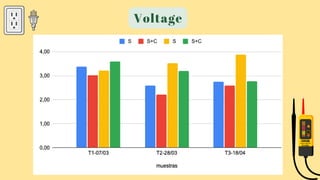
Voltage
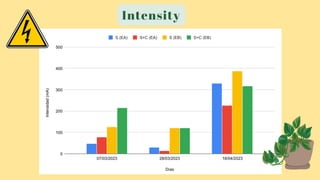
Intensity
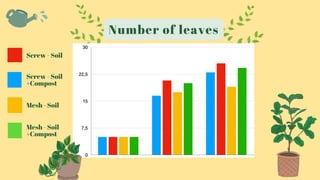
Number of leaves
Screw - Soil
Screw - Soil
+Compost
Mesh - Soil
+Compost
Mesh - Soil
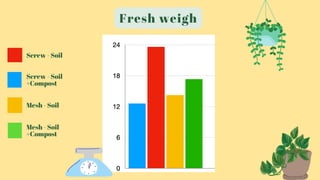
Fresh weigh
Screw - Soil
Screw - Soil
+Compost
Mesh - Soil
+Compost
Mesh - Soil
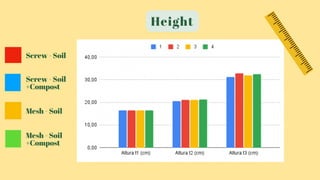
Height
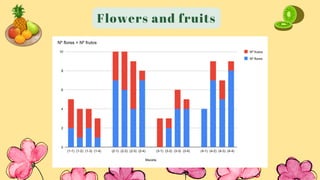
Flowers and fruits
Conclusions
At the conclusion of the project, we have observed that our
hypothesis on how the use of compost in the plant affects its
growth, voltage and current intensity were correct, since
the group of plants 2 and 4 which had this, show an
improvement in their growth, the number of flowers and
fruits, also an increase in the intensity of current and
voltage is observed, which is very positive for our project,
since with the increase of this we get a higher yield in our
"natural battery".
Try to put different plants to see
which one generate more
electricity
01
02
Difference between natural
and chemical fertilizer
03
Try plants with a bigger
surface
04
Try with two plants per
pot
05
Putting worms inside to see if
the plant generates more
electricity
FOR FUTURE
PROJECTS

Resultados del proyecto ENERGYCOMPO (2023)

  • 1.
    Energy compo P E DR O P É R E Z , I R E N E G R O S S O , A L E J A N D R A C A S T I L L A , C L A U D I A V A L D É S , D A N I E L P É R E Z , D A V I D E G E A , M A N U E L E S T É V E Z , G A B R I E L M A R T Í N , M A R T I N A G O N Z Á L E Z & M A R Y A M C O L E T T I In colaboration with: Germán Tortosa
  • 2.
  • 3.
    Biological activity hidesrichnesses in terms of obtaining energy. So why not investigated further? When plants photosynthesize, they generate a degradation which creates a flow of electrons, creating a natural battery. This can be used to obtain energy.
  • 4.
    One only hadsoil and the other had soil with compost. We also put different electrodes in them to see how it changes its growth and the electricity it can generate.
  • 5.
    Ohm's law With thisexperiment we also want to demonstrate Ohm's law. By having bigger electrodes in some of the plants, the resistance of these is lower thus having a higher intensity.
  • 6.
  • 7.
    PREVIOUS STUDIES Use largerpots Use flat electrodes instead of tubes Try other treatments (plants) In the year 2022, research was carried out within the CAOSll project. At the end they came to the conclusion that the experiment could be improved so they proposed some changes among which stand out: cm of the plant (300cm - 500cm) We replaced the cylinders and screws with iron mesh and copper foil. Using peppers instead of onions Taking this changes into account
  • 8.
  • 9.
    By increasing thebiological activity of the soil by adding compost and a plant, we will obtain a higher current intensity. By using electrodes with a larger surface area, we will obtain a greater flow of electrons. To improve previous experimental methods to further investigate how we can harness electricity in the process of plant cultivation. To check how the growth of bell pepper plants and the biological activity of the soil are positively affected by bio-waste compost. To test whether the compost increases photovoltaic energy production. Hypothesis Objectives
  • 10.
  • 11.
    Materials HAY QUEPONER LAS MALLAS Pepper plants Soil Galvanized screw Compost Copper pipe Electrods Copper foil Metal mesh Multimeter Plants
  • 12.
    Method We named allthe pots by dividing them into 4 different groups. There are 4 pots in each group. The groups depend on the type of soil treatment and the electrodes they had.
  • 13.
    Treatment 2 Soil +compost Galvanized screw Copper pipe Different treatments Treatment 1 Treatment 3 Treatment 4 Soil Galvanized screw Copper pipe Soil Galvanized metal mesh Copper foil Soil + compost Galvanized metal mesh Copper foil
  • 14.
    Methods For the electricalmeasurements we connected the plants in series by connecting the ends to an electrical measuring machine, and noted their voltage and amperage, differentiating between the types of substrate and electrodes. To measure the height we used a meter, and to count the fruits, leaves and flowers, we did it manually. The last thing we did was to cut the plants and then weigh them.
  • 15.
  • 16.
  • 17.
  • 18.
    Number of leaves Screw- Soil Screw - Soil +Compost Mesh - Soil +Compost Mesh - Soil
  • 19.
    Fresh weigh Screw -Soil Screw - Soil +Compost Mesh - Soil +Compost Mesh - Soil
  • 20.
  • 21.
  • 22.
    Conclusions At the conclusionof the project, we have observed that our hypothesis on how the use of compost in the plant affects its growth, voltage and current intensity were correct, since the group of plants 2 and 4 which had this, show an improvement in their growth, the number of flowers and fruits, also an increase in the intensity of current and voltage is observed, which is very positive for our project, since with the increase of this we get a higher yield in our "natural battery".
  • 23.
    Try to putdifferent plants to see which one generate more electricity 01 02 Difference between natural and chemical fertilizer 03 Try plants with a bigger surface 04 Try with two plants per pot 05 Putting worms inside to see if the plant generates more electricity FOR FUTURE PROJECTS