2
PROJECT GUIDE :
Mr. DILEEPKUMAR P
GROUP MEMBERS :
JESVIN JOSE
JISHNU.V
SURYA.S
FEBIN PAUL
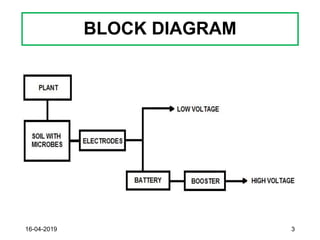
BLOCK DIAGRAM
16-04-2019 3
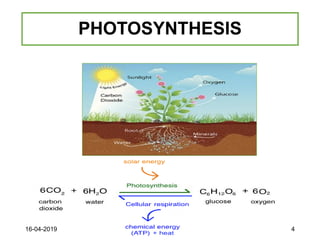
PHOTOSYNTHESIS
16-04-2019 4
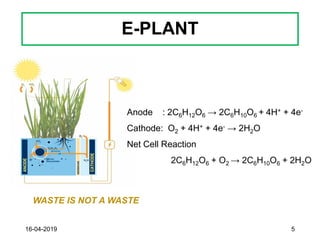
E-PLANT
16-04-2019 5
WASTE IS NOT A WASTE
Anode : 2C6H12O6 → 2C6H10O6 + 4H+ + 4e-
Cathode: O2 + 4H+ + 4e- → 2H2O
Net Cell Reaction
2C6H12O6 + O2 → 2C6H10O6 + 2H2O
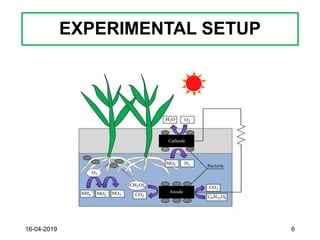
EXPERIMENTAL SETUP
16-04-2019 6
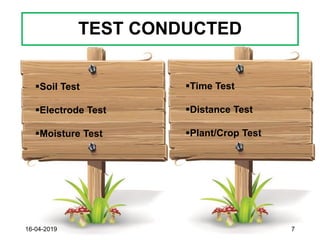
TEST CONDUCTED
16-04-2019 7
▪Soil Test
▪Electrode Test
▪Moisture Test
▪Time Test
▪Distance Test
▪Plant/Crop Test
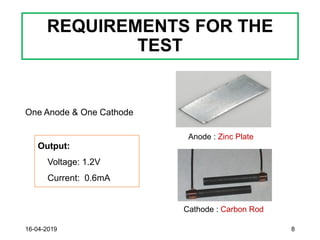
REQUIREMENTS FOR THE
TEST
One Anode & One Cathode
Anode : Zinc Plate
Cathode : Carbon Rod
16-04-2019 8
Output:
Voltage: 1.2V
Current: 0.6mA
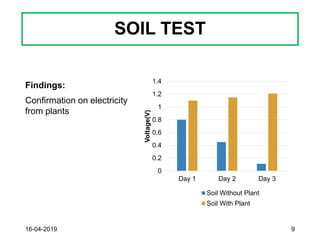
SOIL TEST
Findings:
Confirmation on electricity
from plants
0
0.2
0.4
0.6
0.8
1
1.2
1.4
Day 1 Day 2 Day 3
Voltage(V)
Soil Without Plant
Soil With Plant
16-04-2019 9
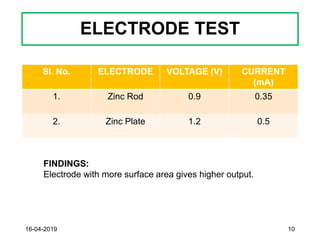
ELECTRODE TEST
Sl. No. ELECTRODE VOLTAGE (V) CURRENT
(mA)
1. Zinc Rod 0.9 0.35
2. Zinc Plate 1.2 0.5
FINDINGS:
Electrode with more surface area gives higher output.
16-04-2019 10
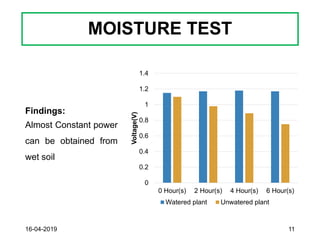
MOISTURE TEST
0
0.2
0.4
0.6
0.8
1
1.2
1.4
0 Hour(s) 2 Hour(s) 4 Hour(s) 6 Hour(s)
Voltage(V)
Watered plant Unwatered plant
Findings:
Almost Constant power
can be obtained from
wet soil
16-04-2019 11
TIME TEST
0
0.2
0.4
0.6
0.8
1
1.2
4:30 AM 9:00 AM 12:00 PM 5:00 PM 7:30 PM 11:00 PM
Voltage(V) Current(mA)
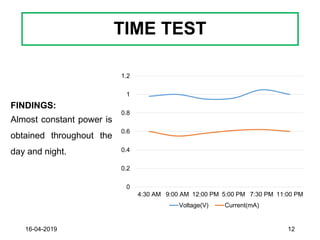
FINDINGS:
Almost constant power is
obtained throughout the
day and night.
16-04-2019 12
DISTANCE TEST
0
0.2
0.4
0.6
0.8
1
1.2
4 cm 40 cm 65 cm 90 cm
Voltage(V) Current(mA)
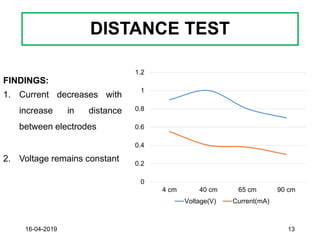
FINDINGS:
1. Current decreases with
increase in distance
between electrodes
2. Voltage remains constant
16-04-2019 13
Plant/Crop Voltage (V) Current
(mA)
Banana
Tree
1.2 .6
Pea Plant 1 .6
Marigold
Plant
.8 .5
Ferns .8 .5
Rose Plant .9 .5
Paddy Field 1 .6
Aloe Vera 1.2 .6
PLANT/CROP TEST
16-04-2019 14
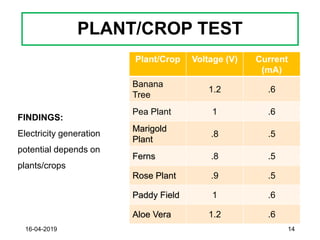
FINDINGS:
Electricity generation
potential depends on
plants/crops
ELECTRICITY GENERATION
POTENTIAL
Electricity generation potential depends upon
➢Types of plant/crop
➢Types of microorganism
➢Sediments / soil
➢ Weather condition
➢Surface area
16-04-2019 15
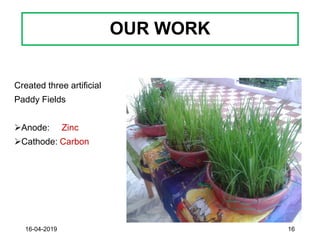
OUR WORK
Created three artificial
Paddy Fields
➢Anode: Zinc
➢Cathode: Carbon
16-04-2019 16
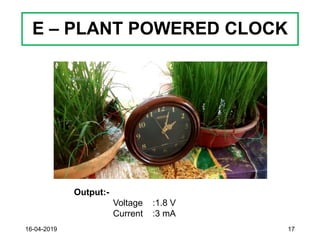
E – PLANT POWERED CLOCK
16-04-2019 17
Output:-
Voltage :1.8 V
Current :3 mA
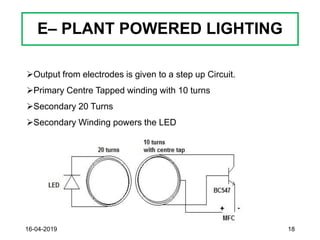
E– PLANT POWERED LIGHTING
16-04-2019 18
➢Output from electrodes is given to a step up Circuit.
➢Primary Centre Tapped winding with 10 turns
➢Secondary 20 Turns
➢Secondary Winding powers the LED
CONCLUSION
➢ e plant is the solution for the future
➢ With correct researches – the fields and forests can be the power
source of the world
➢ If not for the cost and lack of technology, there would never be
any place without electricity in the world
16-04-2019 19
REFERENCE
• Generating Current From Plants Plant-e Technology,
R.Gowtham, 2K.U.Shunmug Sundar, Panimalar Institute of
Technology Chennai, ISSN (Online): 2347 - 2812, Volume-3, Issue
-10, 2015
• “Electricity generation by living plants in a plant microbial
fuel cell”, Ruud Timmers, Thesis submitted in fulfillment of the
requirements for the degree of doctor at Wageningen University
by the authority of the Rector MagnificusProf.dr. M.J. Kropff, in the
presence of the Thesis Committee appointed by the Academic
Board to be defended in publicon Tuesday 15 May 2012
16-04-2019 20
REFERENCE
• “Design criteria for the Plant-Microbial Fuel Cell Electricity
generation with living plants – from lab to application”,
MarjoleinHelder, Thesis submitted in fulfilment of the requirements
for the degree of doctor at Wageningen University by the authority
of the Rector MagnificusProf. dr. M.J. Kropff, in the presence of
the Thesis Committee appointed by the Academic Board to be
defended in public on Friday 23 November 2012
16-04-2019 21
16-04-2019 22
"We Don't Want to Protect
Environment, We Want to Create A
World Where Environment Doesn't
Need PROTECTION"
16-04-2019 23

E plant

  • 2.
    2 PROJECT GUIDE : Mr.DILEEPKUMAR P GROUP MEMBERS : JESVIN JOSE JISHNU.V SURYA.S FEBIN PAUL
  • 3.
  • 4.
  • 5.
    E-PLANT 16-04-2019 5 WASTE ISNOT A WASTE Anode : 2C6H12O6 → 2C6H10O6 + 4H+ + 4e- Cathode: O2 + 4H+ + 4e- → 2H2O Net Cell Reaction 2C6H12O6 + O2 → 2C6H10O6 + 2H2O
  • 6.
  • 7.
    TEST CONDUCTED 16-04-2019 7 ▪SoilTest ▪Electrode Test ▪Moisture Test ▪Time Test ▪Distance Test ▪Plant/Crop Test
  • 8.
    REQUIREMENTS FOR THE TEST OneAnode & One Cathode Anode : Zinc Plate Cathode : Carbon Rod 16-04-2019 8 Output: Voltage: 1.2V Current: 0.6mA
  • 9.
    SOIL TEST Findings: Confirmation onelectricity from plants 0 0.2 0.4 0.6 0.8 1 1.2 1.4 Day 1 Day 2 Day 3 Voltage(V) Soil Without Plant Soil With Plant 16-04-2019 9
  • 10.
    ELECTRODE TEST Sl. No.ELECTRODE VOLTAGE (V) CURRENT (mA) 1. Zinc Rod 0.9 0.35 2. Zinc Plate 1.2 0.5 FINDINGS: Electrode with more surface area gives higher output. 16-04-2019 10
  • 11.
    MOISTURE TEST 0 0.2 0.4 0.6 0.8 1 1.2 1.4 0 Hour(s)2 Hour(s) 4 Hour(s) 6 Hour(s) Voltage(V) Watered plant Unwatered plant Findings: Almost Constant power can be obtained from wet soil 16-04-2019 11
  • 12.
    TIME TEST 0 0.2 0.4 0.6 0.8 1 1.2 4:30 AM9:00 AM 12:00 PM 5:00 PM 7:30 PM 11:00 PM Voltage(V) Current(mA) FINDINGS: Almost constant power is obtained throughout the day and night. 16-04-2019 12
  • 13.
    DISTANCE TEST 0 0.2 0.4 0.6 0.8 1 1.2 4 cm40 cm 65 cm 90 cm Voltage(V) Current(mA) FINDINGS: 1. Current decreases with increase in distance between electrodes 2. Voltage remains constant 16-04-2019 13
  • 14.
    Plant/Crop Voltage (V)Current (mA) Banana Tree 1.2 .6 Pea Plant 1 .6 Marigold Plant .8 .5 Ferns .8 .5 Rose Plant .9 .5 Paddy Field 1 .6 Aloe Vera 1.2 .6 PLANT/CROP TEST 16-04-2019 14 FINDINGS: Electricity generation potential depends on plants/crops
  • 15.
    ELECTRICITY GENERATION POTENTIAL Electricity generationpotential depends upon ➢Types of plant/crop ➢Types of microorganism ➢Sediments / soil ➢ Weather condition ➢Surface area 16-04-2019 15
  • 16.
    OUR WORK Created threeartificial Paddy Fields ➢Anode: Zinc ➢Cathode: Carbon 16-04-2019 16
  • 17.
    E – PLANTPOWERED CLOCK 16-04-2019 17 Output:- Voltage :1.8 V Current :3 mA
  • 18.
    E– PLANT POWEREDLIGHTING 16-04-2019 18 ➢Output from electrodes is given to a step up Circuit. ➢Primary Centre Tapped winding with 10 turns ➢Secondary 20 Turns ➢Secondary Winding powers the LED
  • 19.
    CONCLUSION ➢ e plantis the solution for the future ➢ With correct researches – the fields and forests can be the power source of the world ➢ If not for the cost and lack of technology, there would never be any place without electricity in the world 16-04-2019 19
  • 20.
    REFERENCE • Generating CurrentFrom Plants Plant-e Technology, R.Gowtham, 2K.U.Shunmug Sundar, Panimalar Institute of Technology Chennai, ISSN (Online): 2347 - 2812, Volume-3, Issue -10, 2015 • “Electricity generation by living plants in a plant microbial fuel cell”, Ruud Timmers, Thesis submitted in fulfillment of the requirements for the degree of doctor at Wageningen University by the authority of the Rector MagnificusProf.dr. M.J. Kropff, in the presence of the Thesis Committee appointed by the Academic Board to be defended in publicon Tuesday 15 May 2012 16-04-2019 20
  • 21.
    REFERENCE • “Design criteriafor the Plant-Microbial Fuel Cell Electricity generation with living plants – from lab to application”, MarjoleinHelder, Thesis submitted in fulfilment of the requirements for the degree of doctor at Wageningen University by the authority of the Rector MagnificusProf. dr. M.J. Kropff, in the presence of the Thesis Committee appointed by the Academic Board to be defended in public on Friday 23 November 2012 16-04-2019 21
  • 22.
    16-04-2019 22 "We Don'tWant to Protect Environment, We Want to Create A World Where Environment Doesn't Need PROTECTION"
  • 23.