The Response Ability program is the 
winner of the 2014 Mental Health 
Matters: Mental Health Promotion & 
Wellbeing Award
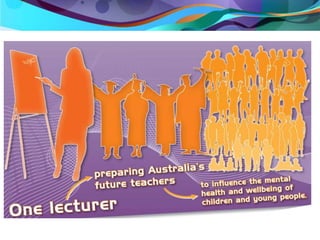
Response Ability is an internationally distinctive 
and highly regarded program that has been 
preparing teaching graduates since 1997, to 
assume an active and influential role in shaping 
the mental health and wellbeing of children and 
young people. 
It is an Initiative of the Hunter Institute of Mental Health with 
funding from the Australian Department of Health.
The goals of Response Ability are to: 
• Support the inclusion of mental health promotion, prevention and 
early intervention in the university pre-service training of teachers 
and the Vocational Education Training (VET) sector’s training of 
Children’s Services educators; 
• Promote and advocate for mental health issues to be included in 
curricula for pre-service teachers and early childhood educators; 
• Maintain partnerships with other initiatives and organisations that 
focus on the mental health of children and young people to 
enhance mental health.
This is achieved through providing: 
• Free, evidence-based multimedia teaching resources to Australian 
tertiary institutions; 
• Information through conference presentations, Response Ability 
website, stakeholder partnerships and collaborations with other 
organisations; 
• Professional support to lecturers and trainers to integrate mental 
health content into their programs; and 
• Updating and development of resources, including factsheets, pod 
casts and infographics.
Why children and young people? 
• The early years of a child’s life form the foundation for positive 
development and wellbeing into their adult years, and can act to 
protect against the development of mental health difficulties or 
illnesses. 
• Many mental health problems and disorders, such as depression 
and anxiety, have their onset in childhood or adolescence. We can 
address the impact of mental health difficulties in our community, 
both today and into the future, by improving mental health 
outcomes in children. 
• We need to reduce the incidence or impact of risk factors, build up 
children’s protective factors and help children and adolescents to 
access early support if difficulties do arise.
Why teachers and early childhood staff? 
• Research suggests that promoting social and emotional skills and 
resilience in educational settings contributes to improved health 
outcomes, behaviour and educational achievement. 
• Educators and teachers have an important role to play in creating 
supportive learning environments, and promoting optimal social and 
emotional wellbeing of all children and young people. 
• It is important that teachers and educators understand the key 
practices they can adopt in their daily practice, to support positive 
mental health, developmental and learning outcomes.
Why target pre-service training? 
• Through its unique position in the pre-service environment, 
Response Ability is the first point of contact for pre-service teachers 
and educators with the key principles of social and emotional 
wellbeing, which lays the foundation for successful whole-of-school 
and community approaches to improving mental health and 
wellbeing. 
• Response Ability is the only school-focussed program that has the 
capacity to integrate information to support the roll out of other 
initiatives addressing mental health and wellbeing, early 
identification and intervention for mental ill-health, suicide 
prevention and suicide postvention initiatives.
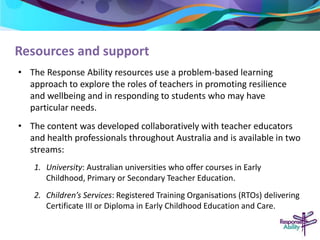
Resources and support 
• The Response Ability resources use a problem-based learning 
approach to explore the roles of teachers in promoting resilience 
and wellbeing and in responding to students who may have 
particular needs. 
• The content was developed collaboratively with teacher educators 
and health professionals throughout Australia and is available in two 
streams: 
1. University: Australian universities who offer courses in Early 
Childhood, Primary or Secondary Teacher Education. 
2. Children’s Services: Registered Training Organisations (RTOs) delivering 
Certificate III or Diploma in Early Childhood Education and Care.
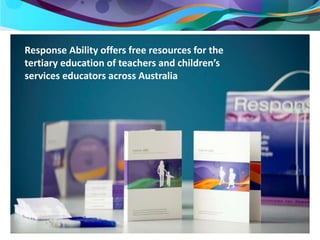
Response Ability offers free resources for the 
tertiary education of teachers and children’s 
services educators across Australia
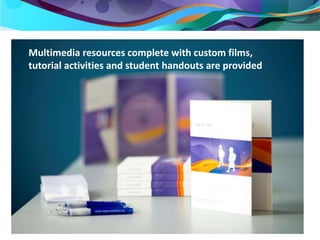
Multimedia resources complete with custom films, 
tutorial activities and student handouts are provided
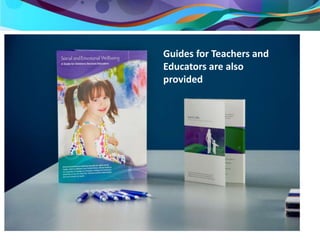
Guides for Teachers and 
Educators are also 
provided
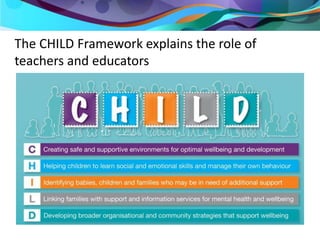
The CHILD Framework explains the role of 
teachers and educators
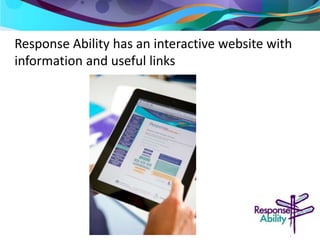
Response Ability has an interactive website with 
information and useful links
Response Ability provides support for trainers 
and lecturers
Contact Us 
Email: education@hnehealth.nsw.gov.au 
Telephone: (02) 4924 6900 
Website: www.responseability.org 
Contact Us 
Email: education@hnehealth.nsw.gov.au 
Telephone: (02) 4924 6900 
Website: www.responseability.org
Response Ability is an initiative of the Hunter 
Institute of Mental Health funded by the 
Australian Government Department of Health.

Response Ability program - winner of the 2014 Mental Health Matters: Mental Health Promotion & Wellbeing Award

  • 1.
    The Response Abilityprogram is the winner of the 2014 Mental Health Matters: Mental Health Promotion & Wellbeing Award
  • 2.
    Response Ability isan internationally distinctive and highly regarded program that has been preparing teaching graduates since 1997, to assume an active and influential role in shaping the mental health and wellbeing of children and young people. It is an Initiative of the Hunter Institute of Mental Health with funding from the Australian Department of Health.
  • 3.
    The goals ofResponse Ability are to: • Support the inclusion of mental health promotion, prevention and early intervention in the university pre-service training of teachers and the Vocational Education Training (VET) sector’s training of Children’s Services educators; • Promote and advocate for mental health issues to be included in curricula for pre-service teachers and early childhood educators; • Maintain partnerships with other initiatives and organisations that focus on the mental health of children and young people to enhance mental health.
  • 4.
    This is achievedthrough providing: • Free, evidence-based multimedia teaching resources to Australian tertiary institutions; • Information through conference presentations, Response Ability website, stakeholder partnerships and collaborations with other organisations; • Professional support to lecturers and trainers to integrate mental health content into their programs; and • Updating and development of resources, including factsheets, pod casts and infographics.
  • 5.
    Why children andyoung people? • The early years of a child’s life form the foundation for positive development and wellbeing into their adult years, and can act to protect against the development of mental health difficulties or illnesses. • Many mental health problems and disorders, such as depression and anxiety, have their onset in childhood or adolescence. We can address the impact of mental health difficulties in our community, both today and into the future, by improving mental health outcomes in children. • We need to reduce the incidence or impact of risk factors, build up children’s protective factors and help children and adolescents to access early support if difficulties do arise.
  • 6.
    Why teachers andearly childhood staff? • Research suggests that promoting social and emotional skills and resilience in educational settings contributes to improved health outcomes, behaviour and educational achievement. • Educators and teachers have an important role to play in creating supportive learning environments, and promoting optimal social and emotional wellbeing of all children and young people. • It is important that teachers and educators understand the key practices they can adopt in their daily practice, to support positive mental health, developmental and learning outcomes.
  • 7.
    Why target pre-servicetraining? • Through its unique position in the pre-service environment, Response Ability is the first point of contact for pre-service teachers and educators with the key principles of social and emotional wellbeing, which lays the foundation for successful whole-of-school and community approaches to improving mental health and wellbeing. • Response Ability is the only school-focussed program that has the capacity to integrate information to support the roll out of other initiatives addressing mental health and wellbeing, early identification and intervention for mental ill-health, suicide prevention and suicide postvention initiatives.
  • 9.
    Resources and support • The Response Ability resources use a problem-based learning approach to explore the roles of teachers in promoting resilience and wellbeing and in responding to students who may have particular needs. • The content was developed collaboratively with teacher educators and health professionals throughout Australia and is available in two streams: 1. University: Australian universities who offer courses in Early Childhood, Primary or Secondary Teacher Education. 2. Children’s Services: Registered Training Organisations (RTOs) delivering Certificate III or Diploma in Early Childhood Education and Care.
  • 10.
    Response Ability offersfree resources for the tertiary education of teachers and children’s services educators across Australia
  • 11.
    Multimedia resources completewith custom films, tutorial activities and student handouts are provided
  • 12.
    Guides for Teachersand Educators are also provided
  • 13.
    The CHILD Frameworkexplains the role of teachers and educators
  • 14.
    Response Ability hasan interactive website with information and useful links
  • 15.
    Response Ability providessupport for trainers and lecturers
  • 16.
    Contact Us Email:education@hnehealth.nsw.gov.au Telephone: (02) 4924 6900 Website: www.responseability.org Contact Us Email: education@hnehealth.nsw.gov.au Telephone: (02) 4924 6900 Website: www.responseability.org
  • 17.
    Response Ability isan initiative of the Hunter Institute of Mental Health funded by the Australian Government Department of Health.

Editor's Notes

  • #2 Not sure if I should change title….