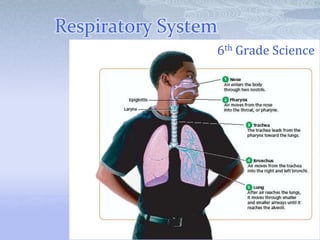
Respiratory System
                 6th Grade Science
I. Function
A. Take in oxygen from air
B. Remove carbon dioxide
C. Provides Energy for all cells
D. Smell
E. Water balance
F. Communication
II. Air Exchange
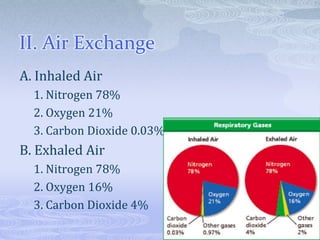
A. Inhaled Air
  1. Nitrogen 78%
  2. Oxygen 21%
  3. Carbon Dioxide 0.03%
B. Exhaled Air
  1. Nitrogen 78%
  2. Oxygen 16%
  3. Carbon Dioxide 4%
III. Pathway
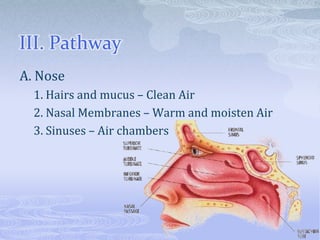
A. Nose
  1. Hairs and mucus – Clean Air
  2. Nasal Membranes – Warm and moisten Air
  3. Sinuses – Air chambers
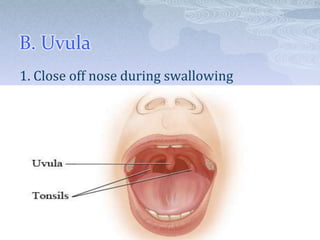
B. Uvula
1. Close off nose during swallowing
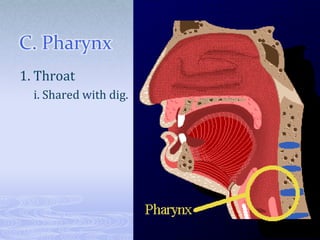
C. Pharynx
1. Throat
  i. Shared with dig.
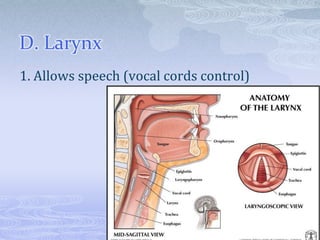
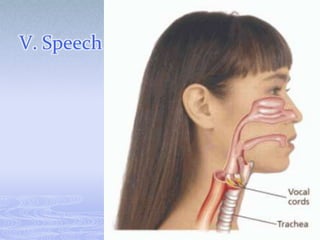
D. Larynx
1. Allows speech (vocal cords control)
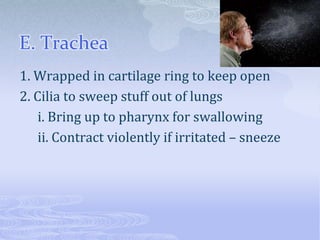
E. Trachea
1. Wrapped in cartilage ring to keep open
2. Cilia to sweep stuff out of lungs
    i. Bring up to pharynx for swallowing
    ii. Contract violently if irritated – sneeze
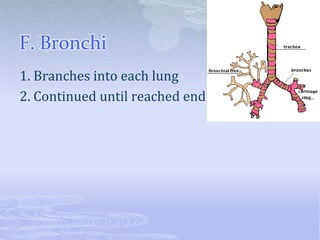
F. Bronchi
1. Branches into each lung
2. Continued until reached end
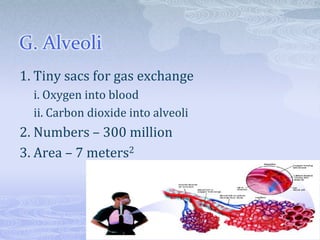
G. Alveoli
1. Tiny sacs for gas exchange
  i. Oxygen into blood
  ii. Carbon dioxide into alveoli
2. Numbers – 300 million
3. Area – 7 meters2
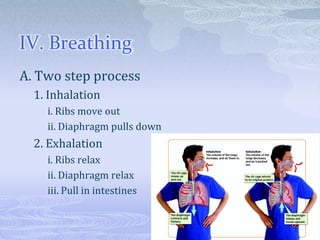
IV. Breathing
A. Two step process
  1. Inhalation
    i. Ribs move out
    ii. Diaphragm pulls down
  2. Exhalation
    i. Ribs relax
    ii. Diaphragm relax
    iii. Pull in intestines
V. Speech
VI. Damage and Disease
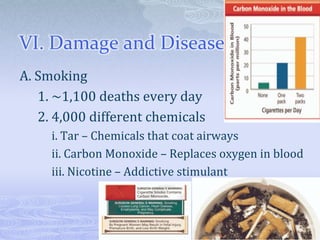
A. Smoking
   1. ~1,100 deaths every day
   2. 4,000 different chemicals
     i. Tar – Chemicals that coat airways
     ii. Carbon Monoxide – Replaces oxygen in blood
     iii. Nicotine – Addictive stimulant
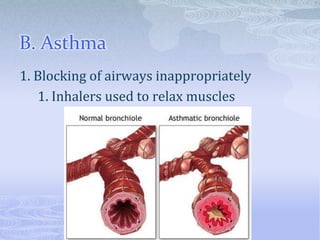
B. Asthma
1. Blocking of airways inappropriately
   1. Inhalers used to relax muscles
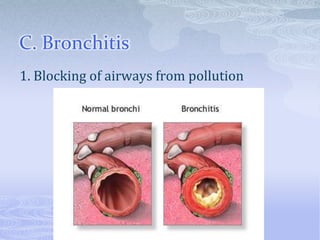
C. Bronchitis
1. Blocking of airways from pollution
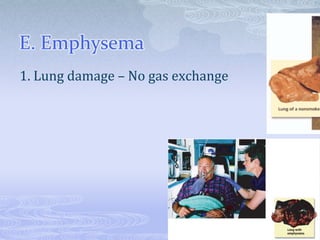
E. Emphysema
1. Lung damage – No gas exchange
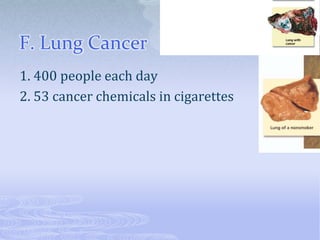
F. Lung Cancer
1. 400 people each day
2. 53 cancer chemicals in cigarettes
G. Atherosclerosis
1. Tar chemicals harden arteries
   i. Smokers have twice as many heart attacks

Respiratory system2

  • 1.
    Respiratory System 6th Grade Science
  • 2.
    I. Function A. Takein oxygen from air B. Remove carbon dioxide C. Provides Energy for all cells D. Smell E. Water balance F. Communication
  • 3.
    II. Air Exchange A.Inhaled Air 1. Nitrogen 78% 2. Oxygen 21% 3. Carbon Dioxide 0.03% B. Exhaled Air 1. Nitrogen 78% 2. Oxygen 16% 3. Carbon Dioxide 4%
  • 4.
    III. Pathway A. Nose 1. Hairs and mucus – Clean Air 2. Nasal Membranes – Warm and moisten Air 3. Sinuses – Air chambers
  • 5.
    B. Uvula 1. Closeoff nose during swallowing
  • 6.
    C. Pharynx 1. Throat i. Shared with dig.
  • 7.
    D. Larynx 1. Allowsspeech (vocal cords control)
  • 8.
    E. Trachea 1. Wrappedin cartilage ring to keep open 2. Cilia to sweep stuff out of lungs i. Bring up to pharynx for swallowing ii. Contract violently if irritated – sneeze
  • 9.
    F. Bronchi 1. Branchesinto each lung 2. Continued until reached end
  • 10.
    G. Alveoli 1. Tinysacs for gas exchange i. Oxygen into blood ii. Carbon dioxide into alveoli 2. Numbers – 300 million 3. Area – 7 meters2
  • 11.
    IV. Breathing A. Twostep process 1. Inhalation i. Ribs move out ii. Diaphragm pulls down 2. Exhalation i. Ribs relax ii. Diaphragm relax iii. Pull in intestines
  • 12.
  • 13.
    VI. Damage andDisease A. Smoking 1. ~1,100 deaths every day 2. 4,000 different chemicals i. Tar – Chemicals that coat airways ii. Carbon Monoxide – Replaces oxygen in blood iii. Nicotine – Addictive stimulant
  • 14.
    B. Asthma 1. Blockingof airways inappropriately 1. Inhalers used to relax muscles
  • 15.
    C. Bronchitis 1. Blockingof airways from pollution
  • 16.
    E. Emphysema 1. Lungdamage – No gas exchange
  • 17.
    F. Lung Cancer 1.400 people each day 2. 53 cancer chemicals in cigarettes
  • 18.
    G. Atherosclerosis 1. Tarchemicals harden arteries i. Smokers have twice as many heart attacks