RESPIRATORY
SYSTEM
the organ system
that is composed of
respiratory tract for
passageway of air.
BREATHING CYCLE INVOLVES:
INHALATION – the act
of taking in air.
EXHALATION – the act
of getting out air.
PARTS OF
RESPIRATORY
SYSTEM
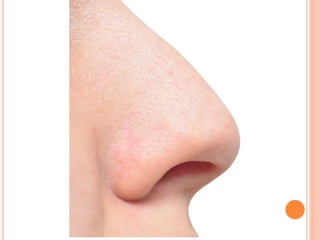
1. NOSTRILS
the opening of
the nose where
air enters the
body
2. NASAL CAVITY
a space
posterior to the
nose that warms
the inhaled air.
3. PHARYNX
a short muscular
segment of the digestive
tract that serves as
passageway of both
food and air: also called
as “throat”.
PHARYNX
4. LARYNX
a segment of
respiratory tract that
produces voice or
sound; also called
“voice box”.
5. EPIGLOTTIS
a leaf shaped flap of
elastic cartilage that acts
as cover for the opening
of the larynx to prevent
unwanted solid materials
from entering.
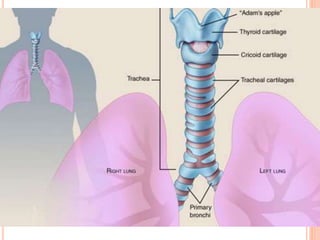
6. TRACHEA
 a segment of the
respiratory tract that
serves as
passageway of air
from the larynx; also
called “windpipe”
It mucus lining has
goblet cells, or
specialized epithelial
cells that secrete mucus
that fight disease
causing germs.
7. LUNGS
consisting of elastic
sacs with branching
passages into which
air is drawn.
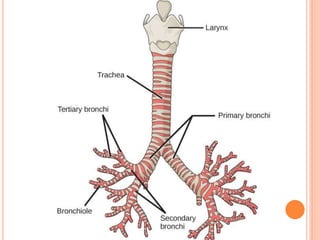
8. BRONCHUS
a segment of
respiratory tract
that serves as
passageway of air
from the trachea.
9. BRONCHIOLES
smaller branch
of bronchus.
Passageway of
air to alveoli.
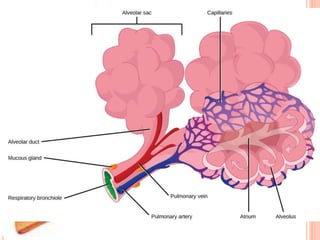
10. ALVEOLI
are tiny sacs within our
lungs that allow oxygen and
carbon dioxide to move
between the lungs and
bloodstream.
where the exchange of
oxygen and carbon dioxide
takes place.
BREATHING
is the process of getting
oxygen.
containing air into the
body and expelling
carbon dioxide
containing air out of the
body.
RESPIRATION
the process of
inhaling and
exhaling.
OXIDATION
a process by which
oxygen is used to
“burn” the nutrients
delivered by the
blood to the cells.
Red blood cells
absorb carbon
dioxide that cause
the blood to become
dark red then goes
back to the lungs.
COMMON DISORDERS AND DISEASES OF
RESPIRATORY SYSTEM
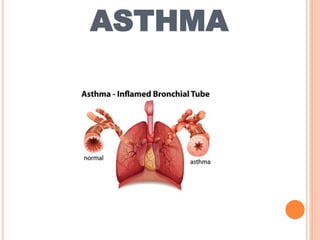
ASTHMA
EMPHYSEMA
PNEUMONIA
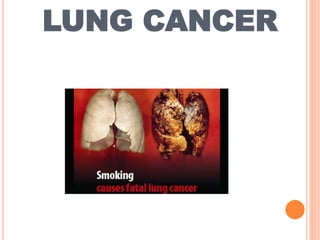
LUNG CANCER
PROPER CARE OF
RESPIRATORY
SYSTEM
1. Eat nourishing
food.
2. Have enough
rest, sleep, and
exercise.
3. Drink plenty of
water and fruit
juices.
4. Avoid substances
that may harm your
respiratory system.
5. Cover your nose
when air around
you is polluted.
6. See your doctor
at least once a
year.

Respiratory system