RESPIRATORY DISEASES DR. Shekhar Annambhotla  BAMS, MD (Ayurveda), CMT, RYT
FACILITATOR Dr. Shekhar Annambhotla,  B.A.M.S., M.D.(Ayurveda), R.Y.T. – 500, CMT Director & Founder Ojas, LLC   Ayurveda Wellness Center 567 Thomas Street, Coopersburg, PA 18036 email: doctorshekhar@gmail.com Website: www.ojas.us
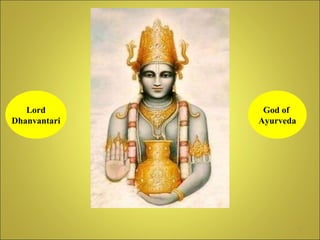
Lord Dhanvantari God of  Ayurveda
“ Namāmi dhanvantari mādi dēvam surā surair vandita pāda padmam  loke jara ruk bhaya mrutyu nāsham  dātaramēsham vividoushadēnām” I bow and humbly request Lord Dhanvantari, who is the embodiment of perfect health -- respected by great seers and evil people -- to remove old age, disease, fear and death through His divine presence in all natural herbal medicines.
Devi Saraswati God of  Education
“  Saraswati namastubhyam varade kāma roopini  vidyārambham karishyāmi  siddhirbhatatu mānasa” I offer deepest respect and great reverence to divine mother Saraswati, who fulfills my desires and provides perfection in my education.
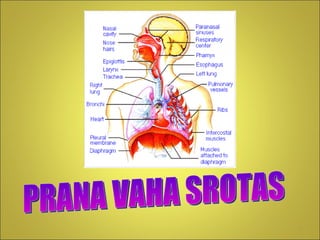
PRANA VAHA SROTAS
Pranavaha Srotas  – Respiratory system Main locations –  Nose, Trachea, Lungs Etiology of vitiation:   Dust, pollen, polluted air, sun, cold weather, injury to the chest,  excessive intake and exposure to cold substances, excessive exertion, suppression of natural urges, malnutrition,  Ama,   krimi  (bacteria, parasites, fungi etc.)
Vata imbalance –   Dryness, roughness, pain in nose, throat and trachea;  anemia,  hoarseness of voice, aphonia (loss of speech);  lightness, pain, cavitations,  inflated with air of lungs, dilatation of bronchii, emphysema, pneumothorax
Pitta imbalance  –   Foul discharge from nose, throat, trachea ulcerations, suppuration hemorrhage, burning sensation inflammation  abscess formation in lungs cancer  hemothorax
Kapha imbalance  –   Excessive, thick, mucous secretions from nose, throat, trachea, obstruction, itching, edema, polyp, tumors disorders of smell consolidation of lungs, tumors, edema, and hydrothorax
Important diseases of the  Pranavaha Srotas  – Nose, nasal passages –   Common cold, rhinitis, nasal obstruction, nasal dryness, nasal ulcerations, nasal polyp, tumors, cancer, epistaxis Throat –  Tonsillitis, enlarged uvula, inflammation of the throat, adenoids, tumors, cancer, diphtheria, pharyngitis, laryngitis, hoarseness, and aphasia Trachea, bronchi  – Tracheal obstruction, trachiitis, bronchitis, bronchial asthma Lungs  –  Pneumonia, tuberculosis, abscess, pulmonary edema, embolism, corpulmonale, emphysema, cancer, whooping cough, dyspnea Pleurae  –  Pleurisy, hydrothorax, hemo-thorax, emphysema
Respiratory disorders are considered “Swasa Roga” in Ayurveda Aggravated and vitiated Kapha-Vata accumulates in upper respiratory tract, lungs, sinuses, leading to several respiratory disorders In general, Kapha-Vata pacifying measures such as food, herbs, behavior help to alleviate respiratory problems
Even though respiratory disorders are of Kapha-Vata type, its revelations starts from the Stomach (Pitta location) The several srotas involved are: Pranavaha srotas  - The channels that carry Prana,the breath or life-force
Udakavaha srotas  - The channels that carry water or regulate water metabolism Annavaha srotas  - The channels that carry food Raktavaha srotas  - The channels that carry blood
ETIOLOGICAL FACTORS Foods -   Aharaja Hetu Regimen  -  Viharaja Hetu Cause of other diseases -   Nidanarthakara Hetu
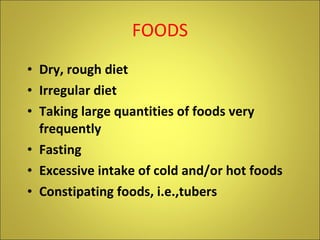
FOODS Dry, rough diet Irregular diet Taking large quantities of foods very frequently Fasting Excessive intake of cold and/or hot foods Constipating foods, i.e.,tubers
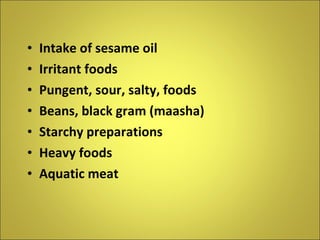
Intake of sesame oil Irritant foods Pungent, sour, salty, foods Beans, black gram (maasha) Starchy preparations Heavy foods Aquatic meat
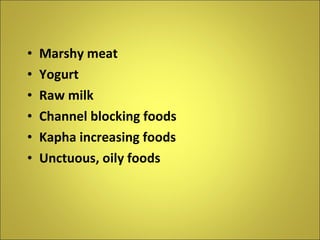
Marshy meat Yogurt Raw milk Channel blocking foods Kapha increasing foods Unctuous, oily foods
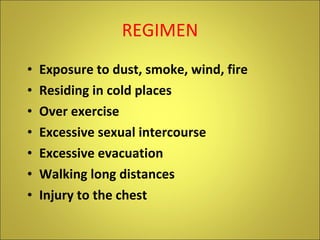
REGIMEN Exposure to dust, smoke, wind, fire Residing in cold places Over exercise Excessive sexual intercourse Excessive evacuation Walking long distances Injury to the chest
Lifting or carrying heavy weights Suppression of natural urges Injury to vital organs (marmas) Night vigil Excessive heat Day sleep
Cause of other diseases Accumulation of gas Ama disorders Weakness Diarrhea Fever Vomiting
Coryza  Surgery to the chest Upward movement of flatus Gastroenteritis Intestinal torpor Anemia
Constipation Hemorrhagic disorders Edema Wasting Abdominal disorders
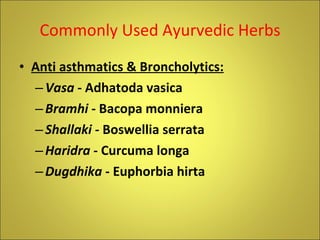
Commonly Used Ayurvedic Herbs Anti asthmatics & Broncholytics: Vasa  - Adhatoda vasica Bramhi  - Bacopa monniera Shallaki -  Boswellia serrata Haridra  - Curcuma longa Dugdhika  - Euphorbia hirta
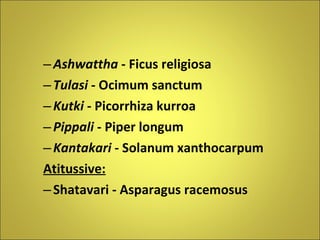
Ashwattha  - Ficus religiosa Tulasi  - Ocimum sanctum Kutki  - Picorrhiza kurroa Pippali  - Piper longum Kantakari  - Solanum xanthocarpum Atitussive: Shatavari - Asparagus racemosus
VASA  (Adhatoda vasica)
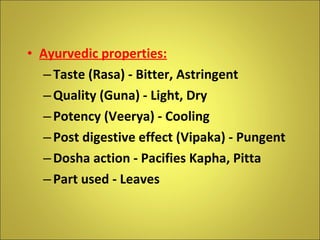
Ayurvedic properties: Taste (Rasa) - Bitter, Astringent Quality (Guna) - Light, Dry Potency (Veerya) - Cooling Post digestive effect (Vipaka) - Pungent Dosha action - Pacifies Kapha, Pitta Part used - Leaves
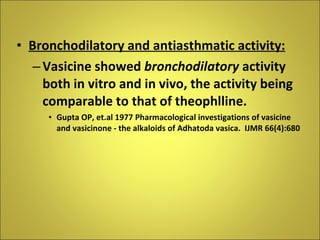
Bronchodilatory and antiasthmatic activity: Vasicine showed  bronchodilatory  activity both in vitro and in vivo, the activity being comparable to that of theophlline. Gupta OP, et.al 1977 Pharmacological investigations of vasicine and vasicinone - the alkaloids of Adhatoda vasica.  IJMR 66(4):680
Vasicine, however, showed bronchodilatory activity in vitro but bronchoconstriction in vivo.  The two alkaloids in combination had a more potent brochodilatory activity and the combination of vasicinone with aminophylline also had an additive effect Bhalla HL, et.al 1982 Preformulation studies III. Vasicinone, a brochodilatory alkaloid from Adhatoda vasica Nees (absorption, potency and toxicity studies). Drug Dev. Indian.Pharm 8(6):833
Adhatoda vasica reduced ovalbumin and: PAF-induced allergic reactions.  A fraction containing the minor alkaloid vascinol and about 20% vasicine inhibited ovalabumin -induced allergic reactions by about 37% at a concentration of 5 mg. Mullar A. et. Al 1993 Chemistry and pharmacology of the antiasthmatic plants. Galpinia glauca, Adhatoda vasica, Picrorrizha kurroa. Planta Medica 59S:A586
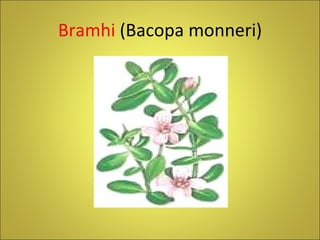
Bramhi  (Bacopa monneri)
Ayurvedic properties: Taste (Rasa) - Bitter Qualities (Guna) - Light, Unctuous Potency (Veerya) - Ushna Post digestive effect - Pungent Dosha effect - Pacifies Kapha and Vata Part used - Leaves
Effects - Nerve tonic, diuretic, anti anxiety agent, cardiotonic,  Beneficial in -   Bronchial asthma Hoarseness of voice Epilepsy Insanity Intellect promoter Anti anxiety agent
Bronchodilatory activity: An ethanol extract dilated the bronchial smooth muscles of anaesthetized rats, counteracting bronchoconstriction induced by carbachol.  This property reduced expiratory pressure, resembling salbutamol rather than isoprenaline in manner.  The action may be mediation through both adrenoceptor dependent and independent mechanisms. Dar A, et. Al 1999 Calcium antagonistic activity of Bacopa monniera on vascular and intestinal smooth muscles of rabbit and guinea pig. Journal of Ethnopharmacology 66 (2): 167
SHATAVARI  (Asparagus racemosus)
Ayurvedic properties: Taste (Rasa) - Sweet, Bitter Quality (Guna) - Heavy, Unctuous Potency (Veerya) - Cooling Post digestive effect (Vipaka) - Sweet Dosha effect - Pacify Pitta and Vata and promotes Kapha
Antitussive activity: The methanolic extract of the root, at a dose of 200 and 400 mg/kg PO, showed significant antitussive activity in sulphur dioxide-induced cough in mice.  The cough inhibition of 40% and 58.5%, respectively, was comparable to that of 10-20 mg/kg of codeine phosphate, where the inhibition observed was 36% and 55.4%, respectively. Mandal SC et.al 2000 Antitussive effect of Asparagus racemosus root against sulfur dioxide-induced cough in mice. Fitoterpaia 71(6):686
SHALLAKI  (Boswellia serrata)
Ayurvedic properties : Taste (Rasa) - Astringent, Bitter, Sweet Qualities (Guna) - Light, Dry Potency (Veerya) - Hot Post digestive effect (Vipaka) - Pungent Dosha action - Balances Kapha, Pitta Part used - Oleo-gum resin, bark
Antiasthmatic activity: In a double-blind, placebo-controlled study, 40 patients of both sexes in the age range 18-75 years, and with a mean duration of bronchial asthma of 9.58 years, were treated with a preparation of gum resin (300 mg thrice daily) for a period of 6 weeks.  Seventy percent of patients should some improvement as evidenced by their disappearance of physical symptoms such as dyspnoea and number of attacks.
There was an improvement in biochemical parameters including a decrease in eosinophil count and ESR.  The control group of 40 patients were treated with lactose (300 mg thrice daily) for 6 weeks and of these, 27% showed some improvement. Gupta I, et.al 1998 Effects of Boswellia serrata gum resin in patients with bronchial asthma: the of a double-blind, placebo-controlled, 6 week clinical study. European Journal of Medical Research 3(11):511
Questions & Answers
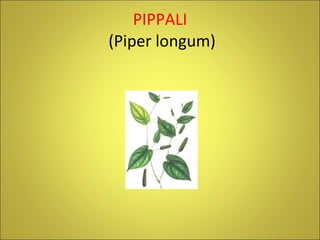
PIPPALI  (Piper longum)
Ayurvedic properties : Taste (Rasa) - Pungent Qualities (Guna) - Light, Unctuous, Sharp Potency (Veerya) - Slight cold Post digestive effect (Vipaka) - Sweet Dosha action - Pacifies Kapha, Vata Part used - Fruit
Antiasthmatic activity: Studies have been carried out to validate the traditional claims of Ayurveda for antiasthmatic activity of piper longum.  An extract of the fruits in milk reduced passive cutaneous anaphylaxis in rats and protected guinea pigs against antigen-induced bronchospasm. Kulashreshta VK et. al. 1969 A study of central stimulant effect of Piper longum, Indian Journal of Pharmacology 1(2):8 Kulashreshta VK et.al. 1971 Analysis of central stimulant activity of Piper longum. Journal of Research into Indian Medicine 6(1):17
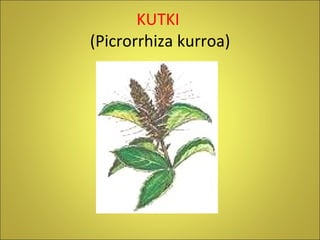
KUTKI  (Picrorrhiza kurroa)
Ayurvedic properties: Taste (Rasa) - Bitter Quality (Guna) - Light, Dry Potency (Veerya) - Cold Post digestive effect - Pungent Dosha effect - Pacifies Kapha, Pitta Part used - dried root
Antiasthmatic activity: P.kurroa has been studied extensively for its antiasthmatic activity. Kulkarni ED et. Al 1976 Studies of antiasthmatic potentials of P.kurroa in comparison with disodium chromoglycate. Aspects of Allergy and Applied Immunology 9:231 Rajaram D 1975 A preliminary clinical trail of P.kurroa in bronchial asthma. Indian Journal of Pharmacology 7:95
The activity has been attributed to compounds such as androsin and apocynin, which have been shown to inhibit allergen- and PAF-induced broncho constriction. Wagner H. 1994 New potent anti-asthmatic constituents from higher plants. Second International Symposium on Innovations in Pharmaceutical Sciences and Technology.  Ahmedabad, Feb 25-27 Stuppner H. 1991 Antiasthmatic effects of P. kurroa: inhibition of allergen and PAF induced bronchial obstruction in guinea pigs by androsin, apocynin and structurally related compounds. Planta Medica 57(2):A-60
The antiallergic and antianalphylactic activity of Picroliv has also been investigated in vitro and in vivo.  A dose of 25 mg/kg inhibited passive anaphylaxis in mice and rats and protected mast cells from degranulation, but bronchospasm induced by histamine could not inhibited. Baruah CC et. Al 1988 Anti-allergic and antianalphylactic activity of Picroliv, as standardized iridoid glycoside fraction of Picrorrhiza kurroa. Pharmacology Research 38 (6):487
A pilot study of 10 patients with acute bronchial asthma given a dose of 160 mg powder twice daily produced evidence of objective and subjective improvement. Shah BK, et. Al 1977 Preliminary report of use of P. kurroa root in bronchial asthma. Journal of Postgraduate Medicine 23(3):118
In another study in 20 patients, the crude extract of P. kurroa roots reduced the frequency and severity of asthmatic attacks and the need for regular bronchodilators. Yegnanarayana R. et.al., Study of Picrorrhiza kurroa in cases of bronchial asthma.  Bombay Hospital Journal 24(2):15
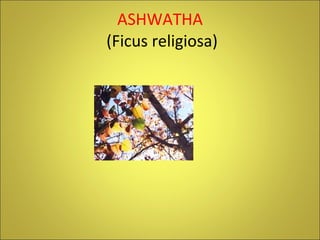
ASHWATHA  (Ficus religiosa)
Ayurvedic properties : Taste (Rasa) - Astringent Qualities (Guna) - Heavy, dry Potency (Veerya) - Cold Post digestive effect (Vipaka) - Pungent Dosha effect - Pacifies Kapha, Pitta Part used: Bark
Parasympatholytic and antiasthmatic activity:  A 95% ethanolic extract of the bark relaxed the intestines of the rat, guinea pig, rabbit and dog and their uterus of the rat.  It antagonised the spasmolytic effect of acetylcholine (Ach), histamine, barium chloride and serotonin, blocked the cardiovascular effects of Ach and protected guinea pigs against Ach and histamine induced asthma. Malhotra CL, et. Al. 1960 Parasympatholytic activity of Ficus religiosa.  Indian Journal of Medical Research 48:734
When tested on the blood pressure of anaesthetised dog, it had vagolytic activity and antagonised Ach, but not histamine. The extract also relaxed the bronchial musculature and antagonised Ach induced spasm in tracheal chain of the dog. Malhotra CL. et.al. 1960 Effects of Ficus religiosa on smooth muscles. Indian Journal of Physiology and Pharmacology 4:130
The dried, powdered interior bark of Ficus religiosa has been suggested as a treatment for they symptoms of bronchial asthma in humans. Patel JR. et al. 2000 Compositions for treatment of asthma containing Ficus religiosa bark admixed with rice pudding. US Paten No. 6149914
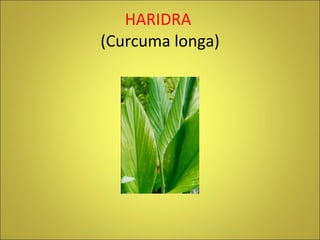
HARIDRA  (Curcuma longa)
Ayurvedic properties: Taste (Rasa) - Bitter, pungent Qualities (Guna) - Light, dry Potency (Veerya) - Hot Post digestive effect (Vipaka) - Pungent Dosha action - Balances Tridosha Part used - Root powder
Anti allergic activity : Antiallergic activity in curcuma extract has been reported. Yano S. et. Al. 1996 Proceedings of the 2nd International Congress on Phytomedicine, Munich, September 11-14.
Antiasthmatic activity: Oral administration of the volatile oil was found to be clinically effective in cases of bronchial asthma. Jain JP, et al 1990 A clinical trail of volatile oil of Curcuma longa Linn. (haridra) in cases of bronchial asthma (Tamak Swasa). Journal of Research in Ayurveda and Siddha 11(1-4): 20 A protective effect by curcumin (200 mg/kg for 7 days) on rat lung, against toxicity induced by cyclophosphamide, has been observed. Venkatesan N, et.al. 1995 Modulation of cyclophosphamide-induced early lung injury by curcumin, an anti-inflammatory antioxidant.  Molecular and Cellular Biochemistry 142:79
Ayurvedic properties: Taste (Rasa) - Sweet Qualities (Guna) - Unctuous Potency (Veerya) - Cold Post digestive effect (Vipaka) - Sweet Dosha effect - Pacifies Pitta Part used - Whole plant
Anti asthmatic activity: The drug is reported to have a relaxation effect on the bronchial tubes and a depressant action on respiration. Chopra RN. Et. Al 1994. Indigenous drugs of India, Academic Publishers, Calcutta
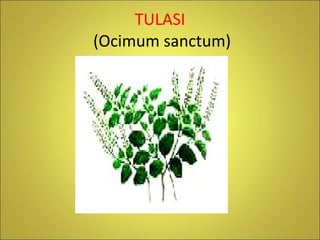
TULASI  (Ocimum sanctum)
Ayurvedic properties: Taste (Rasa) - Pungent, Bitter Qualities (Guna) - Light, Dry Potency (Veerya) - Hot Post digestive effect (Vipaka) - Pungent Dosha action - Pacifies Kapha and Vata Part used - Leaves, seeds
Anti asthmatic activity: A 50% hydro alcoholic extract and the volatile oil extracted from fresh leaves were evaluated against histamine and Ach induced pre-convulsive dyspnoea in pigs.  Both the extract and the oil exhibited a significant dose-dependent anti-asthmatic activity, with the percentage protection shown by 200 mg/kg of ethanol extract of fresh leaves equivalent to 0.5 ml of volatile oil.
The volatile constituents of the fresh leaves were thought to be the main factor responsible for the activity. Singh S et. Al. 1991 Anti-asthmatic and anti-inflammatory activity of Ocimum sanctum, International Journal of Pharmacognosy 29(40):306
Anti-stress activity of Ocimum Sanctum The plant Ocimum sanctum has been found to posses adaptogenic (anti-stress) properties when tested against a battery of tests in mice and rats.  The drugs increased the physical endurance (increased survival time) of swimming mice, prevented stress induced ulcers in rats, protected mice and rats against carbon tetra chloride induced hepatotoxicity, prevented milk induced leucocytosis in mice.
The result of the study indicated that O. sanctum induces a state of non-specific increased resistance against a variety of stress induced biological changes in animals. “  K.P. Bhargava et.al. Indian J. Medical Research March 1981 page 443-451”
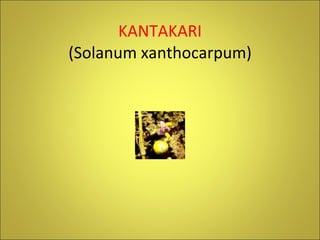
KANTAKARI (Solanum xanthocarpum)
Ayurvedic properties : Taste (Rasa) - Pungent, bitter Qualities (Taste) - Light, sharp, dry Potency (Veerya) - Hot Post digestive effect (Vipaka) - Pungent Dosha action - Pacifies Kapha and Vata Part used - Whole plant
Anti asthmatic and respiratory activity : A whole plant extract of Solanum xanthocarpum produced a significant improvement in certain parameters of pulmonary functions in asthmatic subjects. Govindan S, et.al. 1999 A pilot study on the clinical efficacy of Solanum xanthocarpum and Solanum trilobatum in bronchial asthma. Journal of Ethnopharmacology 66 (2): 205
Clinically the herb has also proved to be useful in treating individuals with cough and bronchial asthma. Vector NP et.al. 1971 Solanum xanthocarpum (Kantakari) in chronic bronchitis, bronchial asthma and non-specific unproductive cough (an experimental and clinical co-relation). Journal of the Association of Physicians of India 19(10):741
ALLERGIES Affect 37 million people Ayurvedic Samprapti (pathogenesis), allergies are doshic reaction to specific allergens Spring, later summer very reactive
Common allergens are- Germination of trees, grasses and ragweed, chemicals on rug, walls, dust, smoke, fire, sun, strong chemical smell Common complaints - Sneezing, itching, red eyes, swelling, obstruction of the nose, fever Allergic reaction leads to imbalance of either Vata, or Pitta or Kapha
VATA ALLERGIES Signs & Symptoms Flatulence Gastric discomfort Intestinal colic Sudden wheezing
Sneezing Headache Tinnitus Insomnia Predominant in Winter & Autumn/Fall seasons
Management Herbal compound: Ashwagandha (Withania somnifera) - 2 parts Bala (Sida cordifolia) - 1 part Vidari Kanda (Ipomoea digitata) - 1 part Yastimadhu (Glycyrrhiza glabra) - 1 part Haritaki (Terminalia chebula) - 1 part 1/4 teaspoon TID with warm water before meals
For severe wheezing - 1/4 teaspoon ginger (Zingiber officinale) 1/4 teaspoon Yastimadhu (Glyceriza glabra) 1/4 teaspoon Pippali (Piper longum) 1 cup hot water  1 pinch salt 1/2 teaspoon Mahanarayana oil or plain sesame oil Panchakarma: Basti (Enema)  - Dashamoola decoction
PITTA ALLERGIES Signs & Symptoms Rash Itching, Hives Urticaria Allergic dermatitis Eczema Predominant in Summer season
Management Blood cleansing: Equal portions of: Manjishta (Rubia cordifolia) - 3 parts Nimba (Azadirachta indica) - 1 part  Turmeric (Curcuma longa) - 2 part Amalaki (Phyllanthus emblica) - 2 parts Guduchi (Tinospora cordifolia) - 1 part Beneficial for Allergic skin problems (dermatitis, eczema)
Blood purification : Burdock tea - three times daily For excessive Pitta: Herbal compound : Avipattikara - 4 parts Shatavari (Asparagus racemosus) - 4 parts Guduchi (Tinospora cordifolia)- 2 parts Bhumyamalaki (Phyllanthus niruri) - 2parts 1/2 teaspoon powder with warm water before meals three times daily
Dermotological problems  -  Dermatitis, eczema, hives, rash, urticaria Apply liberally Neem oil externally on the skin. Rose water for cooling effect on the skin Panchakarma:   Raktamokshana  (Blood letting / blood donation): Donate 1/2 pint or 100  cc blood to blood bank.
Virechana  (Purgation therapy): 2 tablespoons Castor oil or Flax seed oil or Olive oil  1/4 teaspoon dry ginger powder  1 cup hot milk / soy milk / rice milk  Bed time for 3 consecutive days
KAPHA ALLERGIES Signs & Symptoms Hay Fever Colds Congestion Cough Sinus infection Asthma Predominant in Spring season
Management Herbal compound:  Sitopaladi - 4 parts Tulasi (Ocimum sanctum) - 2 parts Yastimadhu (Glycyrrhiza glabra) - 2 parts Kantakari (Solanum xanthocarpum) - 1part Vasa (Adhothoda vasica) - 1 parts Bibhitaki (Terminalia belerica) - 1part  1/2 teaspoon three times daily with honey before meals Upper respiratory problems - Cough, cold, congestion, asthma, hay fever
Panchakarma: Vamana (Vomiting therapy) Licorice tea with rock salt, drink full stomach Rub or irritate the back of the tongue to induce vomiting reflux Can be done in Kapha period (6:00 am - 10:00 am) In west it is not well accepted, where in India well practiced. Avoid in people -  history of heart problems, surgeries, high blood pressure, low blood pressure, hiatal hernia, inguinal hernia,  pregnancy
Tri-dosha Allergies Triphala - Combination of three fruits Haritaki - Balances Vata Amalaki - Balances Pitta Bibhitaki - Balances Kapha
Dietary Regimen Vata allergy - Vata pacifying foods Pitta allergy - Pitta pacifying foods Kapha allergy - Kapha pacifying foods
Viruddha Ahara  (Contradictory/Incompatible foods) Avoid combination of: Milk  with - Yogurt, fish, sour fruits, bread with yeast Meat, Poultry with Diary products Honey & Ghee in equal proportions Corn with dates, raisins, bananas Nightshades (potato, tomato, eggplant) with yogurt, milk, melon, cucumber Fruits, Melons with Starches, Grains e.g.: banana milk shakes, fruit smoothies etc.
Avoid causative factors: Common allergens - pet hair, pollen, mold, dust, smoke, fire, sun etc., Synthetic fibers - polyester, rayon  Arrest Allergens: Nasal drops - Ghee / Sesame oil Application of neem oil on the skin
Breathing exercises Sukha Pranayama - Alternative nostril breathing - hay fever, wheezing, sneezing Bhastrika Pranayama - Congestion Ujjayi Pranayama - Improve immunity
Yoga Postures Surya Namaskar (Sun salutations) - Kapha, Vata problems Chandra Namaskar (Moon salutations) - Pitta problems Stress Management Meditation
COMMON COLD, FLU Kapha - Vata disorder Predisposing seasons Winter, Spring Signs & Symptoms Runny nose, cough, congestion, headache, body aches, loss of appetite, poor digestion, chills, occasional fever
Management Herbal compound: Dry ginger powder - 1 part Cinnamon - 1 part Amalaki - 1 part Steep 1 teaspoon in 1 cup of hot water for about 10 minutes, strain, mix in 1 teaspoon honey, drink several times a day
For enhancing digestion: Fennel seed powder - 1 part Natural sugar - 1 part 2-3 times daily with warm water before meals Nasal decongestant tea: Turmeric 1 part Ginger - 2 part Cinnamon - 3 parts Cardamom - 1 pinch Make tea with honey and drink several times a day.
Decongestant inhalation: 1 teaspoon ginger or 10 drops eucalyptus oil in 1 a pint of hot boiling water.  Inhale steam Herbal compound: Sitopaladi - 1 part Mahasudarshan choorna - 1 part Amalaki - 2 parts 1/2 teaspoon powder with warm water before meals, three times daily
Septilin (HimalayaUSA) in Pharyngitis: A double blind, placebo controlled clinical trial was conducted in 50 patients with chronic non-specific pharyngitis as assess the efficacy of Septilin in comparison to Actifed, an antihistamine-decongestant formula.  Based on the clinical assessment and patient’s score at the end of three months. Septilin was found effective in 68% of the cases compared to Actifed, which was effective in 40% of the cases. Septilin was well tolerated and no side effects were observed. Nehru V. Septilin Versus Actifed in Chronic Non-Specific Pharyngitis.  Ind.Pract.2001: 54(7):501-505
Nasal drops: Liquid ghee (clarified butter) 3- 4 drops in each nostril  for lubrication, relieving irritation, sneezing Sipping hot water several times a day helps to remove toxins Completely avoid dairy products Take sufficient rest, relaxation
Pranayama: Breathing exercises: Bhastrica  Alternative nostril breathing Mild exercises Sun salutations Inverted  & Forward bend postures -  Paschimothana Asana (Shoulder stand) Hasta Pada Asana (Hands leg pose) Removes postnasal drip, helps to drain mucous from the nose
SINUSITIS Signs & Symptoms: Aggravated Kapha blocks sinuses, leads to: Sinus headaches Snoring  Difficulty breathing Ear infections Sleep apnea Post nasal drip Brain infection Meningitis
MANAGEMENT Herbal Compound: Sitopaladi - 4 parts Mahasudharshan - 3 parts Trikatu - 2 parts Tulasi - 2 parts Take 1/2 teaspoon of mixture with warm water three times daily, before meals, for 3 months
Herbal Decongestant: Fresh ginger juice - 1 teaspoon Lemon juice - 2 teaspoons Honey - 3 teaspoons
Herbal Antibiotic: Talisadi - 3 parts Haridra (Curcuma longa) - 2 parts Pippali - 1 part Yastimadhu - 2 parts 1/2 teaspoon with warm water   three times daily, before meals
Sinus Headache: External application of 1/2 teaspoon cinnamon with enough water to make a paste, twice daily Sinus congestion & Pain: Fresh garlic juice nasal drops - 2 drops in each nostril twice daily in the morning & evening.
Avoid: Dairy products - cheese, yogurt, ice cream Ice cold drinks Leftover foods Exposure to cold weather Smoking cigarettes
Favor: Instill 2 drops of melted Ghee in each nostril Pungent, bitter, astringent tastes Sipping warm/hot water throughout the day Light dinner
BRONCHIAL ASTHMA Causative factors: Allergens - pollen, dust, animal hair, various foods Increase of Kapha in entire body Cold Congestion Cough Hay fever
Increased Kapha in stomach, moves to lungs, trachea, and bronchi, thereby blocking the natural flow of air, creating spasms in the bronchial tree and resulting in bronchial asthma and wheezing.
Ayurvedic management for bronchial asthma is to move the excessive Kapha located in the lungs and bronchi back to the stomach, from which it can be easily eliminated through Vamana and Virechana programs.
Management Herbal Compounds : For excessive mucus in the mouth, throat, stomach: Ginger powder - 1 part Yastimadhu - 1 part 1/2 teaspoon with warm water twice daily, before meals
For Excessive wheezing, difficulty in breathing: Recipe 1: - Trikatu - 1 part -  Shallaki - 1 part -  Haridra - 1 part -  Yastimadhu - 1 part -  Cinnamon - 4 parts 1/2 teaspoon powder with 1 teaspoon honey twice daily, before meals
Recipe 2: - Onion juice - 1 part - Honey - 2 parts Take 1 teaspoon 3-4 times daily
Recipe 3: Shatavari - 2 parts Kantakari - 2 parts Dugdhika - 2 parts Bramhi - 2 parts Tulsi - 2 parts 1/2 teaspoon powder with honey 3-4 times daily
Acute Dyspnoea : Sitopaladi - 4 parts Pippali - 1 part Kutki - 1 part Vasa - 4 parts 1/2 teaspoon mixed with honey and 1/2 cup spinach juice 3-4 times daily, before meals
External application on chest: Massaging warm mustard oil with pinch of salt into chest Broncho-dilation effect, relieves congestion Kapha reducing tea: Mustard seed powder - 1 part Pippali powder - 1 part 1/4 teaspoon with 1/2 teaspoon honey and 1 cup warm water 3-4 times daily
Home Remedy : Organic red apple - 1 Cloves - 10 Insert cloves into apple and bake for 10-15 minutes, until it becomes soft and peel the skin of the apples and mash well, take 2 tablespoons 2-3 times daily after meals. Helps to remove excess Kapha in lungs and stomach.
Respicare (HimalayaUSA) A placebo-controlled clinical trial was conducted in patients with chronic asthma using E-721B, a polyherbal formulation. E-721B was administered at a dose of 2 tablets, twice daily, for 12 weeks.  A gradual reduction in severity of cough, a dyspnoea, wheezing and rhonchi and relief from bronchospasm was seen in a majority of patients after treatment with E-721 B E-721B (Respicare) contains Albizzia lebbeck, Tylophora indica, Glycyrrhiza glabra, Solanum xanthocarpum and Rhus succedanea.
Albezzia lebbeck posses mast cell stabilizing properties Glycyrrhiza glabra effective in chronic bronchitis, chronic cough, antihistamnic and expectorant properties Solanum xanthocarpum has anti-inflammatory activity, useful in inhibiting bronchial hyperactivity and mucosal oedema.  Tylophora indica has anti-allergic activity along with membrane stabilizing and bronchodilator effects.  Rhus succedanea has been used in the treatment of cough, fever and chronic asthma S.C. Agarwal, R.H. Singh, Indian Journal of Clinical Practice Vol.12 N.5, October 2001
Avoid : Dairy products - cheese, milk etc. Kapha aggravating foods - salt, cucumber, tuna fish Junk foods with lots of sugar Saturated fats, trans-fatty acids Consumption of meats, margarine, fried foods, commercial popcorn, commercial baked goods
Unsaturated vegetable oils - corn, safflower Smoked, cured, barbecued, and grilled foods Mushrooms, peanuts, walnuts, other nuts, yeast Dusty books, moldy basements, some chemicals.
YOGA ASANAS FOR RESPIRATORY SYSTEM
General :   Shiva Asana (Relaxing pose)  Bhujanga Asana (Cobra pose)  Shalabha Asana (Grasshopper pose)  Sarvanga Asana (Shoulder stand pose)
Vital capacity of lungs :  Bhujanga Asana (Cobra pose)  Shalabha Asana (Grasshopper pose)
Asthma, Bronchitis, Allergies, Hay fever :  Sarvanga Asana (Shoulder stand pose) Shalabha Asana (Grasshopper pose) Bhujanga Asana (Cobra) Vajra Asana (Diamond) Throat, Tonsils :   Bhujanga Asana (Cobra pose)
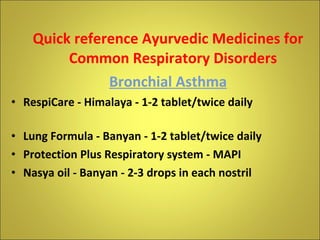
Quick reference Ayurvedic Medicines for Common Respiratory Disorders Bronchial Asthma RespiCare - Himalaya - 1-2 tablet/twice daily Lung Formula - Banyan - 1-2 tablet/twice daily Protection Plus Respiratory system - MAPI Nasya oil - Banyan - 2-3 drops in each nostril
Constipation Triphala - Banyan - 2 tab / bedtime Vegelax - Himalaya - 2 tab / bedtime Elim-Tox - MAPI - 2 tab / bedtime Herbal Cleanse - MAPI / 2 tab / bedtime
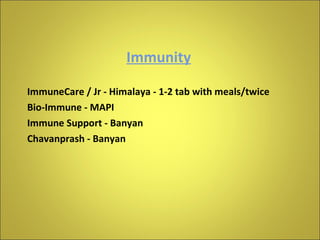
Immunity ImmuneCare / Jr - Himalaya - 1-2 tab with meals/twice Bio-Immune - MAPI Immune Support - Banyan Chavanprash - Banyan
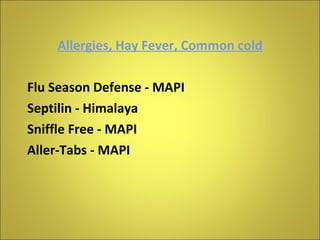
Allergies, Hay Fever, Common cold Flu Season Defense - MAPI Septilin - Himalaya Sniffle Free - MAPI Aller-Tabs - MAPI
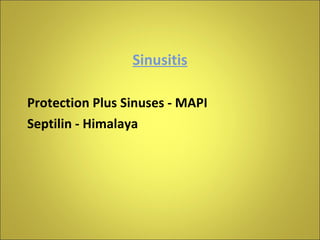
Sinusitis Protection Plus Sinuses - MAPI Septilin - Himalaya
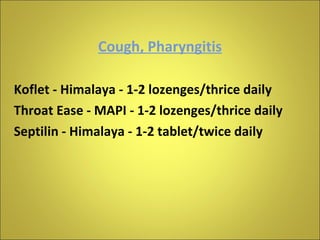
Cough, Pharyngitis Koflet - Himalaya - 1-2 lozenges/thrice daily Throat Ease - MAPI - 1-2 lozenges/thrice daily Septilin - Himalaya - 1-2 tablet/twice daily
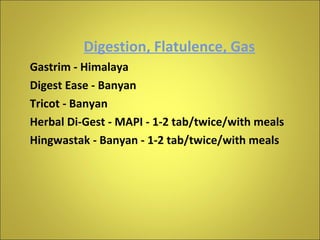
Digestion, Flatulence, Gas Gastrim - Himalaya Digest Ease - Banyan Tricot - Banyan Herbal Di-Gest - MAPI - 1-2 tab/twice/with meals Hingwastak - Banyan - 1-2 tab/twice/with meals
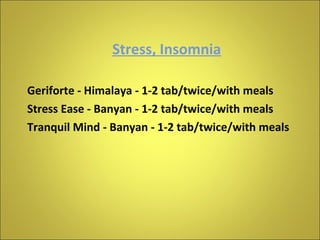
Stress, Insomnia Geriforte - Himalaya - 1-2 tab/twice/with meals Stress Ease - Banyan - 1-2 tab/twice/with meals Tranquil Mind - Banyan - 1-2 tab/twice/with meals
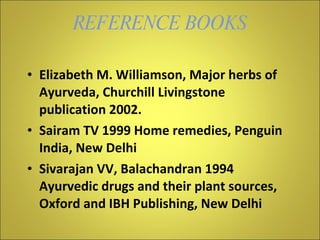
REFERENCE BOOKS Elizabeth M. Williamson, Major herbs of Ayurveda, Churchill Livingstone publication 2002. Sairam TV 1999 Home remedies, Penguin India, New Delhi Sivarajan VV, Balachandran 1994 Ayurvedic drugs and their plant sources, Oxford and IBH Publishing, New Delhi
Kapoor LD 1990 Handbook of Ayurvedic medicinal plants, CRC Press, Boca Raton Ministry of Health and Family Welfare 1989 Ayurvedic pharmacopoeia of India, Government of India, New Delhi Ross 1 1999 Medicinal plants of the World, Humana Press, Totowa, New Jersey
Rastogi RP, Mehrotra BN 1993 Compendium of Indian medicinal plants, PID, New Delhi Bharatiya Vidya Bhavan’s Swami Prakashananda Ayurveda Research Center 1992 Selected medicinal plants of India, Chemexcil, Mumbai Thakur RS, Puri HS, Husain A 1989 Major medicinal plants of India, CIMAP, Lucknow
Nadkarni AK 1976 Indian materia medica. Popular Prakashan Pvt. Ltd. Bombay Chopra RN et.al 1994 Indigenous drugs of India. Academic publishers, Calcutta Pandey GS (ed) 1998 Bhavaprakash Nighantu. Chaukhambha Bharati Academy, Gokul Bhawan, Varanasi

Ayurvedic Management of Respiratory Disorders

  • 1.
    RESPIRATORY DISEASES DR.Shekhar Annambhotla BAMS, MD (Ayurveda), CMT, RYT
  • 2.
    FACILITATOR Dr. ShekharAnnambhotla, B.A.M.S., M.D.(Ayurveda), R.Y.T. – 500, CMT Director & Founder Ojas, LLC Ayurveda Wellness Center 567 Thomas Street, Coopersburg, PA 18036 email: doctorshekhar@gmail.com Website: www.ojas.us
  • 3.
  • 4.
    “ Namāmi dhanvantarimādi dēvam surā surair vandita pāda padmam loke jara ruk bhaya mrutyu nāsham dātaramēsham vividoushadēnām” I bow and humbly request Lord Dhanvantari, who is the embodiment of perfect health -- respected by great seers and evil people -- to remove old age, disease, fear and death through His divine presence in all natural herbal medicines.
  • 5.
    Devi Saraswati Godof Education
  • 6.
    “ Saraswatinamastubhyam varade kāma roopini vidyārambham karishyāmi siddhirbhatatu mānasa” I offer deepest respect and great reverence to divine mother Saraswati, who fulfills my desires and provides perfection in my education.
  • 7.
  • 8.
    Pranavaha Srotas – Respiratory system Main locations – Nose, Trachea, Lungs Etiology of vitiation: Dust, pollen, polluted air, sun, cold weather, injury to the chest, excessive intake and exposure to cold substances, excessive exertion, suppression of natural urges, malnutrition, Ama, krimi (bacteria, parasites, fungi etc.)
  • 9.
    Vata imbalance – Dryness, roughness, pain in nose, throat and trachea; anemia, hoarseness of voice, aphonia (loss of speech); lightness, pain, cavitations, inflated with air of lungs, dilatation of bronchii, emphysema, pneumothorax
  • 10.
    Pitta imbalance – Foul discharge from nose, throat, trachea ulcerations, suppuration hemorrhage, burning sensation inflammation abscess formation in lungs cancer hemothorax
  • 11.
    Kapha imbalance – Excessive, thick, mucous secretions from nose, throat, trachea, obstruction, itching, edema, polyp, tumors disorders of smell consolidation of lungs, tumors, edema, and hydrothorax
  • 12.
    Important diseases ofthe Pranavaha Srotas – Nose, nasal passages – Common cold, rhinitis, nasal obstruction, nasal dryness, nasal ulcerations, nasal polyp, tumors, cancer, epistaxis Throat – Tonsillitis, enlarged uvula, inflammation of the throat, adenoids, tumors, cancer, diphtheria, pharyngitis, laryngitis, hoarseness, and aphasia Trachea, bronchi – Tracheal obstruction, trachiitis, bronchitis, bronchial asthma Lungs – Pneumonia, tuberculosis, abscess, pulmonary edema, embolism, corpulmonale, emphysema, cancer, whooping cough, dyspnea Pleurae – Pleurisy, hydrothorax, hemo-thorax, emphysema
  • 13.
    Respiratory disorders areconsidered “Swasa Roga” in Ayurveda Aggravated and vitiated Kapha-Vata accumulates in upper respiratory tract, lungs, sinuses, leading to several respiratory disorders In general, Kapha-Vata pacifying measures such as food, herbs, behavior help to alleviate respiratory problems
  • 14.
    Even though respiratorydisorders are of Kapha-Vata type, its revelations starts from the Stomach (Pitta location) The several srotas involved are: Pranavaha srotas - The channels that carry Prana,the breath or life-force
  • 15.
    Udakavaha srotas - The channels that carry water or regulate water metabolism Annavaha srotas - The channels that carry food Raktavaha srotas - The channels that carry blood
  • 16.
    ETIOLOGICAL FACTORS Foods- Aharaja Hetu Regimen - Viharaja Hetu Cause of other diseases - Nidanarthakara Hetu
  • 17.
    FOODS Dry, roughdiet Irregular diet Taking large quantities of foods very frequently Fasting Excessive intake of cold and/or hot foods Constipating foods, i.e.,tubers
  • 18.
    Intake of sesameoil Irritant foods Pungent, sour, salty, foods Beans, black gram (maasha) Starchy preparations Heavy foods Aquatic meat
  • 19.
    Marshy meat YogurtRaw milk Channel blocking foods Kapha increasing foods Unctuous, oily foods
  • 20.
    REGIMEN Exposure todust, smoke, wind, fire Residing in cold places Over exercise Excessive sexual intercourse Excessive evacuation Walking long distances Injury to the chest
  • 21.
    Lifting or carryingheavy weights Suppression of natural urges Injury to vital organs (marmas) Night vigil Excessive heat Day sleep
  • 22.
    Cause of otherdiseases Accumulation of gas Ama disorders Weakness Diarrhea Fever Vomiting
  • 23.
    Coryza Surgeryto the chest Upward movement of flatus Gastroenteritis Intestinal torpor Anemia
  • 24.
    Constipation Hemorrhagic disordersEdema Wasting Abdominal disorders
  • 25.
    Commonly Used AyurvedicHerbs Anti asthmatics & Broncholytics: Vasa - Adhatoda vasica Bramhi - Bacopa monniera Shallaki - Boswellia serrata Haridra - Curcuma longa Dugdhika - Euphorbia hirta
  • 26.
    Ashwattha -Ficus religiosa Tulasi - Ocimum sanctum Kutki - Picorrhiza kurroa Pippali - Piper longum Kantakari - Solanum xanthocarpum Atitussive: Shatavari - Asparagus racemosus
  • 27.
  • 28.
    Ayurvedic properties: Taste(Rasa) - Bitter, Astringent Quality (Guna) - Light, Dry Potency (Veerya) - Cooling Post digestive effect (Vipaka) - Pungent Dosha action - Pacifies Kapha, Pitta Part used - Leaves
  • 29.
    Bronchodilatory and antiasthmaticactivity: Vasicine showed bronchodilatory activity both in vitro and in vivo, the activity being comparable to that of theophlline. Gupta OP, et.al 1977 Pharmacological investigations of vasicine and vasicinone - the alkaloids of Adhatoda vasica. IJMR 66(4):680
  • 30.
    Vasicine, however, showedbronchodilatory activity in vitro but bronchoconstriction in vivo. The two alkaloids in combination had a more potent brochodilatory activity and the combination of vasicinone with aminophylline also had an additive effect Bhalla HL, et.al 1982 Preformulation studies III. Vasicinone, a brochodilatory alkaloid from Adhatoda vasica Nees (absorption, potency and toxicity studies). Drug Dev. Indian.Pharm 8(6):833
  • 31.
    Adhatoda vasica reducedovalbumin and: PAF-induced allergic reactions. A fraction containing the minor alkaloid vascinol and about 20% vasicine inhibited ovalabumin -induced allergic reactions by about 37% at a concentration of 5 mg. Mullar A. et. Al 1993 Chemistry and pharmacology of the antiasthmatic plants. Galpinia glauca, Adhatoda vasica, Picrorrizha kurroa. Planta Medica 59S:A586
  • 32.
  • 33.
    Ayurvedic properties: Taste(Rasa) - Bitter Qualities (Guna) - Light, Unctuous Potency (Veerya) - Ushna Post digestive effect - Pungent Dosha effect - Pacifies Kapha and Vata Part used - Leaves
  • 34.
    Effects - Nervetonic, diuretic, anti anxiety agent, cardiotonic, Beneficial in - Bronchial asthma Hoarseness of voice Epilepsy Insanity Intellect promoter Anti anxiety agent
  • 35.
    Bronchodilatory activity: Anethanol extract dilated the bronchial smooth muscles of anaesthetized rats, counteracting bronchoconstriction induced by carbachol. This property reduced expiratory pressure, resembling salbutamol rather than isoprenaline in manner. The action may be mediation through both adrenoceptor dependent and independent mechanisms. Dar A, et. Al 1999 Calcium antagonistic activity of Bacopa monniera on vascular and intestinal smooth muscles of rabbit and guinea pig. Journal of Ethnopharmacology 66 (2): 167
  • 36.
  • 37.
    Ayurvedic properties: Taste(Rasa) - Sweet, Bitter Quality (Guna) - Heavy, Unctuous Potency (Veerya) - Cooling Post digestive effect (Vipaka) - Sweet Dosha effect - Pacify Pitta and Vata and promotes Kapha
  • 38.
    Antitussive activity: Themethanolic extract of the root, at a dose of 200 and 400 mg/kg PO, showed significant antitussive activity in sulphur dioxide-induced cough in mice. The cough inhibition of 40% and 58.5%, respectively, was comparable to that of 10-20 mg/kg of codeine phosphate, where the inhibition observed was 36% and 55.4%, respectively. Mandal SC et.al 2000 Antitussive effect of Asparagus racemosus root against sulfur dioxide-induced cough in mice. Fitoterpaia 71(6):686
  • 39.
  • 40.
    Ayurvedic properties :Taste (Rasa) - Astringent, Bitter, Sweet Qualities (Guna) - Light, Dry Potency (Veerya) - Hot Post digestive effect (Vipaka) - Pungent Dosha action - Balances Kapha, Pitta Part used - Oleo-gum resin, bark
  • 41.
    Antiasthmatic activity: Ina double-blind, placebo-controlled study, 40 patients of both sexes in the age range 18-75 years, and with a mean duration of bronchial asthma of 9.58 years, were treated with a preparation of gum resin (300 mg thrice daily) for a period of 6 weeks. Seventy percent of patients should some improvement as evidenced by their disappearance of physical symptoms such as dyspnoea and number of attacks.
  • 42.
    There was animprovement in biochemical parameters including a decrease in eosinophil count and ESR. The control group of 40 patients were treated with lactose (300 mg thrice daily) for 6 weeks and of these, 27% showed some improvement. Gupta I, et.al 1998 Effects of Boswellia serrata gum resin in patients with bronchial asthma: the of a double-blind, placebo-controlled, 6 week clinical study. European Journal of Medical Research 3(11):511
  • 43.
  • 44.
  • 45.
    Ayurvedic properties :Taste (Rasa) - Pungent Qualities (Guna) - Light, Unctuous, Sharp Potency (Veerya) - Slight cold Post digestive effect (Vipaka) - Sweet Dosha action - Pacifies Kapha, Vata Part used - Fruit
  • 46.
    Antiasthmatic activity: Studieshave been carried out to validate the traditional claims of Ayurveda for antiasthmatic activity of piper longum. An extract of the fruits in milk reduced passive cutaneous anaphylaxis in rats and protected guinea pigs against antigen-induced bronchospasm. Kulashreshta VK et. al. 1969 A study of central stimulant effect of Piper longum, Indian Journal of Pharmacology 1(2):8 Kulashreshta VK et.al. 1971 Analysis of central stimulant activity of Piper longum. Journal of Research into Indian Medicine 6(1):17
  • 47.
  • 48.
    Ayurvedic properties: Taste(Rasa) - Bitter Quality (Guna) - Light, Dry Potency (Veerya) - Cold Post digestive effect - Pungent Dosha effect - Pacifies Kapha, Pitta Part used - dried root
  • 49.
    Antiasthmatic activity: P.kurroahas been studied extensively for its antiasthmatic activity. Kulkarni ED et. Al 1976 Studies of antiasthmatic potentials of P.kurroa in comparison with disodium chromoglycate. Aspects of Allergy and Applied Immunology 9:231 Rajaram D 1975 A preliminary clinical trail of P.kurroa in bronchial asthma. Indian Journal of Pharmacology 7:95
  • 50.
    The activity hasbeen attributed to compounds such as androsin and apocynin, which have been shown to inhibit allergen- and PAF-induced broncho constriction. Wagner H. 1994 New potent anti-asthmatic constituents from higher plants. Second International Symposium on Innovations in Pharmaceutical Sciences and Technology. Ahmedabad, Feb 25-27 Stuppner H. 1991 Antiasthmatic effects of P. kurroa: inhibition of allergen and PAF induced bronchial obstruction in guinea pigs by androsin, apocynin and structurally related compounds. Planta Medica 57(2):A-60
  • 51.
    The antiallergic andantianalphylactic activity of Picroliv has also been investigated in vitro and in vivo. A dose of 25 mg/kg inhibited passive anaphylaxis in mice and rats and protected mast cells from degranulation, but bronchospasm induced by histamine could not inhibited. Baruah CC et. Al 1988 Anti-allergic and antianalphylactic activity of Picroliv, as standardized iridoid glycoside fraction of Picrorrhiza kurroa. Pharmacology Research 38 (6):487
  • 52.
    A pilot studyof 10 patients with acute bronchial asthma given a dose of 160 mg powder twice daily produced evidence of objective and subjective improvement. Shah BK, et. Al 1977 Preliminary report of use of P. kurroa root in bronchial asthma. Journal of Postgraduate Medicine 23(3):118
  • 53.
    In another studyin 20 patients, the crude extract of P. kurroa roots reduced the frequency and severity of asthmatic attacks and the need for regular bronchodilators. Yegnanarayana R. et.al., Study of Picrorrhiza kurroa in cases of bronchial asthma. Bombay Hospital Journal 24(2):15
  • 54.
    ASHWATHA (Ficusreligiosa)
  • 55.
    Ayurvedic properties :Taste (Rasa) - Astringent Qualities (Guna) - Heavy, dry Potency (Veerya) - Cold Post digestive effect (Vipaka) - Pungent Dosha effect - Pacifies Kapha, Pitta Part used: Bark
  • 56.
    Parasympatholytic and antiasthmaticactivity: A 95% ethanolic extract of the bark relaxed the intestines of the rat, guinea pig, rabbit and dog and their uterus of the rat. It antagonised the spasmolytic effect of acetylcholine (Ach), histamine, barium chloride and serotonin, blocked the cardiovascular effects of Ach and protected guinea pigs against Ach and histamine induced asthma. Malhotra CL, et. Al. 1960 Parasympatholytic activity of Ficus religiosa. Indian Journal of Medical Research 48:734
  • 57.
    When tested onthe blood pressure of anaesthetised dog, it had vagolytic activity and antagonised Ach, but not histamine. The extract also relaxed the bronchial musculature and antagonised Ach induced spasm in tracheal chain of the dog. Malhotra CL. et.al. 1960 Effects of Ficus religiosa on smooth muscles. Indian Journal of Physiology and Pharmacology 4:130
  • 58.
    The dried, powderedinterior bark of Ficus religiosa has been suggested as a treatment for they symptoms of bronchial asthma in humans. Patel JR. et al. 2000 Compositions for treatment of asthma containing Ficus religiosa bark admixed with rice pudding. US Paten No. 6149914
  • 59.
  • 60.
    Ayurvedic properties: Taste(Rasa) - Bitter, pungent Qualities (Guna) - Light, dry Potency (Veerya) - Hot Post digestive effect (Vipaka) - Pungent Dosha action - Balances Tridosha Part used - Root powder
  • 61.
    Anti allergic activity: Antiallergic activity in curcuma extract has been reported. Yano S. et. Al. 1996 Proceedings of the 2nd International Congress on Phytomedicine, Munich, September 11-14.
  • 62.
    Antiasthmatic activity: Oraladministration of the volatile oil was found to be clinically effective in cases of bronchial asthma. Jain JP, et al 1990 A clinical trail of volatile oil of Curcuma longa Linn. (haridra) in cases of bronchial asthma (Tamak Swasa). Journal of Research in Ayurveda and Siddha 11(1-4): 20 A protective effect by curcumin (200 mg/kg for 7 days) on rat lung, against toxicity induced by cyclophosphamide, has been observed. Venkatesan N, et.al. 1995 Modulation of cyclophosphamide-induced early lung injury by curcumin, an anti-inflammatory antioxidant. Molecular and Cellular Biochemistry 142:79
  • 63.
    Ayurvedic properties: Taste(Rasa) - Sweet Qualities (Guna) - Unctuous Potency (Veerya) - Cold Post digestive effect (Vipaka) - Sweet Dosha effect - Pacifies Pitta Part used - Whole plant
  • 64.
    Anti asthmatic activity:The drug is reported to have a relaxation effect on the bronchial tubes and a depressant action on respiration. Chopra RN. Et. Al 1994. Indigenous drugs of India, Academic Publishers, Calcutta
  • 65.
  • 66.
    Ayurvedic properties: Taste(Rasa) - Pungent, Bitter Qualities (Guna) - Light, Dry Potency (Veerya) - Hot Post digestive effect (Vipaka) - Pungent Dosha action - Pacifies Kapha and Vata Part used - Leaves, seeds
  • 67.
    Anti asthmatic activity:A 50% hydro alcoholic extract and the volatile oil extracted from fresh leaves were evaluated against histamine and Ach induced pre-convulsive dyspnoea in pigs. Both the extract and the oil exhibited a significant dose-dependent anti-asthmatic activity, with the percentage protection shown by 200 mg/kg of ethanol extract of fresh leaves equivalent to 0.5 ml of volatile oil.
  • 68.
    The volatile constituentsof the fresh leaves were thought to be the main factor responsible for the activity. Singh S et. Al. 1991 Anti-asthmatic and anti-inflammatory activity of Ocimum sanctum, International Journal of Pharmacognosy 29(40):306
  • 69.
    Anti-stress activity ofOcimum Sanctum The plant Ocimum sanctum has been found to posses adaptogenic (anti-stress) properties when tested against a battery of tests in mice and rats. The drugs increased the physical endurance (increased survival time) of swimming mice, prevented stress induced ulcers in rats, protected mice and rats against carbon tetra chloride induced hepatotoxicity, prevented milk induced leucocytosis in mice.
  • 70.
    The result ofthe study indicated that O. sanctum induces a state of non-specific increased resistance against a variety of stress induced biological changes in animals. “ K.P. Bhargava et.al. Indian J. Medical Research March 1981 page 443-451”
  • 71.
  • 72.
    Ayurvedic properties :Taste (Rasa) - Pungent, bitter Qualities (Taste) - Light, sharp, dry Potency (Veerya) - Hot Post digestive effect (Vipaka) - Pungent Dosha action - Pacifies Kapha and Vata Part used - Whole plant
  • 73.
    Anti asthmatic andrespiratory activity : A whole plant extract of Solanum xanthocarpum produced a significant improvement in certain parameters of pulmonary functions in asthmatic subjects. Govindan S, et.al. 1999 A pilot study on the clinical efficacy of Solanum xanthocarpum and Solanum trilobatum in bronchial asthma. Journal of Ethnopharmacology 66 (2): 205
  • 74.
    Clinically the herbhas also proved to be useful in treating individuals with cough and bronchial asthma. Vector NP et.al. 1971 Solanum xanthocarpum (Kantakari) in chronic bronchitis, bronchial asthma and non-specific unproductive cough (an experimental and clinical co-relation). Journal of the Association of Physicians of India 19(10):741
  • 75.
    ALLERGIES Affect 37million people Ayurvedic Samprapti (pathogenesis), allergies are doshic reaction to specific allergens Spring, later summer very reactive
  • 76.
    Common allergens are-Germination of trees, grasses and ragweed, chemicals on rug, walls, dust, smoke, fire, sun, strong chemical smell Common complaints - Sneezing, itching, red eyes, swelling, obstruction of the nose, fever Allergic reaction leads to imbalance of either Vata, or Pitta or Kapha
  • 77.
    VATA ALLERGIES Signs& Symptoms Flatulence Gastric discomfort Intestinal colic Sudden wheezing
  • 78.
    Sneezing Headache TinnitusInsomnia Predominant in Winter & Autumn/Fall seasons
  • 79.
    Management Herbal compound:Ashwagandha (Withania somnifera) - 2 parts Bala (Sida cordifolia) - 1 part Vidari Kanda (Ipomoea digitata) - 1 part Yastimadhu (Glycyrrhiza glabra) - 1 part Haritaki (Terminalia chebula) - 1 part 1/4 teaspoon TID with warm water before meals
  • 80.
    For severe wheezing- 1/4 teaspoon ginger (Zingiber officinale) 1/4 teaspoon Yastimadhu (Glyceriza glabra) 1/4 teaspoon Pippali (Piper longum) 1 cup hot water 1 pinch salt 1/2 teaspoon Mahanarayana oil or plain sesame oil Panchakarma: Basti (Enema) - Dashamoola decoction
  • 81.
    PITTA ALLERGIES Signs& Symptoms Rash Itching, Hives Urticaria Allergic dermatitis Eczema Predominant in Summer season
  • 82.
    Management Blood cleansing:Equal portions of: Manjishta (Rubia cordifolia) - 3 parts Nimba (Azadirachta indica) - 1 part Turmeric (Curcuma longa) - 2 part Amalaki (Phyllanthus emblica) - 2 parts Guduchi (Tinospora cordifolia) - 1 part Beneficial for Allergic skin problems (dermatitis, eczema)
  • 83.
    Blood purification :Burdock tea - three times daily For excessive Pitta: Herbal compound : Avipattikara - 4 parts Shatavari (Asparagus racemosus) - 4 parts Guduchi (Tinospora cordifolia)- 2 parts Bhumyamalaki (Phyllanthus niruri) - 2parts 1/2 teaspoon powder with warm water before meals three times daily
  • 84.
    Dermotological problems - Dermatitis, eczema, hives, rash, urticaria Apply liberally Neem oil externally on the skin. Rose water for cooling effect on the skin Panchakarma: Raktamokshana (Blood letting / blood donation): Donate 1/2 pint or 100 cc blood to blood bank.
  • 85.
    Virechana (Purgationtherapy): 2 tablespoons Castor oil or Flax seed oil or Olive oil 1/4 teaspoon dry ginger powder 1 cup hot milk / soy milk / rice milk Bed time for 3 consecutive days
  • 86.
    KAPHA ALLERGIES Signs& Symptoms Hay Fever Colds Congestion Cough Sinus infection Asthma Predominant in Spring season
  • 87.
    Management Herbal compound: Sitopaladi - 4 parts Tulasi (Ocimum sanctum) - 2 parts Yastimadhu (Glycyrrhiza glabra) - 2 parts Kantakari (Solanum xanthocarpum) - 1part Vasa (Adhothoda vasica) - 1 parts Bibhitaki (Terminalia belerica) - 1part 1/2 teaspoon three times daily with honey before meals Upper respiratory problems - Cough, cold, congestion, asthma, hay fever
  • 88.
    Panchakarma: Vamana (Vomitingtherapy) Licorice tea with rock salt, drink full stomach Rub or irritate the back of the tongue to induce vomiting reflux Can be done in Kapha period (6:00 am - 10:00 am) In west it is not well accepted, where in India well practiced. Avoid in people - history of heart problems, surgeries, high blood pressure, low blood pressure, hiatal hernia, inguinal hernia, pregnancy
  • 89.
    Tri-dosha Allergies Triphala- Combination of three fruits Haritaki - Balances Vata Amalaki - Balances Pitta Bibhitaki - Balances Kapha
  • 90.
    Dietary Regimen Vataallergy - Vata pacifying foods Pitta allergy - Pitta pacifying foods Kapha allergy - Kapha pacifying foods
  • 91.
    Viruddha Ahara (Contradictory/Incompatible foods) Avoid combination of: Milk with - Yogurt, fish, sour fruits, bread with yeast Meat, Poultry with Diary products Honey & Ghee in equal proportions Corn with dates, raisins, bananas Nightshades (potato, tomato, eggplant) with yogurt, milk, melon, cucumber Fruits, Melons with Starches, Grains e.g.: banana milk shakes, fruit smoothies etc.
  • 92.
    Avoid causative factors:Common allergens - pet hair, pollen, mold, dust, smoke, fire, sun etc., Synthetic fibers - polyester, rayon Arrest Allergens: Nasal drops - Ghee / Sesame oil Application of neem oil on the skin
  • 93.
    Breathing exercises SukhaPranayama - Alternative nostril breathing - hay fever, wheezing, sneezing Bhastrika Pranayama - Congestion Ujjayi Pranayama - Improve immunity
  • 94.
    Yoga Postures SuryaNamaskar (Sun salutations) - Kapha, Vata problems Chandra Namaskar (Moon salutations) - Pitta problems Stress Management Meditation
  • 95.
    COMMON COLD, FLUKapha - Vata disorder Predisposing seasons Winter, Spring Signs & Symptoms Runny nose, cough, congestion, headache, body aches, loss of appetite, poor digestion, chills, occasional fever
  • 96.
    Management Herbal compound:Dry ginger powder - 1 part Cinnamon - 1 part Amalaki - 1 part Steep 1 teaspoon in 1 cup of hot water for about 10 minutes, strain, mix in 1 teaspoon honey, drink several times a day
  • 97.
    For enhancing digestion:Fennel seed powder - 1 part Natural sugar - 1 part 2-3 times daily with warm water before meals Nasal decongestant tea: Turmeric 1 part Ginger - 2 part Cinnamon - 3 parts Cardamom - 1 pinch Make tea with honey and drink several times a day.
  • 98.
    Decongestant inhalation: 1teaspoon ginger or 10 drops eucalyptus oil in 1 a pint of hot boiling water. Inhale steam Herbal compound: Sitopaladi - 1 part Mahasudarshan choorna - 1 part Amalaki - 2 parts 1/2 teaspoon powder with warm water before meals, three times daily
  • 99.
    Septilin (HimalayaUSA) inPharyngitis: A double blind, placebo controlled clinical trial was conducted in 50 patients with chronic non-specific pharyngitis as assess the efficacy of Septilin in comparison to Actifed, an antihistamine-decongestant formula. Based on the clinical assessment and patient’s score at the end of three months. Septilin was found effective in 68% of the cases compared to Actifed, which was effective in 40% of the cases. Septilin was well tolerated and no side effects were observed. Nehru V. Septilin Versus Actifed in Chronic Non-Specific Pharyngitis. Ind.Pract.2001: 54(7):501-505
  • 100.
    Nasal drops: Liquidghee (clarified butter) 3- 4 drops in each nostril for lubrication, relieving irritation, sneezing Sipping hot water several times a day helps to remove toxins Completely avoid dairy products Take sufficient rest, relaxation
  • 101.
    Pranayama: Breathing exercises:Bhastrica Alternative nostril breathing Mild exercises Sun salutations Inverted & Forward bend postures - Paschimothana Asana (Shoulder stand) Hasta Pada Asana (Hands leg pose) Removes postnasal drip, helps to drain mucous from the nose
  • 102.
    SINUSITIS Signs &Symptoms: Aggravated Kapha blocks sinuses, leads to: Sinus headaches Snoring Difficulty breathing Ear infections Sleep apnea Post nasal drip Brain infection Meningitis
  • 103.
    MANAGEMENT Herbal Compound:Sitopaladi - 4 parts Mahasudharshan - 3 parts Trikatu - 2 parts Tulasi - 2 parts Take 1/2 teaspoon of mixture with warm water three times daily, before meals, for 3 months
  • 104.
    Herbal Decongestant: Freshginger juice - 1 teaspoon Lemon juice - 2 teaspoons Honey - 3 teaspoons
  • 105.
    Herbal Antibiotic: Talisadi- 3 parts Haridra (Curcuma longa) - 2 parts Pippali - 1 part Yastimadhu - 2 parts 1/2 teaspoon with warm water three times daily, before meals
  • 106.
    Sinus Headache: Externalapplication of 1/2 teaspoon cinnamon with enough water to make a paste, twice daily Sinus congestion & Pain: Fresh garlic juice nasal drops - 2 drops in each nostril twice daily in the morning & evening.
  • 107.
    Avoid: Dairy products- cheese, yogurt, ice cream Ice cold drinks Leftover foods Exposure to cold weather Smoking cigarettes
  • 108.
    Favor: Instill 2drops of melted Ghee in each nostril Pungent, bitter, astringent tastes Sipping warm/hot water throughout the day Light dinner
  • 109.
    BRONCHIAL ASTHMA Causativefactors: Allergens - pollen, dust, animal hair, various foods Increase of Kapha in entire body Cold Congestion Cough Hay fever
  • 110.
    Increased Kapha instomach, moves to lungs, trachea, and bronchi, thereby blocking the natural flow of air, creating spasms in the bronchial tree and resulting in bronchial asthma and wheezing.
  • 111.
    Ayurvedic management forbronchial asthma is to move the excessive Kapha located in the lungs and bronchi back to the stomach, from which it can be easily eliminated through Vamana and Virechana programs.
  • 112.
    Management Herbal Compounds: For excessive mucus in the mouth, throat, stomach: Ginger powder - 1 part Yastimadhu - 1 part 1/2 teaspoon with warm water twice daily, before meals
  • 113.
    For Excessive wheezing,difficulty in breathing: Recipe 1: - Trikatu - 1 part - Shallaki - 1 part - Haridra - 1 part - Yastimadhu - 1 part - Cinnamon - 4 parts 1/2 teaspoon powder with 1 teaspoon honey twice daily, before meals
  • 114.
    Recipe 2: -Onion juice - 1 part - Honey - 2 parts Take 1 teaspoon 3-4 times daily
  • 115.
    Recipe 3: Shatavari- 2 parts Kantakari - 2 parts Dugdhika - 2 parts Bramhi - 2 parts Tulsi - 2 parts 1/2 teaspoon powder with honey 3-4 times daily
  • 116.
    Acute Dyspnoea :Sitopaladi - 4 parts Pippali - 1 part Kutki - 1 part Vasa - 4 parts 1/2 teaspoon mixed with honey and 1/2 cup spinach juice 3-4 times daily, before meals
  • 117.
    External application onchest: Massaging warm mustard oil with pinch of salt into chest Broncho-dilation effect, relieves congestion Kapha reducing tea: Mustard seed powder - 1 part Pippali powder - 1 part 1/4 teaspoon with 1/2 teaspoon honey and 1 cup warm water 3-4 times daily
  • 118.
    Home Remedy :Organic red apple - 1 Cloves - 10 Insert cloves into apple and bake for 10-15 minutes, until it becomes soft and peel the skin of the apples and mash well, take 2 tablespoons 2-3 times daily after meals. Helps to remove excess Kapha in lungs and stomach.
  • 119.
    Respicare (HimalayaUSA) Aplacebo-controlled clinical trial was conducted in patients with chronic asthma using E-721B, a polyherbal formulation. E-721B was administered at a dose of 2 tablets, twice daily, for 12 weeks. A gradual reduction in severity of cough, a dyspnoea, wheezing and rhonchi and relief from bronchospasm was seen in a majority of patients after treatment with E-721 B E-721B (Respicare) contains Albizzia lebbeck, Tylophora indica, Glycyrrhiza glabra, Solanum xanthocarpum and Rhus succedanea.
  • 120.
    Albezzia lebbeck possesmast cell stabilizing properties Glycyrrhiza glabra effective in chronic bronchitis, chronic cough, antihistamnic and expectorant properties Solanum xanthocarpum has anti-inflammatory activity, useful in inhibiting bronchial hyperactivity and mucosal oedema. Tylophora indica has anti-allergic activity along with membrane stabilizing and bronchodilator effects. Rhus succedanea has been used in the treatment of cough, fever and chronic asthma S.C. Agarwal, R.H. Singh, Indian Journal of Clinical Practice Vol.12 N.5, October 2001
  • 121.
    Avoid : Dairyproducts - cheese, milk etc. Kapha aggravating foods - salt, cucumber, tuna fish Junk foods with lots of sugar Saturated fats, trans-fatty acids Consumption of meats, margarine, fried foods, commercial popcorn, commercial baked goods
  • 122.
    Unsaturated vegetable oils- corn, safflower Smoked, cured, barbecued, and grilled foods Mushrooms, peanuts, walnuts, other nuts, yeast Dusty books, moldy basements, some chemicals.
  • 123.
    YOGA ASANAS FORRESPIRATORY SYSTEM
  • 124.
    General :  Shiva Asana (Relaxing pose)  Bhujanga Asana (Cobra pose)  Shalabha Asana (Grasshopper pose)  Sarvanga Asana (Shoulder stand pose)
  • 125.
    Vital capacity oflungs :  Bhujanga Asana (Cobra pose)  Shalabha Asana (Grasshopper pose)
  • 126.
    Asthma, Bronchitis, Allergies,Hay fever : Sarvanga Asana (Shoulder stand pose) Shalabha Asana (Grasshopper pose) Bhujanga Asana (Cobra) Vajra Asana (Diamond) Throat, Tonsils : Bhujanga Asana (Cobra pose)
  • 127.
    Quick reference AyurvedicMedicines for Common Respiratory Disorders Bronchial Asthma RespiCare - Himalaya - 1-2 tablet/twice daily Lung Formula - Banyan - 1-2 tablet/twice daily Protection Plus Respiratory system - MAPI Nasya oil - Banyan - 2-3 drops in each nostril
  • 128.
    Constipation Triphala -Banyan - 2 tab / bedtime Vegelax - Himalaya - 2 tab / bedtime Elim-Tox - MAPI - 2 tab / bedtime Herbal Cleanse - MAPI / 2 tab / bedtime
  • 129.
    Immunity ImmuneCare /Jr - Himalaya - 1-2 tab with meals/twice Bio-Immune - MAPI Immune Support - Banyan Chavanprash - Banyan
  • 130.
    Allergies, Hay Fever,Common cold Flu Season Defense - MAPI Septilin - Himalaya Sniffle Free - MAPI Aller-Tabs - MAPI
  • 131.
    Sinusitis Protection PlusSinuses - MAPI Septilin - Himalaya
  • 132.
    Cough, Pharyngitis Koflet- Himalaya - 1-2 lozenges/thrice daily Throat Ease - MAPI - 1-2 lozenges/thrice daily Septilin - Himalaya - 1-2 tablet/twice daily
  • 133.
    Digestion, Flatulence, GasGastrim - Himalaya Digest Ease - Banyan Tricot - Banyan Herbal Di-Gest - MAPI - 1-2 tab/twice/with meals Hingwastak - Banyan - 1-2 tab/twice/with meals
  • 134.
    Stress, Insomnia Geriforte- Himalaya - 1-2 tab/twice/with meals Stress Ease - Banyan - 1-2 tab/twice/with meals Tranquil Mind - Banyan - 1-2 tab/twice/with meals
  • 135.
    REFERENCE BOOKS ElizabethM. Williamson, Major herbs of Ayurveda, Churchill Livingstone publication 2002. Sairam TV 1999 Home remedies, Penguin India, New Delhi Sivarajan VV, Balachandran 1994 Ayurvedic drugs and their plant sources, Oxford and IBH Publishing, New Delhi
  • 136.
    Kapoor LD 1990Handbook of Ayurvedic medicinal plants, CRC Press, Boca Raton Ministry of Health and Family Welfare 1989 Ayurvedic pharmacopoeia of India, Government of India, New Delhi Ross 1 1999 Medicinal plants of the World, Humana Press, Totowa, New Jersey
  • 137.
    Rastogi RP, MehrotraBN 1993 Compendium of Indian medicinal plants, PID, New Delhi Bharatiya Vidya Bhavan’s Swami Prakashananda Ayurveda Research Center 1992 Selected medicinal plants of India, Chemexcil, Mumbai Thakur RS, Puri HS, Husain A 1989 Major medicinal plants of India, CIMAP, Lucknow
  • 138.
    Nadkarni AK 1976Indian materia medica. Popular Prakashan Pvt. Ltd. Bombay Chopra RN et.al 1994 Indigenous drugs of India. Academic publishers, Calcutta Pandey GS (ed) 1998 Bhavaprakash Nighantu. Chaukhambha Bharati Academy, Gokul Bhawan, Varanasi