Resources:
Associate Program Material: Final Project Overview and
Timeline, Associate Program Material: Final Project Case
Studies
Associate Level Material
Final Project Case Studies
Case Study One
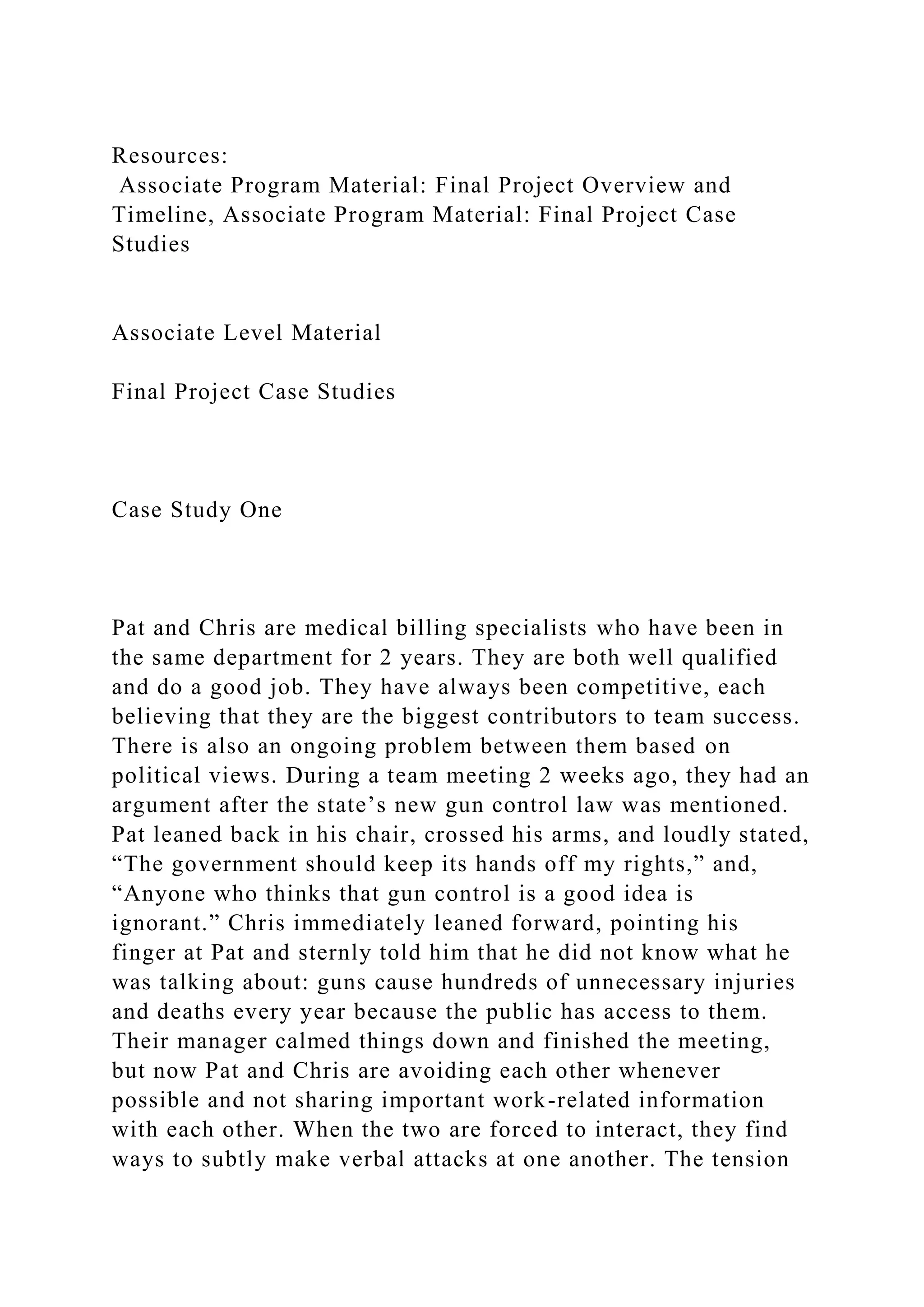
Pat and Chris are medical billing specialists who have been in
the same department for 2 years. They are both well qualified
and do a good job. They have always been competitive, each
believing that they are the biggest contributors to team success.
There is also an ongoing problem between them based on
political views. During a team meeting 2 weeks ago, they had an
argument after the state’s new gun control law was mentioned.
Pat leaned back in his chair, crossed his arms, and loudly stated,
“The government should keep its hands off my rights,” and,
“Anyone who thinks that gun control is a good idea is
ignorant.” Chris immediately leaned forward, pointing his
finger at Pat and sternly told him that he did not know what he
was talking about: guns cause hundreds of unnecessary injuries
and deaths every year because the public has access to them.
Their manager calmed things down and finished the meeting,
but now Pat and Chris are avoiding each other whenever
possible and not sharing important work-related information
with each other. When the two are forced to interact, they find
ways to subtly make verbal attacks at one another. The tension
between them has spread, the entire team feels stressed because
of the situation, and production has slowed.
Case Study Two
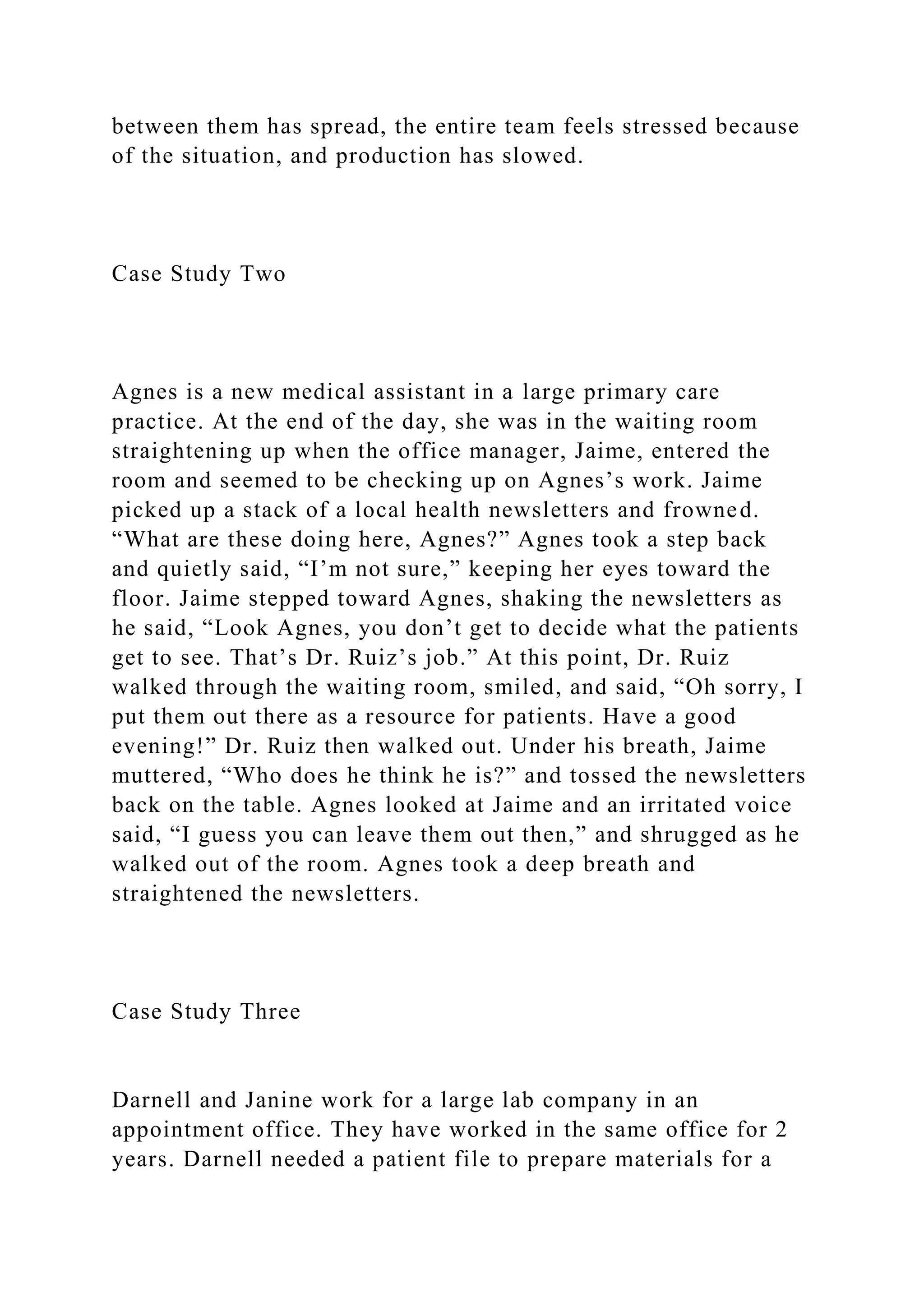
Agnes is a new medical assistant in a large primary care
practice. At the end of the day, she was in the waiting room
straightening up when the office manager, Jaime, entered the
room and seemed to be checking up on Agnes’s work. Jaime
picked up a stack of a local health newsletters and frowned.
“What are these doing here, Agnes?” Agnes took a step back
and quietly said, “I’m not sure,” keeping her eyes toward the
floor. Jaime stepped toward Agnes, shaking the newsletters as
he said, “Look Agnes, you don’t get to decide what the patients
get to see. That’s Dr. Ruiz’s job.” At this point, Dr. Ruiz
walked through the waiting room, smiled, and said, “Oh sorry, I
put them out there as a resource for patients. Have a good
evening!” Dr. Ruiz then walked out. Under his breath, Jaime
muttered, “Who does he think he is?” and tossed the newsletters
back on the table. Agnes looked at Jaime and an irritated voice
said, “I guess you can leave them out then,” and shrugged as he
walked out of the room. Agnes took a deep breath and
straightened the newsletters.
Case Study Three
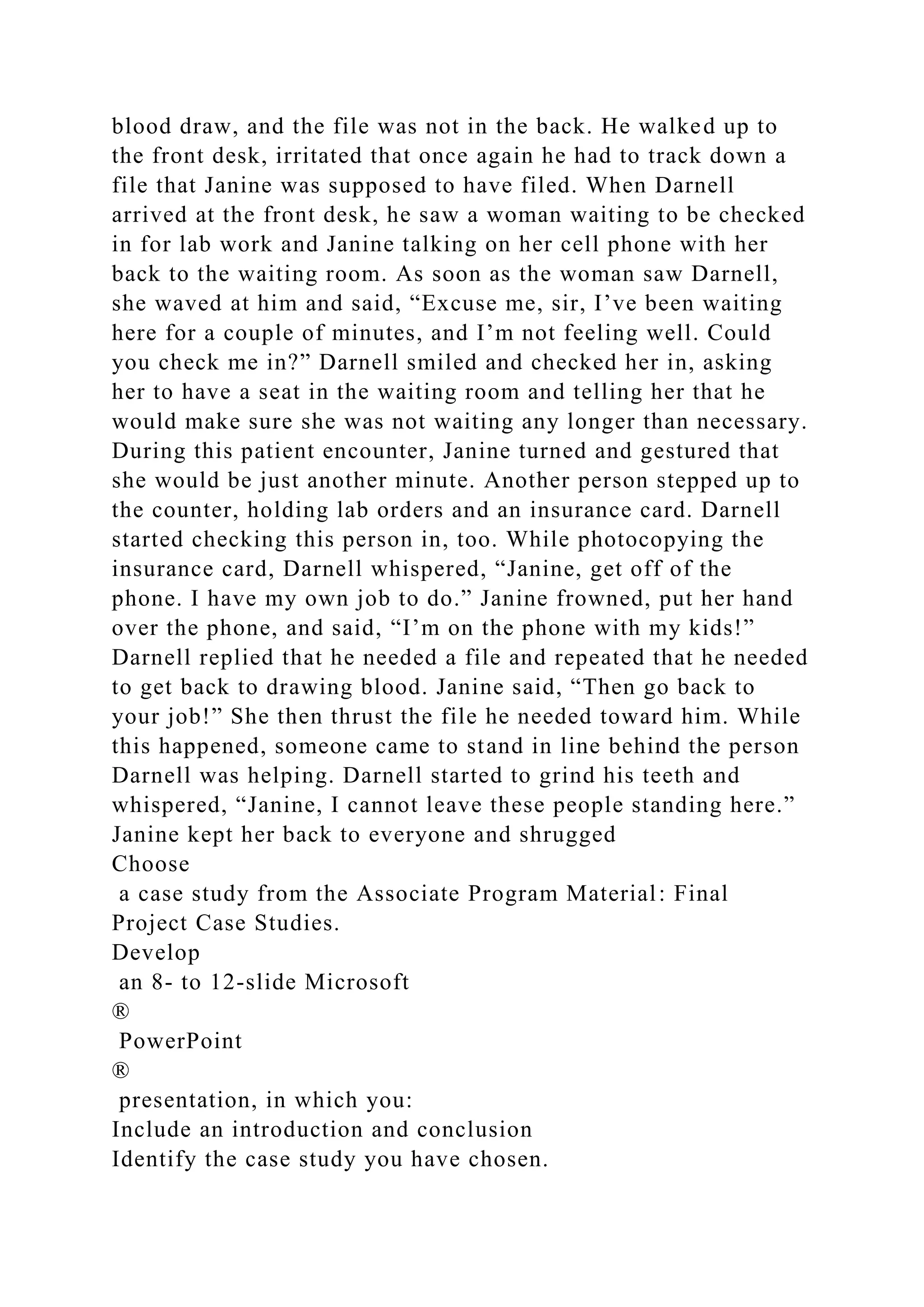
Darnell and Janine work for a large lab company in an
appointment office. They have worked in the same office for 2
years. Darnell needed a patient file to prepare materials for a
blood draw, and the file was not in the back. He walked up to
the front desk, irritated that once again he had to track down a
file that Janine was supposed to have filed. When Darnell
arrived at the front desk, he saw a woman waiting to be checked
in for lab work and Janine talking on her cell phone with her
back to the waiting room. As soon as the woman saw Darnell,
she waved at him and said, “Excuse me, sir, I’ve been waiting
here for a couple of minutes, and I’m not feeling well. Could
you check me in?” Darnell smiled and checked her in, asking
her to have a seat in the waiting room and telling her that he
would make sure she was not waiting any longer than necessary.
During this patient encounter, Janine turned and gestured that
she would be just another minute. Another person stepped up to
the counter, holding lab orders and an insurance card. Darnell
started checking this person in, too. While photocopying the
insurance card, Darnell whispered, “Janine, get off of the
phone. I have my own job to do.” Janine frowned, put her hand
over the phone, and said, “I’m on the phone with my kids!”
Darnell replied that he needed a file and repeated that he needed
to get back to drawing blood. Janine said, “Then go back to
your job!” She then thrust the file he needed toward him. While
this happened, someone came to stand in line behind the person
Darnell was helping. Darnell started to grind his teeth and
whispered, “Janine, I cannot leave these people standing here.”
Janine kept her back to everyone and shrugged
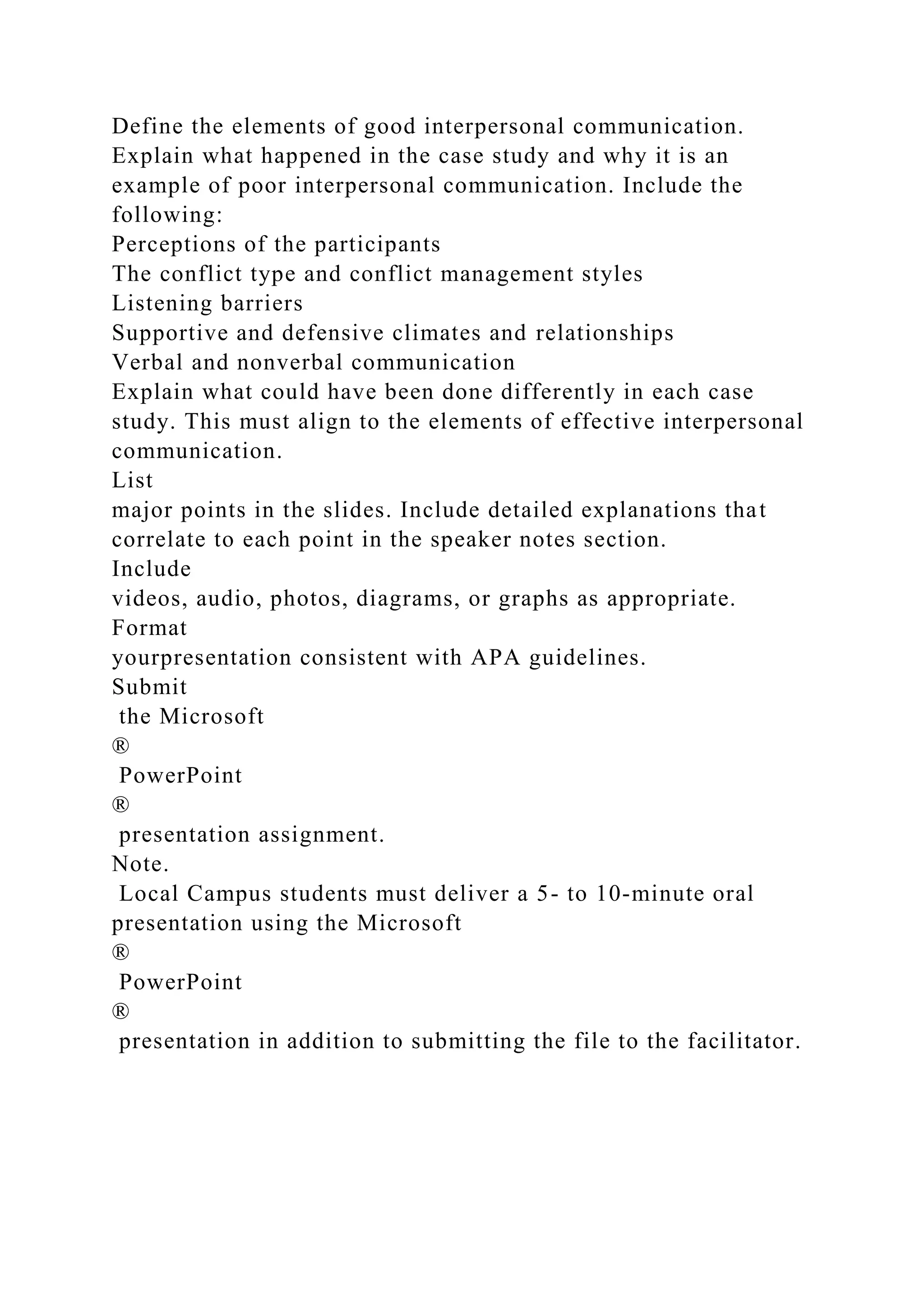
Choose
a case study from the Associate Program Material: Final
Project Case Studies.
Develop
an 8- to 12-slide Microsoft
®
PowerPoint
®
presentation, in which you:
Include an introduction and conclusion
Identify the case study you have chosen.
Define the elements of good interpersonal communication.
Explain what happened in the case study and why it is an
example of poor interpersonal communication. Include the
following:
Perceptions of the participants
The conflict type and conflict management styles
Listening barriers
Supportive and defensive climates and relationships
Verbal and nonverbal communication
Explain what could have been done differently in each case
study. This must align to the elements of effective interpersonal
communication.
List
major points in the slides. Include detailed explanations that
correlate to each point in the speaker notes section.
Include
videos, audio, photos, diagrams, or graphs as appropriate.
Format
yourpresentation consistent with APA guidelines.
Submit
the Microsoft
®
PowerPoint
®
presentation assignment.
Note.
Local Campus students must deliver a 5- to 10-minute oral
presentation using the Microsoft
®
PowerPoint
®
presentation in addition to submitting the file to the facilitator.
Resources Associate Program Material Final Project Overview and .docx

Resources Associate Program Material Final Project Overview and .docx

  • 1.
    Resources: Associate Program Material:Final Project Overview and Timeline, Associate Program Material: Final Project Case Studies Associate Level Material Final Project Case Studies Case Study One Pat and Chris are medical billing specialists who have been in the same department for 2 years. They are both well qualified and do a good job. They have always been competitive, each believing that they are the biggest contributors to team success. There is also an ongoing problem between them based on political views. During a team meeting 2 weeks ago, they had an argument after the state’s new gun control law was mentioned. Pat leaned back in his chair, crossed his arms, and loudly stated, “The government should keep its hands off my rights,” and, “Anyone who thinks that gun control is a good idea is ignorant.” Chris immediately leaned forward, pointing his finger at Pat and sternly told him that he did not know what he was talking about: guns cause hundreds of unnecessary injuries and deaths every year because the public has access to them. Their manager calmed things down and finished the meeting, but now Pat and Chris are avoiding each other whenever possible and not sharing important work-related information with each other. When the two are forced to interact, they find ways to subtly make verbal attacks at one another. The tension
  • 2.
    between them hasspread, the entire team feels stressed because of the situation, and production has slowed. Case Study Two Agnes is a new medical assistant in a large primary care practice. At the end of the day, she was in the waiting room straightening up when the office manager, Jaime, entered the room and seemed to be checking up on Agnes’s work. Jaime picked up a stack of a local health newsletters and frowned. “What are these doing here, Agnes?” Agnes took a step back and quietly said, “I’m not sure,” keeping her eyes toward the floor. Jaime stepped toward Agnes, shaking the newsletters as he said, “Look Agnes, you don’t get to decide what the patients get to see. That’s Dr. Ruiz’s job.” At this point, Dr. Ruiz walked through the waiting room, smiled, and said, “Oh sorry, I put them out there as a resource for patients. Have a good evening!” Dr. Ruiz then walked out. Under his breath, Jaime muttered, “Who does he think he is?” and tossed the newsletters back on the table. Agnes looked at Jaime and an irritated voice said, “I guess you can leave them out then,” and shrugged as he walked out of the room. Agnes took a deep breath and straightened the newsletters. Case Study Three Darnell and Janine work for a large lab company in an appointment office. They have worked in the same office for 2 years. Darnell needed a patient file to prepare materials for a
  • 3.
    blood draw, andthe file was not in the back. He walked up to the front desk, irritated that once again he had to track down a file that Janine was supposed to have filed. When Darnell arrived at the front desk, he saw a woman waiting to be checked in for lab work and Janine talking on her cell phone with her back to the waiting room. As soon as the woman saw Darnell, she waved at him and said, “Excuse me, sir, I’ve been waiting here for a couple of minutes, and I’m not feeling well. Could you check me in?” Darnell smiled and checked her in, asking her to have a seat in the waiting room and telling her that he would make sure she was not waiting any longer than necessary. During this patient encounter, Janine turned and gestured that she would be just another minute. Another person stepped up to the counter, holding lab orders and an insurance card. Darnell started checking this person in, too. While photocopying the insurance card, Darnell whispered, “Janine, get off of the phone. I have my own job to do.” Janine frowned, put her hand over the phone, and said, “I’m on the phone with my kids!” Darnell replied that he needed a file and repeated that he needed to get back to drawing blood. Janine said, “Then go back to your job!” She then thrust the file he needed toward him. While this happened, someone came to stand in line behind the person Darnell was helping. Darnell started to grind his teeth and whispered, “Janine, I cannot leave these people standing here.” Janine kept her back to everyone and shrugged Choose a case study from the Associate Program Material: Final Project Case Studies. Develop an 8- to 12-slide Microsoft ® PowerPoint ® presentation, in which you: Include an introduction and conclusion Identify the case study you have chosen.
  • 4.
    Define the elementsof good interpersonal communication. Explain what happened in the case study and why it is an example of poor interpersonal communication. Include the following: Perceptions of the participants The conflict type and conflict management styles Listening barriers Supportive and defensive climates and relationships Verbal and nonverbal communication Explain what could have been done differently in each case study. This must align to the elements of effective interpersonal communication. List major points in the slides. Include detailed explanations that correlate to each point in the speaker notes section. Include videos, audio, photos, diagrams, or graphs as appropriate. Format yourpresentation consistent with APA guidelines. Submit the Microsoft ® PowerPoint ® presentation assignment. Note. Local Campus students must deliver a 5- to 10-minute oral presentation using the Microsoft ® PowerPoint ® presentation in addition to submitting the file to the facilitator.