Environmental Impact, Illegal
Dumps in Urban and Rural
Areas
B y : A l e j a n d r a M a r i e D e J e s ú s S o t o
R I S E P r o g r a m ( s u m m e r b r i d g e )
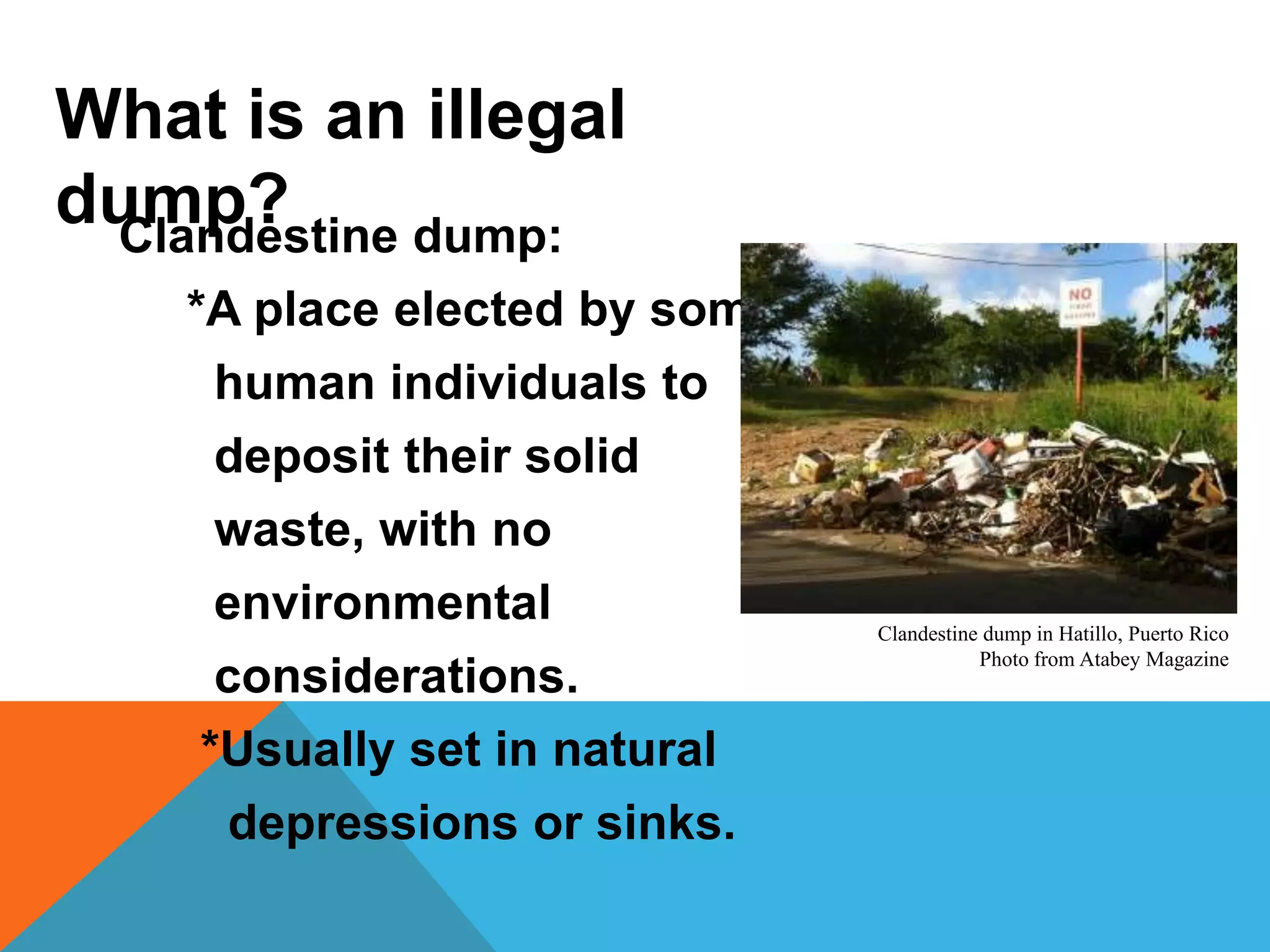
Clandestine dump:
*A place elected by some
human individuals to
deposit their solid
waste, with no
environmental
considerations.
*Usually set in natural
depressions or sinks.
Clandestine dump in Hatillo, Puerto Rico
Photo from Atabey Magazine
What is an illegal
dump?
• Serious source of environmental
pollution
• Diseases (contamination is related
with our health)
-Respiratory infections
-Intestinal infections
-Dengue fever
-Conjunctivitis
--Many of the diseases are transmitted by organisms such as flies, mosquitoes, rats
and cockroaches
Image from
http://salutarismedicalcenter.blogspot.com
• Puerto Rico faces the
threat of illegal dumps
that proliferate due to:
--the large amount of
waste
generated
• According to statements
made at the Eastern
Regional Committee of
the House of
Representatives.
Clandestine dump in Culebra
Photo from Atabey Magazine
What happens to illegal
dumps
It was indicated that there is a
population density of 1,712
inhabitants near by square miles
that produce about 3.91 pounds of
solid waste per day in Puerto Rico.
Table from http://www.suagm.edu/une/pdf/ciencias/desperdiciossolidos.pdf
Total waste disposal 69,211 tons per week
Total waste disposal 9, 860 tons per day
Disposal of waste per
person
3.91 pounds per day
Total waste disposal per
person
0.94m2 per person
• The illegal dumps pollute the
environment and cause disease
• The Natural and Environmental
Resources Department, Environmental
Protect Agency, in Puerto Rico, has no
records or studies of these places,
personal communication.**
**Mrs. Frances Segarra “Area de contaminación de terrenos”, Natural Resources
Department
There is some information in municipal “Obras públicas”, Cayey
Problem (Why)
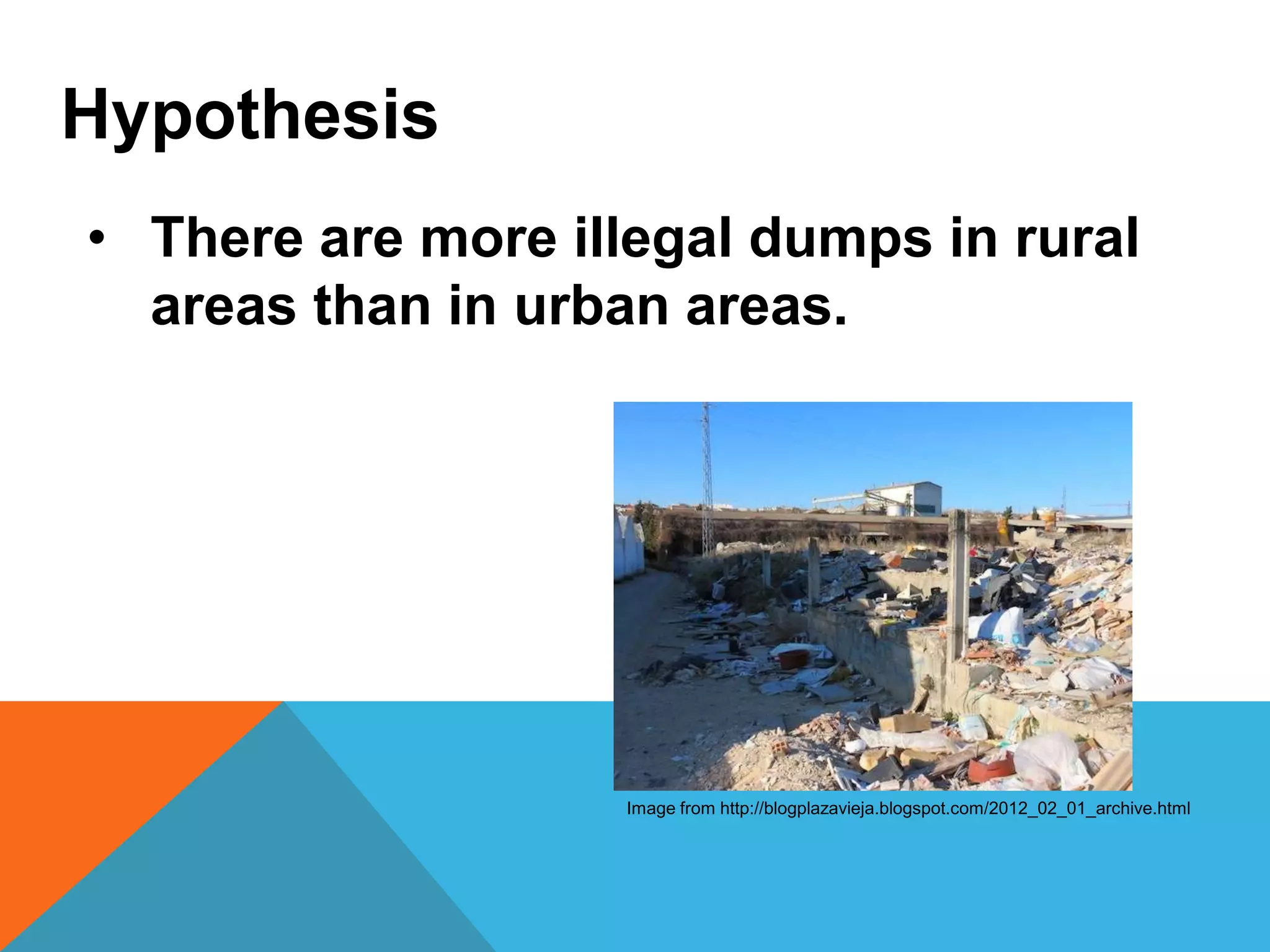
• There are more illegal dumps in rural
areas than in urban areas.
Image from http://blogplazavieja.blogspot.com/2012_02_01_archive.html
Hypothesis
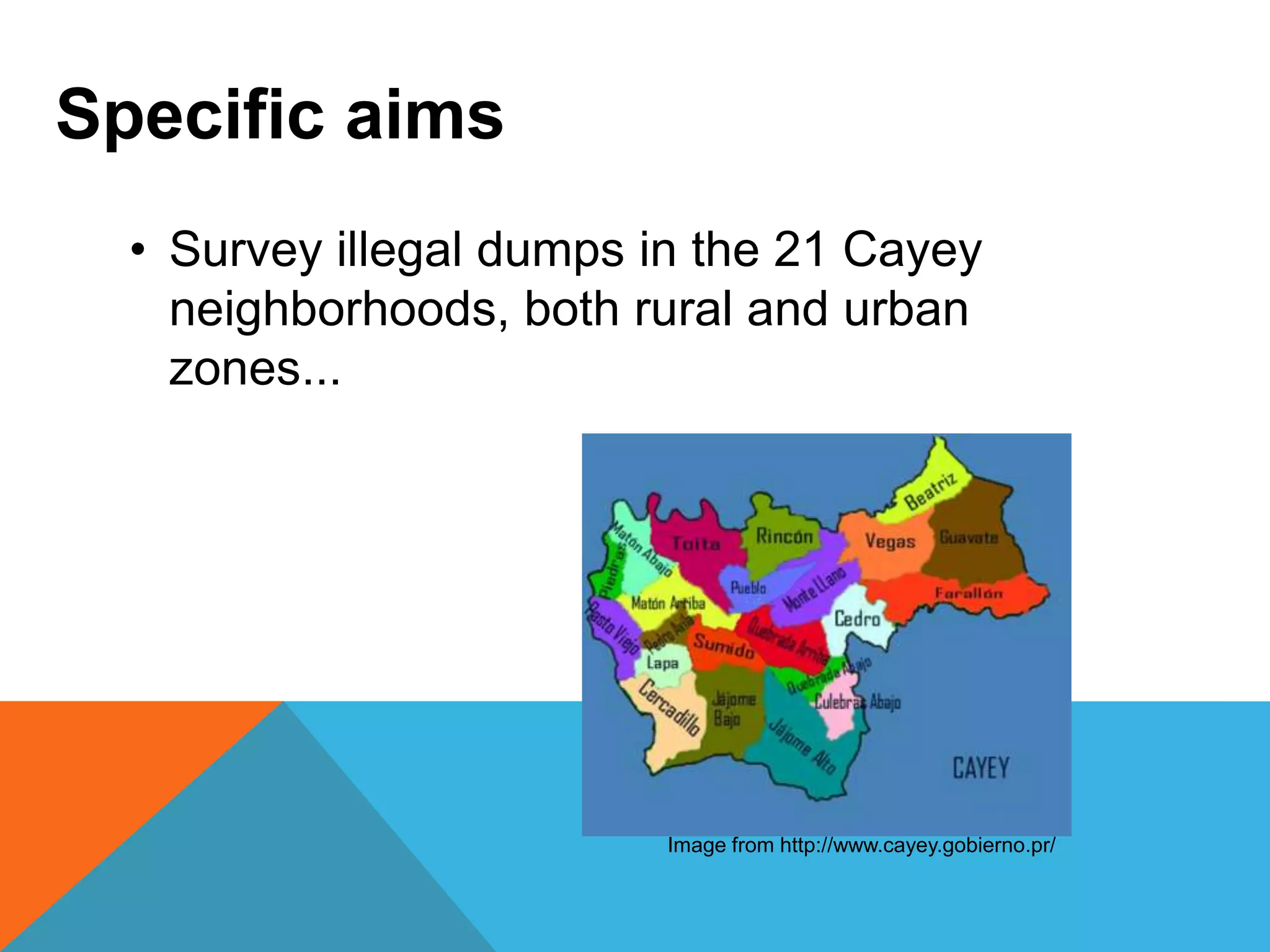
• Survey illegal dumps in the 21 Cayey
neighborhoods, both rural and urban
zones...
Image from http://www.cayey.gobierno.pr/
Specific aims
• Locate illegal dumps in the selected areas
 with cooperation of: “Area de control y planificación de
terrenos”, “Planificación y obras públicas” (Cayey
agencies)*
 through community leaders
• Annotate the site according to their geographical position.
• Investigate: How long has the field set?
• Make a list of the trash and debris found at the dump and
classify each one (organic, inorganic, others).
• Measure the space occupied by the field (m2).
• Account for the population of the area near the clandestine
dump using the last census of the United States (see online)
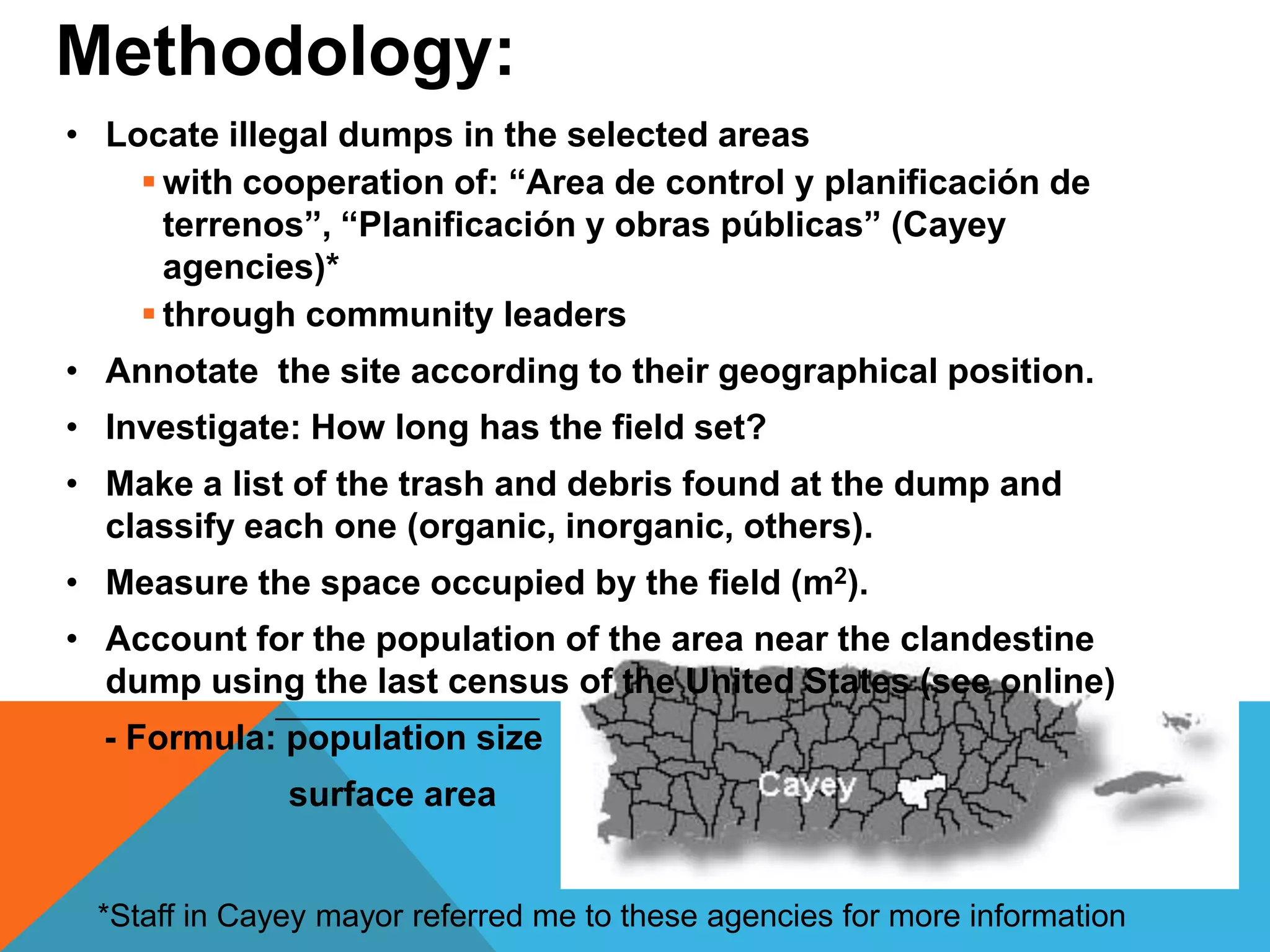
- Formula: population size
surface area
Methodology:
*Staff in Cayey mayor referred me to these agencies for more information
• The information
collected:
-- will be graphed and
tabulated, then will be
scanned.
-- will be available on a
website that I will
create.
-- may be included on
a future environmental
research (information
on
the previous slide)
Example 1
Neighborhood
Example 2
Image
http://civil.engr.siu.edu/301I_Ray/he_sw.htm
Amountofillegaldumps
• Comparing the amount of illegal
dumps in urban and rural areas.
-- Using graphs and tables
• Make a report of the data found, to
make this information resource for
other environmental studies.
Results: analysis
• Campaign to prevent the formation of
more illegal dumps.
• Make a web page to inform the
community about my research.
Through this initiative, the population
will report the existence of
clandestine dumps.
• Notify to Environmental Protect
Agency in Puerto Rico, for them to
take care of the waste management.
Long-term goals
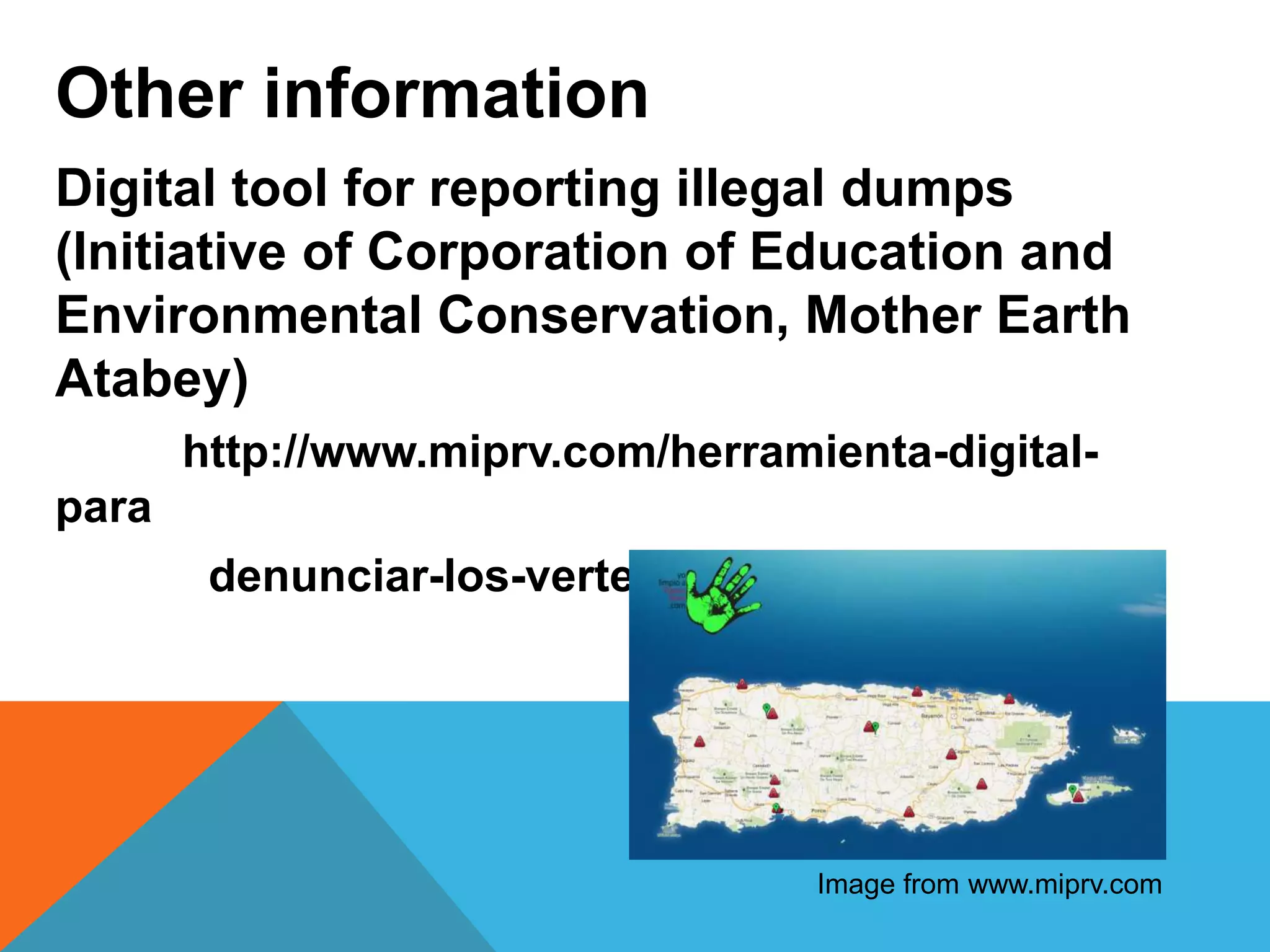
Digital tool for reporting illegal dumps
(Initiative of Corporation of Education and
Environmental Conservation, Mother Earth
Atabey)
http://www.miprv.com/herramienta-digital-
para
denunciar-los-vertederos-clandestinos/
Image from www.miprv.com
Other information
Autoridad de desperdicios sólidos [internet]. [cited on june 15,
2013]. Available in, http://www.ads.pr.gov/
Cayey Ciudad Verde [internet]. [cited on june 16, 2013].
Available in, http://www.cayey.gobierno.pr/
Departamento de Recursos Naturales y ambientales [internet].
[cited on june 15, 2013]. Available in,
http://www.drna.gobierno.pr/
Personal communication. Mrs. Frances Segarra. “Area de
contaminación de terrenos”, Department of Natural
Resources
The Clandestine Dumps [internet]. (2006) [cited on june 15,
2013]. Available in,
http://losvertederosclandestinos.blogspot.com/
References

Illegal dumps

  • 1.
    Environmental Impact, Illegal Dumpsin Urban and Rural Areas B y : A l e j a n d r a M a r i e D e J e s ú s S o t o R I S E P r o g r a m ( s u m m e r b r i d g e )
  • 2.
    Clandestine dump: *A placeelected by some human individuals to deposit their solid waste, with no environmental considerations. *Usually set in natural depressions or sinks. Clandestine dump in Hatillo, Puerto Rico Photo from Atabey Magazine What is an illegal dump?
  • 3.
    • Serious sourceof environmental pollution • Diseases (contamination is related with our health) -Respiratory infections -Intestinal infections -Dengue fever -Conjunctivitis --Many of the diseases are transmitted by organisms such as flies, mosquitoes, rats and cockroaches Image from http://salutarismedicalcenter.blogspot.com
  • 4.
    • Puerto Ricofaces the threat of illegal dumps that proliferate due to: --the large amount of waste generated • According to statements made at the Eastern Regional Committee of the House of Representatives. Clandestine dump in Culebra Photo from Atabey Magazine What happens to illegal dumps
  • 5.
    It was indicatedthat there is a population density of 1,712 inhabitants near by square miles that produce about 3.91 pounds of solid waste per day in Puerto Rico. Table from http://www.suagm.edu/une/pdf/ciencias/desperdiciossolidos.pdf Total waste disposal 69,211 tons per week Total waste disposal 9, 860 tons per day Disposal of waste per person 3.91 pounds per day Total waste disposal per person 0.94m2 per person
  • 6.
    • The illegaldumps pollute the environment and cause disease • The Natural and Environmental Resources Department, Environmental Protect Agency, in Puerto Rico, has no records or studies of these places, personal communication.** **Mrs. Frances Segarra “Area de contaminación de terrenos”, Natural Resources Department There is some information in municipal “Obras públicas”, Cayey Problem (Why)
  • 7.
    • There aremore illegal dumps in rural areas than in urban areas. Image from http://blogplazavieja.blogspot.com/2012_02_01_archive.html Hypothesis
  • 8.
    • Survey illegaldumps in the 21 Cayey neighborhoods, both rural and urban zones... Image from http://www.cayey.gobierno.pr/ Specific aims
  • 9.
    • Locate illegaldumps in the selected areas  with cooperation of: “Area de control y planificación de terrenos”, “Planificación y obras públicas” (Cayey agencies)*  through community leaders • Annotate the site according to their geographical position. • Investigate: How long has the field set? • Make a list of the trash and debris found at the dump and classify each one (organic, inorganic, others). • Measure the space occupied by the field (m2). • Account for the population of the area near the clandestine dump using the last census of the United States (see online) - Formula: population size surface area Methodology: *Staff in Cayey mayor referred me to these agencies for more information
  • 10.
    • The information collected: --will be graphed and tabulated, then will be scanned. -- will be available on a website that I will create. -- may be included on a future environmental research (information on the previous slide) Example 1 Neighborhood Example 2 Image http://civil.engr.siu.edu/301I_Ray/he_sw.htm Amountofillegaldumps
  • 11.
    • Comparing theamount of illegal dumps in urban and rural areas. -- Using graphs and tables • Make a report of the data found, to make this information resource for other environmental studies. Results: analysis
  • 12.
    • Campaign toprevent the formation of more illegal dumps. • Make a web page to inform the community about my research. Through this initiative, the population will report the existence of clandestine dumps. • Notify to Environmental Protect Agency in Puerto Rico, for them to take care of the waste management. Long-term goals
  • 13.
    Digital tool forreporting illegal dumps (Initiative of Corporation of Education and Environmental Conservation, Mother Earth Atabey) http://www.miprv.com/herramienta-digital- para denunciar-los-vertederos-clandestinos/ Image from www.miprv.com Other information
  • 14.
    Autoridad de desperdiciossólidos [internet]. [cited on june 15, 2013]. Available in, http://www.ads.pr.gov/ Cayey Ciudad Verde [internet]. [cited on june 16, 2013]. Available in, http://www.cayey.gobierno.pr/ Departamento de Recursos Naturales y ambientales [internet]. [cited on june 15, 2013]. Available in, http://www.drna.gobierno.pr/ Personal communication. Mrs. Frances Segarra. “Area de contaminación de terrenos”, Department of Natural Resources The Clandestine Dumps [internet]. (2006) [cited on june 15, 2013]. Available in, http://losvertederosclandestinos.blogspot.com/ References