Closing the Achievement
Gap between the Black
and Other races
By: Amanda Neumair
Reasons for Research


The black-white achievement gap exists regularly in many
schools across the nation. A simple comparison of
standardized test scores often shows that black students
score 1 deviation below white students based on mean
test results (Fryer and Levitt, 2004).



Test scores in the school that I teach and where the
research was conducted show consist differences between
Black students and other students in reading scores.
Research Question


Does an hour long daily intervention and
interventions put in place by the classroom
teacher during small group instruction improve
student’s reading level over the course of a six
week period?
Hypothesis
 An

hour long intervention each day with the
reading specialist and an educational
assistant will show that students, who are
achieving below grade level, reading scores
will grow by two or more levels.
Methodology
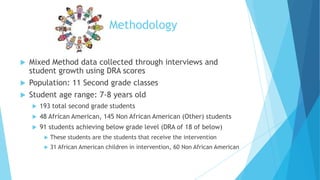
Mixed Method data collected through interviews and
student growth using DRA scores
 Population: 11 Second grade classes
 Student age range: 7-8 years old




193 total second grade students



48 African American, 145 Non African American (Other) students



91 students achieving below grade level (DRA of 18 of below)


These students are the students that receive the intervention



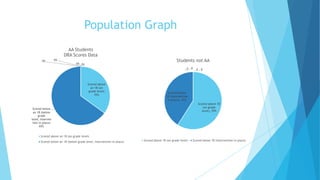
31 African American children in intervention, 60 Non African American
Population Graph
AA Students
DRA Scores Data
0%

Students not AA

0%
0% 0%

,0,0 ,0,0

Scored above
an 18 (on
grade level)
35%

Scored below
18 (intervention
in place), 41%
Scored above 18
(on grade
level), 59%

Scored below
an 18 (below
grade
level, interven
tion in place)
65%
Scored above an 18 (on grade level)
Scored below an 18 (below grade level, intervention in place)

Scored above 18 (on grade level)

Scored below 18 (intervention in place)
Instrument


Instrument – Developmental Reading Assessment (DRA)




Students were tested at the beginning of the second six weeks using the
Development Reading Assessment. This test encompasses the literacy areas of
fluency, comprehension, vocabulary, phonemic awareness, and reading
engagement.

Running Records


Quick reading checks to make sure that students are reading on the appropriate
level and that they are also showing growth.
Procedure


Students were given the Developmental Reading Assessment (DRA) at the
beginning of the second six weeks into the school year to determine their
reading level before further determining if the additional hour intervention
was needed .



If the student scored below a reading level of 18 during the initial DRA
testing, they were placed into an intervention group and pulled out of our
classroom to spend 30 minutes with the reading specialist and 30 minutes in
another intervention group to work on comprehension.



At the three week mark, students did a running record on all students to
determine if the intervention was needed to be continued.



Data was collected by the classroom teacher, and reported to the Reading
Specialist and I.



I also collected qualitative data by conducting informal interviews with the 6
African American children that I have within my own classroom.
Results


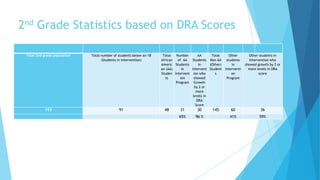
The following statistics table shows that the African American students had
96% growth by 2 or more reading levels. Out of the 31, 30 of the students
grew.



Also, out of the 60 non African American students, only 36 of that group of
students grew by 2 or more reading levels.



This intervention helped narrow the achievement gap, based on DRA
scores, between races.
2nd Grade Statistics based on DRA Scores
Total 2nd grade population

Total number of students below an 18
(Students in intervention)

193

91

Total
Number
AA
Total
Other
African
of AA
Students Non AA students
Americ Students
in
(Other)
in
an (AA)
in
Intervent Student Interventi
Studen Intervent ion who
s
on
ts
ion
showed
Program
Program Growth
by 2 or
more
levels in
DRA
Score

48

31

30

65%

96 %

145

Other students in
Intervention who
showed growth by 2 or
more levels in DRA
score

60

36

41%

59%
Conclusion


Over the course of the second 6 week period, 91 students were pulled out of
the regular education classroom for an hour long intervention. 30 minutes
were spent with the reading specialist working on phonemic awareness and 30
minutes were spent working on comprehension strategies with an educational
assistant.



I feel my overall hypothesis was confirmed that the strict interventions my
school district has in place will help narrow the achievement gap between
children of different races.



African American students within my own classroom reported through
informal interviews that none of them have anyone to read with at
home, they have no books to read at home, and that they would rather get
clothes than a book for their birthday.
Questions to Ponder


Will the students in this intervention continue to show a steady growth rate?


Future studies, without time constraints, could continue to give the DRA every 8
weeks to track growth over a school year.



Does home life affect the students reading ability?



What is going to happen to the children who continue to receive the
intervention for the remainder of the school year, but never reach a proper
reading level?

Research presentation

  • 1.
    Closing the Achievement Gapbetween the Black and Other races By: Amanda Neumair
  • 2.
    Reasons for Research  Theblack-white achievement gap exists regularly in many schools across the nation. A simple comparison of standardized test scores often shows that black students score 1 deviation below white students based on mean test results (Fryer and Levitt, 2004).  Test scores in the school that I teach and where the research was conducted show consist differences between Black students and other students in reading scores.
  • 3.
    Research Question  Does anhour long daily intervention and interventions put in place by the classroom teacher during small group instruction improve student’s reading level over the course of a six week period?
  • 4.
    Hypothesis  An hour longintervention each day with the reading specialist and an educational assistant will show that students, who are achieving below grade level, reading scores will grow by two or more levels.
  • 5.
    Methodology Mixed Method datacollected through interviews and student growth using DRA scores  Population: 11 Second grade classes  Student age range: 7-8 years old   193 total second grade students  48 African American, 145 Non African American (Other) students  91 students achieving below grade level (DRA of 18 of below)  These students are the students that receive the intervention  31 African American children in intervention, 60 Non African American
  • 6.
    Population Graph AA Students DRAScores Data 0% Students not AA 0% 0% 0% ,0,0 ,0,0 Scored above an 18 (on grade level) 35% Scored below 18 (intervention in place), 41% Scored above 18 (on grade level), 59% Scored below an 18 (below grade level, interven tion in place) 65% Scored above an 18 (on grade level) Scored below an 18 (below grade level, intervention in place) Scored above 18 (on grade level) Scored below 18 (intervention in place)
  • 7.
    Instrument  Instrument – DevelopmentalReading Assessment (DRA)   Students were tested at the beginning of the second six weeks using the Development Reading Assessment. This test encompasses the literacy areas of fluency, comprehension, vocabulary, phonemic awareness, and reading engagement. Running Records  Quick reading checks to make sure that students are reading on the appropriate level and that they are also showing growth.
  • 8.
    Procedure  Students were giventhe Developmental Reading Assessment (DRA) at the beginning of the second six weeks into the school year to determine their reading level before further determining if the additional hour intervention was needed .  If the student scored below a reading level of 18 during the initial DRA testing, they were placed into an intervention group and pulled out of our classroom to spend 30 minutes with the reading specialist and 30 minutes in another intervention group to work on comprehension.  At the three week mark, students did a running record on all students to determine if the intervention was needed to be continued.  Data was collected by the classroom teacher, and reported to the Reading Specialist and I.  I also collected qualitative data by conducting informal interviews with the 6 African American children that I have within my own classroom.
  • 9.
    Results  The following statisticstable shows that the African American students had 96% growth by 2 or more reading levels. Out of the 31, 30 of the students grew.  Also, out of the 60 non African American students, only 36 of that group of students grew by 2 or more reading levels.  This intervention helped narrow the achievement gap, based on DRA scores, between races.
  • 10.
    2nd Grade Statisticsbased on DRA Scores Total 2nd grade population Total number of students below an 18 (Students in intervention) 193 91 Total Number AA Total Other African of AA Students Non AA students Americ Students in (Other) in an (AA) in Intervent Student Interventi Studen Intervent ion who s on ts ion showed Program Program Growth by 2 or more levels in DRA Score 48 31 30 65% 96 % 145 Other students in Intervention who showed growth by 2 or more levels in DRA score 60 36 41% 59%
  • 11.
    Conclusion  Over the courseof the second 6 week period, 91 students were pulled out of the regular education classroom for an hour long intervention. 30 minutes were spent with the reading specialist working on phonemic awareness and 30 minutes were spent working on comprehension strategies with an educational assistant.  I feel my overall hypothesis was confirmed that the strict interventions my school district has in place will help narrow the achievement gap between children of different races.  African American students within my own classroom reported through informal interviews that none of them have anyone to read with at home, they have no books to read at home, and that they would rather get clothes than a book for their birthday.
  • 12.
    Questions to Ponder  Willthe students in this intervention continue to show a steady growth rate?  Future studies, without time constraints, could continue to give the DRA every 8 weeks to track growth over a school year.  Does home life affect the students reading ability?  What is going to happen to the children who continue to receive the intervention for the remainder of the school year, but never reach a proper reading level?