Research Data
Management WorkShop,
OpenCons Algeria 2018
13th December 2018
Introduction
Definition of RDM
“Research Data Management (RDM) is
the overarching process that guides
researchers throughout the different
stages of the data lifecycle, enabling
scientists and all other involved
stakeholders to make the most out of the
generated research data” (Giulia Petrovich
,Ref.)
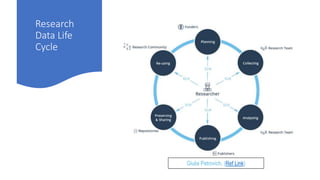
Research
Data Life
Cycle
Giulia Petrovich, (Ref Link)
Why RDM?
• To ensure accessibility of research data
• To ensure usability and reusability of our data
• To ensure accountability (meeting the demands of
funding agencies and research guidelines)
• To ensure interoperability of our data ( the merging of
data with other datasets
• To ensure replicability, transparency, traceability and
confidentiality of data
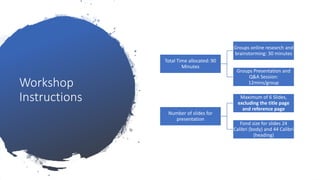
Workshop
Instructions
Total Time allocated: 90
Minutes
Groups online research and
brainstorming: 30 minutes
Groups Presentation and
Q&A Session:
12mins/group
Number of slides for
presentation
Maximum of 6 Slides,
excluding the title page
and reference page
Fond size for slides 24
Calibri (body) and 44 Calibri
(heading)
Some
Expectations of
Workshop
Participants should be able to reflect on the
knowledge gained on the theme of Open Access
and how it applies to other aspects of research
Participants should be able understand the link
between RDM components and Open Access
The participants should be able to demonstrate
how they can contribute to open access
Participants should be familiarise with the
different components of RDM
Group 1. Research Data Management Plan
1. What is a Research Data Management Plan (RDMP)?
2. In what ways can a DMP contribute to Open data? (Group brainstorm session based on
learning from the earlier session)
3. In what ways can you apply a RDM plan to your personal research (Group brainstorming
session)
• Resource Link Intro
• Resource Link 2
• Resource Link 3
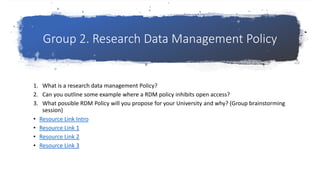
Group 2. Research Data Management Policy
1. What is a research data management Policy?
2. Can you outline some example where a RDM policy inhibits open access?
3. What possible RDM Policy will you propose for your University and why? (Group brainstorming
session)
• Resource Link Intro
• Resource Link 1
• Resource Link 2
• Resource Link 3
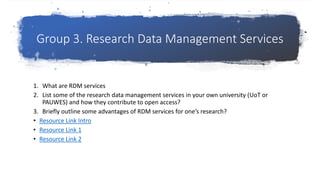
Group 3. Research Data Management Services
1. What are RDM services
2. List some of the research data management services in your own university (UoT or
PAUWES) and how they contribute to open access?
3. Briefly outline some advantages of RDM services for one’s research?
• Resource Link Intro
• Resource Link 1
• Resource Link 2
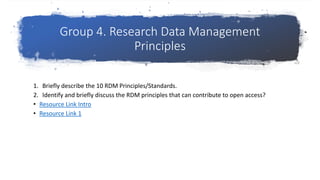
Group 4. Research Data Management
Principles
1. Briefly describe the 10 RDM Principles/Standards.
2. Identify and briefly discuss the RDM principles that can contribute to open access?
• Resource Link Intro
• Resource Link 1
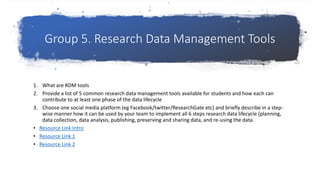
Group 5. Research Data Management Tools
1. What are RDM tools
2. Provide a list of 5 common research data management tools available for students and how each can
contribute to at least one phase of the data lifecycle
3. Choose one social media platform (eg Facebook/twitter/ResearchGate etc) and briefly describe in a step-
wise manner how it can be used by your team to implement all 6 steps research data lifecycle (planning,
data collection, data analysis, publishing, preserving and sharing data, and re-using the data.
• Resource Link Intro
• Resource Link 1
• Resource Link 2

Research data Management Workshop

  • 1.
    Research Data Management WorkShop, OpenConsAlgeria 2018 13th December 2018
  • 2.
    Introduction Definition of RDM “ResearchData Management (RDM) is the overarching process that guides researchers throughout the different stages of the data lifecycle, enabling scientists and all other involved stakeholders to make the most out of the generated research data” (Giulia Petrovich ,Ref.)
  • 3.
  • 4.
    Why RDM? • Toensure accessibility of research data • To ensure usability and reusability of our data • To ensure accountability (meeting the demands of funding agencies and research guidelines) • To ensure interoperability of our data ( the merging of data with other datasets • To ensure replicability, transparency, traceability and confidentiality of data
  • 5.
    Workshop Instructions Total Time allocated:90 Minutes Groups online research and brainstorming: 30 minutes Groups Presentation and Q&A Session: 12mins/group Number of slides for presentation Maximum of 6 Slides, excluding the title page and reference page Fond size for slides 24 Calibri (body) and 44 Calibri (heading)
  • 6.
    Some Expectations of Workshop Participants shouldbe able to reflect on the knowledge gained on the theme of Open Access and how it applies to other aspects of research Participants should be able understand the link between RDM components and Open Access The participants should be able to demonstrate how they can contribute to open access Participants should be familiarise with the different components of RDM
  • 7.
    Group 1. ResearchData Management Plan 1. What is a Research Data Management Plan (RDMP)? 2. In what ways can a DMP contribute to Open data? (Group brainstorm session based on learning from the earlier session) 3. In what ways can you apply a RDM plan to your personal research (Group brainstorming session) • Resource Link Intro • Resource Link 2 • Resource Link 3
  • 8.
    Group 2. ResearchData Management Policy 1. What is a research data management Policy? 2. Can you outline some example where a RDM policy inhibits open access? 3. What possible RDM Policy will you propose for your University and why? (Group brainstorming session) • Resource Link Intro • Resource Link 1 • Resource Link 2 • Resource Link 3
  • 9.
    Group 3. ResearchData Management Services 1. What are RDM services 2. List some of the research data management services in your own university (UoT or PAUWES) and how they contribute to open access? 3. Briefly outline some advantages of RDM services for one’s research? • Resource Link Intro • Resource Link 1 • Resource Link 2
  • 10.
    Group 4. ResearchData Management Principles 1. Briefly describe the 10 RDM Principles/Standards. 2. Identify and briefly discuss the RDM principles that can contribute to open access? • Resource Link Intro • Resource Link 1
  • 11.
    Group 5. ResearchData Management Tools 1. What are RDM tools 2. Provide a list of 5 common research data management tools available for students and how each can contribute to at least one phase of the data lifecycle 3. Choose one social media platform (eg Facebook/twitter/ResearchGate etc) and briefly describe in a step- wise manner how it can be used by your team to implement all 6 steps research data lifecycle (planning, data collection, data analysis, publishing, preserving and sharing data, and re-using the data. • Resource Link Intro • Resource Link 1 • Resource Link 2