Reputation Management
Essentials
Nguyen Thi Thanh Hang
Reputation vs. brand
• Brands are more controllable than reputations
• Leading consumer or high street brands are more
vulnerable to reputation damage.
• Reputation cannot be classed as an asset for
balance sheet purposes, yet a bad one is a
liability.
• A brand is manufactured by an organization to
sell to one stakeholder group & consumers while
a reputation is created by its stakeholders
• Reputation is ultimately a measure of trust.
Benefits of good reputations
3
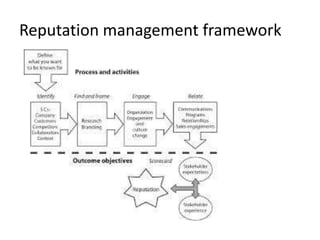
Reputation management framework
Reputational Risk Management
5
Determinants
of
Reputational
Risk
Ways to
manage
Reputational
Risk
Reputation
Reality-Gap
Changing
beliefs &
expectations
Weak internal
coordination
Objectively
assess
reputation
versus reality
Access and
accept impact of
changing
expectations
Explicitly focus
on reputational
risk
Strong and sustainable reputation
Lack of policy
knowledge &
improper
implementation
Raise
awareness and
enforce
compliance
Holcim Vietnam Issues
Management
6
Determinants of
Reputational
Risk
Ways to
manage
Reputational
Risk
Reputation
Reality-Gap
Changing
beliefs &
expectations
Weak internal
coordination
- Clipping Report
- Stakeholders
need assessment
- Customers
survey
- Employees
survey
- CRM
- Call Center
- Media relations &
communication
campaign
- Stakeholders
meeting & CEP
- NPS
- Corporate
communicati
on in SD
under CEO
- Department
communicati
on
champions
- Crisis
communicati
on
Strong and sustainable reputation
Lack of policy
knowledge &
improper
implementation
- Constantly
monitor and
evolve
- Document
Management
System
- Compliance
Systems
Employees
Employees’
family
Consumer
Local
authoritiesLocal
community
Government
Ministry
Financial
Institutions
Media
X Industry
NGOs
Contractors
ors
Suppliers
Students
Universities
Academic
Mass
community
Low
Levelofinfluence(impact)
Level of interest
High interest Medium
interest
Low interest
Customers
Keep satisfied Focus efforts / Key players
Respond to request / Monitor Keep informed
Media
Sample Stakeholders Analysis
Typical causes of reputation risk
10
9
8
7
6
5
4
3
2
10 9 8 7 6 5 4 3 2 1 1 2 3 4 5 6 7 8 9 10
1
2
3
4
5
6
7
8
9
10
1
More Severe
Less Severe
LessLikely
Quality / product
failure
Reputation
damage
Compliance
issue
Company
financial health
Accident with
lives lost
Biodiversity
Environmental
issue
Information services
– breakdown/leaks
Company policy
/ changes
Fuel Waste-
related
concerns
Serious natural
disasters
OH&S-related
issues
Industrial
disputes
Sample Risk Analysis
Scope of corporate communication influence
Issues Management, Holcim Vietnam Ltd,
Bao SD Nguyen, 2013-11-19
Functions of Corp. Com Strategy
11
Scan environment
to identify and
prioritize issues
and stakeholders’
expectations
Be instrumental
in setting up
social goals (in
line with social
strategy)
Build symbolic
and behavioural
relationships with
strategic
stakeholders
Engage strategic
stakeholders in
problem solving
and decision
making
Case studies
Issues Management, Holcim Vietnam Ltd,
Bao SD Nguyen, 2013-11-19
Concern
Disgust
Surprise
Outrag
e
Disappointmen
t
What is our level of RR management?
We are here!

Reputation Management Essentials

  • 1.
  • 2.
    Reputation vs. brand •Brands are more controllable than reputations • Leading consumer or high street brands are more vulnerable to reputation damage. • Reputation cannot be classed as an asset for balance sheet purposes, yet a bad one is a liability. • A brand is manufactured by an organization to sell to one stakeholder group & consumers while a reputation is created by its stakeholders • Reputation is ultimately a measure of trust.
  • 3.
    Benefits of goodreputations 3
  • 4.
  • 5.
    Reputational Risk Management 5 Determinants of Reputational Risk Waysto manage Reputational Risk Reputation Reality-Gap Changing beliefs & expectations Weak internal coordination Objectively assess reputation versus reality Access and accept impact of changing expectations Explicitly focus on reputational risk Strong and sustainable reputation Lack of policy knowledge & improper implementation Raise awareness and enforce compliance
  • 6.
    Holcim Vietnam Issues Management 6 Determinantsof Reputational Risk Ways to manage Reputational Risk Reputation Reality-Gap Changing beliefs & expectations Weak internal coordination - Clipping Report - Stakeholders need assessment - Customers survey - Employees survey - CRM - Call Center - Media relations & communication campaign - Stakeholders meeting & CEP - NPS - Corporate communicati on in SD under CEO - Department communicati on champions - Crisis communicati on Strong and sustainable reputation Lack of policy knowledge & improper implementation - Constantly monitor and evolve - Document Management System - Compliance Systems
  • 7.
    Employees Employees’ family Consumer Local authoritiesLocal community Government Ministry Financial Institutions Media X Industry NGOs Contractors ors Suppliers Students Universities Academic Mass community Low Levelofinfluence(impact) Level ofinterest High interest Medium interest Low interest Customers Keep satisfied Focus efforts / Key players Respond to request / Monitor Keep informed Media Sample Stakeholders Analysis
  • 8.
    Typical causes ofreputation risk
  • 9.
    10 9 8 7 6 5 4 3 2 10 9 87 6 5 4 3 2 1 1 2 3 4 5 6 7 8 9 10 1 2 3 4 5 6 7 8 9 10 1 More Severe Less Severe LessLikely Quality / product failure Reputation damage Compliance issue Company financial health Accident with lives lost Biodiversity Environmental issue Information services – breakdown/leaks Company policy / changes Fuel Waste- related concerns Serious natural disasters OH&S-related issues Industrial disputes Sample Risk Analysis
  • 10.
    Scope of corporatecommunication influence Issues Management, Holcim Vietnam Ltd, Bao SD Nguyen, 2013-11-19
  • 11.
    Functions of Corp.Com Strategy 11 Scan environment to identify and prioritize issues and stakeholders’ expectations Be instrumental in setting up social goals (in line with social strategy) Build symbolic and behavioural relationships with strategic stakeholders Engage strategic stakeholders in problem solving and decision making
  • 12.
    Case studies Issues Management,Holcim Vietnam Ltd, Bao SD Nguyen, 2013-11-19 Concern Disgust Surprise Outrag e Disappointmen t
  • 13.
    What is ourlevel of RR management? We are here!