Reproduction
Done by Haya Al-Sineedi 8i
Table of Contents
Infographic about
Reproduction
The Process of
Reproduction
01 02
01
The Process of
Reproduction
The male reproductive cell is called the sperm
The female reproductive cell is called the egg
Millions of sperms are produced a day after a
male hits puberty
Eggs are formed at the time of birth and are
lost every month after puberty
The sperms are the only cells that move,
that is why they have tails
The tail gives the sperm cell movement
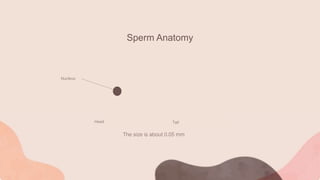
Sperm Anatomy
Nucleus
Head Tail
The size is about 0.05 mm
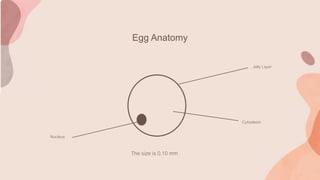
Egg Anatomy
Nucleus
Cytoplasm
Jelly Layer
The size is 0.10 mm
When the sperm and egg join it is called conception
The fusion of the female nucleus with the male
nucleus is called fertilization
Implantation is when the mass of cells is settled into
cells is settled into the wall of the uterus
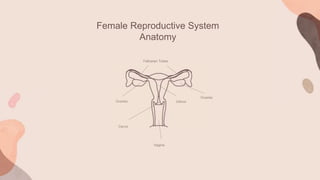
Female Reproductive System
Anatomy
Fallopian Tubes
Ovaries
Cervix
Uterus
Vagina
Ovaries
Sperm form in the testes
Sperms get pumped out along the sperm ducts during sex
They pass glands which add fluids to help the sperm stay alive.
Then the mixture of sperm and fluid — called semen —spurts out
through his penis
A fetus forms when cells start to specialize and produce
different tissues and organs
The placenta is a muscular lining between the mother and the
fetus that gives the fetus oxygen and nutrients
When the fetus is settled in the uterus, some of the cells make
contact with the mother's blood supply
They began to form a placenta and umbilical cord to pass
nutrients and oxygen from her blood to the fetus
The placenta does the job of the small intestines and
lungs
The blood vessels in the placenta have a large
surface area, so that nutrients and oxygen can
diffuse into them quickly
Waste molecules like carbon dioxide and urea
diffuse from the fetus to the mother
There is a sack around the baby called the
amniotic membrane/ sack
It is filled with a liquid called the amniotic fluid
The fluid protects the fetus from bumps and
lets it move
02
Infographic about Reproduction
Monozygotic Twins (MZTs)
It all starts when a man and
woman have sex
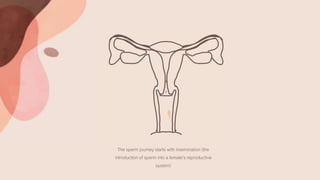
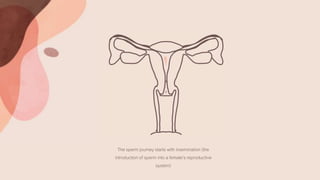
The sperm journey starts with insemination (the
introduction of sperm into a female’s reproductive
system)
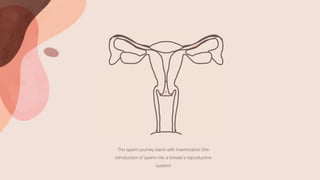
The sperm journey starts with insemination (the
introduction of sperm into a female’s reproductive
system)
The sperm journey starts with insemination (the
introduction of sperm into a female’s reproductive
system)
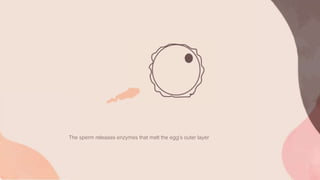
The sperm releases enzymes that melt the egg’s outer layer
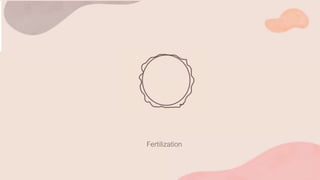
Fertilization
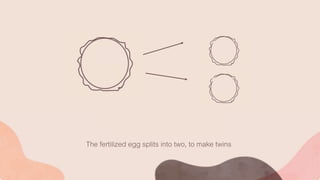
The fertilized egg splits into two, to make twins
The zygotes turn into blastocytes
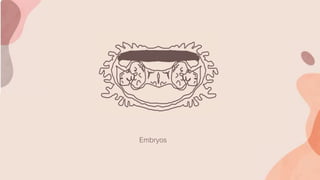
Embryos
Fetuses
Two Baby Boys are born!
Thank You For Listening!

Reproduction

  • 1.
  • 2.
    Table of Contents Infographicabout Reproduction The Process of Reproduction 01 02
  • 3.
  • 4.
    The male reproductivecell is called the sperm The female reproductive cell is called the egg
  • 5.
    Millions of spermsare produced a day after a male hits puberty Eggs are formed at the time of birth and are lost every month after puberty
  • 6.
    The sperms arethe only cells that move, that is why they have tails The tail gives the sperm cell movement
  • 7.
  • 8.
  • 9.
    When the spermand egg join it is called conception The fusion of the female nucleus with the male nucleus is called fertilization Implantation is when the mass of cells is settled into cells is settled into the wall of the uterus
  • 10.
    Female Reproductive System Anatomy FallopianTubes Ovaries Cervix Uterus Vagina Ovaries
  • 11.
    Sperm form inthe testes Sperms get pumped out along the sperm ducts during sex They pass glands which add fluids to help the sperm stay alive. Then the mixture of sperm and fluid — called semen —spurts out through his penis
  • 12.
    A fetus formswhen cells start to specialize and produce different tissues and organs The placenta is a muscular lining between the mother and the fetus that gives the fetus oxygen and nutrients When the fetus is settled in the uterus, some of the cells make contact with the mother's blood supply They began to form a placenta and umbilical cord to pass nutrients and oxygen from her blood to the fetus
  • 13.
    The placenta doesthe job of the small intestines and lungs The blood vessels in the placenta have a large surface area, so that nutrients and oxygen can diffuse into them quickly Waste molecules like carbon dioxide and urea diffuse from the fetus to the mother
  • 14.
    There is asack around the baby called the amniotic membrane/ sack It is filled with a liquid called the amniotic fluid The fluid protects the fetus from bumps and lets it move
  • 15.
  • 16.
    It all startswhen a man and woman have sex
  • 17.
    The sperm journeystarts with insemination (the introduction of sperm into a female’s reproductive system)
  • 18.
    The sperm journeystarts with insemination (the introduction of sperm into a female’s reproductive system)
  • 19.
    The sperm journeystarts with insemination (the introduction of sperm into a female’s reproductive system)
  • 20.
    The sperm releasesenzymes that melt the egg’s outer layer
  • 21.
  • 22.
    The fertilized eggsplits into two, to make twins
  • 23.
    The zygotes turninto blastocytes
  • 24.
  • 25.
  • 26.
    Two Baby Boysare born!
  • 27.
    Thank You ForListening!