HOW DOES YOUR
   MEDIA PRODUCT
REPRESENT PARTICULAR
  SOCIAL GROUPS?
HOW ARE THE YOUTH OF
     TODAY REPRESENTED?
     Figures show more than half of the stories about teenage boys in
     national and regional newspapers in the past year (4,374 out of
     8,629) were about crime. The word most commonly used to
     describe them was "yobs" (591 times), followed by "thugs" (254
     times), "sick" (119 times) and "feral" (96 times

     Other terms often used included
     "hoodie", "louts", "heartless", "evil"
     "frightening", "scum", "monsters", "inhuman" and "threatening"
     The research – commissioned by Women in Journalism – showed
     the best chance a teenager had of receiving sympathetic
     coverage was if they died.

     "We found some news coverage where teen boys were
     described in glowing terms – 'model student', 'angel', 'altar boy'
     or 'every mother's perfect son'," the research concluded, "but
     sadly these were reserved for teenage boys who met a violent
     and untimely death."

     At the same time a survey of nearly 1,000 teenage boys found 85
     per cent believed newspapers portray them in a bad light.


http://www.independent.co.uk/news/uk/home-news/hoodies-louts-scum-how-media-demonises-teenagers-1643964.html
It is important, as I mentioned in
       my previous evaluation
 question, that I present youth in
 a positive light in order to raise
    my circulation figures as my
   target audience is mainly of
    that age group and would
      therefore not like to read
  something that contributes to
 their already bad image within
the media but portrays them as
         who they really are.
  A minority continuously ruins it
      for the majority with their
behavior and attitude therefore
 giving the media something to
 work from, to create a story to
 attract readers, who then take
  whatever the newspaper has
     written down literally and
therefore have their mind set on
         the youth of today.
YOUTH
Within the magazine, they are represented as fun loving, but relaxed/chilled at the
   same time. The images used on my front cover, contents page and double page
   spread show a very relaxed view of youth. On my front cover, my models face is
   calm and serene, which she gives off to the reader using direct eye contact with
   the reader. The images used on my contents page also shows the calmness of
   majority of the youth of today. In one image, it showcases a girl, although hard at
   work making music, checking her phone for tweets and texts which shows that the
   youth today are very much attached to their phones and a lot of their lives
   depend on the use of mobile phones, internet… technology, in general. Another
   image shows two girls hanging around their area, together, no expressions on their
   face which shows they are not going to cause any trouble as they do not look
   mischievous in any way, shape or form. An image of a girl smiling is also on my
   contents page which shows the youth are mainly happy, positive and polite which
   is contrasting to which they are normally portrayed as being, which shows my
   battle to challenge the representation of this group. On my double page
   spread, the use of a manipulated image which is colourful and unique which
   represents youth as being artistic and individual, they are all no longer afraid to be
   different therefore the media should stop bunching them all together. My goal
   when creating this magazine was to represent the youth in a positive way which
   nobody is doing or at least successfully doing it at the moment in the UK.

Representation

  • 1.
    HOW DOES YOUR MEDIA PRODUCT REPRESENT PARTICULAR SOCIAL GROUPS?
  • 2.
    HOW ARE THEYOUTH OF TODAY REPRESENTED? Figures show more than half of the stories about teenage boys in national and regional newspapers in the past year (4,374 out of 8,629) were about crime. The word most commonly used to describe them was "yobs" (591 times), followed by "thugs" (254 times), "sick" (119 times) and "feral" (96 times Other terms often used included "hoodie", "louts", "heartless", "evil" "frightening", "scum", "monsters", "inhuman" and "threatening" The research – commissioned by Women in Journalism – showed the best chance a teenager had of receiving sympathetic coverage was if they died. "We found some news coverage where teen boys were described in glowing terms – 'model student', 'angel', 'altar boy' or 'every mother's perfect son'," the research concluded, "but sadly these were reserved for teenage boys who met a violent and untimely death." At the same time a survey of nearly 1,000 teenage boys found 85 per cent believed newspapers portray them in a bad light. http://www.independent.co.uk/news/uk/home-news/hoodies-louts-scum-how-media-demonises-teenagers-1643964.html
  • 3.
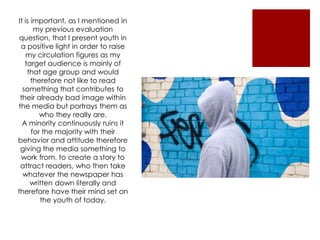
    It is important,as I mentioned in my previous evaluation question, that I present youth in a positive light in order to raise my circulation figures as my target audience is mainly of that age group and would therefore not like to read something that contributes to their already bad image within the media but portrays them as who they really are. A minority continuously ruins it for the majority with their behavior and attitude therefore giving the media something to work from, to create a story to attract readers, who then take whatever the newspaper has written down literally and therefore have their mind set on the youth of today.
  • 4.
    YOUTH Within the magazine,they are represented as fun loving, but relaxed/chilled at the same time. The images used on my front cover, contents page and double page spread show a very relaxed view of youth. On my front cover, my models face is calm and serene, which she gives off to the reader using direct eye contact with the reader. The images used on my contents page also shows the calmness of majority of the youth of today. In one image, it showcases a girl, although hard at work making music, checking her phone for tweets and texts which shows that the youth today are very much attached to their phones and a lot of their lives depend on the use of mobile phones, internet… technology, in general. Another image shows two girls hanging around their area, together, no expressions on their face which shows they are not going to cause any trouble as they do not look mischievous in any way, shape or form. An image of a girl smiling is also on my contents page which shows the youth are mainly happy, positive and polite which is contrasting to which they are normally portrayed as being, which shows my battle to challenge the representation of this group. On my double page spread, the use of a manipulated image which is colourful and unique which represents youth as being artistic and individual, they are all no longer afraid to be different therefore the media should stop bunching them all together. My goal when creating this magazine was to represent the youth in a positive way which nobody is doing or at least successfully doing it at the moment in the UK.