Group 4
GRADE 11-ROSAL (HUMSS)
ADVISER: MARLON B. NAZARENO
SUBJECT: UCSP
POLITICS
Politics is the way that people living in
groups make decisions. Politics about making
agreements between people so that they can live
in groups such as tribes, cities, or countries. In
large group, such as countries, some people may
spend a lot of their time making such as
agreements.
ONE OF OUR
TOPIC, IS ALL
ABOUT…….
- He is an author and he served as
staff director for most of the panel's
life. His research has covered
psychosocial issues in population,
fertility determinants, family
planning program effectiveness, and
program and reproductive health
service costs. He was born on
November 28, 1944. And now he is
77 years old.
He previously directed the World Bank's annual
population projections and has worked on
projections in various areas, including causes of
death. He has also helped develop and evaluate
population projects in developing countries. Dr.
Bulatao was previously affiliated with the East-
West Center and the University of the
Philippines.
He served on the staff of the National Research
Council's Committee on Population in 1983-1985
and with its Working Group on Population
Growth and Economic Development. He has an
M.A. in sociology from the University of the
Philippines and a Ph.D. in sociology from the
University of Chicago.
1. Understanding Racial and ethnic differences in
health in late life: A Research Agenda.
2. World Population Projections 1989-90: Short-
and Long- term estimates (World Bank)
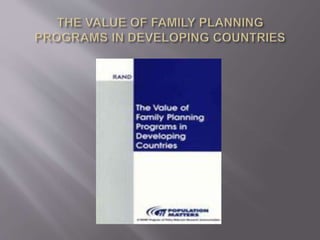
3. The Value of Family Planning Programs in
Developing Countries.
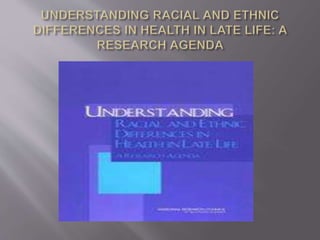
As the population of older Americans grows, it is
becoming more racially and ethnically
diverse. Differences in health by racial and ethnic
status could be increasingly
consequential for health policy and programs.
Such differences are not simply a matter of
education or ability to pay for health care.
Summary tables on population size and growth, age structure,
fertility and mortality rates, the world and the continents,
geographic regions and income groups, World Bank regions, and
individual countries are included. The tables on age structure
cover broad age groups (0-14, 15-64, and 65 and over) and
provide a more convenient summary than did previous editions.
The projections cover the entire world for almost two centuries,
from 1985 to 2150. With data available as of mid-1989, separate
projects were prepared for 187 countries, economies, territories,
and small-country groupings. The length of the projection period
was chosen to allow populations to approach stability, which in
some cases takes essentially the entire period.
Family planning programs have been highly
successful over the past 30 years in providing
women in developing countries with desired
access to contraceptive services and helping to
reduce fertility rates. Notwithstanding this
success, there is still an urgent need for these
programs. The world's population is increasing,
with annual population growth still
approximately 80 million people.
1) Who is Rodolfo A. Bulatao?
2) When is Rodolfo A. Bulatao's
birthday?
3) How many books has he
authored?
FILL IN THE BLANKS
Directions: Get ½ Crosswise and answer the ff.
1) He is an ________ and he served as staff director for most of the panel's
life.
2) Dr. Bulatao was previously affiliated with the _______________ and the
University of the Philippines.
3) He served on the staff of the National Research Council's Committee on
Population in __________ and with its Working Group on Population
Growth and Economic Development.
4) As the ___________ of older Americans grows, it is becoming more racially
and ethnically diverse.
5) The world's population is increasing, with annual population growth still
approximately _________________.
Directions: Get ½ sheet of paper and answer the following
questions.
1. He is an author and serves as staff director
A. Jose Rizal B. Apollinario Mabini
C. Remigio E. Agpalo D. Rodolfo A. Bulatao
2. When is Rodolfo A. Bulatao’s birthday?
A. January 28, 1944
B. February 28, 1944
C. November 28, 1944
D. None of the above
3. How many book’s has he authored?
A. 2
B. 3
C. 4
D. 5
4. What is the 1st book that he authored?
A. Understanding Racial and ethnic differences in health in late life: A
Research Agenda.
B. The Value of Family Planning Programs in Developing Countries.
C. Araling Panlipunan
D.None of the above
5. Who is the adviser of Grade 11-Rosal?
A. Regina Gadon
B. Marlon Nazareno
C. Diane Goco
D. Claire Dianne Mirano
IDENTIFICATION
1. author
2. East-West Center
3. 1983-1985
4. population
5. 80 million people
MULTIPLE CHOICE
1. D
2. C
3. B
4. A
5. B
REPORTING OF GROUP 4.pptx

REPORTING OF GROUP 4.pptx

  • 1.
    Group 4 GRADE 11-ROSAL(HUMSS) ADVISER: MARLON B. NAZARENO SUBJECT: UCSP
  • 3.
  • 4.
    Politics is theway that people living in groups make decisions. Politics about making agreements between people so that they can live in groups such as tribes, cities, or countries. In large group, such as countries, some people may spend a lot of their time making such as agreements.
  • 5.
    ONE OF OUR TOPIC,IS ALL ABOUT…….
  • 7.
    - He isan author and he served as staff director for most of the panel's life. His research has covered psychosocial issues in population, fertility determinants, family planning program effectiveness, and program and reproductive health service costs. He was born on November 28, 1944. And now he is 77 years old.
  • 8.
    He previously directedthe World Bank's annual population projections and has worked on projections in various areas, including causes of death. He has also helped develop and evaluate population projects in developing countries. Dr. Bulatao was previously affiliated with the East- West Center and the University of the Philippines.
  • 9.
    He served onthe staff of the National Research Council's Committee on Population in 1983-1985 and with its Working Group on Population Growth and Economic Development. He has an M.A. in sociology from the University of the Philippines and a Ph.D. in sociology from the University of Chicago.
  • 10.
    1. Understanding Racialand ethnic differences in health in late life: A Research Agenda. 2. World Population Projections 1989-90: Short- and Long- term estimates (World Bank) 3. The Value of Family Planning Programs in Developing Countries.
  • 11.
    As the populationof older Americans grows, it is becoming more racially and ethnically diverse. Differences in health by racial and ethnic status could be increasingly consequential for health policy and programs. Such differences are not simply a matter of education or ability to pay for health care.
  • 12.
    Summary tables onpopulation size and growth, age structure, fertility and mortality rates, the world and the continents, geographic regions and income groups, World Bank regions, and individual countries are included. The tables on age structure cover broad age groups (0-14, 15-64, and 65 and over) and provide a more convenient summary than did previous editions. The projections cover the entire world for almost two centuries, from 1985 to 2150. With data available as of mid-1989, separate projects were prepared for 187 countries, economies, territories, and small-country groupings. The length of the projection period was chosen to allow populations to approach stability, which in some cases takes essentially the entire period.
  • 13.
    Family planning programshave been highly successful over the past 30 years in providing women in developing countries with desired access to contraceptive services and helping to reduce fertility rates. Notwithstanding this success, there is still an urgent need for these programs. The world's population is increasing, with annual population growth still approximately 80 million people.
  • 18.
    1) Who isRodolfo A. Bulatao? 2) When is Rodolfo A. Bulatao's birthday? 3) How many books has he authored?
  • 20.
    FILL IN THEBLANKS Directions: Get ½ Crosswise and answer the ff. 1) He is an ________ and he served as staff director for most of the panel's life. 2) Dr. Bulatao was previously affiliated with the _______________ and the University of the Philippines. 3) He served on the staff of the National Research Council's Committee on Population in __________ and with its Working Group on Population Growth and Economic Development. 4) As the ___________ of older Americans grows, it is becoming more racially and ethnically diverse. 5) The world's population is increasing, with annual population growth still approximately _________________.
  • 21.
    Directions: Get ½sheet of paper and answer the following questions. 1. He is an author and serves as staff director A. Jose Rizal B. Apollinario Mabini C. Remigio E. Agpalo D. Rodolfo A. Bulatao 2. When is Rodolfo A. Bulatao’s birthday? A. January 28, 1944 B. February 28, 1944 C. November 28, 1944 D. None of the above
  • 22.
    3. How manybook’s has he authored? A. 2 B. 3 C. 4 D. 5 4. What is the 1st book that he authored? A. Understanding Racial and ethnic differences in health in late life: A Research Agenda. B. The Value of Family Planning Programs in Developing Countries. C. Araling Panlipunan D.None of the above 5. Who is the adviser of Grade 11-Rosal? A. Regina Gadon B. Marlon Nazareno C. Diane Goco D. Claire Dianne Mirano
  • 23.
    IDENTIFICATION 1. author 2. East-WestCenter 3. 1983-1985 4. population 5. 80 million people MULTIPLE CHOICE 1. D 2. C 3. B 4. A 5. B