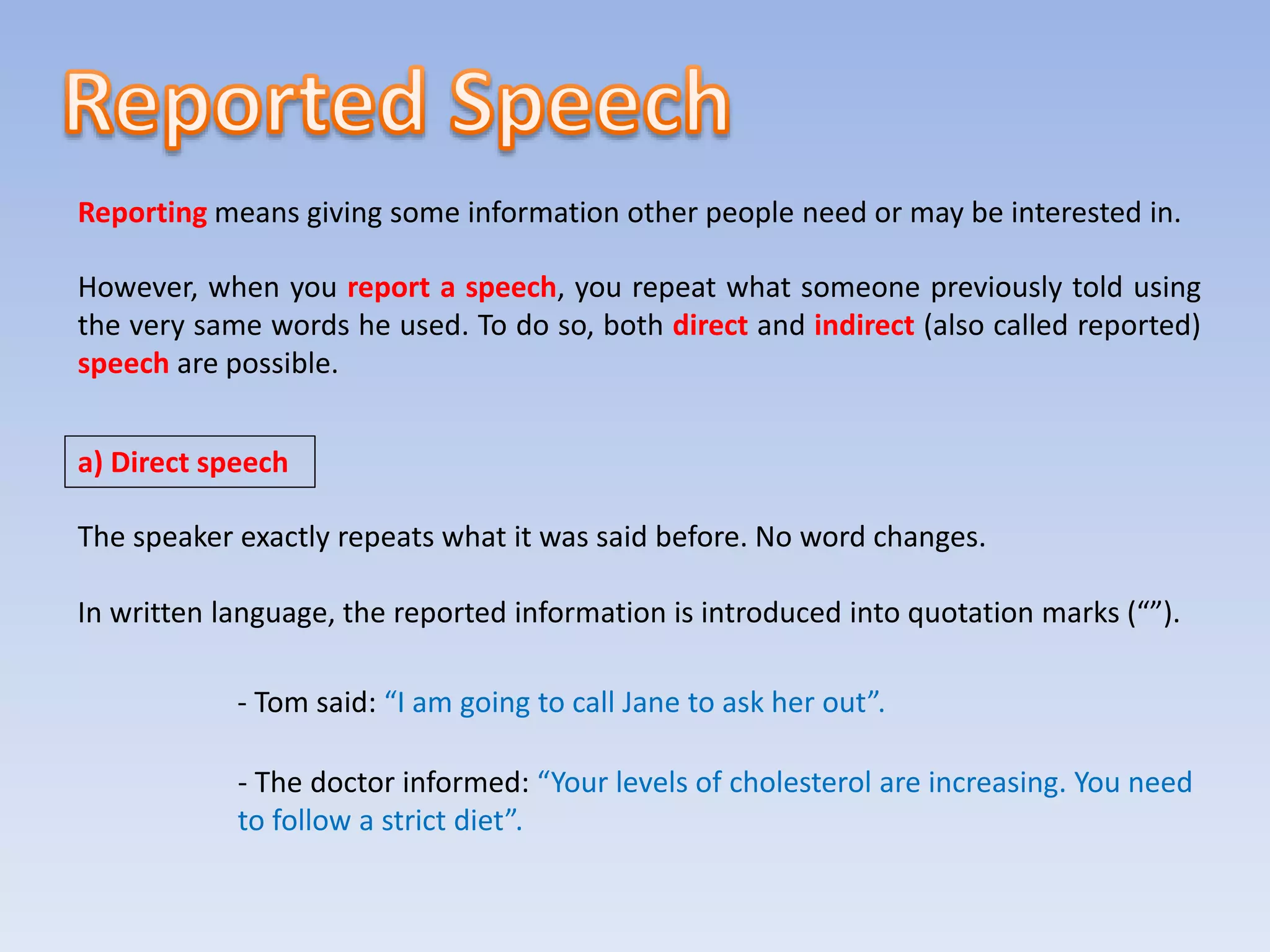
Reporting means giving some information other people need or may be interested in.
However, when you report a speech, you repeat what someone previously told using
the very same words he used. To do so, both direct and indirect (also called reported)
speech are possible.
a) Direct speech
The speaker exactly repeats what it was said before. No word changes.
- Tom said: “I am going to call Jane to ask her out”.
- The doctor informed: “Your levels of cholesterol are increasing. You need
to follow a strict diet”.
In written language, the reported information is introduced into quotation marks (“”).
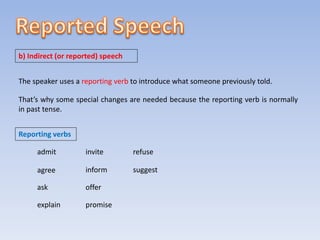
b) Indirect (or reported) speech
The speaker uses a reporting verb to introduce what someone previously told.
That’s why some special changes are needed because the reporting verb is normally
in past tense.
Reporting verbs
admit
agree
ask
explain
invite
inform
offer
promise
refuse
suggest
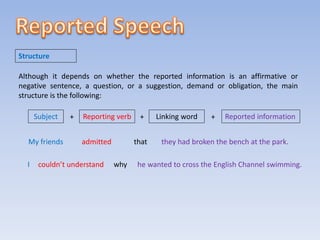
Although it depends on whether the reported information is an affirmative or
negative sentence, a question, or a suggestion, demand or obligation, the main
structure is the following:
Structure
Subject Reporting verb
+ + Linking word + Reported information
My friends admitted that they had broken the bench at the park.
I couldn’t understand why he wanted to cross the English Channel swimming.
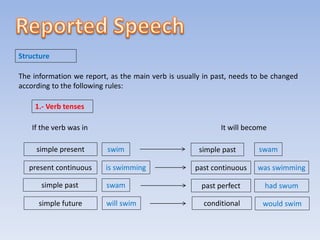
The information we report, as the main verb is usually in past, needs to be changed
according to the following rules:
Structure
1.- Verb tenses
If the verb was in It will become
simple present swim simple past swam
present continuous is swimming past continuous was swimming
simple past swam past perfect had swum
simple future will swim conditional would swim
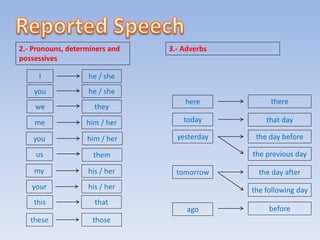
2.- Pronouns, determiners and
possessives
I he / she
we they
me him / her
us
my
them
his / her
this
these
that
those
3.- Adverbs
here
today
yesterday
tomorrow
there
that day
the day before
the previous day
the day after
the following day
ago before
you he / she
you him / her
your his / her
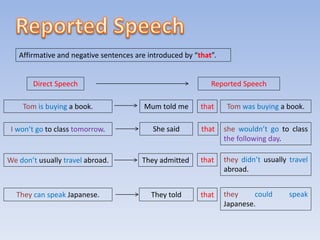
Affirmative and negative sentences are introduced by “that”.
Direct Speech
Tom is buying a book. that
Mum told me
Reported Speech
Tom was buying a book.
I won’t go to class tomorrow. She said that she wouldn’t go to class
the following day.
We don’t usually travel abroad. They admitted that they didn’t usually travel
abroad.
They can speak Japanese. They told that they could speak
Japanese.
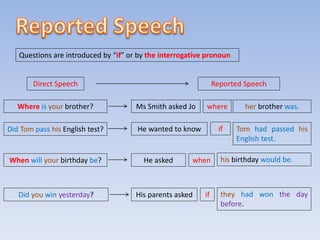
Questions are introduced by “if” or by the interrogative pronoun
Direct Speech
Where is your brother? where
Ms Smith asked Jo
Reported Speech
her brother was.
Did Tom pass his English test? He wanted to know if Tom had passed his
English test.
When will your birthday be? He asked when his birthday would be.
Did you win yesterday? His parents asked if they had won the day
before.

Reported speech 3º ESO

  • 1.
    Reporting means givingsome information other people need or may be interested in. However, when you report a speech, you repeat what someone previously told using the very same words he used. To do so, both direct and indirect (also called reported) speech are possible. a) Direct speech The speaker exactly repeats what it was said before. No word changes. - Tom said: “I am going to call Jane to ask her out”. - The doctor informed: “Your levels of cholesterol are increasing. You need to follow a strict diet”. In written language, the reported information is introduced into quotation marks (“”).
  • 2.
    b) Indirect (orreported) speech The speaker uses a reporting verb to introduce what someone previously told. That’s why some special changes are needed because the reporting verb is normally in past tense. Reporting verbs admit agree ask explain invite inform offer promise refuse suggest
  • 3.
    Although it dependson whether the reported information is an affirmative or negative sentence, a question, or a suggestion, demand or obligation, the main structure is the following: Structure Subject Reporting verb + + Linking word + Reported information My friends admitted that they had broken the bench at the park. I couldn’t understand why he wanted to cross the English Channel swimming.
  • 4.
    The information wereport, as the main verb is usually in past, needs to be changed according to the following rules: Structure 1.- Verb tenses If the verb was in It will become simple present swim simple past swam present continuous is swimming past continuous was swimming simple past swam past perfect had swum simple future will swim conditional would swim
  • 5.
    2.- Pronouns, determinersand possessives I he / she we they me him / her us my them his / her this these that those 3.- Adverbs here today yesterday tomorrow there that day the day before the previous day the day after the following day ago before you he / she you him / her your his / her
  • 6.
    Affirmative and negativesentences are introduced by “that”. Direct Speech Tom is buying a book. that Mum told me Reported Speech Tom was buying a book. I won’t go to class tomorrow. She said that she wouldn’t go to class the following day. We don’t usually travel abroad. They admitted that they didn’t usually travel abroad. They can speak Japanese. They told that they could speak Japanese.
  • 7.
    Questions are introducedby “if” or by the interrogative pronoun Direct Speech Where is your brother? where Ms Smith asked Jo Reported Speech her brother was. Did Tom pass his English test? He wanted to know if Tom had passed his English test. When will your birthday be? He asked when his birthday would be. Did you win yesterday? His parents asked if they had won the day before.