Japanese Ghosts, Creatures,
and Myths
(disclaimer: Forgive the grammatical errors, I just 'copy-paste')
• Yokai- (often spelled Youkai)
("apparitions", "spirits" or "demons")
-Japanese folklorists and historians use
yōkai as "supernatural or unaccountable
phenomena to their informants"
http://www.youtube.com/watch?v=yPDWAcW3BRc
• Yurei- Yurei are ghosts or spirits, and tend
to be similar to their western counterparts.
• Obake- Obake (also called bakemono or
simply bake) are creatures that have
changed from one form to another,
generally becoming more powerful in the
process. Usually this change is due to the
presence of negative feelings, and as
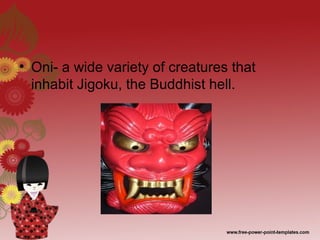
• Oni- a wide variety of creatures that
inhabit Jigoku, the Buddhist hell.
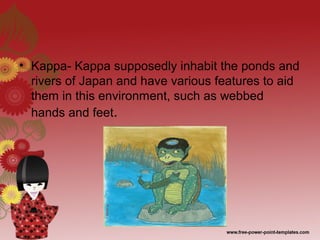
• Kappa- Kappa supposedly inhabit the ponds and
rivers of Japan and have various features to aid
them in this environment, such as webbed
hands and feet.
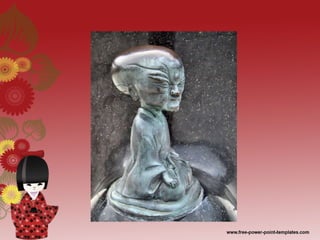
• Nurarihyon is a yokai from folklore
that may have derived from stories
of a large jellyfish. In modern stories
he is considered to be the
commander of all yokai, and has a
habit of slipping into peoples houses
while they are busy making dinner
and helping himself to tea and
tobacco.
• Momonjii is a kind of bogeyman that
carries children off into the forest and
is used by parents to threaten their
misbehaving kids. Believed to derive
from Momonga, a kind of small flying
squirrel that turns into momonjii upon
reaching old age.
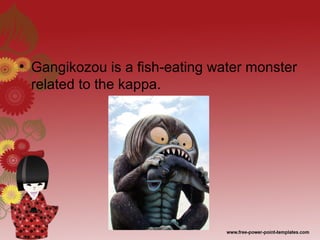
• Gangikozou is a fish-eating water monster
related to the kappa.
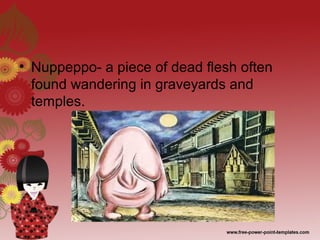
• Nuppeppo- a piece of dead flesh often
found wandering in graveyards and
temples.
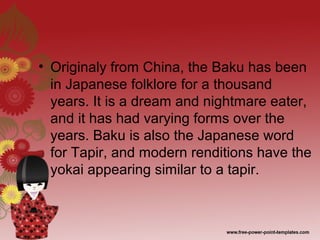
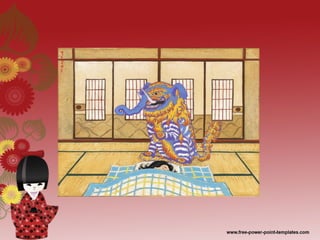
• Originaly from China, the Baku has been
in Japanese folklore for a thousand
years. It is a dream and nightmare eater,
and it has had varying forms over the
years. Baku is also the Japanese word
for Tapir, and modern renditions have the
yokai appearing similar to a tapir.
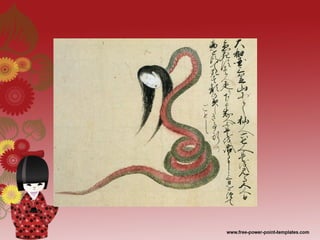
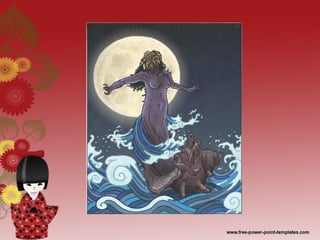
• Nureonna has the body of a snake and the
head of a woman. Exists in various sizes
up to 300 meters in length, and often
found on the seashore. has a habit of
sucking all the blood from its victims.
• A sazae is a shellfish known as Turban
Snail in English. When a turban snail
reaches 30 years of age it turns into a
"turban snail ogre", sazaeoni. It can turn
itself into a beautiful woman, and, as the
story goes, when rescued from the sea
by sailors will have sex with all of them
but cut off the testicles afterwards.
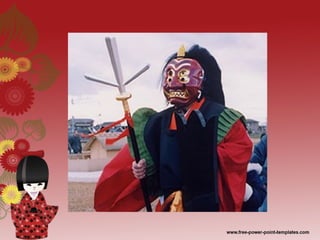
• Housoushi was a kind of exorcist who
used his four eyes to watch over the
four directions and dispel invisible
"pollution". He seems to be developed

from a Chinese shaman/magician.
There are still ceremonies held in
several Kyoto shrines involving
Houssoushi, but he somehow
dissapeared or fell out of favor in the
ninth century.
• Housoushi was a kind of exorcist who
used his four eyes to watch over the
four directions and dispel invisible
"pollution". He seems to be developed
from a Chinese shaman/magician.
There are still ceremonies held in
several Kyoto shrines involving
Houssoushi, but he somehow
dissapeared or fell out of favor in the
ninth century.
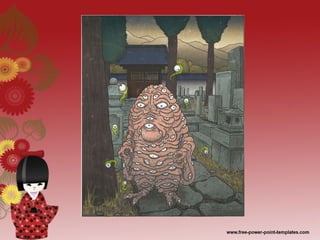
• Hyakume, literally "one hundred eyes", is
a yokai that protects shrines from thieves.
It is said that if you steal from a shrine
then one of hyakume's eyes will chase
after you until it attaches itself to you. It is
possible that this is related to the symbol
that was tattooed on convicted thieves.
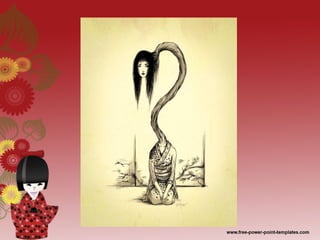
• Rokurokubi during the daytime look
just like normal people, but at night
they can stretch their necks to
tremendous lengths and seem to
delight in scaring people, especially it
is said, drunks. There are buddhist
versions of Rokurokubi that actually
were humans who broke buddhist
precepts, and were more bloodthirsty
and demonic than other Rokurokubi.
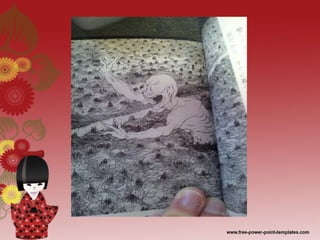
• Dorotabo was a hard-working farmer who
died. His son who inherited the land was a
bit of a wastrel who rather than work the
land sold it off. Whenever the new owner
tried to work in the paddies Dorotabo
would emerge from the mud screaming
"this is my land!!!". Interestingly his one
eye maybe connected with ancient fertility
rites, literally "the one-eyed trouser
snake"!
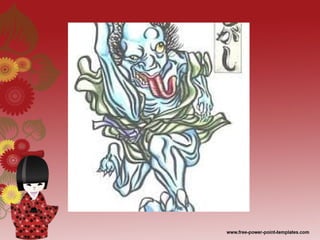
• Isogashi is the Japanese word for "busy",
and is an invisible spirit that possesses
people and drives them to busyness.(sana
saniban din tayo nito anez?)
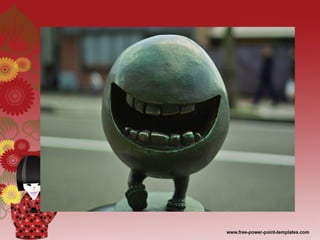
• Betobeto-san is invisible and
harmless, rather natural phenomenon
than monster. If you've ever been
walking down a dark country lane at
night and felt as if you are being
followed, but turn around and there is
no-one there, chances are it is
Betobetosan following you. The
solution is to say "Betobetosan!... go
ahead pleease" and he will pass you.
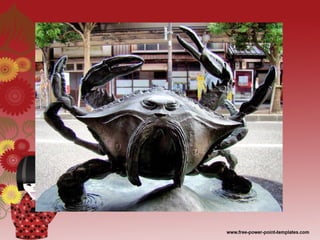
• Kanibouzu was a giant crab that hid in a
temple and took the form of a buddhist
monk. Whenever people visited the temple
he would kill and eat them.
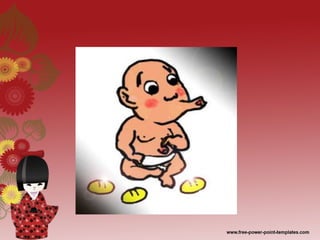
• Hyoutoku is a variation of Kyotoko. In
the story, a poor old couple meet a
beautiful woman in the forest and she
gives them a baby boy. They take him
home and notice that the little boy is
constantly poking his bellybutton until
eventually gold starts coming out of it
and the old couple become rich.
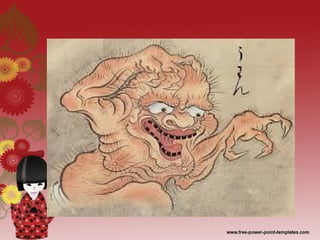
• Uwan is an invisible Yokai that inhabits old
houses and temples. His shouts can only
be heard inside the building. In the Edo
period artists began painting images of
various "invisible" yokai.
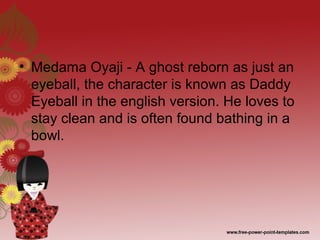
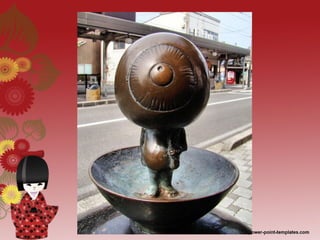
• Medama Oyaji - A ghost reborn as just an
eyeball, the character is known as Daddy
Eyeball in the english version. He loves to
stay clean and is often found bathing in a
bowl.
• Keukegen is completely covered in hair
and is known to cause disease in humans.
It inhabits damp, airless spaces, so the
solution is to open windows and doors and
allow some air circulation.
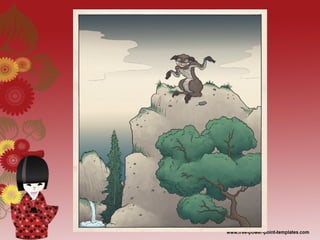
• Yamabiko is a tree spirit living in the
mountains that creates the echoes you
hear in the mountains
• Syunobon is a yokai originally from
Fukushima. When following you he
appears human, but will startle you by
reverting to his original form.
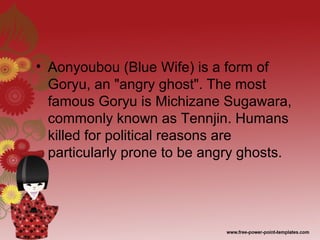
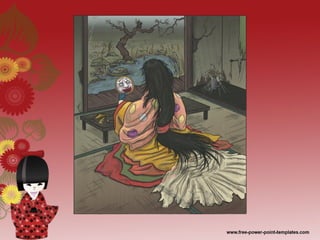
• Aonyoubou (Blue Wife) is a form of
Goryu, an "angry ghost". The most
famous Goryu is Michizane Sugawara,
commonly known as Tennjin. Humans
killed for political reasons are
particularly prone to be angry ghosts.
Report ghosts

Report ghosts

  • 1.
    Japanese Ghosts, Creatures, andMyths (disclaimer: Forgive the grammatical errors, I just 'copy-paste')
  • 2.
    • Yokai- (oftenspelled Youkai) ("apparitions", "spirits" or "demons") -Japanese folklorists and historians use yōkai as "supernatural or unaccountable phenomena to their informants" http://www.youtube.com/watch?v=yPDWAcW3BRc
  • 3.
    • Yurei- Yureiare ghosts or spirits, and tend to be similar to their western counterparts. • Obake- Obake (also called bakemono or simply bake) are creatures that have changed from one form to another, generally becoming more powerful in the process. Usually this change is due to the presence of negative feelings, and as
  • 4.
    • Oni- awide variety of creatures that inhabit Jigoku, the Buddhist hell.
  • 5.
    • Kappa- Kappasupposedly inhabit the ponds and rivers of Japan and have various features to aid them in this environment, such as webbed hands and feet.
  • 6.
    • Nurarihyon isa yokai from folklore that may have derived from stories of a large jellyfish. In modern stories he is considered to be the commander of all yokai, and has a habit of slipping into peoples houses while they are busy making dinner and helping himself to tea and tobacco.
  • 8.
    • Momonjii isa kind of bogeyman that carries children off into the forest and is used by parents to threaten their misbehaving kids. Believed to derive from Momonga, a kind of small flying squirrel that turns into momonjii upon reaching old age.
  • 10.
    • Gangikozou isa fish-eating water monster related to the kappa.
  • 11.
    • Nuppeppo- apiece of dead flesh often found wandering in graveyards and temples.
  • 12.
    • Originaly fromChina, the Baku has been in Japanese folklore for a thousand years. It is a dream and nightmare eater, and it has had varying forms over the years. Baku is also the Japanese word for Tapir, and modern renditions have the yokai appearing similar to a tapir.
  • 14.
    • Nureonna hasthe body of a snake and the head of a woman. Exists in various sizes up to 300 meters in length, and often found on the seashore. has a habit of sucking all the blood from its victims.
  • 16.
    • A sazaeis a shellfish known as Turban Snail in English. When a turban snail reaches 30 years of age it turns into a "turban snail ogre", sazaeoni. It can turn itself into a beautiful woman, and, as the story goes, when rescued from the sea by sailors will have sex with all of them but cut off the testicles afterwards.
  • 18.
    • Housoushi wasa kind of exorcist who used his four eyes to watch over the four directions and dispel invisible "pollution". He seems to be developed from a Chinese shaman/magician. There are still ceremonies held in several Kyoto shrines involving Houssoushi, but he somehow dissapeared or fell out of favor in the ninth century.
  • 19.
    • Housoushi wasa kind of exorcist who used his four eyes to watch over the four directions and dispel invisible "pollution". He seems to be developed from a Chinese shaman/magician. There are still ceremonies held in several Kyoto shrines involving Houssoushi, but he somehow dissapeared or fell out of favor in the ninth century.
  • 21.
    • Hyakume, literally"one hundred eyes", is a yokai that protects shrines from thieves. It is said that if you steal from a shrine then one of hyakume's eyes will chase after you until it attaches itself to you. It is possible that this is related to the symbol that was tattooed on convicted thieves.
  • 23.
    • Rokurokubi duringthe daytime look just like normal people, but at night they can stretch their necks to tremendous lengths and seem to delight in scaring people, especially it is said, drunks. There are buddhist versions of Rokurokubi that actually were humans who broke buddhist precepts, and were more bloodthirsty and demonic than other Rokurokubi.
  • 25.
    • Dorotabo wasa hard-working farmer who died. His son who inherited the land was a bit of a wastrel who rather than work the land sold it off. Whenever the new owner tried to work in the paddies Dorotabo would emerge from the mud screaming "this is my land!!!". Interestingly his one eye maybe connected with ancient fertility rites, literally "the one-eyed trouser snake"!
  • 27.
    • Isogashi isthe Japanese word for "busy", and is an invisible spirit that possesses people and drives them to busyness.(sana saniban din tayo nito anez?)
  • 29.
    • Betobeto-san isinvisible and harmless, rather natural phenomenon than monster. If you've ever been walking down a dark country lane at night and felt as if you are being followed, but turn around and there is no-one there, chances are it is Betobetosan following you. The solution is to say "Betobetosan!... go ahead pleease" and he will pass you.
  • 31.
    • Kanibouzu wasa giant crab that hid in a temple and took the form of a buddhist monk. Whenever people visited the temple he would kill and eat them.
  • 33.
    • Hyoutoku isa variation of Kyotoko. In the story, a poor old couple meet a beautiful woman in the forest and she gives them a baby boy. They take him home and notice that the little boy is constantly poking his bellybutton until eventually gold starts coming out of it and the old couple become rich.
  • 35.
    • Uwan isan invisible Yokai that inhabits old houses and temples. His shouts can only be heard inside the building. In the Edo period artists began painting images of various "invisible" yokai.
  • 37.
    • Medama Oyaji- A ghost reborn as just an eyeball, the character is known as Daddy Eyeball in the english version. He loves to stay clean and is often found bathing in a bowl.
  • 39.
    • Keukegen iscompletely covered in hair and is known to cause disease in humans. It inhabits damp, airless spaces, so the solution is to open windows and doors and allow some air circulation.
  • 41.
    • Yamabiko isa tree spirit living in the mountains that creates the echoes you hear in the mountains
  • 43.
    • Syunobon isa yokai originally from Fukushima. When following you he appears human, but will startle you by reverting to his original form.
  • 45.
    • Aonyoubou (BlueWife) is a form of Goryu, an "angry ghost". The most famous Goryu is Michizane Sugawara, commonly known as Tennjin. Humans killed for political reasons are particularly prone to be angry ghosts.