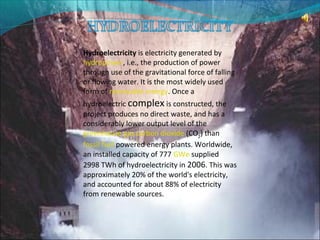
Hydroelectricity is electricity generated by
hydropower, i.e., the production of power
through use of the gravitational force of falling
or flowing water. It is the most widely used
form of renewable energy. Once a
hydroelectric complex is constructed, the
project produces no direct waste, and has a
considerably lower output level of the
greenhouse gas carbon dioxide (CO2
) than
fossil fuel powered energy plants. Worldwide,
an installed capacity of 777 GWe supplied
2998 TWh of hydroelectricity in 2006. This was
approximately 20% of the world's electricity,
and accounted for about 88% of electricity
from renewable sources.
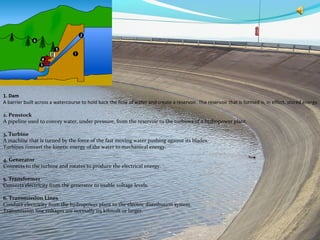
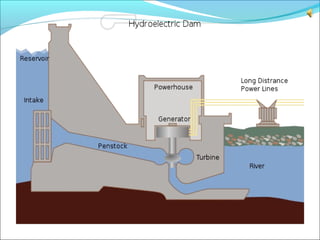
1. Dam
A barrier built across a watercourse to hold back the flow of water and create a reservoir. The reservoir that is formed is, in effect, stored energy.
2. Penstock
A pipeline used to convey water, under pressure, from the reservoir to the turbines of a hydropower plant.
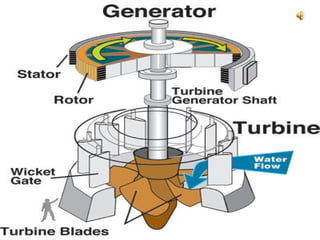
3. Turbine
A machine that is turned by the force of the fast moving water pushing against its blades.
Turbines convert the kinetic energy of the water to mechanical energy.
4. Generator
Connects to the turbine and rotates to produce the electrical energy.
5. Transformer
Converts electricity from the generator to usable voltage levels.
6. Transmission Lines
Conduct electricity from the hydropower plant to the electric distribution system.
Transmission line voltages are normally 115 kilovolt or larger.
Solar energy, radiant light and heat from the Sun, has been harnessed by
humans since ancient times using a range of ever-evolving technologies. Solar
radiation, along with secondary solar-powered resources such as wind and wave
power, hydroelectricity and biomass, account for most of the available
renewable energy on Earth. Only a minuscule fraction of the available solar
energy is used.
Solar powered electrical generation relies on heat engines and photovoltaics.
Solar energy's uses are limited only by human ingenuity. A partial list of solar
applications includes space heating and cooling through solar architecture,
potable water via distillation and disinfection, daylighting, solar hot water,
solar cooking, and high temperature process heat for industrial purposes.To
harvest the solar energy, the most common way is to use solar panels
Solar technologies are broadly characterized as either passive solar or active
solar depending on the way they capture, convert and distribute solar energy.
Active solar techniques include the use of photovoltaic panels and solar thermal
collectors to harness the energy. Passive solar techniques include orienting a
building to the Sun, selecting materials with favorable thermal mass or light
dispersing properties, and designing spaces that naturally circulate air.
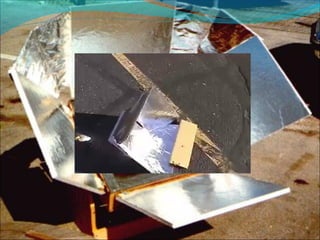
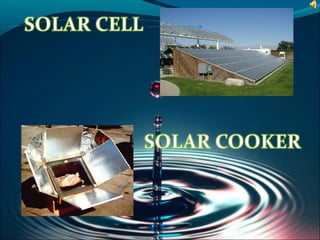
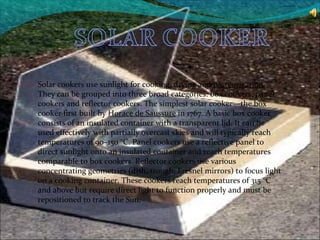
Solar cookers use sunlight for cooking, drying and pasteurization.
They can be grouped into three broad categories: box cookers, panel
cookers and reflector cookers. The simplest solar cooker—the box
cooker first built by Horace de Saussure in 1767. A basic box cooker
consists of an insulated container with a transparent lid. It can be
used effectively with partially overcast skies and will typically reach
temperatures of 90–150 °C. Panel cookers use a reflective panel to
direct sunlight onto an insulated container and reach temperatures
comparable to box cookers. Reflector cookers use various
concentrating geometries (dish, trough, Fresnel mirrors) to focus light
on a cooking container. These cookers reach temperatures of 315 °C
and above but require direct light to function properly and must be
repositioned to track the Sun.
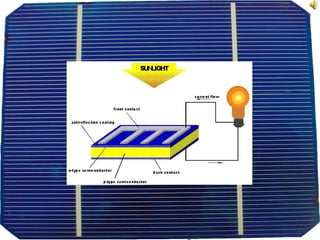
A solar cell is a device that converts the energy of sunlight directly into
electricity by the photovoltaic effect. Sometimes the term solar cell is
reserved for devices intended specifically to capture energy from
sunlight, while the term photovoltaic cell is used when the light source
is unspecified. Assemblies of cells are used to make solar panels, solar
modules, or photovoltaic arrays. Photovoltaics is the field of technology
and research related to the application of solar cells in producing
electricity for practical use. The energy generated this way is an
example of solar energy (also called solar power).
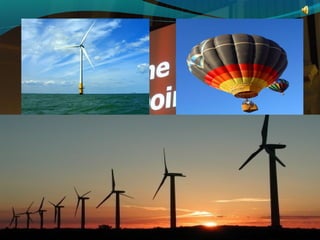
Wind energy is the kinetic energy associated with the movement of atmospheric air. It has
been used for hundreds of years for sailing, grinding grain, and for irrigation. Wind energy
systems convert this kinetic energy to more useful forms of power. Wind energy systems for
irrigation and milling have been in use since ancient times and since the beginning of the
20th
century it is being used to generate electric power. Windmills for water pumping have
been installed in many countries particularly in the rural areas.
•Wind turbines transform the energy in the wind into mechanical power, which can then be
used directly for grinding etc. or further converting to electric power to generate electricity.
Wind turbines can be used singly or in clusters called ‘wind farms’. Small wind turbines called
aero-generators can be used to charge large batteries.
•Five nations – Germany, USA, Denmark, Spain and India – account for 80% of the world’s
installed wind energy capacity. Wind energy continues to be the fastest growing renewable
energy source with worldwide wind power installed capacity reaching 14,000 MW.
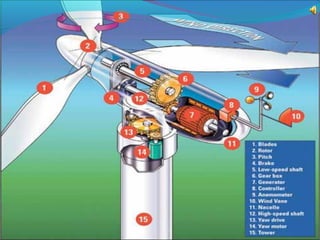
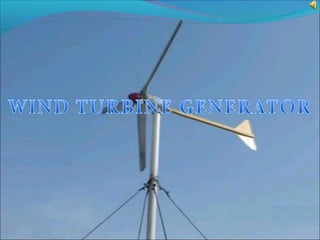
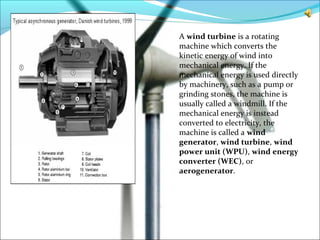
A wind turbine is a rotating
machine which converts the
kinetic energy of wind into
mechanical energy. If the
mechanical energy is used directly
by machinery, such as a pump or
grinding stones, the machine is
usually called a windmill. If the
mechanical energy is instead
converted to electricity, the
machine is called a wind
generator, wind turbine, wind
power unit (WPU), wind energy
converter (WEC), or
aerogenerator.
Renewable energy
Renewable energy

Renewable energy

  • 4.
    Hydroelectricity is electricitygenerated by hydropower, i.e., the production of power through use of the gravitational force of falling or flowing water. It is the most widely used form of renewable energy. Once a hydroelectric complex is constructed, the project produces no direct waste, and has a considerably lower output level of the greenhouse gas carbon dioxide (CO2 ) than fossil fuel powered energy plants. Worldwide, an installed capacity of 777 GWe supplied 2998 TWh of hydroelectricity in 2006. This was approximately 20% of the world's electricity, and accounted for about 88% of electricity from renewable sources.
  • 5.
    1. Dam A barrierbuilt across a watercourse to hold back the flow of water and create a reservoir. The reservoir that is formed is, in effect, stored energy. 2. Penstock A pipeline used to convey water, under pressure, from the reservoir to the turbines of a hydropower plant. 3. Turbine A machine that is turned by the force of the fast moving water pushing against its blades. Turbines convert the kinetic energy of the water to mechanical energy. 4. Generator Connects to the turbine and rotates to produce the electrical energy. 5. Transformer Converts electricity from the generator to usable voltage levels. 6. Transmission Lines Conduct electricity from the hydropower plant to the electric distribution system. Transmission line voltages are normally 115 kilovolt or larger.
  • 10.
    Solar energy, radiantlight and heat from the Sun, has been harnessed by humans since ancient times using a range of ever-evolving technologies. Solar radiation, along with secondary solar-powered resources such as wind and wave power, hydroelectricity and biomass, account for most of the available renewable energy on Earth. Only a minuscule fraction of the available solar energy is used. Solar powered electrical generation relies on heat engines and photovoltaics. Solar energy's uses are limited only by human ingenuity. A partial list of solar applications includes space heating and cooling through solar architecture, potable water via distillation and disinfection, daylighting, solar hot water, solar cooking, and high temperature process heat for industrial purposes.To harvest the solar energy, the most common way is to use solar panels Solar technologies are broadly characterized as either passive solar or active solar depending on the way they capture, convert and distribute solar energy. Active solar techniques include the use of photovoltaic panels and solar thermal collectors to harness the energy. Passive solar techniques include orienting a building to the Sun, selecting materials with favorable thermal mass or light dispersing properties, and designing spaces that naturally circulate air.
  • 12.
    Solar cookers usesunlight for cooking, drying and pasteurization. They can be grouped into three broad categories: box cookers, panel cookers and reflector cookers. The simplest solar cooker—the box cooker first built by Horace de Saussure in 1767. A basic box cooker consists of an insulated container with a transparent lid. It can be used effectively with partially overcast skies and will typically reach temperatures of 90–150 °C. Panel cookers use a reflective panel to direct sunlight onto an insulated container and reach temperatures comparable to box cookers. Reflector cookers use various concentrating geometries (dish, trough, Fresnel mirrors) to focus light on a cooking container. These cookers reach temperatures of 315 °C and above but require direct light to function properly and must be repositioned to track the Sun.
  • 13.
    A solar cellis a device that converts the energy of sunlight directly into electricity by the photovoltaic effect. Sometimes the term solar cell is reserved for devices intended specifically to capture energy from sunlight, while the term photovoltaic cell is used when the light source is unspecified. Assemblies of cells are used to make solar panels, solar modules, or photovoltaic arrays. Photovoltaics is the field of technology and research related to the application of solar cells in producing electricity for practical use. The energy generated this way is an example of solar energy (also called solar power).
  • 16.
    Wind energy isthe kinetic energy associated with the movement of atmospheric air. It has been used for hundreds of years for sailing, grinding grain, and for irrigation. Wind energy systems convert this kinetic energy to more useful forms of power. Wind energy systems for irrigation and milling have been in use since ancient times and since the beginning of the 20th century it is being used to generate electric power. Windmills for water pumping have been installed in many countries particularly in the rural areas. •Wind turbines transform the energy in the wind into mechanical power, which can then be used directly for grinding etc. or further converting to electric power to generate electricity. Wind turbines can be used singly or in clusters called ‘wind farms’. Small wind turbines called aero-generators can be used to charge large batteries. •Five nations – Germany, USA, Denmark, Spain and India – account for 80% of the world’s installed wind energy capacity. Wind energy continues to be the fastest growing renewable energy source with worldwide wind power installed capacity reaching 14,000 MW.
  • 20.
    A wind turbineis a rotating machine which converts the kinetic energy of wind into mechanical energy. If the mechanical energy is used directly by machinery, such as a pump or grinding stones, the machine is usually called a windmill. If the mechanical energy is instead converted to electricity, the machine is called a wind generator, wind turbine, wind power unit (WPU), wind energy converter (WEC), or aerogenerator.