Relationship Analysis
CMS 330
Chapters 10,12,13
Presented by Van N. Ly
Introduction:
Our friendship developed through
the years
• Peter is a close male friend.
• We met at a local coffee shop: Freeport Café.
• Once a month, on Sunday, we have a coffee
brunch get-together ritual.
• We share lots of intimate friendship and
conversation over coffee.
Theory #1
Concept from Chapter 10
Communication Privacy
Management Theory
• “Culture “
• Gender
• Motivation
• Risk benefit analysis
• Context
Communicating Personal
Information: Disclosure
and Privacy
Theory # 1 from Textbook
Culture: “Individualistic cultures value privacy more than
collectivist culture.”
Gender: “Men and women who strongly identify as masculine or
feminine are likely to use rules for disclosure and privacy that
correspond to sex role expectation.
Motivation: “Motivation to disclose or maintain privacy is
influenced by our risk-benefit analysis.”
Risk Benefit Analysis: “Weighing what advantages we might gain
by disclosing private information or maintaining private
information against the danger.”
Content: “ Privacy and disclosure rule”
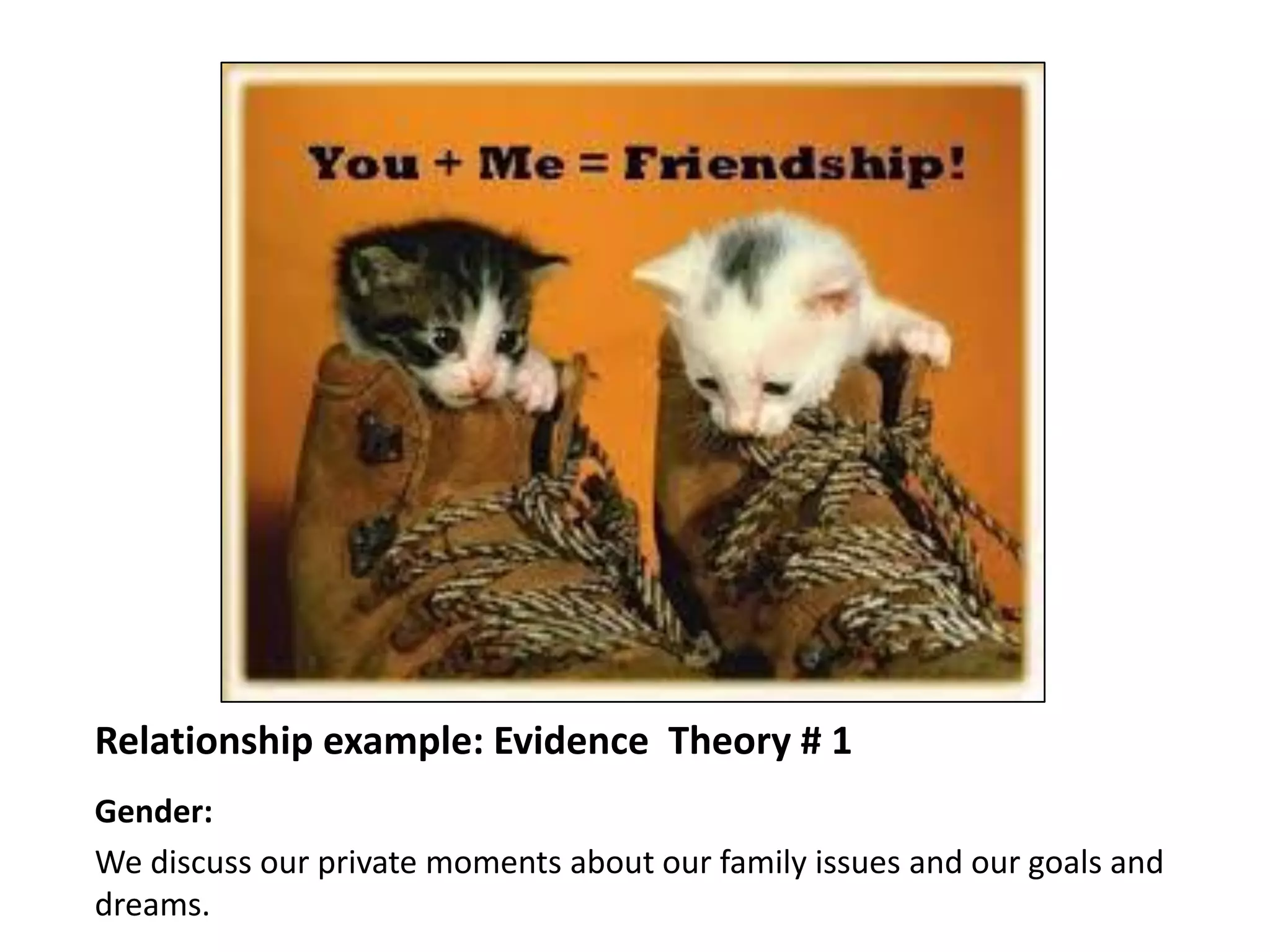
Relationship example: Evidence Theory # 1
Gender:
We discuss our private moments about our family issues and our goals and
dreams.
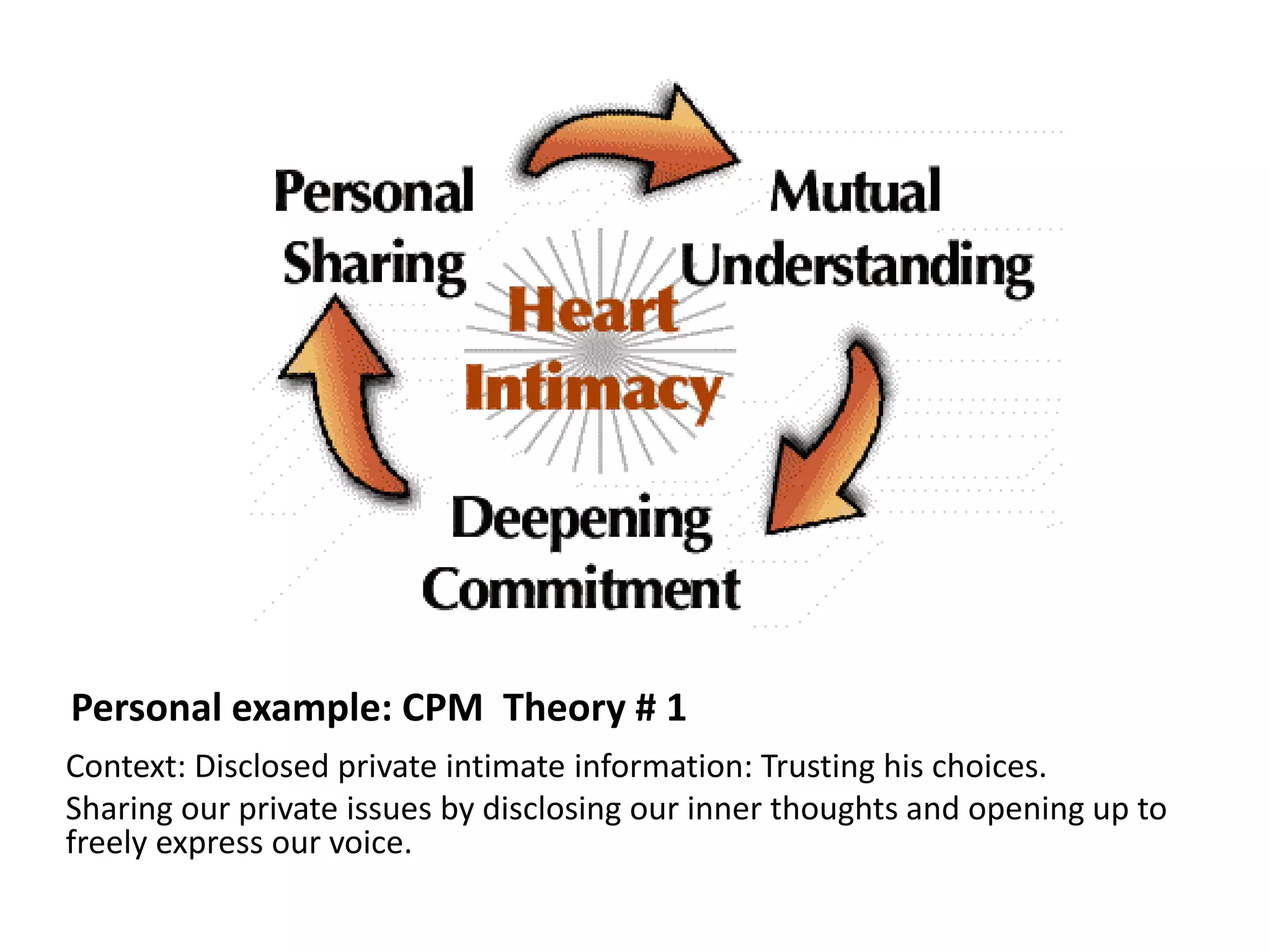
Personal example: CPM Theory # 1
Context: Disclosed private intimate information: Trusting his choices.
Sharing our private issues by disclosing our inner thoughts and opening up to
freely express our voice.
Theory # 2 from Textbook:
Effects of Disclosure and Privacy on
Relationships:
• Effects on Intimacy: “ Relationships cycle between
disclosure and privacy.”
• Effects on Reciprocity: “The mutual disclosure of
similarly sensitive information by both partners.”
• Information co-ownership: “The private information
that each partner has shared with the other so that it
is now jointly held.”
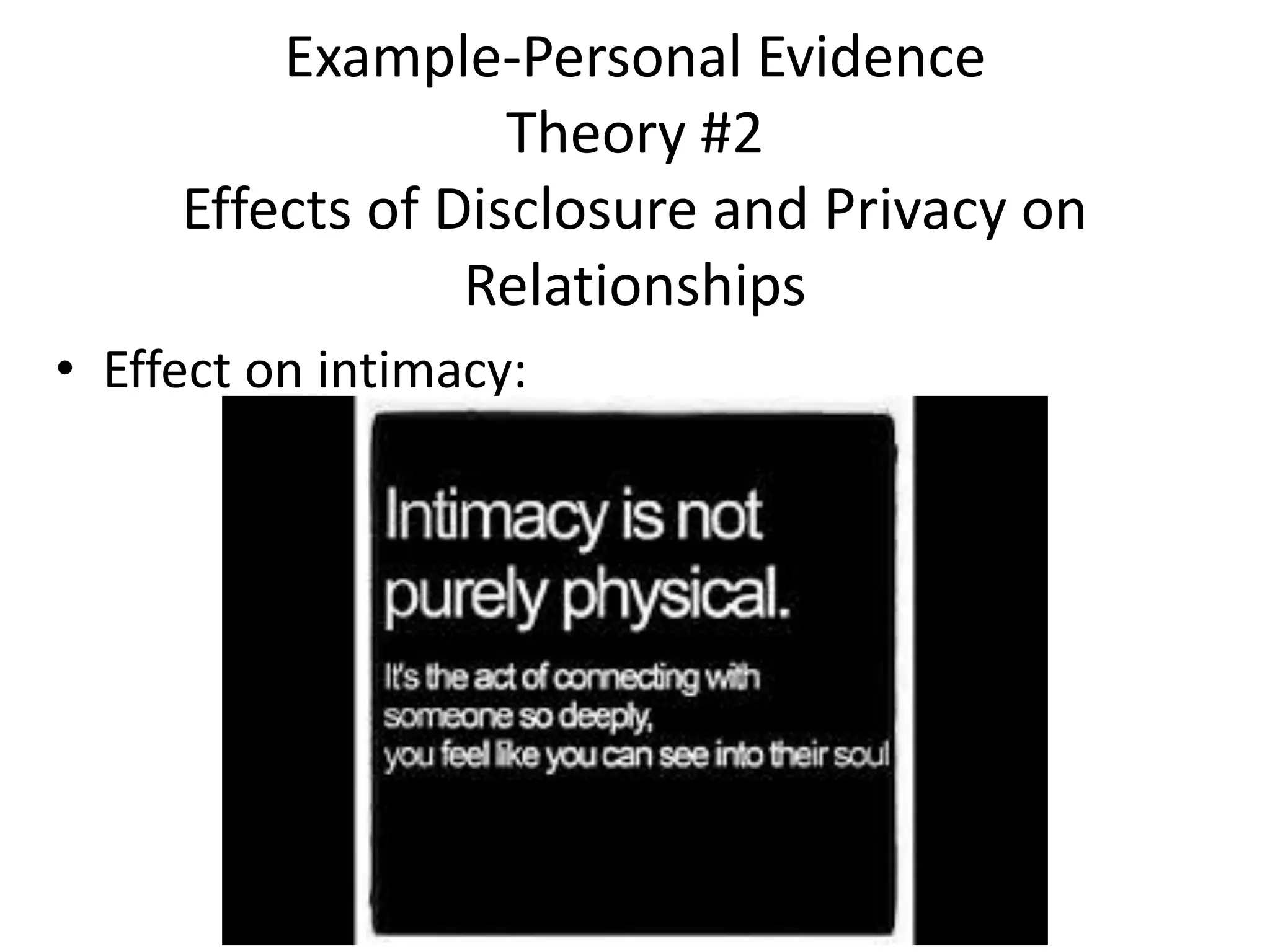
• Effect on intimacy:
Example-Personal Evidence
Theory #2
Effects of Disclosure and Privacy on
Relationships
• We talked about everything that was on our minds.
We never kept any secrets from each other.
Example-Personal Evidence:
Theory #2
Effects on Reciprocity
Our friendship is based on trusting
one another to do the right thing.
Example-Personal Evidence:
Theory #2
Information Co-ownership
Theory #3 from textbook:
Digitally managing your personal
information:
• Social media: “ The rapid development and frequent
use of social media have transformed how we
practice digital communication and manage our
personal information.”
• Warranting Theory: “Proposes that you will place
more credibility on information about the personal
characteristics and behaviors of others when the
online information cannot be easily manipulated by
the person whom it describes.”
Example-Personal Evidence:
Theory #3
Digitally managing your personal information
• We use Facebook Messenger as a mode of
communication on a weekly basis.
• When we are not meeting face to face, in person.
Chapter 11:
Using Interpersonal Influence
• Theory #4
• Processing Persuasive Messages: The
Elaboration Likelihood Model ( ELM).
• Persuasion: The use of verbal messages
designed to influence the attitudes and
behavior of others.
Example-Personal Evidence:
Theory #4
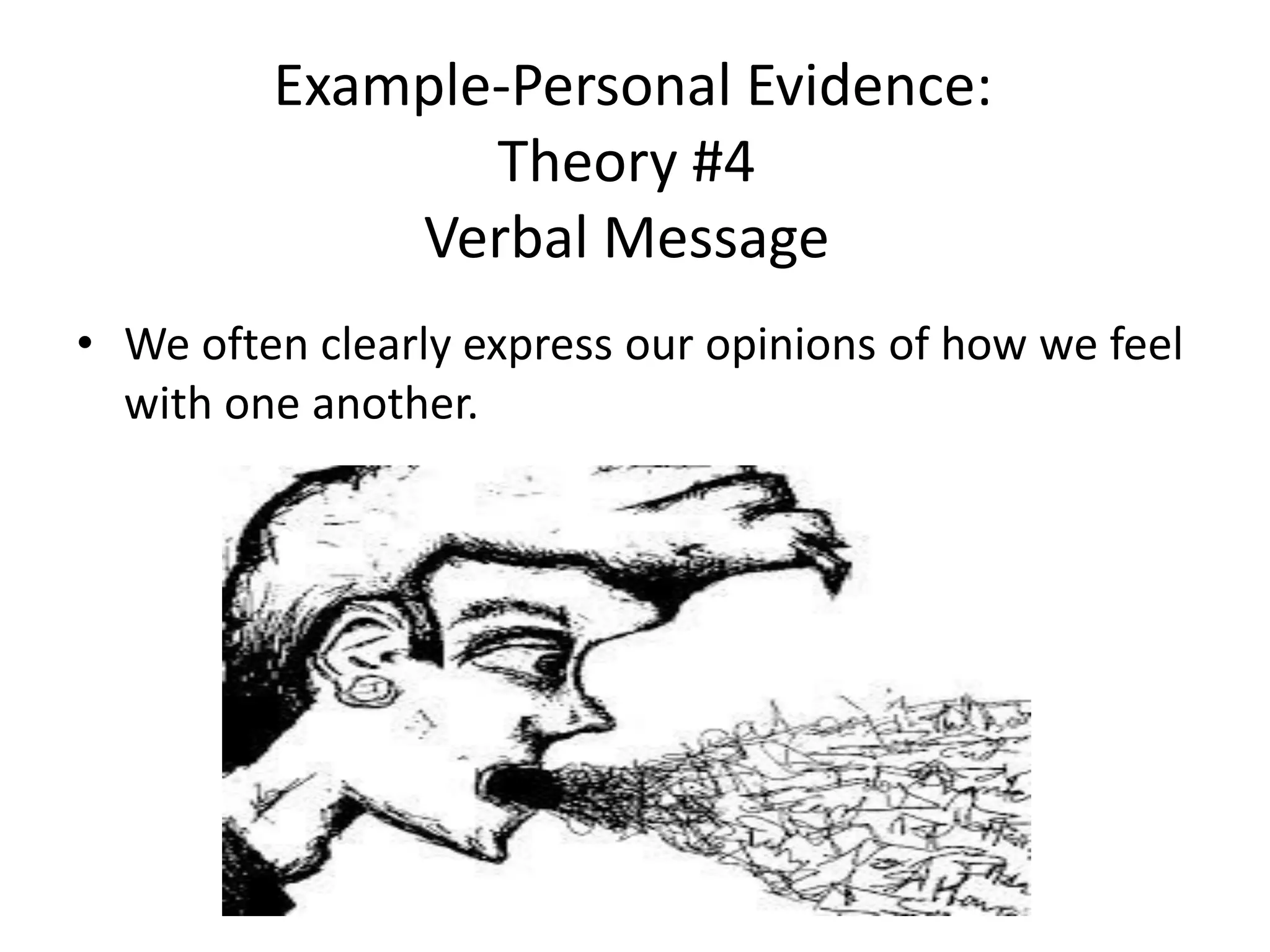
Verbal Message
• We often clearly express our opinions of how we feel
with one another.
Theory #4 from textbook
Elaboration Likelihood Model (ELM) of
Persuasion
• ELM: “A dual processing theory that holds
that people will use either heuristics-mental
shortcuts or more elaborate critical thinking
skills.”
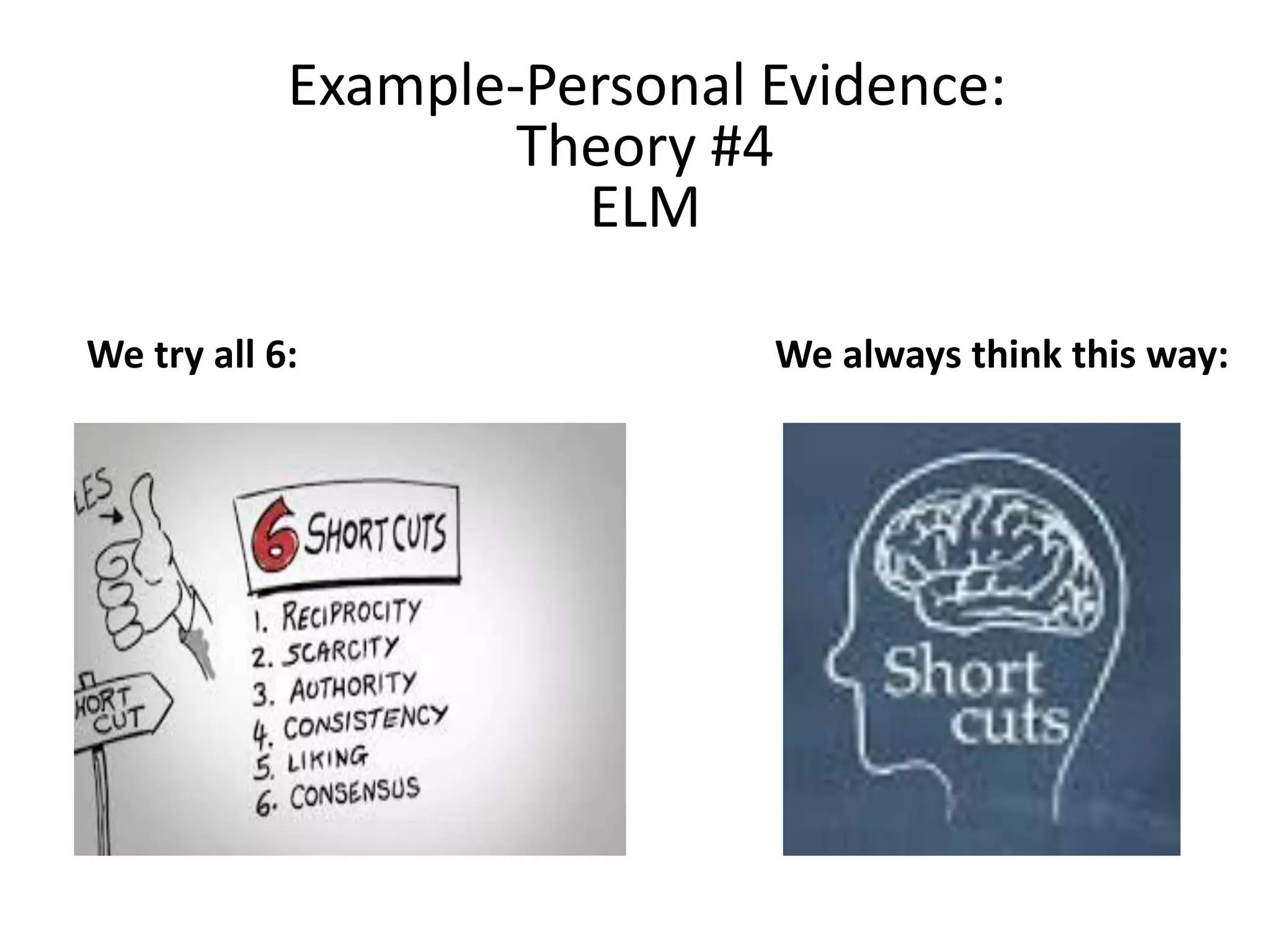
We try all 6: We always think this way:
Example-Personal Evidence:
Theory #4
ELM
• Interpersonal conflict: “Defined broadly as disagreement between
two independent people who perceive that they have incompatible
goals.”
• There are six types of conflict:
• Pseudoconflict. “ Caused by perceptual differences”
• Fact conflict. “Caused by a dispute over the truth”
• Value Conflict. “Caused by deep-seated moral belief”
• Policy Conflict. “ Caused by differences over a preferred plan”
• Ego Conflict. “Caused by both parties insisting on being the winner”
• Metaconflict. “ Caused by the process of communication”
Chapter 12: Managing Conflict
Theory #5 from textbook
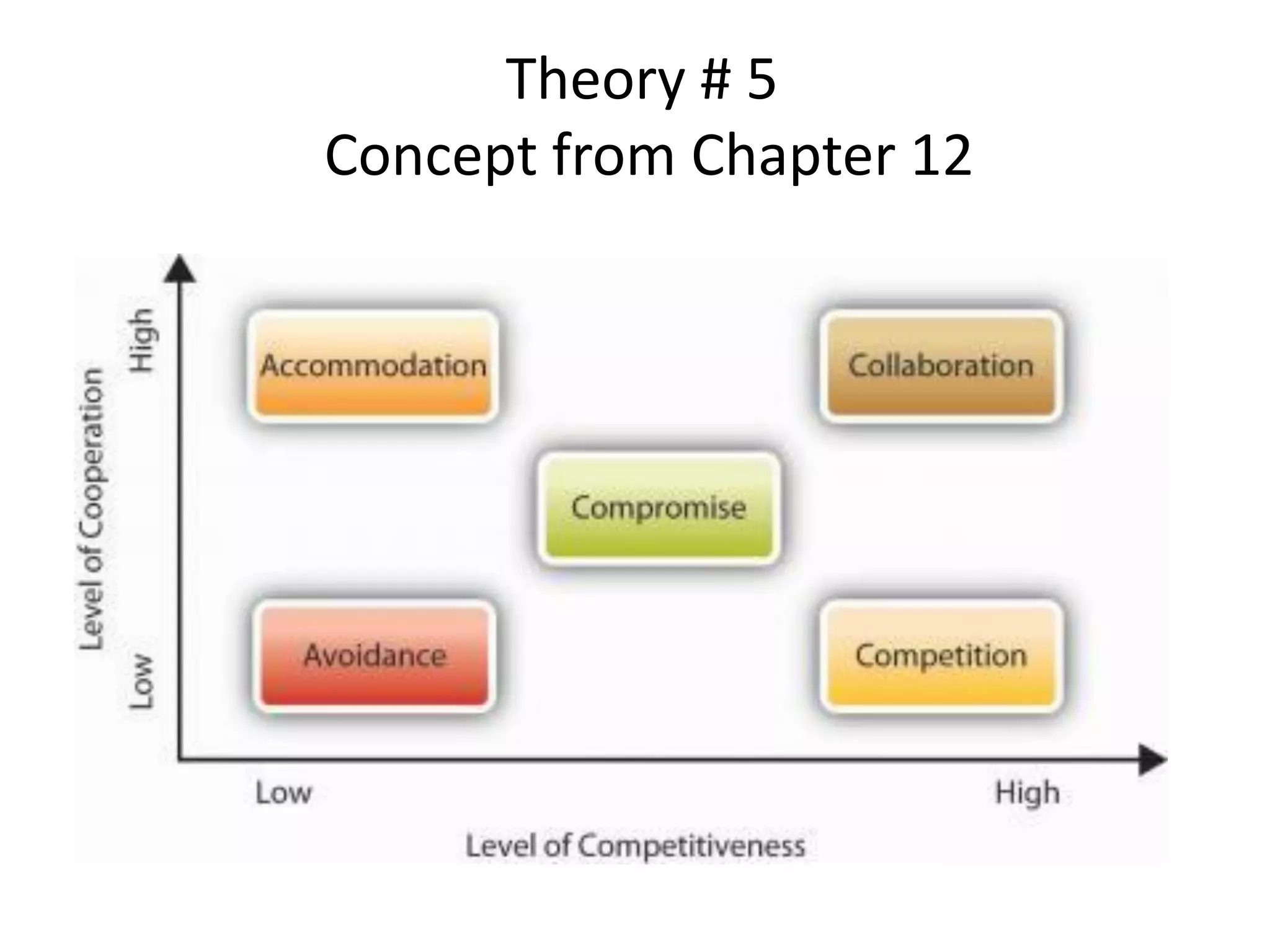
Theory # 5
Concept from Chapter 12
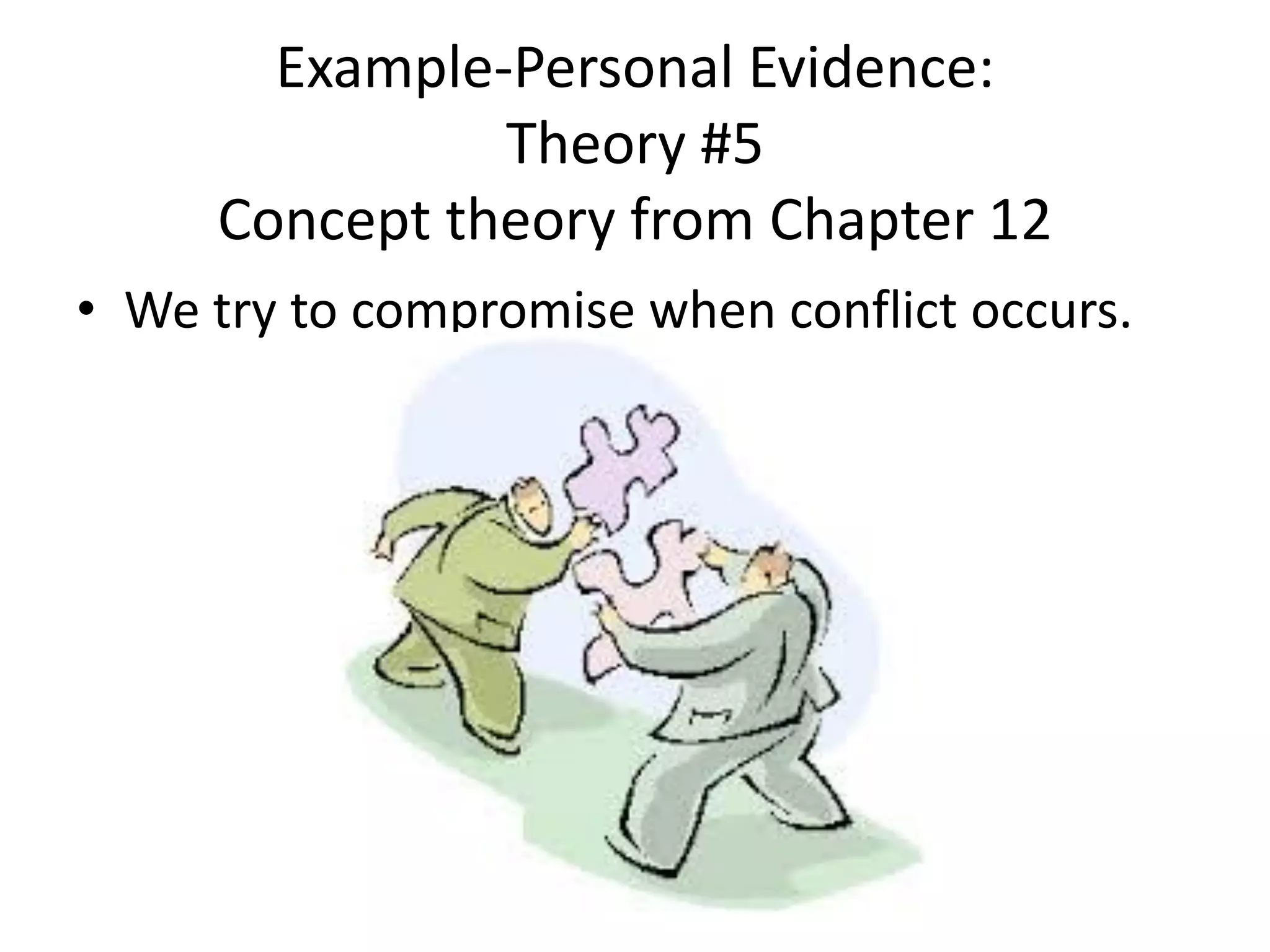
• We try to compromise when conflict occurs.
Example-Personal Evidence:
Theory #5
Concept theory from Chapter 12
Families: Parent-Child Communication
Nurturing parental communication: “Messages that encourage a child’s
physical, social, emotional, and intellectual development.”
Controlling parental communication: “Messages that attempt to influence
or regulate a child’s behavior.”
Theory #6
Concept from Chapter 13
Communicating in Intimate Relationship
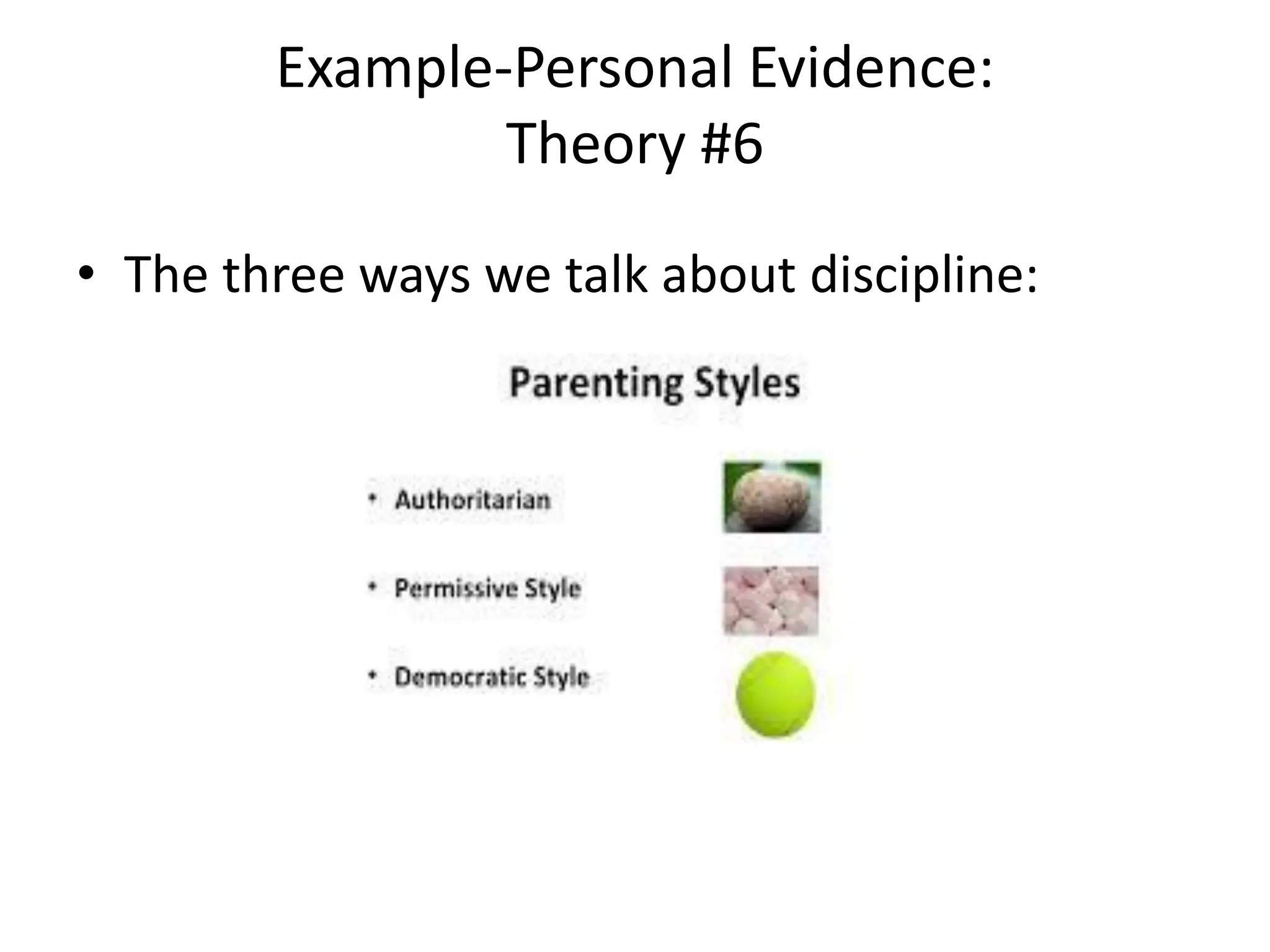
• The three ways we talk about discipline:
Example-Personal Evidence:
Theory #6
Theory # 7
Concept from Chapter 13:
Friendship
Initiation: “First initial conversation”
Responsiveness: “Listening and responding skills help
nurture the friendship.”
Self disclosure: “Share personal feelings and information
with each other.”
Emotional support: “Friends will disagree with each
other’s ideas.”
Example-Personal Evidence:
Theory #7
Chapter 13
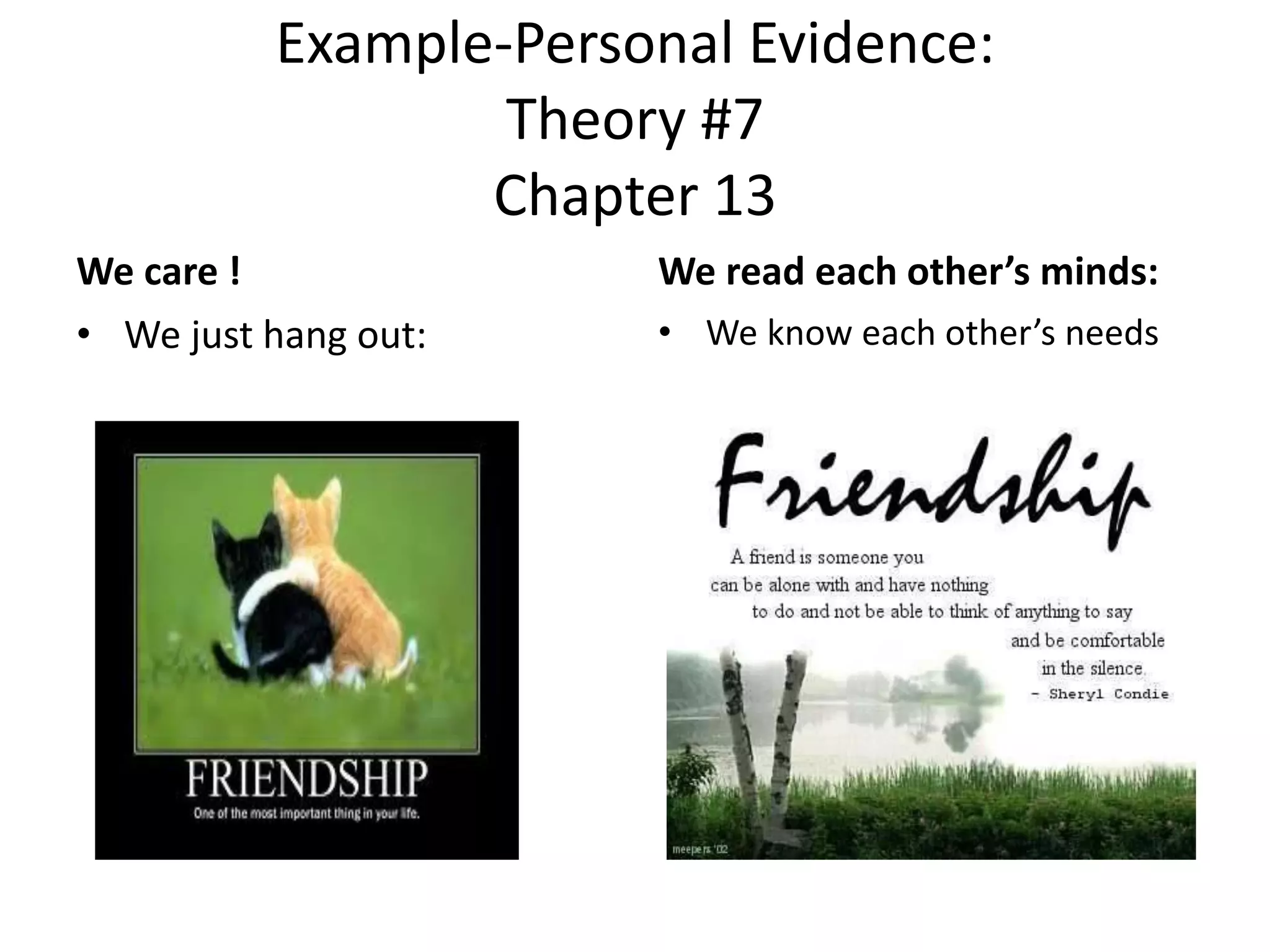
We care !
• We just hang out:
We read each other’s minds:
• We know each other’s needs
Theory # 8
Concept from Chapter 13
Longterm Romantic Relationship
• Independence: “Less reliant on their partners for
emotional support”
• Ideology: “The partners adhere to long established
belief system”
• Communication: “ Conflict avoidance” now called
“Communication”
• Traditional couples: “Couples share a traditional
ideology about longterm relationship.”
Example-Personal Evidence:
Theory #8
Chapter 13
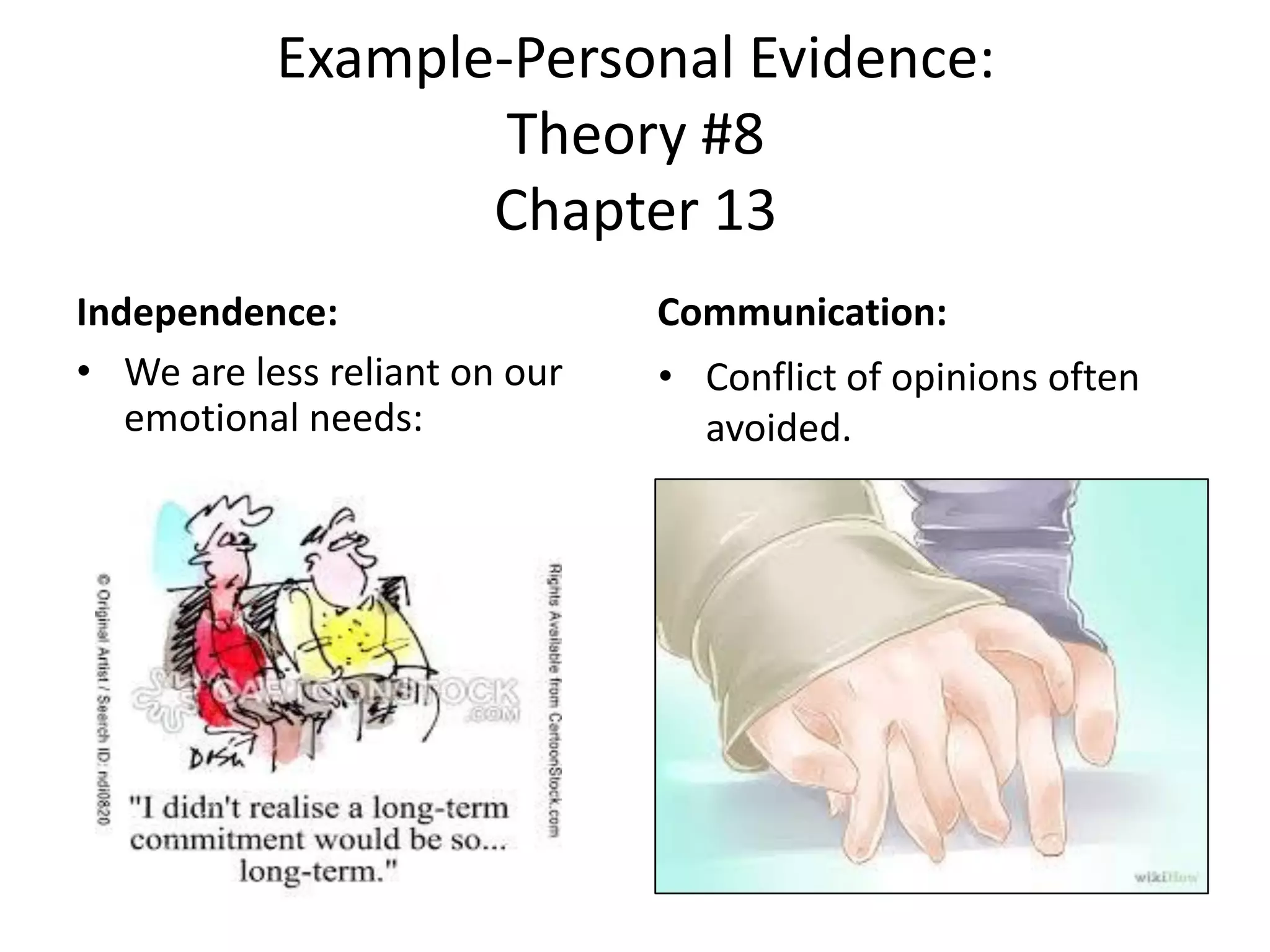
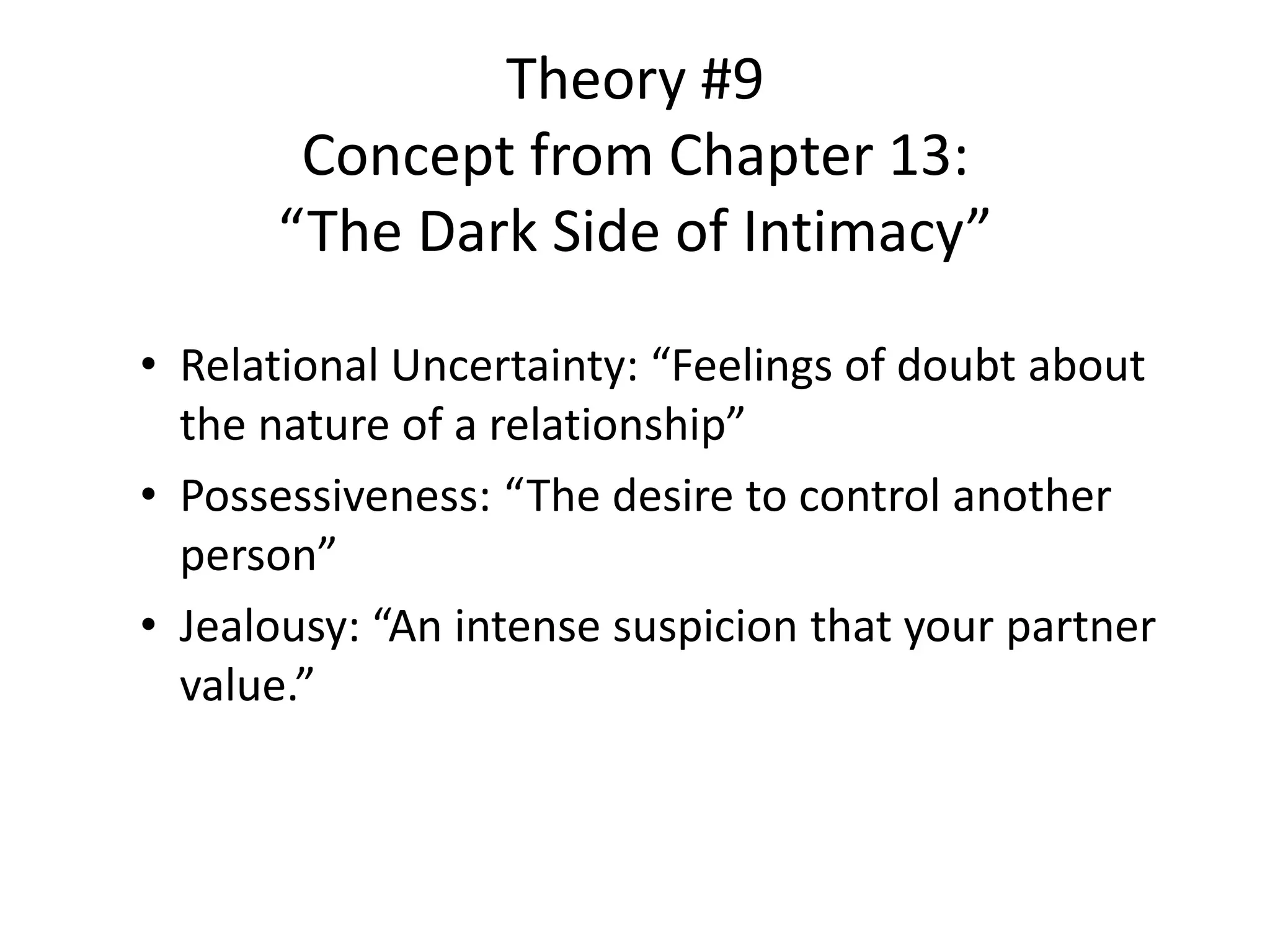
Independence:
• We are less reliant on our
emotional needs:
Communication:
• Conflict of opinions often
avoided.
Theory #9
Concept from Chapter 13:
“The Dark Side of Intimacy”
• Relational Uncertainty: “Feelings of doubt about
the nature of a relationship”
• Possessiveness: “The desire to control another
person”
• Jealousy: “An intense suspicion that your partner
value.”
Example-Personal Evidence:
Theory #9
Chapter 10
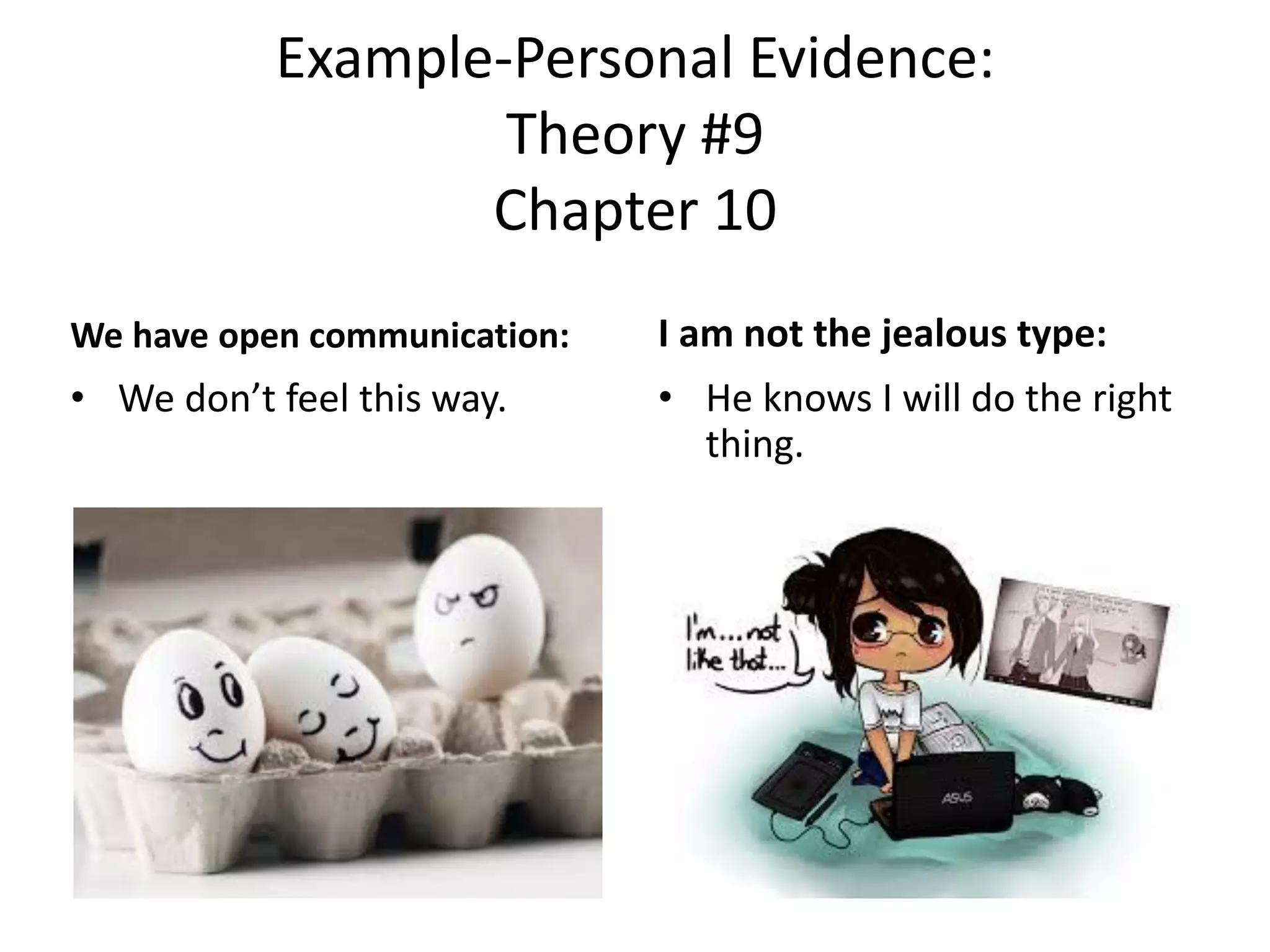
We have open communication:
• We don’t feel this way.
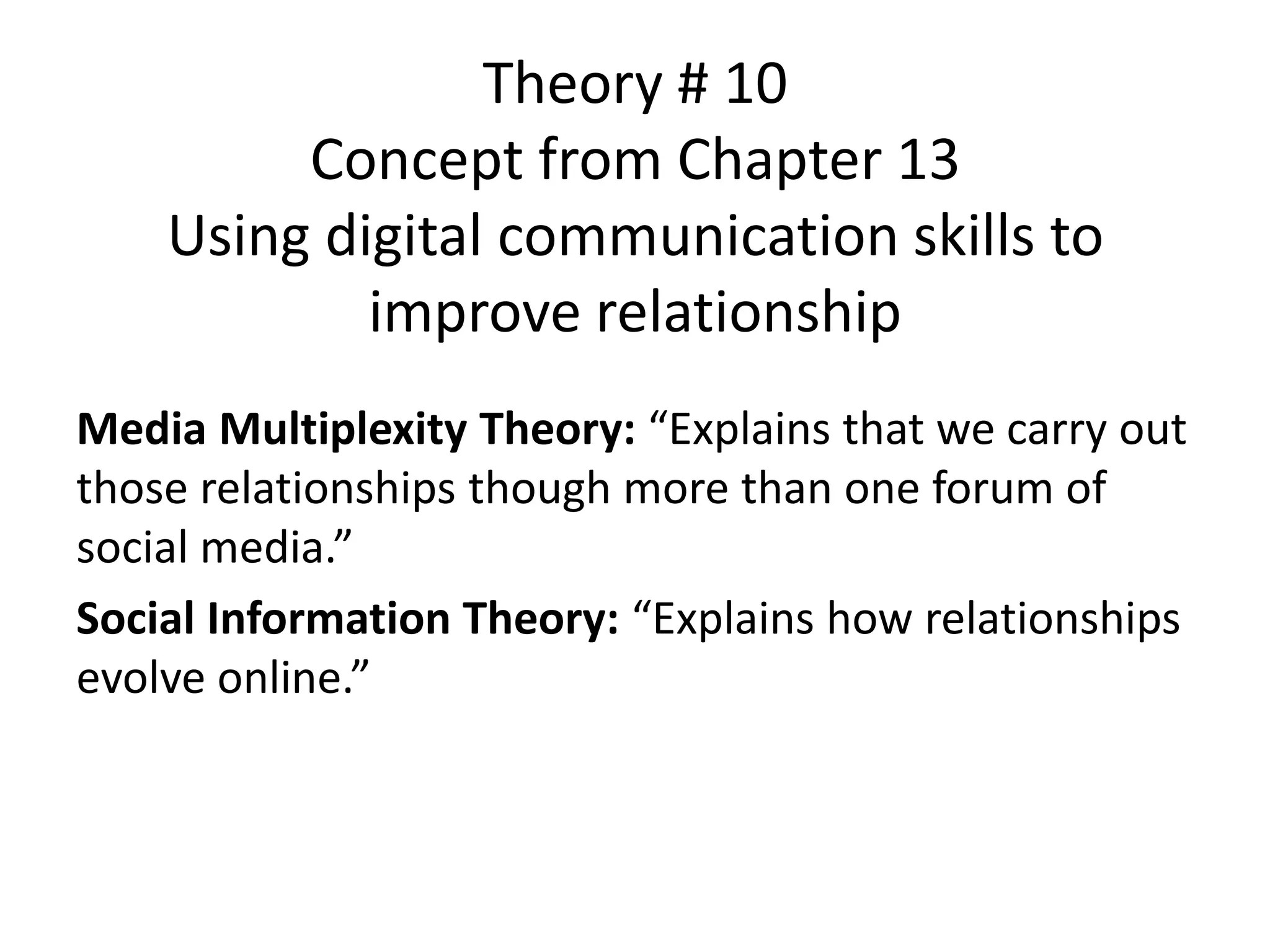
I am not the jealous type:
• He knows I will do the right
thing.
Theory # 10
Concept from Chapter 13
Using digital communication skills to
improve relationship
Media Multiplexity Theory: “Explains that we carry out
those relationships though more than one forum of
social media.”
Social Information Theory: “Explains how relationships
evolve online.”
Example-Personal Evidence:
Theory # 10
Chapter 13
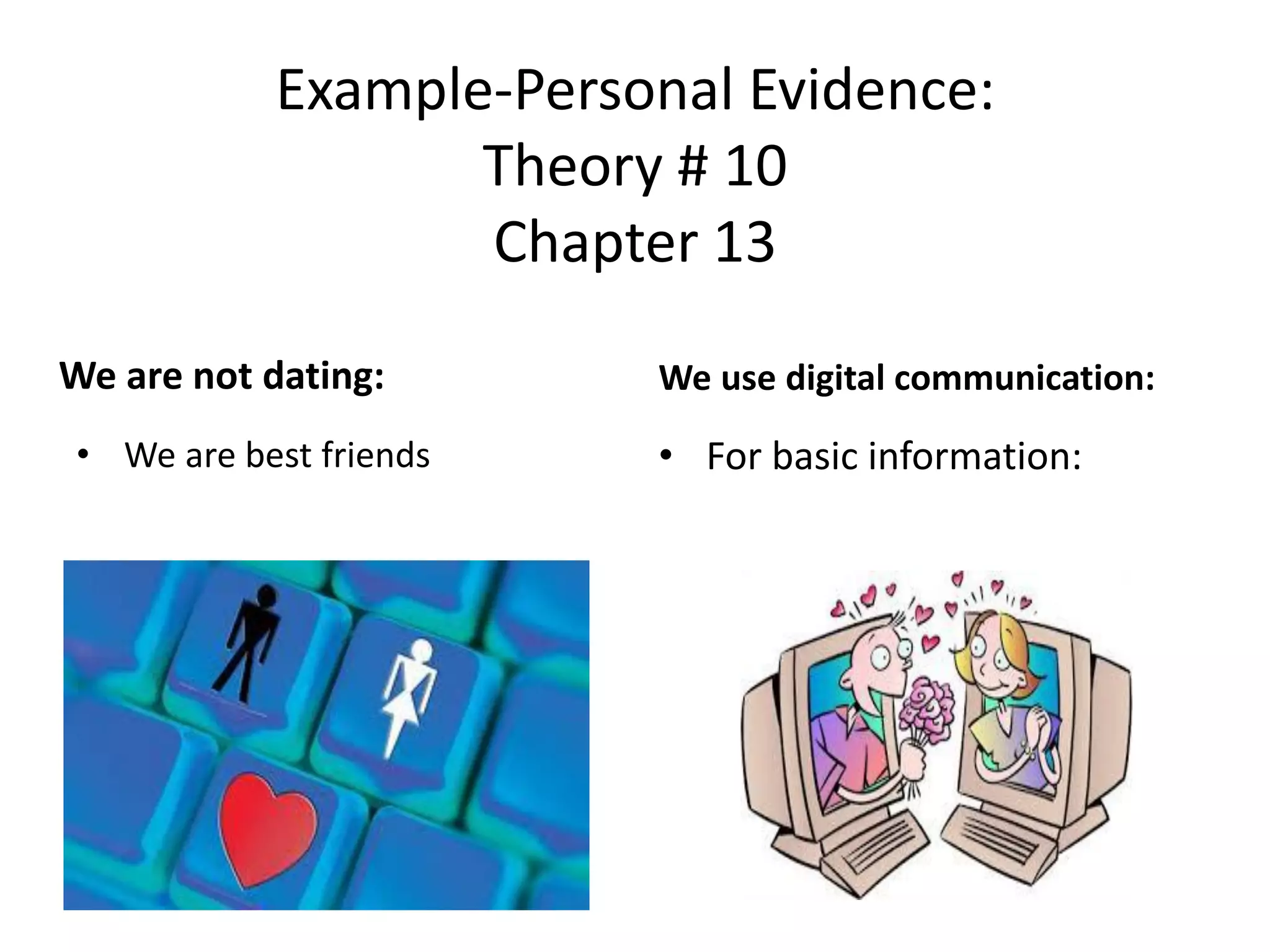
We are not dating:
• We are best friends
We use digital communication:
• For basic information:
Conclusion:
• Through the years, Peter and I have shared
many intimate conversations about our family
issues, and many other conflicts that we
encountered. Our friendship remains strong,
however, because of our trust and mutual
respect for one another.

Relationship analysis cms 330 powerpoint presentation

  • 1.
    Relationship Analysis CMS 330 Chapters10,12,13 Presented by Van N. Ly
  • 2.
    Introduction: Our friendship developedthrough the years • Peter is a close male friend. • We met at a local coffee shop: Freeport Café. • Once a month, on Sunday, we have a coffee brunch get-together ritual. • We share lots of intimate friendship and conversation over coffee.
  • 3.
    Theory #1 Concept fromChapter 10 Communication Privacy Management Theory • “Culture “ • Gender • Motivation • Risk benefit analysis • Context Communicating Personal Information: Disclosure and Privacy
  • 4.
    Theory # 1from Textbook Culture: “Individualistic cultures value privacy more than collectivist culture.” Gender: “Men and women who strongly identify as masculine or feminine are likely to use rules for disclosure and privacy that correspond to sex role expectation. Motivation: “Motivation to disclose or maintain privacy is influenced by our risk-benefit analysis.” Risk Benefit Analysis: “Weighing what advantages we might gain by disclosing private information or maintaining private information against the danger.” Content: “ Privacy and disclosure rule”
  • 5.
    Relationship example: EvidenceTheory # 1 Gender: We discuss our private moments about our family issues and our goals and dreams.
  • 6.
    Personal example: CPMTheory # 1 Context: Disclosed private intimate information: Trusting his choices. Sharing our private issues by disclosing our inner thoughts and opening up to freely express our voice.
  • 7.
    Theory # 2from Textbook: Effects of Disclosure and Privacy on Relationships: • Effects on Intimacy: “ Relationships cycle between disclosure and privacy.” • Effects on Reciprocity: “The mutual disclosure of similarly sensitive information by both partners.” • Information co-ownership: “The private information that each partner has shared with the other so that it is now jointly held.”
  • 8.
    • Effect onintimacy: Example-Personal Evidence Theory #2 Effects of Disclosure and Privacy on Relationships
  • 9.
    • We talkedabout everything that was on our minds. We never kept any secrets from each other. Example-Personal Evidence: Theory #2 Effects on Reciprocity
  • 10.
    Our friendship isbased on trusting one another to do the right thing. Example-Personal Evidence: Theory #2 Information Co-ownership
  • 11.
    Theory #3 fromtextbook: Digitally managing your personal information: • Social media: “ The rapid development and frequent use of social media have transformed how we practice digital communication and manage our personal information.” • Warranting Theory: “Proposes that you will place more credibility on information about the personal characteristics and behaviors of others when the online information cannot be easily manipulated by the person whom it describes.”
  • 12.
    Example-Personal Evidence: Theory #3 Digitallymanaging your personal information • We use Facebook Messenger as a mode of communication on a weekly basis. • When we are not meeting face to face, in person.
  • 13.
    Chapter 11: Using InterpersonalInfluence • Theory #4 • Processing Persuasive Messages: The Elaboration Likelihood Model ( ELM). • Persuasion: The use of verbal messages designed to influence the attitudes and behavior of others.
  • 14.
    Example-Personal Evidence: Theory #4 VerbalMessage • We often clearly express our opinions of how we feel with one another.
  • 15.
    Theory #4 fromtextbook Elaboration Likelihood Model (ELM) of Persuasion • ELM: “A dual processing theory that holds that people will use either heuristics-mental shortcuts or more elaborate critical thinking skills.”
  • 16.
    We try all6: We always think this way: Example-Personal Evidence: Theory #4 ELM
  • 17.
    • Interpersonal conflict:“Defined broadly as disagreement between two independent people who perceive that they have incompatible goals.” • There are six types of conflict: • Pseudoconflict. “ Caused by perceptual differences” • Fact conflict. “Caused by a dispute over the truth” • Value Conflict. “Caused by deep-seated moral belief” • Policy Conflict. “ Caused by differences over a preferred plan” • Ego Conflict. “Caused by both parties insisting on being the winner” • Metaconflict. “ Caused by the process of communication” Chapter 12: Managing Conflict Theory #5 from textbook
  • 18.
    Theory # 5 Conceptfrom Chapter 12
  • 19.
    • We tryto compromise when conflict occurs. Example-Personal Evidence: Theory #5 Concept theory from Chapter 12
  • 20.
    Families: Parent-Child Communication Nurturingparental communication: “Messages that encourage a child’s physical, social, emotional, and intellectual development.” Controlling parental communication: “Messages that attempt to influence or regulate a child’s behavior.” Theory #6 Concept from Chapter 13 Communicating in Intimate Relationship
  • 21.
    • The threeways we talk about discipline: Example-Personal Evidence: Theory #6
  • 22.
    Theory # 7 Conceptfrom Chapter 13: Friendship Initiation: “First initial conversation” Responsiveness: “Listening and responding skills help nurture the friendship.” Self disclosure: “Share personal feelings and information with each other.” Emotional support: “Friends will disagree with each other’s ideas.”
  • 23.
    Example-Personal Evidence: Theory #7 Chapter13 We care ! • We just hang out: We read each other’s minds: • We know each other’s needs
  • 24.
    Theory # 8 Conceptfrom Chapter 13 Longterm Romantic Relationship • Independence: “Less reliant on their partners for emotional support” • Ideology: “The partners adhere to long established belief system” • Communication: “ Conflict avoidance” now called “Communication” • Traditional couples: “Couples share a traditional ideology about longterm relationship.”
  • 25.
    Example-Personal Evidence: Theory #8 Chapter13 Independence: • We are less reliant on our emotional needs: Communication: • Conflict of opinions often avoided.
  • 26.
    Theory #9 Concept fromChapter 13: “The Dark Side of Intimacy” • Relational Uncertainty: “Feelings of doubt about the nature of a relationship” • Possessiveness: “The desire to control another person” • Jealousy: “An intense suspicion that your partner value.”
  • 27.
    Example-Personal Evidence: Theory #9 Chapter10 We have open communication: • We don’t feel this way. I am not the jealous type: • He knows I will do the right thing.
  • 28.
    Theory # 10 Conceptfrom Chapter 13 Using digital communication skills to improve relationship Media Multiplexity Theory: “Explains that we carry out those relationships though more than one forum of social media.” Social Information Theory: “Explains how relationships evolve online.”
  • 29.
    Example-Personal Evidence: Theory #10 Chapter 13 We are not dating: • We are best friends We use digital communication: • For basic information:
  • 30.
    Conclusion: • Through theyears, Peter and I have shared many intimate conversations about our family issues, and many other conflicts that we encountered. Our friendship remains strong, however, because of our trust and mutual respect for one another.