Regenerating Forests And Livelihoods In Nepal A New Lease On Life Thierry
Regenerating Forests And Livelihoods In Nepal A New Lease On Life Thierry
Regenerating Forests And Livelihoods In Nepal A New Lease On Life Thierry
Regenerating Forests And Livelihoods In Nepal A New Lease On Life Thierry
Regenerating Forests And Livelihoods In Nepal A New Lease On Life Thierry
1.
Regenerating Forests AndLivelihoods In Nepal A
New Lease On Life Thierry download
https://ebookbell.com/product/regenerating-forests-and-
livelihoods-in-nepal-a-new-lease-on-life-thierry-5308410
Explore and download more ebooks at ebookbell.com
2.
Here are somerecommended products that we believe you will be
interested in. You can click the link to download.
Tropical Forests Regional Paths Of Destruction And Regeneration In The
Late Twentieth Century Thomas Rudel
https://ebookbell.com/product/tropical-forests-regional-paths-of-
destruction-and-regeneration-in-the-late-twentieth-century-thomas-
rudel-51908554
Tropical Forests Regional Paths Of Destruction And Regeneration In The
Late Twentieth Century Thomas A Rudel
https://ebookbell.com/product/tropical-forests-regional-paths-of-
destruction-and-regeneration-in-the-late-twentieth-century-thomas-a-
rudel-1876296
Ecology Of Riparian Forests In Japan Disturbance Life History And
Regeneration 1st Edition H Sakio
https://ebookbell.com/product/ecology-of-riparian-forests-in-japan-
disturbance-life-history-and-regeneration-1st-edition-h-sakio-2186298
Soil Science For Regenerative Agriculture A Comprehensive Guide To
Living Soil Notill Gardening Composting And Natural Farming Complete
With A Stepbystep Action Plan To Quickly Grow Soil Amlie Des Plantes
https://ebookbell.com/product/soil-science-for-regenerative-
agriculture-a-comprehensive-guide-to-living-soil-notill-gardening-
composting-and-natural-farming-complete-with-a-stepbystep-action-plan-
to-quickly-grow-soil-amlie-des-plantes-54216210
3.
Second Growth ThePromise Of Tropical Forest Regeneration In An Age Of
Deforestation Robin L Chazdon
https://ebookbell.com/product/second-growth-the-promise-of-tropical-
forest-regeneration-in-an-age-of-deforestation-robin-l-
chazdon-51442852
Second Growth The Promise Of Tropical Forest Regeneration In An Age Of
Deforestation Robin L Chazdon
https://ebookbell.com/product/second-growth-the-promise-of-tropical-
forest-regeneration-in-an-age-of-deforestation-robin-l-chazdon-4689834
Regenerating Americas Legacy Cities 1st Edition Alan Mallach Lavea
Brachman
https://ebookbell.com/product/regenerating-americas-legacy-cities-1st-
edition-alan-mallach-lavea-brachman-51650628
Regenerating Deprived Urban Areas A Cross National Analysis Of
Areabased Initiatives Rene Peter Hohmann
https://ebookbell.com/product/regenerating-deprived-urban-areas-a-
cross-national-analysis-of-areabased-initiatives-rene-peter-
hohmann-51809352
Regenerating Japan Organicism Modernism And National Destiny In Oka
Asajirs Evolution And Human Life Gregory Sullivan
https://ebookbell.com/product/regenerating-japan-organicism-modernism-
and-national-destiny-in-oka-asajirs-evolution-and-human-life-gregory-
sullivan-51922804
6.
Regenerating forests andlivelihoods
in Nepal
- A new lease on life
Unfolding the experience of 20 years of poverty
alleviation through leasehold forestry in the
Himalayas
7.
Authors:
Bala Ram Adhikari– Department of Forests, Government of Nepal
Nav Raj Baral – Forestry specialist
Jim Hancock – Natural resources Officer, Food and Agriculture
Organization (FAO-UN), Rome
Govinda Kafley – Team Leader, TA-LFLP
Pashupathi Koirala – Department of Forests, Government of Nepal
Jaap Reijmerinck – Agriculture and rural Economist
Brett Shapiro, lead author, technical writer
Under the coordination of:
Benoit Thierry, Country programme manager, International Fund for
Agriculture Development (IFAD), Rome
Editors:
Kenichi Shono, Forestry Officer, FAO Regional Asia Pacific Office
(FAO RAP)
CABI, UK
8.
REGENERATING FORESTS AND
LIVELIHOODSIN NEPAL:
A NEW LEASE ON LIFE
UNFOLDING THE EXPERIENCE OF 20 YEARS OF
POVERTY ALLEVIATION THROUGH LEASEHOLD
FORESTRY IN THE HIMALAYAS
Published by
The Food and Agriculture Organization of the United Nations (FAO)
and
International Fund for Agricultural Development (IFAD)
by arrangement with
CABI
7
Table of Contents
Acronyms......................................................................................08
List of tables, charts and pictures ..................................................09
Preface-Foreword ..........................................................................10
Introduction ...................................................................................15
1 Rural Nepal: its people, its forests..............................................22
2 An initiative takes root – HLFFDP, the first leasehold forestry
project............................................................................................43
3 The initiative gathers force – LFLP, the second leasehold forestry
project............................................................................................58
4 Impacts of leasehold forestry....................................................116
5 Beyond the two projects, a national perspective and institutional
context .........................................................................................150
6 When the programme leaves ....................................................179
7 Conclusions ..............................................................................213
About the Authors .......................................................................220
List of LFLP TA project publications .........................................228
References ...................................................................................230
13.
8
Acronyms
BISEP-ST Biodiversity SectorProgram for Siwaliks and Tarai
CBFM Community Based Forest Management
CFUG Community Forest User Group
DFID Department for International Development
DFO District Forest Office/Officer
DoF Department of Forest
Ex-ACT EX-Ante Carbon balance Tool
FAO Food and Agriculture Organisation of the United
Nations
GDP Gross Domestic Product
Ha Hectare
HLFFDP Hill Leasehold Forestry and Forage Development
Project
ICIMOD International Centre for Integrated Mountain
Development
IFAD International Fund for Agricultural Development
IPS Inter Press Service
LFLP Leasehold Forestry and Livestock Programme
LFP Livelihoods and Forestry Programme
LFUG Leasehold Forestry Users Group
MAPs Medicinal and Aromatic Plants
MFSC Ministry of Forest and Soil Conservation
MSFP Multi Stakeholder Forestry Program
NGO Non-governmental Organization
NPC National Planning Commission
NTFP Non-Timber Forest Product
REDD+ Reduce Emissions from Deforestation and Forest
Degradation
SNV Netherlands Development Organisation
TA Technical Assistance
UN United Nations
UNDP United Nations Development Programme
WUPAP Western Upland Poverty Alleviation Project
Currency conversion:
1 USD (US Dollar) = 100 NPRs (Nepalese Rupees)
14.
9
List of tables,charts and pictures
Tables
Table 1: Coverage details of programmes (page 37)
Table 2: Community and leasehold forestry on the ground (page 40)
Table 3: How community and leasehold forestry proponents view each
other (page 41)
Table 4: Summary of programme components/sub-components (page 60)
Table 5: Goat rearing status (page 89)
Table 6: Animal health services (page 92)
Table 7: Leasehold forest user group performance: comparison between
first and second project (page 109)
Table 8: Average number of forest product species by district (range in
brackets) (page 127)
Table 9: Sources of forest products for households to meet their subsistence
needs (page 130)
Table 10: Comparison of livestock production, consumption, sales and
incomes between leasehold households and control households (page 135)
Table 11: Forest area, per ownership category (page 155)
Figures
Figure 1: Distribution of caste and ethnic groups in Nepal (page 28)
Figure 2: Percentage of decision-making role (page 52)
Figure 3: Collaboration with other agencies (page 78)
Figure 4: Availability of forage, fodder from leasehold forests (page 82)
Figure 5: Status of goat term deposit (page 99)
Figure 6: Overall status in leasehold forest user group (page 107)
Figure 7: Performance by component (page 108)
Figure 8: Trends in weeding and plantation activities (page 123)
Figure 9: Shift in forest land cover from handover to 2010 (page 125)
Figure 10: Forest cover change in different forest management regimes
(page 129)
Figure 11: Goat herd size (page 134)
15.
10
Preface
“Regenerating forests andlivelihoods in Nepal - A new lease on
life”, recounts a success story about a ground-breaking and
innovative rural development operation in the Himalayan foothills
that made a real difference: during a lifespan of 20 years, it
transformed increasingly degraded land, where farmers carved out a
meager existence, into a fertile and prosperous zone where they
could thrive. The ingredients to the programme’s success, from both
technical and human perspectives, are described in this book and
demonstrate people’s extraordinary commitment in this country
prone to natural disasters, particularly earthquakes. This positive
experience deserves to be shared in this time of major global
commitment to environmental and climate change management
Spearheaded under the Roof of the World, the Leasehold
Forestry and Livestock Programme (LFLP) teams worked closely
with the local inhabitants, civil society and the government. The
tasks ranged from bringing in cultivation techniques that protected
the environment, to introducing new local crops and goats, to
promoting an entrepreneurial spirit and marketing expertise. Every
intervention was carefully conducted to mitigate climate change and
to help most vulnerable farmers become more resilient to its effects
as well as improving their family income.
Farmers who took part in the Leasehold Forestry
programme speak candidly about how the initiative helped them to
increase their production of tree crops and livestock without
degrading the precious forest upon which their livelihoods depend.
Time and time again, their testimonies bear witness to the
importance of “inclusiveness” – ensuring that everyone in their
community, especially women and young people, take part in every
aspect of the learning and the doing.
16.
11
The forest wasallocated to communities with 40-year
renewable leases and then restored by the Leasehold Forestry
programme staff and villagers to create viable and sustainable
incomes and reduce poverty. The result? The dramatic “greening” of
once barren lands; abundant harvests and new products; a higher
standard of living – in short, a better life and one that holds great
promise for the generations to come.
Although aid development initiatives produce thousands of
documents, the valuable information they contain remains buried in
bureaucracies and in the “grey literature”, never to surface despite
the extraordinary changes that these initiatives may have brought to
the lives and livelihoods of millions of poor people. This book is a
collaborative effort to dig out 20 years of experience of a successful
Nepali project that sought to give the most remote and vulnerable
families in the country a decent life. After two decades, it was time
to take stock of the efforts, processes and results of the project in
order to share them beyond the steep boundaries of the Himalayas.
This book was written within the framework of the
Leasehold Forestry and Livestock Programme as part of an initiative
of the Government of Nepal, the International Fund for Agricultural
Development (IFAD) and the Food and Agriculture Organization
(FAO) to promote knowledge management in rural development.
The results can be seen at: www.lflp.gov.np .
Through an extensive collaboration which brought together
the efforts of a team established and coordinated by Benoît Thierry,
IFAD country programme manager and Jim Hancock from FAO’s
Investment Centre, the book gradually came to life. The collective
work of drafting and editing, which was led by Brett Shapiro with
the support of Govinda Kafley, Pashupati Koirala and Jaap
Reijmerink, was also supported “on the ground” by Bala Ram
Adhikari, Project Manager, Nav Raj Baral, Consultant, and for
editing by Kenichi Shono from FAO Bangkok.
17.
12
From the endof 2011, project staff have been encouraged to
collect all historic paper and electronic documentation (reports,
analyses, databases, posters, photos and videos) in order to create a
comprehensive electronic library of the project over the past
20 years. From January 2012 to September 2013, technical notes on
project results and impacts were prepared by project staff and the
FAO technical assistance team through a knowledge management
operation managed by the Investment Centre. These documents also
provide an overall picture of the project’s 20-year evolution and its
various phases. During the same period, articles based on interviews
and first-hand accounts of villagers and project specialists were
produced or updated (Brett Shapiro, Lorina Sthapit, Kaushal
Shreshtra, and IFAD). The articles focused on important changes that
took place in the daily lives of the project’s beneficiaries. In addition,
Daniel Cabral da Silva and Louise Duquesne, from ISTOM tropical
agriculture school Paris, prepared case studies based on field
interviews, and PROCASUR (an organisation specialised in
Knowledge Management conducted several “learning routes” with
project beneficiaries.
Finally, Brett Shapiro spent May and June 2013 visiting the
villages in the project area to record the villagers’ “stories” and to
sift through the existing documentation to compile this book. His
inspiration and talent helped to shape the extensive information and,
chapter after chapter, tell the story of LFLP. He knew how to take
the story down two paths: recounting the daily life of the
communities, and explaining the more technical aspects of the
project. He was accompanied by Naresh Newar, a journalist who
produced some of the stories with InterPressService (IPS).
In 2014, the draft was reviewed and rewritten thanks to the
contributions of a peer review group from the Government of Nepal,
FAO, IFAD and development partners. Jim Hancock and the FAO
team conducted an analysis of project results and impacts, and
Nicolas Savajol, GIS specialist, created a variety of maps of the
project outcome. Yangyuentham Wanaporn revised the draft and
18.
13
created graphs fromavailable data. Kaushal Shreshtra selected the
photos and wonderfully formatted the graphic material for the book
layout with Simon Bichet who finalized it.
Toward the end of 2014, CABI showed interest in having it
published, on the same model that was done some years ago for a
book about the Mandrare project in Madagascar entitled Nourishing
the Land, Nourishing the People (L’Harmattan 2007 and CABI
2010).
The original idea of such books is to capture a resonant
experience of rural development and make it accessible to everyone
– development practitioners and the curious alike – and not to limit it
to the standard administrative document that is ultimately buried
under mounds of others.
Thanks to this publication the steep boundaries of Himalaya
leasehold forestry groups open and unveil the reality – the process,
the challenges, the results – of a long-term development initiative
that made a difference.
Benoît Thierry
October 2014
19.
14
Foreword
Writing this bookwould not have been pleasurable – let alone
possible – without the guidance, support and infinite patience of so
many people. Words cannot capture the thanks I wish to extend to
Navraj Baral, a kind of guardian angel who spirited me from village
to village, organizing each and every visit, serving as indefatigable
interpreter during the hours of conversation I had with villagers,
answering my never-ending questions that each conversation
provoked, and in the rare moments of spare time teaching me about
local trees with an enthusiasm that a parent feels for a child. His
energy and his passion for his work, not to mention his expertise,
were infectious and inspired me to navigate the difficult sections of
this book in the same way that he inspired me to navigate the many
treacherous footpaths leading to the more remote villages.
Very special thanks also go to Govinda Kafley and Pashupati
Koirala, whose wealth of knowledge about leasehold forestry
transcends all documentation written about it, and whose meticulous
scrutiny of the various drafts of the document ensured that the
figures were accurate and supported the narrative, and that the
narrative was accurate and supported the figures. So much of what
they shared was not to be found in reports, brochures, websites and
other written testimony.
I would also like to thank the many project and government
staff who spent time with me in the field and in their office
explaining their perspectives and sharing their knowledge so that I
could stitch together a complex but coherent book that would be
forthright and without the “hard sell” position that is implicit in so
many books of this genre.
20.
15
And finally, Imust thank the hundreds of villagers who
welcomed me into their homes, took precious time away from their
labours to sit with me under a tree, walk with me through the
leasehold land and talk to me about their life, their needs, their
hopes, their aspirations. This book is for them, and the millions of
others like them, in the hope that it contributes to effecting positive
change in their lives and livelihoods.
Brett Shapiro
October 2014
21.
16
Introduction
Leasehold forestry isa new kind of property rights regime that
started in Nepal about 20 years ago. It has dual objectives:
regenerating degraded forest land and alleviating rural poverty.
Under this system, the Nepalese government hands over state-owned,
virtually open-access, degraded forest lands to a group of the poorest
and most vulnerable households, on average ten in number, but
ranging from five to fifteen. Each household is eligible to receive
around one hectare of land in the form of a group lease contract. The
duration of the lease is 40 years, with a provision to extend it another
40 years, covering four generations of the same family. The state
requires the households to protect their forest lands against
degradation from open grazing, forest fires, soil erosion, etc., either
for the purpose of enhancing the natural regeneration of trees, shrubs
and grass or for cultivating economically beneficial perennial and
multi-purpose plants.
This book seeks to capture the leasehold forestry experience,
with a special focus on the Leasehold Forestry and Livestock
Programme, which has been a critical part of the leasehold forestry
experience in Nepal. It will describe the origins and evolution of the
various leasehold forestry programmes and projects that have been
launched in the country, as well as their objectives, components and
activities, and concrete outcomes and impacts. However, it will also
emphasize the story behind the numbers and the individual lives that
were impacted by the initiatives. Testimonies are a strong element of
the book, as they reveal the on-the-ground results of the leasehold
forestry experience: What was successful and why? Why did some
things work well and others not? Testimonies come from
programme, project and government staff and, most importantly, the
farmers themselves.
22.
17
It is hopedthat the information and the stories captured in these
pages will help practitioners and policy-makers in Nepal and in all
countries affected by the same development issues to understand and
draw useful lessons about leasehold forestry, and adapt, mainstream
and scale up those elements of leasehold forestry that will promote
sustainable livelihoods for poor rural people while preserving the
extremely precious natural resource on which their lives and
livelihoods depend. In these years of climate change, the
programme’s impact on livelihood as well on the environment is
worth to be counted and disseminated through this book.
23.
18
Women farmers aretaking the lead in managing leasehold forestry
programmes in rural Nepal. Credit: Naresh Newar/IPS
JHIRUBAS, Nepal, June 2013 Nearly 300 km from Nepal’s
teeming capital, Kathmandu, in a small village dug into the steep
slopes of the mountainous Palpa district, 35-year-old Dhanmaya Pata
goes about her daily chores in much the same way that her ancestors
did centuries ago.
Pata and the roughly 200 other residents in the scenic yet
sparse Dharkesingh village, part of the Jhirubas village development
committee, live off the surrounding forests, in bright red, thatched-
roof mud huts. Jhirubas is the most remote of the 3,913 village
development committees scattered across 75 districts in Nepal, but it
shares with its counterparts a high level of underdevelopment, food
insecurity and poverty.
The road infrastructure is very weak and often gets washed
away in the monsoon rains, making transportation of food very
difficult – in fact, over half the population suffers from inadequate
food consumption. The nearest water source is a three-hour walk
24.
19
away. These villagershave no illusions of living in grand
circumstances; their humble dreams consist only of ensuring a decent
future for their children. And with the help of a massive leasehold
forestry programme, they are doing just that.
In 2005, a 12.7-million-dollar Leasehold Forestry and
Livestock Programme (LFLP) took flight in 22 mid-hill districts,
stretching from the country’s easternmost extremity to its western
border, covering 28,000 hectares of forest land managed by nearly
6,000 forestry leasehold groups involving 58,000 households.
Four years later the government began pilot projects – led by
the DoF, with technical inputs from the FAO and financial assistance
from the Government of Finland – in four districts including Palpa
(where Jhirubas is located), where locals have converted degraded
forest areas into the country’s largest broom grass plantations.
Locally known as “amriso”, the grass now covers 246 hectares of the
350-hectare region. The grass requires little water and thrives on
steep slopes, preventing landslides and helping to remediate the soil.
By turning the flowers of the plant into traditional brooms,
which are then sold to a local retailer, villagers earn the money
required to stock up on food for the monsoon months when the roads
in their landslide-prone village become impassable. “In the last 12
months we earned about 3.5 million rupees (roughly 35,000 dollars)
and the income is growing every year”, Navindra Thapa Magar, a
local farmer and secretary of a leasehold forestry cooperative in the
Kauledanda village of the Jhirubas village development committee
told IPS.
Each of the 246 households in the village earned about 150
dollars in 2012, income that has proved to be indispensable in
supplementing villagers’ diets during the nine months out of the year
when production of maize, wheat, potatoes, millet and green
vegetables comes to a standstill. Amreso leaves also provide fodder
for livestock, and the stems provide fuel.
Women run the show
Households surviving on less than 80 dollars per year
quickly stood out as the target population for the project, which
promised each family a 40-year free lease of one hectare of land.
25.
20
DoF and FAOofficials provided support by training farmers and
initiating a shift away from slash-and-burn practices, known locally
as “khoriya farming”, towards more sustainable agro-forestry
techniques, in which crops are interspersed with trees and other
plants, ensuring a longer and healthier life for the entire ecosystem.
What officials had not anticipated, however, was the level of
women’s participation in the project. A wave of male migration out
of Jhirubas over the last few decades had pushed women into the
dual role of labourer-housekeeper. Daman Singh Thapa, chairman of
the Kaule leasehold forestry cooperative, explained that when the
scheme spread to their remote village, women quickly took up the
challenge of planting and harvesting the grass, working long hours
on the steep slopes.
Govinda Prasad Kafley, Team Leader, TA-LFLP, an FAO
administered project, added that every participating household now
involves equal numbers of trained men and women, who share
decision-making power. While FAO experts say income generation
has led to developments like the installation of water pipes, which
relieve women of having to walk several kilometres each day in
search of water, others worry that the burden of farming and business
operations heaped on top of household chores and care of livestock
might end up hurting rather than helping the community.
Forty-year-old Bom Bahadur Thapa told IPS that the work,
which includes hand-clearing shrubs in order to plant the grass and
then hand-picking the flowers for the brooms, is backbreaking.
“Let’s hope that men become more involved, instead of leaving to
look for work elsewhere”, she said.
Indeed, news of the project’s success has already gone viral,
prompting migrant workers to return to their village after pictures of
thriving broom grass plantations and the smiling faces of their
families replaced images of hardship.
To reduce the drudgery of harvesting and carrying brooms
on their backs to the local collection centre, several farmers in the
community recently pooled their resources to purchase a tractor,
becoming the first leasehold forestry group in the country to do so.
With the grass providing plenty of fodder, livestock herds
have increased four-fold from roughly two to three goats to an
average of 12 goats per family, said Hasti Maya Bayambu,
26.
21
chairperson of aleasehold forestry group in Dharkesingh. The
community is even considering selling the excess fodder to markets
outside their village.
Following the success of broom grass plantations,
impoverished families from the traditionally marginalised janjatis
(indigenous) and dalit (low caste) groups have also embarked on
commercial ventures, producing cardamom and ginger using agro-
forestry techniques, according to Palpa District Forest Officer Suresh
Singh.
But even while celebrating the project’s success, government
officials are gearing up for the next big challenge: what to do when
aid from the FAO and IFAD expires at the end of 2013, leaving
farmers without technical inputs like free seeds, savings schemes and
marketing trainings that are integral to the proper functioning of the
micro-economy that has developed around the programme.
Narayan Bhattarai, the hub officer and key field officer of
the pilot districts, told IPS that farmers rely greatly on the presence
of fulltime field officers, who, in addition to arranging trips for
officials and donor representatives, boost locals’ confidence in the
project.
By the farmers’ own admission, it will take at least five years
to attain full self-sufficiency. Unless donor agencies step up their
efforts, the future of one of Nepal’s most successful rural
development programmes hangs in the balance.
Article by Naresh Newar. Inter Press Service News Agency. This story was
captured during the field mission drafting this book in June 2013. It was
then published online by IPS: http://www.ipsnews.net/2013/06/leasehold-
forestry-brings-a-new-lease-on-life/
27.
22
Chapter 1
Rural Nepal:its people, its forests
“Standing on the beautiful hilltop
Looking at the distant snow-capped
Mountains hiding behind clouds…
I look at the stretched green field
Down the hill at the smoking valley
And instantly realize that
It is not the dream of heaven unknown…
But it is the sips of air that I take
For the well-being of the world
And of the hope of all green…”
From Sips of Air, a poem by Dhal Bahadur Jirel, Nepal
A brief history of Nepal
It is theorized that the word “Nepal” was derived from the Sanskrit
“nipalaya”, which means “at the foot of the mountains” or “abode at
the foot”, a reference to its location in relation to the Himalayas.
Prehistory: There is evidence that people of Kirat ethnicity lived in
what is now Nepal more than 2,500 years ago and ruled the area for
about 1,225 years (800–300 BCE). Their reign had 29 kings, the first
of whom was Elam (also known as Yalambar), who is referenced in
the epic Mahabharata.
1700s – the beginning of modern Nepal: Modern Nepal was created
in the second half of the 18th century. The king of the small
principality of Gorkha, Prithvi Narayan Shah, formed a unified
country from a number of independent hill states. At an early age, he
dedicated himself to the conquest of the Kathmandu Valley and the
creation of a single state, which he achieved in 1768.
28.
23
1800s – internalturmoil: After Shah’s death, his dynasty began to
expand the kingdom into what is present-day northern India. At the
same time, his heirs were unable to maintain firm political control
over Nepal. Rivalry between Nepal and the British East India
Company over the states bordering Nepal and India led to the Anglo-
Nepalese War (1814–1816). In the end, large parts of the Nepali
territories of Terai (nearly one third of the country) were ceded to the
British in exchange for Nepalese autonomy. These territories
remained in India when India became independent in 1947.
The Rana dynasty ruled the Kingdom of Nepal from 1846 to
1953. The Shah monarch was reduced to a figurehead, and Jung
Bahadur was the first ruler. He codified laws and modernized the
state’s bureaucracy, and in 1855 he attempted to impose his
influence in Tibet but was stopped in the Nepalese–Tibetan War
(1855–1856). In 1885 a coup d’état took place. The nephews of Jung
Bahadur killed his sons and took control. The Rana dynasty
developed into a power family and is still very influential in the
country. The family formed close alliances with the Shah dynasty
through marriage and business.
1900s – from “monarchy” to “democracy”
1950s. Popular dissatisfaction was growing among those who were
educated in Indian schools and also among the Ranas themselves –
many of whom were marginalized within the hierarchy. They wanted
to liberate Nepal from autocratic Rana occupation. After an armed
revolt, the Shah family returns to power and appoints a non-Rana as
prime minister. A period of quasi-constitutional rule follows.
1959. A new constitution was issued, and the first democratic
elections for a national assembly were held. However, years of
wrangling between kings and the government ensued, and in 1960
the democratic experiment was dissolved.
1960. King Mahendra carried out a royal coup and promulgated
another new constitution. Members of Parliament and hundreds of
29.
24
activists were arrestedin the process. The new constitution
established a party-less system of panchayats (councils) and
solidified the absolute power of the monarchy, keeping the King as
head of state with sole authority over all governmental institutions.
1979. King Birenda (King Mahendra’s son) called for a national
referendum to decide on the nature of Nepal’s government: either the
continuation of the panchayat system with democratic reforms, or the
establishment of a multi-party system. The former system won, and
the King carried out the promised reforms.
1991. Nepal held its first parliamentary elections in nearly 50 years.
The Nepali Congress won 110 of the 205 seats and formed the first
elected government in 32 years.
1996. The Communist (Maoist) Party of Nepal began an insurgency
in five districts, establishing a provisional “people’s government” at
the district level in several locations. The rebellion escalated.
2001. The royal family was assassinated and soon after, the new king
temporarily deposed the government and took complete control.
2005. The King declared a state of emergency to quash the
revolution, placing politicians under arrest, cutting telephone and
internet lines, and curtailing freedom of the press.
2006. Strikes and street protests forced the King to reinstate the
parliament. A seven-party coalition took control of the government
and stripped the King of most of his powers.
2008. In the elections, the Maoists secured a largest-party status,
with the prospect of forming a government to rule the proposed
“Republic of Nepal”. The newly elected Assembly declared Nepal a
Federal Democratic Republic, thus abolishing the 240-year-old
monarchy. Ram Baran Yadav (Nepali Congress) became the first
president, and Pushpa Kamal Dahal (Unified Communist/Maoist
Party) became the first elected prime minister.
30.
25
2013. November, newelections were conducted after Parliament
failed to finalize and promulgate the new Constitution.
The country at a glance
Landlocked between India and China, Nepal has a total area of
147,181 square kilometres. Altitudes range from less than 100 metres
above sea level to more than 8,800 metres in less than 100 km
distance. With this variety of altitude and corresponding climates, the
country is rich in biodiversity, and has a huge potential for niche
agricultural products. Natural resources are abundant, and various
agro-climatic conditions are favourable to developing food and cash
crops. However, the physical isolation and rugged terrain of Nepal’s
hilly and mountainous regions make it difficult to promote economic
activities and deliver services.
About half the population lives in the Plains (Terai), the tiny
southern belt of Nepal; 43 per cent live in the Hill areas (up to 2,500
metres); and 7 per cent in the mountain areas that are more than
3,000 metres above sea level.
In recent years, political instability has been another major
obstacle to development efforts. Poverty, lack of economic growth,
and increasing marginalization contributed to political unrest and
violence. A Maoist rebellion that began in 1996 in the remote hill
districts of the Mid-Western region later intensified and spread
across large parts of the country. More than 14,000 Nepalese were
killed during the major conflict period and about 600,000 were
internally displaced or made homeless. In addition, more than
2 million people are believed to have fled to India. Fighting occurred
largely in rural districts, starting in the West, taking a heavy toll on
agriculture. In November 2006, a comprehensive peace accord was
signed between the then Royal Government and the Maoists, which
marked the ending of the armed conflict. The accord also included
clauses about the transformation of the country to a multi-party
democratic republic as well as about respect of human, social and
economic rights. A reinstated parliament abolished the monarchy,
31.
26
formed an interimgovernment led by the Nepali Congress leader and
provided an interim constitution for the nation. A Constituent
Assembly election was held in April 2008, and the country entered
into the era of the “3Rs” – reconciliation, rehabilitation and
reconstruction. Although the armed conflict has ended, peace and the
political situation remain fragile. Following the peace accord, Nepal
has been making the arduous transition from a decade-long conflict
to a democratic society. However, political uncertainty persists, with
no agreement reached over the key issues of governance structure.
Despite these obstacles, Nepal has achieved notable gains in
reducing poverty: the “incidence of poverty” (i.e. the share of the
population whose income or consumption is below the poverty line)
decreased from 42 per cent in 1996 to 33 per cent in 2006, to 25 per
cent in 20101
, and 23.25 per cent in 20122
. In addition to the
expansion of road and communication networks in the country (in
2013, almost each of the 75 districts had road access), these gains
have come about mainly through a significant increase in remittances
resulting from the mass migration of adults and youth in search of
alternative livelihoods from villages to cities, neighbouring countries
and abroad. With about 1,000 men travelling abroad for work every
day, remittances now constitute a significant proportion of Nepal’s
gross domestic product (GDP) – 23 per cent in 2011 – and they keep
growing. At the same time, more women are heading households
alone and taking on the burden of sustaining the rural economy, a
phenomenon called the “feminization of agriculture”. Women
constitute more than 60 percent of the agricultural labour force but
have little access to land, production technologies and training.
There is progress and there are obstacles. When taken
together, however, Nepal is one of the poorest and least developed
countries in Asia and in the world. Its per capita GDP is about
USD 630 (World Bank, 2011), and nearly a quarter of the total
1
National Living Standards Survey NLSS III.
2
Central Bureau of Statistics, 2013.
32.
27
population lives belowthe national poverty line. There are serious
problems of food insecurity and malnutrition throughout the country,
especially in the hilly and mountainous regions where 50 per cent of
children are malnourished. This is largely due to the poor
performance of the agricultural sector (ref. 19 + IFAD website).
Lens on the rural areas
About 80 per cent of Nepal’s population lives in rural areas and
depends on small, fragmented subsistence farming for their
livelihoods. Household food security and poor nutrition are still
widespread in rural areas. Most households have little or no access to
basic social services such as primary health care, education, clean
drinking water and sanitation services. They have generally very
small landholdings and a few are landless, have high rates of
illiteracy and are also concentrated in specific ethnic, caste and
minority groups, particularly those of the lowest caste (dalits, or
untouchables) and indigenous peoples (janajatis). Life is a constant
struggle for survival. The most vulnerable and marginalized groups
are the lowest social castes, indigenous peoples and women.
Poor rural people in Nepal include:
• destitute people, such as sick or disabled people, abandoned
children and displaced persons;
• extremely poor people, including illiterate or landless people or
those with very few assets;
• moderately poor people, such as those who have small farms that
produce insufficient food for family consumption or for income
generation, and thus are often heavily indebted;
• people who are “nearly poor”, including small farmers who are
at risk of slipping deeper into poverty as a result of factors such
as conflict, debt and land degradation.
Land ownership – especially of productive arable land – in
Nepal has traditionally been concentrated in the hands of a few. For
most poor rural families, access to land is extremely limited. Almost
33.
28
70 per centof households have holdings of less than 1 hectare and
many of them depend on plots that are too small to meet their
subsistence requirements. The growing population has put huge
pressure on cultivable land, especially in the Terai, which also
supports many landless migrants from the hills. The growing
population also has led historically to unsustainable use of natural
resources, including overgrazing and deforestation in hill and
mountain areas. And erosion in the uplands causes flooding in the
lowlands that can be devastating to crop yields. Social discrimination
in rural Nepal plays a significant role in keeping the most
disadvantaged people poor and marginalized. Excluded groups
include smallholder farmers, landless labourers, lower castes,
indigenous peoples and women. Discrimination on the grounds of
caste is officially illegal in Nepal but is in fact widespread, especially
in rural areas. Members of the lowest caste (dalits) are the most
disadvantaged group, and many of them work as wage labourers for
higher-caste and well-off farmers.
Figure 1: Distribution of caste and ethnic groups in Nepal
Source: Friedrich Huebler, May 2007, huebler.blogspot.com
34.
29
There is awide gap between women and men when it comes
to access to health, nutrition, education and participation in decision-
making. Infant mortality is much higher for girls, and illiteracy is far
more common among women than men. Many rural women live in
severe poverty, without any means of improving conditions for
themselves and their families. Within households women often have
less to eat than men. Insufficient calorie intake can lead to chronic
malnutrition in the infants they feed. Poor families are often obliged
to send their children to work rather than to school. In this way the
poverty cycle is perpetuated in the next generation. It is estimated
that about one quarter of the children in Nepal are engaged in some
kind of family or wage labour.
The voices of women
Look at my grass here, it’s very close to the house. Before, I had to
walk four or five hours to collect it. We also produce vegetables now,
which are good for the children. And with fodder so close, we can
feed the animals in stalls, and the children can study instead of
herding livestock.
Sanu Babu Udas
Before I had leasehold land, for about six months a year I used to
leave the house from 6 a.m. until 4 p.m. collecting ground grasses.
From July to October, ground grasses are available in my small
field, and from October to January they are now available in my
leasehold forest plot. It takes me just three hours at most, which
saves six to seven hours a day for other activities.
Goma Danuwar
Women in the hills of Nepal spend enormous amounts of time and
energy each day collecting water and fodder or fuel wood, tending to
their children and taking care of their domestic, livestock and
farming activities. Additional tasks fall on them when the men
migrate in search of employment. The biggest change noted by the
women was the time it takes for them to conduct their daily tasks.
35.
30
Now they areable to accomplish more and different tasks, largely
because of the time they save collecting grass, fodder and firewood,
which are more plentiful, closer to their homes and located in places
with which the women are familiar, thus minimizing the need to
wander in order to gather these essential items. Many women also
highlighted that their time savings have been accompanied by
substantial technical assistance, knowledge and credit, which have
better equipped them to use their new-found time. Several women,
for example, reported that they had used credit to acquire livestock
and that the time savings resulting from the leasehold forestry had
enabled them to look after the cattle. Secure access to the leasehold
forest land and the significant savings in time and work that have
resulted have also enabled more children to attend school. Before,
children’s labour was required for grazing livestock and fetching
fodder. In many cases, the leasehold savings groups have contributed
towards the costs of sending children to school. Several women
highlighted another important factor leading to an increase in school
attendance: their husbands had become more receptive to their
arguments about the need to send the children to school.
Source: IFAD/Shapiro, B. 2001. Voices from the Field. Women’s access to
land and other natural resources in Nepal. Woman’s Resource Access
Programme
Forest resources in Nepal
Forest is one of the major natural resources in Nepal. According to
Nepal’s Department of Forest Research and Survey, forest is
estimated to cover about 29 per cent of the national territory. In
addition, 10.6 per cent of the country is covered by degraded shrub
lands.
During the 20th century, these valuable resources have
generally been decreasing and Nepal became famous in the 1980s for
exporting arable land to India, through massive erosion.
Demographic growth was one of the main causes of
degradation, as more and more people exploited forest to cover their
36.
31
needs for energy,fodder, etc. The Ministry of Forest and Soil
Conservation estimated in 1988 that 75 per cent of the total energy
consumed in the country, as well as 40 per cent of fodder for
livestock, was extracted from forests. This was clearly unsustainable.
However, the amount of forest degradation and the reasons
for it vary throughout the country. Between 1978 and 1994, forest
area decreased at an annual rate of 1.7 per cent throughout the
country, whereas in the hills it decreased at a rate of 2.3 per cent
annually. Between 1964 and 1991, Nepal lost 570,000 hectares of
forest. In the Terai, forest was mainly destroyed to be converted into
cultivable land or urban areas; in the hills it was degraded by
excessive and improper use, leading to an increase in shrubs areas
(ref. 15).
Recent macro-level studies and visual interpretations have
revealed that Nepal’s forest coverage and condition is significantly
improving due to the Community Forestry intervention. For example,
in a report on 20 Terai districts published by the Department of
Forests in 2005, the deforestation rate had been slowed down from
1.3 per cent to 0.27 per cent outside the protected areas.
Therefore in 2014, almost 40 per cent of the country can be
considered as forest land which is on the increase for the past decade
and a considerable result of forestry public policies in Nepal.
Importance of forest for rural people’s livelihoods
Forest is one of the main assets of Nepal’s economy. FAO has
estimated that Nepal’s forestry sector contributed 3.5 per cent to the
GDP of the country from 1990 to 2000. This figure does not include
the many indirect effects of forest, in terms of soil conservation,
livestock production, water resource control and tourism. The
Ministry of Forests and Soil Conservations puts the figure at 15 per
cent.
For poor rural people, forest is the cornerstone of their
livelihoods because it provides fodder for livestock, stabilizes the
soil and provides suitable agricultural land under its cover (for non-
37.
32
timber forest products,which generate cash incomes and provide
food for self-consumption).
Given the importance of forest for the livelihood of Nepal’s
rural population, it was urgent for the Government of Nepal to halt
forest degradation by implementing new models of forest
management that would be ecologically sustainable without
compromising the lives and livelihoods of those who depend on
forest.
Community forestry emerges
Nepal’s forestry policies have evolved considerably during the past
50 years. In 1957, all the forest areas were nationalized, and
restrictions on tree cutting were adopted in order to lower the very
high deforestation rate that the country was facing. Previously, the
elite had access to and ownership of vast tracts of forests in the hills,
numbering in the thousands of hectares and spread throughout the
country. When nationalization was introduced, the elites were no
longer interested in protecting the forests, which were subsequently
transformed into a no-man’s land. This was the main cause of
degradation at the time.
In 1961, a new law extended these measures to all the lands
surrounding forests that had been under fallow for at least two years.
But due to corruption and illegal cutting, the measures were not
sufficient to stop deforestation; the situation became even worse in
some areas.
In 1978, considering the failure of the nationalization system,
a new forestry policy was adopted, giving responsibility for forest
exploitation and protection to “panchayats”. Panchayats were local
administrative bodies, gathering representatives from many villages
and usually representing between 2,000 and 4,000 people. Panchayat
Forest and Panchayat Protected Forest Rules led to the creation of
the first official Community Forestry Development Project in 1980.
The project was funded by the World Bank, with technical assistance
from the Food and Agriculture Organization of the United Nations
38.
33
(FAO) (ref. 15).Thus, if the nationalization system had not been
imposed (with its failures), community and leasehold forestry would
not have been conceived.
Community forestry actually originated and evolved through
the National Forestry Plan, 1976, which, for the first time, saw a
need to hand over the nation’s forests to the local level. The
recommended policy then was to hand over the resource to the
village council, a politico-administrative unit. In 1977, the policy
received legislative back-up through an amendment to the Forest Act
(1961). The programme eventually received a more official
commitment when it was endorsed by the National Planning
Commission in its 6th Plan.
A decade of trials showed that the village council was not a
proper unit for such handover. Instead, the local people with an
indigenous form of use rights could be a better alternative to whom
the concerned resource might be transferred. This very experience
actually formed the basis for the Master Plan for Forestry Sector
policy in 1989, which envisaged handing over all accessible forests
in the hills to communities of user groups “to the extent that they are
able and willing to manage them”. The policy received legal backing
when the old forestry legislation was replaced by a totally new set of
legislations: Forest Act 1993 and Forest Regulations 1995.
Policy priority to community forestry means that the forests
cannot be transferred to any other form of tenure arrangements
unless no demands exist for community forestry (ref. 25).
39.
34
Community Forestry –how it works
When a community forestry user group (CFUG) is formed, anyone
from the community is eligible to be integrated in it. The District
Forest Office (DFO) has the authority to hand over National Forest
to a group of local people.
There is no legal limitation, neither in terms of surface of the
community forest nor in terms of number of beneficiaries in the
CFUG, the only limit being the actual capacity of group members to
access and exploit the community forest. Boundaries of the forest
handed over are identified in a first phase, followed by definition of
the rights and responsibilities in a constitution paper. Then, an
operational plan is written to define the forestry use policy. This
paper must be signed by both CFUG and DFO.
Communities are generally handed over the forest for an
undetermined period of time, and are guided by a periodic
management or operation plan of five or ten years. As long as the
groups work according to the mutually accepted plan, the land
cannot be taken back. Renewal is only for the management plan. In
those cases when the area is taken back, the DFO is obliged to form
another committee and hand over the forest again as community
forest.
Source: ref. 15
40.
35
(Note: table takenfrom ref. 15)
Leasehold forestry emerges
The origin of the lease concept dates back to the amendment of
Forest Act (1961) in 1977. However, the concept was far from being
considered until the 1989 amendment to the Act when provisions
were made to lease out forest lands to poor families. The Master Plan
for Forestry Sector made a provision for a classification of the
nation’s forests into five broad categories including “leasehold
forest”. But at that time the concept seems to have been inspired by
an idea of leasing out land essentially for commercial purposes. In
41.
36
consonance with thepolicy stipulations, the Forest Act of 1993
essentially stuck to commercial concepts of the lease and did not
make special provision for leasing land to the poor. The Forest Act
restricts its objectives to the following stipulations:
• Production of raw materials for forest-based industries.
• Sales, distribution and use of forest products through increased
production.
• Forest conservation-based tourism (eco-tourism).
• Agro-forestry with emphasis on forest conservation.
• Bio-diversity conservation.
There was a change in the provision when Forest Rules 1995
explicitly made a provision for leasing forest lands to the poor.
Although this provision received second priority to community
forestry, it did receive priority over the commercial or industrial
lease.
Forest Act of 1993, Section 30
“Priority to be given to the Community Forest: Notwithstanding
anything contained elsewhere in this Act, any part of the National
Forest suitable to handover to the Users’ Group as Community
Forest shall not be handed over as Leasehold Forest.”
In 1998, the National Planning Commission declared
leasehold forestry as priority programme for poverty alleviation. This
declaration was soon followed by the promulgation of Leasehold
Forestry Policy 2002, which indicates that forestry land could be
granted to:
• Commercial forestry enterprises.
• Entrepreneurs for eco-tourism.
• Households living under the poverty line.
Leasehold forestry is a new kind of property rights regime
with the twin objectives of regenerating degraded forest land and
alleviating rural poverty. Currently, around 7,000 leasehold forest
42.
37
user groups (LFUGs)with 65,400 household members function in 40
out of the 75 districts in Nepal.
Table 1: Coverage details of programmes
S.N. Programme
type**
Total
districts
covered
Number of
groups
Area (ha) Beneficiary
households
1 HLFFDP 10 1,768 7,421 12,221
2 LFLP 22 4,101 20,450 39,465
3 TA LFLP 4 81 1012 925
4 WUPAP 10 901 11,620 12,597
5 BISEP-ST 8 26 133 236
6 LFP 15 71 60 790
Total 40* 6,948
*Districts overlap ** See Chapter 5.
Leasehold forestry – how it works
The government hands over state-owned, virtually open-access,
degraded forest lands to a group (LFUG) of poor households,
generally less than ten in number, with each household receiving
around one hectare of land in the form of a lease contract with the
group. Prospective LFUGs undergo a social assessment to determine
their eligibility. Only the poor are legally eligible to receive
leasehold forestry. The two eligibility criteria are: “owning less than
0.5 hectares of land” and earning at maximum “an annual per capita
income of 3 035 NPRs”, which corresponds to about USD 110 at
1985/86 prices. For 2010/11 per capita income is NPRs 19,261 per
year (USD 192), reflecting the change in living standards. The
duration of the lease is 40 years, with provision to extend it to
another 40 years. This lease enables the recipient household to
exercise legally all rights exercised by a private landowner, although
actual ownership of the land is vested with the state. The state
requires the groups to protect their forest lands against degradation
from open grazing, forest fires, soil erosion, etc., either for the
purpose of enhancing the natural regeneration of trees, shrubs and
43.
38
grass or tocultivate economically beneficial perennial plants. Open
grazing on the leasehold forestry land is to be replaced by stall
feeding of livestock. Since the land is classified by the government
as forest land and not agricultural land, forestry staff cannot promote
cereals. In addition, leasehold lands are generally steep and therefore
cereal cultivation is likely to cause erosion. Leasehold groups are
authorized to extract forest products, distribute them among the
group members and sell surpluses to outsiders in accordance with
provisions made in the operational plan.
Leaseholders are responsible for protecting any surviving old
and large trees on the leased land, but these trees remain the property
of the government. Leaseholders can transfer or sell their rights to
others after they have successfully completed one-third of their lease
period. They cannot, however, sell the leased land or easily pledge it
as collateral for obtaining loans. The basic idea is to enhance forest
regeneration while making it possible for the land to meet basic
livelihood needs. The programme expects leasehold forestry
households to enhance their income in a sustainable manner from:
livestock (mainly goats), due to improved fodder availability; and
from planting and selling non-timber forest products.
Rangers from the DFO, with the help of staff from the
District Livestock Services Office, help LFUGs to prepare a forest
management plan of five or more years. LFUG members are also
provided with technical advice and training, in order to help them
restore the forest on their plot, and start income-generating activities.
The groups are also provided with basic material, such as seeds, in
order to reduce investment costs poor people would otherwise not be
able to afford. A pair of she-goats and one buck are also provided as
a grant. LFUGs have a more democratic system of decision-making
than the more commonly elite-dominated traditional communities.
Since the groups are small – between 5 and 15 households with an
average of 9 members per household – a homogeneous group is
formed with no dominating figure. Their rights and responsibilities
are stated in their constitution or rules and regulations.
44.
39
Leasehold forestry isconsidered innovative for a number of
reasons. First, it utilizes degraded forest or wasteland that has low
productivity but is widely available: approximately 11 per cent of the
total forest area of Nepal is shrub land and therefore appropriate for
conversion to leasehold forestry land; in addition there are 500,000
hectares of uncultivated land. Second, the land can be handed over to
the resource-poor population for the twin purposes of addressing
poverty and regenerating forests.
However, because of the policy priority for community
forestry, only a fraction of the potential area is used for leasehold
forestry. Since community forestry began in the late 1970s and all
the government forest land (including barren land) was handed over
before leasehold forestry started, it is difficult to know how much of
it actually remains. A process has been introduced in the name of
“Land Allocation” to provide land to the poorest people in
community forestry as well, Similarly, there have been instances
when parts of community forestry that were barren and suitable as
leasehold forestry were returned to the government to be handed over
as leasehold forests. For example, a recent survey conducted by TA-
LFLP in four districts outside of the LFLP area (Gorkha, Palpa,
Nawalparasi and Tanahun) estimated that 4,500 hectares of forest
was available for leasehold forestry for intensive cultivation.
Community forestry and leasehold forestry:
complementary approaches
Community and leasehold forestry are very comparable in many
ways. Both are meant to conserve forest and empower rural people.
Community forestry and leasehold forestry are both systems based
on transferring the usufruct right of the forest from the state to
groups of local people. The idea is that if rural people are provided
with forest plots, and are allowed to generate benefits from them,
they will manage their plot in a sustainable way, in order to preserve
their productive assets. The result is then a win-win situation, as rural
45.
40
people can generateadditional income with their plot, and protect
forest from degradation – a task that state bodies hadn’t been able to
accomplish until now.
At the same time, the co-existence of these two systems of
forest management has raised discussions over the country, with
many advocating one system by criticizing the other, and others
advocating the implementation of a forest policy mixing both
approaches. As we shall see there is much complementarity, and
further opportunities for building synergies. (These issues are taken
up in Chapter 6.)
Table 2: Community and leasehold forestry on the ground
Community forestry Leasehold forestry
Bigger and richer forest land
managed by larger communities
irrespective of wealth status.
Intended for deriving benefits in
the medium term.
Small and often degraded forest
patches managed by relatively poor
people, who by definition fall below
the poverty line. Intended for deriving
benefits in the short term.
The group normally manages
forests in totality. Group might
decide to allocate forest areas to
smaller hamlets close to a certain
section of the forest. However,
land division between individuals
is not a normal feature.
Groups decide on whether and how to
allocate land. Some groups manage
the leasehold forest collectively,
sharing in the benefits on the basis of
the work performed by each
household. Others allocate individual
plots, by lottery or an informed
judgment of the productivity of each
plot. Individual plot size then reflects
differences in productivity.
Income-generating activities
considered and undertaken.
Emphasis given to income-generating
activities through pasture/livestock-
related developments.
Major thrust is forest management. Thrust is on livelihoods/income-
generating activities.
46.
41
The group ownsthe funds in
common. These may be used for
community development works
(schools, community drinking
water supply, etc.) but not for
private purposes. The benefit
accrues to the group and the group
decides where and how to use it; it
is generally not used for funding
household chores, except in the
land allocated to “sub groups”
where the leasehold forestry
concept has been introduced.
If the group has decided to allocate
individual plots, generated funds are
purely private and individuals may
decide how to use the funds (excludes
support provided by outside agencies
specifically for commissioning
development works in the
community). Otherwise, funds belong
to the group, although even here,
individual households can use funds
based on their needs.
Group membership is dynamic.
Those who move from the locality
lose their membership and those
who migrate into the territory may
negotiate for membership. By the
same token, the offspring of
members automatically inherit the
membership if the family splits or
after the death of the person
having the membership.
The group manages its membership,
and inheritance is ensured by the
group. Migration is only an issue if
the entire family leaves. If only one or
two family members leave, then the
family remains a member of the
group. No family will easily give up
its entitlement to 40+ years of user
rights, and one issue is that a group
cannot easily absorb new members if
there is no additional forest area.
Source: ref. 2
Table 3: How community and leasehold forestry proponents view each
other
Leasehold forestry as seen by
community forestry proponents
Community forestry as seen by
leasehold forestry proponents
Competing for the forest land, when
community forestry is actually the
priority programme.
Insensitive to the situation of the
poor, when land allocation has not
been introduced.
Programme is too expensive and is
run with loan money. Output does
not match the input and
sustainability is questioned.
The programme overlooks the
degraded areas and just concentrates
on the better-quality forest lands.
47.
42
Considers only asmall section of the
community and the forest, and
ignores the wider environment.
Focuses on tree products and is not
sensitive to the situation of the poor.
Field practice and process (forest
management) transparency are
lacking.
Field practice and process do not
focus on the poor and hence the rich
reap more benefits from community
forestry intervention.
Knowledge of group mobilization is
lacking.
The fund is mobilized more for
social development than poverty
alleviation.
Source: ref. 2
48.
43
Chapter 2
An initiativetakes root – HLFFDP, the first
leasehold forestry project
Everest. Himalayas. Blinding white against brilliant blue. The Roof
of the World. Yes, Nepal is the roof of the world and conjures
spectacular images. But under this roof, its 26.6 million citizens
carry out the business of daily life, some in the isolated mountainous
and hilly areas, others in the plains, and others in the major cities.
About 83 per cent of them live in rural areas, and most are engaged
in agriculture, often with agroforestry and in close relation to the
surrounding forests, the agriculture still dominating the economy
and accounting for one third of Nepal’s gross domestic product
(GDP). However, the share of the government budget allocated to
agriculture is only about 3 per cent. Lately, there has been growing
interest in agriculture in the country and an acknowledgement of its
importance to the economy.
The concept of leasehold forestry was launched on the ground in
1992 in the Mid-hills districts. Between the end of the 1970s and the
mid-1990s, deforestation, land degradation and soil erosion spelled
disaster for rural households in the districts, where a large percentage
of the population is poor.
As forests disappeared, people – especially women – were
forced to spend more time collecting fodder and fuelwood, which in
turn led to a drop in agricultural labour supply and production, and
decreased food security. Community forestry was introduced as one
way to address these issues. However, as time passed, it became
clear that the poorest people were being excluded from the initiative.
Nepal’s government launched the Hills Leasehold Forestry and
Forage Development Project (HLFFDP), which was financed by an
IFAD loan, as well as a grant from the Royal Netherlands
49.
44
Government for theTechnical Assistance component implemented
by FAO. Its goal was to reduce poverty and restore environments in
the Middle Hills by offering 40-year leases of small plots of
degraded, public forest land exclusively to groups of the poorest
rural households. The stronger the group, the better chance it had to
continue to maintain and improve the site.
IFAD in Nepal
The International Fund for Agricultural Development (IFAD), a
specialized agency of the United Nations, was established as an
international financial institution in 1977 as one of the major
outcomes of the 1974 World Food Conference. The conference was
organized in response to the food crises of the early 1970s that
primarily affected the Sahelian countries of Africa. It resolved that
“an International Fund for Agricultural Development should be
established immediately to finance agricultural development projects
primarily for food production in the developing countries.” One of
the most important insights emerging from the conference was that
the causes of food insecurity and famine were not so much failures in
food production but structural problems relating to poverty, and to
the fact that the majority of the developing world’s poor populations
were concentrated in rural areas3
.
Nepal was one of the first countries to benefit from IFAD
loans, beginning in 1978. The 14 projects financed to date have
mobilized significant resources. For every dollar lent by IFAD, an
additional dollar has been committed by the government and other
donors.
IFAD’s strategy in Nepal supports the development policies
and programmes of the government and other partners, especially in
relation to peace-building, reconciliation, reconstruction and
economic recovery. IFAD’s investments reinforce these efforts by
3
http://www.ifad.org/governance/index_full.htm
50.
45
addressing the issuesof poverty, inequality and social
marginalization that have been at the heart of conflict in the country.
IFAD recognizes that building sustainable livelihoods and
the rural institutions that can support them – particularly in a fragile
political and physical environment – is a long-term effort that
requires extended support. Its interventions are designed to:
• stimulate income diversification and productive employment by
promoting a range of economic opportunities that can bring
equitable benefits both on and off the farm
• unleash investment by poor rural people in market-oriented
activities, reducing their vulnerability to climate and other
shocks by supporting instruments that can mitigate risk
• strengthen rural institutions, enabling them to deliver effective,
accountable and climate-smart services to on- and off-farm
producers on an equitable and sustainable basis.
In particular, IFAD continues to direct its resources towards
the hill and mountain areas, where poverty levels are high and access
to infrastructure, services and markets is extremely limited. For
maximum impact, the Nepal country programme targets two main
groups: vulnerable farm households with sufficient land to develop
on-farm activities as their main source of livelihood; and land-poor
households and young people, including migration returnees, who
can benefit from developing off-farm microenterprises. (From IFAD
website).
FAO in Nepal
FAO was established in 1945 as a specialized United Nations agency
after 44 governments, meeting in Hot Springs, Virginia, the United
States, committed themselves to founding a permanent organization
for food and agriculture.
Achieving food security for all is at the heart of FAO’s
efforts – to make sure people have regular access to enough high-
quality food to lead active, healthy lives. FAO’s three main goals
51.
46
are: the eradicationof hunger, food insecurity and malnutrition; the
elimination of poverty and the driving forward of economic and
social progress for all; and, the sustainable management and
utilization of natural resources, including land, water, air, climate
and genetic resources for the benefit of present and future
generations.
Nepal became a member FAO on 21 November 1951. Since
that time Nepal and FAO have been cooperating to improve the
agricultural and rural development of the country. FAO was the first
among the different UN agencies to start its office and field-level
work in Nepal, focusing initially on agriculture and water resource
management.
The achievements of 60 years of cooperation is an opportune
moment to reflect upon the successes achieved over those years
while at the same time reaffirming the commitment and enthusiasm
to maintain the momentum into the future. During these 60 years
almost 300 projects have been implemented by the organization,
embracing a broad range of programmes related to crop, vegetables,
forestry, livestock, fishery, food safety, nutrition, planning, policy,
rural development and environment conservation and FAO supported
the drafting of many agriculture policies and strategies in the
country.
Working together for leasehold forestry
IFAD support has been crucial in developing the concept of
leasehold forestry, which first took the form of the Leasehold
Forestry and Forage Development Project (HLFFDP), implemented
in ten mid-hills districts between 1992 and 2002. The government
continued the project-initiated activities between 2002 and 2005 (the
“bridging phase”), extending coverage to 26 districts. IFAD funding
was resumed in 2005 for a Phase II of the initiative – the Leasehold
Forestry and Livestock Programme (LFLP) – which was to continue
for nine years, ending in 2014.
52.
47
Under HLFFDP, FAOprovided a Technical Assistance (TA)
component which was designed for the first five years (1992–1997)
with the financial support of the Government of the Netherlands. The
TA was extended in 1997 and ended with the completion of
HLFFDP in 2002. A second phase, consisting of a Technical
Cooperation Programme (TCP) project, was implemented from 2007
to 2009. Since then, FAO has been implementing a “Technical
Assistance Project for LFLP” with financial support from the
Government of Finland. The TA support provides technical
backstopping for effective implementation of LFLP and to pilot new
modalities and expand to other districts. (Other donor-supported
initiatives making use of the leasehold forestry concept are described
in Chapter 5.)
The HLFFDP originally had four implementing agencies: the
Department of Forests (DoF); the Department of Livestock Services;
the Agricultural Development Bank of Nepal; and the Nepal
Agricultural Research Council. The DoF was to identify suitable
sites and to supervise forest management; the Department of
Livestock Services was responsible for the distribution of livestock,
fodder tree saplings and forage seeds. Both departments were to
assist in drawing up operational plans and providing appropriate
training. The Agricultural Development Bank of Nepal was initially
chosen to take the lead role in group formation and in providing
credit, but it was replaced by the DoF due to its lack of competence
and enthusiasm for the role. Nepal Agricultural Research Council
activities focused developing technologies for suitable grasses,
legumes and fodder trees. With three implementing agencies
working at central, district and field levels, coordination was a key
factor (ref. 12).
Indeed, the success of the programme hinged to a great
extent on the formation of dynamic and cohesive groups in order for
a critical mass to be built.
53.
48
Participants rehabilitated theland by banning grazing and by
stall-feeding their livestock, as well as by cultivating fodder grasses,
fruit trees and other plants provided by the project. The leases gave
them long-term land tenure and along with it the incentive to
regenerate, protect and manage the degraded forest areas they were
using, while offering them benefits in terms of improved livelihoods.
Incomes diversify
“Before the leasehold forestry programme, we worked as labourers
for our livelihoods. We were short of forage and fuelwood. At the
age of ten our children had to collect forest products instead of going
to school. We heard about this programme through the forest ranger.
He told us we could get leasehold land if we asked. We worked as
suggested, by planting new species and protecting indigenous
species. Because of the project we now have time for other activities.
I am raising buffalo now, and conditions for the family have
improved greatly now that I am making money by selling buffalo
milk.”
Mundra Bahadur Magar, member of the Langali LFUG in Chitwan
When the project ended in 2003, 7,421 hectares of degraded
forest land had been handed over to 12,221 poor rural households,
and 1,768 leasehold forestry groups had been formed. Once the
leasehold forestry approach was successfully piloted and its impact
was proven, the government scaled up the approach with its own
resources from the initial ten districts to 26 “priority” districts in the
hills of Nepal. The original districts chosen for HLFFDP were from
the central and western regions, which were near Kathmandu and
easy to reach. The new districts were primarily from the central and
western regions, but at least several districts from all regions were
included.
“The project was a major success”, said IFAD’s country
programme manager for Nepal at the time. “The most innovative and
impressive element is that it was the first project in Nepal with both
54.
49
forestry and livestockcomponents to focus exclusively on helping
the poorest of the poor rural people. But there is considerable need to
include the poorest community members in development projects
and to ensure more equitable distribution of the benefits from forests.
And because the leasehold forestry approach has been so successful,
other development agencies are now piloting the same targeting
approach to reach the poorest of the poor.”
The project broke new ground in other areas as well. There
was a strong partnership between the Department of Forests
(Ministry of Forest and Soil Conservation) and the Department of
Livestock Services (Ministry of Agriculture Development), so that
productive aspects of forestry and livestock activities were linked.
And gender and development training for project staff and
participants focused on both men and women. This gender approach
was presented as a best practice at the 12th World Forestry Congress
held in Quebec in September 2003. The project’s impact on poverty
was highlighted in a case study presented at the May 2004
conference in Shanghai, China on Scaling-up Poverty Reduction: A
Global Learning Process.
A project evaluation mission4
in 2003 and impact studies5
found that the project had contributed considerably to improving the
livelihoods of rural poor people, especially women, and to improving
the condition of degraded forests. The National Planning
Commission commissioned an evaluation of the project in 2005 and
also found it very successful.
One of the project’s most significant results was the increase
in available animal feed, which decreased the average time women
used to collect forest-based fodder from 3.9 hours per day to 1.4
hours. This additional 2.5 hours per day meant that women had more
time to pursue other productive activities, like literacy and vocational
4
http://www.ifad.org/evaluation/public_html/eksyst/doc/prj/region/pi/nepal/nepal
5
Ohler, F.M.J., 2000. The Impact of Leasehold Forestry on Livelihoods and
Environment. HLFFDP, Field Document 3/2000. Summary:
http://www.fao.org/docrep/ARTICLE/WFC/XII/0214-C1
[116]
[117]
The next momentthey disappeared silently into the fog.
They had been gone but an incredibly short time when
Johnny reappeared in his shallow skiff.
“Well, she’s still here,” he breathed with a sigh of
satisfaction. “Guess I ought not to take such chances,
but who’d be out here that knows our secret?”
He climbed happily back to his seat in the plane,
buckled on his harness, then touched his lever.
But what was this? The engine gave a few sput-sputs,
then stopped dead.
“What?”
He could not believe his senses. He tried it again. No
better results.
Snatching off his harness, he leaped to the platform
beside the motor.
For a moment his eyes and his fingers played over the
line of spark plugs of the twelve-cylinder motor, as a
skilled musician plays over the keys of an organ.
Then his face went blank.
“Changed!” he muttered. “Somebody’s been here. That
spark plug there; never had one like that. And that one;
I cracked the enamel when I put one in there. It’s gone.
Perfectly good-looking one there now. Somebody’s
tampered—”
He drew from his pocket a wrench. Quickly unscrewing
the spark plug, he placed it on top of the cylinder, then
gave the propeller a whirl.
57.
[118]
“No spark,” hemumbled. “Dead! Dead as a last year’s
ragweed!”
Again he paused in thought.
The next moment he was all action. Dropping to the
fuselage, he dragged from within the space back of the
seat numerous odds and ends of wooden rods, coils of
wire, clamps, bolts and glass insulators. These he
pieced together with incredible speed. At length a wire-
strung pole was thrust high in air. Wires were attached
at the bottom, a receiver thrust over his head, and then,
seated in his place before the wheel, he was allowing
his fingers to play upon the key of a wireless.
“Sput—sput—sput!” The snap of the electric current
sounded above him. He was sending out an S. O. S.
addressed to Pant at the home station.
“Sput-sput-sput,” the instrument sounded again and
again. Each time he waited for an answer. At last, to his
great joy, it came. The buzzing in his receiver resolved
itself into the dots and dashes of the Morse code:
“Shoot, Pant.”
“Thank God!” Johnny exclaimed.
The purpose of the intruders was plain enough. They
had hoped to drive Johnny to desert his plane in this
lonely spot, then they would return and strip it of its
priceless steel at their leisure.
“I’ll show them!” he hissed.
Again his fingers played on the key. He instructed Pant
to bring twelve spark plugs to the island on Lake
Poncetrane. He was to make a landing there, if possible,
58.
[119]
[120]
then to bringthe spark plugs to the northeast corner of
the island where he, Johnny, would be waiting for him.
He listened until the other boy’s O. K. rang in his ears
then, removing the receiver from his head, he settled
back in his seat. It would be two hours before Pant
arrived. Everything would be all right if—suddenly he sat
up straight, his brow wrinkled—“if he can land on the
island!” he exclaimed; “and I doubt if he can. There’s a
small bare space in the very center, and that is covered
with rocks; the rest is timbered. If he can’t land, we
lose!”
At last he rose and, having drawn himself up beside the
motor, busied himself with the task of removing the
faulty spark plugs.
“The villains!” he muttered. “It’s a dirty trick!”
He had just completed his task of removing the spark
plugs, when there came to his waiting ear the drum of a
powerful motor.
“Pant,” he murmured, “good old Pant. He’s made it in
record time. Now if only—”
He did not finish. He dared not hope that it could be
done.
The thunder of the motor grew louder. The fog had
cleared now, and he could see the plane, an airplane
Pant had borrowed, like some gigantic dragon fly,
drifting down upon him.
Before it reached the spot in the sky above him, it
swerved to the right and went skimming low over the
tree-tops of the island.
59.
[121]
Johnny made nomove to go ashore; there would be
time enough for that after Pant had effected a landing—
if he did.
For a second or two the drum of the motor ceased, and
Johnny’s heart stopped beating with it. Could Pant make
it?
But again came the thunder of the motor. Again the
plane appeared above the trees. He had not found a
safe landing place.
Once more the plane circled over the island, then
dipped out of sight. Again the motor stopped. This time
Johnny was sure Pant had been successful, but again
his hopes fell, for the plane rose to circle once more.
Four times he attempted it; four times failed.
“Can’t do it. It’s no use!” Johnny sank limply down into
his seat.
But Pant was swinging around. He was preparing to
pass low over the seaplane. What could he want?
As he came scudding along with engine shut off, Johnny
heard him shout:
“Watch this!”
The next moment he saw his hand shoot out.
Something dropped from that hand. Straight down it
dropped for a hundred feet, then something resembling
a parachute filled with air appeared, and checked its
fall.
60.
[122]
Quickly Johnny leapedinto his skiff and was away to the
spot where this miniature parachute would fall. The
thing was heavy. Could he reach it before it dragged the
parachute to the bottom of the lake? Straining every
muscle, he sent the skiff flying over the surface of the
water.
The parachute had fallen into the lake. Now he was a
hundred feet from it, now fifty, now twenty-five, and
now—now, his hand shot out and seized it just as,
water-logged, it was beginning to sink.
As he dragged the cloth affair from the water, from his
lips there escaped a glad shout. Attached to the
parachute’s cord were three spark plugs.
Hardly had he made this discovery than there came
again the shout:
“Watch this!”
He did watch, and did do his best, but in spite of his
efforts the second parachute sank before he reached it.
But there were others. Twice more he succeeded and
three times failed. But he now had nine new spark
plugs. Surely there were enough.
Paddling hastily to the plane, he made the changes,
dropped into his seat, and again touched his lever. This
time there came a welcome burst of thunder and he
was away.
He gazed for a second behind him to see Pant, his
purpose fulfilled, speeding away toward home.
61.
[123]
[124]
“That,” smiled Johnny,“was a clever trick. I’d never
have thought of it. But trust good old Pant for that.
Who’d have thought, though,” his brow wrinkled, “that
old Slim Jim, the contortionist, was still on our trail?”
Strangely enough, during the days that followed the
contortionist put in no second appearance.
Three weeks of testing proved to them that their
engines were a complete success. Then began what
proved to be their great adventure.
There came to them a short, bald-headed man of
middle age, with a letter from Mr. McFarland, their
employer.
The letter read: “This gentleman, Professor Paul Lasky,
is a very close friend of mine. He may ask you to do
something difficult and dangerous. Do it if you can, for
his cause is worthy and his need imperative.”
The stranger was not slow in laying his needs before
them. A tramp steamer had gone on the shoals of a
coral island some two thousand miles from the Pacific
coast of America. Some passengers and members of the
crew had been drowned. The others had been rescued.
The wreck was driven high on the sand in a sheltered
bay, so she would not break up at once. Some hardy
adventurers, claiming to have owned the steamer, had
put off in another steamer four days previous with the
purpose of salvaging her cargo. It was imperative that
he, the professor, should reach the wreck before them.
A seaplane was the only craft that could bring him to
the island in time, and of all the air-craft then on the
coast, none had the possibilities of such protracted flight
save their own. He wished them to take him there. The
62.
[125]
reward would beample and, should his mission be
successfully accomplished, they would be real
benefactors of mankind, since some tens of thousands
of children would be benefited.
Johnny and Pant held a long consultation. The
undertaking was a serious one. Could it be that the
stranger knew the type of engine their plane carried?
His mission must indeed be an important one if a mere
landsman, accustomed to neither the sea nor the air,
would attempt such a perilous flight to accomplish it.
“What can it be?” Johnny demanded of Pant.
“Can’t tell. Some treasure on the ship, perhaps.”
“But the ship and the cargo belong to the men who
have gone to strip the wreck, don’t they?”
“Perhaps. Then again, perhaps not. Perhaps, at least,
not all.”
“Well, if you are ready to undertake it, I am.”
“You’re on!” exclaimed Pant, gripping Johnny’s hand. “It
will be a wonderful test for our motors.”
“And I don’t think our contortionist friend can follow us,”
smiled Johnny.
Twenty hours later, after having covered fifteen hundred
miles in steady flight, they realized that it was indeed to
be a wonderful test for their motors, and to them as
well; a test out of which they might never emerge.
They were sailing high over a boundless expanse of
water, when Johnny suggested that they drop to the
63.
[126]
[127]
level of thesea and rest their motors for an hour as
they drifted, sea-gull-like, on the surface of the gently
heaving ocean.
“Perfectly calm down there,” he called through his
speaking-tube.
“Guess so.” Pant, who was acting as pilot, set her nose
downward and slowed his engine for volplaning.
As they neared the surface of the water, an exclamation
of surprise escaped Pant’s lips.
“Why, she’s rolling in great billows. Not a breath of air,
either!”
“It’s stifling,” grumbled Johnny.
Pant gave one look at the barometer. Instantly his face
clouded.
“Didn’t know the glass could drop so low,” he mumbled.
“Nasty weather coming. Can’t float on that water. Better
climb back up.”
Slowly the plane climbed skyward again. When she had
reached a high altitude, with the suddenness of thought
she ceased to climb.
It was as if she had run, head on, into an immense
filmy veil of silk that hung from the high heavens, its
fringe touching the sea. The veil was dark, the darkness
of midnight blue. It seized the plane and set it twirling,
whirling, pitching, plunging. It was as if a giant hand
had seized the veil from above and twisted it, as one
twists a damp towel to wring it.
64.
[128]
It was thenthat Pant at the wheel lost all control.
Johnny, in the cabin, became an over-large punching-
bag. Harnessed to his seat from every side, he swung
now into space, and now jammed hard into place, to
feel himself banged against the side of the narrow
cabin. With head sunk limply forward, with his whole
body relaxed, he waited dumbly for the end. What that
end might be, he could not even guess. They were
caught in a typhoon, hundreds of miles from land,
somewhere in mid-Pacific.
65.
[129]
CHAPTER IX
A PLANEIN A TYPHOON
When they struck the typhoon Johnny had the courage
to hope that Pant might bring them out of it in safety.
This, however, seemed scarcely believable. The cabin, a
moment before stuffy as a clothes closet, was now as
breezy as a mosquito-bar tent in a stiff wind. She was
battened tight, too. The mad whirl of the plane made
Johnny dizzy and sick. His ears were full of strange
sounds. The creak and groan of planes, stays and guys,
that seemed about to snap, was mingled with the
thunder of the engines. Above all this, like the voice of
some mad siren’s spirit filled with hatred and revenge,
rang out the shrill scream of the wind. Johnny’s eyes
were blinded by strange weird lights—red, yellow and
purple—flash upon flash.
“Must be in the midst of the gigantic smithy where
lightning bolts are forged,” he grumbled, as he closed
his eyes tight and took one more mad whirl that it
seemed must be the craft’s last.
But at that, the seemingly last moment, the whirling
gale took a strange turn. The plane hung motionless in
66.
[130]
mid-air. By goodfortune she stood right side up. Her
planes were as yet unimpaired.
She was a staunch craft. Not a stick, nor wire, nor screw
but had been tested and doubly inspected before they
went into her. Her two twelve-cylinder engines, lying
one beside the other above the fuselage, were bound
and braced from every side. Johnny thought of all this
as they lay there suspended in space.
It was a lull; he understood that well enough. A strange
lull it was, too, as if the storm had taken their frail craft
into its gigantic fist, as an ape holds a fledgling bird in
his horny claw before crashing it against the trunk of a
tree.
Johnny’s lips were pressed to the speaking-tube. “We’re
in for it!” he shrilled to his pal.
“Yes?” came back from Pant.
“How you standing it?”
Pant retorted with a grim chuckle:
“Not so bad. Pretty wet out here.”
“What—what’ll we do?”
“Going to climb. Top to this thing somewhere, maybe.
Nobody knows, though. It’s a typhoon. Always wanted
to see what a plane’d do in a typhoon.”
“You’ll see, but never tell, maybe.”
“Maybe.”
“Look out—here she comes again! It’s—”
67.
[131]
[132]
“Yes, it’s—” Pant’svoice seemed blown back into him by
the terrific gust of wind. The next instant, a darkness
such as he had never seen; a tumult such as he had
never heard; a torrent of rain such as he had never
witnessed; a wild whirling such as he had never
experienced, drove all power of thought from his
befuddled brain, leaving him again a half-animate, over-
large punching-bag, swinging in the narrow center of
the cabin.
Even in this dizzy state of half-consciousness he thought
of Pant. When told that he might not escape disaster, he
had not said, “I have escaped before.” He might have
said it, for there had been other adventures; a night in a
forest in India, with a mad black leopard’s eyes
gleaming at him out of the darkness; an hour in a
dungeon-dark cave, with murderous savages about him.
There had been other adventures, too, and he had
escaped; yet he did not say, “I will again.” That was the
kind of fellow he was. Confident of his ability, interested
in all of life, thrilled by each new experience, he stood
ready to face each one as it came and do battle
valiantly, leaving the results to a power greater, a mind
wiser, than his own.
At this moment when Johnny was thinking these
thoughts, Pant was being dragged forward half out of
his soggy, water-soaked harness, then slammed back
into his seat, to be deluged to the drowning by a
downpour that was not rain, he thought, but more like a
sky-suspended tank of fresh water. He found himself
surprised that the plane held up against it; that it did
not sink at once into the sea. His leather coat hung like
a weight of steel upon his shoulders; his eyes, his ears,
his mouth were filled with water. It chilled, benumbed,
depressed him.
68.
[133]
The plane wastraveling with the gale; whether in a
circle or straight ahead, he could not tell. The engine
was shut off. Would it start again at his bidding? That
he did not know. If not, their situation was hopeless.
The time would come when the storm would drop them,
as it drops a bird it has harried and beaten to its death.
Then, with no power, they would sink helpless into the
sea. And such a sea as it must be! He had not seen it
since the storm began. He could imagine it, though.
Black, angry water tossed into foam. Billows, mountain
high. What a landing-place for a seaplane! One
resounding crash that echoed above the demon
laughter of the waves, then all would be over!
“She must start! She must,” he muttered. Half-
unconsciously he put his hand to the lever, then quickly
drew it away.
“No, not now, not now,” he muttered. “The dust! The
dust! If only it is still dry!”
Then, for a moment, his mind dwelt upon the wind. It
was strange about that wind. It did not come in gusts,
but flowed straight on like a stream of water. In the
utter darkness, flooded by torrents of rain, carried
steadily forward by that constant flow of wind, he was
overcome by an illusion. He fancied himself passing
beneath the surface of the sea. Only the touching of his
tongue to his lips, to satisfy his mind that this was not
salt water that beat in from every side, could dispel the
illusion.
The whole thing was so terrific, so altogether beyond
comprehension, that it shunted off the powers that
drove his brain to action. It was altogether unbelievable.
69.
As Johnny Thompson’smind cleared itself of the effects
of the airship’s mad whirl, it began puzzling over certain
questions: What was to be the end of this? Why where
they there?
70.
[134]
[135]
The truth was,Johnny did not know why they were
there. They had come upon this long and perilous air
journey over the sea at the request of a stranger. No,
perhaps they had not been as mad as that. The man
had brought with him a letter of introduction from their
employer. Yet, why should he not have told them more
of his intentions? How could this journey benefit tens of
thousands of children? They were in imminent danger of
being destroyed by the storm. He felt that it would help
if only he knew the reason why.
There came another whirl. He caught his breath and
tried to think clearly. It was a monstrous experience; he
could not think of it in any other way.
“Can’t last long—wonder we haven’t hit the water
before this. Must have been mighty high up.”
To his surprise and great relief, the plane again righted
herself. This time, half on her side, she lay upon the air
like a crippled bird poising for its death plunge.
His lips were at the tube.
“What you going to do?” he shouted above the roar of
the wind.
“Going—to—get—out—of—here,” came back.
“Can—you?”
“Can—try. Look—out. Start—engine. May—take—
tailspin. Can’t—be—worse,—though.”
The next instant there came the thunder of the powerful
motor.
71.
[136]
[137]
“Thank God! Dust’sdry,” Pant muttered as he tried to
straighten up his tilted car.
When he heard the thunder of the motors, Pant could
scarcely have been more thankful about anything. True,
there were not another such pair of engines in the
world, but there had been a strain put upon every bolt,
rod, feed-pipe and screw such as had been endured by
no other engines. If there had been a single break, then
all was lost.
When they did respond to his touch, he at once tilted
his right plane in such a manner as to square her up.
The wind was blowing steadily, and, he thought, less
violently, though this was hard to concede, since it
seemed to him that a more madly violent gale than
even now was blowing would be hard to imagine.
The plane righted herself gracefully. Truly, this was a
marvelous bit of machinery, made by master builders.
She had been designed for dependability rather than
speed, yet she presented a rather rakish appearance,
her upper planes jutting out over the lower ones by a
full five feet. Her fuselage was built like the body of a
wasp, in two parts. In the forward part was the driver’s
seat, fully exposed to the open air. In the rear portion
was a closed cabin fitted with two seats. These seats in
fair weather might be made to collapse in such a
manner as to form a bed. Thus it was possible for one
aviator to rest while the other was at the wheel.
But the distinctive part of the whole equipment was the
engines. If Pant had felt any misgivings about the type
of engine their plane was fitted with, the next few
minutes made him doubly thankful that they were just
what they were.
72.
[138]
Hardly had theybegun a mad rush straight away with
the wind, the nose of the plane tilted twenty-five
degrees upward, than there began to play about him
vivid sparks of fire.
“Picking up lightning,” he muttered.
Like lights twinkling on the deck of a steamer the sparks
leaped from plane to plane. They flashed down the guy-
wires and braces, leaped to the motors. Setting her
firing irregularly for a second, they raced for the tail,
only to flash back to the wheel and give Pant’s arm such
a sudden twist that for the second he was paralyzed.
The next moment his lips were at the tube.
“Mighty bad,” he shouted. “Dangerous—I—I—say.”
“Better—stop—her,” came back from Johnny.
Pant’s hand was at the lever. The engine went still, but
just at that instant a tremendous flash leaped up from
the large tank at the rear of the fuselage.
Pant leaped high, then sank back with a shudder.
“Man! Man!” he gasped. “If that had been gasoline in
that tank! If it had!”
His brow wrinkled. “I only hope it didn’t rip her wide
open. Anyway, we climbed some. Can afford to glide.”
They were surrounded by a succession of vivid flashes
of lightning. The plane was tipped to a rakish angle.
Through a storm-washed window Johnny saw what lay
below. The ocean, vast, mysterious, dark and terrible,
73.
[139]
[140]
appeared as alimitless open-hearth steel furnace filled
with gleaming molten metal.
In the very midst of this was what appeared at first to
be a mere splotch on the surface, but which in time
resolved itself into the form of a steamship.
He gasped as he made out its form, “To think,” he
muttered, “that any ship could live in this!”
Yet, as he thought of it, he knew that they had in years
past. He had read authentic accounts of ships riding out
such a storm.
Even as he watched he saw the water smooth out into
what he knew to be the surface of a gigantic wave; saw,
amid the flashes, the ship leap forward to meet it; saw
her prow rest on air; saw her plunge; saw her buried
beneath an avalanche of sea.
He shut his eyes, expecting never again to see that
ship; yet, when he opened them, she was still there
battling with the elements.
“Bravo! Bravo!” he exclaimed involuntarily.
The next instant the plane tipped back into position, the
engines roared, he felt her turn and knew that Pant had
set her head-on against the storm.
He listened to the roar of the engines and thrilled at the
battle as he felt the shock of the storm.
Suddenly, as the sheet-lightning flashed, he saw a dark
object pass his window, then another.
74.
[141]
“The parachutes!” heexclaimed in consternation. He put
his lips to the tube: “Storm—tore—the—parachutes—
away.”
“I—know,” came back from Pant. “No—good—now,—
anyway. Can’t—land.”
Then at the very thought, Johnny laughed. On a calm
sea the parachutes might save them; in such a storm,
never.
“Saw—a—ship—down—there. See—her?” he asked a
moment later.
“Yes.”
“Think—that’s—the—ship—we’re—racing?”
“Might—be.”
“If—it—is—we—win.”
“If—we—live—through,—yes.”
There was silence. But again there came a sound from
the tube. This time it was not Pant, but the stranger
who rode behind Johnny. Johnny started; he had quite
forgotten him.
“What—what is it?” he stammered.
“Thought—I—ought—to—tell—you.” The voice was low
and subdued, like a parson reading the funeral service
at a grave.
“Tell—me—what?” Johnny asked, bewildered.
“About—the—wreck. Why—we—are—going—”
75.
[142]
But at thatinstant there came a blinding flash, a
deafening roar, and the plane seemed to leap into
midair, like a rowboat hit by a fifty-pound projectile.
76.
[143]
CHAPTER X
THE TASTEOF SALT SEA WATER
When he had collected his scattered senses after the
tremendous lift which the plane had been subjected to,
Johnny Thompson knew that they must have been in
the midst of a terrific electrical explosion which had
occurred in mid-air; a current of electricity such as no
mere man-made voltmeter would ever measure had
leaped from cloud to cloud. For a fraction of a second
the circuit had been broken. The explosion had
followed.
Pressing his lips to Pant’s tube, Johnny inquired
curiously:
“Any—damage?”
“Can’t—tell—yet,” came back. “Hope—not.”
For a moment there was no sound, save the screaming
of the wind. Then, again, came the call of the stranger.
“Hello!” exclaimed Johnny.
77.
[144]
“About—the—wreck. Ought—to—tell. May—not—come—
out—of—this.You—may—come—out. Can—you—hear?”
“Yes,—yes!” Johnny was impatient of delay.
“Ought—to—tell. Mighty—important. Wreck—mighty—
important. Lot—of—people—affected. Children—most.
Ought—to—tell.”
“Well, why doesn’t he tell?” was Johnny’s mental
comment. “Has the storm driven him mad?”
He wanted to know about that wreck. His life was
imperiled for a cause, but what cause he did not know.
His mission in life, he had found out long ago, was to
help others live more happily and profitably. If the cause
were a good enough cause, he might cheerfully die for
it. “Children,” the man had said, “many children.” Well,
that was best of all: to help many children.
“Well,” Johnny grumbled through the tube, “why—don’t
—you—tell?”
“Going—to—tell,” came to Johnny through the tube.
Then the Professor told his story. There was a pause
between every pair of words; the wail of the storm, the
thunder of the engines, the roar of the ocean, made it
necessary. Even so, he was forced to repeat several
sentences over and over before Johnny caught them. It
was aggravating, doubly so since any word might be the
man’s last; might be the last Johnny ever listened to, as
well. There was one word the man repeated ten times
or more, and, at that, Johnny did not catch it. It was an
important word, too, the most important word, the very
keyword, but Johnny gave it up at last.
78.
[145]
[146]
“Isn’t any use,”he muttered after the tenth time. “Some
great treasure, but whether it’s gold or diamonds, or old
ivory or frankincense, I’ll never be able to tell, if I ask
him a thousand times.”
The stranger, it seemed, was a professor in a medical
college; his brother, a medical missionary in one of
those border countries that lie between China and
Russia. During the war something became very scarce,
but just what something Johnny could not make out.
He, the Professor, wrote his brother about it. The
something came from Russia—only place it could be
obtained. There was fighting still in those regions where
it was found, between the bolsheviki and their enemies.
Children in the United States, it seemed, tens of
thousands of them, would benefit if it were brought out
from Russia. Johnny could not see how that could be.
“Perhaps the mine belongs to an orphanage,” he
decided, half in humor, half in earnest.
The Professor had written his missionary brother of the
need. He had written that he thought that, for the sake
of the children, the thing must be managed. It could be
carried out, the treasure could. It would require a
considerable investment, perhaps twenty thousand
dollars. The Professor had sold his home, had raked and
scraped, borrowed and begged. At last the money was
sent to the brother.
Months of anxious waiting followed. Finally there came
a cable from an obscure Chinese port. The missionary
brother had the precious stuff and was boarding the
“Men-Cheng,” a tramp steamer, manned half by
Chinamen and half by white men. She bore a Chinese
name but carried an American flag.
79.
[147]
He had nottrusted the officers and steward of her
overmuch, so, instead of putting his treasure in their
hands, he had chartered a two-berth stateroom and had
carried it with him in four flat chests. Piling three of
them on the lower berth, and sliding the other beneath,
he had slept in the berth above.
That cable was the last ever heard from him. The
steamer had been caught in a gale and driven upon the
shore of a coral island, as Johnny already knew. The
missionary brother did not appear with the rescued
members of passengers and crew. All these survivors
had been questioned, but none knew anything about
what became of him. It seemed probable that he had
come on deck in the storm and had been washed
overboard.
And the treasure was there still. Beyond question, it was
in that stateroom where he had stored it, since none
but him knew of it.
The wrecking crew, more than likely, was a gang of
ghouls, with no principle, and with no knowledge of
such things, anyway. They would either dump the
treasure into the sea or carry it away. In either case it
would be a total loss, and the small fortune of the
Professor would be gone forever. It seemed, however,
that the Professor was more concerned about the
children’s share than he was about his own.
“What sort of treasure could it be,” Johnny asked
himself, “that even the roughest, most ignorant rascals
would dump into the sea?”
“Bunch of nonsense,” he muttered. Yet there was
something about the intense earnestness of the man
80.
[148]
[149]
that gripped him,convinced him that it was not
nonsense, but that here was a truly great and worthy
cause.
Suddenly it came to him that, were he to outlive the
stranger and reach the wreck, he would have no means
of identifying the chests. Again his lips were at the tube.
“The—chests!” he shouted, “the—chests!”
“Yes—yes,” came back.
“The—chests. How—can—you—identify—”
His sentence was broken halfway. There came such a
thundering, grinding, screaming horror of noises as he
had never heard, not even in this hurricane. The
seaplane stood still. Her engines were going, but she
did not move. It was as if the shaft had broken loose
from the propeller and was running wild, yet Johnny
knew this was not so. He knew that the violence of the
storm had suddenly become so great that the plane
could make no headway before it.
So there they stood, halted in mid-air. What must come
next? Was this the end? These questions burned their
way to the very depths of his throbbing brain.
He had not long to wait for action. The plane began to
turn slowly about. It was as if it were set upon a
perpendicular shaft, and a mighty hand was gripping
and turning it against its motor’s power to resist.
Then the thunder of the engines ceased; Pant had
foreseen the ultimate end of the struggle and had
prepared himself for it.
81.
[150]
The plane swungaround, square with the wind, then
began a glide which increased in speed with each
fraction of a second. Pant was dragged from his seat by
the mere force of the air. With nostrils flattened, eyes
closed, body bent like a western rider’s, as he is thrown
in the air by a bucking bronco, he still clung to the
wheel and guided the craft as best he could.
Feeling himself constantly drawn to the right, he
realized that they were not gliding straight downward,
but were following a gigantic spiral—perhaps miles
across. He shuddered. He had experienced something
similar to this in his boyhood days—the spiral glide of
the amusement park. Yet that was child’s play. This was
grim reality, and at the end of the glide lay the
remorseless, plunging sea.
Johnny Thompson and the Professor sat in their cabin,
too much overcome to move or speak. Through
Johnny’s mind there ran many wild thoughts. Now the
past, his home, his friends, his mother, were mirrored
before his mind’s vision. The next he was contemplating
freeing himself from his harness and opening the cabin
door. To be trapped in that cabin, strapped to his seat,
as they took the plunge into the sea, would be terrible.
Better that he might have one fierce battle with the
ocean. Yet there was still a chance—a ghost of a chance
—some startling development that might save them.
Then, if he were loose in the cabin, the cabin door
open, he would be shaken out to his death while the
plane flew on to safety.
He ended by doing nothing at all, and the plane, holding
true to her spiral glide, swung on toward the dark
waters. The spiral seemed endless. One might almost
82.
[151]
[152]
have imagined thatthe storm had an upward twist and
was shooting them toward the skies.
A moment’s flash of lightning undeceived them. The sea
lay close beneath them, perilously close; almost it
appeared to be lifting up hands to grasp them.
Johnny Thompson at last began to struggle with his
harness. Pant licked his lips with his tongue and thereby
received a revelation. The moisture on his lips was salt;
they were in the midst of the salt spray of some titanic
wave. The end was not far off.
In desperation he kicked the engines into gear. There
followed a moment of suspense. Thinking of it
afterward, not one of the three could account for what
followed. Perhaps the current of air created by some on-
rushing wave had lifted them; perhaps the very force of
the powerful engines had torn them from the grip of the
remorseless spiral glide. Whatever it was, they suddenly
found themselves booming along over the raging sea,
and with each hundred yards covered there came a
lessening of the wind’s violence. It seemed that they
were truly on their way to safety.
Johnny started as from a revery. The signal from the
Professor’s speaking-tube was screaming insistently.
“Hello!” he shouted hoarsely.
“Those—chests,” came back through the tube. “Do—you
—hear—me? Those—chests—they—are—marked—with
—initials—L—B—on the bottom. Do—you—hear? L—like
—lake. B—like—bird. Get it?”
“Yes,” Johnny answered.
83.
[153]
[154]
“All—right.”
Again, save forthe thunder of the engines and the
diminishing howl of the wind, there was silence.
“Wish I had tried harder to get the name of those things
in the four chests,” Johnny mused. “I’d like mighty well
to know. Didn’t sound like anything I have ever heard
of. Perhaps it’s some kind of Russian fur; new name for
Russian sable, maybe. Guess there’s no use asking him
about it now. Too much noise; couldn’t hear.”
Then his mind turned to the steamer they had seen
struggling in that raging sea. He wondered if it had
escaped.
“Hope so,” he murmured, “even if they are our rivals.
We’ll beat them easily if we get out of this. Looks like
we would, too.”
Then, suddenly, his face went gray. He had thought of
something—the dust in the fuel tank! There would have
been enough to carry them to their destination, and a
little to spare, had they not encountered the storm.
They had battled the storm for what seemed hours. This
had consumed much fuel. What awaited them once they
were free from this storm?
He put his mouth to Pant’s speaking-tube, but the
message remained unspoken.
“No use to cross a bridge till we come to it,” he
muttered. “Not out of the storm yet.”
84.
[155]
CHAPTER XI
LIFE’S HAZARDOF A SINGLE
GLIDE
The coming out of the storm was like riding out of night
into the bright light of a new day. Pant, as he sat at the
wheel, steering as in a dream, was entranced by the
beauty and wonder of it. They had been near death a
score of times in a single hour; now they were racing
away to life. Life! What a wonderful privilege just to live!
How foolish boys must be who risk life for some useless
plaything—to accept a “dare” or experience some new
thrill. So he mused, and then all at once he realized that
they had risked their lives for a cause of which they
knew little.
“Well,” he said, as he settled himself more firmly in his
position behind the wheel, “we’ve come this far, so
we’ve got to see it through. I wonder how far that
storm has carried us off our course, and in what
direction we are going now?”
Rubbing the moisture off the glass of his compass, he
read their direction. Then he started. They were going
85.
Welcome to ourwebsite – the perfect destination for book lovers and
knowledge seekers. We believe that every book holds a new world,
offering opportunities for learning, discovery, and personal growth.
That’s why we are dedicated to bringing you a diverse collection of
books, ranging from classic literature and specialized publications to
self-development guides and children's books.
More than just a book-buying platform, we strive to be a bridge
connecting you with timeless cultural and intellectual values. With an
elegant, user-friendly interface and a smart search system, you can
quickly find the books that best suit your interests. Additionally,
our special promotions and home delivery services help you save time
and fully enjoy the joy of reading.
Join us on a journey of knowledge exploration, passion nurturing, and
personal growth every day!
ebookbell.com



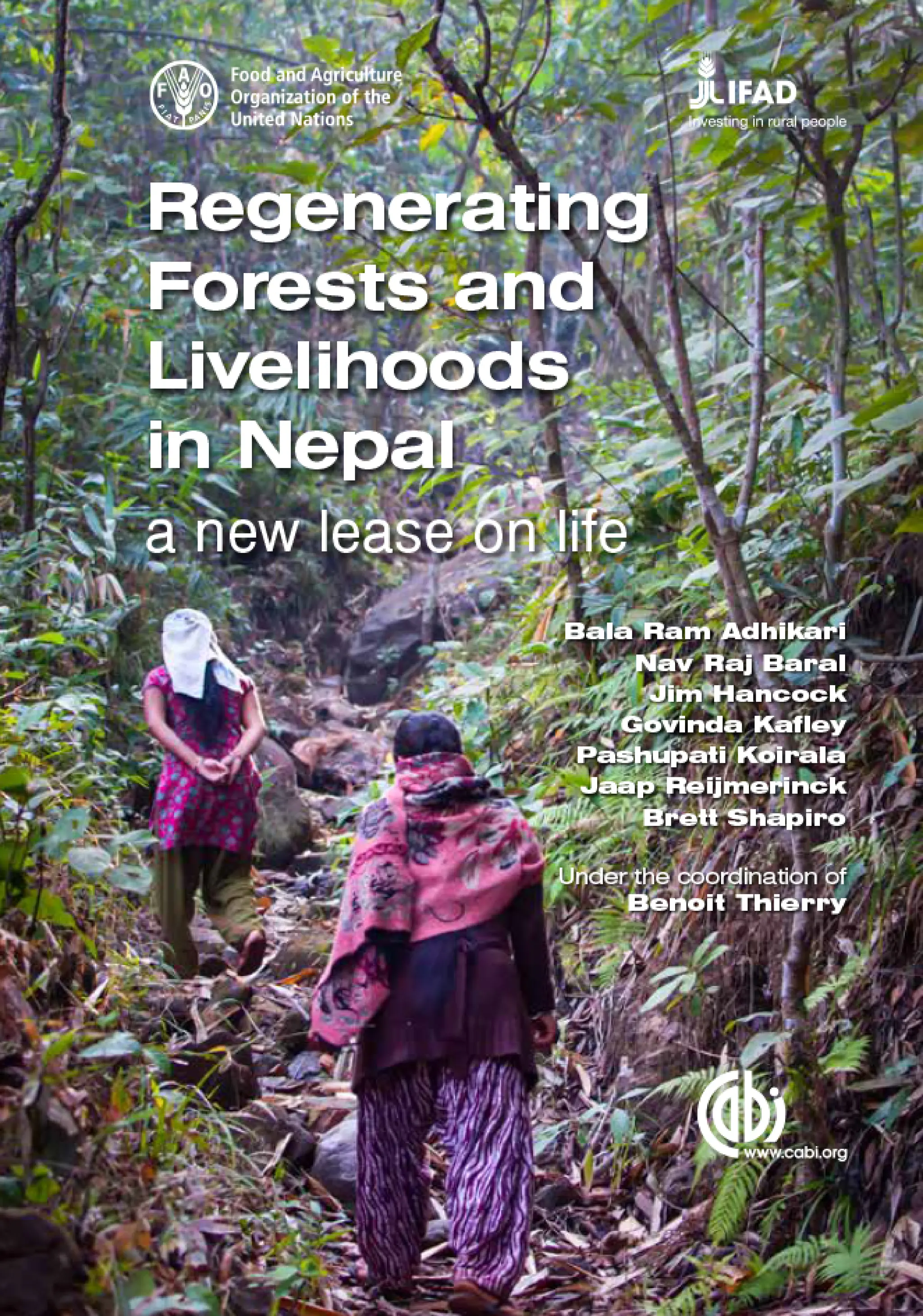







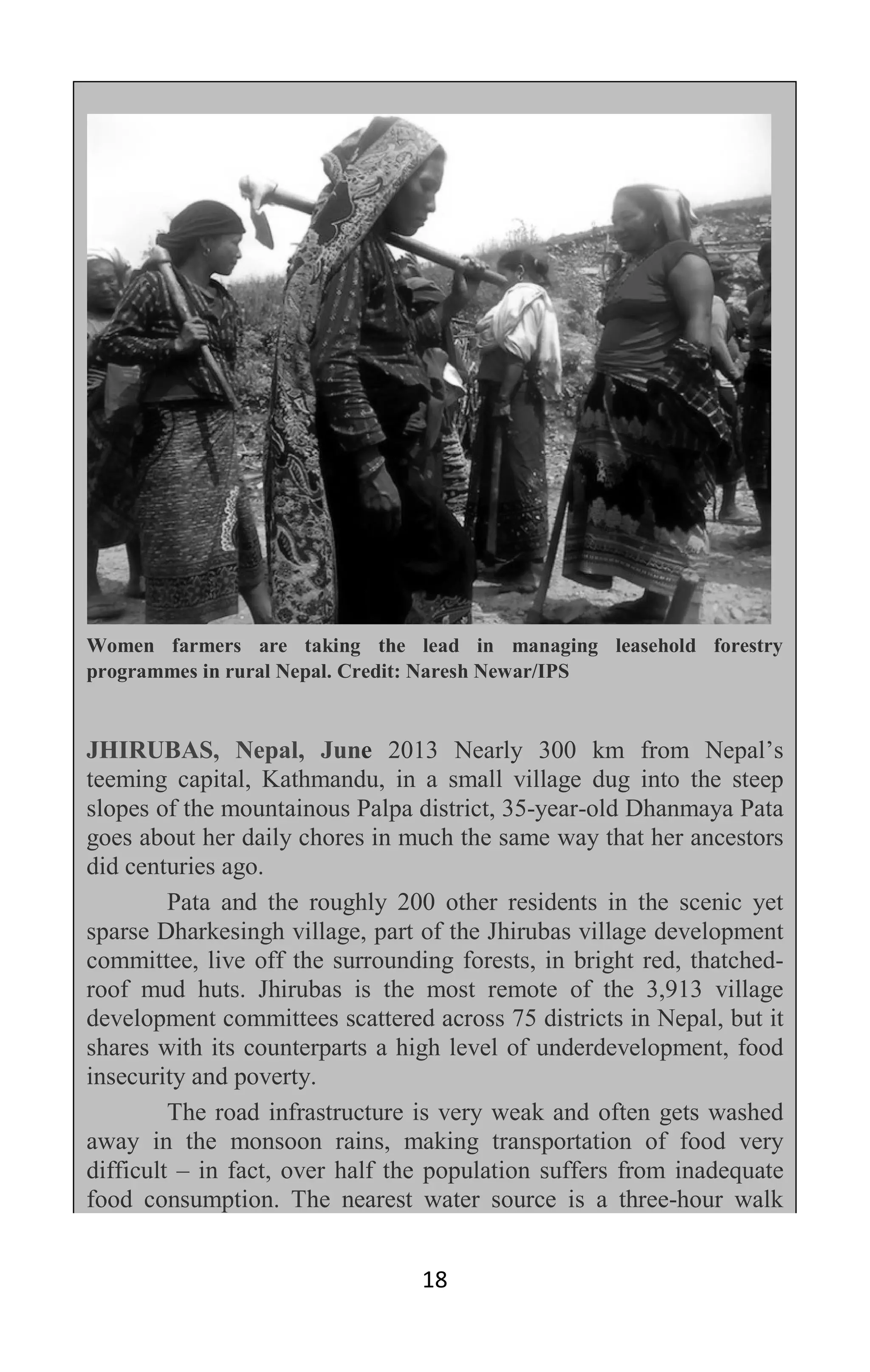







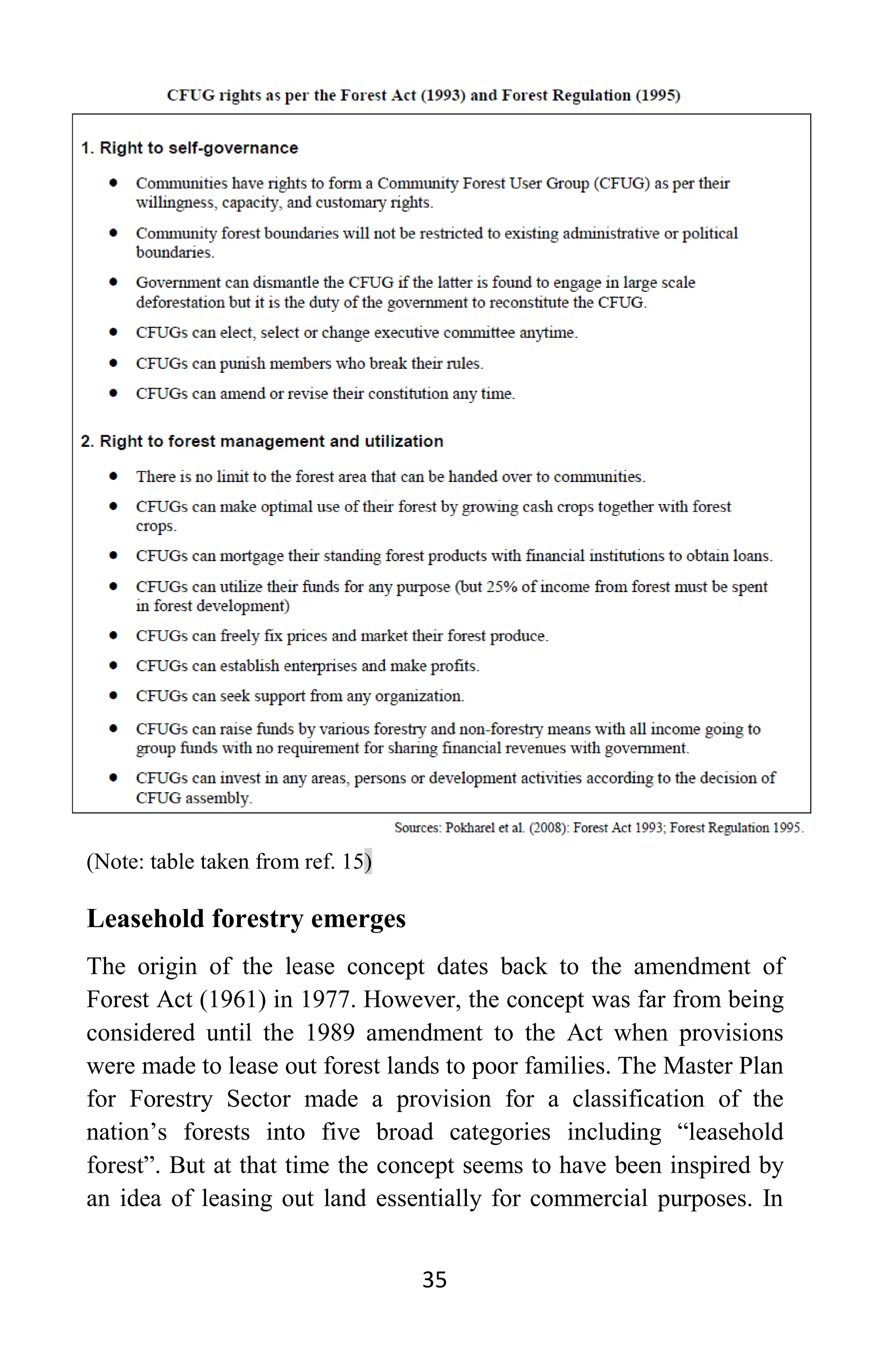
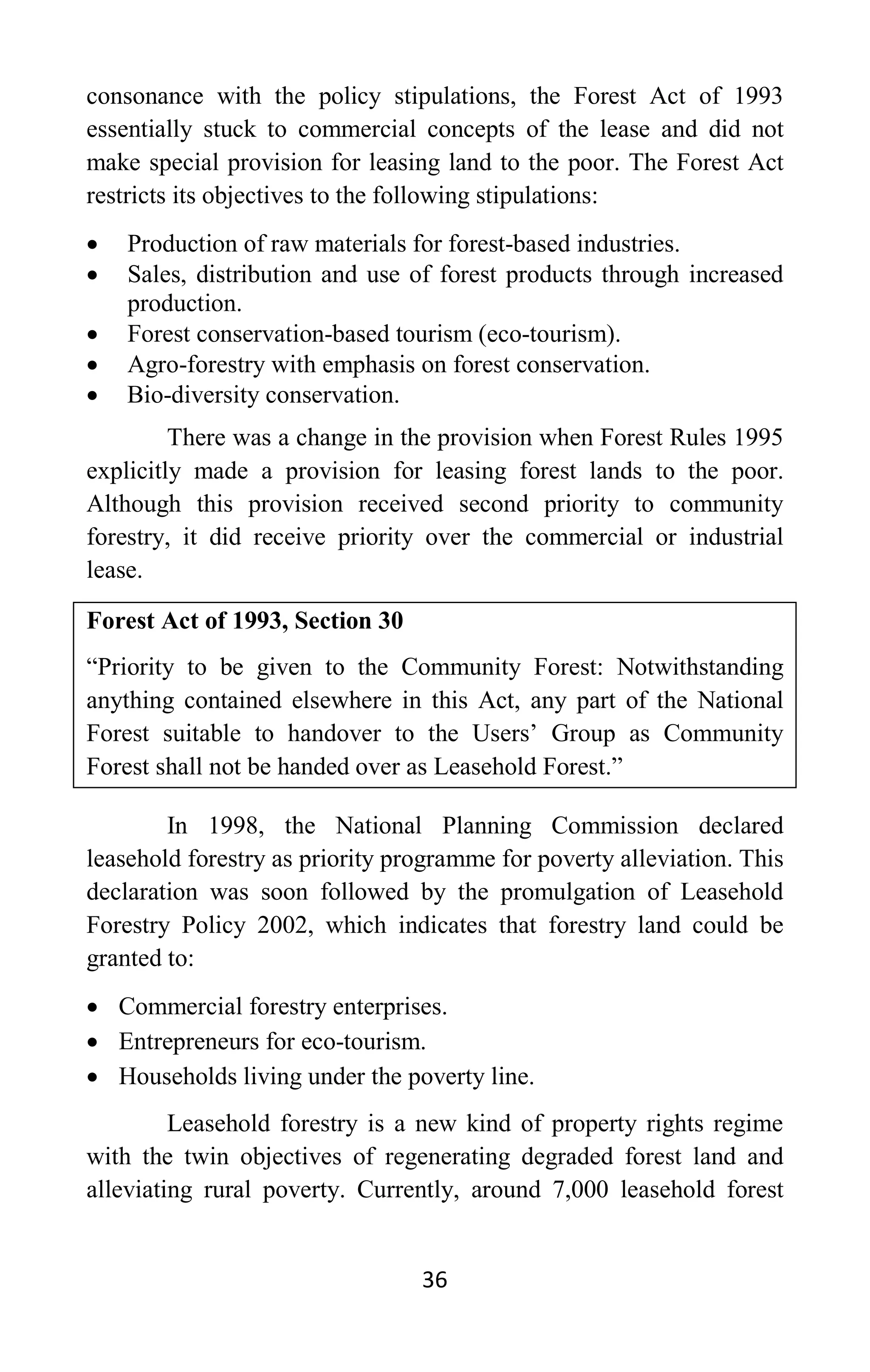
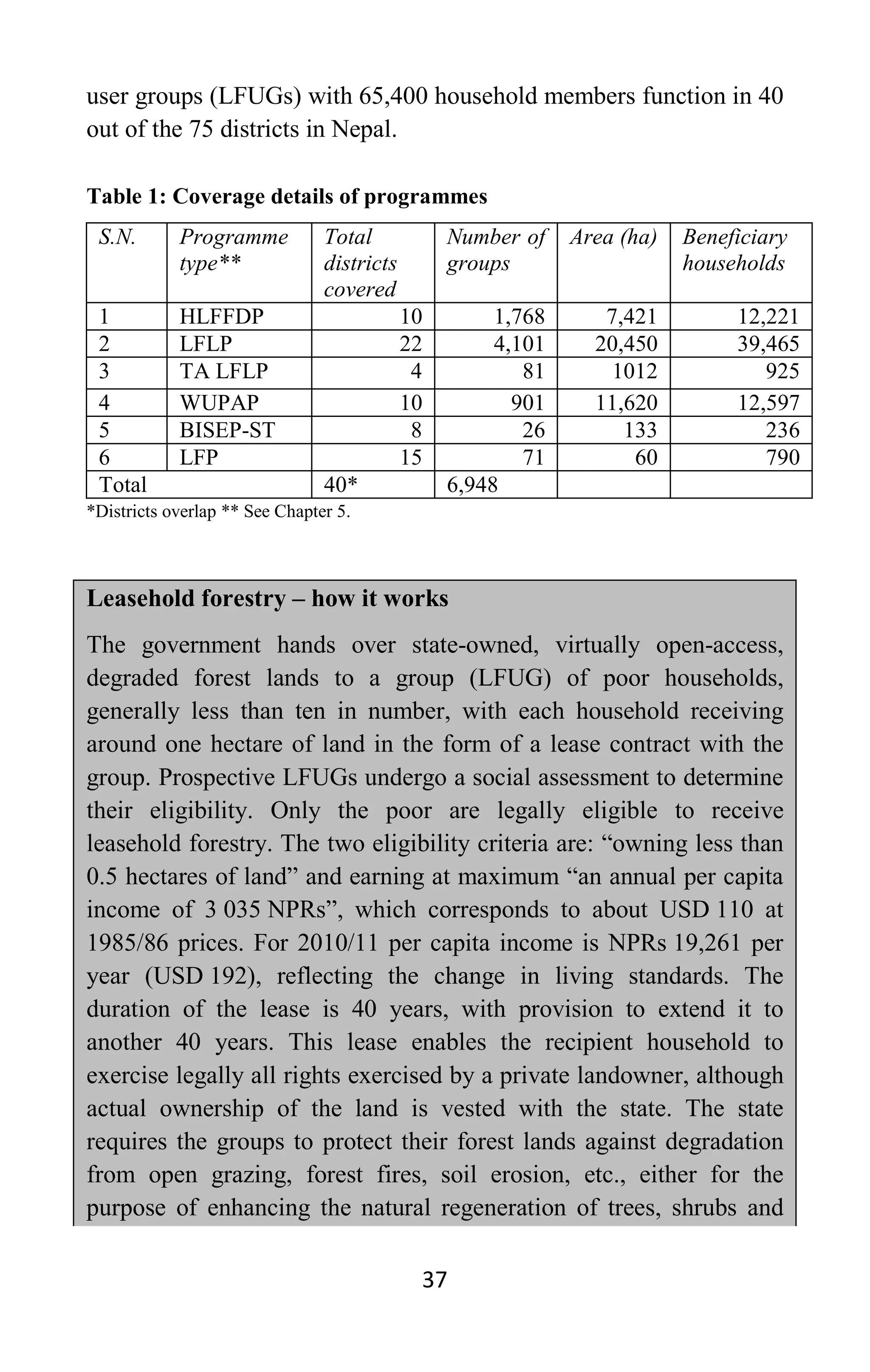
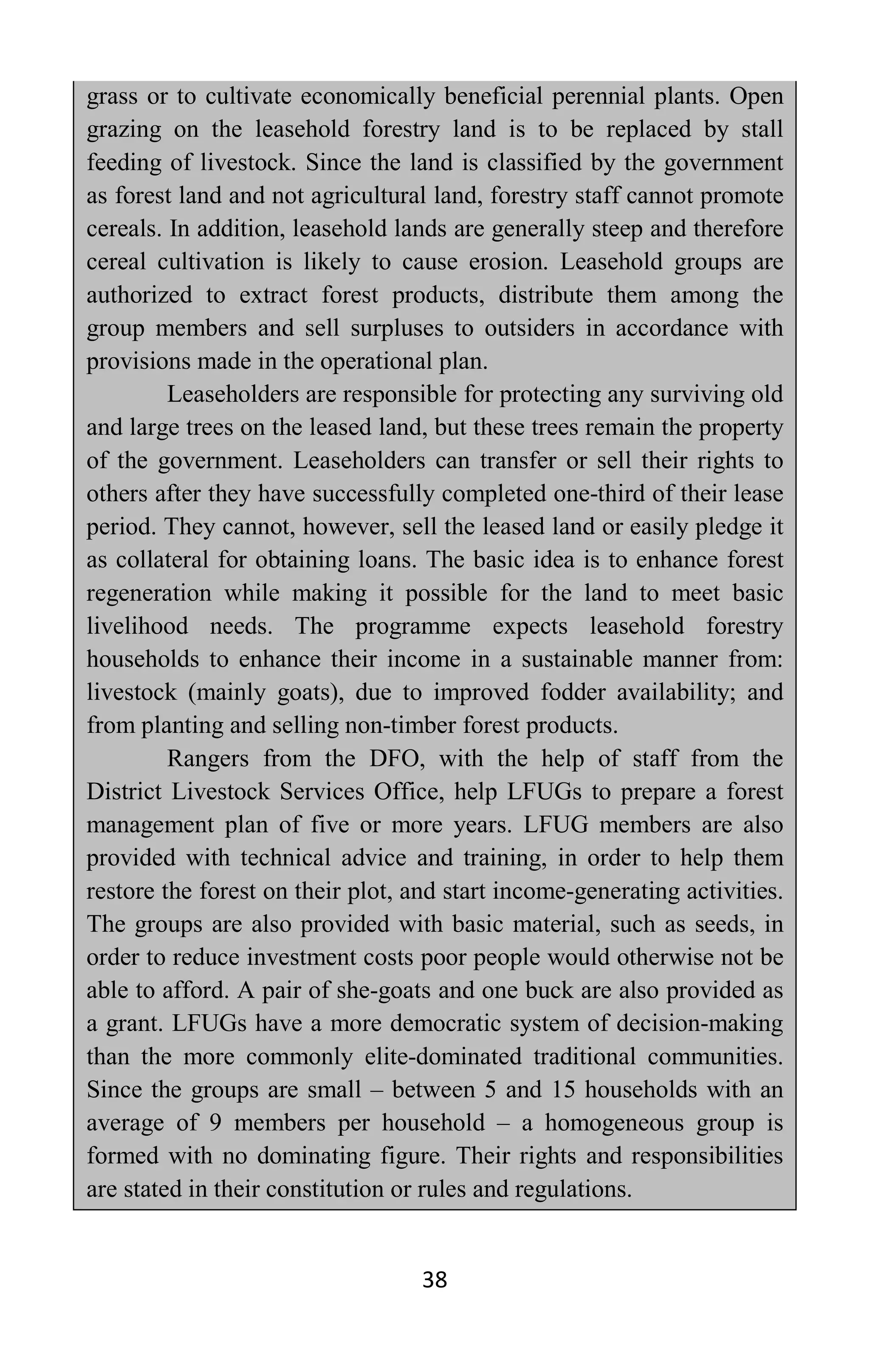

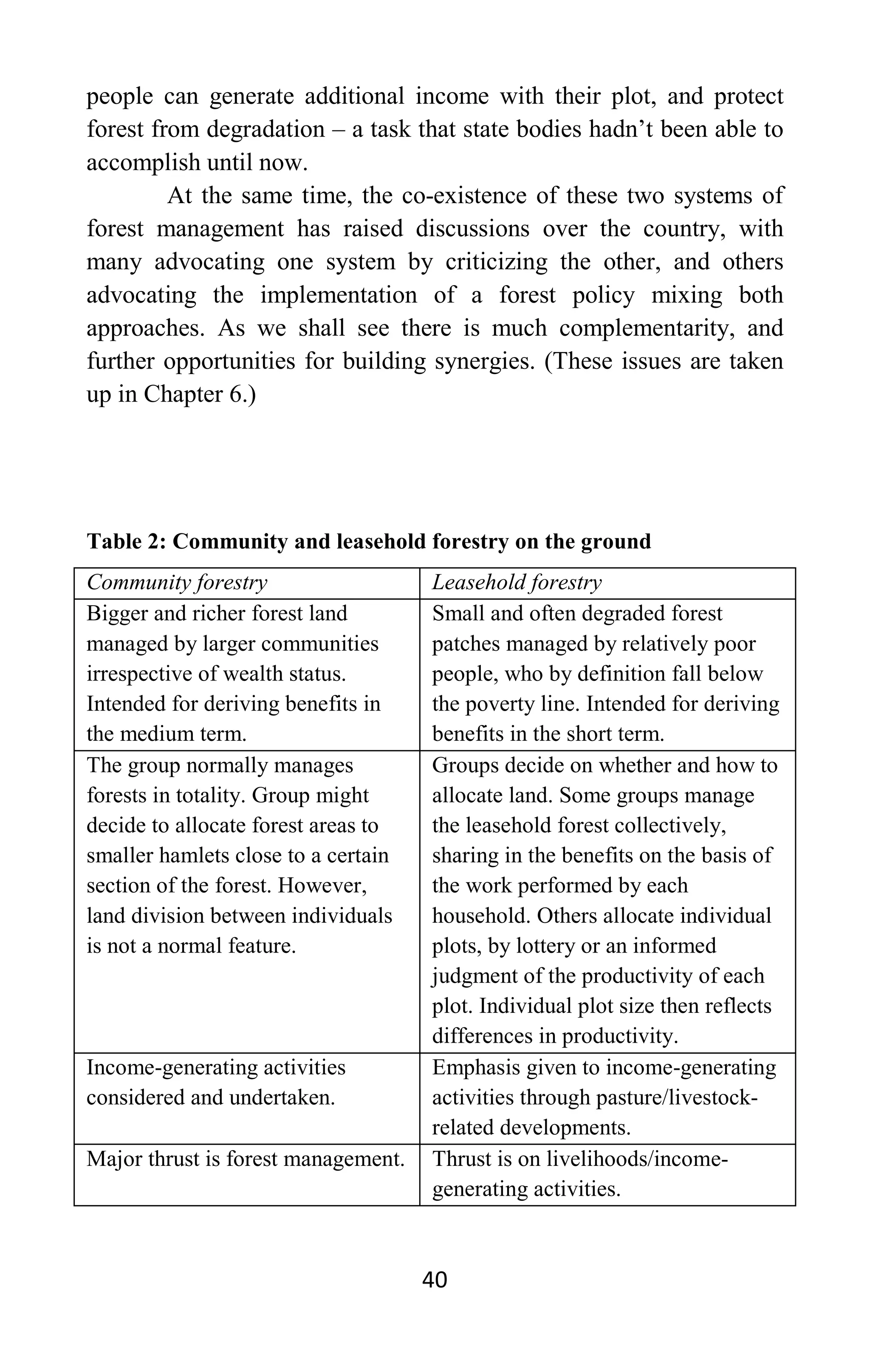
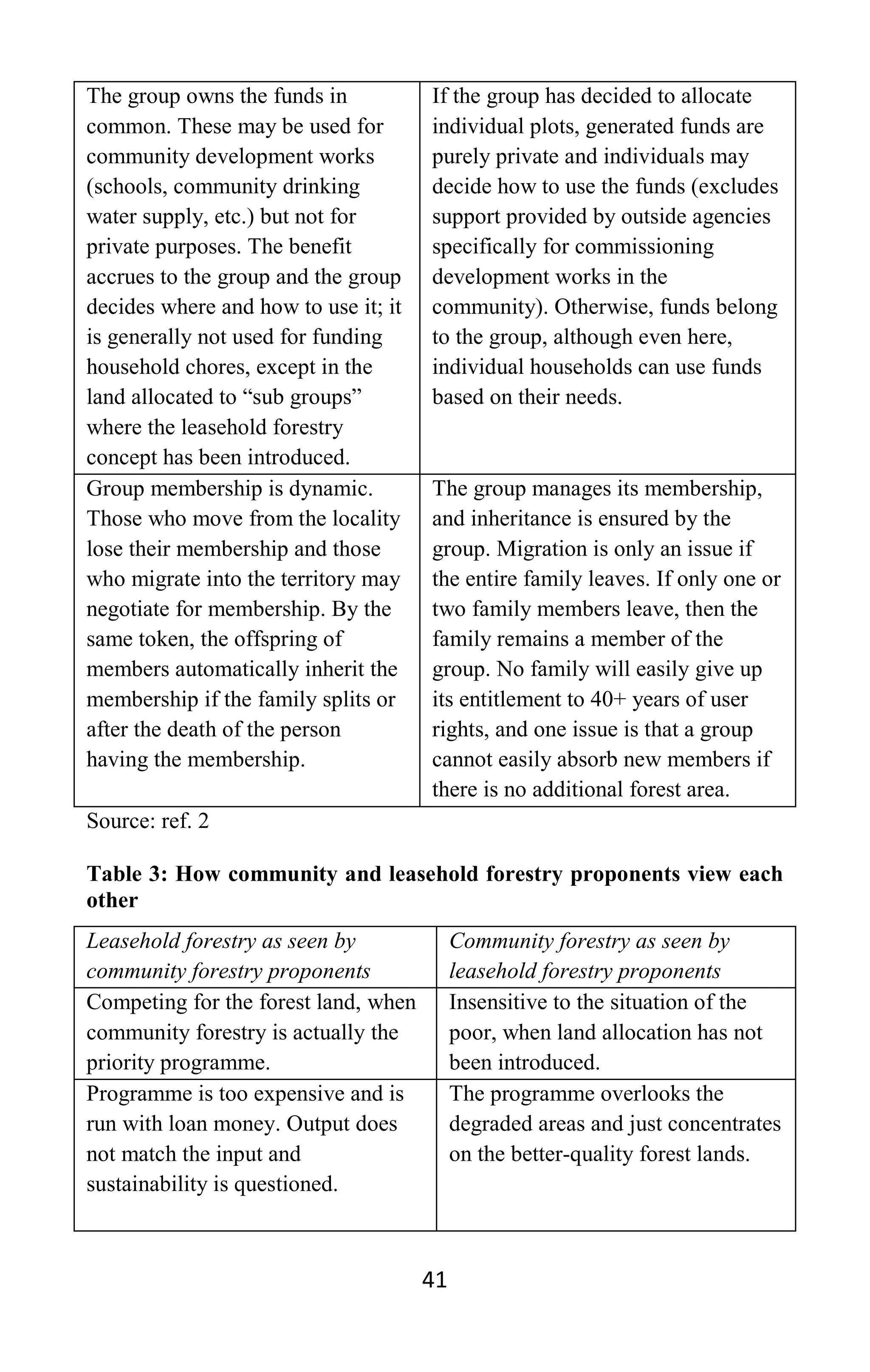





![[116]
[117]
The next moment they disappeared silently into the fog.
They had been gone but an incredibly short time when
Johnny reappeared in his shallow skiff.
“Well, she’s still here,” he breathed with a sigh of
satisfaction. “Guess I ought not to take such chances,
but who’d be out here that knows our secret?”
He climbed happily back to his seat in the plane,
buckled on his harness, then touched his lever.
But what was this? The engine gave a few sput-sputs,
then stopped dead.
“What?”
He could not believe his senses. He tried it again. No
better results.
Snatching off his harness, he leaped to the platform
beside the motor.
For a moment his eyes and his fingers played over the
line of spark plugs of the twelve-cylinder motor, as a
skilled musician plays over the keys of an organ.
Then his face went blank.
“Changed!” he muttered. “Somebody’s been here. That
spark plug there; never had one like that. And that one;
I cracked the enamel when I put one in there. It’s gone.
Perfectly good-looking one there now. Somebody’s
tampered—”
He drew from his pocket a wrench. Quickly unscrewing
the spark plug, he placed it on top of the cylinder, then
gave the propeller a whirl.](https://image.slidesharecdn.com/2654205-250724132414-275c0fd2/75/Regenerating-Forests-And-Livelihoods-In-Nepal-A-New-Lease-On-Life-Thierry-56-2048.jpg)
![[118]
“No spark,” he mumbled. “Dead! Dead as a last year’s
ragweed!”
Again he paused in thought.
The next moment he was all action. Dropping to the
fuselage, he dragged from within the space back of the
seat numerous odds and ends of wooden rods, coils of
wire, clamps, bolts and glass insulators. These he
pieced together with incredible speed. At length a wire-
strung pole was thrust high in air. Wires were attached
at the bottom, a receiver thrust over his head, and then,
seated in his place before the wheel, he was allowing
his fingers to play upon the key of a wireless.
“Sput—sput—sput!” The snap of the electric current
sounded above him. He was sending out an S. O. S.
addressed to Pant at the home station.
“Sput-sput-sput,” the instrument sounded again and
again. Each time he waited for an answer. At last, to his
great joy, it came. The buzzing in his receiver resolved
itself into the dots and dashes of the Morse code:
“Shoot, Pant.”
“Thank God!” Johnny exclaimed.
The purpose of the intruders was plain enough. They
had hoped to drive Johnny to desert his plane in this
lonely spot, then they would return and strip it of its
priceless steel at their leisure.
“I’ll show them!” he hissed.
Again his fingers played on the key. He instructed Pant
to bring twelve spark plugs to the island on Lake
Poncetrane. He was to make a landing there, if possible,](https://image.slidesharecdn.com/2654205-250724132414-275c0fd2/75/Regenerating-Forests-And-Livelihoods-In-Nepal-A-New-Lease-On-Life-Thierry-57-2048.jpg)
![[119]
[120]
then to bring the spark plugs to the northeast corner of
the island where he, Johnny, would be waiting for him.
He listened until the other boy’s O. K. rang in his ears
then, removing the receiver from his head, he settled
back in his seat. It would be two hours before Pant
arrived. Everything would be all right if—suddenly he sat
up straight, his brow wrinkled—“if he can land on the
island!” he exclaimed; “and I doubt if he can. There’s a
small bare space in the very center, and that is covered
with rocks; the rest is timbered. If he can’t land, we
lose!”
At last he rose and, having drawn himself up beside the
motor, busied himself with the task of removing the
faulty spark plugs.
“The villains!” he muttered. “It’s a dirty trick!”
He had just completed his task of removing the spark
plugs, when there came to his waiting ear the drum of a
powerful motor.
“Pant,” he murmured, “good old Pant. He’s made it in
record time. Now if only—”
He did not finish. He dared not hope that it could be
done.
The thunder of the motor grew louder. The fog had
cleared now, and he could see the plane, an airplane
Pant had borrowed, like some gigantic dragon fly,
drifting down upon him.
Before it reached the spot in the sky above him, it
swerved to the right and went skimming low over the
tree-tops of the island.](https://image.slidesharecdn.com/2654205-250724132414-275c0fd2/75/Regenerating-Forests-And-Livelihoods-In-Nepal-A-New-Lease-On-Life-Thierry-58-2048.jpg)
![[121]
Johnny made no move to go ashore; there would be
time enough for that after Pant had effected a landing—
if he did.
For a second or two the drum of the motor ceased, and
Johnny’s heart stopped beating with it. Could Pant make
it?
But again came the thunder of the motor. Again the
plane appeared above the trees. He had not found a
safe landing place.
Once more the plane circled over the island, then
dipped out of sight. Again the motor stopped. This time
Johnny was sure Pant had been successful, but again
his hopes fell, for the plane rose to circle once more.
Four times he attempted it; four times failed.
“Can’t do it. It’s no use!” Johnny sank limply down into
his seat.
But Pant was swinging around. He was preparing to
pass low over the seaplane. What could he want?
As he came scudding along with engine shut off, Johnny
heard him shout:
“Watch this!”
The next moment he saw his hand shoot out.
Something dropped from that hand. Straight down it
dropped for a hundred feet, then something resembling
a parachute filled with air appeared, and checked its
fall.](https://image.slidesharecdn.com/2654205-250724132414-275c0fd2/75/Regenerating-Forests-And-Livelihoods-In-Nepal-A-New-Lease-On-Life-Thierry-59-2048.jpg)
![[122]
Quickly Johnny leaped into his skiff and was away to the
spot where this miniature parachute would fall. The
thing was heavy. Could he reach it before it dragged the
parachute to the bottom of the lake? Straining every
muscle, he sent the skiff flying over the surface of the
water.
The parachute had fallen into the lake. Now he was a
hundred feet from it, now fifty, now twenty-five, and
now—now, his hand shot out and seized it just as,
water-logged, it was beginning to sink.
As he dragged the cloth affair from the water, from his
lips there escaped a glad shout. Attached to the
parachute’s cord were three spark plugs.
Hardly had he made this discovery than there came
again the shout:
“Watch this!”
He did watch, and did do his best, but in spite of his
efforts the second parachute sank before he reached it.
But there were others. Twice more he succeeded and
three times failed. But he now had nine new spark
plugs. Surely there were enough.
Paddling hastily to the plane, he made the changes,
dropped into his seat, and again touched his lever. This
time there came a welcome burst of thunder and he
was away.
He gazed for a second behind him to see Pant, his
purpose fulfilled, speeding away toward home.](https://image.slidesharecdn.com/2654205-250724132414-275c0fd2/75/Regenerating-Forests-And-Livelihoods-In-Nepal-A-New-Lease-On-Life-Thierry-60-2048.jpg)
![[123]
[124]
“That,” smiled Johnny, “was a clever trick. I’d never
have thought of it. But trust good old Pant for that.
Who’d have thought, though,” his brow wrinkled, “that
old Slim Jim, the contortionist, was still on our trail?”
Strangely enough, during the days that followed the
contortionist put in no second appearance.
Three weeks of testing proved to them that their
engines were a complete success. Then began what
proved to be their great adventure.
There came to them a short, bald-headed man of
middle age, with a letter from Mr. McFarland, their
employer.
The letter read: “This gentleman, Professor Paul Lasky,
is a very close friend of mine. He may ask you to do
something difficult and dangerous. Do it if you can, for
his cause is worthy and his need imperative.”
The stranger was not slow in laying his needs before
them. A tramp steamer had gone on the shoals of a
coral island some two thousand miles from the Pacific
coast of America. Some passengers and members of the
crew had been drowned. The others had been rescued.
The wreck was driven high on the sand in a sheltered
bay, so she would not break up at once. Some hardy
adventurers, claiming to have owned the steamer, had
put off in another steamer four days previous with the
purpose of salvaging her cargo. It was imperative that
he, the professor, should reach the wreck before them.
A seaplane was the only craft that could bring him to
the island in time, and of all the air-craft then on the
coast, none had the possibilities of such protracted flight
save their own. He wished them to take him there. The](https://image.slidesharecdn.com/2654205-250724132414-275c0fd2/75/Regenerating-Forests-And-Livelihoods-In-Nepal-A-New-Lease-On-Life-Thierry-61-2048.jpg)
![[125]
reward would be ample and, should his mission be
successfully accomplished, they would be real
benefactors of mankind, since some tens of thousands
of children would be benefited.
Johnny and Pant held a long consultation. The
undertaking was a serious one. Could it be that the
stranger knew the type of engine their plane carried?
His mission must indeed be an important one if a mere
landsman, accustomed to neither the sea nor the air,
would attempt such a perilous flight to accomplish it.
“What can it be?” Johnny demanded of Pant.
“Can’t tell. Some treasure on the ship, perhaps.”
“But the ship and the cargo belong to the men who
have gone to strip the wreck, don’t they?”
“Perhaps. Then again, perhaps not. Perhaps, at least,
not all.”
“Well, if you are ready to undertake it, I am.”
“You’re on!” exclaimed Pant, gripping Johnny’s hand. “It
will be a wonderful test for our motors.”
“And I don’t think our contortionist friend can follow us,”
smiled Johnny.
Twenty hours later, after having covered fifteen hundred
miles in steady flight, they realized that it was indeed to
be a wonderful test for their motors, and to them as
well; a test out of which they might never emerge.
They were sailing high over a boundless expanse of
water, when Johnny suggested that they drop to the](https://image.slidesharecdn.com/2654205-250724132414-275c0fd2/75/Regenerating-Forests-And-Livelihoods-In-Nepal-A-New-Lease-On-Life-Thierry-62-2048.jpg)
![[126]
[127]
level of the sea and rest their motors for an hour as
they drifted, sea-gull-like, on the surface of the gently
heaving ocean.
“Perfectly calm down there,” he called through his
speaking-tube.
“Guess so.” Pant, who was acting as pilot, set her nose
downward and slowed his engine for volplaning.
As they neared the surface of the water, an exclamation
of surprise escaped Pant’s lips.
“Why, she’s rolling in great billows. Not a breath of air,
either!”
“It’s stifling,” grumbled Johnny.
Pant gave one look at the barometer. Instantly his face
clouded.
“Didn’t know the glass could drop so low,” he mumbled.
“Nasty weather coming. Can’t float on that water. Better
climb back up.”
Slowly the plane climbed skyward again. When she had
reached a high altitude, with the suddenness of thought
she ceased to climb.
It was as if she had run, head on, into an immense
filmy veil of silk that hung from the high heavens, its
fringe touching the sea. The veil was dark, the darkness
of midnight blue. It seized the plane and set it twirling,
whirling, pitching, plunging. It was as if a giant hand
had seized the veil from above and twisted it, as one
twists a damp towel to wring it.](https://image.slidesharecdn.com/2654205-250724132414-275c0fd2/75/Regenerating-Forests-And-Livelihoods-In-Nepal-A-New-Lease-On-Life-Thierry-63-2048.jpg)
![[128]
It was then that Pant at the wheel lost all control.
Johnny, in the cabin, became an over-large punching-
bag. Harnessed to his seat from every side, he swung
now into space, and now jammed hard into place, to
feel himself banged against the side of the narrow
cabin. With head sunk limply forward, with his whole
body relaxed, he waited dumbly for the end. What that
end might be, he could not even guess. They were
caught in a typhoon, hundreds of miles from land,
somewhere in mid-Pacific.](https://image.slidesharecdn.com/2654205-250724132414-275c0fd2/75/Regenerating-Forests-And-Livelihoods-In-Nepal-A-New-Lease-On-Life-Thierry-64-2048.jpg)
![[129]
CHAPTER IX
A PLANE IN A TYPHOON
When they struck the typhoon Johnny had the courage
to hope that Pant might bring them out of it in safety.
This, however, seemed scarcely believable. The cabin, a
moment before stuffy as a clothes closet, was now as
breezy as a mosquito-bar tent in a stiff wind. She was
battened tight, too. The mad whirl of the plane made
Johnny dizzy and sick. His ears were full of strange
sounds. The creak and groan of planes, stays and guys,
that seemed about to snap, was mingled with the
thunder of the engines. Above all this, like the voice of
some mad siren’s spirit filled with hatred and revenge,
rang out the shrill scream of the wind. Johnny’s eyes
were blinded by strange weird lights—red, yellow and
purple—flash upon flash.
“Must be in the midst of the gigantic smithy where
lightning bolts are forged,” he grumbled, as he closed
his eyes tight and took one more mad whirl that it
seemed must be the craft’s last.
But at that, the seemingly last moment, the whirling
gale took a strange turn. The plane hung motionless in](https://image.slidesharecdn.com/2654205-250724132414-275c0fd2/75/Regenerating-Forests-And-Livelihoods-In-Nepal-A-New-Lease-On-Life-Thierry-65-2048.jpg)
![[130]
mid-air. By good fortune she stood right side up. Her
planes were as yet unimpaired.
She was a staunch craft. Not a stick, nor wire, nor screw
but had been tested and doubly inspected before they
went into her. Her two twelve-cylinder engines, lying
one beside the other above the fuselage, were bound
and braced from every side. Johnny thought of all this
as they lay there suspended in space.
It was a lull; he understood that well enough. A strange
lull it was, too, as if the storm had taken their frail craft
into its gigantic fist, as an ape holds a fledgling bird in
his horny claw before crashing it against the trunk of a
tree.
Johnny’s lips were pressed to the speaking-tube. “We’re
in for it!” he shrilled to his pal.
“Yes?” came back from Pant.
“How you standing it?”
Pant retorted with a grim chuckle:
“Not so bad. Pretty wet out here.”
“What—what’ll we do?”
“Going to climb. Top to this thing somewhere, maybe.
Nobody knows, though. It’s a typhoon. Always wanted
to see what a plane’d do in a typhoon.”
“You’ll see, but never tell, maybe.”
“Maybe.”
“Look out—here she comes again! It’s—”](https://image.slidesharecdn.com/2654205-250724132414-275c0fd2/75/Regenerating-Forests-And-Livelihoods-In-Nepal-A-New-Lease-On-Life-Thierry-66-2048.jpg)
![[131]
[132]
“Yes, it’s—” Pant’s voice seemed blown back into him by
the terrific gust of wind. The next instant, a darkness
such as he had never seen; a tumult such as he had
never heard; a torrent of rain such as he had never
witnessed; a wild whirling such as he had never
experienced, drove all power of thought from his
befuddled brain, leaving him again a half-animate, over-
large punching-bag, swinging in the narrow center of
the cabin.
Even in this dizzy state of half-consciousness he thought
of Pant. When told that he might not escape disaster, he
had not said, “I have escaped before.” He might have
said it, for there had been other adventures; a night in a
forest in India, with a mad black leopard’s eyes
gleaming at him out of the darkness; an hour in a
dungeon-dark cave, with murderous savages about him.
There had been other adventures, too, and he had
escaped; yet he did not say, “I will again.” That was the
kind of fellow he was. Confident of his ability, interested
in all of life, thrilled by each new experience, he stood
ready to face each one as it came and do battle
valiantly, leaving the results to a power greater, a mind
wiser, than his own.
At this moment when Johnny was thinking these
thoughts, Pant was being dragged forward half out of
his soggy, water-soaked harness, then slammed back
into his seat, to be deluged to the drowning by a
downpour that was not rain, he thought, but more like a
sky-suspended tank of fresh water. He found himself
surprised that the plane held up against it; that it did
not sink at once into the sea. His leather coat hung like
a weight of steel upon his shoulders; his eyes, his ears,
his mouth were filled with water. It chilled, benumbed,
depressed him.](https://image.slidesharecdn.com/2654205-250724132414-275c0fd2/75/Regenerating-Forests-And-Livelihoods-In-Nepal-A-New-Lease-On-Life-Thierry-67-2048.jpg)
![[133]
The plane was traveling with the gale; whether in a
circle or straight ahead, he could not tell. The engine
was shut off. Would it start again at his bidding? That
he did not know. If not, their situation was hopeless.
The time would come when the storm would drop them,
as it drops a bird it has harried and beaten to its death.
Then, with no power, they would sink helpless into the
sea. And such a sea as it must be! He had not seen it
since the storm began. He could imagine it, though.
Black, angry water tossed into foam. Billows, mountain
high. What a landing-place for a seaplane! One
resounding crash that echoed above the demon
laughter of the waves, then all would be over!
“She must start! She must,” he muttered. Half-
unconsciously he put his hand to the lever, then quickly
drew it away.
“No, not now, not now,” he muttered. “The dust! The
dust! If only it is still dry!”
Then, for a moment, his mind dwelt upon the wind. It
was strange about that wind. It did not come in gusts,
but flowed straight on like a stream of water. In the
utter darkness, flooded by torrents of rain, carried
steadily forward by that constant flow of wind, he was
overcome by an illusion. He fancied himself passing
beneath the surface of the sea. Only the touching of his
tongue to his lips, to satisfy his mind that this was not
salt water that beat in from every side, could dispel the
illusion.
The whole thing was so terrific, so altogether beyond
comprehension, that it shunted off the powers that
drove his brain to action. It was altogether unbelievable.](https://image.slidesharecdn.com/2654205-250724132414-275c0fd2/75/Regenerating-Forests-And-Livelihoods-In-Nepal-A-New-Lease-On-Life-Thierry-68-2048.jpg)

![[134]
[135]
The truth was, Johnny did not know why they were
there. They had come upon this long and perilous air
journey over the sea at the request of a stranger. No,
perhaps they had not been as mad as that. The man
had brought with him a letter of introduction from their
employer. Yet, why should he not have told them more
of his intentions? How could this journey benefit tens of
thousands of children? They were in imminent danger of
being destroyed by the storm. He felt that it would help
if only he knew the reason why.
There came another whirl. He caught his breath and
tried to think clearly. It was a monstrous experience; he
could not think of it in any other way.
“Can’t last long—wonder we haven’t hit the water
before this. Must have been mighty high up.”
To his surprise and great relief, the plane again righted
herself. This time, half on her side, she lay upon the air
like a crippled bird poising for its death plunge.
His lips were at the tube.
“What you going to do?” he shouted above the roar of
the wind.
“Going—to—get—out—of—here,” came back.
“Can—you?”
“Can—try. Look—out. Start—engine. May—take—
tailspin. Can’t—be—worse,—though.”
The next instant there came the thunder of the powerful
motor.](https://image.slidesharecdn.com/2654205-250724132414-275c0fd2/75/Regenerating-Forests-And-Livelihoods-In-Nepal-A-New-Lease-On-Life-Thierry-70-2048.jpg)
![[136]
[137]
“Thank God! Dust’s dry,” Pant muttered as he tried to
straighten up his tilted car.
When he heard the thunder of the motors, Pant could
scarcely have been more thankful about anything. True,
there were not another such pair of engines in the
world, but there had been a strain put upon every bolt,
rod, feed-pipe and screw such as had been endured by
no other engines. If there had been a single break, then
all was lost.
When they did respond to his touch, he at once tilted
his right plane in such a manner as to square her up.
The wind was blowing steadily, and, he thought, less
violently, though this was hard to concede, since it
seemed to him that a more madly violent gale than
even now was blowing would be hard to imagine.
The plane righted herself gracefully. Truly, this was a
marvelous bit of machinery, made by master builders.
She had been designed for dependability rather than
speed, yet she presented a rather rakish appearance,
her upper planes jutting out over the lower ones by a
full five feet. Her fuselage was built like the body of a
wasp, in two parts. In the forward part was the driver’s
seat, fully exposed to the open air. In the rear portion
was a closed cabin fitted with two seats. These seats in
fair weather might be made to collapse in such a
manner as to form a bed. Thus it was possible for one
aviator to rest while the other was at the wheel.
But the distinctive part of the whole equipment was the
engines. If Pant had felt any misgivings about the type
of engine their plane was fitted with, the next few
minutes made him doubly thankful that they were just
what they were.](https://image.slidesharecdn.com/2654205-250724132414-275c0fd2/75/Regenerating-Forests-And-Livelihoods-In-Nepal-A-New-Lease-On-Life-Thierry-71-2048.jpg)
![[138]
Hardly had they begun a mad rush straight away with
the wind, the nose of the plane tilted twenty-five
degrees upward, than there began to play about him
vivid sparks of fire.
“Picking up lightning,” he muttered.
Like lights twinkling on the deck of a steamer the sparks
leaped from plane to plane. They flashed down the guy-
wires and braces, leaped to the motors. Setting her
firing irregularly for a second, they raced for the tail,
only to flash back to the wheel and give Pant’s arm such
a sudden twist that for the second he was paralyzed.
The next moment his lips were at the tube.
“Mighty bad,” he shouted. “Dangerous—I—I—say.”
“Better—stop—her,” came back from Johnny.
Pant’s hand was at the lever. The engine went still, but
just at that instant a tremendous flash leaped up from
the large tank at the rear of the fuselage.
Pant leaped high, then sank back with a shudder.
“Man! Man!” he gasped. “If that had been gasoline in
that tank! If it had!”
His brow wrinkled. “I only hope it didn’t rip her wide
open. Anyway, we climbed some. Can afford to glide.”
They were surrounded by a succession of vivid flashes
of lightning. The plane was tipped to a rakish angle.
Through a storm-washed window Johnny saw what lay
below. The ocean, vast, mysterious, dark and terrible,](https://image.slidesharecdn.com/2654205-250724132414-275c0fd2/75/Regenerating-Forests-And-Livelihoods-In-Nepal-A-New-Lease-On-Life-Thierry-72-2048.jpg)
![[139]
[140]
appeared as a limitless open-hearth steel furnace filled
with gleaming molten metal.
In the very midst of this was what appeared at first to
be a mere splotch on the surface, but which in time
resolved itself into the form of a steamship.
He gasped as he made out its form, “To think,” he
muttered, “that any ship could live in this!”
Yet, as he thought of it, he knew that they had in years
past. He had read authentic accounts of ships riding out
such a storm.
Even as he watched he saw the water smooth out into
what he knew to be the surface of a gigantic wave; saw,
amid the flashes, the ship leap forward to meet it; saw
her prow rest on air; saw her plunge; saw her buried
beneath an avalanche of sea.
He shut his eyes, expecting never again to see that
ship; yet, when he opened them, she was still there
battling with the elements.
“Bravo! Bravo!” he exclaimed involuntarily.
The next instant the plane tipped back into position, the
engines roared, he felt her turn and knew that Pant had
set her head-on against the storm.
He listened to the roar of the engines and thrilled at the
battle as he felt the shock of the storm.
Suddenly, as the sheet-lightning flashed, he saw a dark
object pass his window, then another.](https://image.slidesharecdn.com/2654205-250724132414-275c0fd2/75/Regenerating-Forests-And-Livelihoods-In-Nepal-A-New-Lease-On-Life-Thierry-73-2048.jpg)
![[141]
“The parachutes!” he exclaimed in consternation. He put
his lips to the tube: “Storm—tore—the—parachutes—
away.”
“I—know,” came back from Pant. “No—good—now,—
anyway. Can’t—land.”
Then at the very thought, Johnny laughed. On a calm
sea the parachutes might save them; in such a storm,
never.
“Saw—a—ship—down—there. See—her?” he asked a
moment later.
“Yes.”
“Think—that’s—the—ship—we’re—racing?”
“Might—be.”
“If—it—is—we—win.”
“If—we—live—through,—yes.”
There was silence. But again there came a sound from
the tube. This time it was not Pant, but the stranger
who rode behind Johnny. Johnny started; he had quite
forgotten him.
“What—what is it?” he stammered.
“Thought—I—ought—to—tell—you.” The voice was low
and subdued, like a parson reading the funeral service
at a grave.
“Tell—me—what?” Johnny asked, bewildered.
“About—the—wreck. Why—we—are—going—”](https://image.slidesharecdn.com/2654205-250724132414-275c0fd2/75/Regenerating-Forests-And-Livelihoods-In-Nepal-A-New-Lease-On-Life-Thierry-74-2048.jpg)
![[142]
But at that instant there came a blinding flash, a
deafening roar, and the plane seemed to leap into
midair, like a rowboat hit by a fifty-pound projectile.](https://image.slidesharecdn.com/2654205-250724132414-275c0fd2/75/Regenerating-Forests-And-Livelihoods-In-Nepal-A-New-Lease-On-Life-Thierry-75-2048.jpg)
![[143]
CHAPTER X
THE TASTE OF SALT SEA WATER
When he had collected his scattered senses after the
tremendous lift which the plane had been subjected to,
Johnny Thompson knew that they must have been in
the midst of a terrific electrical explosion which had
occurred in mid-air; a current of electricity such as no
mere man-made voltmeter would ever measure had
leaped from cloud to cloud. For a fraction of a second
the circuit had been broken. The explosion had
followed.
Pressing his lips to Pant’s tube, Johnny inquired
curiously:
“Any—damage?”
“Can’t—tell—yet,” came back. “Hope—not.”
For a moment there was no sound, save the screaming
of the wind. Then, again, came the call of the stranger.
“Hello!” exclaimed Johnny.](https://image.slidesharecdn.com/2654205-250724132414-275c0fd2/75/Regenerating-Forests-And-Livelihoods-In-Nepal-A-New-Lease-On-Life-Thierry-76-2048.jpg)
![[144]
“About—the—wreck. Ought—to—tell. May—not—come—
out—of—this. You—may—come—out. Can—you—hear?”
“Yes,—yes!” Johnny was impatient of delay.
“Ought—to—tell. Mighty—important. Wreck—mighty—
important. Lot—of—people—affected. Children—most.
Ought—to—tell.”
“Well, why doesn’t he tell?” was Johnny’s mental
comment. “Has the storm driven him mad?”
He wanted to know about that wreck. His life was
imperiled for a cause, but what cause he did not know.
His mission in life, he had found out long ago, was to
help others live more happily and profitably. If the cause
were a good enough cause, he might cheerfully die for
it. “Children,” the man had said, “many children.” Well,
that was best of all: to help many children.
“Well,” Johnny grumbled through the tube, “why—don’t
—you—tell?”
“Going—to—tell,” came to Johnny through the tube.
Then the Professor told his story. There was a pause
between every pair of words; the wail of the storm, the
thunder of the engines, the roar of the ocean, made it
necessary. Even so, he was forced to repeat several
sentences over and over before Johnny caught them. It
was aggravating, doubly so since any word might be the
man’s last; might be the last Johnny ever listened to, as
well. There was one word the man repeated ten times
or more, and, at that, Johnny did not catch it. It was an
important word, too, the most important word, the very
keyword, but Johnny gave it up at last.](https://image.slidesharecdn.com/2654205-250724132414-275c0fd2/75/Regenerating-Forests-And-Livelihoods-In-Nepal-A-New-Lease-On-Life-Thierry-77-2048.jpg)
![[145]
[146]
“Isn’t any use,” he muttered after the tenth time. “Some
great treasure, but whether it’s gold or diamonds, or old
ivory or frankincense, I’ll never be able to tell, if I ask
him a thousand times.”
The stranger, it seemed, was a professor in a medical
college; his brother, a medical missionary in one of
those border countries that lie between China and
Russia. During the war something became very scarce,
but just what something Johnny could not make out.
He, the Professor, wrote his brother about it. The
something came from Russia—only place it could be
obtained. There was fighting still in those regions where
it was found, between the bolsheviki and their enemies.
Children in the United States, it seemed, tens of
thousands of them, would benefit if it were brought out
from Russia. Johnny could not see how that could be.
“Perhaps the mine belongs to an orphanage,” he
decided, half in humor, half in earnest.
The Professor had written his missionary brother of the
need. He had written that he thought that, for the sake
of the children, the thing must be managed. It could be
carried out, the treasure could. It would require a
considerable investment, perhaps twenty thousand
dollars. The Professor had sold his home, had raked and
scraped, borrowed and begged. At last the money was
sent to the brother.
Months of anxious waiting followed. Finally there came
a cable from an obscure Chinese port. The missionary
brother had the precious stuff and was boarding the
“Men-Cheng,” a tramp steamer, manned half by
Chinamen and half by white men. She bore a Chinese
name but carried an American flag.](https://image.slidesharecdn.com/2654205-250724132414-275c0fd2/75/Regenerating-Forests-And-Livelihoods-In-Nepal-A-New-Lease-On-Life-Thierry-78-2048.jpg)
![[147]
He had not trusted the officers and steward of her
overmuch, so, instead of putting his treasure in their
hands, he had chartered a two-berth stateroom and had
carried it with him in four flat chests. Piling three of
them on the lower berth, and sliding the other beneath,
he had slept in the berth above.
That cable was the last ever heard from him. The
steamer had been caught in a gale and driven upon the
shore of a coral island, as Johnny already knew. The
missionary brother did not appear with the rescued
members of passengers and crew. All these survivors
had been questioned, but none knew anything about
what became of him. It seemed probable that he had
come on deck in the storm and had been washed
overboard.
And the treasure was there still. Beyond question, it was
in that stateroom where he had stored it, since none
but him knew of it.
The wrecking crew, more than likely, was a gang of
ghouls, with no principle, and with no knowledge of
such things, anyway. They would either dump the
treasure into the sea or carry it away. In either case it
would be a total loss, and the small fortune of the
Professor would be gone forever. It seemed, however,
that the Professor was more concerned about the
children’s share than he was about his own.
“What sort of treasure could it be,” Johnny asked
himself, “that even the roughest, most ignorant rascals
would dump into the sea?”
“Bunch of nonsense,” he muttered. Yet there was
something about the intense earnestness of the man](https://image.slidesharecdn.com/2654205-250724132414-275c0fd2/75/Regenerating-Forests-And-Livelihoods-In-Nepal-A-New-Lease-On-Life-Thierry-79-2048.jpg)
![[148]
[149]
that gripped him, convinced him that it was not
nonsense, but that here was a truly great and worthy
cause.
Suddenly it came to him that, were he to outlive the
stranger and reach the wreck, he would have no means
of identifying the chests. Again his lips were at the tube.
“The—chests!” he shouted, “the—chests!”
“Yes—yes,” came back.
“The—chests. How—can—you—identify—”
His sentence was broken halfway. There came such a
thundering, grinding, screaming horror of noises as he
had never heard, not even in this hurricane. The
seaplane stood still. Her engines were going, but she
did not move. It was as if the shaft had broken loose
from the propeller and was running wild, yet Johnny
knew this was not so. He knew that the violence of the
storm had suddenly become so great that the plane
could make no headway before it.
So there they stood, halted in mid-air. What must come
next? Was this the end? These questions burned their
way to the very depths of his throbbing brain.
He had not long to wait for action. The plane began to
turn slowly about. It was as if it were set upon a
perpendicular shaft, and a mighty hand was gripping
and turning it against its motor’s power to resist.
Then the thunder of the engines ceased; Pant had
foreseen the ultimate end of the struggle and had
prepared himself for it.](https://image.slidesharecdn.com/2654205-250724132414-275c0fd2/75/Regenerating-Forests-And-Livelihoods-In-Nepal-A-New-Lease-On-Life-Thierry-80-2048.jpg)
![[150]
The plane swung around, square with the wind, then
began a glide which increased in speed with each
fraction of a second. Pant was dragged from his seat by
the mere force of the air. With nostrils flattened, eyes
closed, body bent like a western rider’s, as he is thrown
in the air by a bucking bronco, he still clung to the
wheel and guided the craft as best he could.
Feeling himself constantly drawn to the right, he
realized that they were not gliding straight downward,
but were following a gigantic spiral—perhaps miles
across. He shuddered. He had experienced something
similar to this in his boyhood days—the spiral glide of
the amusement park. Yet that was child’s play. This was
grim reality, and at the end of the glide lay the
remorseless, plunging sea.
Johnny Thompson and the Professor sat in their cabin,
too much overcome to move or speak. Through
Johnny’s mind there ran many wild thoughts. Now the
past, his home, his friends, his mother, were mirrored
before his mind’s vision. The next he was contemplating
freeing himself from his harness and opening the cabin
door. To be trapped in that cabin, strapped to his seat,
as they took the plunge into the sea, would be terrible.
Better that he might have one fierce battle with the
ocean. Yet there was still a chance—a ghost of a chance
—some startling development that might save them.
Then, if he were loose in the cabin, the cabin door
open, he would be shaken out to his death while the
plane flew on to safety.
He ended by doing nothing at all, and the plane, holding
true to her spiral glide, swung on toward the dark
waters. The spiral seemed endless. One might almost](https://image.slidesharecdn.com/2654205-250724132414-275c0fd2/75/Regenerating-Forests-And-Livelihoods-In-Nepal-A-New-Lease-On-Life-Thierry-81-2048.jpg)
![[151]
[152]
have imagined that the storm had an upward twist and
was shooting them toward the skies.
A moment’s flash of lightning undeceived them. The sea
lay close beneath them, perilously close; almost it
appeared to be lifting up hands to grasp them.
Johnny Thompson at last began to struggle with his
harness. Pant licked his lips with his tongue and thereby
received a revelation. The moisture on his lips was salt;
they were in the midst of the salt spray of some titanic
wave. The end was not far off.
In desperation he kicked the engines into gear. There
followed a moment of suspense. Thinking of it
afterward, not one of the three could account for what
followed. Perhaps the current of air created by some on-
rushing wave had lifted them; perhaps the very force of
the powerful engines had torn them from the grip of the
remorseless spiral glide. Whatever it was, they suddenly
found themselves booming along over the raging sea,
and with each hundred yards covered there came a
lessening of the wind’s violence. It seemed that they
were truly on their way to safety.
Johnny started as from a revery. The signal from the
Professor’s speaking-tube was screaming insistently.
“Hello!” he shouted hoarsely.
“Those—chests,” came back through the tube. “Do—you
—hear—me? Those—chests—they—are—marked—with
—initials—L—B—on the bottom. Do—you—hear? L—like
—lake. B—like—bird. Get it?”
“Yes,” Johnny answered.](https://image.slidesharecdn.com/2654205-250724132414-275c0fd2/75/Regenerating-Forests-And-Livelihoods-In-Nepal-A-New-Lease-On-Life-Thierry-82-2048.jpg)
![[153]
[154]
“All—right.”
Again, save for the thunder of the engines and the
diminishing howl of the wind, there was silence.
“Wish I had tried harder to get the name of those things
in the four chests,” Johnny mused. “I’d like mighty well
to know. Didn’t sound like anything I have ever heard
of. Perhaps it’s some kind of Russian fur; new name for
Russian sable, maybe. Guess there’s no use asking him
about it now. Too much noise; couldn’t hear.”
Then his mind turned to the steamer they had seen
struggling in that raging sea. He wondered if it had
escaped.
“Hope so,” he murmured, “even if they are our rivals.
We’ll beat them easily if we get out of this. Looks like
we would, too.”
Then, suddenly, his face went gray. He had thought of
something—the dust in the fuel tank! There would have
been enough to carry them to their destination, and a
little to spare, had they not encountered the storm.
They had battled the storm for what seemed hours. This
had consumed much fuel. What awaited them once they
were free from this storm?
He put his mouth to Pant’s speaking-tube, but the
message remained unspoken.
“No use to cross a bridge till we come to it,” he
muttered. “Not out of the storm yet.”](https://image.slidesharecdn.com/2654205-250724132414-275c0fd2/75/Regenerating-Forests-And-Livelihoods-In-Nepal-A-New-Lease-On-Life-Thierry-83-2048.jpg)
![[155]
CHAPTER XI
LIFE’S HAZARD OF A SINGLE
GLIDE
The coming out of the storm was like riding out of night
into the bright light of a new day. Pant, as he sat at the
wheel, steering as in a dream, was entranced by the
beauty and wonder of it. They had been near death a
score of times in a single hour; now they were racing
away to life. Life! What a wonderful privilege just to live!
How foolish boys must be who risk life for some useless
plaything—to accept a “dare” or experience some new
thrill. So he mused, and then all at once he realized that
they had risked their lives for a cause of which they
knew little.
“Well,” he said, as he settled himself more firmly in his
position behind the wheel, “we’ve come this far, so
we’ve got to see it through. I wonder how far that
storm has carried us off our course, and in what
direction we are going now?”
Rubbing the moisture off the glass of his compass, he
read their direction. Then he started. They were going](https://image.slidesharecdn.com/2654205-250724132414-275c0fd2/75/Regenerating-Forests-And-Livelihoods-In-Nepal-A-New-Lease-On-Life-Thierry-84-2048.jpg)



![GEOGRAPHY-Study Material [ Class 10th] .pdf](https://cdn.slidesharecdn.com/ss_thumbnails/geography-studymaterial-250613053858-319e1b53-thumbnail.jpg?width=640&height=640&fit=bounds)


