Reducing tropical forest loss through
           multiple-use?
       Manuel R. Guariguata
20
years
ago
in
Rio…
“Forest
resources
and
forest
lands
should
be
sustainably
managed
to
meet
the
social,
economic,
ecological,
cultural
and
spiritual
needs
of
present
and
future
generations.

These
needs
are
for
forest
products
and
services,
such
as
wood
and
wood
products,
water,
food,
fodder,
medicine,
fuel,
shelter,
employment,
recreation,
habitats
for
wildlife,
landscape
diversity,
carbon
sinks
and
reservoirs,
and
for
other
forest
products.”
• Food
supplies
will
expand
70
%
by
2050
and
  demand
for
wood
and
fiber
will
concurrently
  increase
• How
can
we
sustain
enough
productive
forest
  and
land
available
for
agriculture
to
meet
  current
demands
without
further
forest
  conversion?
• Keeping
space
for
productive
forests
will
  require
innovation
in
forestry
practices
while
  meeting
ever‐growing
societal
needs
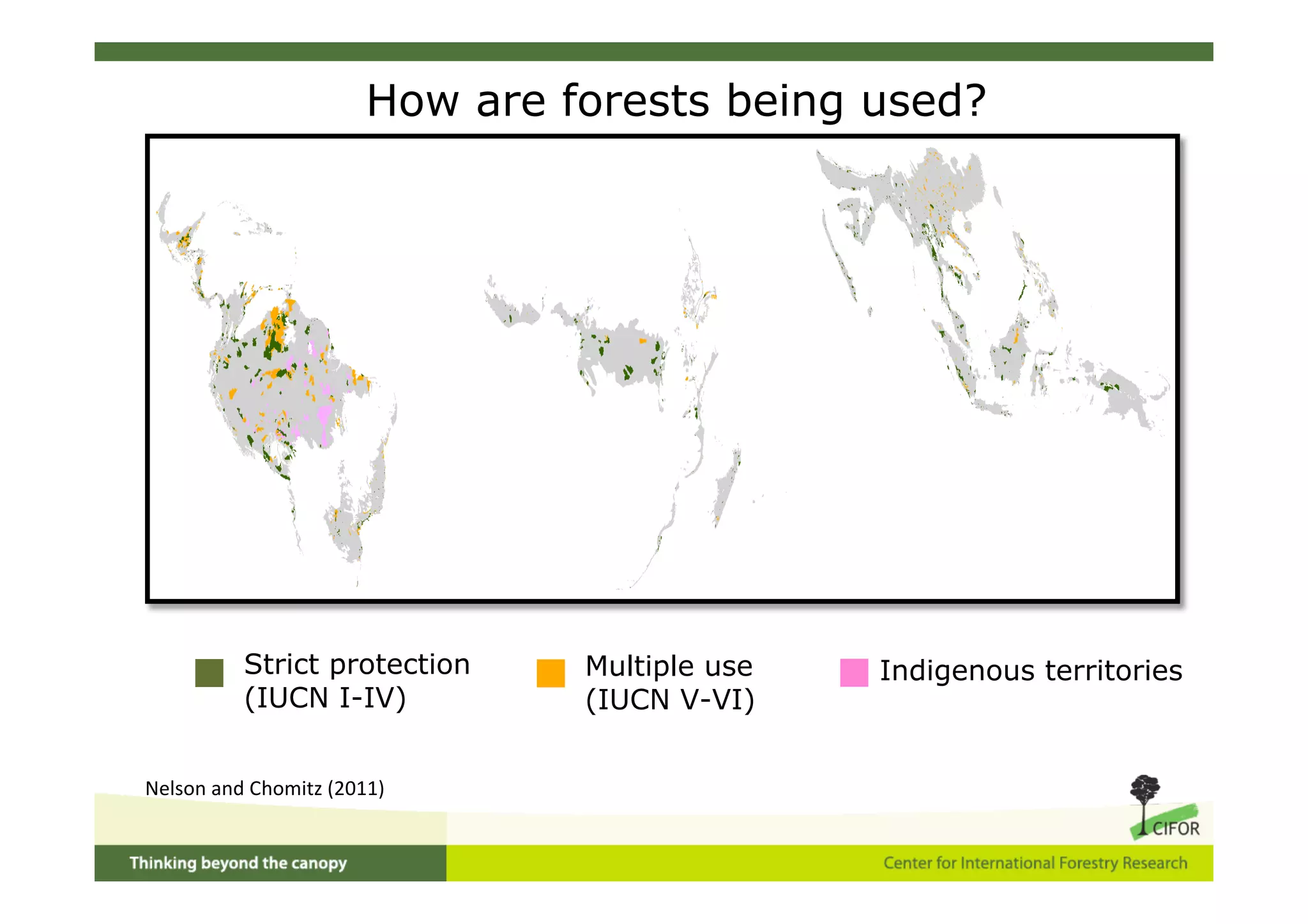
How are forests being used?


          Strict protection     Multiple use   Indigenous territories
          (IUCN I-IV)           (IUCN V-VI)


Nelson
and
Chomitz
(2011)
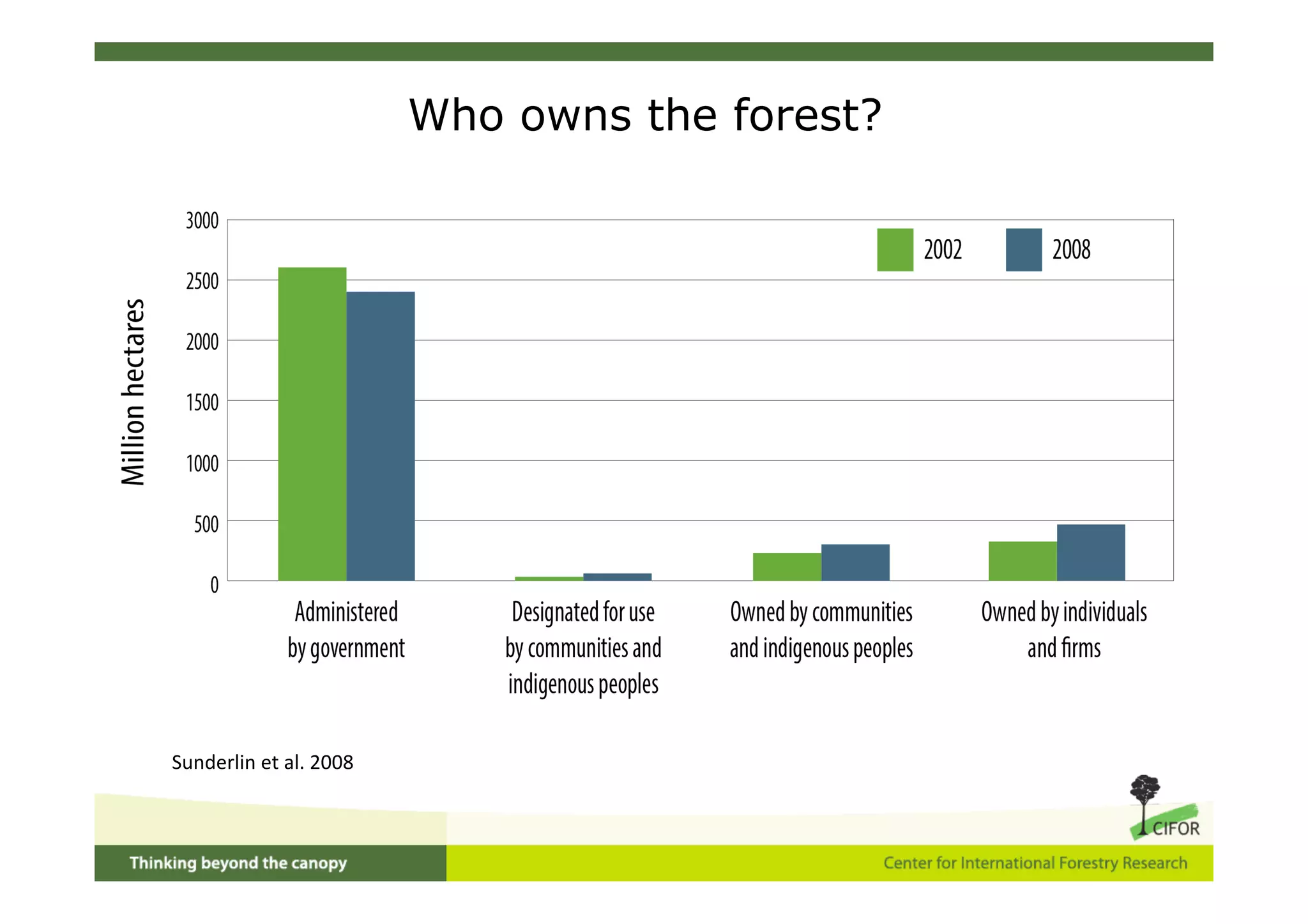
Who owns the forest?


Sunderlin
et
al.
2008
How do deforestation and degradation
     fit in the current scenario?
• In
Latin
America
and
Asia,
strict
forest
  protection
substantially
reduced
fire
  incidence
but
multi‐use
areas
were
even
  more
effective

• Across
the
tropics,
deforestation
rates
in
  protected
areas
were
significantly
larger
than
  in
multi‐use
protected
areas
Nelson
and
Chomitz
2011;
Porter‐Bolland
et
al.
2012
Multi-use: challenges
• Technical
and
managerial
capacities
differ
for
  different
forest
products
and
market
  opportunities
• Local
communities
and
small‐scale
operators
  struggle
to
adjust
their
practices
to
meet
  official
regulations—which
in
turn
show
little
  harmonization
for
multiple
objectives
• Spatial
planning
for
long
term
production
is
  usually
disregarded—particularly
for
multiple
  uses
and
multiple
views
• Ossified
tropical
forestry
curricula
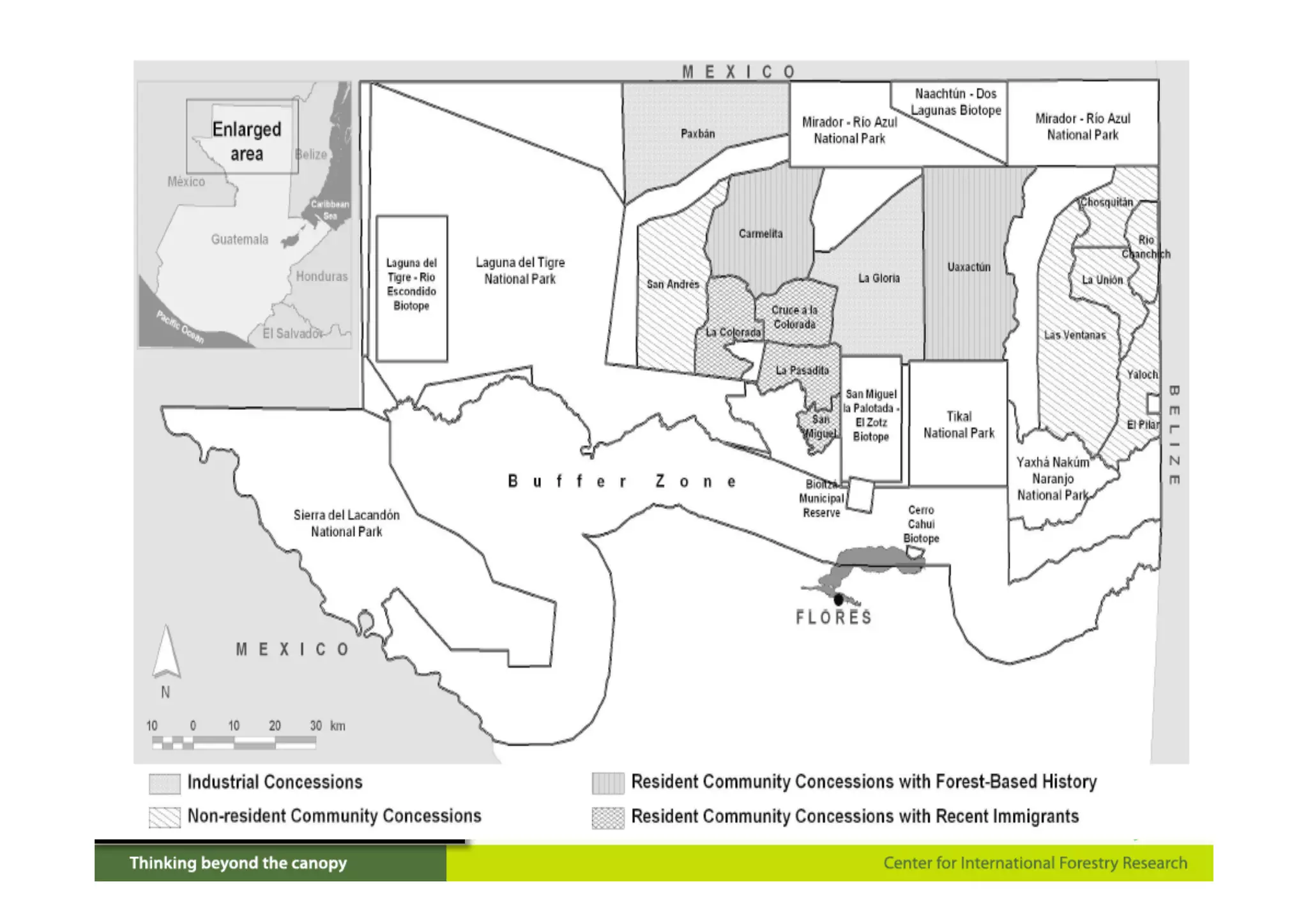
In
Guatemala,
ten
years
after
the
implementation
of
community
forest
concessions,
those
with
the
highest
degree
of
product
diversification
and
social
organization
are
better
able
to
buffer
economic
uncertainty


Radachowsky
et
al.
2012
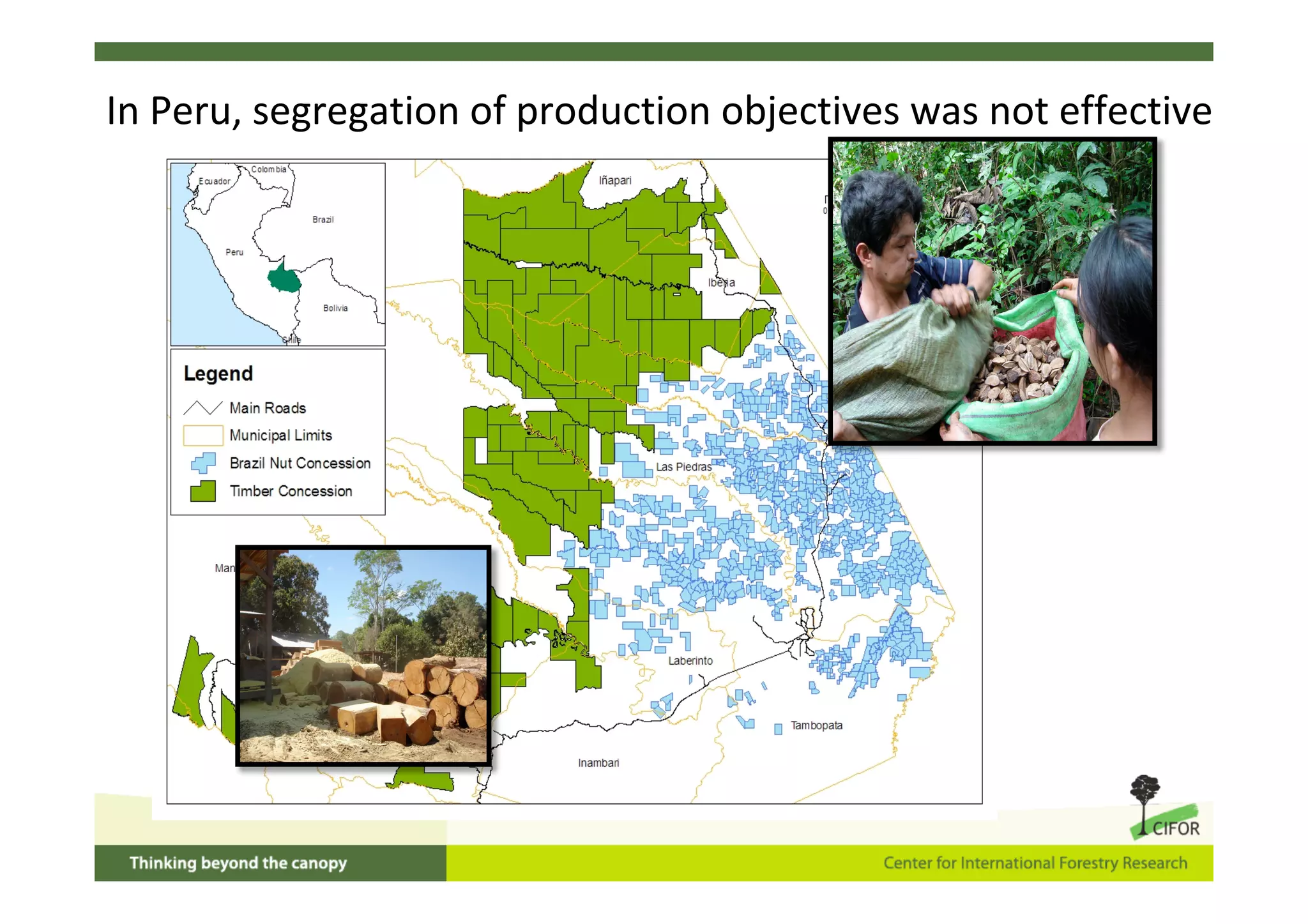
In
Peru,
segregation
of
production
objectives
was
not
effective
Policy dimensions
Aichi
Target
5:
Rate
of
loss
of
all
natural
  habitats,
including
forests,
is
at
least
  halved
…and
degradation
and
  fragmentation
is
significantly
reduced
Aichi
Target
11:
Terrestrial
areas
are
  conserved…and
integrated
into
the
  wider
landscapes
and
seascapes
• Management
tradeoffs
are
complex
  and
acute
in
multiple
use
systems
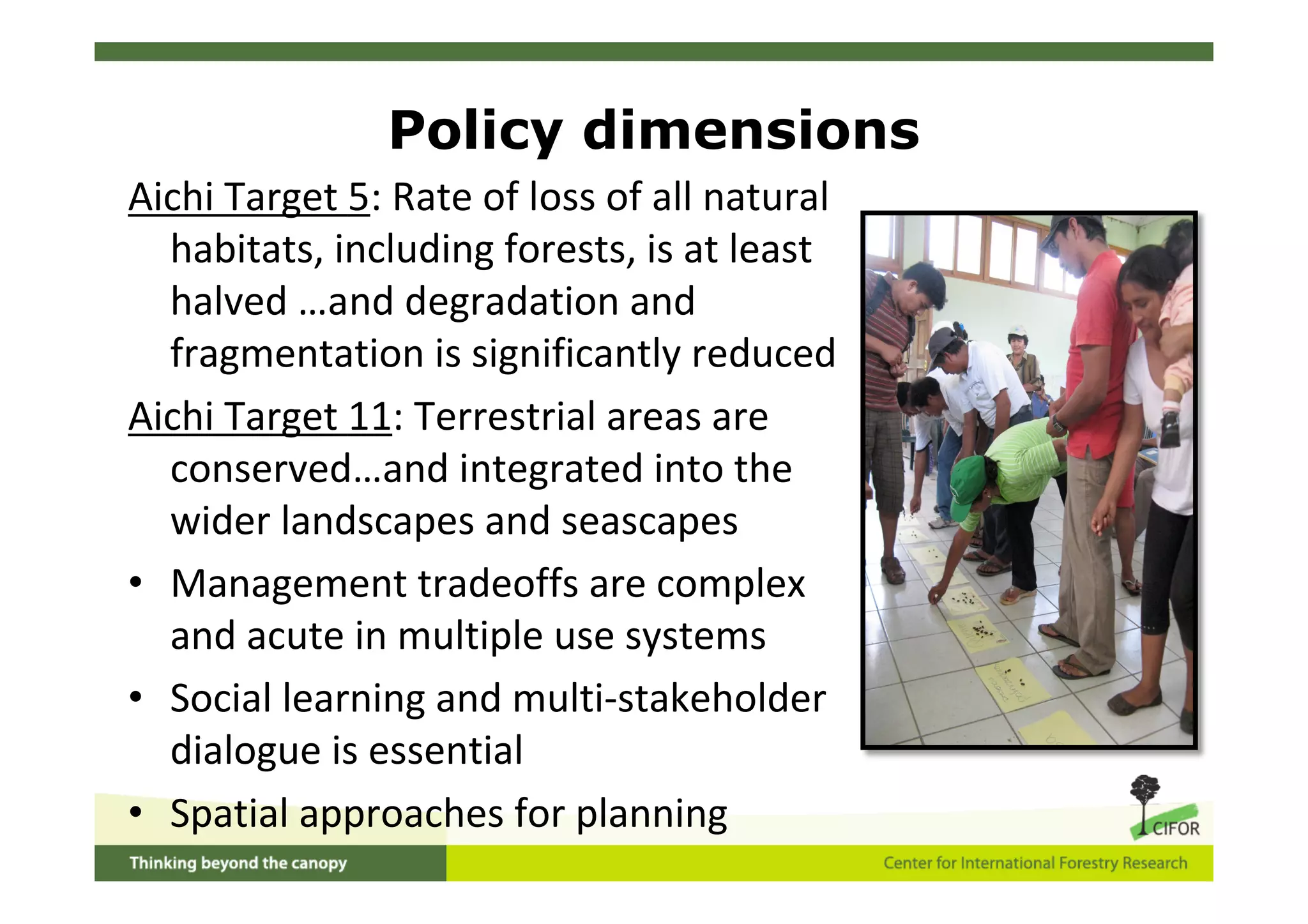
• Social
learning
and
multi‐stakeholder
  dialogue
is
essential
• Spatial
approaches
for
planning
Reducing tropical forest loss through multiple use?

Reducing tropical forest loss through multiple use?