Download to read offline
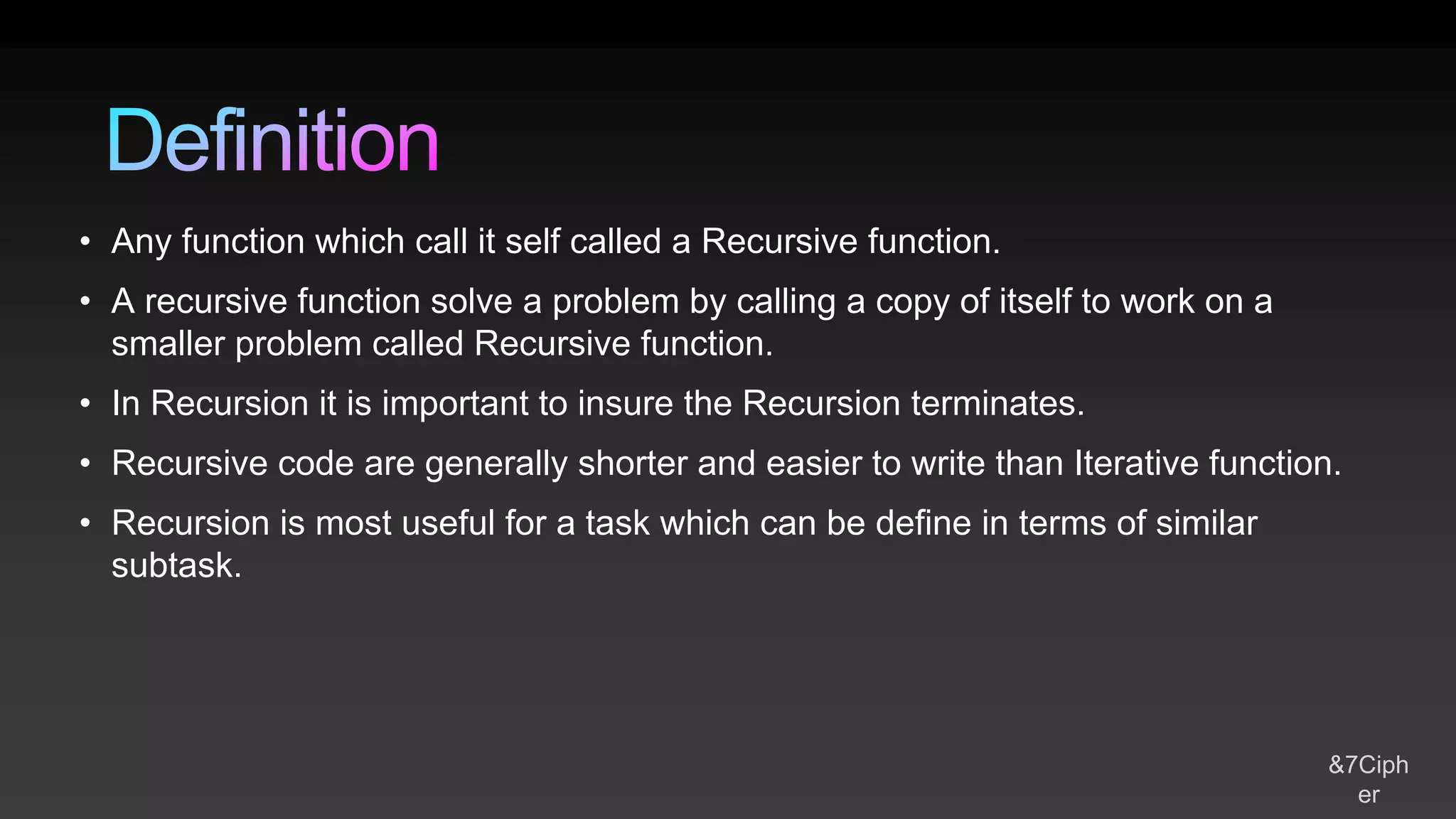
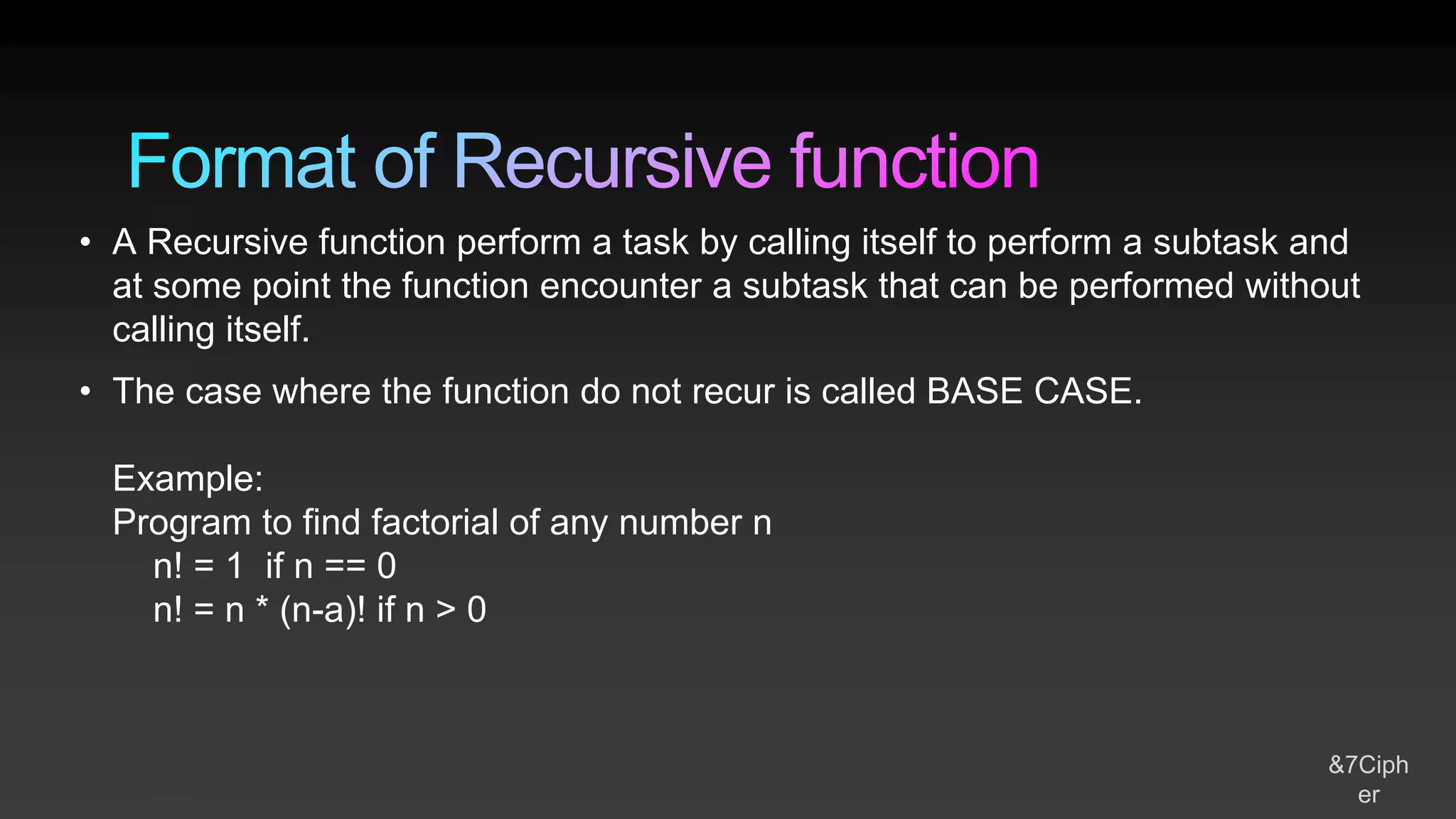
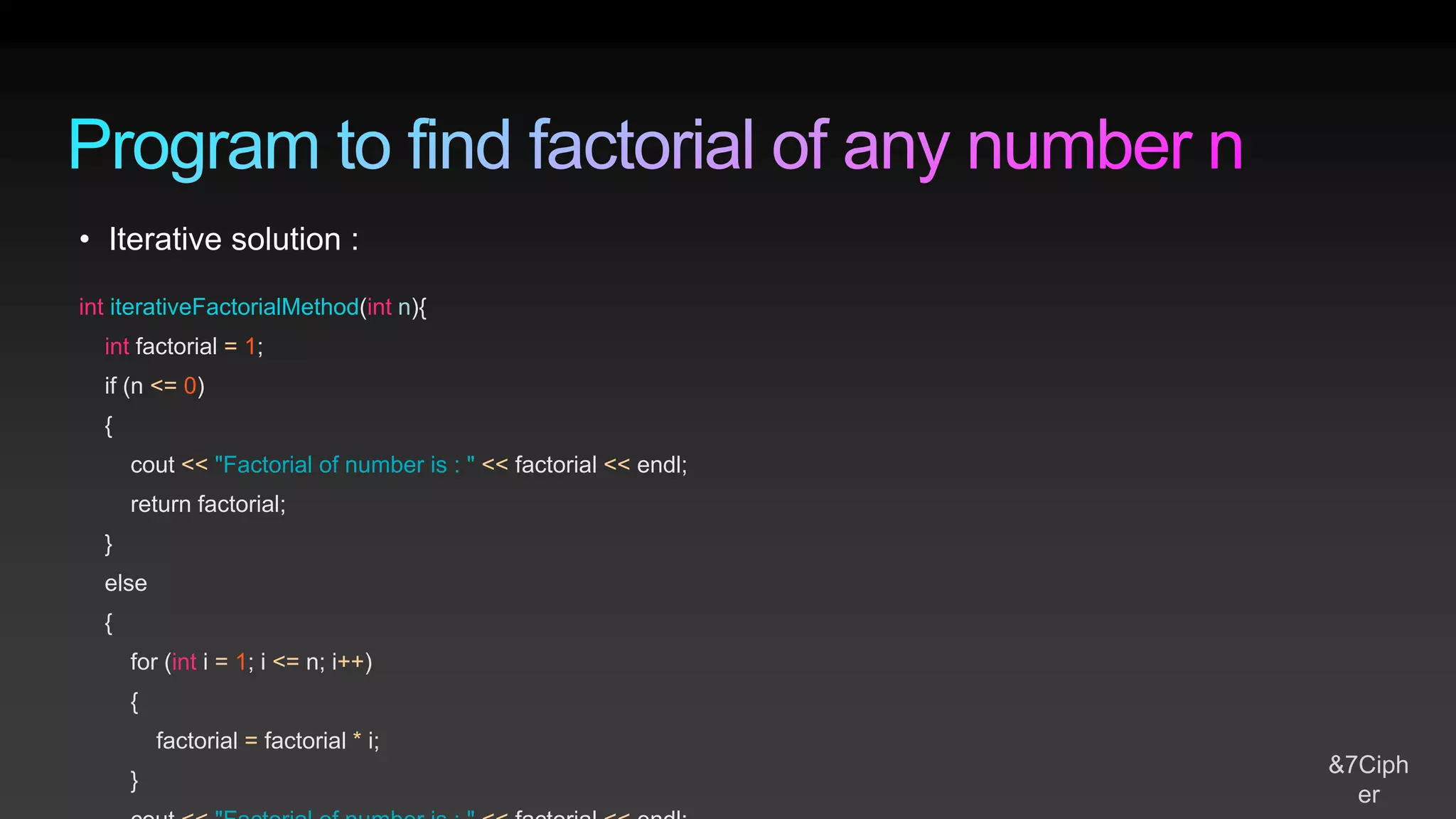
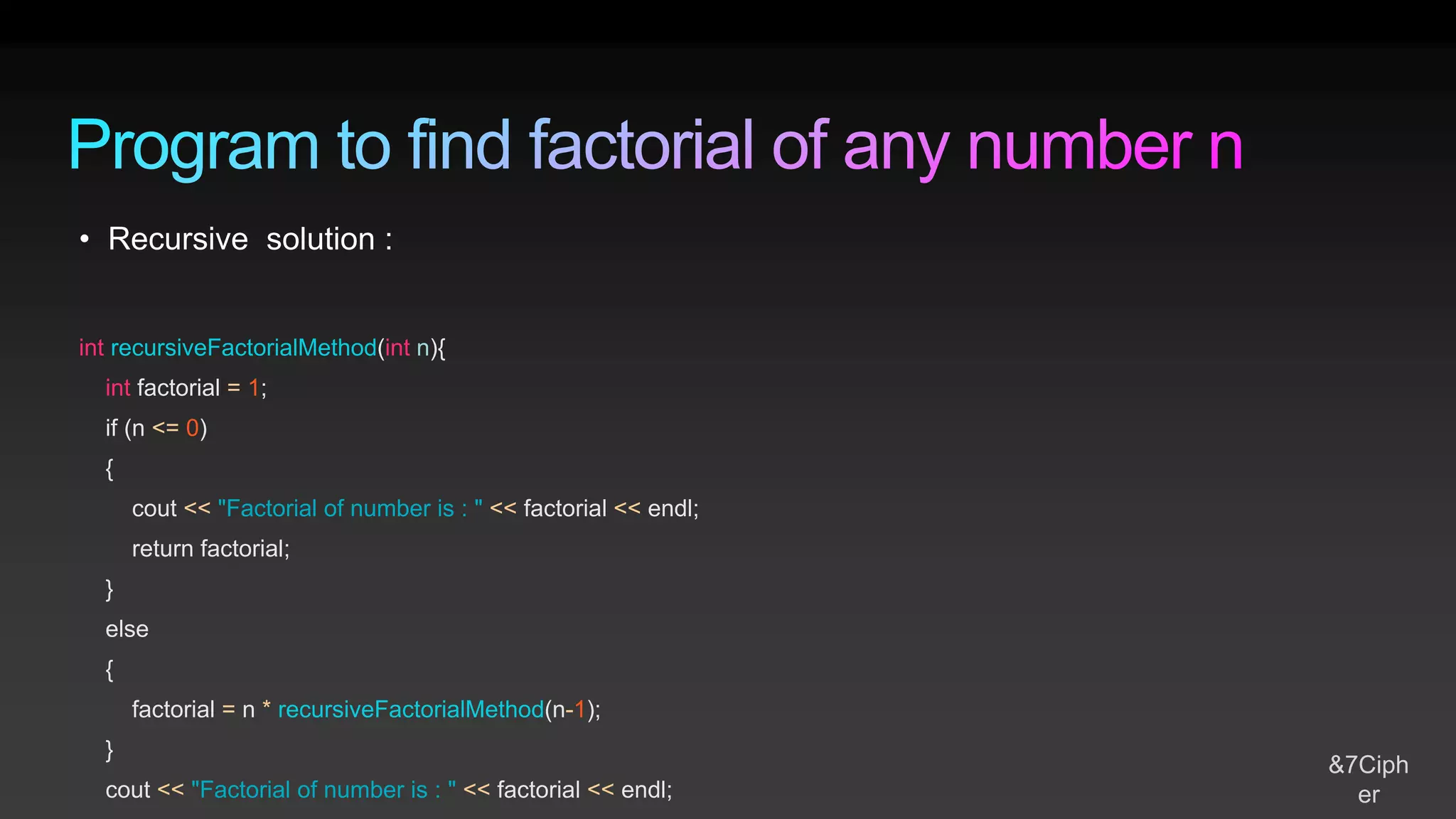
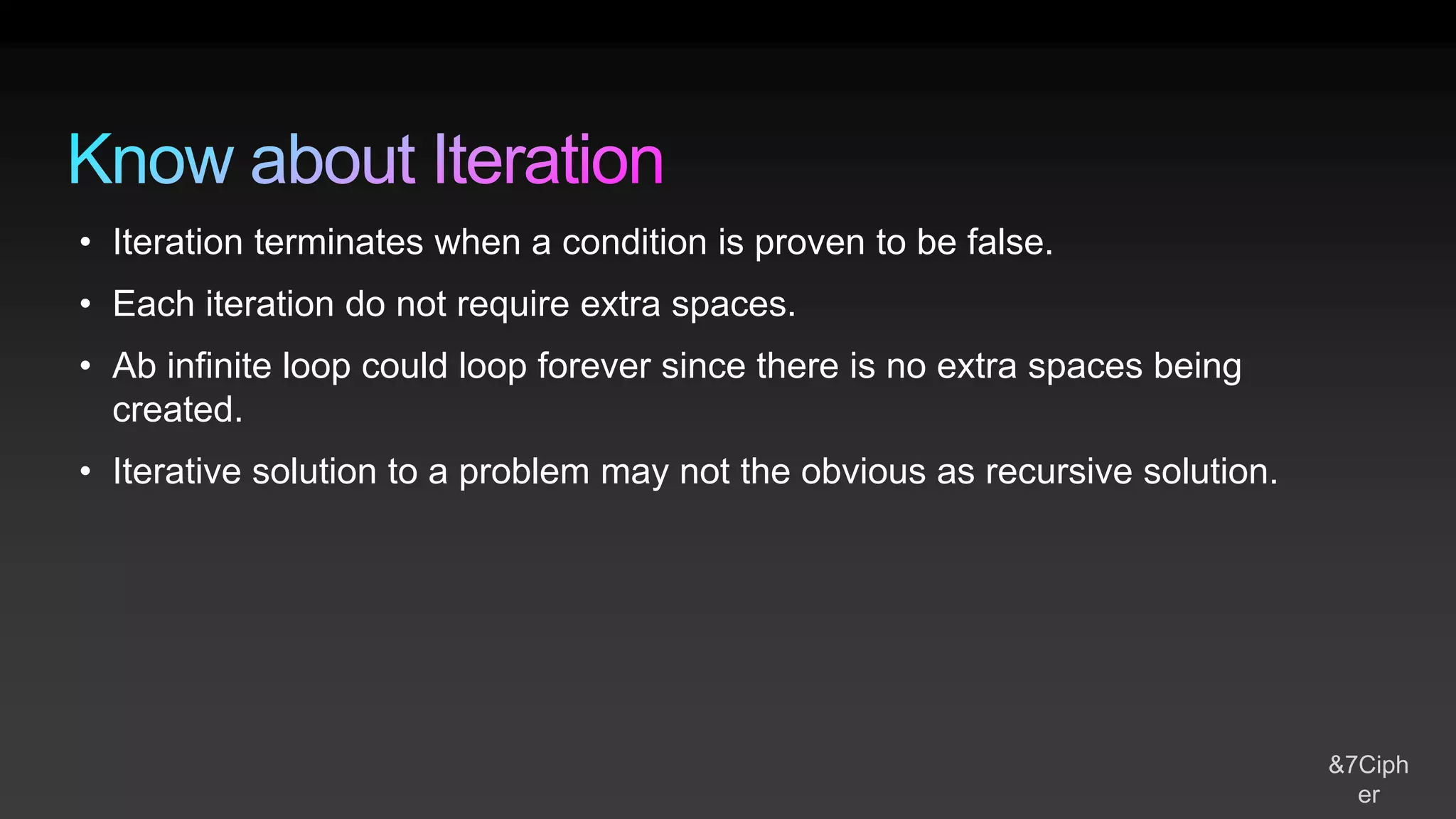
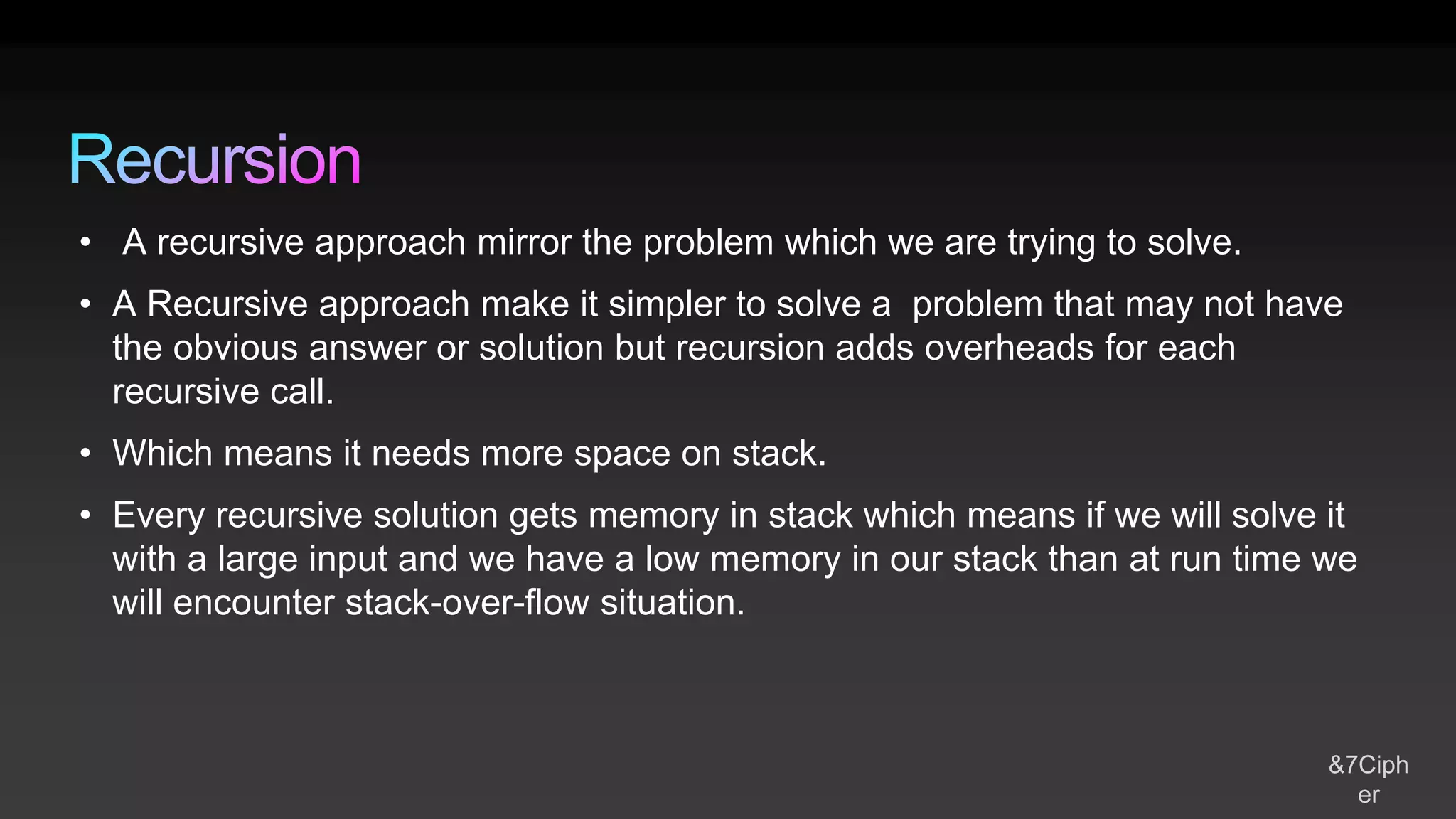
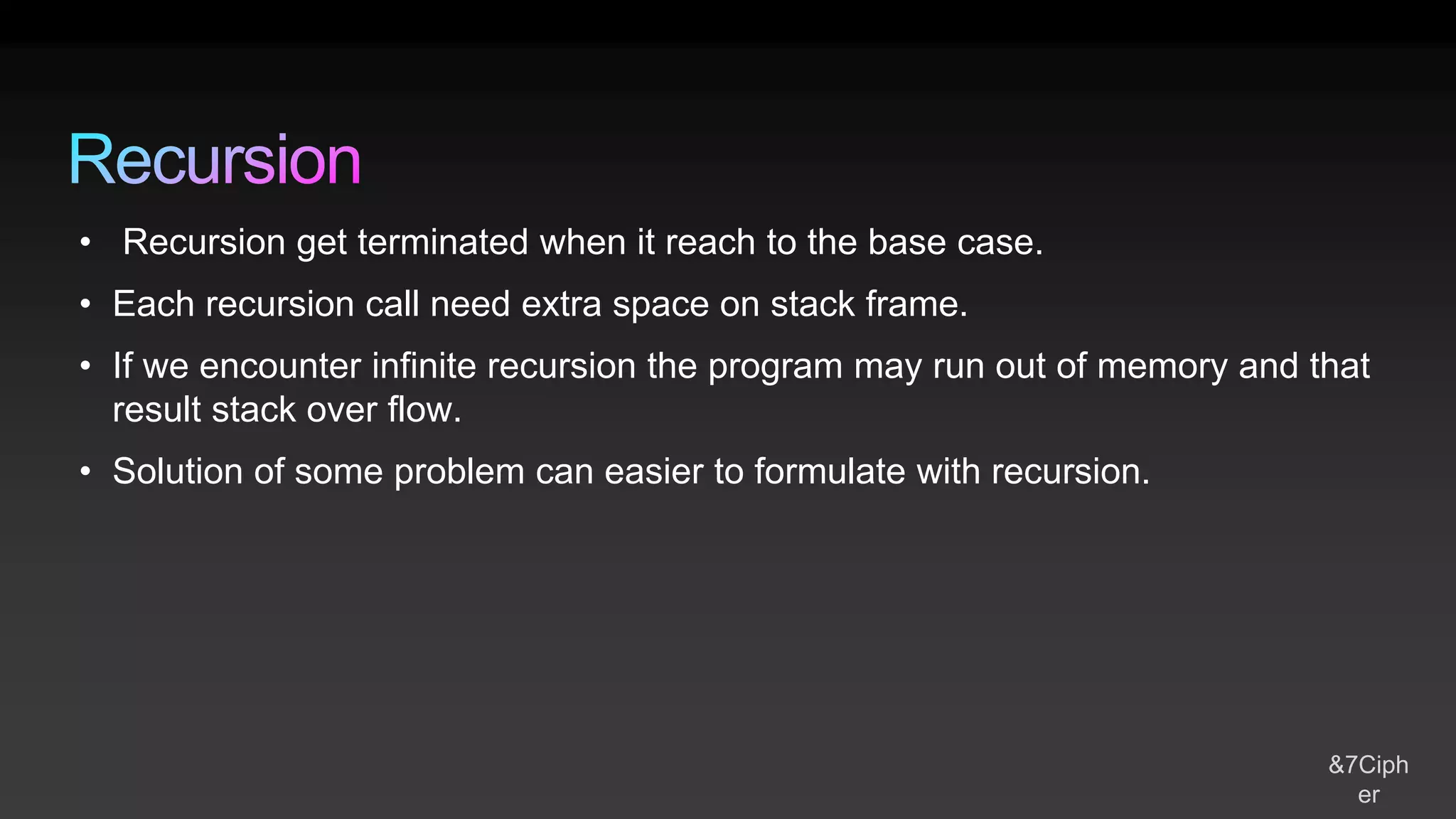
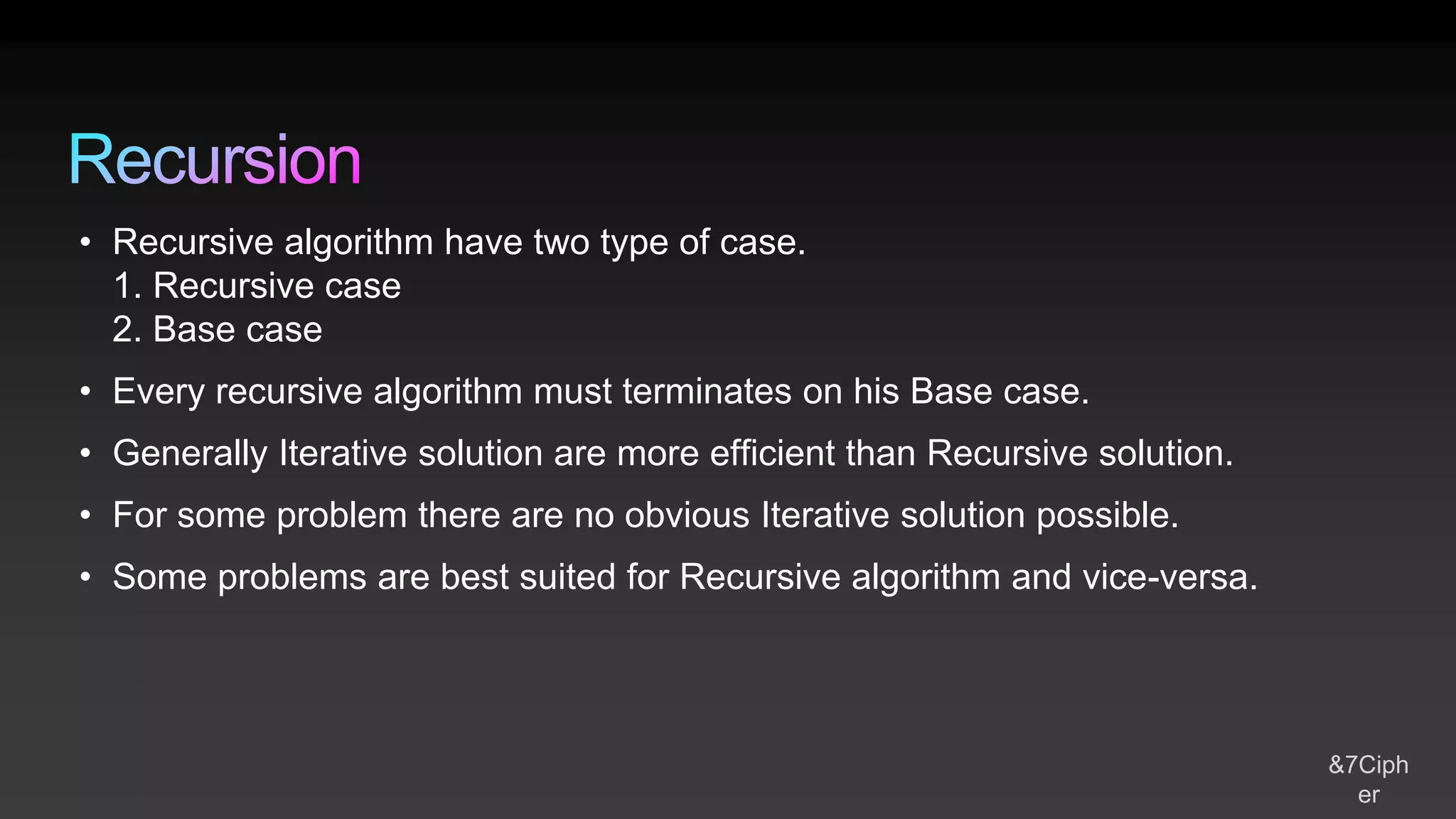
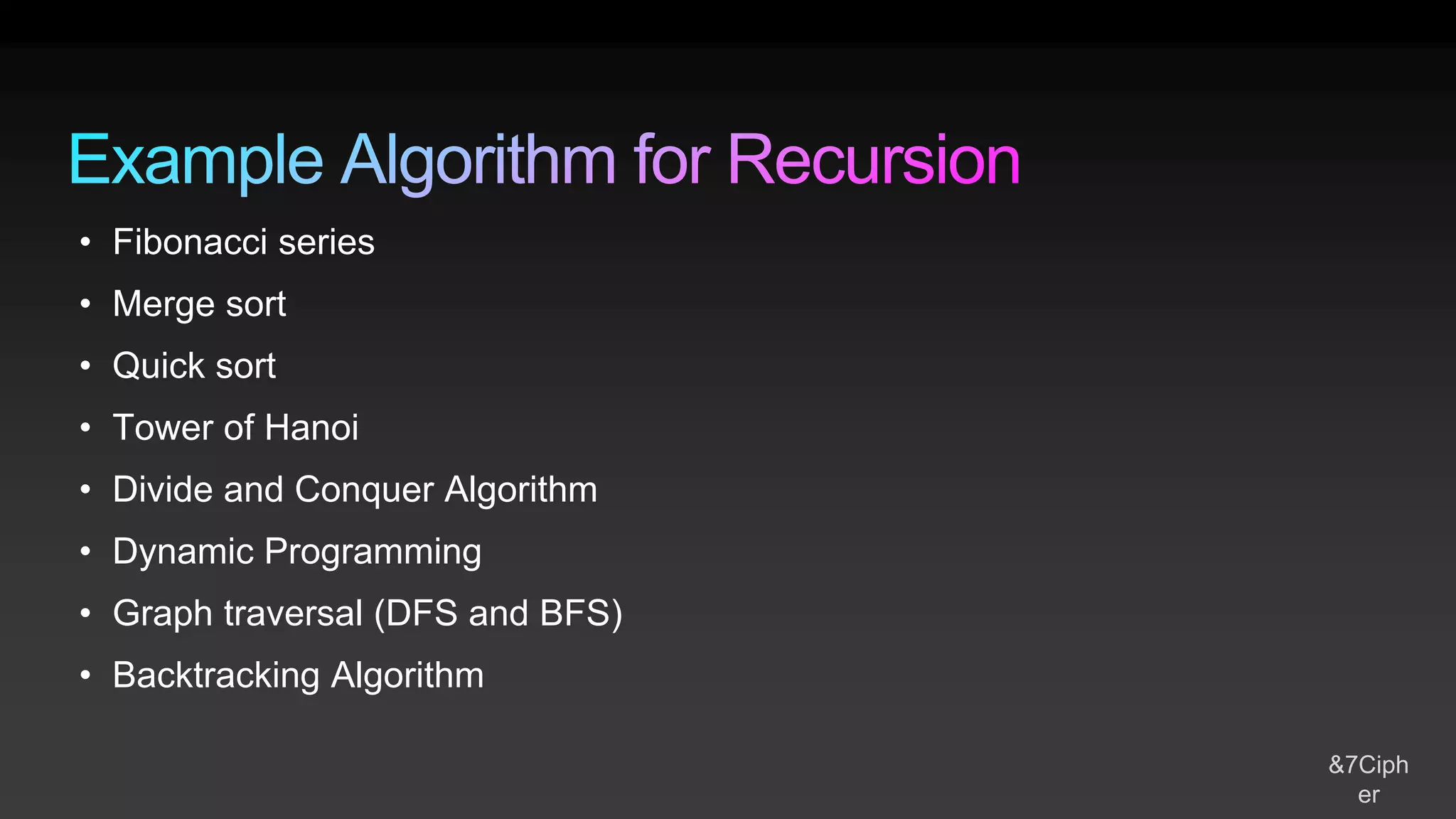
A recursive function calls itself to solve smaller instances of a problem until a base case is reached. Recursion uses additional memory on the stack for each call, so iterative solutions are generally more efficient, but some problems are best solved recursively. Examples of problems well-suited for recursion include calculating factorials, Fibonacci numbers, sorting algorithms like merge and quick sort, and graph traversal algorithms.


