By Kourosh Alizadeh
Although most UTIs can be effectively
treated by antibiotics, UTI recurrence is
a common problem and sometimes may
be very troublesome.
UTI can recur easily in an
immunocompetent child with
anatomically normal urinary tracts.
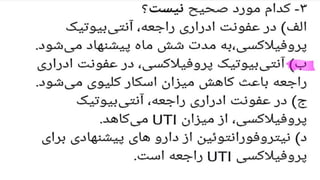
Recurrent UTI: three febrile UTIs in six
months or four total UTIs in one year.
8 to 30 percent of children with UTI
experience on or more reinfections.
Recurrent episodes of pyelonephritis can
lead to renal scarring.
Routine surveillance cultures
should not be performed.
In asymptomatic children after
their first UTI.
Am Ac Peds. March 18, 2014
Antimicrobial prophylaxis has been
suggested in children without VUR
who have frequent recurrent UTIs
and it may reduce the
Risk of recurrent UTI.
N Engl J Med.2009;361(18):174
There are two possible pathways in the
pathogenesis of recurrent UTI;
Frequent repeat ascending infections
and chronic/persistent infections in the
bladder.
Each pathway also might result
from two possible mechanisms;
Bacterial factors and deficiencies in
host defense.
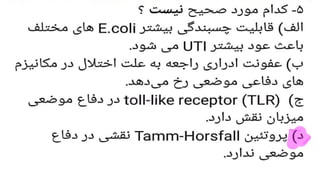
Adhesion is particularly important
When infection occurs in an
anatomically normal urinary tract
Am J Kidney Dis.1991;17(1):1.
Curr Opin Urol.2002;12(1):33.
Cell Microbiol. 2002;4(5):257
Most recurrent UTIs were caused
by an E. coli strain which was
identical to the primary infecting
strain.
Dan Med Bull. 2011 Apr; 58(4):B4187.
J Clin Microbiol. 2012 Dec; 50(12):4002-7.
Patients with frequent recurrent
UTIs might just be infected by a
special strain of E. coli.
J Infect. 2007 Jul; 55(1):8-18.
Virulence. 2011 Nov-Dec; 2(6):528-37.
E. coli with DNA papG coding for a
P-fimbriae was significantly
associated with recurrent UTIs.
Another possible mechanism for
frequent recurrent UTIs is the survival of
bacteria in the bladder through
progression of intracellular bacterial
communities (IBCs)
Early studies showed that E. coli could
replicate intracellularly, form a loose
collection of bacteria, and then escape
into the bladder lumen.
EMBO J. 2000 Jun 15; 19(12):2803-12.
Infect Immun. 2001 Jul; 69(7):4572-9.
IBCs in the bladder could form 4–16 h
after bacterial infection, and then
develop a persistent quiescent
intracellular reservoir 2 weeks later.
Proc Natl Acad Sci U S A. 2006 Sep 19; 103(38):14170-5.
These IBCs could be quiescent for
extended periods despite
antibacterial therapy, and then re-
emerge to cause recurrent UTI.
A recent study revealed that bacteria
in the IBCs, can utilize a galactoside for
metabolism and oxidative stress
resistance.
MBio. 2016;7:e00104–16.
Since studies propose that most
recurrent UTIs are caused by E.
coli strains which are identical to the
primary infection, IBCs and a quiescent
intracellular reservoir might play
important roles in the pathogenesis of
recurrent UTIs.
It is well known that patients with
immunodeficiency tend to have
frequent, recurrent, and severe
UTIs.
Br J Haematol. 2009;145:709–27
However, recurrent UTIs in some
immunocompetent patients might
also be caused by host defense
deficiencies.
The innate immune response in the
bladder, such as toll-like receptors (TLRs),
can recognize pathogens and induce a
robust inflammatory immune response.
TLRs are essential for the
activation of immune responses
and may be associated with
recurrent UTI.
Patients with specific TLR
polymorphisms may have deficiency of
pathogen recognition in the bladder,
which then leads to higher prevalence
of recurrent UTIs.
[PLoS One. 2009;4:e5990].
Polymorphism of TLR2 G2258A, is
associated with an increased risk of
bacteriuria. alsoTLR5 C1174T, is
associated with an increased risk of
recurrent UTI.
[PLoS One. 2009;4:e5990].
On the contrary, TLR polymorphism
including TLR4 A896G and TLR1
G1805T might have potential roles
in protection from recurrent UTI.
[PLoS One. 2009;4:e5990]
The urothelium can secrete pro-
inflammatory cytokines and protective
glycoprotein plaaques such as uroplakin
and Tamm–Horsfall protein (THP) on the
bladder surface as anatomical barriers.
[Nat Rev Immunol. 2015;15:655–63,
Kidney Int. 2009;75:1153–65].
The urothelium's antibacterial
adherence mechanism is fundamental
in host defense, and it had been proven
to be less potent in patients with
recurrent UTI.
[J Urol. 1988;140:157–9]
Uroplakins are the essential
structural components of the
urothelium and a deficiency
compromises the urothelial
permeability barrier.
[Kidney Int. 2009;75:1153–65]
Decreased or entirely absent
uroplakin expression in the
urothelium has been found in
patients with recurrent UTI.
[J Urol. 2011;186:2359–64.]
also, animal studies showed that
urinary THP has the potential to
prevent bacteria from interacting or
aggregating in the urothelium.
[Kidney Int. 2004;65:791–7,Am J Physiol
Renal Physiol. 2004;286:F795–802.]
Recurrent uti without obvious risk factors

Recurrent uti without obvious risk factors

  • 1.
  • 2.
    Although most UTIscan be effectively treated by antibiotics, UTI recurrence is a common problem and sometimes may be very troublesome.
  • 3.
    UTI can recureasily in an immunocompetent child with anatomically normal urinary tracts.
  • 4.
    Recurrent UTI: threefebrile UTIs in six months or four total UTIs in one year. 8 to 30 percent of children with UTI experience on or more reinfections. Recurrent episodes of pyelonephritis can lead to renal scarring.
  • 5.
    Routine surveillance cultures shouldnot be performed. In asymptomatic children after their first UTI. Am Ac Peds. March 18, 2014
  • 6.
    Antimicrobial prophylaxis hasbeen suggested in children without VUR who have frequent recurrent UTIs and it may reduce the Risk of recurrent UTI. N Engl J Med.2009;361(18):174
  • 7.
    There are twopossible pathways in the pathogenesis of recurrent UTI; Frequent repeat ascending infections and chronic/persistent infections in the bladder.
  • 8.
    Each pathway alsomight result from two possible mechanisms; Bacterial factors and deficiencies in host defense.
  • 9.
    Adhesion is particularlyimportant When infection occurs in an anatomically normal urinary tract Am J Kidney Dis.1991;17(1):1. Curr Opin Urol.2002;12(1):33. Cell Microbiol. 2002;4(5):257
  • 10.
    Most recurrent UTIswere caused by an E. coli strain which was identical to the primary infecting strain. Dan Med Bull. 2011 Apr; 58(4):B4187. J Clin Microbiol. 2012 Dec; 50(12):4002-7.
  • 11.
    Patients with frequentrecurrent UTIs might just be infected by a special strain of E. coli. J Infect. 2007 Jul; 55(1):8-18. Virulence. 2011 Nov-Dec; 2(6):528-37.
  • 12.
    E. coli withDNA papG coding for a P-fimbriae was significantly associated with recurrent UTIs.
  • 13.
    Another possible mechanismfor frequent recurrent UTIs is the survival of bacteria in the bladder through progression of intracellular bacterial communities (IBCs)
  • 14.
    Early studies showedthat E. coli could replicate intracellularly, form a loose collection of bacteria, and then escape into the bladder lumen. EMBO J. 2000 Jun 15; 19(12):2803-12. Infect Immun. 2001 Jul; 69(7):4572-9.
  • 15.
    IBCs in thebladder could form 4–16 h after bacterial infection, and then develop a persistent quiescent intracellular reservoir 2 weeks later. Proc Natl Acad Sci U S A. 2006 Sep 19; 103(38):14170-5.
  • 16.
    These IBCs couldbe quiescent for extended periods despite antibacterial therapy, and then re- emerge to cause recurrent UTI.
  • 17.
    A recent studyrevealed that bacteria in the IBCs, can utilize a galactoside for metabolism and oxidative stress resistance. MBio. 2016;7:e00104–16.
  • 18.
    Since studies proposethat most recurrent UTIs are caused by E. coli strains which are identical to the primary infection, IBCs and a quiescent intracellular reservoir might play important roles in the pathogenesis of recurrent UTIs.
  • 19.
    It is wellknown that patients with immunodeficiency tend to have frequent, recurrent, and severe UTIs. Br J Haematol. 2009;145:709–27
  • 20.
    However, recurrent UTIsin some immunocompetent patients might also be caused by host defense deficiencies.
  • 21.
    The innate immuneresponse in the bladder, such as toll-like receptors (TLRs), can recognize pathogens and induce a robust inflammatory immune response.
  • 22.
    TLRs are essentialfor the activation of immune responses and may be associated with recurrent UTI.
  • 23.
    Patients with specificTLR polymorphisms may have deficiency of pathogen recognition in the bladder, which then leads to higher prevalence of recurrent UTIs. [PLoS One. 2009;4:e5990].
  • 24.
    Polymorphism of TLR2G2258A, is associated with an increased risk of bacteriuria. alsoTLR5 C1174T, is associated with an increased risk of recurrent UTI. [PLoS One. 2009;4:e5990].
  • 25.
    On the contrary,TLR polymorphism including TLR4 A896G and TLR1 G1805T might have potential roles in protection from recurrent UTI. [PLoS One. 2009;4:e5990]
  • 26.
    The urothelium cansecrete pro- inflammatory cytokines and protective glycoprotein plaaques such as uroplakin and Tamm–Horsfall protein (THP) on the bladder surface as anatomical barriers. [Nat Rev Immunol. 2015;15:655–63, Kidney Int. 2009;75:1153–65].
  • 27.
    The urothelium's antibacterial adherencemechanism is fundamental in host defense, and it had been proven to be less potent in patients with recurrent UTI. [J Urol. 1988;140:157–9]
  • 28.
    Uroplakins are theessential structural components of the urothelium and a deficiency compromises the urothelial permeability barrier. [Kidney Int. 2009;75:1153–65]
  • 29.
    Decreased or entirelyabsent uroplakin expression in the urothelium has been found in patients with recurrent UTI. [J Urol. 2011;186:2359–64.]
  • 30.
    also, animal studiesshowed that urinary THP has the potential to prevent bacteria from interacting or aggregating in the urothelium. [Kidney Int. 2004;65:791–7,Am J Physiol Renal Physiol. 2004;286:F795–802.]