Skills for Building Your Team


 Recruiting Strategies to Create a
        Culture of Success


           Dr. Kevin Kragenbrink
Today’s Agenda
   Part 1: Recruiting Systems
       The typical team development process
       Rules for Success Focused Recruiting
       Rules for Interviewing Systems
   Part 2: Core Issues for Recruiting in the
    Outdoor Industry
       Seasonal Workers
       Judgment is the Key
   Part 3: Q&A
How an organization selects, develops and manages

            its employees is the single

 greatest predictor of organization performance.
Some Common Mistakes
 The Typical Process
 Reactive Hiring
 Measuring For Failure
 Accepting Turnover
Rules for Success Focused Recruiting
   Start with the Job Description
      How do you define success?
      How do you measure success?
   Recruit to the Job and Your Culture
      Match experience and credentials to the job.
      Match attitudes and behaviors to your culture
      Test both with behavioral interviewing
The Interview Is Key

   CEO Rule:
“Candidates Will
Misrepresent Their
      Past”
Rules for Interviewing

   Use Behavioral Questioning
    S     Describe a Situation
    T     Describe a Task
    A     Tell me what Action you took
    R     Tell me the Results of your action
    E     What Evidence can you provide?
CEO Rule:
“Past behaviors are the
  best predictors of
        future
   performance.”
Hiring Seasonal Staff
        In the
 Outdoor Industry
All employees have an influence on:
    Your brand image
    Morale of the organization
    Overall quality of the products
    Customer service
    Bottom line results (NOI)
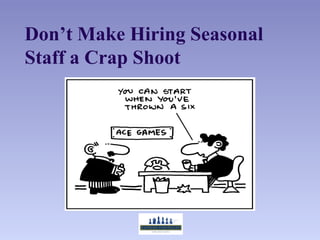
Don’t Make Hiring Seasonal
Staff a Crap Shoot
A successful business requires the alignment
  of business culture, leadership practices
                     and
          employee skills/ behavior.
Understanding Your Business Culture
Know Your Business Culture
Characteristics       Control          Collaboration     Competence          Cultivation
Defined By        Driven short –term   Harmony and        Consistent          Inspirited by
                        goals          Cooperation        challenge         purpose to deliver
                                                                           services or product
Values                Consistent         Inclusivity      Internal and     Individual identity
                   performance and                          external            with the
                       reliable                           competition        Organization
Environment        Decisions come      Consensus and        Rewards        Empowers people
                    from the top         harmony            winners
Strengths           Pragmatic and       Loyalty and           High         Allow for growth
                       realistic         empathy        Performance and          and
                                                        Focused Strategy   Develop human
                                                                               potential
Weaknesses        Limits innovation       Lack of         Excessive           Excessive
                                       accountability      pressure        emphasis on self-
                                                          Egocentric         expression
Matching Cultures and Behaviors
      Control             Collaboration            Competence                Cultivation
  Follows the specific       Team Player         Highly independent       Believes in what the
 job/role requirements                                                    Organization believes

  Follows directives     Willing to multi-task       Demonstrate              Value driven
                                                     personality
  Doesn’t work well      Sacrifices own agenda                            Seeks out growth and
   independently            for group goals             Expert                   change

  Good at performing       Generalist in skill
   specific functions                            Focused on being the      Employees identify
                                                        best                deeply with the
 competent in specific      Harmony and                                    Organization and
      skill set           cooperation among                                make it their own
                              employees          Organizational life is
     Employees are                               intense, high-strung
  expected to comply                              with challenge and
   with decisions and                                performance
  rules established by
    higher authority
Chart your Staff


      Collaboration    Control


       Cultivation    Competence
Each Culture can be effective if the
     business strategies, leadership,
employee selection, staff development and
            rewards systems
               are aligned
Categories of Seasonal Staff
   Support Non Technical –Back and front office,
    logistical support
   Technical-guides/instructors- Primarily responsible
    for the care and safety of clients, and all decision-
    making in the field


         My focus is on technical staff
Hiring Criteria
Evaluate and select candidate based on :

1.   Cultural fit

2.   Core Competencies

3.   Judgment

4.   Personality
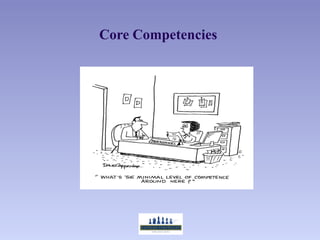
Core Competencies
Core competencies – should be measured in two ways:

   1. General Requirements - candidates possess the
      physical ability and knowledge to safely
      manage clients in the environment.


   2. Technical Skills – candidates are proficient in
      the essential skills required to lead clients safely
      in the activity.
Measures
1. General requirements
     • Physical Fitness
     • Experience with the equipment
     • Knowledge of the terrain
     • Local weather
     • Environmental hazards

2. Technical skills – documented experience
     • Lead class IV and V peak ascents
     • Captain a raft over class III and higher rapids
Judgment
    Good judgment is:

         • Having the experience and awareness to predict
           an outcome to a situation.

         •   Making the right decision that leads to a
             positive outcome given a set of circumstances.

“A leader with limited knowledge and superior judgment
  is better than one with vast knowledge and little
 judgment.”
         Paul Petzoldt
Interviewing for Determining Sound Judgment
                                    Case Method
Rafting Trip - A group of nine adults (male and female,
married and single) are proceeding down the Green River on a
multi-day paddling rafting trip in mid-summer. Among
participants there is a wide range of physical fitness, interest
and enthusiasm for the experience. One out-of-shape male is
complaining to the group about having to paddle long distances
and the un-comfortableness of camping and being outdoors. His
wife is the opposite -very fit, risk taker and an adventurist.
Among the singles from the start of the trip one male is paying
a great amount of attention to a very attractive female and she
does not welcome his advances. By Day three, the group is
starting to notice that a particular single male and female keep
disappearing during break and camp set-ups.
Backpacking – In the late morning of day one of a
backpacking trip in the Lewis and Clark National Forest, a 21
year old male is experiencing shortness of breath and an
irregular heartbeat. The group leader assumes that the young
man is out of shape. The group continues on and by the
afternoon the young man is lagging way behind with real
difficulty in breathing.


Canoeing - On a canoeing trip in the Southeastern United
States in July at 2:30 PM, a group is traveling down a river
about to enter a long, wide lake. The plan is to cross the six-
mile lake and camp for the night on the shore.
Interviewing Questions:

1. What is your appraisal of the situation?


2. What are your specific concerns?


3. What actions need to be taken?
“Judge a person by his questions
             rather
      than by his answers.”
Voltaire
Final Candidate Selection
   1. Does the candidate fit and will he/she enhance the company
      culture ?

   2. Does the candidate have the required skills and experience to
      safely lead clients?

   3. Does the candidate have the maturity and judgment to
      foresee potential hazards?

   4. Does the candidate have the personality and ability to work
      within guidelines
Next step: Invite the Candidate to your training programs
Summary
   Define Your Recruiting Systems
      Job Descriptions that Define Success
      Rules of engagement to set expectations
      Behavioral interviewing to identify behavior
      Clear communications to define next steps
   Set Your Hiring Criteria
      Ability (do they have the skills, resources, credentials, etc.)
      Willingness (do they have the attitude, behaviors, culture,
        etc.)
   Communicate Culture
      Vision, Values, Mission
      Non-Negotiables Go Beyond the Employee Manual
Lessons Learned
 Take a minute to write down your
  lessons learned?
 1.
 2.
 3.
 4.
Thank you for participating in Today’s
               Workshop
 For more information on the Estrada Strategies Online CEO Club,
please contact me at kevin@estradastrategies.com or by phone at
                         865-804-1556

Recruiting your team: Recruiting and Hiring the Right People for Every Job

  • 1.
    Skills for BuildingYour Team Recruiting Strategies to Create a Culture of Success Dr. Kevin Kragenbrink
  • 2.
    Today’s Agenda  Part 1: Recruiting Systems  The typical team development process  Rules for Success Focused Recruiting  Rules for Interviewing Systems  Part 2: Core Issues for Recruiting in the Outdoor Industry  Seasonal Workers  Judgment is the Key  Part 3: Q&A
  • 3.
    How an organizationselects, develops and manages its employees is the single greatest predictor of organization performance.
  • 4.
    Some Common Mistakes The Typical Process  Reactive Hiring  Measuring For Failure  Accepting Turnover
  • 5.
    Rules for SuccessFocused Recruiting  Start with the Job Description  How do you define success?  How do you measure success?  Recruit to the Job and Your Culture  Match experience and credentials to the job.  Match attitudes and behaviors to your culture  Test both with behavioral interviewing
  • 6.
    The Interview IsKey CEO Rule: “Candidates Will Misrepresent Their Past”
  • 7.
    Rules for Interviewing  Use Behavioral Questioning S Describe a Situation T Describe a Task A Tell me what Action you took R Tell me the Results of your action E What Evidence can you provide?
  • 8.
    CEO Rule: “Past behaviorsare the best predictors of future performance.”
  • 9.
    Hiring Seasonal Staff In the Outdoor Industry
  • 10.
    All employees havean influence on:  Your brand image  Morale of the organization  Overall quality of the products  Customer service  Bottom line results (NOI)
  • 11.
    Don’t Make HiringSeasonal Staff a Crap Shoot
  • 12.
    A successful businessrequires the alignment of business culture, leadership practices and employee skills/ behavior.
  • 13.
  • 14.
    Know Your BusinessCulture Characteristics Control Collaboration Competence Cultivation Defined By Driven short –term Harmony and Consistent Inspirited by goals Cooperation challenge purpose to deliver services or product Values Consistent Inclusivity Internal and Individual identity performance and external with the reliable competition Organization Environment Decisions come Consensus and Rewards Empowers people from the top harmony winners Strengths Pragmatic and Loyalty and High Allow for growth realistic empathy Performance and and Focused Strategy Develop human potential Weaknesses Limits innovation Lack of Excessive Excessive accountability pressure emphasis on self- Egocentric expression
  • 15.
    Matching Cultures andBehaviors Control Collaboration Competence Cultivation Follows the specific Team Player Highly independent Believes in what the job/role requirements Organization believes Follows directives Willing to multi-task Demonstrate Value driven personality Doesn’t work well Sacrifices own agenda Seeks out growth and independently for group goals Expert change Good at performing Generalist in skill specific functions Focused on being the Employees identify best deeply with the competent in specific Harmony and Organization and skill set cooperation among make it their own employees Organizational life is Employees are intense, high-strung expected to comply with challenge and with decisions and performance rules established by higher authority
  • 16.
    Chart your Staff Collaboration Control Cultivation Competence
  • 17.
    Each Culture canbe effective if the business strategies, leadership, employee selection, staff development and rewards systems are aligned
  • 18.
    Categories of SeasonalStaff  Support Non Technical –Back and front office, logistical support  Technical-guides/instructors- Primarily responsible for the care and safety of clients, and all decision- making in the field My focus is on technical staff
  • 19.
    Hiring Criteria Evaluate andselect candidate based on : 1. Cultural fit 2. Core Competencies 3. Judgment 4. Personality
  • 20.
  • 21.
    Core competencies –should be measured in two ways: 1. General Requirements - candidates possess the physical ability and knowledge to safely manage clients in the environment. 2. Technical Skills – candidates are proficient in the essential skills required to lead clients safely in the activity.
  • 22.
    Measures 1. General requirements • Physical Fitness • Experience with the equipment • Knowledge of the terrain • Local weather • Environmental hazards 2. Technical skills – documented experience • Lead class IV and V peak ascents • Captain a raft over class III and higher rapids
  • 23.
    Judgment Good judgment is: • Having the experience and awareness to predict an outcome to a situation. • Making the right decision that leads to a positive outcome given a set of circumstances. “A leader with limited knowledge and superior judgment is better than one with vast knowledge and little judgment.” Paul Petzoldt
  • 24.
    Interviewing for DeterminingSound Judgment Case Method Rafting Trip - A group of nine adults (male and female, married and single) are proceeding down the Green River on a multi-day paddling rafting trip in mid-summer. Among participants there is a wide range of physical fitness, interest and enthusiasm for the experience. One out-of-shape male is complaining to the group about having to paddle long distances and the un-comfortableness of camping and being outdoors. His wife is the opposite -very fit, risk taker and an adventurist. Among the singles from the start of the trip one male is paying a great amount of attention to a very attractive female and she does not welcome his advances. By Day three, the group is starting to notice that a particular single male and female keep disappearing during break and camp set-ups.
  • 25.
    Backpacking – Inthe late morning of day one of a backpacking trip in the Lewis and Clark National Forest, a 21 year old male is experiencing shortness of breath and an irregular heartbeat. The group leader assumes that the young man is out of shape. The group continues on and by the afternoon the young man is lagging way behind with real difficulty in breathing. Canoeing - On a canoeing trip in the Southeastern United States in July at 2:30 PM, a group is traveling down a river about to enter a long, wide lake. The plan is to cross the six- mile lake and camp for the night on the shore.
  • 26.
    Interviewing Questions: 1. Whatis your appraisal of the situation? 2. What are your specific concerns? 3. What actions need to be taken?
  • 27.
    “Judge a personby his questions rather than by his answers.” Voltaire
  • 28.
    Final Candidate Selection 1. Does the candidate fit and will he/she enhance the company culture ? 2. Does the candidate have the required skills and experience to safely lead clients? 3. Does the candidate have the maturity and judgment to foresee potential hazards? 4. Does the candidate have the personality and ability to work within guidelines Next step: Invite the Candidate to your training programs
  • 30.
    Summary  Define Your Recruiting Systems  Job Descriptions that Define Success  Rules of engagement to set expectations  Behavioral interviewing to identify behavior  Clear communications to define next steps  Set Your Hiring Criteria  Ability (do they have the skills, resources, credentials, etc.)  Willingness (do they have the attitude, behaviors, culture, etc.)  Communicate Culture  Vision, Values, Mission  Non-Negotiables Go Beyond the Employee Manual
  • 31.
    Lessons Learned  Takea minute to write down your lessons learned?  1.  2.  3.  4.
  • 32.
    Thank you forparticipating in Today’s Workshop For more information on the Estrada Strategies Online CEO Club, please contact me at kevin@estradastrategies.com or by phone at 865-804-1556