Recent Trends in AI
Artificial Intelligence has rapidly evolved in recent years, impacting
various industries.
Recent Advancements in
Machine Learning
• Deep Learning Techniques: Advancements in neural network
architectures and training methods.
• Transfer Learning: Leveraging pre-trained models to improve
learning in new tasks.
• AutoML: Automated machine learning tools for model selection
and hyperparameter tuning.
Natural Language Processing and Its
Impact
Advancements in
Communication
Natural language processing
enables machines to
understand, interpret, and
respond to human language.
It has revolutionized customer
service through chatbots and
virtual assistants.
Language Barrier
Breakthroughs
NLP facilitates multilingual
communication, breaking
down language barriers and
fostering global collaboration
and understanding.
Insightful Data Analysis
NLP helps extract valuable
insights from a vast amount of
unstructured text data,
making it vital for business
intelligence and decision-
making.
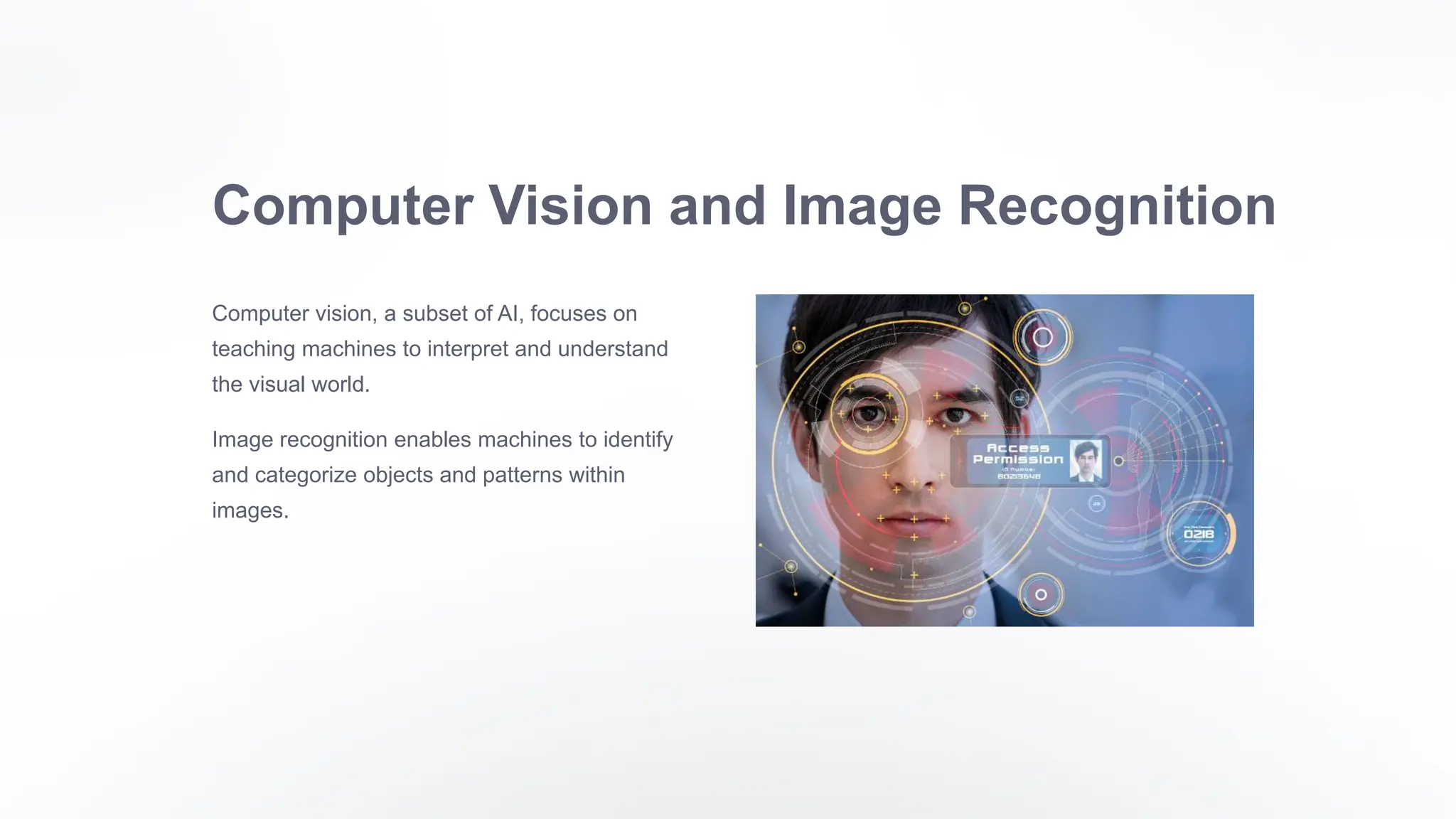
Computer Vision and Image Recognition
Computer vision, a subset of AI, focuses on
teaching machines to interpret and understand
the visual world.
Image recognition enables machines to identify
and categorize objects and patterns within
images.
Robotics and Automation
Robotic Assembly
Robotic arms are used in
manufacturing to automate
production lines.
Autonomous Vehicles
Self-driving cars and drones
utilize AI for navigation and
control.
Industrial Robots
Advanced robots perform tasks
in industries such as logistics
and agriculture.
AI in Finance
Automated Analysis
AI is automating complex financial analysis,
improving risk assessment and investment
decision-making.
Algorithmic Trading
AI-based algorithms are playing a critical role in
automated trading strategies, optimizing market
decision processes.
AI in Healthcare and Medicine
Improved Diagnosis
and Treatment
AI in healthcare enables
accurate diagnosis and
personalized treatment for
patients.
Precision and
Efficiency in Surgery
Robotic surgeries powered by
AI ensure precision and faster
recovery times for patients.
Enhanced Medical
Imaging Analysis
AI aids in analyzing medical
images, leading to early
detection and precise
interpretation of conditions.
Ethics and Concerns Surrounding AI
Ethical Dilemmas
AI decision-making raises questions about
bias, privacy, and accountability.
Job Displacement
Concerns exist about the potential impact of
AI on employment and labor markets.
Security Risks
AI systems may pose security threats and
vulnerabilities, raising cybersecurity
concerns.
Misuse of AI
There is apprehension about the misuse of AI
for malicious purposes or propaganda.
Future of AI and its potential
1 Enhanced Automation
AI will revolutionize repetitive tasks, increasing efficiency and productivity.
2 Personalized Experiences
AI will tailor products and services to individual preferences with precision.
3 Ethical and Responsible AI
The development of ethical guidelines and regulations for AI implementation.
Applications of AI in Various Industries
1
Manufacturing
Optimizing production processes and predictive maintenance.
2
Finance
Algorithmic trading, fraud detection, and risk assessment.
3
Healthcare
Medical imaging analysis, personalized treatment,
and drug discovery.
4
Retail
Personalized recommendations and inventory
management.
Conclusion and Key Takeaways
Ethical Considerations
As AI continues to advance, ethical
considerations regarding its use become
increasingly important. It is crucial to
prioritize ethical decision-making in AI
development and deployment.
Impact on Labor and Employment
AI's automation capabilities raise concerns
about the impact on jobs and employment.
It's essential to address job displacement
and invest in programs for reskilling.
Regulatory Framework
Establishing comprehensive and adaptive
regulations for AI technologies is imperative
to ensure responsible and safe
implementation across industries.
Democratization of AI
Efforts to make AI accessible to all, while
considering privacy and security, are key for
harnessing the full potential of this
transformative technology.

Recent Trends in Artificial Intelligence

  • 1.
    Recent Trends inAI Artificial Intelligence has rapidly evolved in recent years, impacting various industries.
  • 2.
    Recent Advancements in MachineLearning • Deep Learning Techniques: Advancements in neural network architectures and training methods. • Transfer Learning: Leveraging pre-trained models to improve learning in new tasks. • AutoML: Automated machine learning tools for model selection and hyperparameter tuning.
  • 3.
    Natural Language Processingand Its Impact Advancements in Communication Natural language processing enables machines to understand, interpret, and respond to human language. It has revolutionized customer service through chatbots and virtual assistants. Language Barrier Breakthroughs NLP facilitates multilingual communication, breaking down language barriers and fostering global collaboration and understanding. Insightful Data Analysis NLP helps extract valuable insights from a vast amount of unstructured text data, making it vital for business intelligence and decision- making.
  • 4.
    Computer Vision andImage Recognition Computer vision, a subset of AI, focuses on teaching machines to interpret and understand the visual world. Image recognition enables machines to identify and categorize objects and patterns within images.
  • 5.
    Robotics and Automation RoboticAssembly Robotic arms are used in manufacturing to automate production lines. Autonomous Vehicles Self-driving cars and drones utilize AI for navigation and control. Industrial Robots Advanced robots perform tasks in industries such as logistics and agriculture.
  • 6.
    AI in Finance AutomatedAnalysis AI is automating complex financial analysis, improving risk assessment and investment decision-making. Algorithmic Trading AI-based algorithms are playing a critical role in automated trading strategies, optimizing market decision processes.
  • 7.
    AI in Healthcareand Medicine Improved Diagnosis and Treatment AI in healthcare enables accurate diagnosis and personalized treatment for patients. Precision and Efficiency in Surgery Robotic surgeries powered by AI ensure precision and faster recovery times for patients. Enhanced Medical Imaging Analysis AI aids in analyzing medical images, leading to early detection and precise interpretation of conditions.
  • 8.
    Ethics and ConcernsSurrounding AI Ethical Dilemmas AI decision-making raises questions about bias, privacy, and accountability. Job Displacement Concerns exist about the potential impact of AI on employment and labor markets. Security Risks AI systems may pose security threats and vulnerabilities, raising cybersecurity concerns. Misuse of AI There is apprehension about the misuse of AI for malicious purposes or propaganda.
  • 9.
    Future of AIand its potential 1 Enhanced Automation AI will revolutionize repetitive tasks, increasing efficiency and productivity. 2 Personalized Experiences AI will tailor products and services to individual preferences with precision. 3 Ethical and Responsible AI The development of ethical guidelines and regulations for AI implementation.
  • 10.
    Applications of AIin Various Industries 1 Manufacturing Optimizing production processes and predictive maintenance. 2 Finance Algorithmic trading, fraud detection, and risk assessment. 3 Healthcare Medical imaging analysis, personalized treatment, and drug discovery. 4 Retail Personalized recommendations and inventory management.
  • 11.
    Conclusion and KeyTakeaways Ethical Considerations As AI continues to advance, ethical considerations regarding its use become increasingly important. It is crucial to prioritize ethical decision-making in AI development and deployment. Impact on Labor and Employment AI's automation capabilities raise concerns about the impact on jobs and employment. It's essential to address job displacement and invest in programs for reskilling. Regulatory Framework Establishing comprehensive and adaptive regulations for AI technologies is imperative to ensure responsible and safe implementation across industries. Democratization of AI Efforts to make AI accessible to all, while considering privacy and security, are key for harnessing the full potential of this transformative technology.