Rebooting the IoT
From the Internet of Things to an Economy of Things
Rob van den Dam
Global Telecom Leader
IBM Institute for Business Value
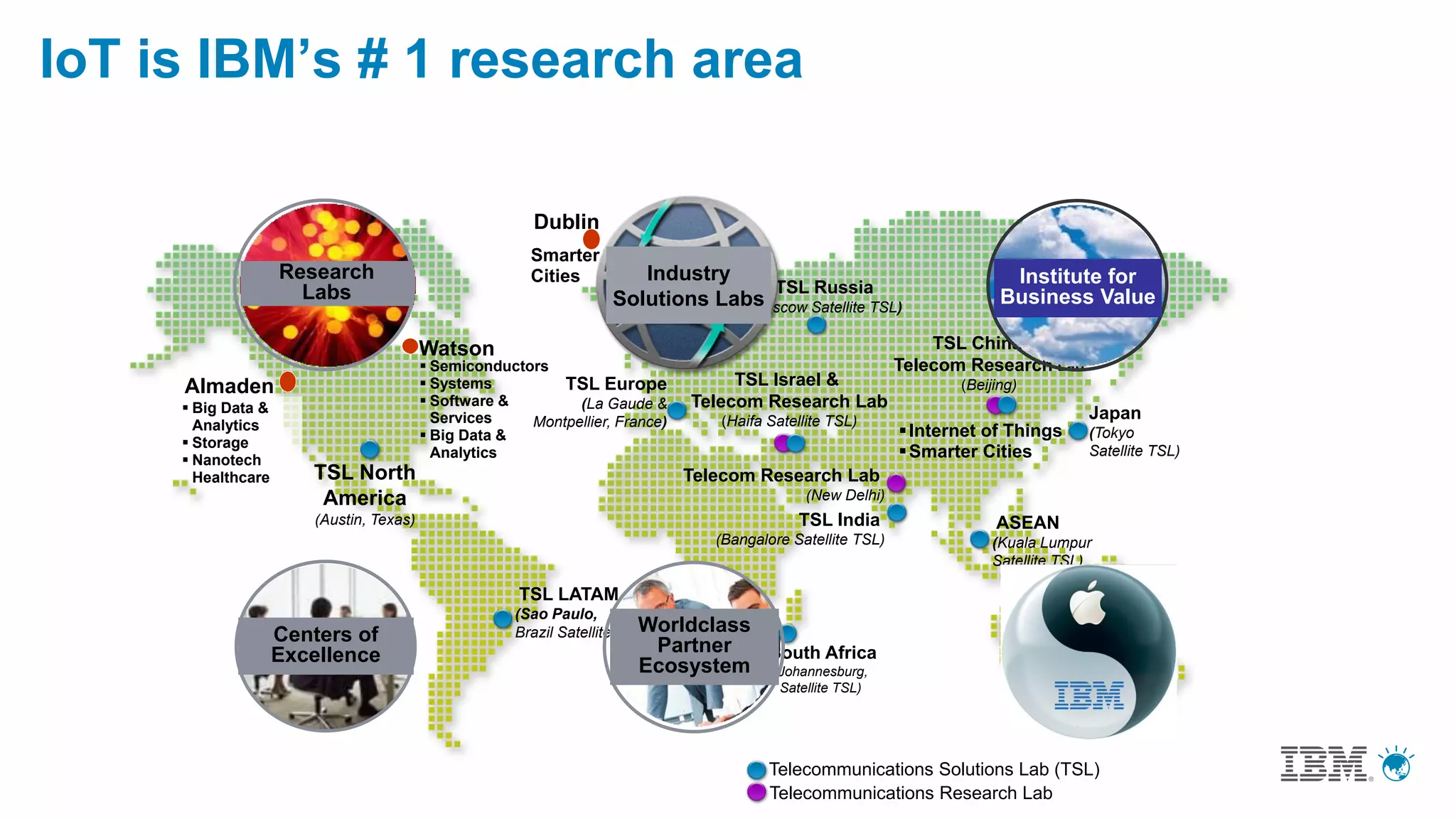
IoT is IBM’s # 1 research area
Telecommunications Solutions Lab (TSL)
Telecommunications Research Lab
TSL China &
Telecom Research Lab
(Beijing)
TSL North
America
(Austin, Texas)
Japan
(Tokyo
Satellite TSL)
TSL Israel &
Telecom Research Lab
(Haifa Satellite TSL)
Telecom Research Lab
(New Delhi)
TSL LATAM
(Sao Paulo,
Brazil Satellite TSL)
TSL Europe
(La Gaude &
Montpellier, France)
TSL Russia
(Moscow Satellite TSL)
South Africa
(Johannesburg, Satellite TSL)
ASEAN
(Kuala Lumpur
Satellite TSL)
TSL India
(Bangalore Satellite TSL)
Centers of
Excellence
Institute for
Business Value
Research
Labs
Almaden c
 Big Data &
Analytics
 Storage
 Nanotech
Healthcare
Watson
 Semiconductors
 Systems
 Software &
Services
 Big Data &
Analytics
c
Dublin
Smarter
Cities
Internet of Things
Smarter Cities
South Africa
(Johannesburg,
Satellite TSL)
Worldclass
Partner
Ecosystem
Industry
Solutions Labs
Future
Agendas
Value Realization
Studies
3 to 10 year industry outlook
with action oriented next steps
In-depth assessment of today’s
critical issues, opportunities, etc
CXO
Surveys
Chief Officiers studies – CEO,
CIO, CMO, CFO, CHRO, etc.
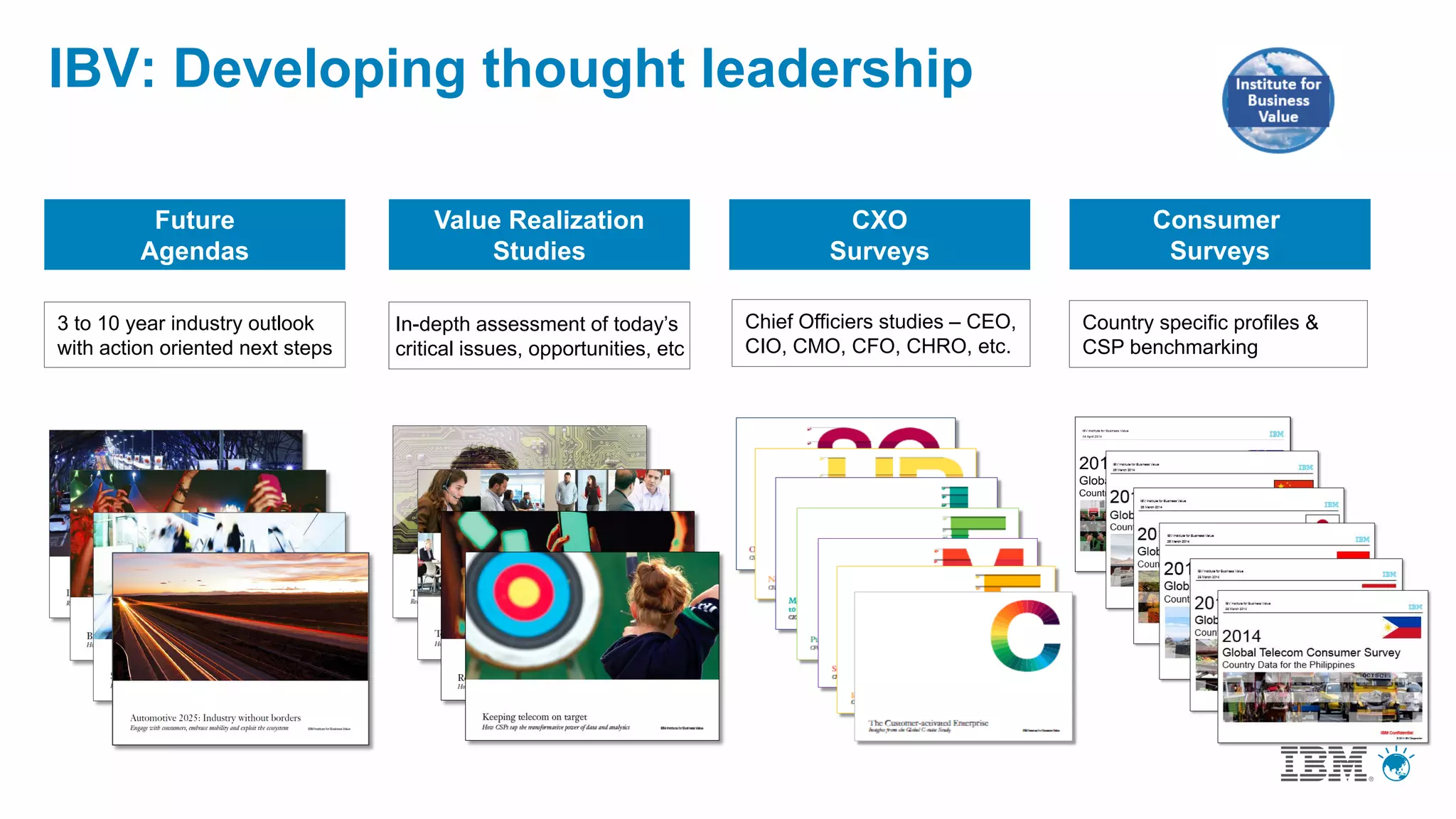
IBV: Developing thought leadership
Consumer
Surveys
Country specific profiles &
CSP benchmarking
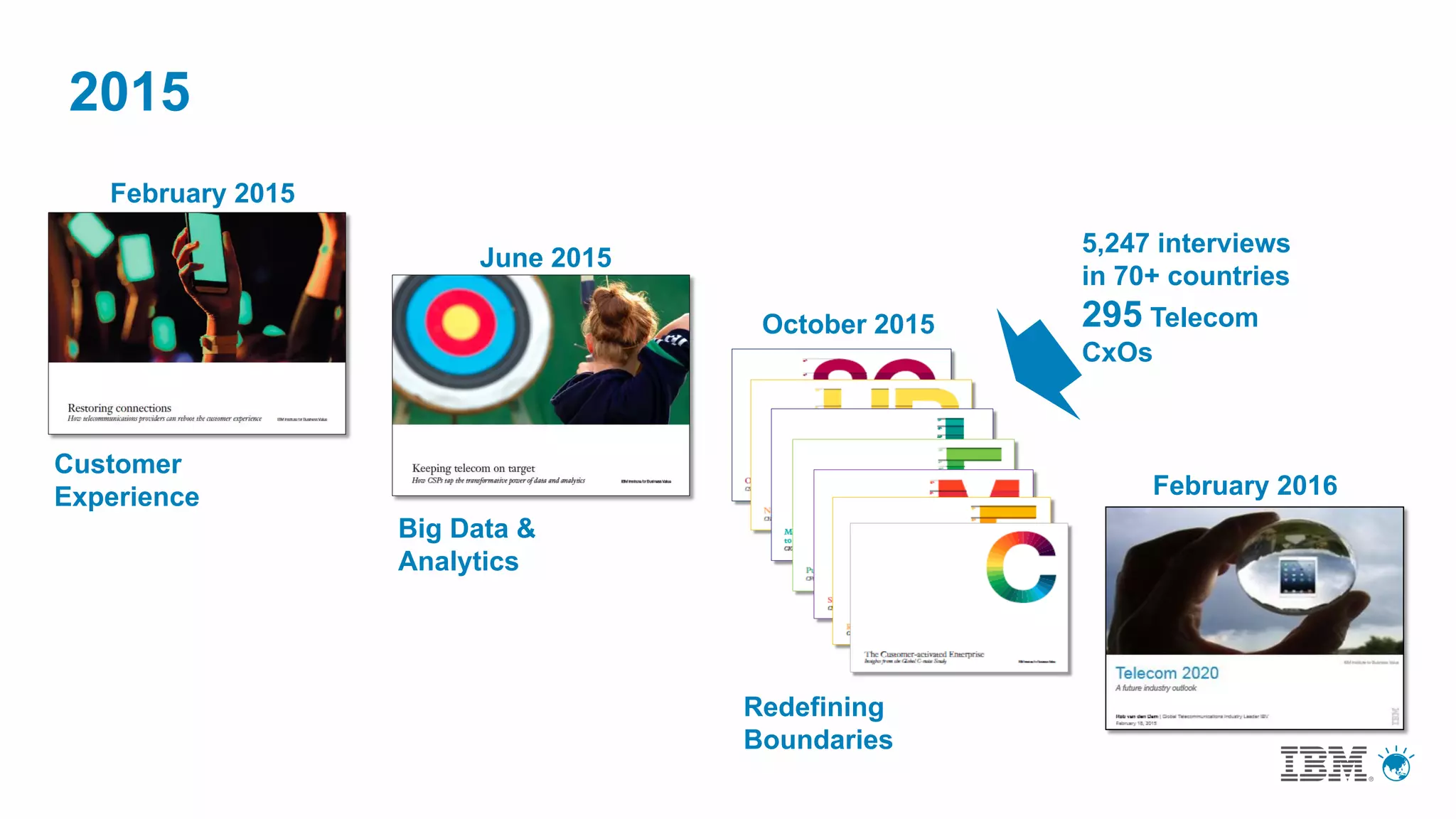
2015
February 2015
June 2015
October 2015
February 2016
Customer
Experience
Big Data &
Analytics
5,247 interviews
in 70+ countries
295 Telecom
CxOs
Redefining
Boundaries
Content
 Discussing the Internet of Things
 The role of Telecom Providers in IoT
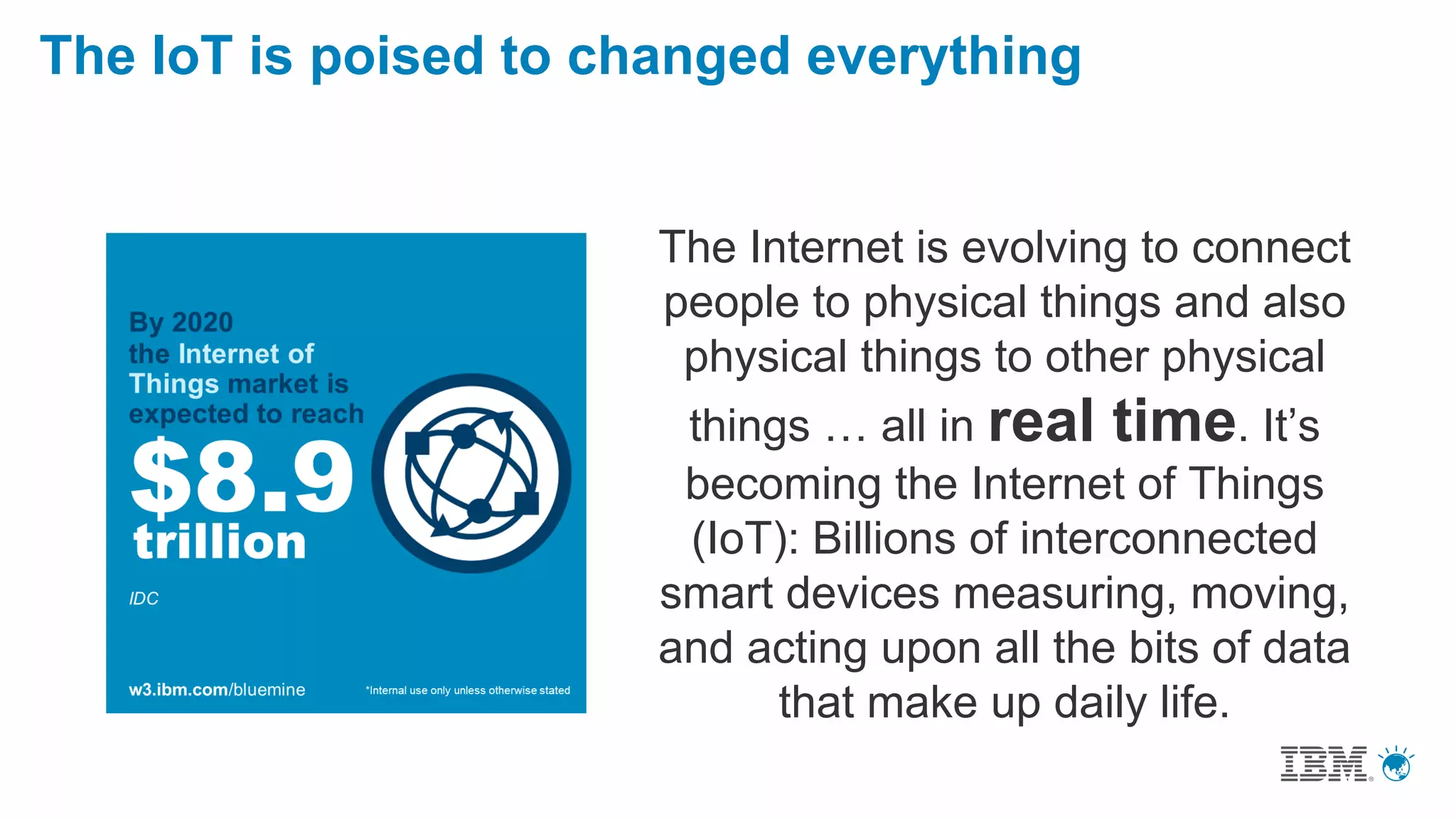
The IoT is poised to changed everything
The Internet is evolving to connect
people to physical things and also
physical things to other physical
things … all in real time. It’s
becoming the Internet of Things
(IoT): Billions of interconnected
smart devices measuring, moving,
and acting upon all the bits of data
that make up daily life.
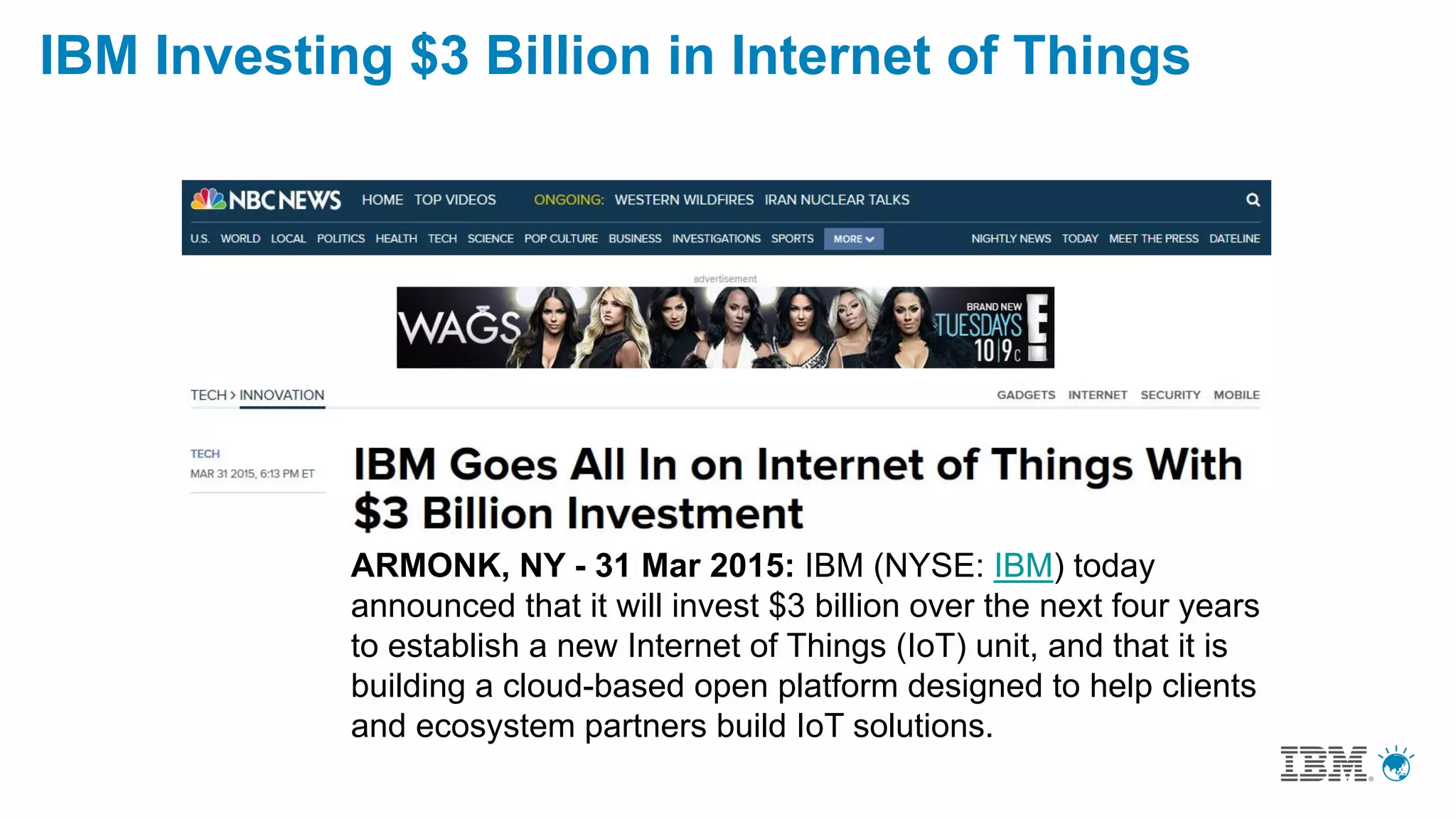
ARMONK, NY - 31 Mar 2015: IBM (NYSE: IBM) today
announced that it will invest $3 billion over the next four years
to establish a new Internet of Things (IoT) unit, and that it is
building a cloud-based open platform designed to help clients
and ecosystem partners build IoT solutions.
IBM Investing $3 Billion in Internet of Things
07/15/15
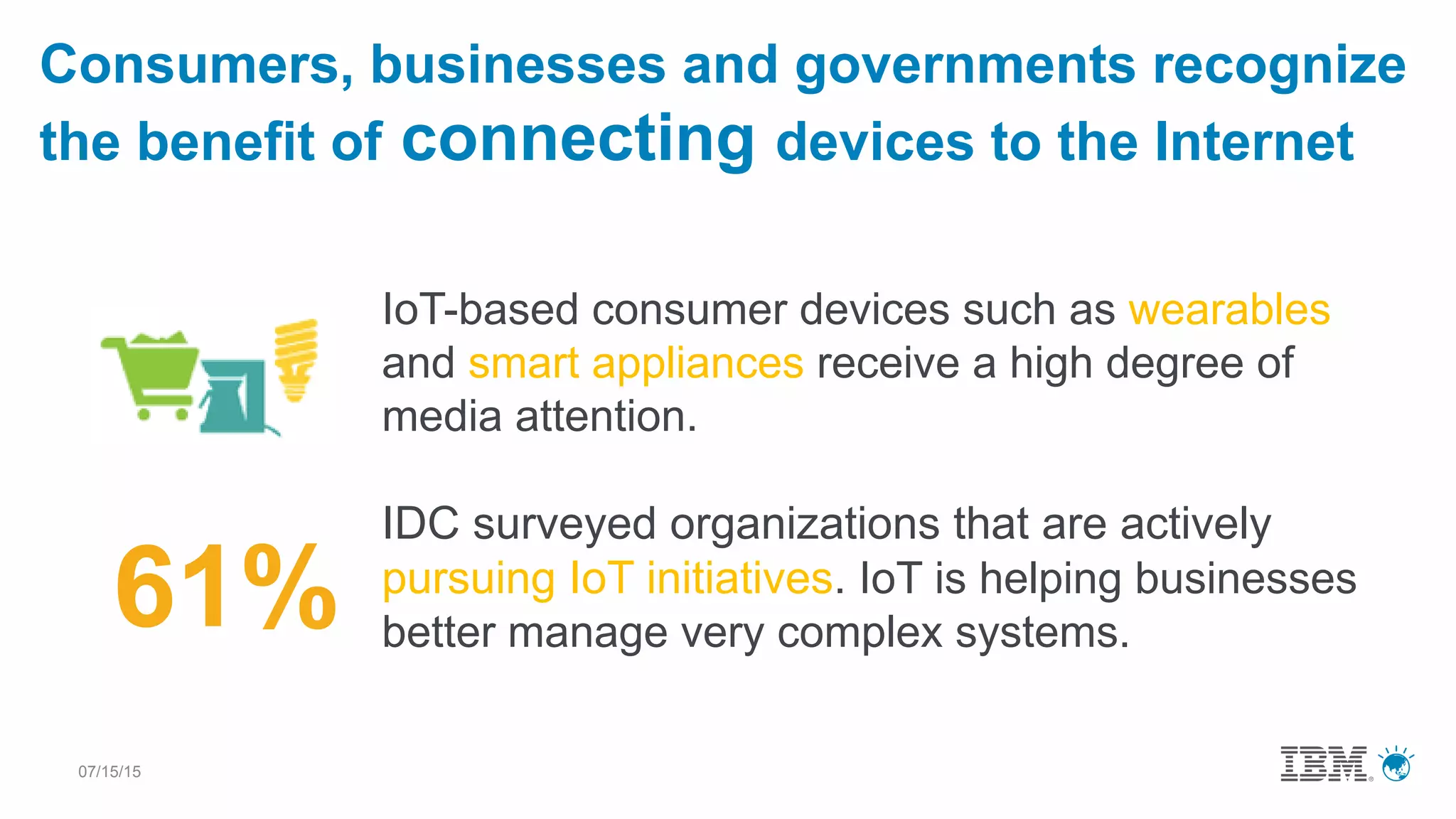
IoT-based consumer devices such as wearables
and smart appliances receive a high degree of
media attention.
IDC surveyed organizations that are actively
pursuing IoT initiatives. IoT is helping businesses
better manage very complex systems.
Consumers, businesses and governments recognize
the benefit of connecting devices to the Internet
61%
9
1
2
3
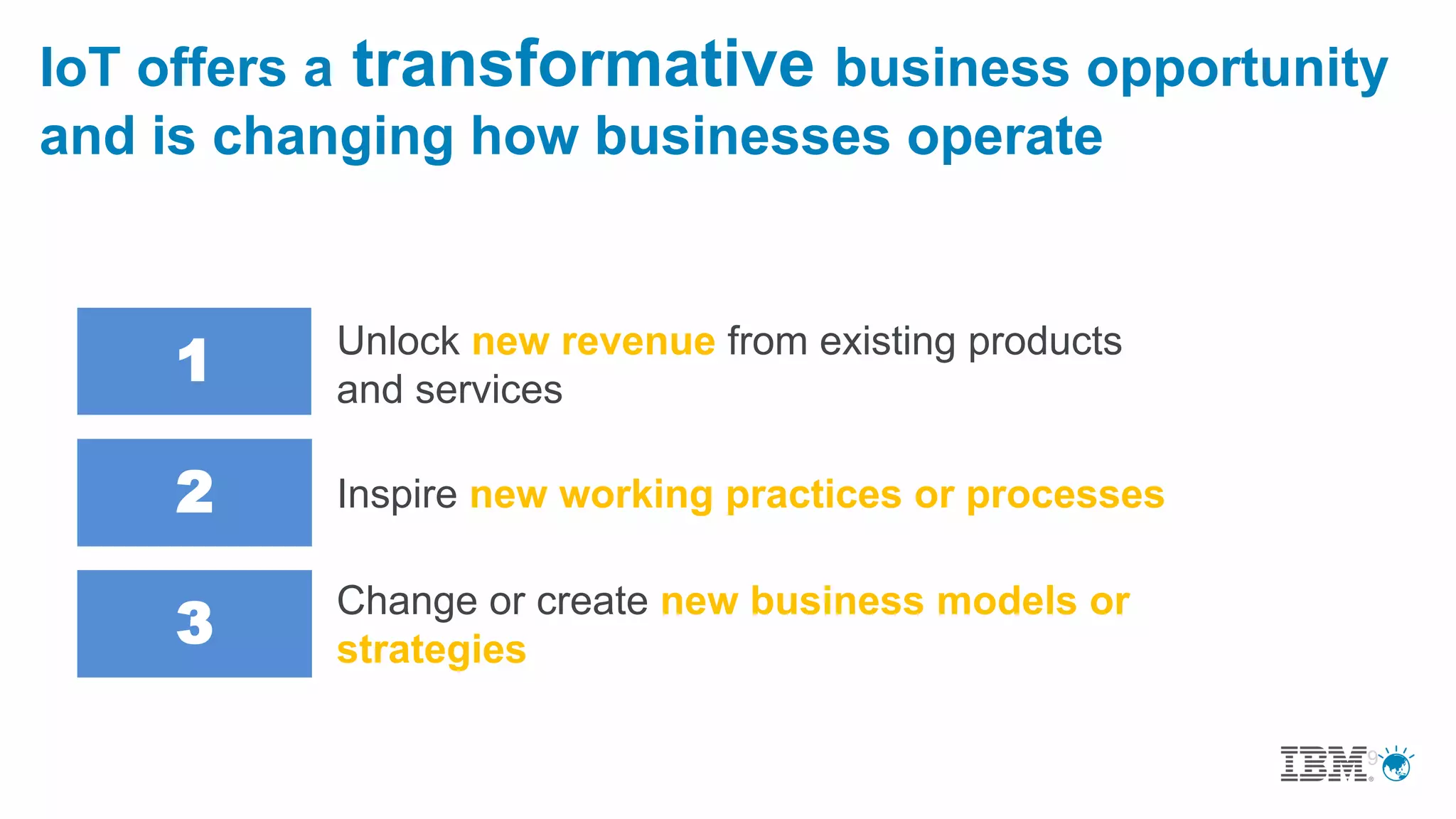
Unlock new revenue from existing products
and services
Inspire new working practices or processes
Change or create new business models or
strategies
IoT offers a transformative business opportunity
and is changing how businesses operate
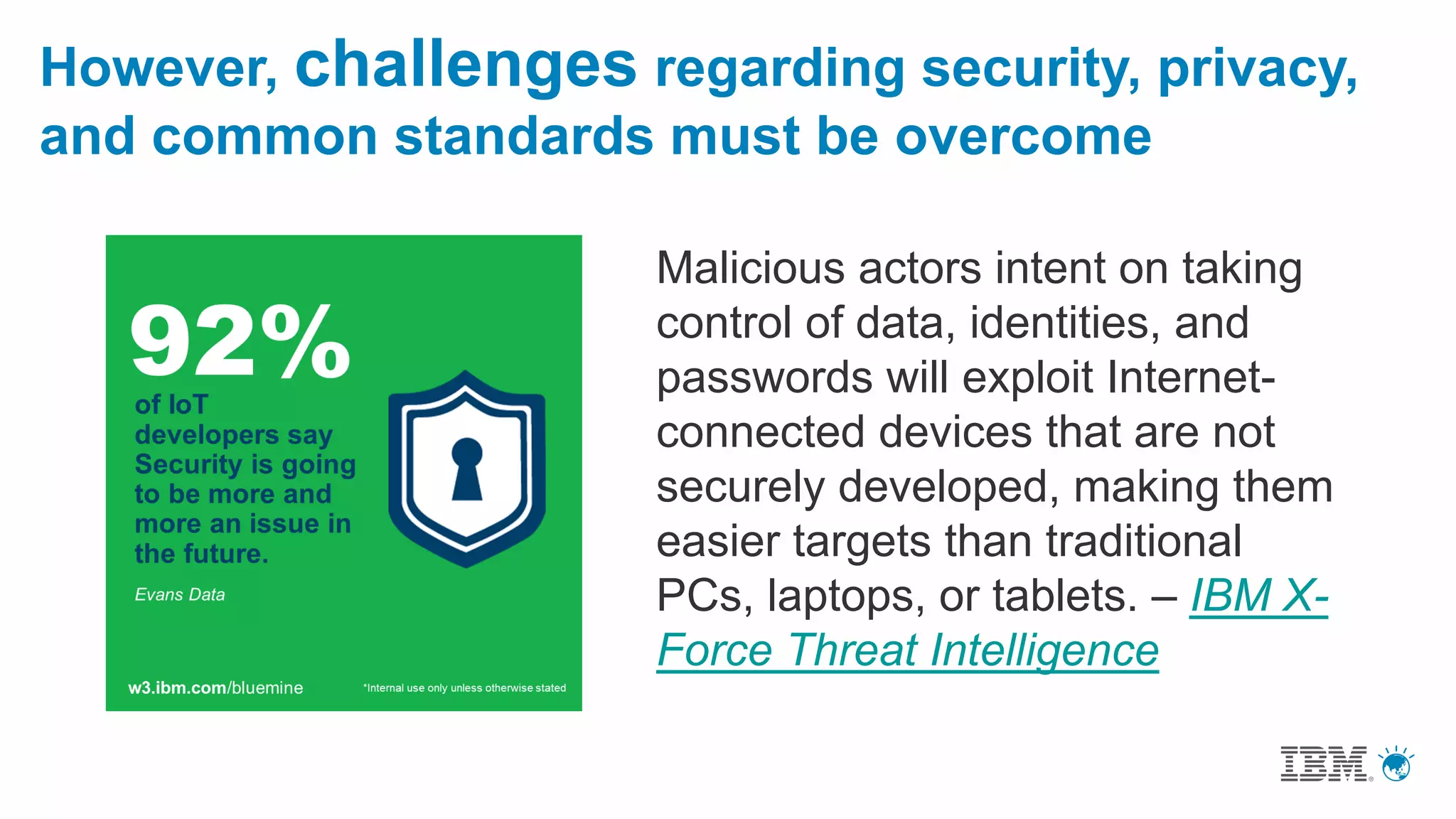
However, challenges regarding security, privacy,
and common standards must be overcome
Malicious actors intent on taking
control of data, identities, and
passwords will exploit Internet-
connected devices that are not
securely developed, making them
easier targets than traditional
PCs, laptops, or tablets. – IBM X-
Force Threat Intelligence
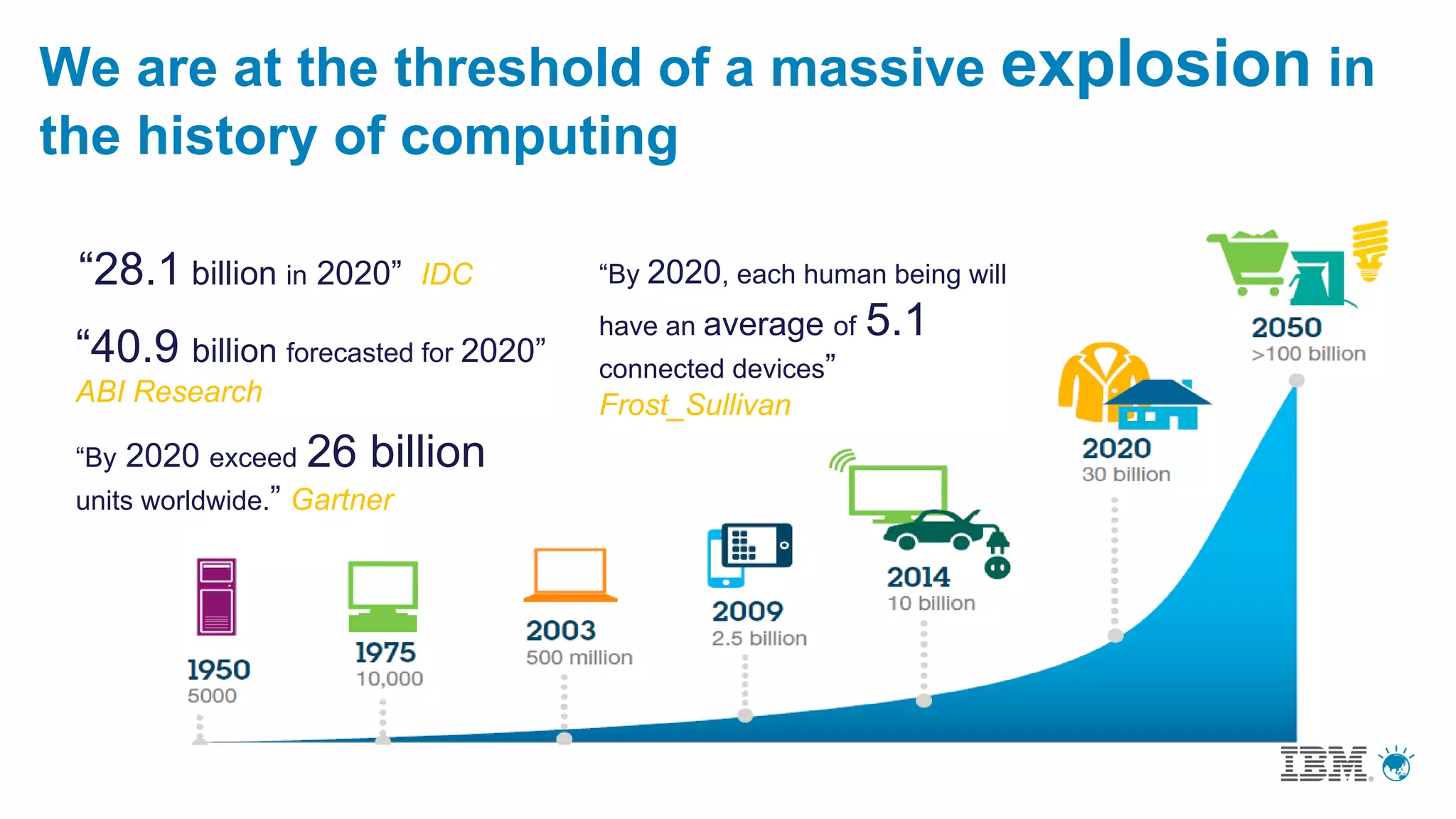
“By 2020, each human being will
have an average of 5.1
connected devices”
Frost_Sullivan
“28.1 billion in 2020” IDC
“40.9 billion forecasted for 2020”
ABI Research
“By 2020 exceed 26 billion
units worldwide.” Gartner
We are at the threshold of a massive explosion in
the history of computing
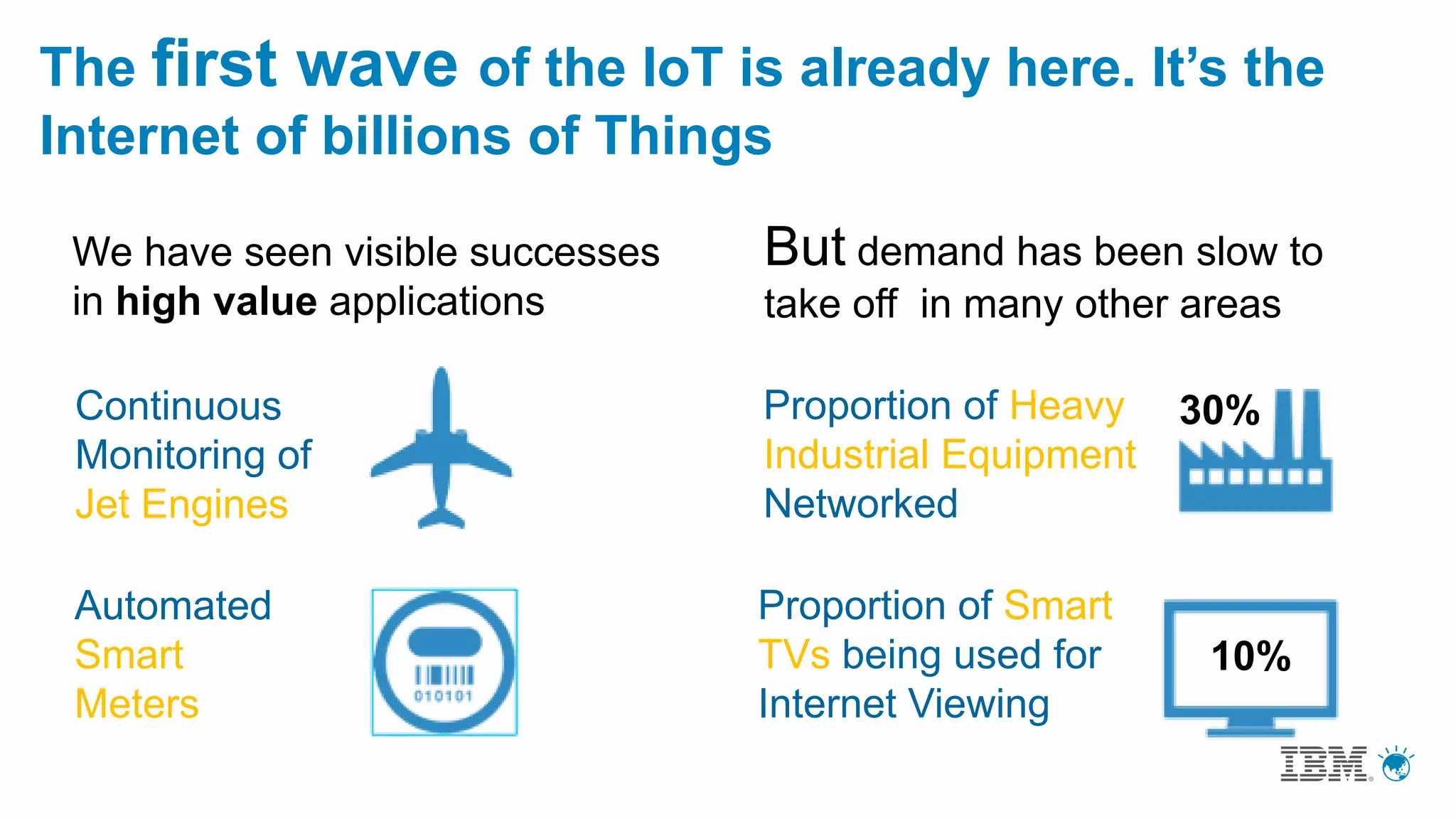
The first wave of the IoT is already here. It’s the
Internet of billions of Things
Proportion of Smart
TVs being used for
Internet Viewing
Continuous
Monitoring of
Jet Engines
Automated
Smart
Meters
We have seen visible successes
in high value applications
But demand has been slow to
take off in many other areas
Proportion of Heavy
Industrial Equipment
Networked
10%
30%
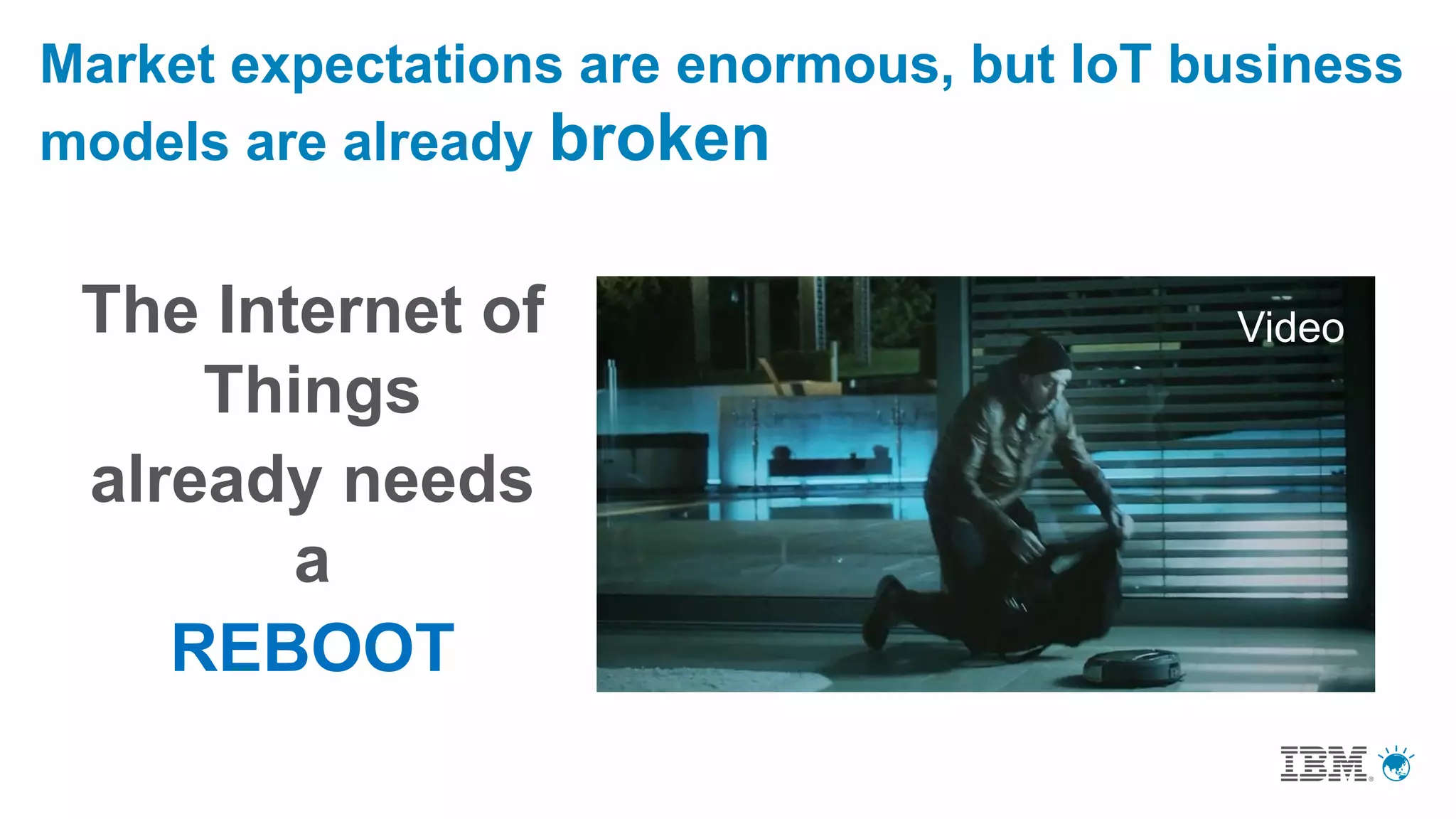
Market expectations are enormous, but IoT business
models are already broken
The Internet of
Things
already needs
a
REBOOT
Video
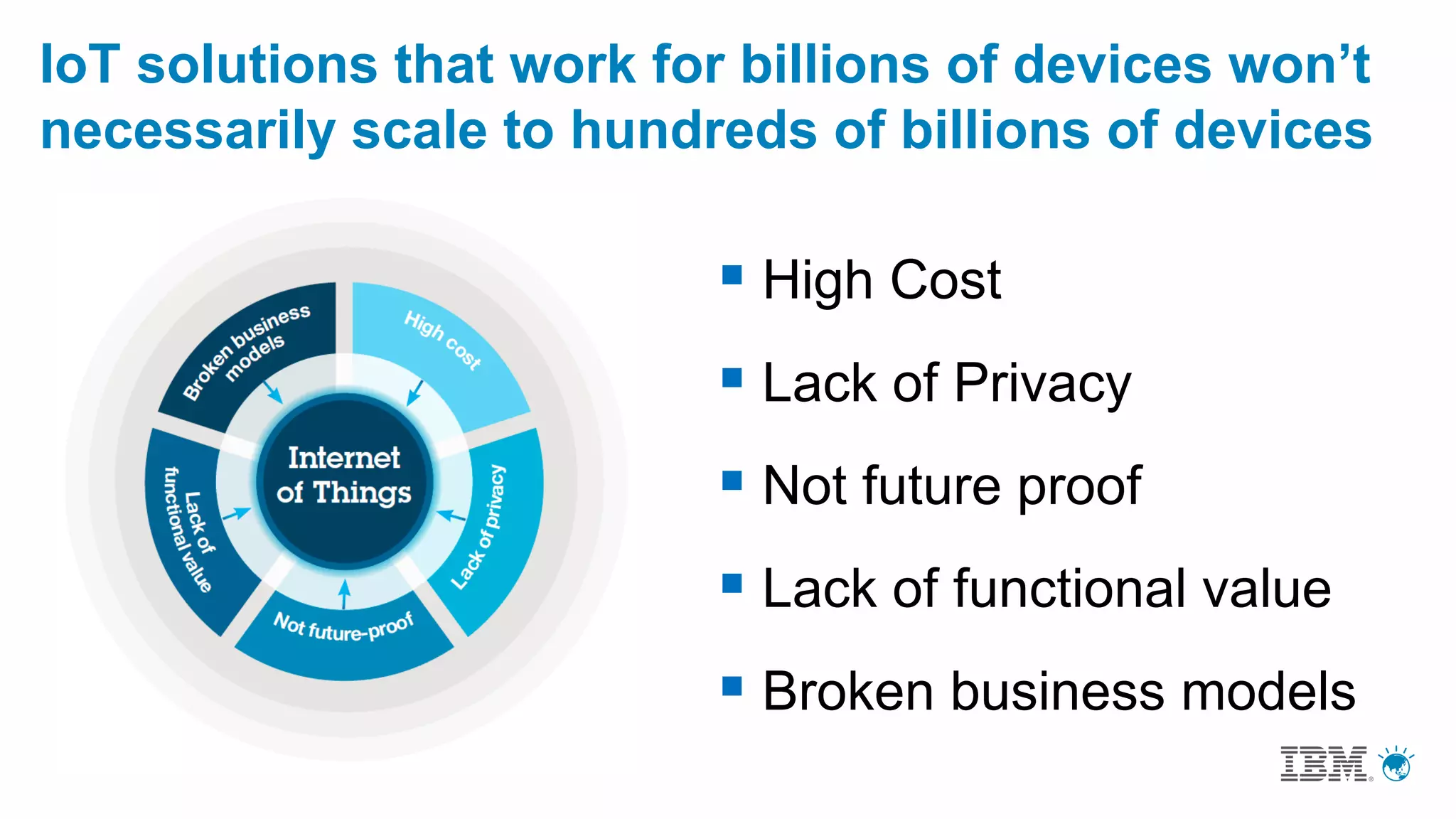
IoT solutions that work for billions of devices won’t
necessarily scale to hundreds of billions of devices
 High Cost
 Lack of Privacy
 Not future proof
 Lack of functional value
 Broken business models
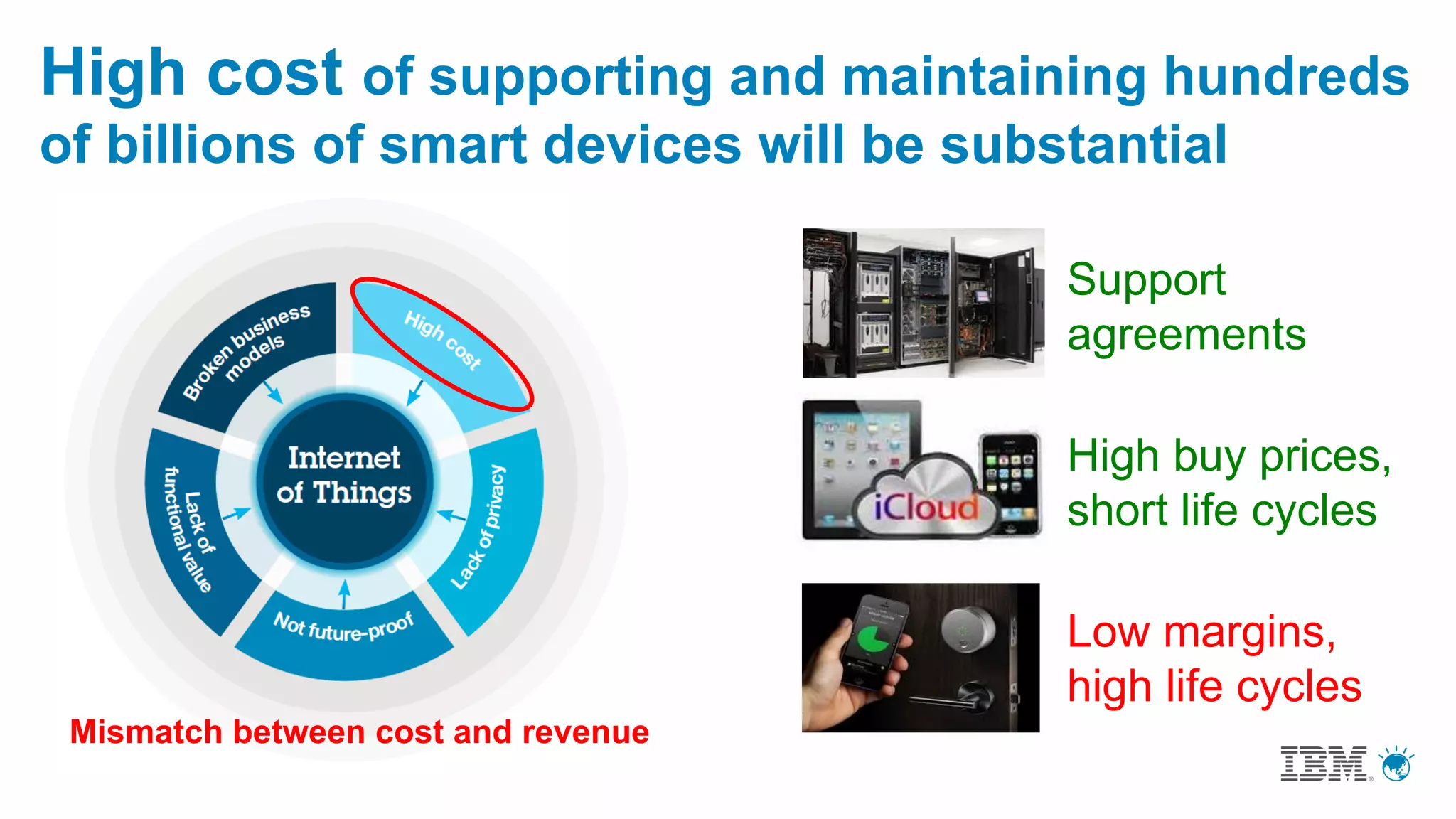
High cost of supporting and maintaining hundreds
of billions of smart devices will be substantial
Support
agreements
High buy prices,
short life cycles
Low margins,
high life cycles
Mismatch between cost and revenue
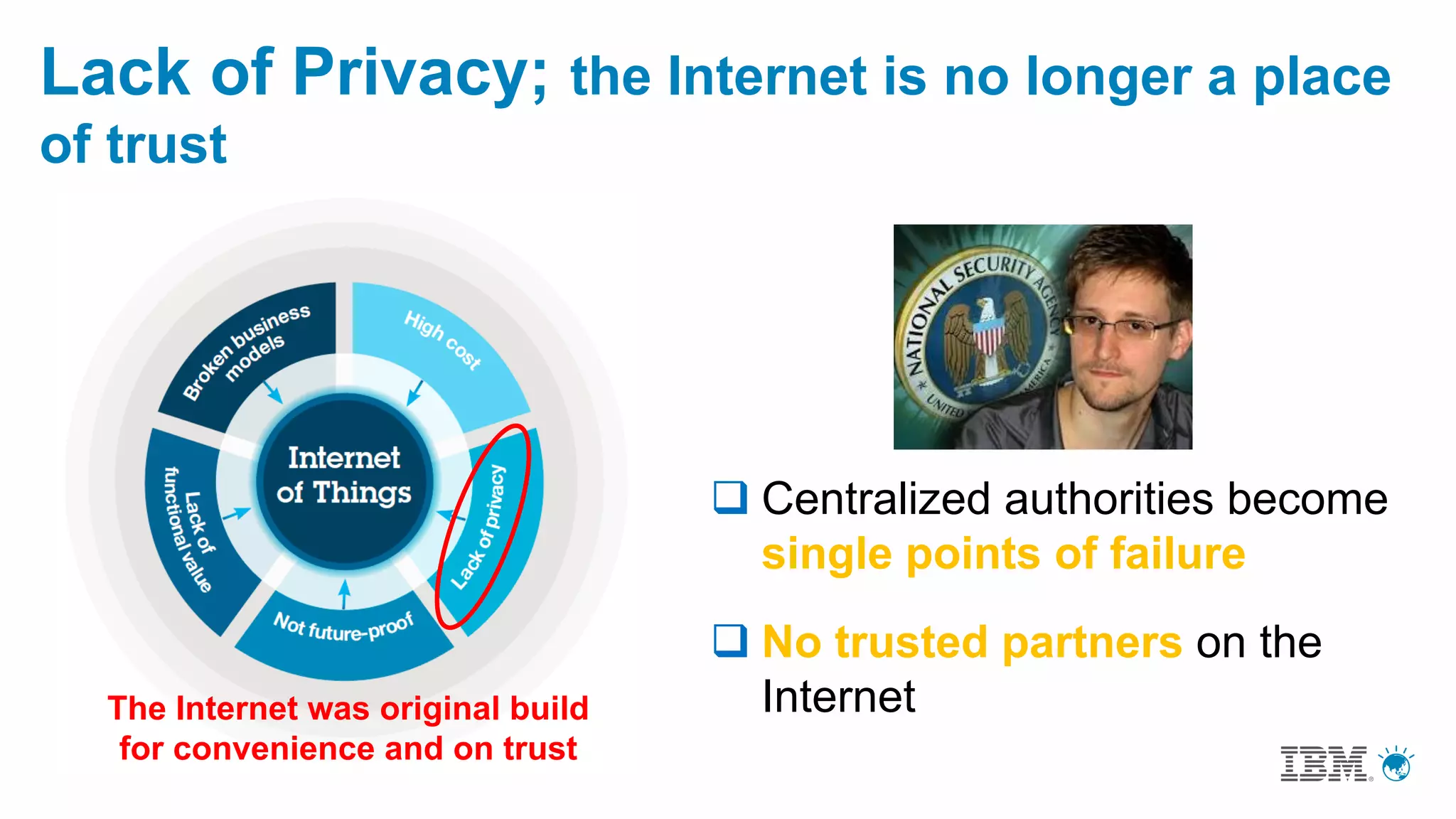
Lack of Privacy; the Internet is no longer a place
of trust
 Centralized authorities become
single points of failure
 No trusted partners on the
InternetThe Internet was original build
for convenience and on trust
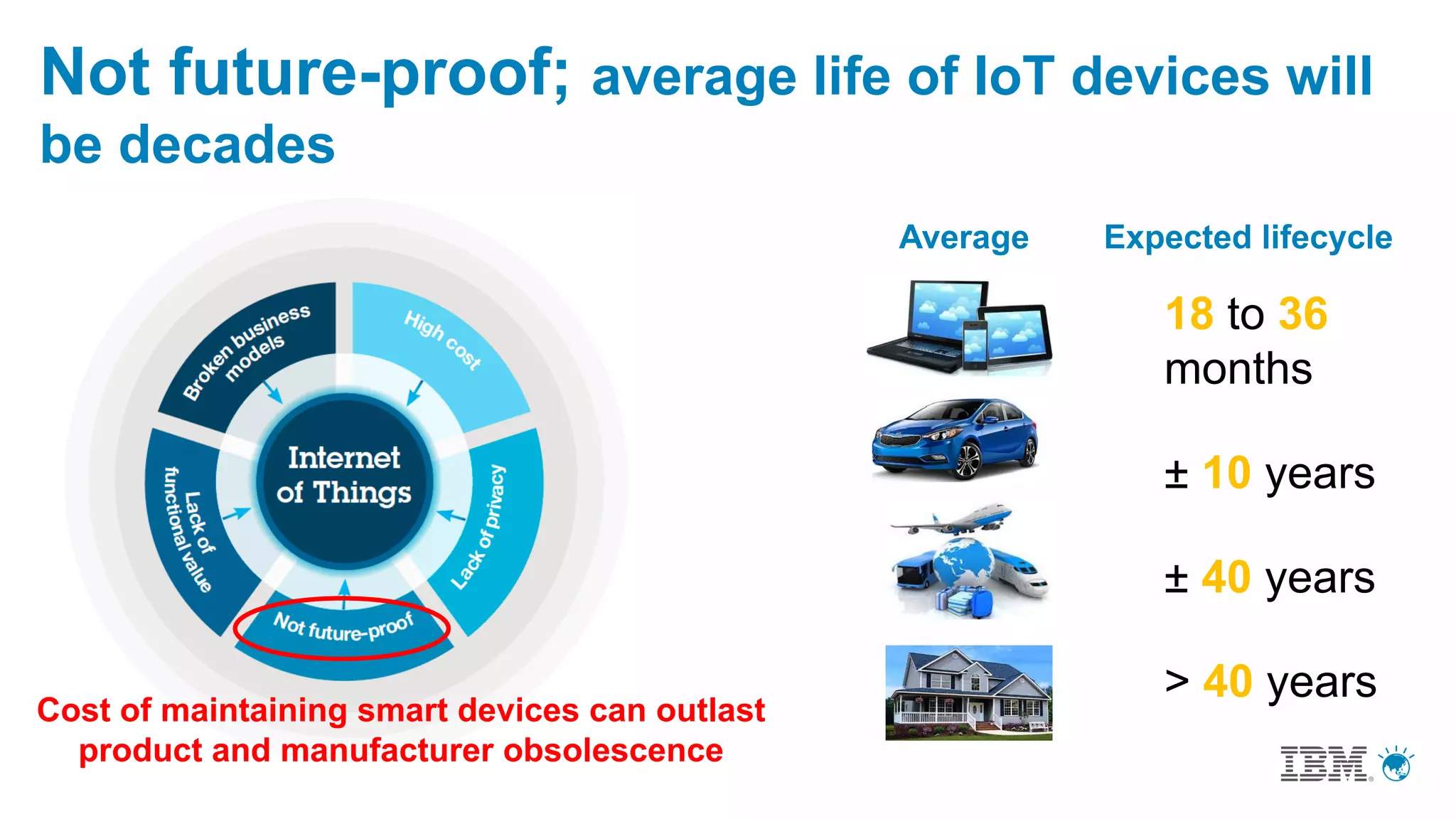
Not future-proof; average life of IoT devices will
be decades
Cost of maintaining smart devices can outlast
product and manufacturer obsolescence
Average Expected lifecycle
18 to 36
months
± 10 years
± 40 years
> 40 years
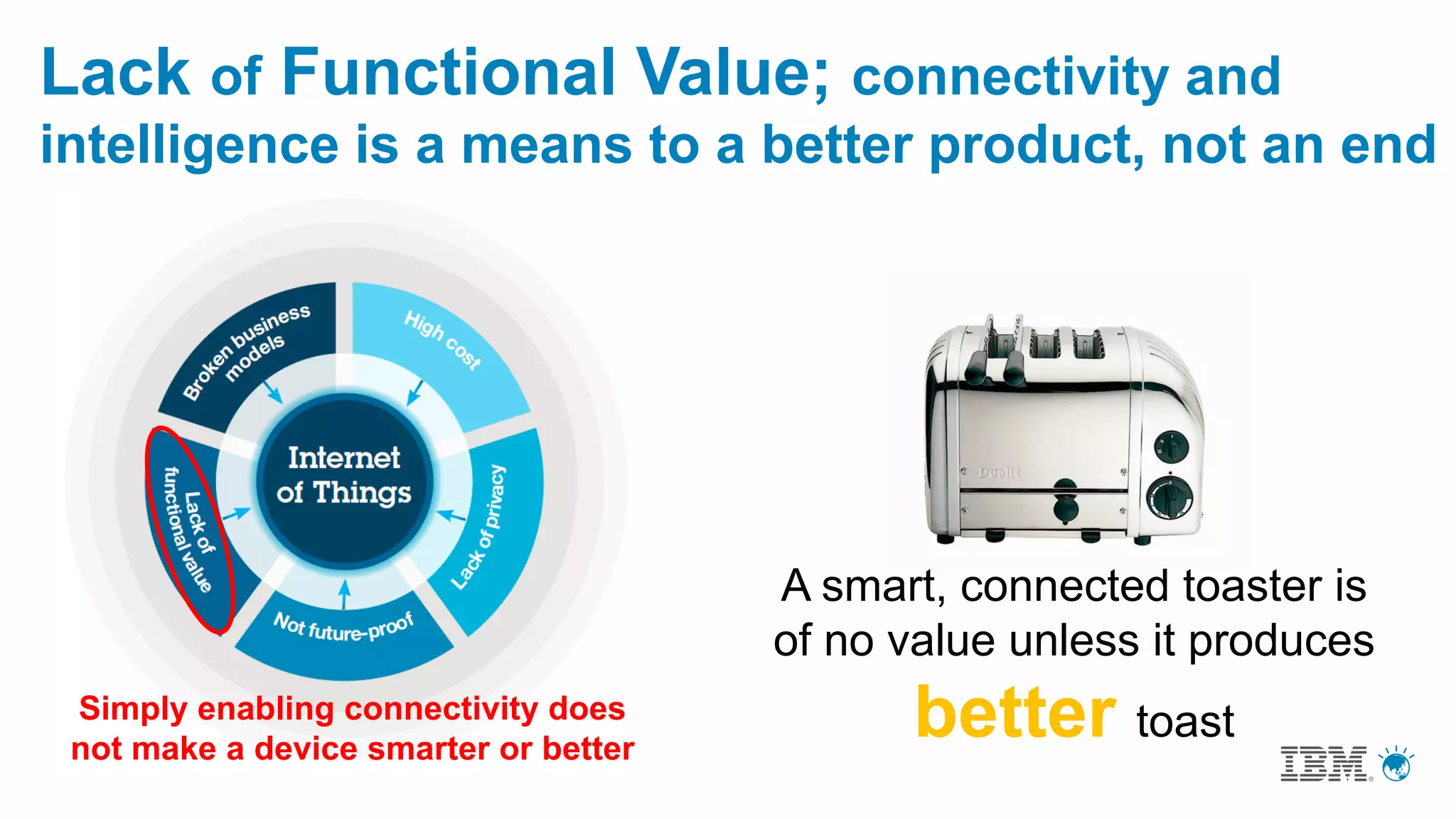
Lack of Functional Value; connectivity and
intelligence is a means to a better product, not an end
Simply enabling connectivity does
not make a device smarter or better
A smart, connected toaster is
of no value unless it produces
better toast
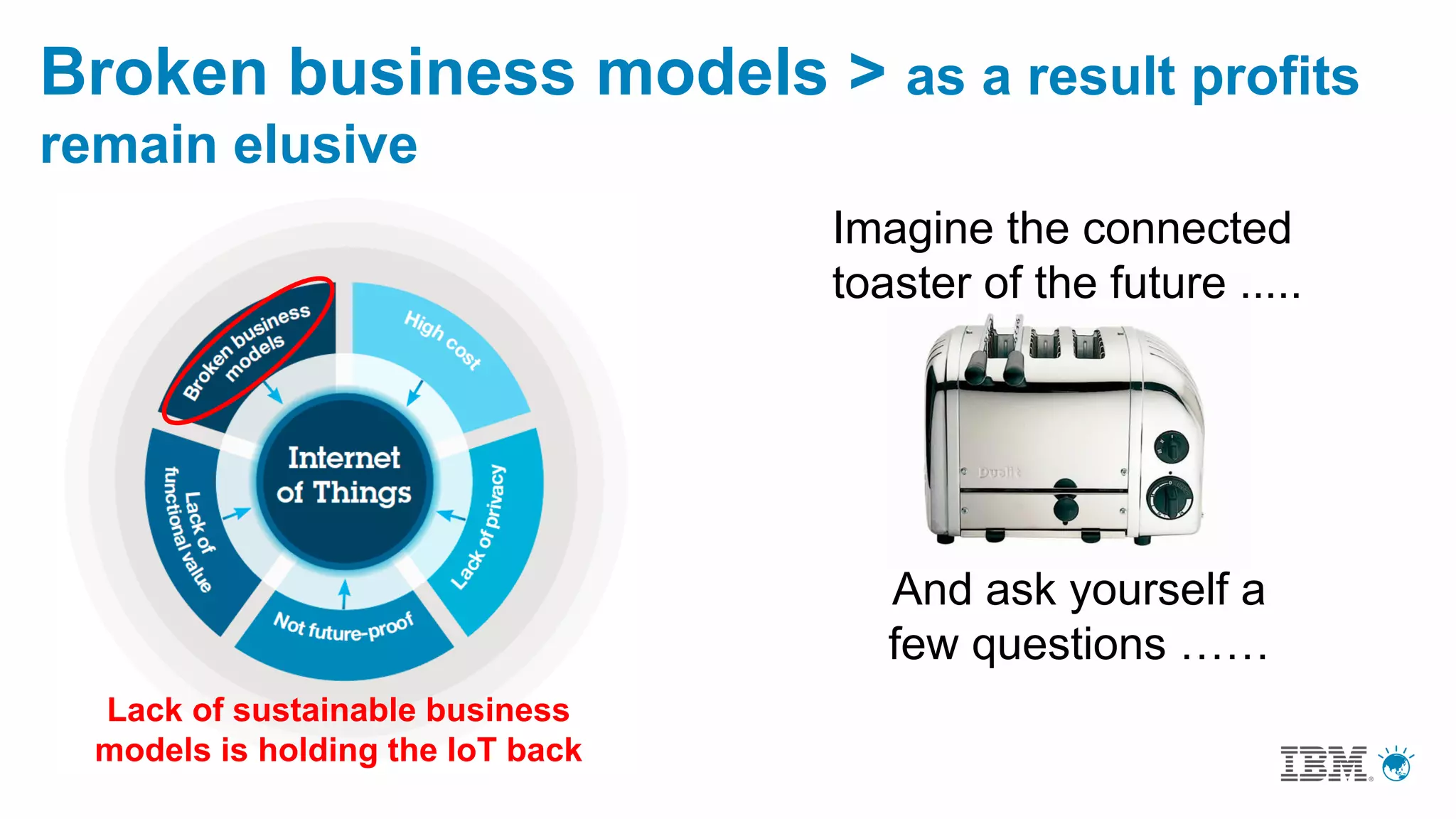
Broken business models > as a result profits
remain elusive
Lack of sustainable business
models is holding the IoT back
And ask yourself a
few questions ……
Imagine the connected
toaster of the future .....
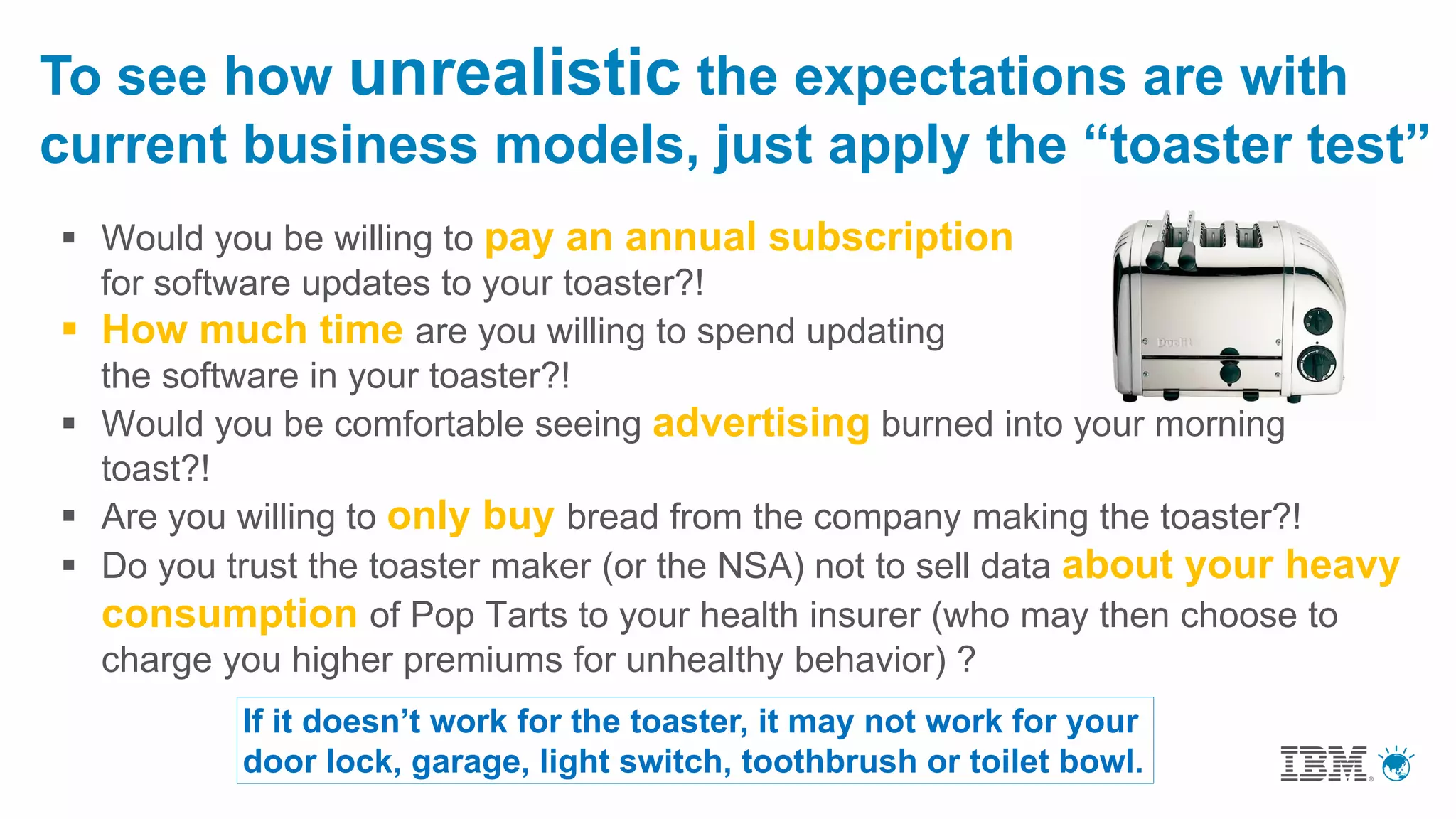
To see how unrealistic the expectations are with
current business models, just apply the “toaster test”
 Would you be willing to pay an annual subscription
for software updates to your toaster?!
 How much time are you willing to spend updating
the software in your toaster?!
 Would you be comfortable seeing advertising burned into your morning
toast?!
 Are you willing to only buy bread from the company making the toaster?!
 Do you trust the toaster maker (or the NSA) not to sell data about your heavy
consumption of Pop Tarts to your health insurer (who may then choose to
charge you higher premiums for unhealthy behavior) ?
If it doesn’t work for the toaster, it may not work for your
door lock, garage, light switch, toothbrush or toilet bowl.
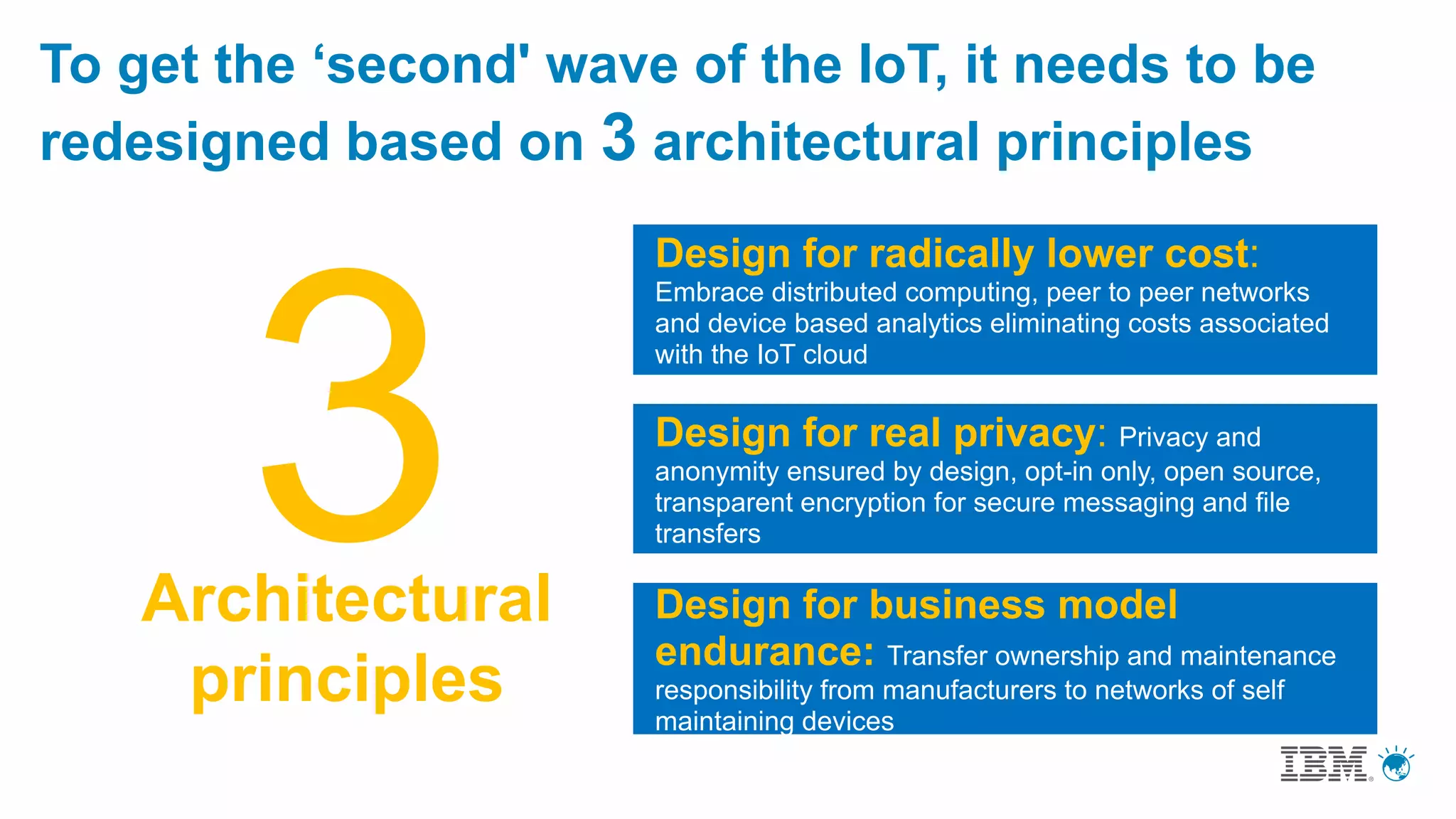
To get the ‘second' wave of the IoT, it needs to be
redesigned based on 3 architectural principles
Architectural
principles
Design for radically lower cost:
Embrace distributed computing, peer to peer networks
and device based analytics eliminating costs associated
with the IoT cloud
Design for real privacy: Privacy and
anonymity ensured by design, opt-in only, open source,
transparent encryption for secure messaging and file
transfers
Design for business model
endurance: Transfer ownership and maintenance
responsibility from manufacturers to networks of self
maintaining devices
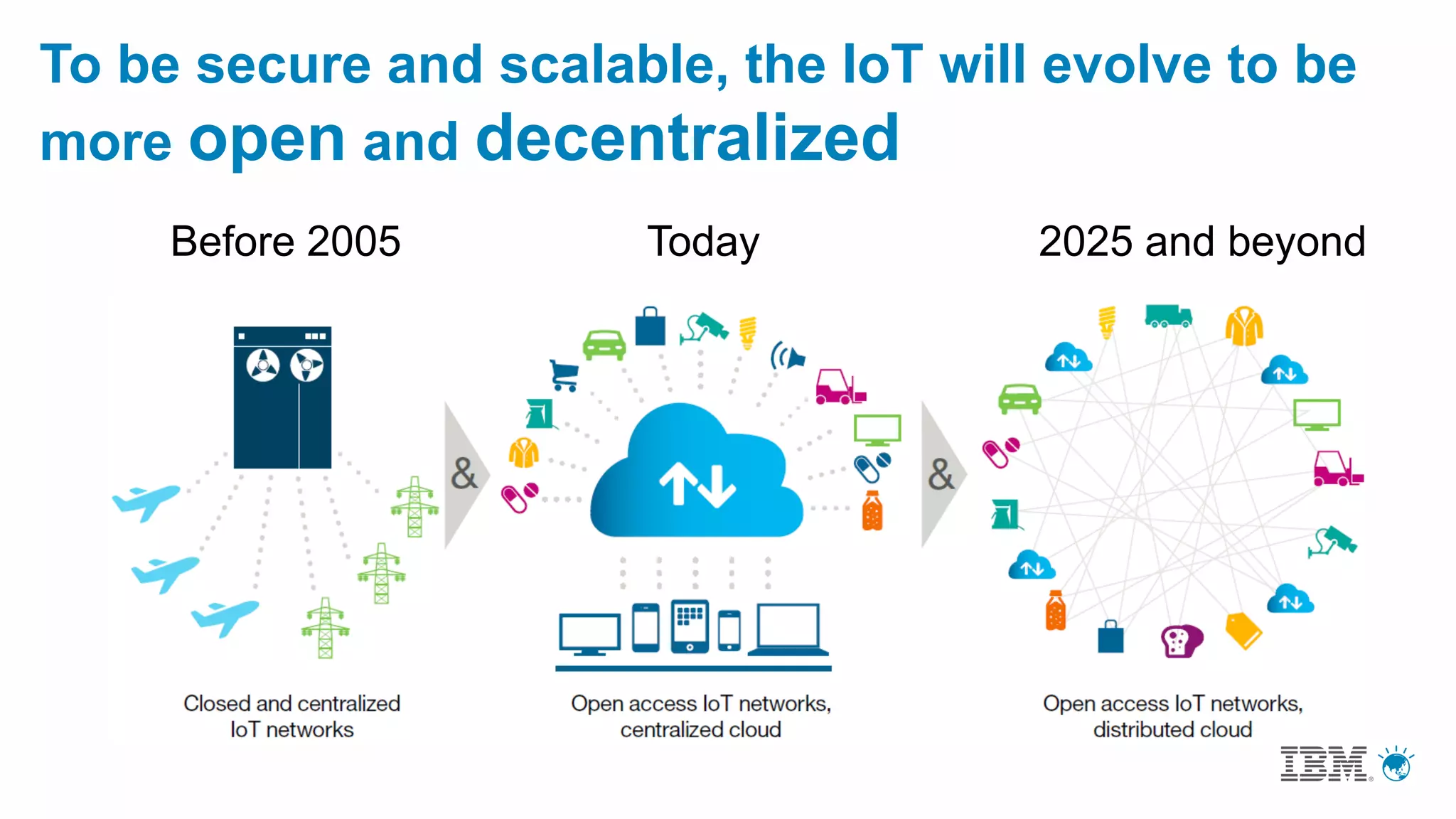
To be secure and scalable, the IoT will evolve to be
more open and decentralized
Before 2005 Today 2025 and beyond
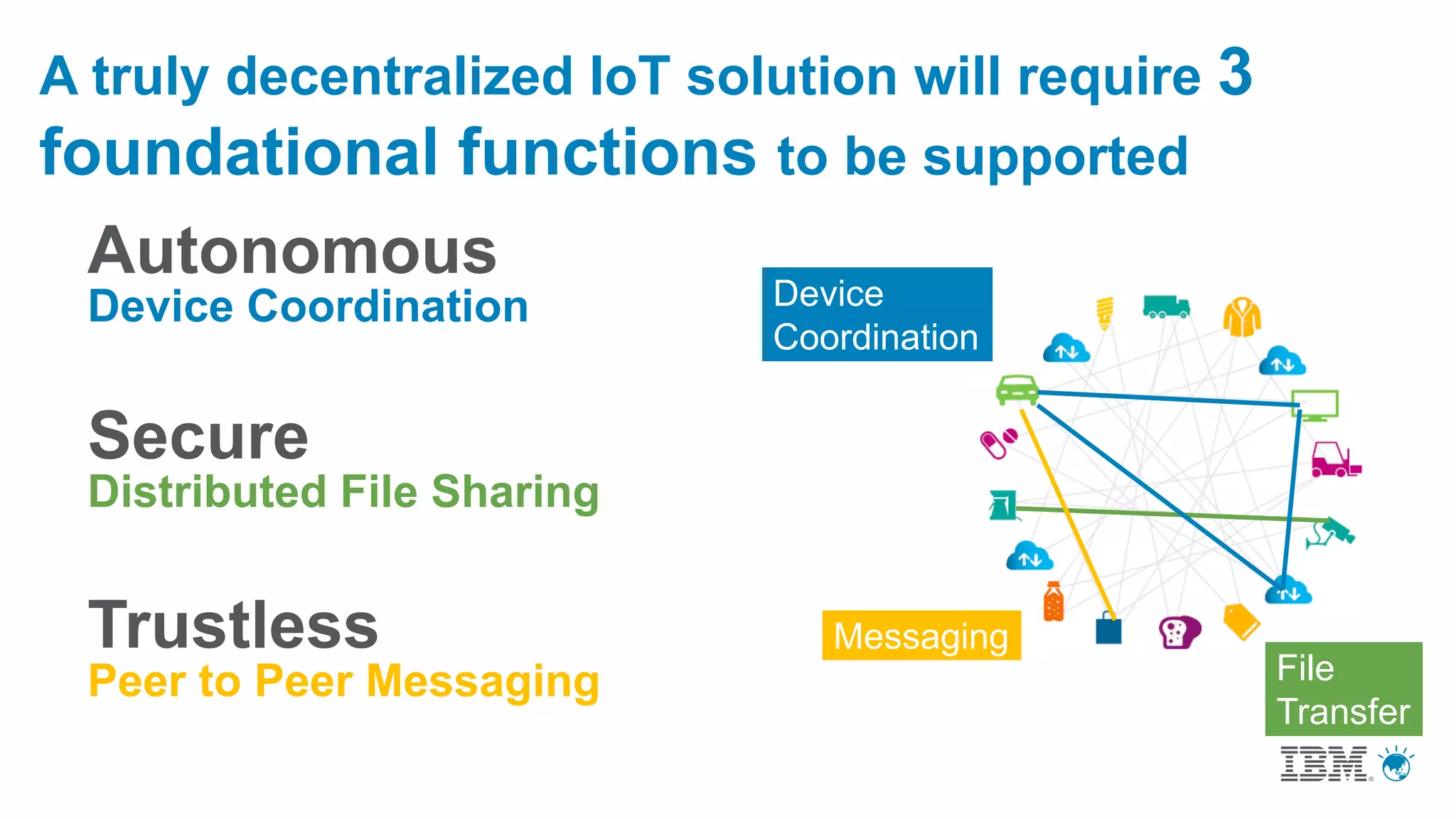
A truly decentralized IoT solution will require 3
foundational functions to be supported
File
Transfer
Messaging
Device
Coordination
Trustless
Peer to Peer Messaging
Secure
Distributed File Sharing
Autonomous
Device Coordination
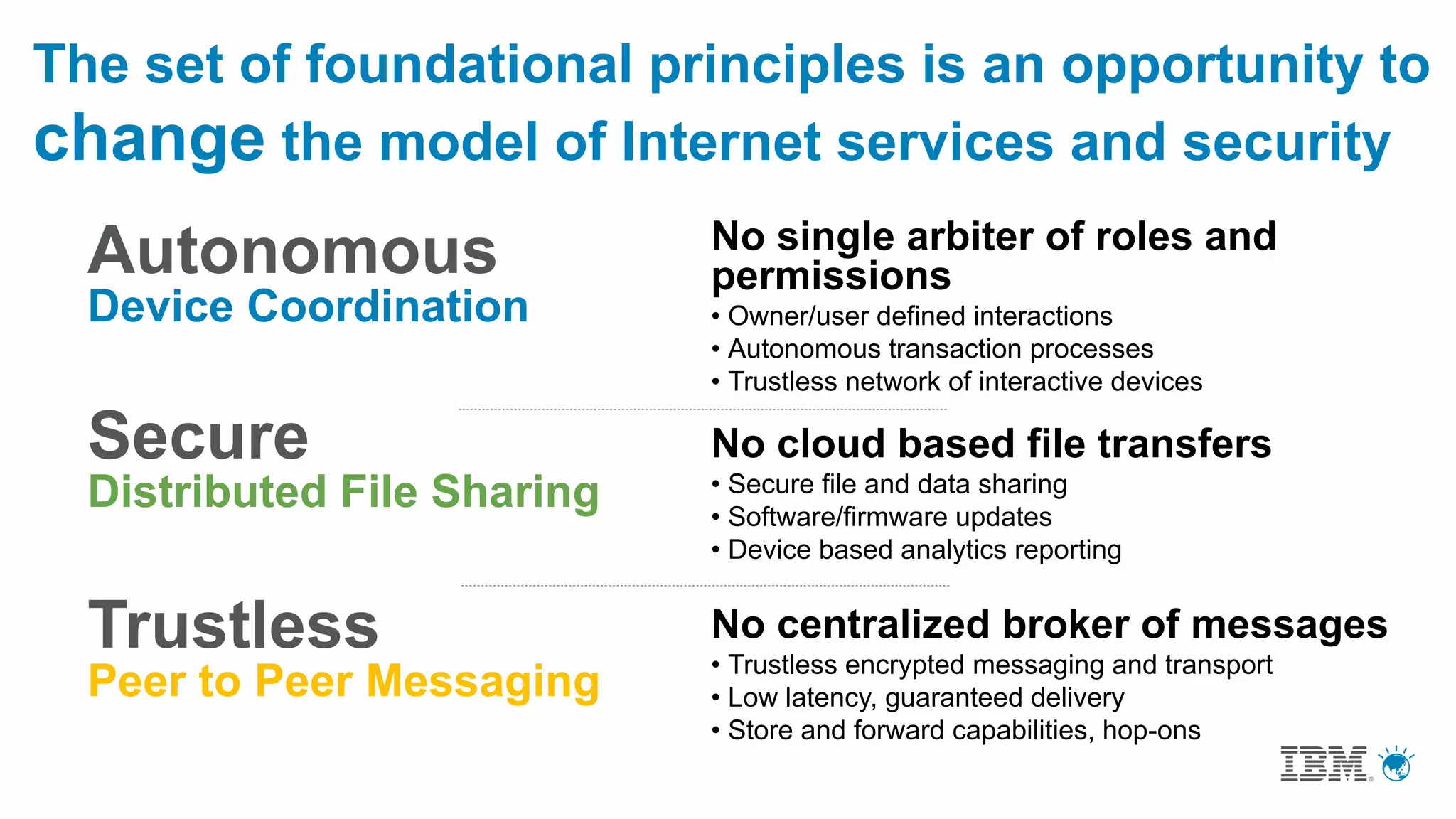
The set of foundational principles is an opportunity to
change the model of Internet services and security
Trustless
Peer to Peer Messaging
Secure
Distributed File Sharing
Autonomous
Device Coordination
No single arbiter of roles and
permissions
• Owner/user defined interactions
• Autonomous transaction processes
• Trustless network of interactive devices
No cloud based file transfers
• Secure file and data sharing
• Software/firmware updates
• Device based analytics reporting
No centralized broker of messages
• Trustless encrypted messaging and transport
• Low latency, guaranteed delivery
• Store and forward capabilities, hop-ons
A secure and scalable IoT solution can be built on
open-source technology
No single arbiter of roles and
permissions
• Owner/user defined interactions
• Autonomous transaction processes
• Trustless network of interactive devices
No cloud based file transfers
• Secure file and data sharing
• Software/firmware updates
• Device based analytics reporting
No centralized broker of messages
• Trustless encrypted messaging and transport
• Low latency, guaranteed delivery
• Store and forward capabilities, hop-ons
P2P messaging
protocols
P2P decentralized
filesharing
Blockchains
Example
Example
Example
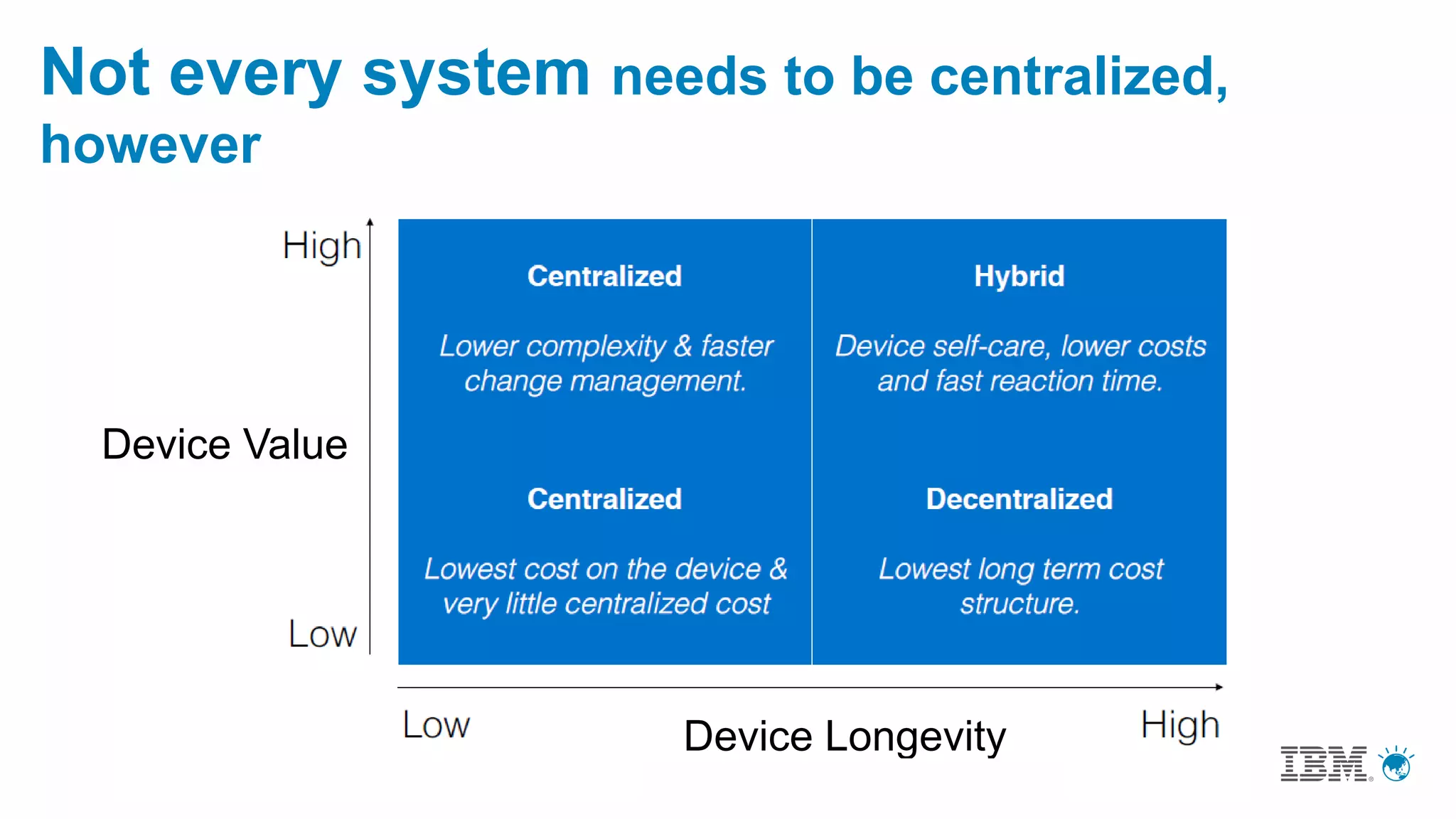
Not every system needs to be centralized,
however
Device Longevity
Device Value
Democracy of Devices
By empowering devices to
function autonomously, the edge
will become a frontier of new
economic value, creating an
“ECONOMY OF THINGS”
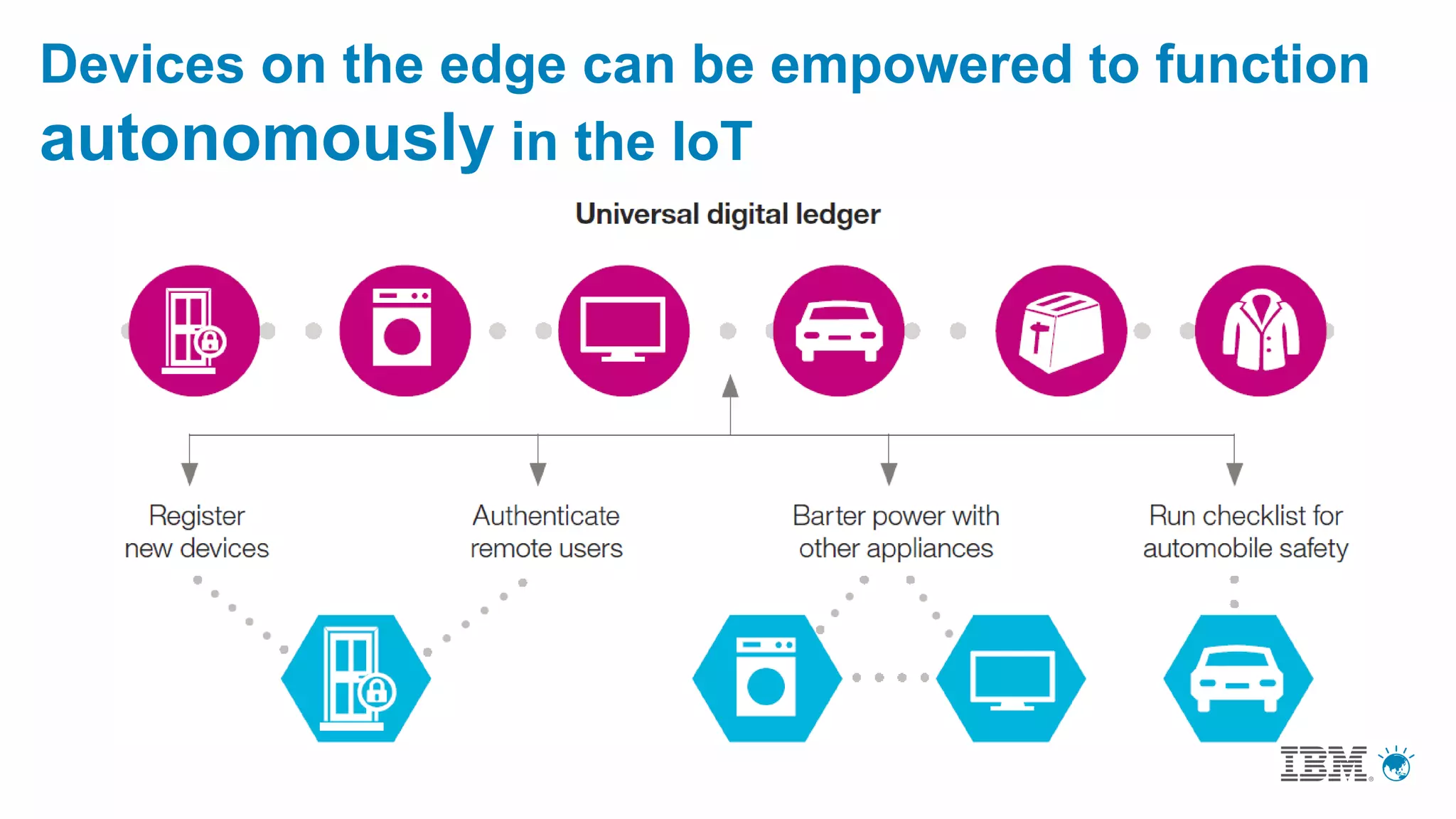
Devices on the edge can be empowered to function
autonomously in the IoT
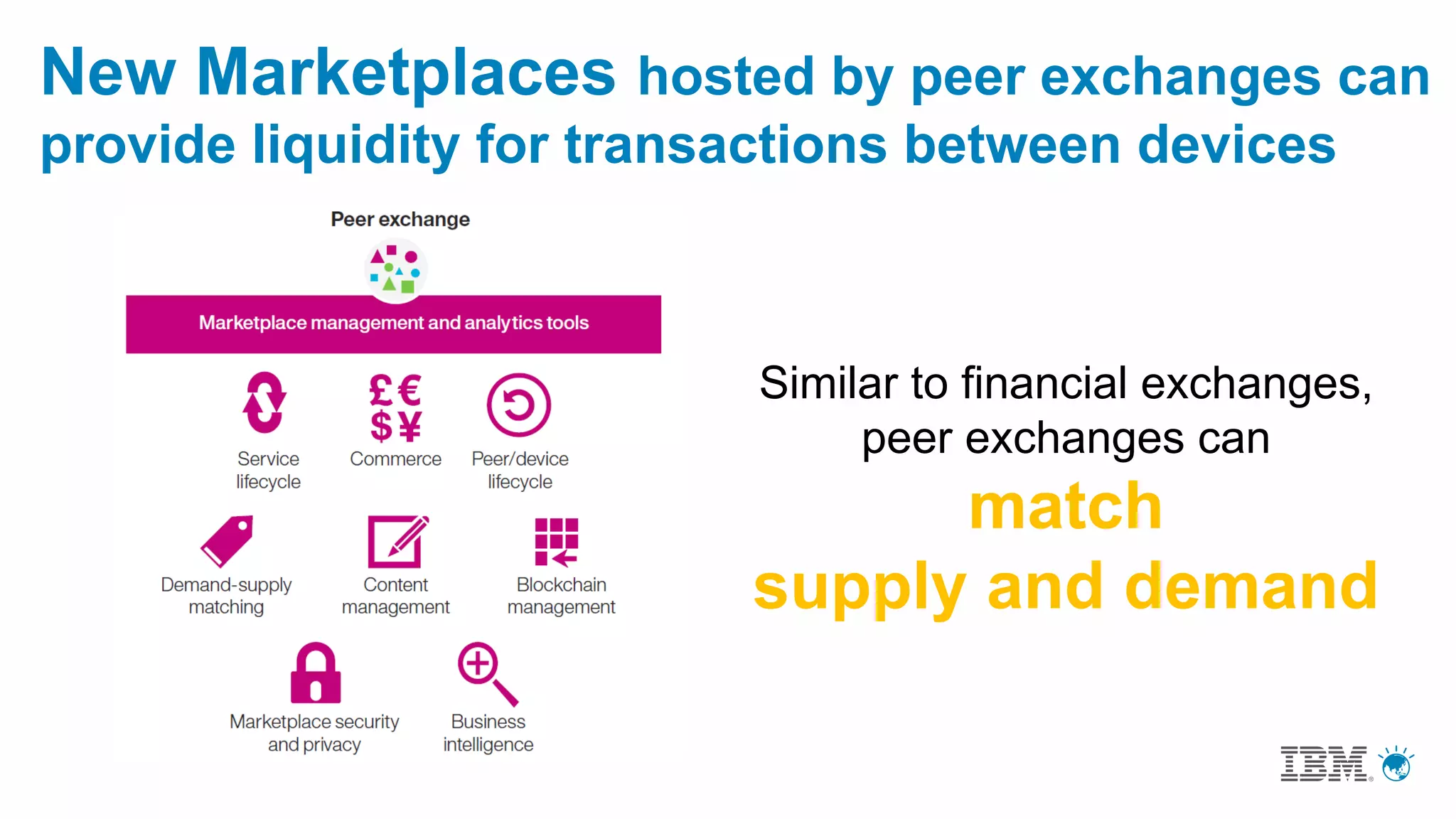
New Marketplaces hosted by peer exchanges can
provide liquidity for transactions between devices
Similar to financial exchanges,
peer exchanges can
match
supply and demand
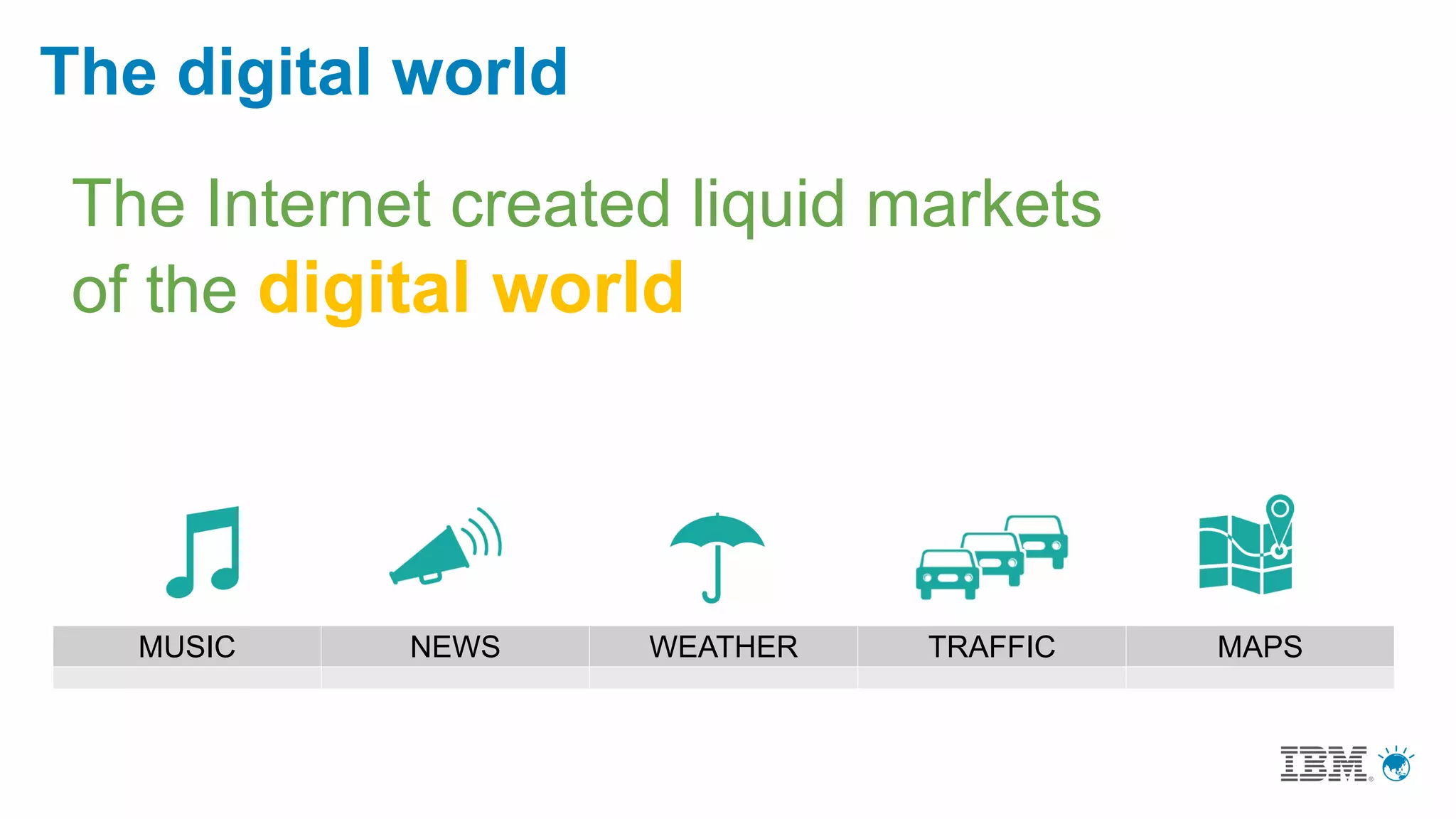
MUSIC NEWS WEATHER TRAFFIC MAPS
The Internet created liquid markets
of the digital world
The digital world
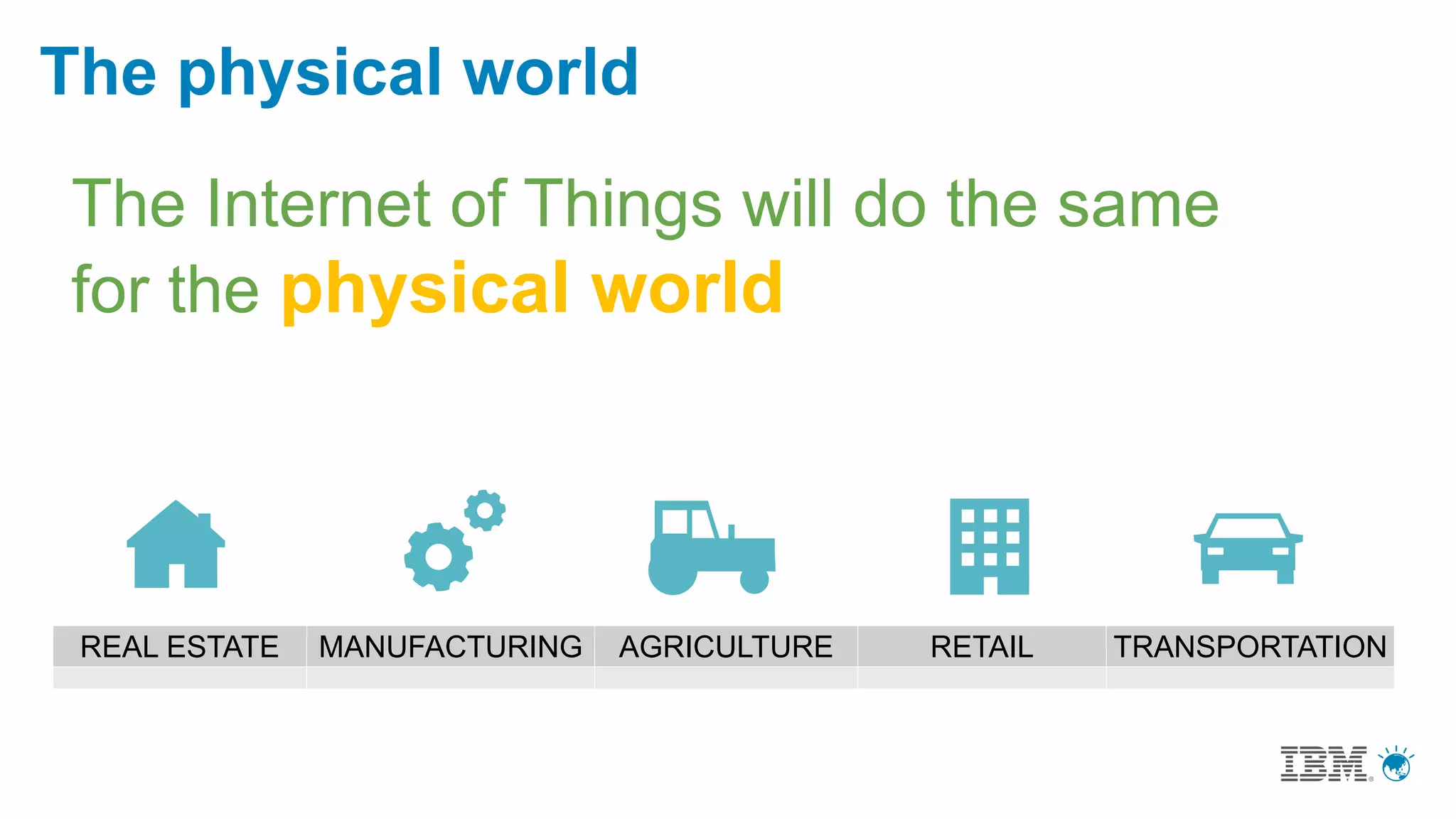
REAL ESTATE MANUFACTURING AGRICULTURE RETAIL TRANSPORTATION
The Internet of Things will do the same
for the physical world
The physical world
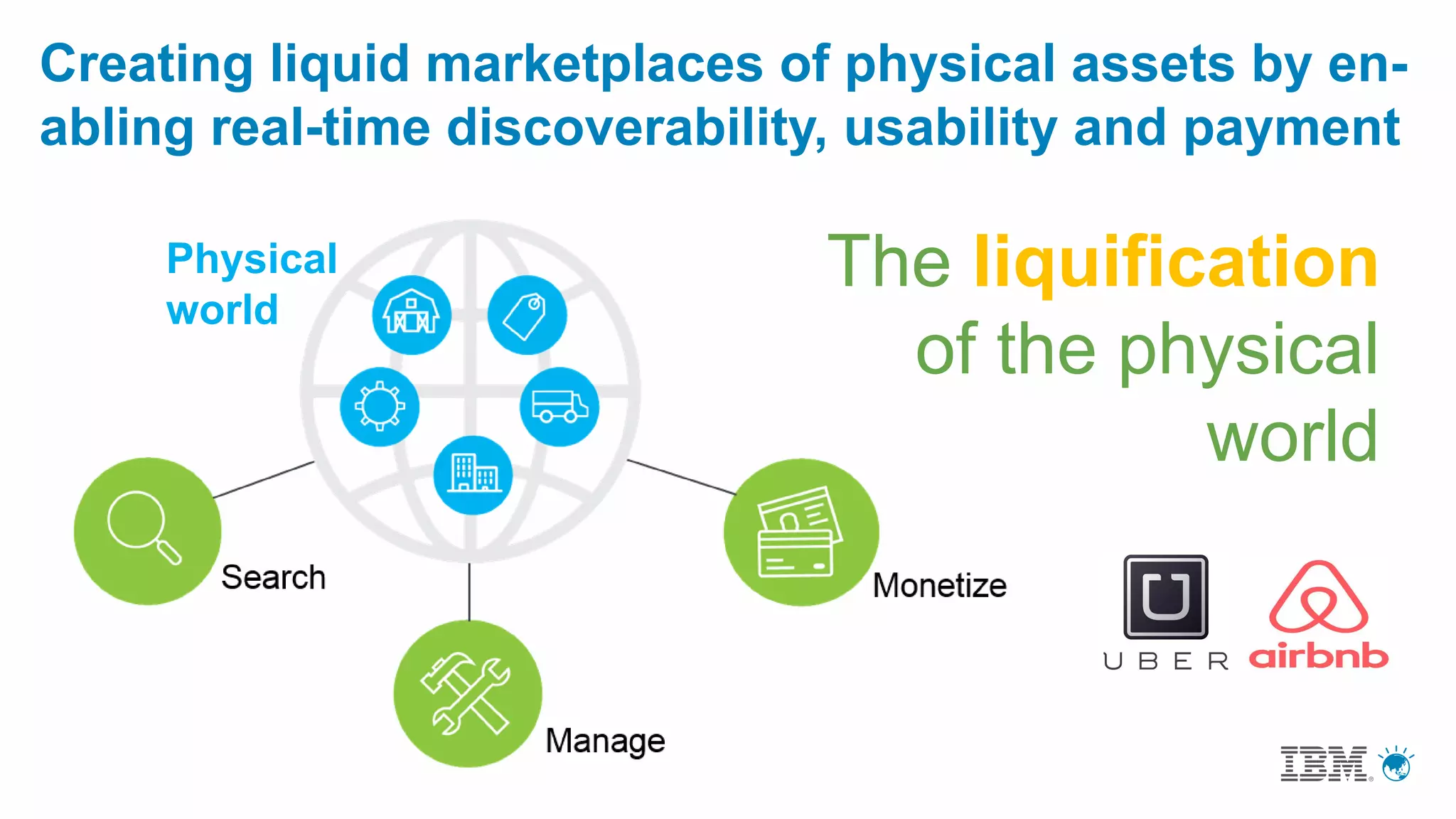
Creating liquid marketplaces of physical assets by en-
abling real-time discoverability, usability and payment
Physical
world
The liquification
of the physical
world
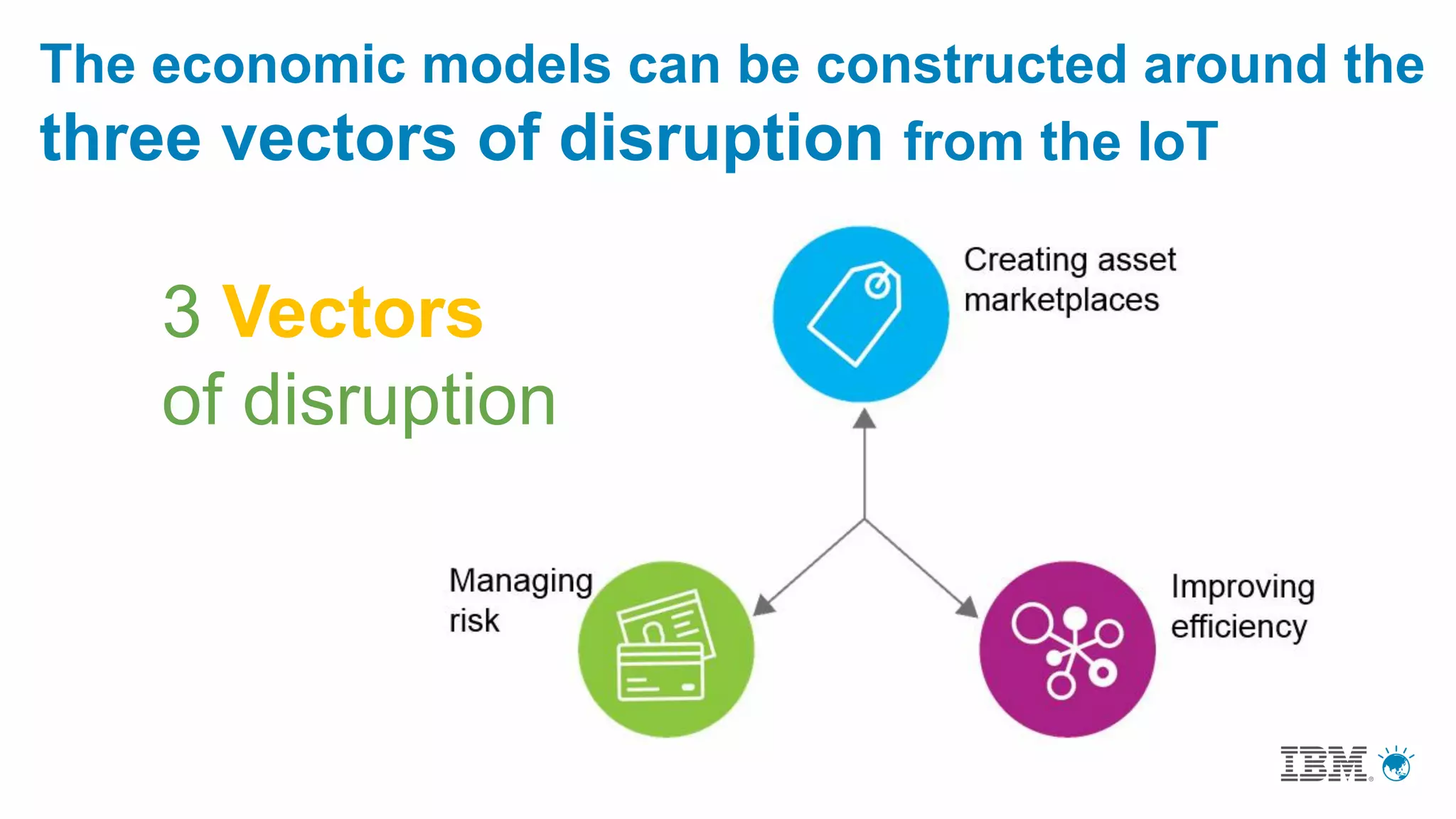
The economic models can be constructed around the
three vectors of disruption from the IoT
3 Vectors
of disruption
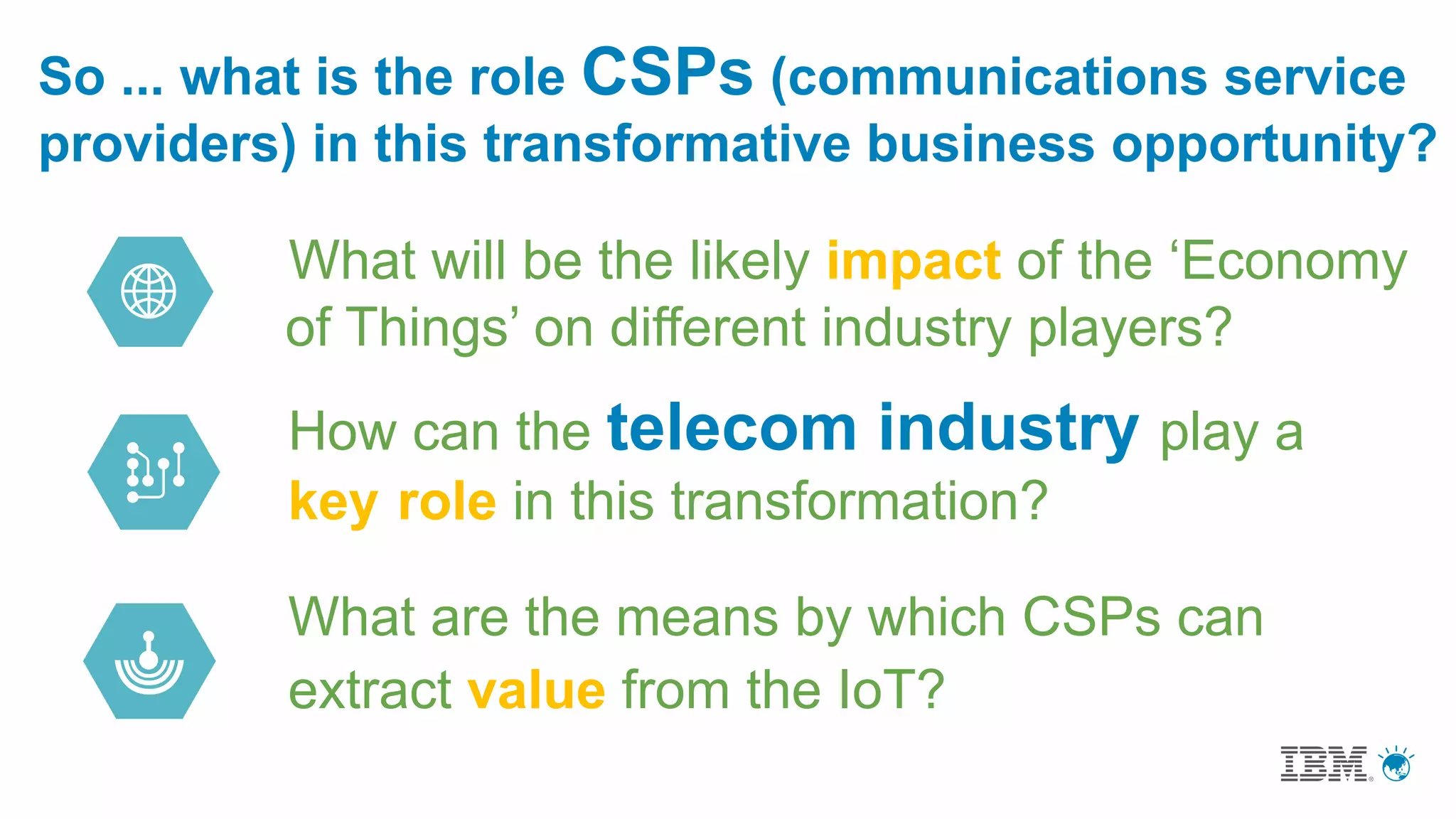
So ... what is the role CSPs (communications service
providers) in this transformative business opportunity?
What are the means by which CSPs can
extract value from the IoT?
What will be the likely impact of the ‘Economy
of Things’ on different industry players?
How can the telecom industry play a
key role in this transformation?
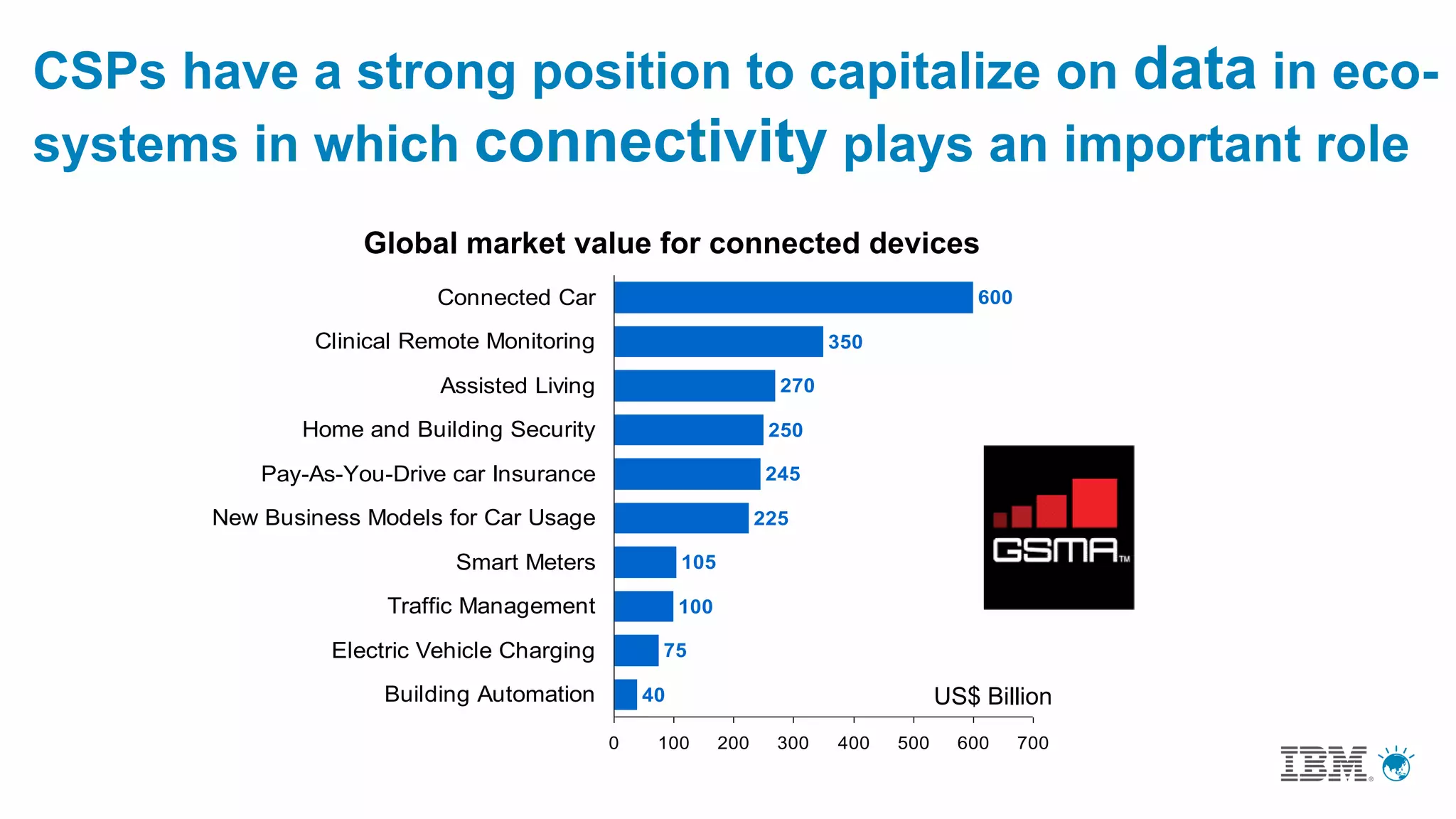
CSPs have a strong position to capitalize on data in eco-
systems in which connectivity plays an important role
600
350
270
250
245
225
105
100
75
40
0 100 200 300 400 500 600 700
Connected Car
Clinical Remote Monitoring
Assisted Living
Home and Building Security
Pay-As-You-Drive car Insurance
New Business Models for Car Usage
Smart Meters
Traffic Management
Electric Vehicle Charging
Building Automation
Global market value for connected devices
US$ Billion
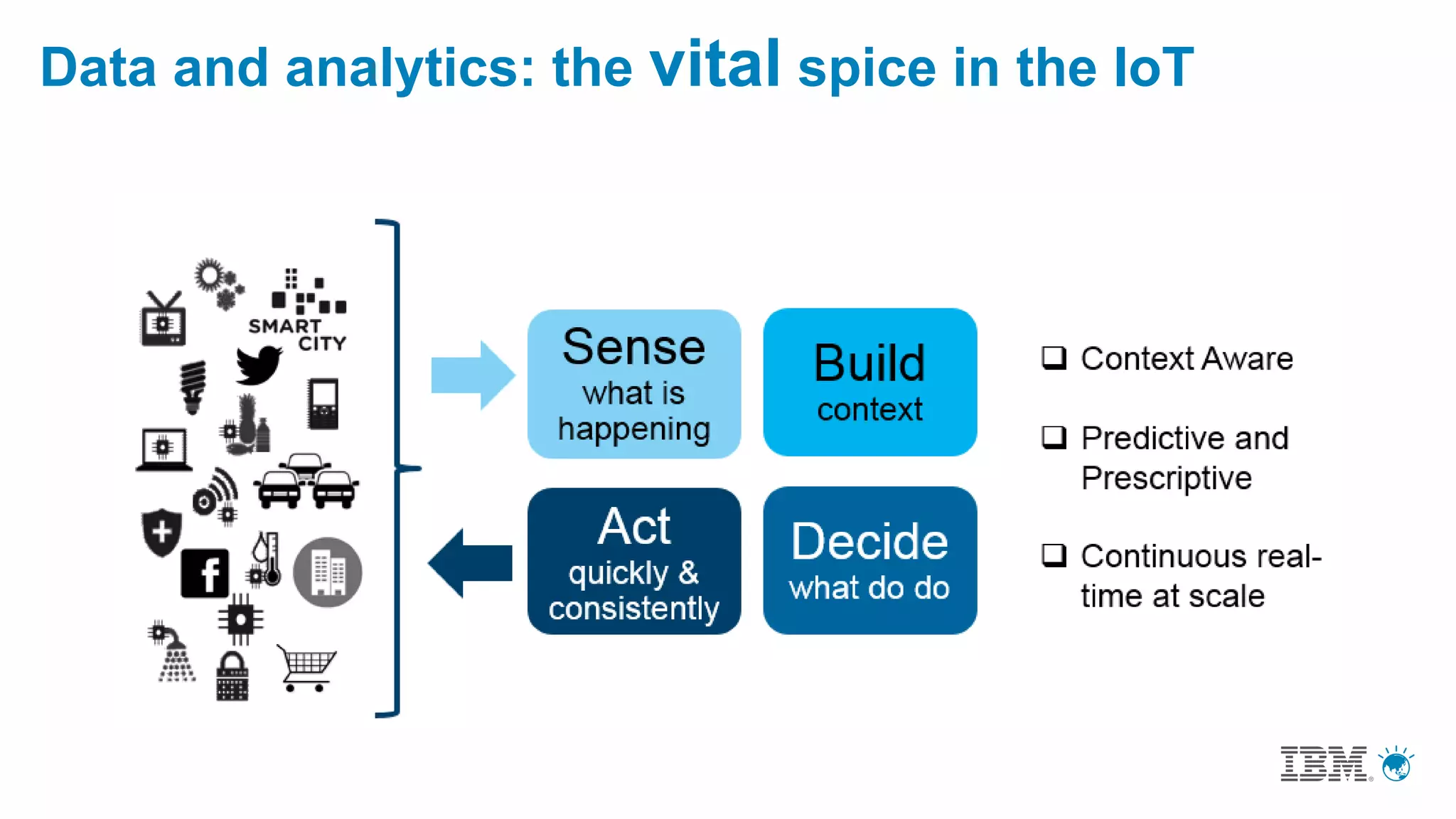
Data and analytics: the vital spice in the IoT
38
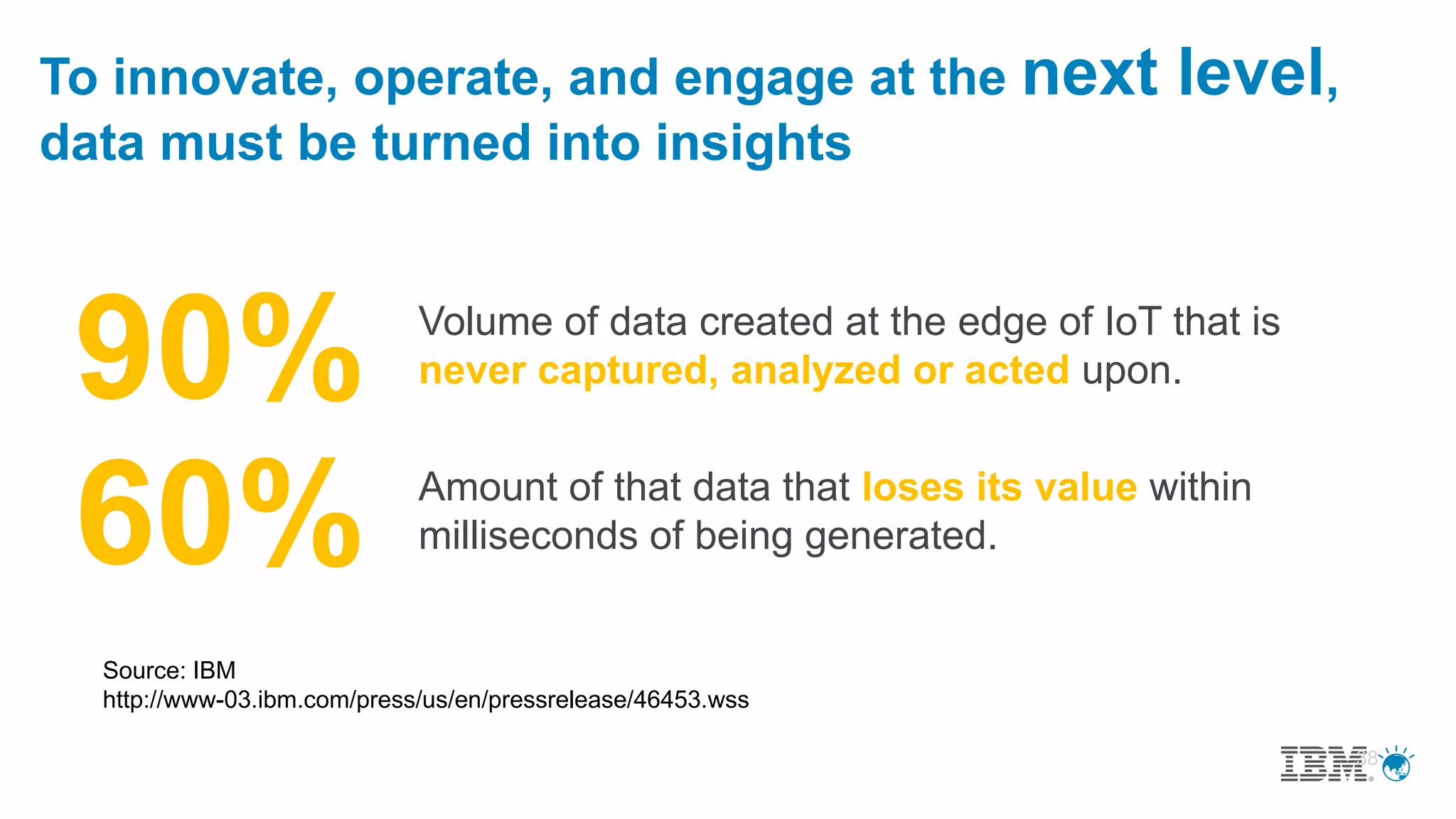
90% Volume of data created at the edge of IoT that is
never captured, analyzed or acted upon.
60% Amount of that data that loses its value within
milliseconds of being generated.
Source: IBM
http://www-03.ibm.com/press/us/en/pressrelease/46453.wss
To innovate, operate, and engage at the next level,
data must be turned into insights
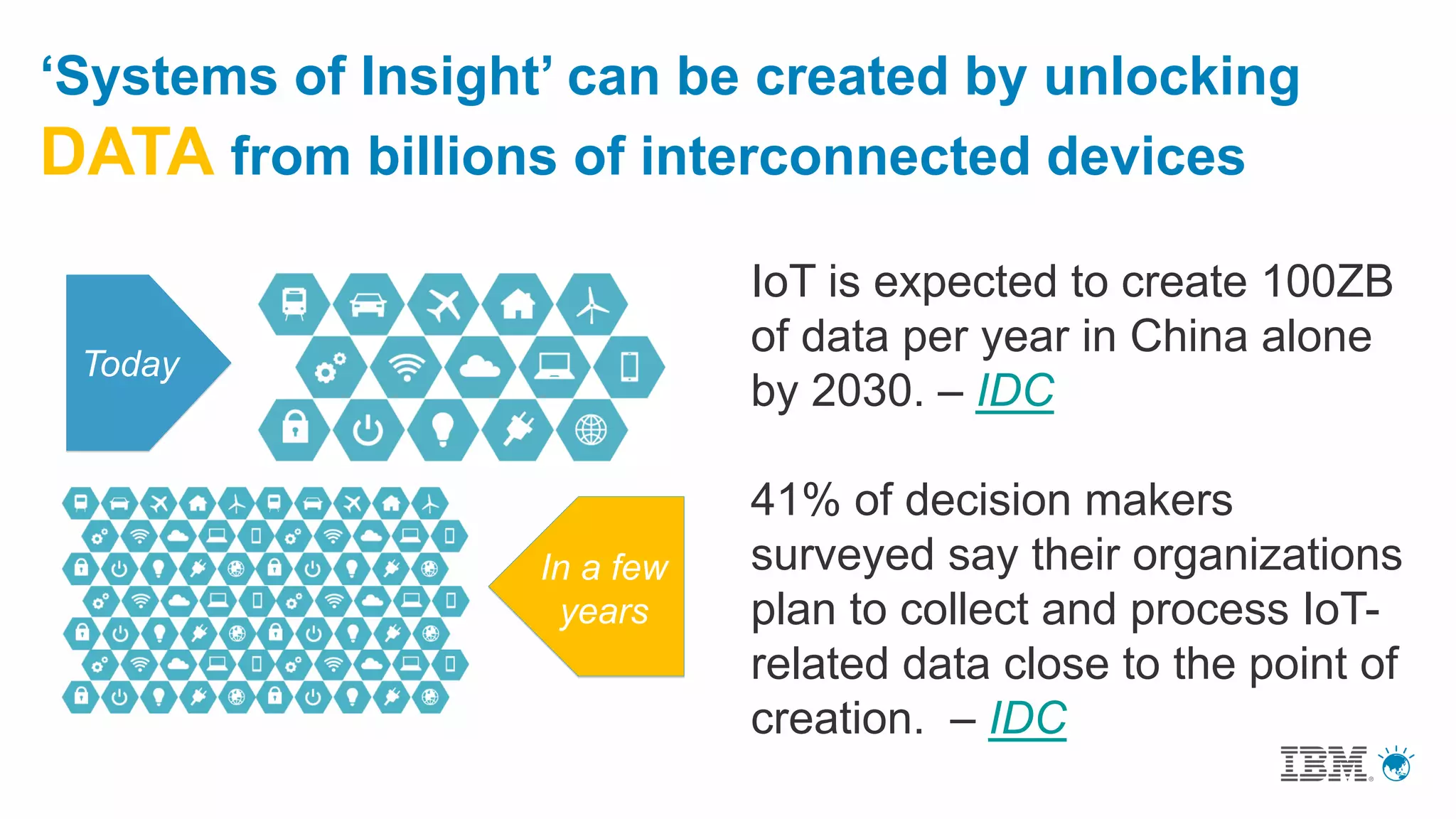
Today
In a few
years
‘Systems of Insight’ can be created by unlocking
DATA from billions of interconnected devices
IoT is expected to create 100ZB
of data per year in China alone
by 2030. – IDC
41% of decision makers
surveyed say their organizations
plan to collect and process IoT-
related data close to the point of
creation. – IDC
07/15/15
Personalized and instant are the new
expectations for engagement.
Internet of Things gives businesses access to
product usage data they’ve never had before.
Personalized services designed from usage
data creates opportunities for new sources of
revenue.
Insights that lead to new ways to engage; mobile and
social are changing expectations on engagements
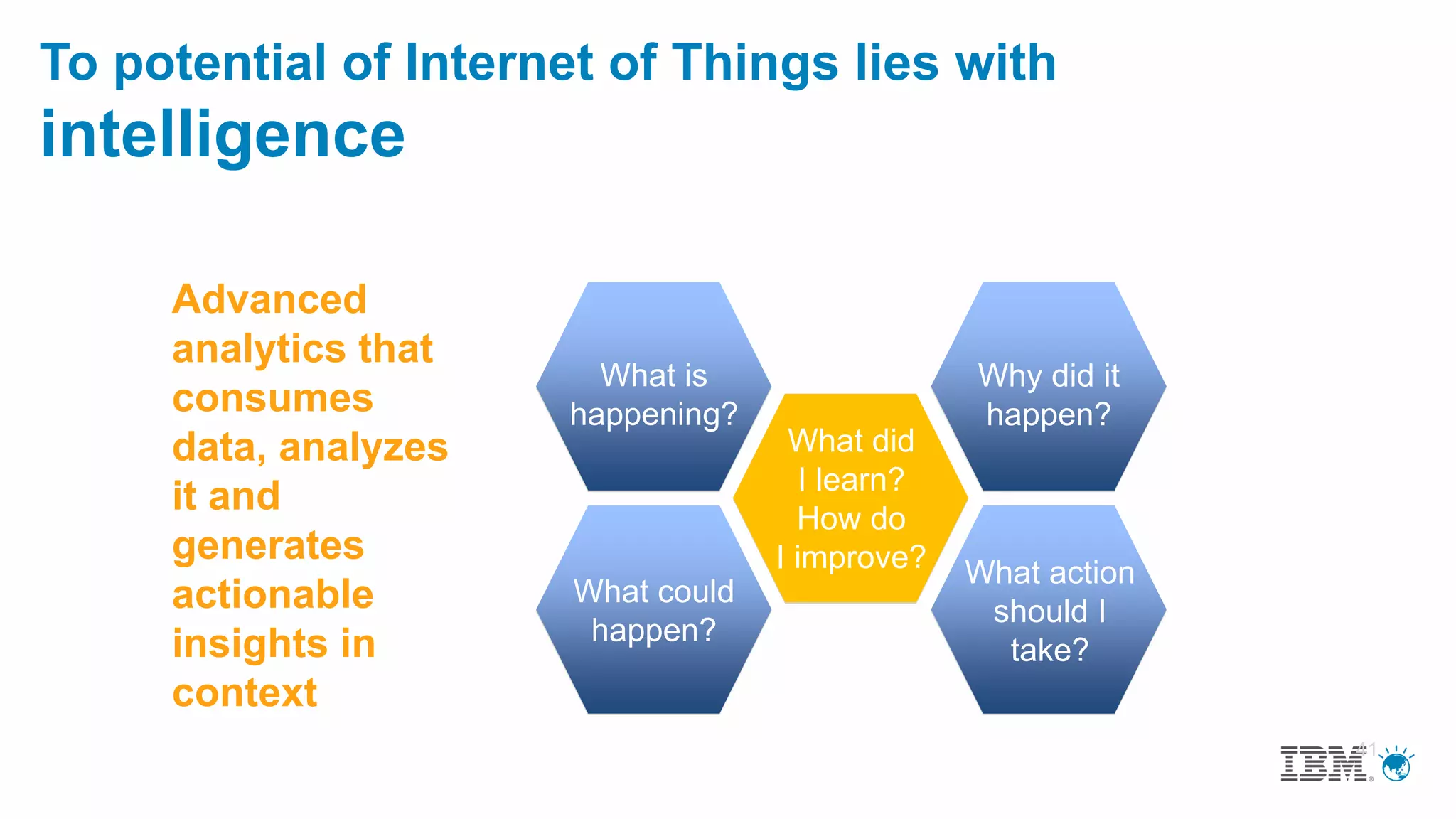
Advanced
analytics that
consumes
data, analyzes
it and
generates
actionable
insights in
context
41
What did
I learn?
How do
I improve?
What is
happening?
Why did it
happen?
What could
happen?
What action
should I
take?
To potential of Internet of Things lies with
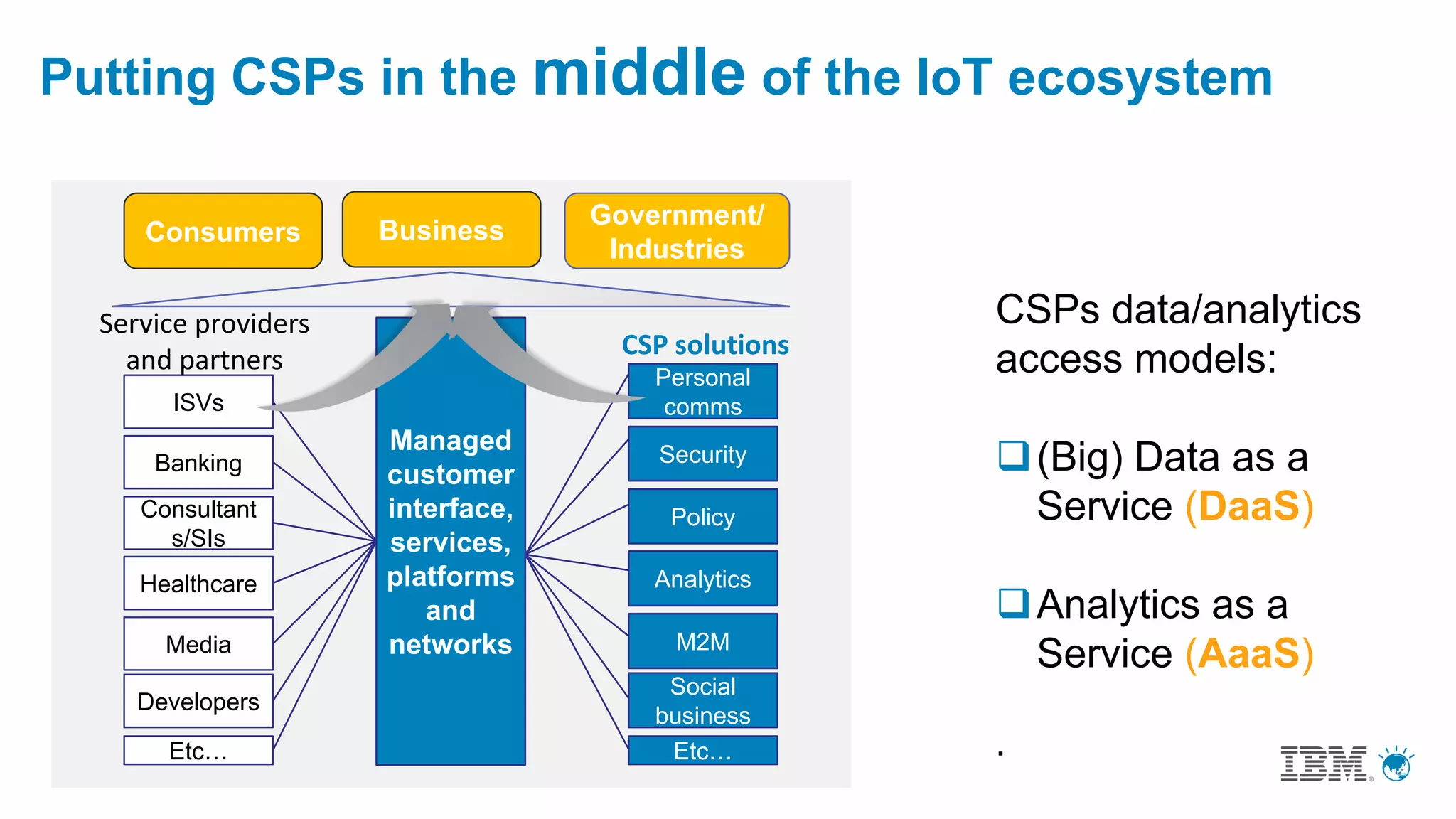
intelligence
Developers
ISVs
Banking
Consultant
s/SIs
Healthcare
Media
Social
business
Personal
comms
Security
Policy
Analytics
M2M
Etc… Etc…
Managed
customer
interface,
services,
platforms
and
networks
Service providers
and partners CSP solutions
Consumers Business
Government/
Industries
Putting CSPs in the middle of the IoT ecosystem
CSPs data/analytics
access models:
(Big) Data as a
Service (DaaS)
Analytics as a
Service (AaaS)
.
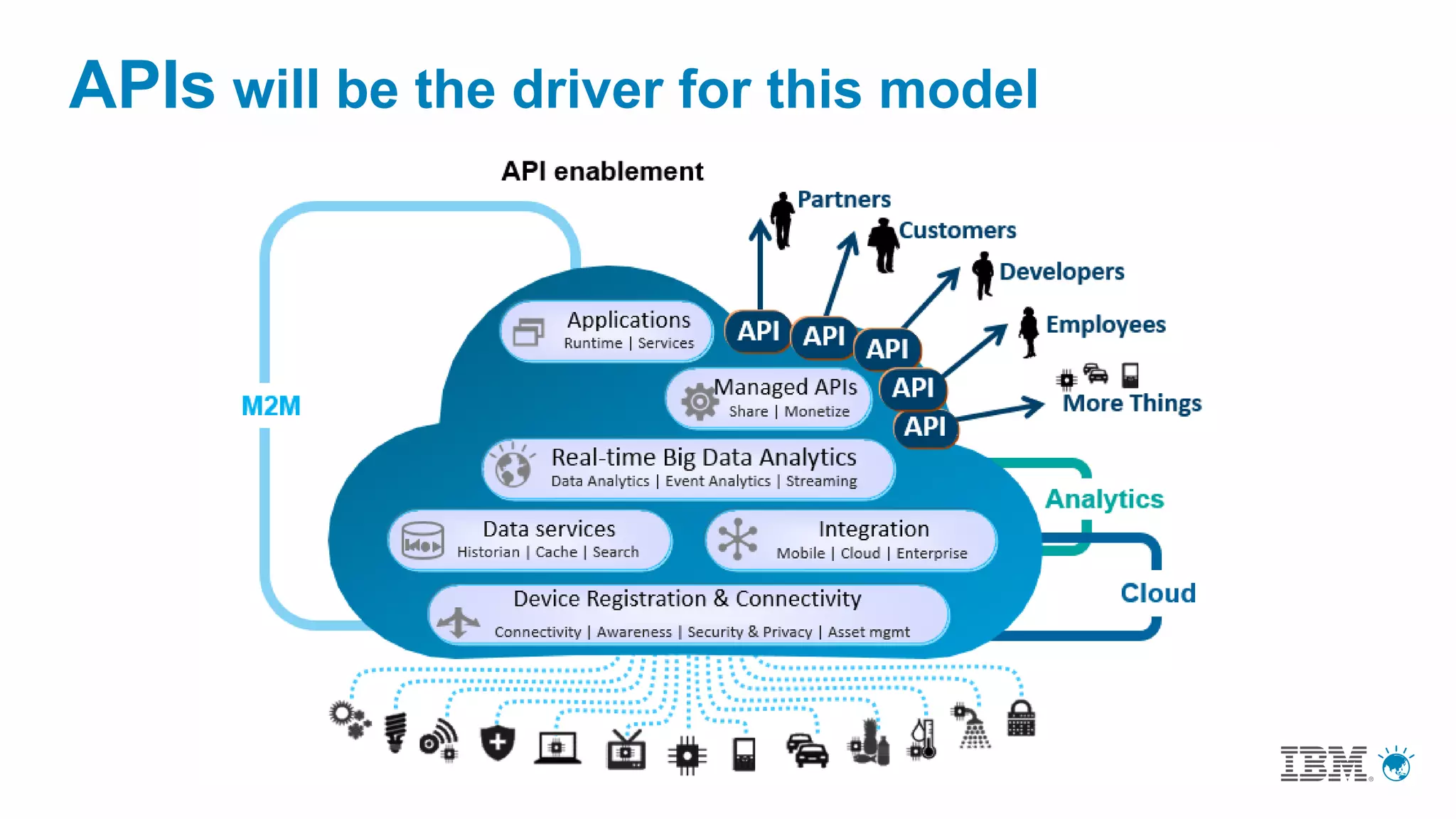
APIs will be the driver for this model
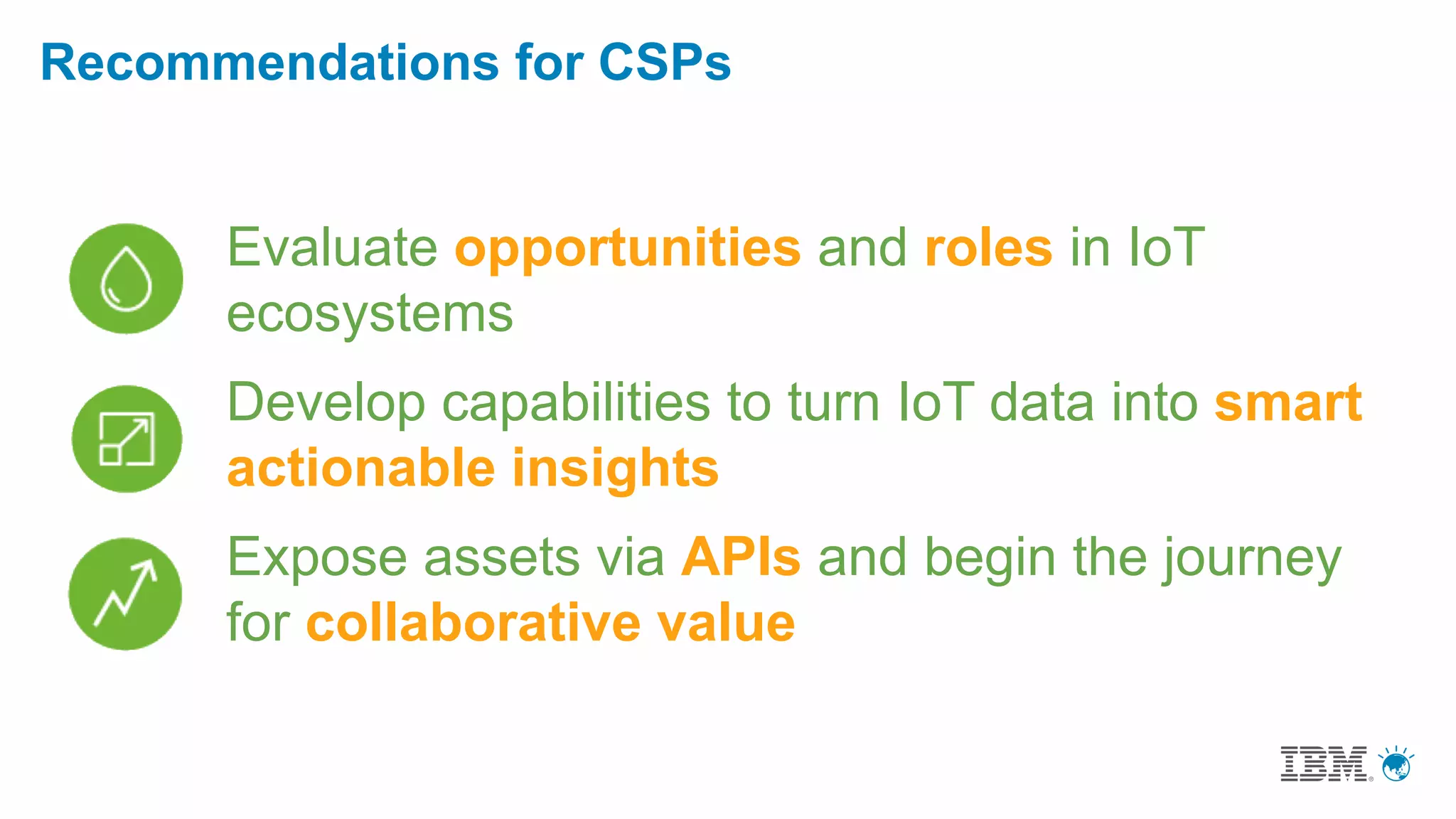
Evaluate opportunities and roles in IoT
ecosystems
Develop capabilities to turn IoT data into smart
actionable insights
Expose assets via APIs and begin the journey
for collaborative value
Recommendations for CSPs
Thank you
Rob van den Dam
Global Telecom Industry Leader
IBM Institute for Business Value
rob_vandendam@nl.ibm.com
www.ibm.com/iibv

Rebooting the IOT - ACC Conference

  • 1.
    Rebooting the IoT Fromthe Internet of Things to an Economy of Things Rob van den Dam Global Telecom Leader IBM Institute for Business Value
  • 2.
    IoT is IBM’s# 1 research area Telecommunications Solutions Lab (TSL) Telecommunications Research Lab TSL China & Telecom Research Lab (Beijing) TSL North America (Austin, Texas) Japan (Tokyo Satellite TSL) TSL Israel & Telecom Research Lab (Haifa Satellite TSL) Telecom Research Lab (New Delhi) TSL LATAM (Sao Paulo, Brazil Satellite TSL) TSL Europe (La Gaude & Montpellier, France) TSL Russia (Moscow Satellite TSL) South Africa (Johannesburg, Satellite TSL) ASEAN (Kuala Lumpur Satellite TSL) TSL India (Bangalore Satellite TSL) Centers of Excellence Institute for Business Value Research Labs Almaden c  Big Data & Analytics  Storage  Nanotech Healthcare Watson  Semiconductors  Systems  Software & Services  Big Data & Analytics c Dublin Smarter Cities Internet of Things Smarter Cities South Africa (Johannesburg, Satellite TSL) Worldclass Partner Ecosystem Industry Solutions Labs
  • 3.
    Future Agendas Value Realization Studies 3 to10 year industry outlook with action oriented next steps In-depth assessment of today’s critical issues, opportunities, etc CXO Surveys Chief Officiers studies – CEO, CIO, CMO, CFO, CHRO, etc. IBV: Developing thought leadership Consumer Surveys Country specific profiles & CSP benchmarking
  • 4.
    2015 February 2015 June 2015 October2015 February 2016 Customer Experience Big Data & Analytics 5,247 interviews in 70+ countries 295 Telecom CxOs Redefining Boundaries
  • 5.
    Content  Discussing theInternet of Things  The role of Telecom Providers in IoT
  • 6.
    The IoT ispoised to changed everything The Internet is evolving to connect people to physical things and also physical things to other physical things … all in real time. It’s becoming the Internet of Things (IoT): Billions of interconnected smart devices measuring, moving, and acting upon all the bits of data that make up daily life.
  • 7.
    ARMONK, NY -31 Mar 2015: IBM (NYSE: IBM) today announced that it will invest $3 billion over the next four years to establish a new Internet of Things (IoT) unit, and that it is building a cloud-based open platform designed to help clients and ecosystem partners build IoT solutions. IBM Investing $3 Billion in Internet of Things
  • 8.
    07/15/15 IoT-based consumer devicessuch as wearables and smart appliances receive a high degree of media attention. IDC surveyed organizations that are actively pursuing IoT initiatives. IoT is helping businesses better manage very complex systems. Consumers, businesses and governments recognize the benefit of connecting devices to the Internet 61%
  • 9.
    9 1 2 3 Unlock new revenuefrom existing products and services Inspire new working practices or processes Change or create new business models or strategies IoT offers a transformative business opportunity and is changing how businesses operate
  • 10.
    However, challenges regardingsecurity, privacy, and common standards must be overcome Malicious actors intent on taking control of data, identities, and passwords will exploit Internet- connected devices that are not securely developed, making them easier targets than traditional PCs, laptops, or tablets. – IBM X- Force Threat Intelligence
  • 12.
    “By 2020, eachhuman being will have an average of 5.1 connected devices” Frost_Sullivan “28.1 billion in 2020” IDC “40.9 billion forecasted for 2020” ABI Research “By 2020 exceed 26 billion units worldwide.” Gartner We are at the threshold of a massive explosion in the history of computing
  • 13.
    The first waveof the IoT is already here. It’s the Internet of billions of Things Proportion of Smart TVs being used for Internet Viewing Continuous Monitoring of Jet Engines Automated Smart Meters We have seen visible successes in high value applications But demand has been slow to take off in many other areas Proportion of Heavy Industrial Equipment Networked 10% 30%
  • 14.
    Market expectations areenormous, but IoT business models are already broken The Internet of Things already needs a REBOOT Video
  • 15.
    IoT solutions thatwork for billions of devices won’t necessarily scale to hundreds of billions of devices  High Cost  Lack of Privacy  Not future proof  Lack of functional value  Broken business models
  • 16.
    High cost ofsupporting and maintaining hundreds of billions of smart devices will be substantial Support agreements High buy prices, short life cycles Low margins, high life cycles Mismatch between cost and revenue
  • 17.
    Lack of Privacy;the Internet is no longer a place of trust  Centralized authorities become single points of failure  No trusted partners on the InternetThe Internet was original build for convenience and on trust
  • 18.
    Not future-proof; averagelife of IoT devices will be decades Cost of maintaining smart devices can outlast product and manufacturer obsolescence Average Expected lifecycle 18 to 36 months ± 10 years ± 40 years > 40 years
  • 19.
    Lack of FunctionalValue; connectivity and intelligence is a means to a better product, not an end Simply enabling connectivity does not make a device smarter or better A smart, connected toaster is of no value unless it produces better toast
  • 20.
    Broken business models> as a result profits remain elusive Lack of sustainable business models is holding the IoT back And ask yourself a few questions …… Imagine the connected toaster of the future .....
  • 21.
    To see howunrealistic the expectations are with current business models, just apply the “toaster test”  Would you be willing to pay an annual subscription for software updates to your toaster?!  How much time are you willing to spend updating the software in your toaster?!  Would you be comfortable seeing advertising burned into your morning toast?!  Are you willing to only buy bread from the company making the toaster?!  Do you trust the toaster maker (or the NSA) not to sell data about your heavy consumption of Pop Tarts to your health insurer (who may then choose to charge you higher premiums for unhealthy behavior) ? If it doesn’t work for the toaster, it may not work for your door lock, garage, light switch, toothbrush or toilet bowl.
  • 22.
    To get the‘second' wave of the IoT, it needs to be redesigned based on 3 architectural principles Architectural principles Design for radically lower cost: Embrace distributed computing, peer to peer networks and device based analytics eliminating costs associated with the IoT cloud Design for real privacy: Privacy and anonymity ensured by design, opt-in only, open source, transparent encryption for secure messaging and file transfers Design for business model endurance: Transfer ownership and maintenance responsibility from manufacturers to networks of self maintaining devices
  • 23.
    To be secureand scalable, the IoT will evolve to be more open and decentralized Before 2005 Today 2025 and beyond
  • 24.
    A truly decentralizedIoT solution will require 3 foundational functions to be supported File Transfer Messaging Device Coordination Trustless Peer to Peer Messaging Secure Distributed File Sharing Autonomous Device Coordination
  • 25.
    The set offoundational principles is an opportunity to change the model of Internet services and security Trustless Peer to Peer Messaging Secure Distributed File Sharing Autonomous Device Coordination No single arbiter of roles and permissions • Owner/user defined interactions • Autonomous transaction processes • Trustless network of interactive devices No cloud based file transfers • Secure file and data sharing • Software/firmware updates • Device based analytics reporting No centralized broker of messages • Trustless encrypted messaging and transport • Low latency, guaranteed delivery • Store and forward capabilities, hop-ons
  • 26.
    A secure andscalable IoT solution can be built on open-source technology No single arbiter of roles and permissions • Owner/user defined interactions • Autonomous transaction processes • Trustless network of interactive devices No cloud based file transfers • Secure file and data sharing • Software/firmware updates • Device based analytics reporting No centralized broker of messages • Trustless encrypted messaging and transport • Low latency, guaranteed delivery • Store and forward capabilities, hop-ons P2P messaging protocols P2P decentralized filesharing Blockchains Example Example Example
  • 27.
    Not every systemneeds to be centralized, however Device Longevity Device Value
  • 28.
    Democracy of Devices Byempowering devices to function autonomously, the edge will become a frontier of new economic value, creating an “ECONOMY OF THINGS”
  • 29.
    Devices on theedge can be empowered to function autonomously in the IoT
  • 30.
    New Marketplaces hostedby peer exchanges can provide liquidity for transactions between devices Similar to financial exchanges, peer exchanges can match supply and demand
  • 31.
    MUSIC NEWS WEATHERTRAFFIC MAPS The Internet created liquid markets of the digital world The digital world
  • 32.
    REAL ESTATE MANUFACTURINGAGRICULTURE RETAIL TRANSPORTATION The Internet of Things will do the same for the physical world The physical world
  • 33.
    Creating liquid marketplacesof physical assets by en- abling real-time discoverability, usability and payment Physical world The liquification of the physical world
  • 34.
    The economic modelscan be constructed around the three vectors of disruption from the IoT 3 Vectors of disruption
  • 35.
    So ... whatis the role CSPs (communications service providers) in this transformative business opportunity? What are the means by which CSPs can extract value from the IoT? What will be the likely impact of the ‘Economy of Things’ on different industry players? How can the telecom industry play a key role in this transformation?
  • 36.
    CSPs have astrong position to capitalize on data in eco- systems in which connectivity plays an important role 600 350 270 250 245 225 105 100 75 40 0 100 200 300 400 500 600 700 Connected Car Clinical Remote Monitoring Assisted Living Home and Building Security Pay-As-You-Drive car Insurance New Business Models for Car Usage Smart Meters Traffic Management Electric Vehicle Charging Building Automation Global market value for connected devices US$ Billion
  • 37.
    Data and analytics:the vital spice in the IoT
  • 38.
    38 90% Volume ofdata created at the edge of IoT that is never captured, analyzed or acted upon. 60% Amount of that data that loses its value within milliseconds of being generated. Source: IBM http://www-03.ibm.com/press/us/en/pressrelease/46453.wss To innovate, operate, and engage at the next level, data must be turned into insights
  • 39.
    Today In a few years ‘Systemsof Insight’ can be created by unlocking DATA from billions of interconnected devices IoT is expected to create 100ZB of data per year in China alone by 2030. – IDC 41% of decision makers surveyed say their organizations plan to collect and process IoT- related data close to the point of creation. – IDC
  • 40.
    07/15/15 Personalized and instantare the new expectations for engagement. Internet of Things gives businesses access to product usage data they’ve never had before. Personalized services designed from usage data creates opportunities for new sources of revenue. Insights that lead to new ways to engage; mobile and social are changing expectations on engagements
  • 41.
    Advanced analytics that consumes data, analyzes itand generates actionable insights in context 41 What did I learn? How do I improve? What is happening? Why did it happen? What could happen? What action should I take? To potential of Internet of Things lies with intelligence
  • 42.
    Developers ISVs Banking Consultant s/SIs Healthcare Media Social business Personal comms Security Policy Analytics M2M Etc… Etc… Managed customer interface, services, platforms and networks Service providers andpartners CSP solutions Consumers Business Government/ Industries Putting CSPs in the middle of the IoT ecosystem CSPs data/analytics access models: (Big) Data as a Service (DaaS) Analytics as a Service (AaaS) .
  • 43.
    APIs will bethe driver for this model
  • 44.
    Evaluate opportunities androles in IoT ecosystems Develop capabilities to turn IoT data into smart actionable insights Expose assets via APIs and begin the journey for collaborative value Recommendations for CSPs
  • 45.
    Thank you Rob vanden Dam Global Telecom Industry Leader IBM Institute for Business Value rob_vandendam@nl.ibm.com www.ibm.com/iibv