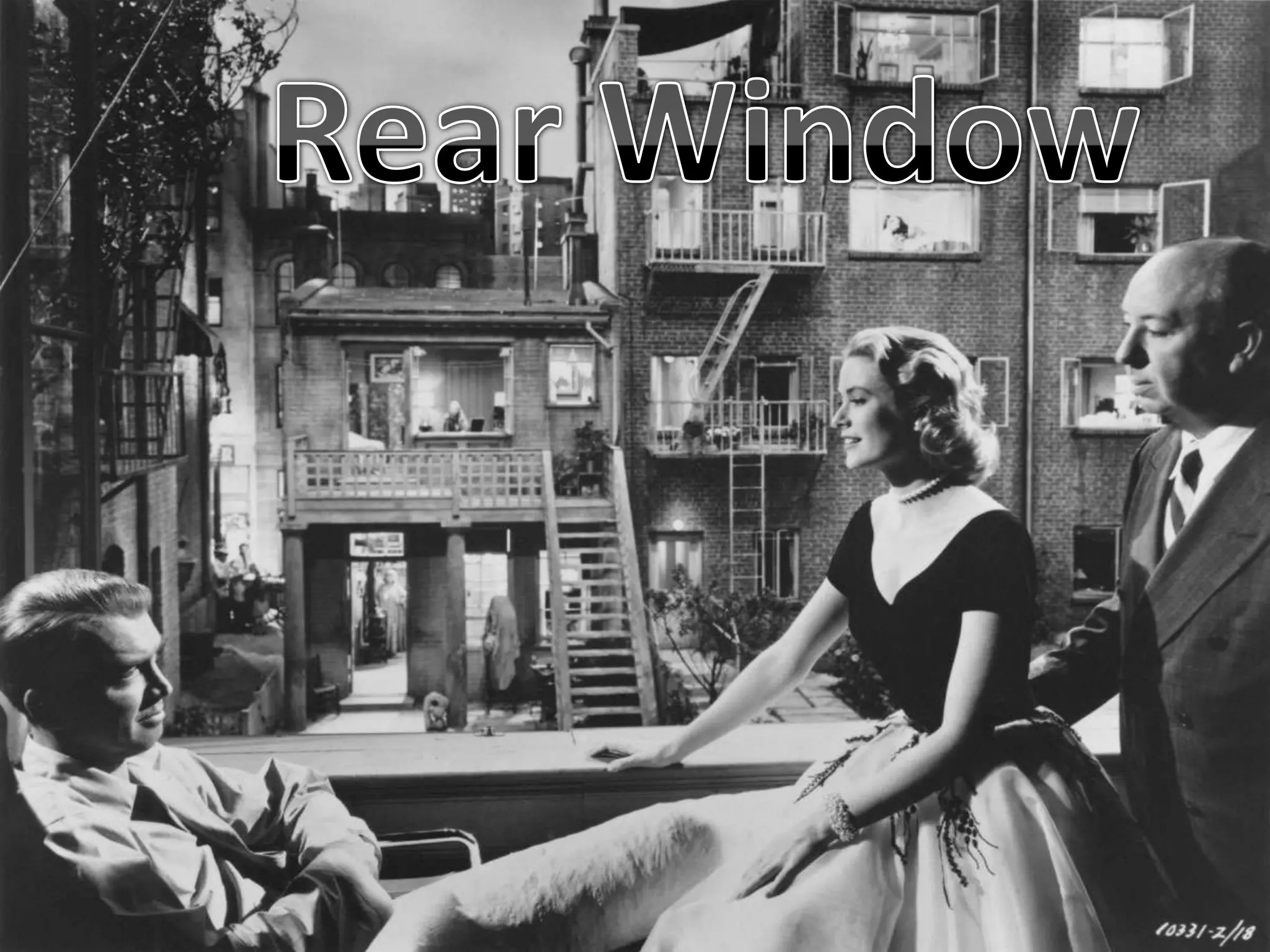
Rear Window
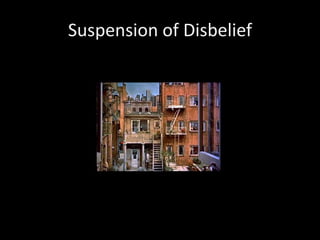
Suspension of Disbelief
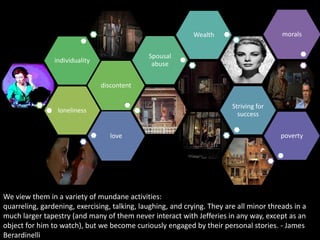
We view them in a variety of mundane activities: quarreling, gardening, exercising, talking, laughing, and crying. They are all minor threads in a much larger tapestry (and many of them never interact with Jefferies in any way, except as an object for him to watch), but we become curiously engaged by their personal stories. - James Berardinelli
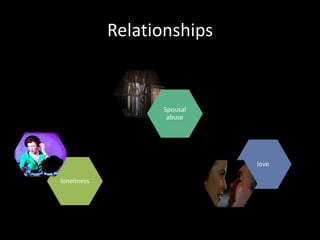
RelationshipsSpousal abuselonelinesslove
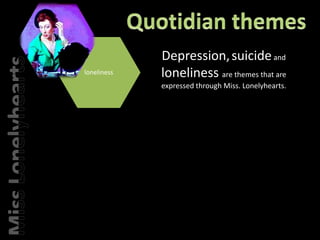
Quotidian themesDepression,suicide and loneliness are themes that are expressed through Miss. Lonelyhearts. lonelinessMiss Lonelyhearts
Quotidian ThemesMr. And Mrs. Thornwald represent the issue of spousal abuse/domestic violence which was  a rising concern in the 1950s, with the media desensitising the issue, especially in American society.Spousal abuseMr. & Mrs. Thornwald
Quotidian ThemesThe quotidian theme of love is apparent strongly in the protagonist (L.B Jeffries) and his girlfriend (Lisa Freemont). Lisa & L.B Jeffrieslove
Subversion
SubversionThe quotidian theme of relationships is integral in Rear Window.
“In 1950s America, the media portrayed males in 63% of conflict situations while wives were victims in 39% of situations. In addition, wives were more aggressive in 73% of domestic situations, in 10% of situations, husbands and wives were equally aggressive and in only 17% of situations were husbands more violent than wives.” Author: Saenger, G.In D. M. White & R. H. Abel (Eds.), The funnies, an American idiom (pp. 219-231). Glencoe, NY: The Free Press. (1963).music and sound is integral in developing that sense of empathy in the responder, but also aids in the subversion of Miss Lonely Hearts’ character.
Jeff and Lisa are the poster couple for love, albeit unconventional.
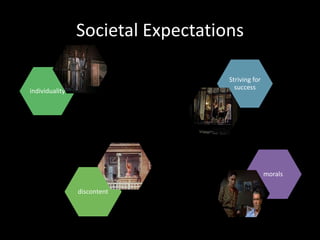
Power that is usually implied with wealth is subverted by Hitchcock. This is shown by Lisa’s eagerness to enter a relationship with L.B Jeffries, but his reluctance, and his final decision on their relationship shows that wealth does not mean power in this instance.Societal ExpectationsmoralsindividualitydiscontentStriving for success
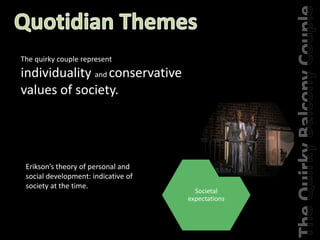
Quotidian ThemesThe quirky couple represent individuality and conservative values of society.Societal expectationsThe Quirky Balcony CoupleErikson’s theory of personal and social development: indicative of society at the time.
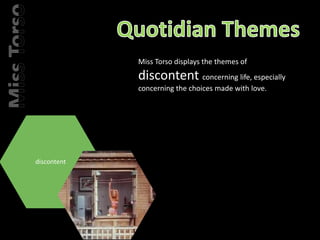
Quotidian ThemesMiss TorsoMiss Torso displays the themes of discontent concerning life, especially concerning the choices made with love.discontent
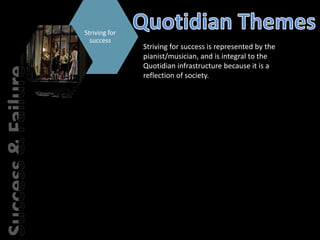
Quotidian ThemesStriving for success is represented by the pianist/musician, and is integral to the Quotidian infrastructure because it is a reflection of society.Striving for successSuccess & Failure
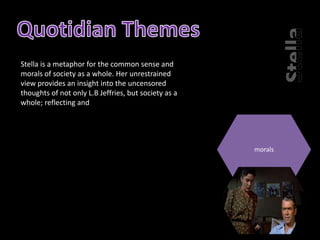
Quotidian ThemesStellamoralsStella is a metaphor for the common sense and morals of society as a whole. Her unrestrained view provides an insight into the uncensored thoughts of not only L.B Jeffries, but society as a whole; reflecting and
Subversion
SubversionThe quirky couple on the balcony are the most obvious fit for Stella’s observation, which is that “People do strange things when they think that people aren’t watching them.”
Erikson’s theory of Personal and Social Development theorises that stage five has of gaining acceptance in a group that has similar ideals and values,
Miss Torso’s societal expectations and personal expectations to find a mate are most probably the reasons pushing her to have dinner parties with countless men simultaneously. She is chased after by men in suits which seems accurate, however, towards the end of the film, the subversion of this theme is seen, with a not-so attractive, plain man who is presumably Miss Torso’s partner, who she chooses from the rest of the group.
The struggle for success that the pianist undergoes, with many failed pieces throughout the film frustrating him is a metaphor for the reality of a career. This piece of realism allows the responder to relate to the character, instead of having a complete success from the beginning.
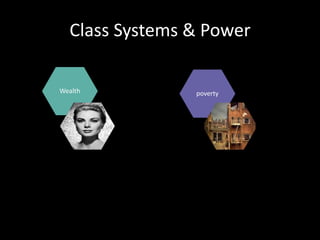
. Throughout the movie, a note to make is that there are no children or youth, which further exemplifies Stella’s voice as a paternal voice, and her role as a nurse towards Jeffries also strengthens this. Her voice of reason is shown by quotes such as: “Nothing has caused more problems for the human race than intelligence” (subversion of gender roles)Class Systems & PowerWealthpoverty
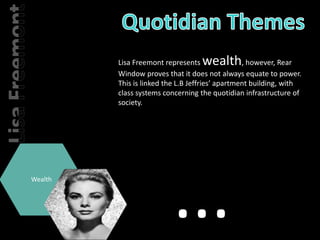
Quotidian ThemesWealthLisa Freemont represents wealth, however, Rear Window proves that it does not always equate to power. This is linked the L.B Jeffries’ apartment building, with class systems concerning the quotidian infrastructure of society. Lisa Freemont...
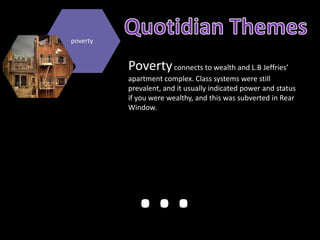
Quotidian ThemesPoverty connects to wealth and L.B Jeffries’ apartment complex. Class systems were still prevalent, and it usually indicated power and status if you were wealthy, and this was subverted in Rear Window....poverty
...Power?
...Not Always!Subversion
SubversionAlthough Lisa emasculates Jeffries in concern to his inability to move from his wheelchair, as well as the wealth between the two, Jeffries proves that all power does not lie with those that hold the wealth, and this is subverting the stereotypical quotidian infrastructure, with the individual without the wealth holding the power in terms of romantic relationships.These themes all relate to realism, quotidian infrastructure and can be interpreted universally.
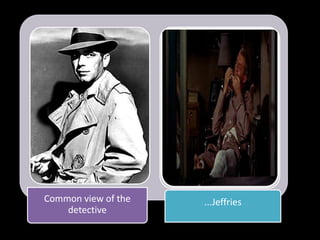
Verburg speaks of Stella and her masculinity when she says “He better get that trunk out of there before it starts to leak”. Her raw and logical thinking is usually attributed to a male detective, such as Marlowe, so the passivity and subversion of gender notions in concern to the common view of the detective occurred.

Rear Window

  • 1.
  • 2.
  • 3.
    We view themin a variety of mundane activities: quarreling, gardening, exercising, talking, laughing, and crying. They are all minor threads in a much larger tapestry (and many of them never interact with Jefferies in any way, except as an object for him to watch), but we become curiously engaged by their personal stories. - James Berardinelli
  • 4.
  • 5.
    Quotidian themesDepression,suicide andloneliness are themes that are expressed through Miss. Lonelyhearts. lonelinessMiss Lonelyhearts
  • 6.
    Quotidian ThemesMr. AndMrs. Thornwald represent the issue of spousal abuse/domestic violence which was a rising concern in the 1950s, with the media desensitising the issue, especially in American society.Spousal abuseMr. & Mrs. Thornwald
  • 7.
    Quotidian ThemesThe quotidiantheme of love is apparent strongly in the protagonist (L.B Jeffries) and his girlfriend (Lisa Freemont). Lisa & L.B Jeffrieslove
  • 8.
  • 9.
    SubversionThe quotidian themeof relationships is integral in Rear Window.
  • 10.
    “In 1950s America,the media portrayed males in 63% of conflict situations while wives were victims in 39% of situations. In addition, wives were more aggressive in 73% of domestic situations, in 10% of situations, husbands and wives were equally aggressive and in only 17% of situations were husbands more violent than wives.” Author: Saenger, G.In D. M. White & R. H. Abel (Eds.), The funnies, an American idiom (pp. 219-231). Glencoe, NY: The Free Press. (1963).music and sound is integral in developing that sense of empathy in the responder, but also aids in the subversion of Miss Lonely Hearts’ character.
  • 11.
    Jeff and Lisaare the poster couple for love, albeit unconventional.
  • 12.
    Power that isusually implied with wealth is subverted by Hitchcock. This is shown by Lisa’s eagerness to enter a relationship with L.B Jeffries, but his reluctance, and his final decision on their relationship shows that wealth does not mean power in this instance.Societal ExpectationsmoralsindividualitydiscontentStriving for success
  • 13.
    Quotidian ThemesThe quirkycouple represent individuality and conservative values of society.Societal expectationsThe Quirky Balcony CoupleErikson’s theory of personal and social development: indicative of society at the time.
  • 14.
    Quotidian ThemesMiss TorsoMissTorso displays the themes of discontent concerning life, especially concerning the choices made with love.discontent
  • 15.
    Quotidian ThemesStriving forsuccess is represented by the pianist/musician, and is integral to the Quotidian infrastructure because it is a reflection of society.Striving for successSuccess & Failure
  • 16.
    Quotidian ThemesStellamoralsStella isa metaphor for the common sense and morals of society as a whole. Her unrestrained view provides an insight into the uncensored thoughts of not only L.B Jeffries, but society as a whole; reflecting and
  • 17.
  • 18.
    SubversionThe quirky coupleon the balcony are the most obvious fit for Stella’s observation, which is that “People do strange things when they think that people aren’t watching them.”
  • 19.
    Erikson’s theory ofPersonal and Social Development theorises that stage five has of gaining acceptance in a group that has similar ideals and values,
  • 20.
    Miss Torso’s societalexpectations and personal expectations to find a mate are most probably the reasons pushing her to have dinner parties with countless men simultaneously. She is chased after by men in suits which seems accurate, however, towards the end of the film, the subversion of this theme is seen, with a not-so attractive, plain man who is presumably Miss Torso’s partner, who she chooses from the rest of the group.
  • 21.
    The struggle forsuccess that the pianist undergoes, with many failed pieces throughout the film frustrating him is a metaphor for the reality of a career. This piece of realism allows the responder to relate to the character, instead of having a complete success from the beginning.
  • 22.
    . Throughout themovie, a note to make is that there are no children or youth, which further exemplifies Stella’s voice as a paternal voice, and her role as a nurse towards Jeffries also strengthens this. Her voice of reason is shown by quotes such as: “Nothing has caused more problems for the human race than intelligence” (subversion of gender roles)Class Systems & PowerWealthpoverty
  • 23.
    Quotidian ThemesWealthLisa Freemontrepresents wealth, however, Rear Window proves that it does not always equate to power. This is linked the L.B Jeffries’ apartment building, with class systems concerning the quotidian infrastructure of society. Lisa Freemont...
  • 24.
    Quotidian ThemesPoverty connectsto wealth and L.B Jeffries’ apartment complex. Class systems were still prevalent, and it usually indicated power and status if you were wealthy, and this was subverted in Rear Window....poverty
  • 25.
  • 26.
  • 27.
    SubversionAlthough Lisa emasculatesJeffries in concern to his inability to move from his wheelchair, as well as the wealth between the two, Jeffries proves that all power does not lie with those that hold the wealth, and this is subverting the stereotypical quotidian infrastructure, with the individual without the wealth holding the power in terms of romantic relationships.These themes all relate to realism, quotidian infrastructure and can be interpreted universally.
  • 29.
    Verburg speaks ofStella and her masculinity when she says “He better get that trunk out of there before it starts to leak”. Her raw and logical thinking is usually attributed to a male detective, such as Marlowe, so the passivity and subversion of gender notions in concern to the common view of the detective occurred.