


By
Prof. Waswa Balunywa
Questions
 When does one retire?
 What does one do after retirement?
 How do you prepare for retirement?
 What are the choices?
 How to actually do it?
By Prof. Waswa Balunywa 2
When Does One Retire?
 On ready retirement age as per law
 On getting to stage of diminishing returns
 When successors are in place
 When he makes enough money!?
 No age limit
By Prof. Waswa Balunywa 3
What is Retirement?
 A shift from one type of activity to another
 Appropriate when one ceases to contribute
effectively to one type of engagement
 Retirement is Re-engagement
 When successors are ready to take over
 Reducing own workload and speed
 No need to stop working
By Prof. Waswa Balunywa 4
What is Re-engagement?
 Switch from one job to another.
 One needs not retire entirely.
 One needs to be engaged in something.
 Doing non-strangeous activities
By Prof. Waswa Balunywa 5
Different types of Re-
engagement
The choices
1. Re-engagement on reaching a compulsory
retirement age
2. Planned Re-engagement on making
sufficient income
3. Forced Re-engagement
By Prof. Waswa Balunywa 6
Challenges
 Illness
 Declining income
 Death of spouse
 Living too lonely
 Problem with children/
By Prof. Waswa Balunywa 7
How to Overcome?
 Plan
 Save
By Prof. Waswa Balunywa 8
Cultural Setting
 African families still extended family system.
 Western countries have nuclear family. When
children grow they go away.
 African families still have family support.
 Looking after elderly
 Elderly look after children's’ home
By Prof. Waswa Balunywa 9
Re-engagement on Reaching a
Compulsory Retirement Age
a) Civil service retirement
i) Sit home with a pension
ii) A pension with a business
iii) A pension in the extended family support
iv) A pension with creative wealth support
By Prof. Waswa Balunywa 10
b) Non-Civil service retirement
 Depends on extended family
 Depends on accumulated wealth
 Work to death
 A combination of any of the above
By Prof. Waswa Balunywa 11
Planning for Re- engagement
 Important to recognize retirement as re-
engagement
 Plan early in life
 Save to ensure finacial independence
 Take insurance where meaningful
 Rich dad poor dad way. Create wealth
 Plan for a business activity
By Prof. Waswa Balunywa 12
a) Important to recognize
retirement as re-engagement
 Life is a cycle, from childhood back to
childhood.
 In each cycle you are either supported or you
support yourself
 Each cycle is an engagement, childhood,
student, work.
 There is always decline and possibly decay
By Prof. Waswa Balunywa 13
b) Plan early in life
 Evolve life goals and adjust them with time.
 Follow your brains and your heart.
 Look to the future and plan back to the
present.
 Visualize the various stages of your life.
 Support the different stages with necessary
energy and resources.
By Prof. Waswa Balunywa 14
Save
 Do not spend more than you can
 Put some money aside however little
 Never borrow unless you are sure of your
cash flows
 Or borrow to be leverage situations other
than inflation
 Your savings today will be of great help in
your re-engagement stage
By Prof. Waswa Balunywa 15
Take Insurance
 Under good financial circumstances take an
insurance.
 An insurance is a savings you will definitely
need the money
By Prof. Waswa Balunywa 16
Rich dad poor dad way
 Do not look for money, look for wealth
 Buy and sell property
 Borrow to buy property for sale
 Buy shares in the company
 In conclusion you will earn while seated
By Prof. Waswa Balunywa 17
Doing business after
retirement
Issues
 You are a spent force by that time possibly in
decline stage
 Resources have competing needs
 Very costly health conditions
 None the less you can always start
By Prof. Waswa Balunywa 18
Starting and running business
in the decline stage of life Establish a need in the market
 Think through the idea
Can it be produced?
What is its price?
Can it be sold?
How to sell it?
 Discuss idea with experts
 Prepare a business plan
 Do you have the necessary funds
By Prof. Waswa Balunywa 19
Start the business
 Mobilize finances
 Register the business
 Acquire relevant premises/ equipment
 Take necessary action to create value
By Prof. Waswa Balunywa 20
Issues/ what to watch out for.
 Do not hire people you cannot fire
 Do not borrow
 Don’t spend more than 25% of your
accumulated earnings
 One step at a time
 Bite what you can chew
 Location is important
By Prof. Waswa Balunywa 21
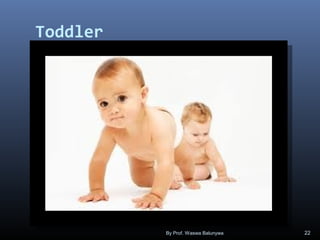
Toddler
By Prof. Waswa Balunywa 22
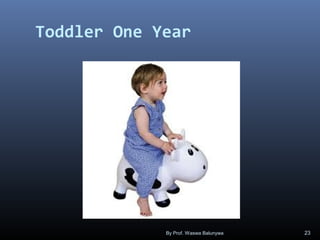
Toddler One Year
By Prof. Waswa Balunywa 23
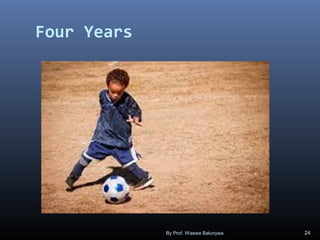
Four Years
By Prof. Waswa Balunywa 24
Active- Eight Years
By Prof. Waswa Balunywa 25
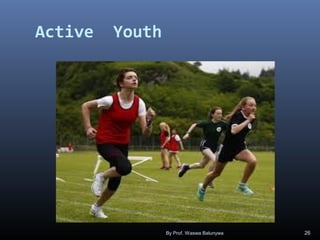
Active Youth
By Prof. Waswa Balunywa 26
Executive
By Prof. Waswa Balunywa 27
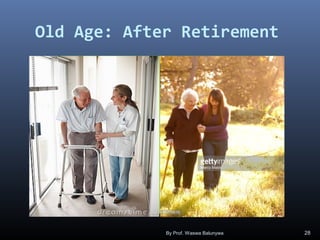
Old Age: After Retirement
By Prof. Waswa Balunywa 28
Retirement Home
By Prof. Waswa Balunywa 29

Re engaging After Retirement (1)

  • 1.
  • 2.
    Questions  When doesone retire?  What does one do after retirement?  How do you prepare for retirement?  What are the choices?  How to actually do it? By Prof. Waswa Balunywa 2
  • 3.
    When Does OneRetire?  On ready retirement age as per law  On getting to stage of diminishing returns  When successors are in place  When he makes enough money!?  No age limit By Prof. Waswa Balunywa 3
  • 4.
    What is Retirement? A shift from one type of activity to another  Appropriate when one ceases to contribute effectively to one type of engagement  Retirement is Re-engagement  When successors are ready to take over  Reducing own workload and speed  No need to stop working By Prof. Waswa Balunywa 4
  • 5.
    What is Re-engagement? Switch from one job to another.  One needs not retire entirely.  One needs to be engaged in something.  Doing non-strangeous activities By Prof. Waswa Balunywa 5
  • 6.
    Different types ofRe- engagement The choices 1. Re-engagement on reaching a compulsory retirement age 2. Planned Re-engagement on making sufficient income 3. Forced Re-engagement By Prof. Waswa Balunywa 6
  • 7.
    Challenges  Illness  Decliningincome  Death of spouse  Living too lonely  Problem with children/ By Prof. Waswa Balunywa 7
  • 8.
    How to Overcome? Plan  Save By Prof. Waswa Balunywa 8
  • 9.
    Cultural Setting  Africanfamilies still extended family system.  Western countries have nuclear family. When children grow they go away.  African families still have family support.  Looking after elderly  Elderly look after children's’ home By Prof. Waswa Balunywa 9
  • 10.
    Re-engagement on Reachinga Compulsory Retirement Age a) Civil service retirement i) Sit home with a pension ii) A pension with a business iii) A pension in the extended family support iv) A pension with creative wealth support By Prof. Waswa Balunywa 10
  • 11.
    b) Non-Civil serviceretirement  Depends on extended family  Depends on accumulated wealth  Work to death  A combination of any of the above By Prof. Waswa Balunywa 11
  • 12.
    Planning for Re-engagement  Important to recognize retirement as re- engagement  Plan early in life  Save to ensure finacial independence  Take insurance where meaningful  Rich dad poor dad way. Create wealth  Plan for a business activity By Prof. Waswa Balunywa 12
  • 13.
    a) Important torecognize retirement as re-engagement  Life is a cycle, from childhood back to childhood.  In each cycle you are either supported or you support yourself  Each cycle is an engagement, childhood, student, work.  There is always decline and possibly decay By Prof. Waswa Balunywa 13
  • 14.
    b) Plan earlyin life  Evolve life goals and adjust them with time.  Follow your brains and your heart.  Look to the future and plan back to the present.  Visualize the various stages of your life.  Support the different stages with necessary energy and resources. By Prof. Waswa Balunywa 14
  • 15.
    Save  Do notspend more than you can  Put some money aside however little  Never borrow unless you are sure of your cash flows  Or borrow to be leverage situations other than inflation  Your savings today will be of great help in your re-engagement stage By Prof. Waswa Balunywa 15
  • 16.
    Take Insurance  Undergood financial circumstances take an insurance.  An insurance is a savings you will definitely need the money By Prof. Waswa Balunywa 16
  • 17.
    Rich dad poordad way  Do not look for money, look for wealth  Buy and sell property  Borrow to buy property for sale  Buy shares in the company  In conclusion you will earn while seated By Prof. Waswa Balunywa 17
  • 18.
    Doing business after retirement Issues You are a spent force by that time possibly in decline stage  Resources have competing needs  Very costly health conditions  None the less you can always start By Prof. Waswa Balunywa 18
  • 19.
    Starting and runningbusiness in the decline stage of life Establish a need in the market  Think through the idea Can it be produced? What is its price? Can it be sold? How to sell it?  Discuss idea with experts  Prepare a business plan  Do you have the necessary funds By Prof. Waswa Balunywa 19
  • 20.
    Start the business Mobilize finances  Register the business  Acquire relevant premises/ equipment  Take necessary action to create value By Prof. Waswa Balunywa 20
  • 21.
    Issues/ what towatch out for.  Do not hire people you cannot fire  Do not borrow  Don’t spend more than 25% of your accumulated earnings  One step at a time  Bite what you can chew  Location is important By Prof. Waswa Balunywa 21
  • 22.
  • 23.
    Toddler One Year ByProf. Waswa Balunywa 23
  • 24.
    Four Years By Prof.Waswa Balunywa 24
  • 25.
    Active- Eight Years ByProf. Waswa Balunywa 25
  • 26.
    Active Youth By Prof.Waswa Balunywa 26
  • 27.
  • 28.
    Old Age: AfterRetirement By Prof. Waswa Balunywa 28
  • 29.
    Retirement Home By Prof.Waswa Balunywa 29