Design of Reinforced Cement
Concrete Structure
(3-2-1)
Course Contents
1. Introduction
2. Design Methods
3. Limit state Design for Beam and Slabs
4. Limit State Design for Columns and Footings
5. Design and Detailing of Miscellaneous Structure
Introduction
1.1 Limitation of Plain Concrete
1.2 Properties of Reinforcement and concrete
1.3 Analysis of forces and stresses in reinforced concrete structure
1.1 Limitation of Plain Concrete
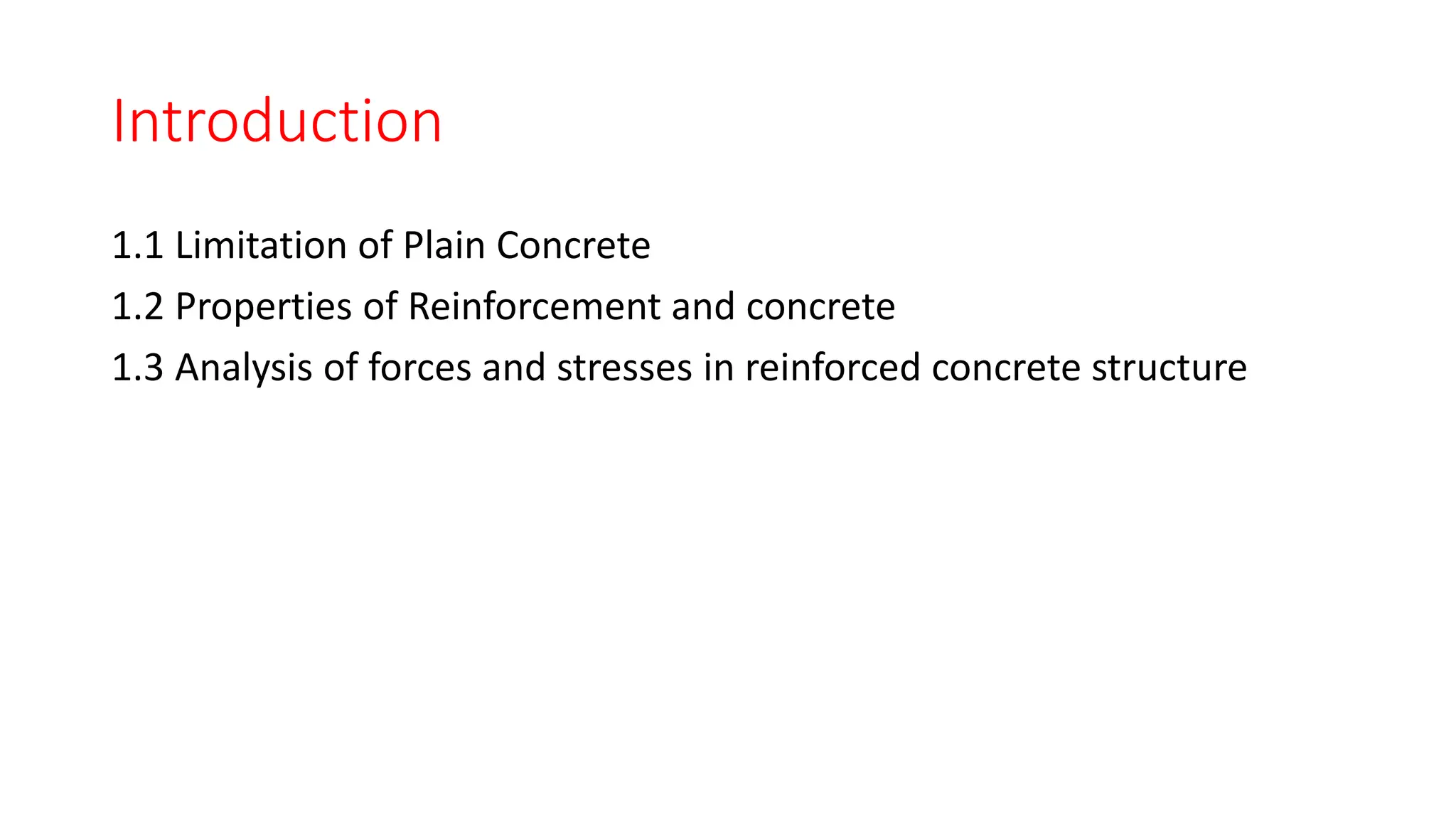
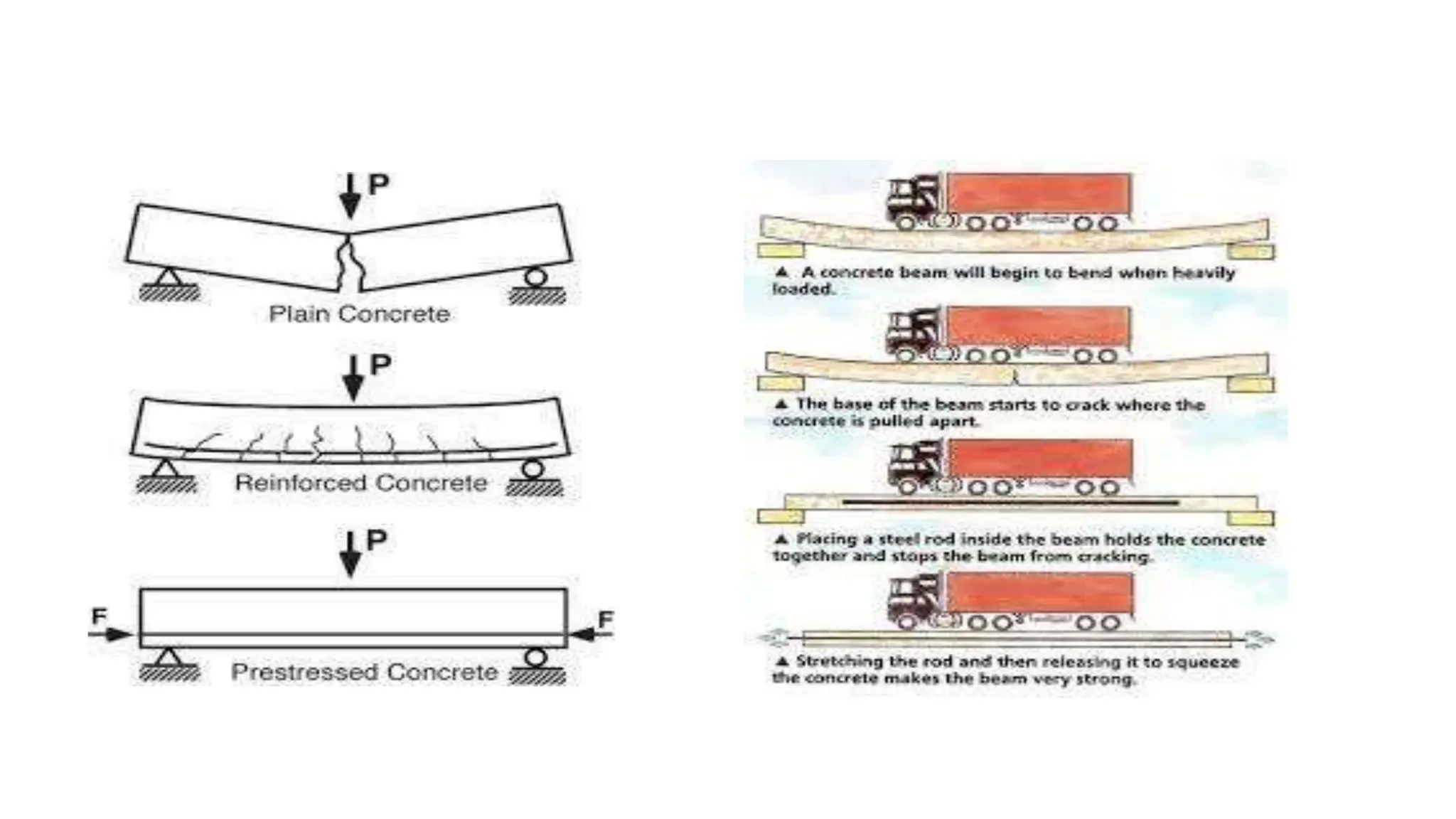
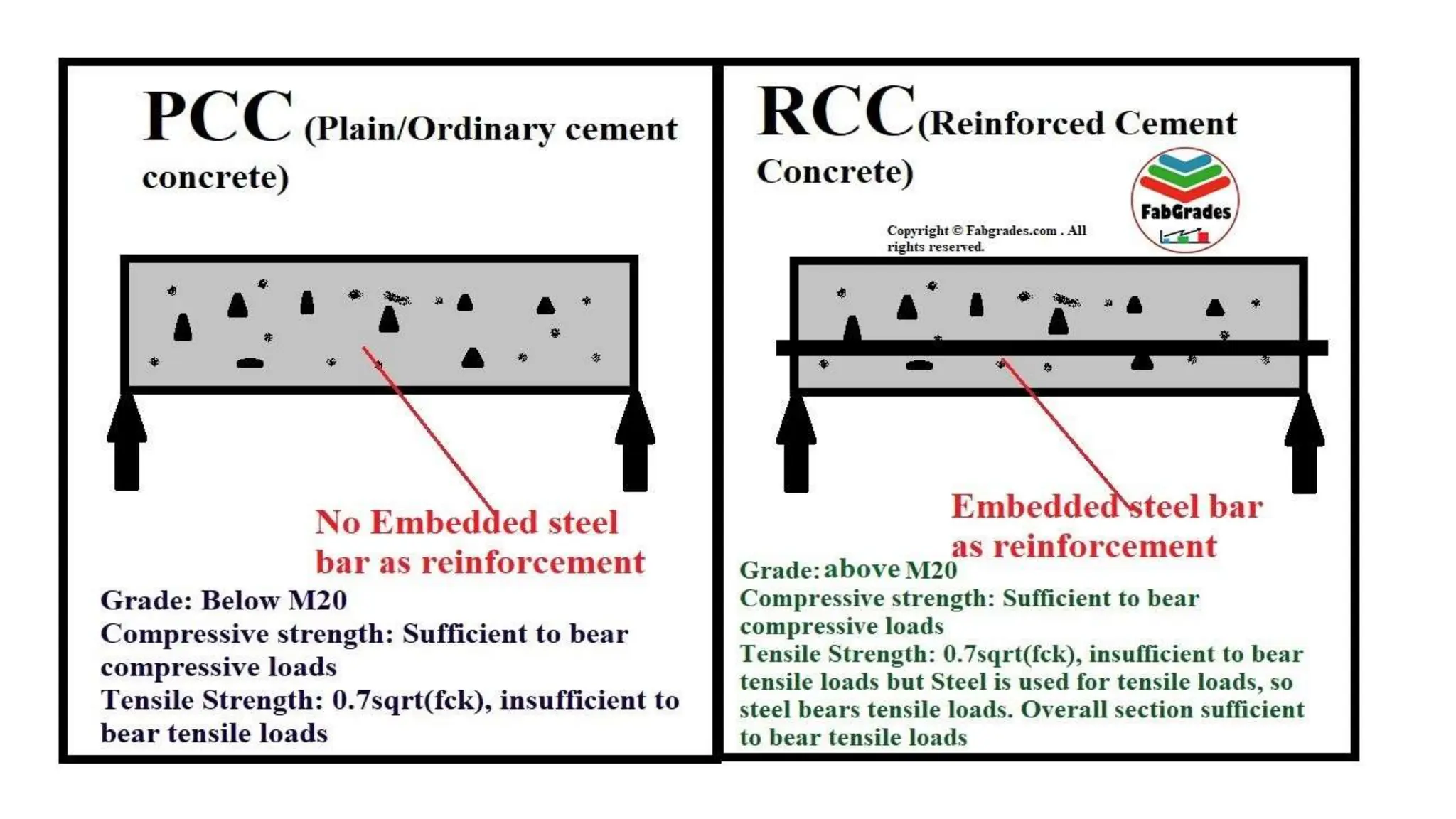
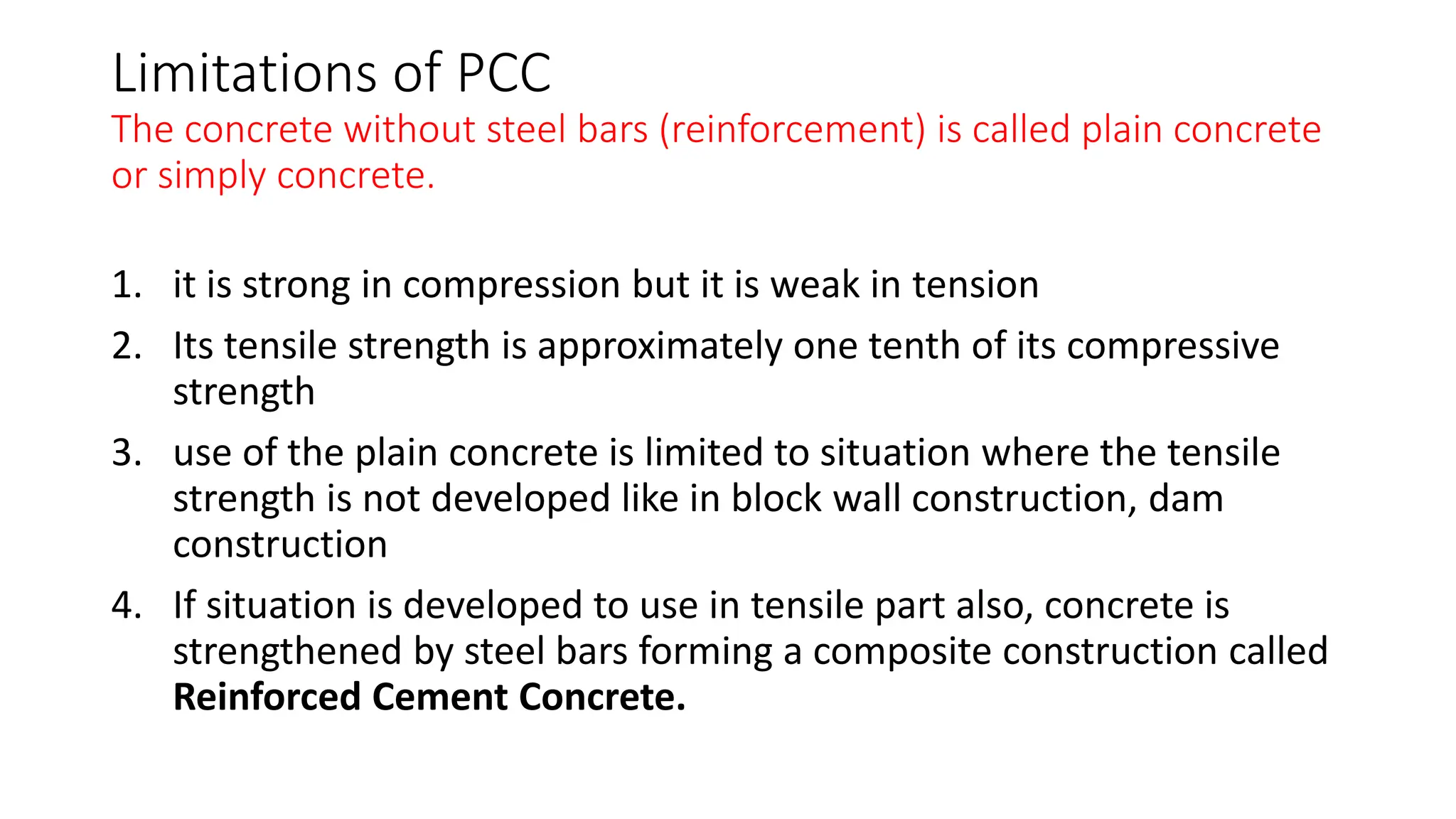
Limitations of PCC
The concrete without steel bars (reinforcement) is called plain concrete
or simply concrete.
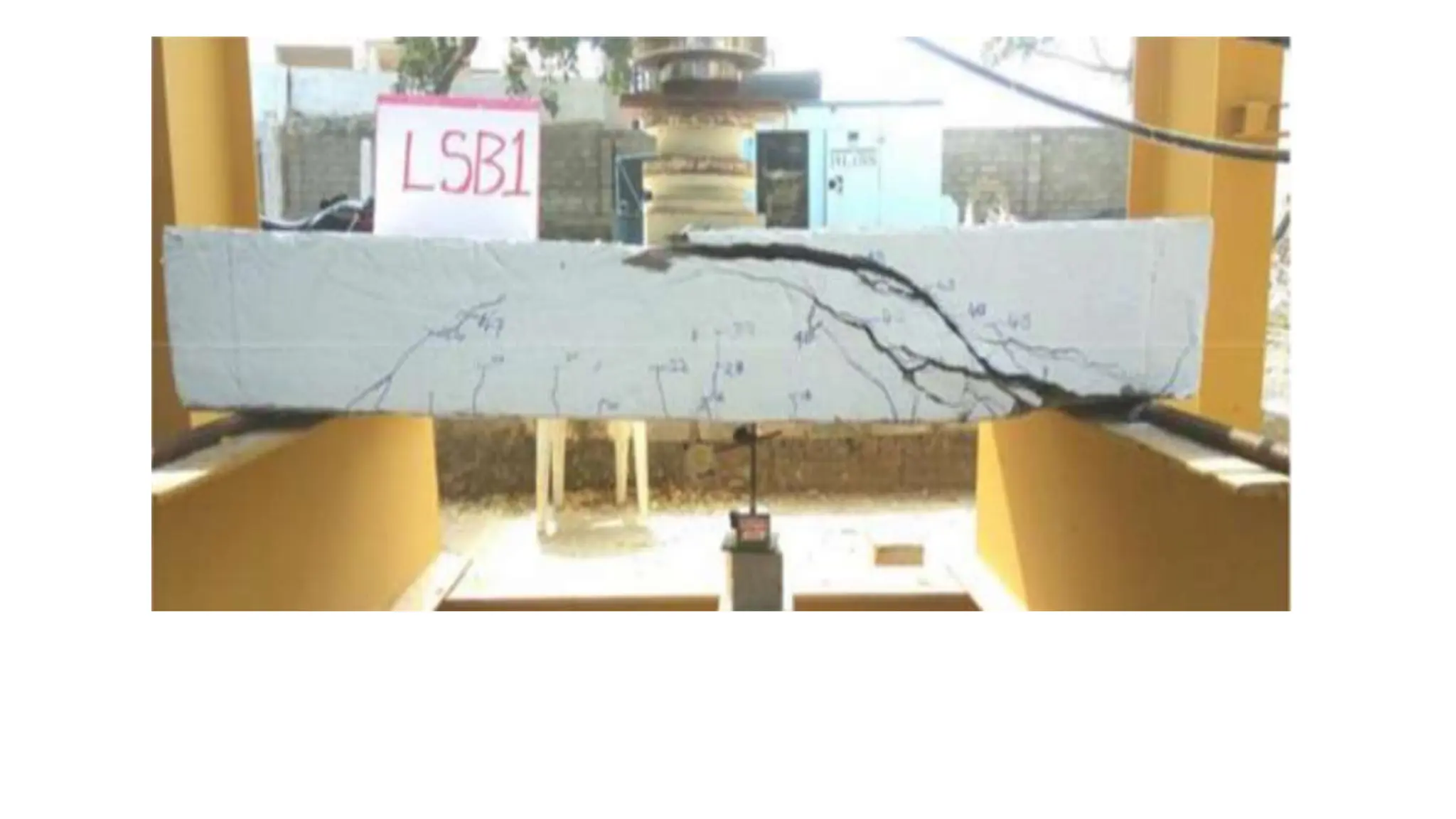
1. it is strong in compression but it is weak in tension
2. Its tensile strength is approximately one tenth of its compressive
strength
3. use of the plain concrete is limited to situation where the tensile
strength is not developed like in block wall construction, dam
construction
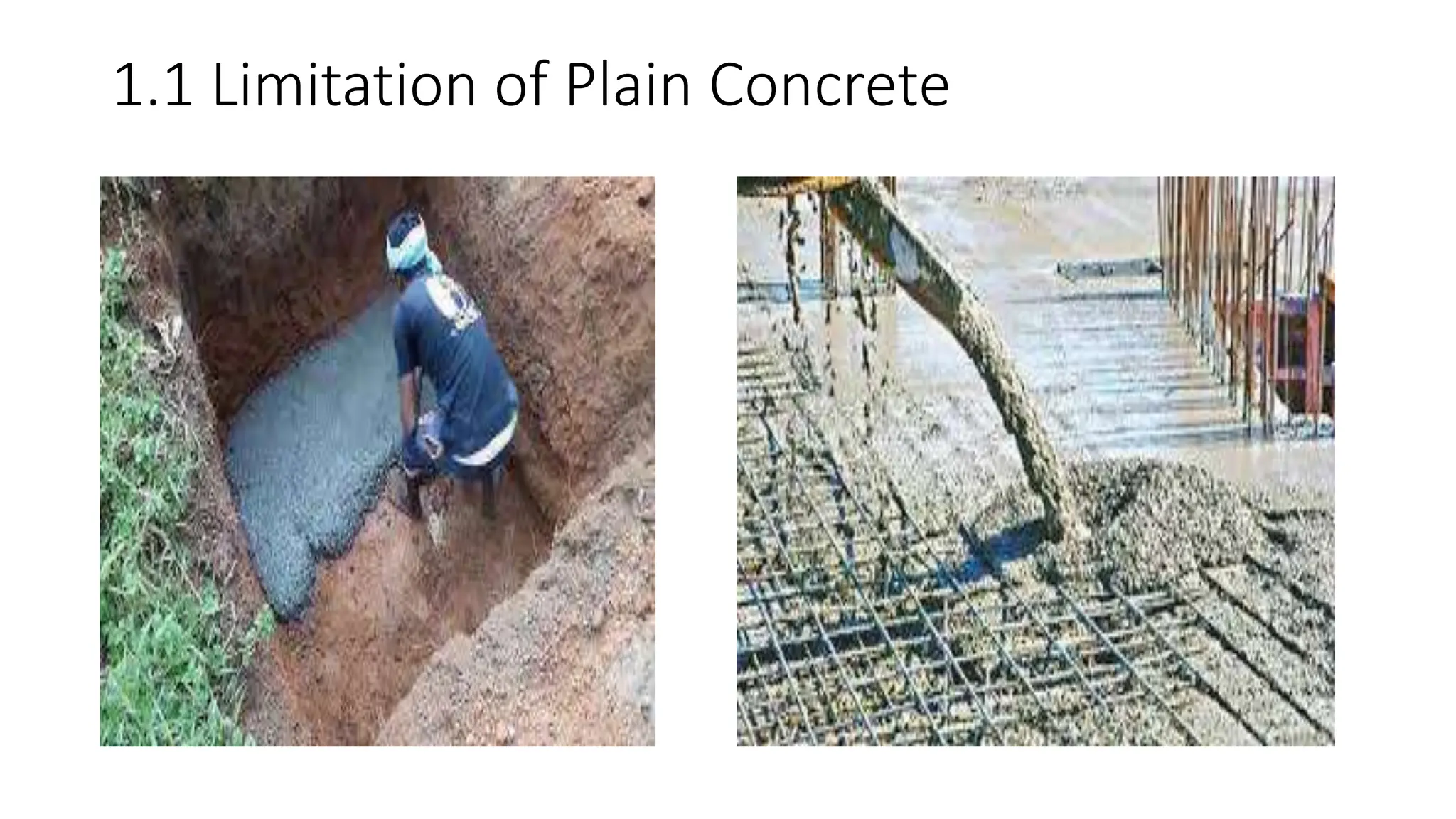
4. If situation is developed to use in tensile part also, concrete is
strengthened by steel bars forming a composite construction called
Reinforced Cement Concrete.
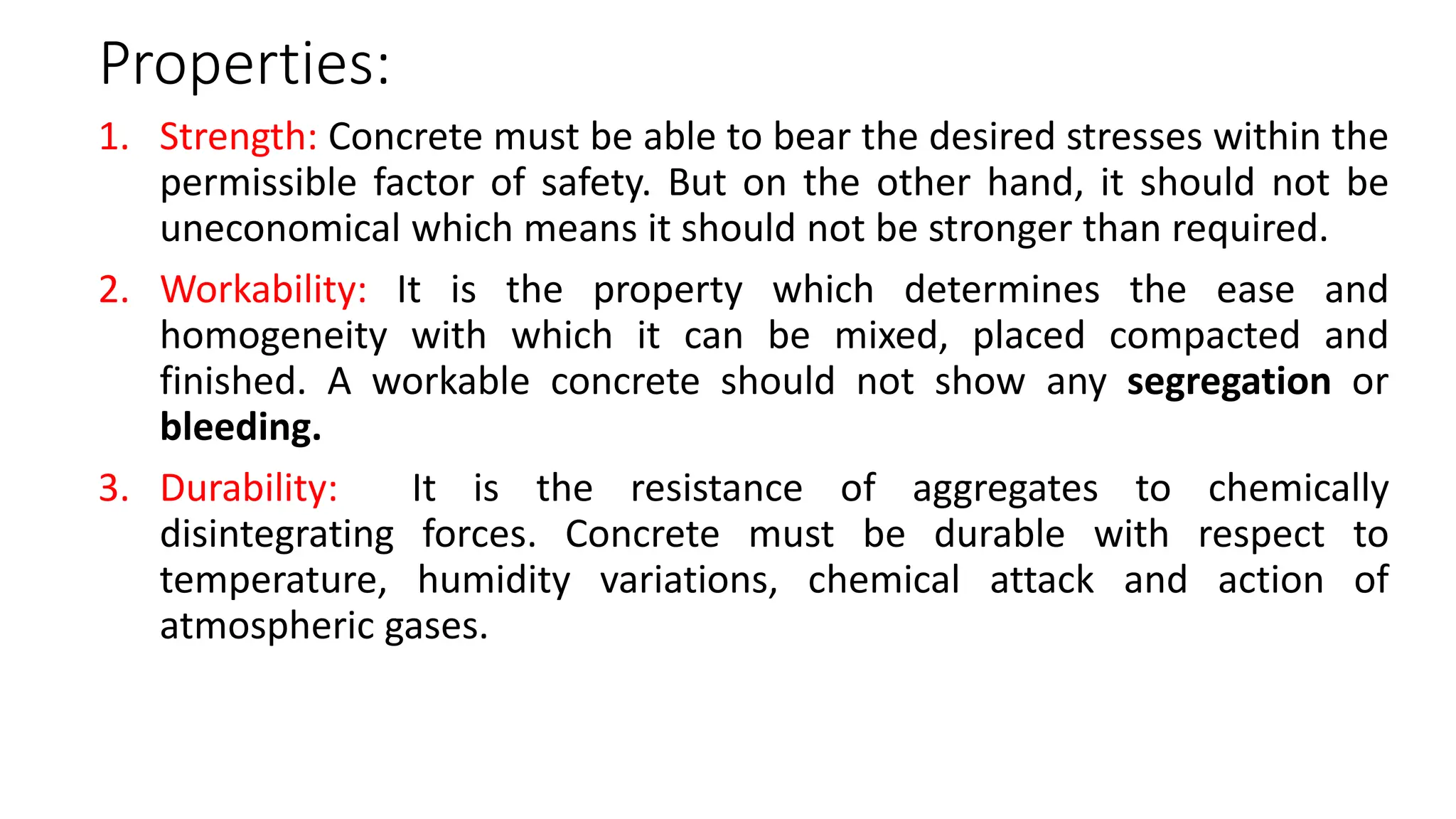
Properties:
1. Strength: Concrete must be able to bear the desired stresses within the
permissible factor of safety. But on the other hand, it should not be
uneconomical which means it should not be stronger than required.
2. Workability: It is the property which determines the ease and
homogeneity with which it can be mixed, placed compacted and
finished. A workable concrete should not show any segregation or
bleeding.
3. Durability: It is the resistance of aggregates to chemically
disintegrating forces. Concrete must be durable with respect to
temperature, humidity variations, chemical attack and action of
atmospheric gases.
• Modulus of elasticity of Concrete
• Compressive stress or strength
• Tensile strength of concrete
• Shear stress in concrete
• Creep
• Shrinkage
• Stress strain behavior of concrete
Stages of Design Process:
•Structural Planning
•Preliminary Design
•Modeling of the Structure
and loads
Notes:
• The popularity of concrete is due to easily available ingredient
materials and easy work and to meet the demands of any particular
situation.
• It is highly durable and resistant to water, easy to cast into variety of
shape and size and easily available material
• The advanced concrete technology helps to use locally available
materials in proper workmanship, so as to produce concrete
satisfying performance requirements.
RCC 1st.pptx Design of Reinforced Cement Concrete Structures

RCC 1st.pptx Design of Reinforced Cement Concrete Structures

  • 1.
    Design of ReinforcedCement Concrete Structure (3-2-1)
  • 2.
    Course Contents 1. Introduction 2.Design Methods 3. Limit state Design for Beam and Slabs 4. Limit State Design for Columns and Footings 5. Design and Detailing of Miscellaneous Structure
  • 3.
    Introduction 1.1 Limitation ofPlain Concrete 1.2 Properties of Reinforcement and concrete 1.3 Analysis of forces and stresses in reinforced concrete structure
  • 4.
    1.1 Limitation ofPlain Concrete
  • 7.
    Limitations of PCC Theconcrete without steel bars (reinforcement) is called plain concrete or simply concrete. 1. it is strong in compression but it is weak in tension 2. Its tensile strength is approximately one tenth of its compressive strength 3. use of the plain concrete is limited to situation where the tensile strength is not developed like in block wall construction, dam construction 4. If situation is developed to use in tensile part also, concrete is strengthened by steel bars forming a composite construction called Reinforced Cement Concrete.
  • 8.
    Properties: 1. Strength: Concretemust be able to bear the desired stresses within the permissible factor of safety. But on the other hand, it should not be uneconomical which means it should not be stronger than required. 2. Workability: It is the property which determines the ease and homogeneity with which it can be mixed, placed compacted and finished. A workable concrete should not show any segregation or bleeding. 3. Durability: It is the resistance of aggregates to chemically disintegrating forces. Concrete must be durable with respect to temperature, humidity variations, chemical attack and action of atmospheric gases.
  • 9.
    • Modulus ofelasticity of Concrete • Compressive stress or strength • Tensile strength of concrete • Shear stress in concrete • Creep • Shrinkage • Stress strain behavior of concrete
  • 10.
    Stages of DesignProcess: •Structural Planning •Preliminary Design •Modeling of the Structure and loads
  • 11.
    Notes: • The popularityof concrete is due to easily available ingredient materials and easy work and to meet the demands of any particular situation. • It is highly durable and resistant to water, easy to cast into variety of shape and size and easily available material • The advanced concrete technology helps to use locally available materials in proper workmanship, so as to produce concrete satisfying performance requirements.