SABARIGIRI 
COLLEGE OF EDUCATION 
Anchal 
Presented by 
RATHEESH.R. 
Option : Natural Science 
Reg.No: 13379014
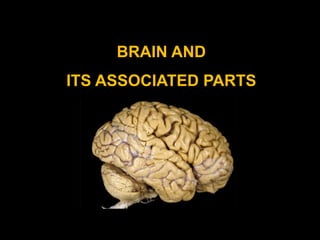
BRAIN AND 
ITS ASSOCIATED PARTS
INTRODUCTION 
The brain and the spinal cord are the important 
parts of the nervous system.The brain is situated 
inside a bony cranium. 
The brain is covered by three layers. They 
are called meninges. Meninges serve the 
function of protection of brain and of providing 
nutrients and oxygen to brain tissue through 
their capillaries. Cerebrospinal fluid (CSF) fills 
the cavity between these layers.
PARTS OF A BRAIN 
1.Cerebrum 
2.Cerebellum 
3. Medulla oblongata 
4.Thalamus 
5.Hypothalamus 
6.Pons 
7.Corpus Callosum
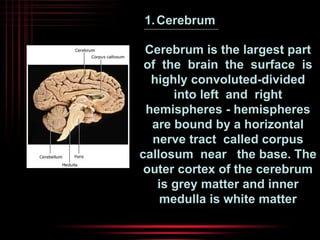
1.Cerebrum 
Cerebrum is the largest part 
of the brain the surface is 
highly convoluted-divided 
into left and right 
hemispheres - hemispheres 
are bound by a horizontal 
nerve tract called corpus 
callosum near the base. The 
outer cortex of the cerebrum 
is grey matter and inner 
medulla is white matter
Functions 
Centre of consciousness 
thorough, imagination, memory, 
analytical thinking 
Awareness of vision, hearing 
,smell taste, touch, heat etc. 
Control of voluntary action
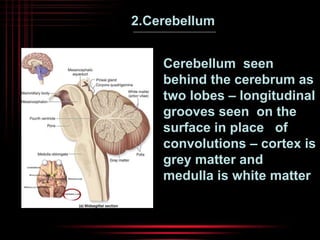
2.Cerebellum 
Cerebellum seen 
behind the cerebrum as 
two lobes – longitudinal 
grooves seen on the 
surface in place of 
convolutions – cortex is 
grey matter and 
medulla is white matter
Functions 
Maintains balance and equilibrium 
of body 
Coordinates muscular activities and 
impulses for this come from 
cerebrum
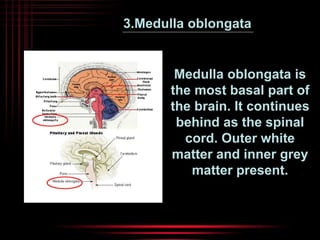
3.Medulla oblongata 
Medulla oblongata is 
the most basal part of 
the brain. It continues 
behind as the spinal 
cord. Outer white 
matter and inner grey 
matter present.
Functions 
Controls heart beat, breathing 
contraction of blood vessels, 
gastrointestinal movements 
vomiting, sneezing coughing 
and other involuntary 
activities.
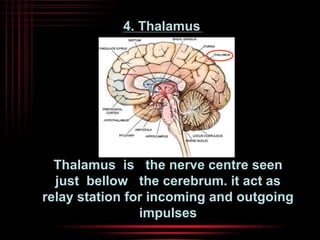
4. Thalamus 
Thalamus is the nerve centre seen 
just bellow the cerebrum. it act as 
relay station for incoming and outgoing 
impulses
Functions 
Relays transmission of impulses to 
the cerebrum and from the 
cerebrum. 
Prevents passage of many of the 
impulses to cerebrum during sleep. 
Narcotics influence the thalamus 
and thus prevents the passage of 
pain impulses to cerebrum.
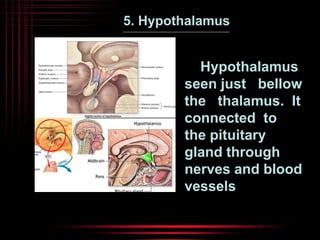
5. Hypothalamus 
Hypothalamus 
seen just bellow 
the thalamus. It 
connected to 
the pituitary 
gland through 
nerves and blood 
vessels
Functions 
Maintains homeostasis by regulating 
the body temperature, water level etc. 
Centre of thirst, hunger sexual drive etc 
Production of hormones oxytocin and 
vasopressin. 
Controls the secretion of pituitary 
hormones 
Helps to maintain the normal 
constitution of blood.
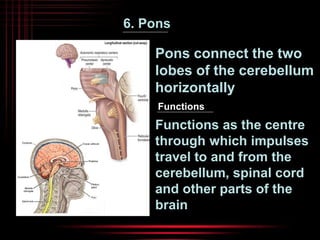
6. Pons 
Pons connect the two 
lobes of the cerebellum 
horizontally 
Functions 
Functions as the centre 
through which impulses 
travel to and from the 
cerebellum, spinal cord 
and other parts of the 
brain
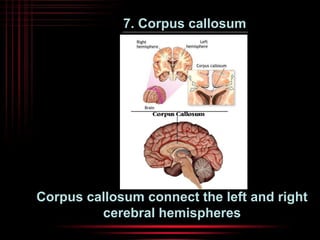
7. Corpus callosum 
Corpus callosum connect the left and right 
cerebral hemispheres
Ratheesh Powerpoint Presentation

Ratheesh Powerpoint Presentation

  • 2.
    SABARIGIRI COLLEGE OFEDUCATION Anchal Presented by RATHEESH.R. Option : Natural Science Reg.No: 13379014
  • 3.
    BRAIN AND ITSASSOCIATED PARTS
  • 4.
    INTRODUCTION The brainand the spinal cord are the important parts of the nervous system.The brain is situated inside a bony cranium. The brain is covered by three layers. They are called meninges. Meninges serve the function of protection of brain and of providing nutrients and oxygen to brain tissue through their capillaries. Cerebrospinal fluid (CSF) fills the cavity between these layers.
  • 5.
    PARTS OF ABRAIN 1.Cerebrum 2.Cerebellum 3. Medulla oblongata 4.Thalamus 5.Hypothalamus 6.Pons 7.Corpus Callosum
  • 6.
    1.Cerebrum Cerebrum isthe largest part of the brain the surface is highly convoluted-divided into left and right hemispheres - hemispheres are bound by a horizontal nerve tract called corpus callosum near the base. The outer cortex of the cerebrum is grey matter and inner medulla is white matter
  • 7.
    Functions Centre ofconsciousness thorough, imagination, memory, analytical thinking Awareness of vision, hearing ,smell taste, touch, heat etc. Control of voluntary action
  • 8.
    2.Cerebellum Cerebellum seen behind the cerebrum as two lobes – longitudinal grooves seen on the surface in place of convolutions – cortex is grey matter and medulla is white matter
  • 9.
    Functions Maintains balanceand equilibrium of body Coordinates muscular activities and impulses for this come from cerebrum
  • 10.
    3.Medulla oblongata Medullaoblongata is the most basal part of the brain. It continues behind as the spinal cord. Outer white matter and inner grey matter present.
  • 11.
    Functions Controls heartbeat, breathing contraction of blood vessels, gastrointestinal movements vomiting, sneezing coughing and other involuntary activities.
  • 12.
    4. Thalamus Thalamusis the nerve centre seen just bellow the cerebrum. it act as relay station for incoming and outgoing impulses
  • 13.
    Functions Relays transmissionof impulses to the cerebrum and from the cerebrum. Prevents passage of many of the impulses to cerebrum during sleep. Narcotics influence the thalamus and thus prevents the passage of pain impulses to cerebrum.
  • 14.
    5. Hypothalamus Hypothalamus seen just bellow the thalamus. It connected to the pituitary gland through nerves and blood vessels
  • 15.
    Functions Maintains homeostasisby regulating the body temperature, water level etc. Centre of thirst, hunger sexual drive etc Production of hormones oxytocin and vasopressin. Controls the secretion of pituitary hormones Helps to maintain the normal constitution of blood.
  • 16.
    6. Pons Ponsconnect the two lobes of the cerebellum horizontally Functions Functions as the centre through which impulses travel to and from the cerebellum, spinal cord and other parts of the brain
  • 17.
    7. Corpus callosum Corpus callosum connect the left and right cerebral hemispheres