
RAPID ROUTES
TO SCALE
SCALING UP PRIMARY CARE TO
IMPROVE HEALTH IN LOW AND
MIDDLE INCOME COUNTRIES
December 2014
Rapid routes to scaleRapid routes to scale
About the Rapid Routes to Scale Group
Rapid Routes to Scale is a unique group of stakeholders from the academic,
social and private sectors, committed to ensuring poorer people have better
health by understanding how primary care can be scaled and acting upon it.
This report has been created and funded by:
	 Bill and Melinda Gates Foundation
	 Center for Health Market Innovations
	 International Centre for Social Franchising
	GlaxoSmithKline
	 International Partnership for Innovative Healthcare Delivery
	 Merck & Co
	 Merck Serono
	 Novo Nordisk
	 T-HOPE, University of Toronto
Acknowledgements
The authors would like to thank all those interviewed for being so generous
with their time and insights. Particular thanks go to IPIHD and R4D for the
extensive time, energy and expertise that they put into their advisory role.
T-HOPE would also like to thank Daniela Graziano, Stephen Pomedli, Ilan
Shahin, Raman Sohal, and Diane Wu for assisting with the research.
Disclaimer
Except where specifically attributed, all opinions, statements and
conclusions are those of the authors and not of any interviewee. Due
care has been taken in researching and analysing the information herein
but does not assume any liability for the accuracy or completeness of
the information. The material in this report may be quoted and used
provided it is properly attributed.
Authors
Onil Bhattacharyya – Principal Investigator
Will Mitchell – Principal Investigator
Anita McGahan – Principal Investigator
Kate Mossman – Research Coordinator
Leigh Hayden – Research Manager
Jason Sukhram – Research Associate
David Leung – Research Associate
Dan Berelowitz – CEO
Jackie Horn – Project Director
Martha Paren – Manager
Matthew Towner – Consultant
Foreword
As Ebola ravages the west coast of Africa, almost never has there been
a time when the failure of primary care health systems has been so
starkly illustrated, and so devastating. The tragedy of poor primary care
is not only impacting on health but also livelihoods, stopping millions
contributing to the betterment of the societies they live in. This is not
a failure of medicine, it is a failure of organization; an inability to scale
primary care systems.
Frustratingly, private, public and social sector organizations seem to have
the ability to reinvent the wheel continuously, pouring time and money
into new programs that meet a commercial and social need when so
often this work has already been done. Yet there are examples of primary
care scaling successfully that can be learnt from, developed, copied and/
or adapted.
We know that no one primary care organisation can scale up alone. To
successfully scale takes an ecosystem of support. This is why the Rapid
Routes to Scale group have come together to understand what makes
primary care scale, and to take action. I am proud to be working with
such a uniquely placed and diverse group of organizations. The Rapid
Routes to Scale group hope that this research will help you scale up
primary care, no matter what your role in the ecosystem is, to make lives
healthier and better for those who need it most.
Dan Berelowitz,
Chief Executive ICSF
Rapid routes to scale
1
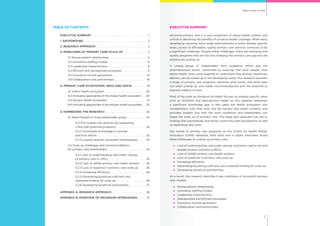
TABLE OF CONTENTS
EXECUTIVE SUMMARY. . . . . . . . . . . . . . . . . . . . . . . . . . . . . . . . . . . . . . . 1
1. BACKGROUND. . . . . . . . . . . . . . . . . . . . . . . . . . . . . . . . . . . . . . . . . . . . . 2
2. RESEARCH APPROACH. . . . . . . . . . . . . . . . . . . . . . . . . . . . . . . . . . . . 3
3. MOBILIZERS OF PRIMARY CARE SCALE UP. . . . . . . . . . . . . . . . . . 3
3.1 Strong patient relationships. . . . . . . . . . . . . . . . . . . . . . . . . . . 4
3.2 Innovative staffing models. . . . . . . . . . . . . . . . . . . . . . . . . . . . 6
3.3 Leadership characteristics. . . . . . . . . . . . . . . . . . . . . . . . . . . . 9
3.4 Efficient and standardized processes . . . . . . . . . . . . . . . . .  11
3.5 Innovative income generation. . . . . . . . . . . . . . . . . . . . . . . . 14
3.6 Collaboration and partnerships. . . . . . . . . . . . . . . . . . . . . . . 16
4. PRIMARY CARE ECOSYSTEMS: INDIA AND KENYA . . . . . . . . . . 19
4.1 India’s health ecosystem. . . . . . . . . . . . . . . . . . . . . . . . . . . .  20
4.2 Innovative approaches in the Indian health ecosystem. . .  20
4.3 Kenya’s health ecosystem. . . . . . . . . . . . . . . . . . . . . . . . . . . . 21
4.4 Innovative approaches in the Kenyan health ecosystem. . . 22
5. HARNESSING THE RESEARCH. . . . . . . . . . . . . . . . . . . . . . . . . . . . . 23
5.1 Rapid Routes to Scale stakeholder group. . . . . . . . . . . . .  24
5.1.1 Put insights into practice by supporting
a few high potential programs. . . . . . . . . . . . . . . . . . . . .  24
5.1.2 Consolidate knowledge to provide
practical advice. . . . . . . . . . . . . . . . . . . . . . . . . . . . . . . . . .  24
5.1.3 Location specific ecosystem development . . . . .  24
5.2 Scale up challenges and recommendations
for primary care stakeholders . . . . . . . . . . . . . . . . . . . . . . . . . .  24
5.2.1 Lack of understanding, and under valuing,
of primary care in LMICs. . . . . . . . . . . . . . . . . . . . . . . . . . . 25
5.2.2 Lack of skilled primary care health workers. . . . . 25
5.2.3 Lack of expertise in primary care scale up. . . . .  26
5.2.4 Increasing efficiency . . . . . . . . . . . . . . . . . . . . . . . .  26
5.2.5 Generating/accessing sufficient and
sustained funding for scale up. . . . . . . . . . . . . . . . . . . . .  26
5.2.6 Developing beneficial partnerships. . . . . . . . . . . . . 27
APPENDIX A: RESEARCH APPROACH . . . . . . . . . . . . . . . . . . . . . . . . 28
APPENDIX B: OVERVIEW OF PROGRAMS INTERVIEWED. . . . . . . 31
EXECUTIVE SUMMARY
We know primary care is a core component of robust health systems and
critical to delivering the benefits of universal health coverage. While many
developing countries have made improvements in some disease specific
areas, access to affordable, quality primary care services continues to be
a significant challenge. Despite these challenges, there are emerging and
quality programs that are not only bridging this primary care gap but are
ambitiously scaling up.
A unique group of stakeholders from academia, NGOs and the
pharmaceutical sector, committed to ensuring that poor people have
better health, have come together to understand how primary healthcare
delivery can be scaled up in the developing world. This research uncovers
a range of primary care programs, identifies what works, and what does
not when scaling up, and makes recommendations with the potential to
improve millions of lives.
Most of the scale up literature on health focuses on disease specific areas
such as HIV/AIDS and reproductive health so this research addresses
a significant knowledge gap. It also takes the health ecosystem into
consideration, with field visits into the Kenyan and Indian contexts, and
provides insights into how the local conditions and stakeholders can
shape the scale up of primary care. This deep dive approach has led to
findings that substantiate, and refute, commonly held assumptions, as well
as identifying new ones.
Our review of primary care programs on the Centre for Health Market
Innovation (CHMI) database, field visits and in depth interviews found
these challenges to scaling up primary care:
	 Lack of understanding, and under valuing, of primary care in low and
middle income countries (LMICs)
	 Lack of skilled primary care health workers
	 Lack of expertise in primary care scale up
	 Increasing efficiency
	 Generating/accessing sufficient and sustained funding for scale up
	 Developing beneficial partnerships
As a result, this research identifies 6 key mobilizers of successful primary
care models:
	 Strong patient relationships
	 Innovative staffing models
	 Leadership characteristics
	 Standardized and efficient processes
	 Innovative income generation
	 Collaboration and partnerships
Rapid routes to scaleRapid routes to scale
32
This Rapid Routes to Scale stakeholder group was convened with the
specific intention of turning research into action. For each of the primary
care challenges, we have developed actionable recommendations for
health ecosystem stakeholders to address collaboratively, such as building
relationships with patients and relevant partners, developing appropriate
staffing innovations, providing management support for leadership,
facilitating the implementation of efficient processes and new technologies,
and supporting innovative and impactful primary care programs. We have
also identified a number of specific actions that the Rapid Routes to
Scale stakeholder group can pursue to support the scale up of primary
care programs, including putting insights into practice by selecting and
supporting a few high potential programs, consolidating knowledge to
provide practical advice, and location specific ecosystem development.
While primary care scale up is complex and challenging, the research
shows that with the right approach, donors, investors, policy makers,
researchers, and programs themselves can harness their collective impact
to help scale up primary care for those who need it most.
1. BACKGROUND
Strong primary care systems are associated with improved health
outcomes, increased access to appropriate services and reduced health
inequities.1, 2, 3
Despite this, the delivery of primary care is poorly developed
in many LMICs. Primary care works best when it is the first point of contact
with the health system, is comprehensive, provides care across the life
course and connects patients with other levels of care as required.4
Many innovative private primary care programs are emerging in LMICs
with the potential to increase access to, and the quality of, health services.5
However, few have achieved substantial scale. Scale is the process of
expanding coverage of primary care delivery to increase health impact. For
our purposes, scale up involves increasing the number of people served,
geographies covered, and/or services provided. Our research aimed to
identify innovative primary care models in LMICs, identify critical factors that
impact an innovative program’s ability to scale up, and examine the role of
the health ecosystem, including local stakeholders and contextual factors, in
shaping primary care scale up.
2. RESEARCH APPROACH
The research involved a review of over 100 documents from the academic
and grey literature on primary care and scale up, a review of 465 innovative
primary care programs in the CHMI database and in depth interviews and
field visits with 37 primary care programs and 12 primary care and scale up
experts. A more detailed discussion of the research methods can be found
in Appendix A. Appendix B provides an overview of programs interviewed
for this study.
3. MOBILIZERS OF PRIMARY CARE SCALE UP
While scaling up primary care is important for improving access to
essential curative and preventative health services, our research found that
there are characteristics of primary care that make it inherently difficult
to scale. These include a lack of demand for primary care services from
LMIC populations, difficulty attracting an already scarce supply of health
workers, and low margins that make it challenging to sustain operations
and expand. These are essentially management problems, pointing to the
need for programs to successfully manage supply and demand within a
health ecosystem to achieve scale.
Through this study, we found a number of program activities that promote
scale up of primary care programs. We have organized these factors into 6
key mobilizers that facilitate scale up. Within these 6 mobilizers, we found
that specific scale up factors fall into 2 broad groupings:
	 Scale catalysts (differentiators): Activities described as beneficial
for scale up. Our analysis found that programs with these features,
sometimes alone and sometimes in combination, are statistically
more likely to be successfully scaling than programs without these
features.
	 Scale promoters (contributors): Activities described by programs as
helpful for scale up. Programs that are scaling successfully, and some
of those that are not, have these features. These activities contribute
to the ability of a program to achieve its basic goals, but were not
found to differentiate programs that are scaling successfully from
those that are not.
1
   Starfield, B., Shi, L., Macinko, J. (2005) Contri-
bution of primary care to health systems and
health. The Milbank Quarterly 83(3): 457-502.
2
   Beasley, J.W., Starfield, B., van Weel, C., Rosser,
W.W., Haq, C.L. (2007) Global health and prima-
ry care research. Journal of the American Board
of Family Medicine 20: 518 –526.
3
   Kepp, M. (2008) Cracks appear in Bra-
zil's primary health-care programme. Lancet
372(9642): 372.
4
   Starfield, B., Shi, L., Macinko, J. (2005) Con-
tribution of primary care to health systems and
health. The Milbank Quarterly 83(3): 457-502.
5
   Bloom, G., Ainsworth, P. (2010) Beyond scal-
ing up: pathways to universal access to health
services, STEPS Working Paper 40. Brighton:
STEPS Centre.
Rapid routes to scaleRapid routes to scale
54
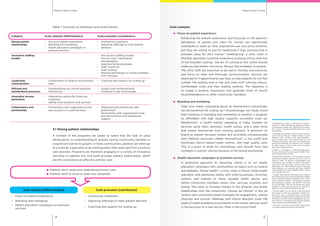
Table 1: Summary of Mobilizers and Scale Factors
3.1 Strong patient relationships
A number of the programs we spoke to noted that the lack of value
attributed to, or understanding of, primary care by community members is
a significant barrier to growth. In many communities, patients will often go
to a chemist, a specialist or do nothing rather than seek care from a primary
care provider. Programs are therefore engaging in a variety of innovative
activities to address this and build provider patient relationships, which
are the cornerstone of effective primary care.
Category Scale catalysts (differentiators) Scale promoters (contributors)
Strong patient
relationships
-	 Focus on patient experience
-	 Branding and marketing
-	 Health education campaigns to
promote services
-	 Community mobilizers
-	 Adjusting offerings to meet patient
demand
Innovative staffing
models
-	 Non doctor staffing models
-	 Doctors from “alternative”
demographics
-	 Selective hiring processes
-	 Staff incentives
-	 Staff training
-	 Remote technology to connect patients
with clinicians
Leadership
characteristics
-	 Combination of medical and business
skills
-	 Coaching and support for scaling up
Efficient and
standardized processes
-	 Standardizing non clinical practices
-	Franchising
-	 Supply chain enhancements
-	 Investing in new technologies
Innovative income
generation
-	 Alternative options for financing
treatment
-	 Selling other products and services
Collaboration and
partnerships
-	 Partnerships with organizations that
give access to a customer base
-	 Alignment and partnership with
government
-	 Partnerships with organizations that
provide technical and operational
support
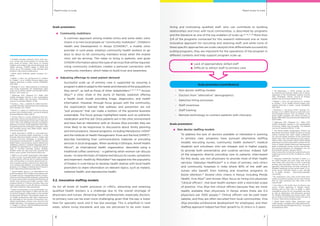
Scale catalysts (differentiators) Scale promoters (contributors)
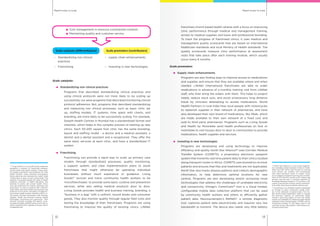
–	 Focus on patient experience –	 Community mobilizers
–	 Branding and marketing –	 Adjusting offerings to meet patient demand
–	 Health education campaigns to promote
services
–	 Coaching and support for scaling up
Patients don’t value and understand primary care
Patients tend to avoid or seek care elsewhere
Scale catalysts:
	 Focus on patient experience:
	 Enhancing the patient experience and focusing on the patient’s
perception of quality and value for money can significantly
contribute to scale up. Poor populations are very price sensitive,
but they are willing to pay for healthcare if they perceive that it
provides value for their money.6
Healthspring7
, a clinic chain in
Mumbai, describes customer experience as being critical, with one
of the founders stating, “the act of coming to the centre should
make you feel better, not worse. We put the emphasis on people.”
The clinic staff are expected to be warm, friendly, and punctual,
and focus on clear and thorough communication. Doctors are
restricted to 4 appointments per hour so that patients do not feel
rushed. The waiting area is tidy and clean with calming colours,
comfortable sofas and free reading material. The objective is
to create a positive impression and generate word of mouth
recommendations to other community members.
	 Branding and marketing
	 Clear and visible messaging about an intervention’s advantages
can be beneficial for scaling up.8
Unsurprisingly, our study found
that investing in branding and marketing to position a program
as affordable and high quality supports successful scale up.
MeraDoctor9
, a health hotline operating in India, markets its
services using radio, seminars, health camps, and a sales force
that shares testimonies from existing patients. It positions its
brand as patient focused, honest and providing compassionate
care. Patients associate LifeNet International10
, a non profit that
franchises church based health centres, with high quality care.
This is a point of pride for franchisees, who benefit from real
increases in patient volume because of this brand positioning.
	 Health education campaigns to promote services
	 A promising approach to attracting clients is to run health
education campaigns with communities on topics such as malaria
and diabetes. Penda Health11
, a clinic chain in Kenya, holds health
education and awareness events with small businesses, churches,
schools, and markets to share valuable health advice, and
inform community members about clinic services, locations and
timing. This helps to increase interest in the program and builds
relationships with the community. Clínicas da Família12
in Rio de
Janeiro uses community based strategies for engagement, visiting
churches and schools. Meetings with school directors cover the
types of health problems encountered in the school, and can result
in the provision of a new service, often in the school itself.
6
Berelowtiz, D., Horn, J., Thornton, A., Leeds, I.,
Wong, D. (2013) Identifying replicable health-
care delivery models with significant social ben-
efit. London: The International Centre for Social
Franchising.
7
Healthspring, started in 2011, provides primary
care services through 7 health centres around
Mumbai, each of which take approximately 1
year to break even. It provides access to cost
effective and timely care, with an emphasis on
preventive medicine. Its objective is to expand
to other parts of India in the next 4-5 years.
http://www.healthspring.in
8
Gilson, L., Schneider, H. (2010) Managing scal-
ing up: what are the key issues? Health Policy
and Planning 25(2): 97-98.
9
MeraDoctor, founded in 2011, provides a health
hotline and medical discount service in over 19
states in India. Its doctors, psychologists and
nutritionists are available by phone through a
call centre 24 hours a day, 7 days a week. It has
addressed over 400 different types of primary
care ailments and currently has over 40,000
clients eligible to call the health hotline. http://
www.meradoctor.com
10
LifeNet International franchises local clinics in
East Africa aiming to improve population health
by increasing the quality of patient care. It pro-
vides medical training, management training,
pharmaceutical supply, and growth financing
for its franchises. The current model was imple-
mented in 2012 and has grown to include 51
partners. http://www.lninternational.org/
11
Penda Health is a for profit social enterprise
that began in 2012 and operates 2 health cen-
tres and 1 clinic in Nairobi, Kenya. It provides
accessible, affordable, high-quality primary care
services for hard to reach populations, particu-
larly women. It currently serves 25,000 patients
a year. http://www.pendahealth.com/
12
See Box 1 on Clínicas da Família. http://www.
rio.rj.gov.br/web/sms/clinicas-da-familia1
Rapid routes to scaleRapid routes to scale
76
Scale promoters:
	 Community mobilizers
	 A common approach among mobile clinics and some static clinic
chains is to hire local people as “community mobilizers”. Children’s
Health and Development in Kenya (CHADIK)13
, a mobile clinic
provider in rural areas, employs community health workers to go
door to door to let community members know when the mobile
clinic will be arriving. This helps to bring in patients, and gives
CHADIK information about the type of services that will be required.
Using community mobilizers creates a personal connection with
community members, which helps to build trust and awareness.
	 Adjusting offerings to meet patient demand
	 Successful scale up of primary care is supported by ensuring a
programisabletoadapttotheneedsandinterestsofthepopulations
they serve14
, as well as those of other stakeholders.15, 16, 17, 18, 19
Access
Afya,20
a clinic chain in the slums of Nairobi, explored offering
a health kiosk model providing triage, diagnostics, and health
information. However, through focus groups with the community,
the organization learned that wellness and prevention are not
“pull products” that can make a bottom of the pyramid business
sustainable. The focus groups highlighted needs such as authentic
medication and first aid. Once patients are in the clinic environment
and have had an interaction with an Access Afya provider, they are
more likely to be responsive to discussions about family planning
and immunizations. Several programs, including Meradoctor, mDhil21
and the Institute of Health Management: Pune and Pachod (IHMP)22
,
describe translating their communications materials or providing
services in local languages. When working in Ethiopia, Amref Health
Africa23
, an international health organization, described using a
traditional coffee ceremony – a gathering when women can discuss
issues – to raise the topic of malaria and discuss its causes, symptoms
and treatment. Health by Motorbike24
has tapped into the popularity
of theatre in rural Kenya to develop health dramas with local health
promoters to share information on relevant topics, such as malaria,
maternal health, and reproductive health.
3.2. Innovative staffing models
As for all kinds of health provision in LMICs, attracting and retaining
qualified health workers is a challenge due to the overall shortage of
physicians and nurses. Attracting health professionals, especially doctors,
to primary care can be even more challenging given that the pay is lower
than for specialty work and it has less prestige. This is amplified in rural
areas, where living standards and pay are perceived to be even lower.
Hiring and motivating qualified staff, who can contribute to building
relationships and trust with local communities, is described by programs
and the literature as one of the top enablers of scale up.25, 26, 27, 28
More than
3/4 of the programs contacted for this research referenced one or more
innovative approach for recruiting and retaining staff, and while none of
these specific approaches are scale catalysts that differentiate successfully
scaling programs, they are important for the operations of the program in
different contexts and help support program scale up.
Lack of appropriately skilled staff
Difficult to attract staff to primary care
Scale promoters (contributors)
–	 Non doctor staffing models
–	 Doctors from “alternative” demographics
–	 Selective hiring processes
–	 Staff incentives
–	 Staff training
–	 Remote technology to connect patients with clinicians
Scale promoters:
	 Non doctor staffing models
	 To address the lack of doctors available or interested in working
in primary care, programs have pursued alternative staffing
models recruiting nurses, community health workers29
, medical
students and volunteers who are cheaper and in higher supply,
to provide both preventative and curative services. Indeed, half
of the programs directly providing care to patients, interviewed
for this study, use non physicians to provide most of their health
services. Vaatsalya Healthcare30
is a chain of primary care clinics
and community hospitals in India where 80% of the staff are
nurses who benefit from training and incentive programs to
boost retention.31
Several clinic chains in Kenya, including Penda
Health, Viva Afya32
and Access Afya, focus on hiring non physician
“clinical officers”, mid level health workers with a restricted scope
of practice. Viva Afya hire clinical officers because they are more
readily available than physicians in Kenya where there are 0.2
physicians per 1000 people.33
Clinical officers can be paid lower
salaries, and they are often recruited from local communities. Viva
Afya provides professional development for employees, and their
staffing approach helped fuel their growth to 12 clinics in 5 years.
13
CHADIK provides outreach clinics with doc-
tors, nurses and social workers to remote and
poor areas of Kenya. They focus on serving
children and mothers that would otherwise lack
health services. CHADIK began in 2008 and
serves up to 120 patients a day through their
program. http://www.chadik.org.uk
14
IPIHD (2012) APROFE profile. Durham, N.C.:
IPIHD.
15
Walley, J., Lawn, J.E., de Francisco, A., Chopra,
M., Rudan, I. et al. (2008) Primary health care:
making Alma-Ata a reality. Lancet 372(9642):
1001-1007.
16
Burleigh, E. (n.d.) Best practices in scaling up
case study: Guatemala: Pro RedesSalud: rapid
scale -up of primary health care through NGOs.
Boston. John Snow, Inc.
17
Sibthorpe, B.M., Glasgow, N.J., Wells, R.W.
(2005) Emergent themes in the sustainability
of primary health care innovation. The Medical
Journal of Australia 183(10): 77-80.
18
Charles, L., Moe, J., Bartlett, R. (2012) One fam-
ily health Rwanda: achievements and challenges
2012. Durham, N.C.: IPIHD.
19
Homer, C.J., Baron, R. (2010) How to scale up
primary care transformation. Journal of General
Internal Medicine 25(6): 625-9.
20
Access Afya is a social enterprise that pro-
vides basic clinical and prevention services at 2
clinics and 2 field-based school sites in Nairobi’s
slums. Their core offerings include consultation,
pharmacy services, rapid diagnostic tests, fam-
ily planning and immunizations. It began in 2012
and currently serves over 3000 clients. http://
www.accessafya.com
21
mDhil, launched in 2009, is a for-profit pro-
gram that promotes health awareness in India
through interactive digital content, mobile web
browsers, and text messages. It consults with
local groups and physicians to identify relevant
health topics, and produces online medical and
wellbeing content in multiple languages that is
available for download on a variety of devices.
Their 6 YouTube channels receive 40,000-
50,000 views per day, and have received 19.2
million views overall. http://www.mdhil.com/
22
IHMP is a non profit organization that began
in 1975 in India. It provides health and develop-
ment programs with the aim of working closely
with communities to increase demand and ac-
cess to quality primary care services, particular-
ly for women and children. It currently operates
projects in 72 villages in Pachod and 27 slums in
Pune. http://www.ihmp.org/index.html
23
Amref Health Africa is an international non
profit founded in 1957. It helps to increase access
to health care for marginalized African commu-
nities by providing health programs, advocating
for local communities, working with Ministries of
Health and training local health workers. With
program offices in 7 African countries, they now
reach communities in over 40 African countries
with their initiatives. http://amref.org/
24
Health by Motorbike is a non profit health out-
reach program that began in 2010 with the aim
of serving isolated communities on the border
of Kenya and Tanzania. The program sends a lo-
cal health professional with basic medications
by motorbike to visit remote communities, pro-
viding medications, primary care services, and
health education. The program currently serves
7 villages in Kenya. http://healthbymotorbike.
wix.com/healthbymotorbike
25
De Maeseneer, J. (2013) Scaling up fam-
ily medicine and primary health care in Africa:
statement of the Primafamed network Victoria
Falls, Zimbabwe. African Journal of Primary
Health Care and Family Medicine 5(1).
26
Walley, J., Lawn, J.E., de Francisco, A., Chopra,
M., Rudan, I. et al. (2008) Primary health care:
making Alma-Ata a reality. Lancet 372(9642):
1001-1007.
27
Mackinco, J., de Souza, M.F.M., Guanais, F.C.,
Simoes, C.C.S. (2007) Going to scale with com-
munity-based primary care: an analysis of the
family health program and infant mortality in
Brazil, 1999-2004. Social Science & Medicine 65:
2070-2080.
28
Sibthorpe, B.M., Glasgow, N.J., Wells, R.W.
(2005) Emergent themes in the sustainability
of primary health care innovation. The Medical
Journal of Australia 183(10): 77-80.
29
The World Health Organization (WHO) has
described community health workers as having
shorter training than other health profession-
als, who are ideally members of the community
where they work and selected by and respon-
sible to their communities (WHO (2010) Global
experience of community health workers for de-
livery of health related millennium development
goals: a systematic review, country case studies,
and recommendations for integration into na-
tional health systems. Geneva: WHO).
http://www.who.int/workforcealliance/knowl-
edge/publications/CHW_FullReport_2010.
pdf?ua=1
30
Vaatsalya Healthcare, founded in 2004, is a
for profit hospital and clinic chain that serves
semi urban and rural areas in India. It provides
primary and secondary services, as well as di-
agnostics and pharmacy services, bringing af-
fordable healthcare to less served areas. It cur-
rently serves 500,000 clients a year through
its 9 health centres. http://www.vaatsalya.
com/2014/
31
By comparison, only a few of the other clinic
chains we spoke to employ nurses, and of those
that do, they represent less than 20% of the
clinical staff.
32
Viva Afya is a for profit chain of primary care
clinics, mostly operating in Nairobi, Kenya.
Starting with its first clinic in 2009, it offers
competitive prices for its consultation services,
as well as diagnostics and pharmacy services
for densely populated, low income areas. They
are on track to serve 80,000 clients this year at
12 clinics. http://www.vivaafya.co.ke/
33
World Bank (2014) Data: physicians (per
1,000 people). Available from http://data.world-
bank.org/indicator/SH.MED.PHYS.ZS. Accessed
23 September 2014
Rapid routes to scaleRapid routes to scale
98
	 Doctors from “alternative” demographics
	 Programs that rely on physicians to provide patient services have
turned their attention to recruiting doctors from backgrounds that
may not traditionally be associated with primary care provision:
–	 Traditional healers, such as experienced Ayurvedic doctors in
India who already operate in rural areas and are familiar with
the local community. For example, World Health Partners34
enters into franchise arrangements with providers such as
Ayurveda, Yoga, Unani, Sidda & Homeopathy (AYUSH) doctors
who have existing clinics in rural India.
–	 New medical school graduates who want to gain experience
and do not want the responsibility of opening up their own
clinics. Vaatsalya, a primary care clinic and hospital chain in
India, describes that part of its new recruitment strategy is to
hire recent graduates rather than experienced doctors, and
give them greater autonomy in their practices.
–	 Retired doctors who are interested in continuing to provide
medical services but who don’t want to run their own clinics and
seek more stable work hours. Swasth Health Centres35
operates
a clinic chain in Mumbai’s slums and hires retired government
doctors who are motivated to help lower income populations.
These doctors appreciate having a fixed salary and not having
to deal with administrative issues or night shifts.
	 Selective hiring processes
	 Some programs emphasised the importance of hiring motivated
and qualified staff that have a passion for primary care and are
committed to serving the community. Getting the hiring right at the
outset and for all roles within the organization can support scale
up. Ross Clinics36
, in Delhi, has a rigorous hiring process for clinic
managers, who are an integral part of the model since they help
to run the clinics, manage patients, and assist the doctor. In their
interview process, they look for applicants that are highly motivated,
excellent multitaskers, quick learners, and have good people skills.
	 Staff incentives
	 In addition to hiring motivated staff with the right skills, programs
are offering incentives to attract and retain staff. This includes
providing manageable and set working hours, a comfortable
working environment, market rate salaries, performance rewards
and team building activities. NationWide Primary Healthcare
Services37
, a clinic chain in India, pays its doctors a fixed salary, and
gives them a performance bonus based on patient satisfaction
surveys, protocol adherence, and clinical outcome, which helps
to maintain quality standards, improve patient satisfaction and
outcome, and attract and motivate staff.
	 Staff training
	 Programs are also investing in a range of staff training programs,
including informal on the job training and mentoring, together
with online and in person training. NationWide actively recruits
medical school graduates who are unable to obtain one of the
limited specialist residency spots available in India, and provides
them with specific family medicine training. Staff are also given
the opportunity to write UK examinations and obtain a UK
recognized certification in family medicine. Penda Health uses
online programs to train staff on clinical practices, as well as in
person training on medical techniques such as IUD insertion.
CHADIK also uses web conferencing to allow access to medical
experts and trainers who provided training remotely to its health
workers. The Patan Academy of Health Sciences38
strengthens
the primary care ecosystem in Nepal by increasing the number of
rural providers through its medical training program. It does this
by giving preference to accepting, and providing scholarships
to, students from rural areas, bringing rural medicine, such as an
emphasis on certain infectious diseases, into the curriculum, and
having students train in rural areas for 2-4 years.
	 Remote technology to connect patients with clinicians
	 Programs are using technology to connect patients (especially
those in rural areas) with physicians located elsewhere. World
Health Partners connects patients at their franchised providers
in rural India with doctors at the Central Medical Facility in larger
cities like Delhi and Patna using a video link supported by mobile
phone, computer and Internet technology, and remote diagnostic
tools designed by Neurosynaptic.39
Health hotlines are also being
used to connect patients and providers efficiently and affordably,
facilitating teletriage, where hotline doctors can let patients know if
further investigation is needed and connect them with a static clinic,
local labs and pharmacies, if necessary. Mediphone40
is a health
hotline in India that allows clients to speak to doctors from a private
hospital chain who can provide health information and prescriptions
via SMS or email.
3.3 Leadership characteristics
A quarter of the programs we interviewed described aspects of leadership
as important facilitators of scale up. Leaders with business skills and
expertise in implementation, as well as passion and commitment to
the success of the program, are particularly relevant to primary care.
34
World Health Partners is a non profit health
service delivery program that franchises exist-
ing clinics run by rural providers and uses tech-
nology to connect informal rural practitioners-
SkyCare providers - with formal providers at
their Central Medical Facilities in urban areas.
It aims to provide quality, affordable health ser-
vices, with an emphasis on infectious diseases,
reproductive health and child health. The pro-
gram began in 2009, and there are currently
over 9,000 health centers in its network in Bihar
and Uttar Pradesh, India. Recently, the program
has expanded its operations into Kenya. http://
worldhealthpartners.org/?p=2
35
Swasth Health Centres operates a clinic chain
in Mumbai’s slums. Beginning in 2011, they de-
scribe their model as 5 D services (doctor,
drugs, dental, daycare and diagnostics) at 50%
of the market rate with 90% user satisfaction. In
the last 3 years, Swasth has opened in 14 loca-
tions and they have over 50,000 families regis-
tered at their clinics. http://www.swasthindia.in/
36
Ross Clinics is a for profit clinic chain in In-
dia that provides health services through family
physicians, dentists and physiotherapists, with
the aim of serving the whole family at afford-
able rates. Their clinics focus on primary care
services, and provide vaccinations, dispense
medications and conduct diagnostic tests. The
program began in 2011 and currently operates
5 static clinics and 5 satellite clinics in India.
http://www.rossclinics.com/
37
NationWide Primary Healthcare Services is a
chain of clinics in India that provides primary
care services through general practitioners, pe-
diatricians and gynecologists. It also provides
laboratory, pharmacy, basic radiology and home
health services and 24/7 on call telephone sup-
port line for its subscribed members. Starting in
2010, they currently have 15 full service clinics
and 21 satellite clinics in Bangalore and Delhi.
http://www.nationwidedocs.org/
38
The Patan Academy of Health Sciences in Ne-
pal is dedicated to rural medicine and training
physicians that will practice in rural areas where
80% of the population is located. It focuses on
training students from rural areas on issues that
are prevalent in rural areas, and much of the
training takes place in rural locales. In the first
year, 2011, there were 2200 applicants for 50
places, http://www.pahs.edu.np/
39
Neurosynaptic Communications is a tech-
nology company based in Bangalore, India
founded in 2002 with the aim of developing
technology to support healthcare for remote
and rural populations. In 2008, it launched the
Remote Medical Diagnostics (ReMeDi®) Medi-
cal Data Acquisition Unit (MDAU), a device
that facilitates remote diagnosis by measuring
and transmitting vital patient parameters, such
as blood pressure, body temperature, oxygen
saturation, heart sounds, electrocardiograph,
and heart and pulse rate. Further, the recently
launched mobile Tablet based mDOC solution
enables healthcare workers to provide a wide
range of diagnostics and remote consultations
at the doorsteps of masses. Today, Neurosynap-
tic’s remote diagnostics indirectly serve almost
50 million people around the world. http://www.
neurosynaptic.com/
40
Mediphone, which began in 2011, is a for-prof-
it health hotline service in India that provides
health advice for non-acute and minor ailments
over the phone. Callers are connected with ac-
credited doctors and nurses and are provided
medical advice through teletriage. Services
include first level medical advice, family plan-
ning, emergency referral, counseling, and nutri-
tion guidance. The program now receives 2000
calls/day from its clients. http://www.airtel.in/
mediphone/
Rapid routes to scaleRapid routes to scale
1110
Historically most low and medium income patients in less developed
countries have been served by isolated primary care clinics set up by
independent practitioners in individual communities. These (typically)
small clinics run by country doctors are fairly simple to operate, but in the
last 5-10 years more and more practitioners have recognized the need to
scale up. Different approaches have emerged such as clinic chains, mobile
clinics, health hotlines and telemedicine, but there are few established
pathways for developing and expanding these operations, which are far
more complex than running single clinics. Programs in the study noted
the need for program leaders who have a combination of clinical and
business experience, and the need for more help, and support, in meeting
the challenges of scaling up primary care. As noted by the founder of one
primary clinic chain: “there is not a lot of information out there on how to
scale up a low margin business.”41
This is particularly the case for primary
care, and our review found that much of the scale up literature focuses
on scaling up vertical interventions on HIV/AIDS and reproductive health,
with comparatively little guidance for primary care.
Scale catalysts (differentiators) Scale promoters (contributors)
–	 Combination of medical and
business skills
–	 Coaching and support for
scaling up
Limited business experience of program and clinic leadership
Pathways for expanding primary care operations not established
Scale catalysts:
	 Combination of clinical and business skills
	 Our research found that while programs with leaders with medical
backgrounds were not necessarily more likely to be successfully
scaling, those with physician leaders who had experience or
training in business were more likely to be in the successfully scaling
group. The founder of Ross Clinics in India had initially assumed
that providing quality care at a good price would bring people
in. Finding this wasn’t the case, he leveraged his business training
to experiment with methods of generating demand, create client
loyalty, and reduce costs, all of which facilitated program scale up.
Similarly, the medically qualified founder of NationWide, another
Indian clinic chain, holds an MBA, which focused on strategy
and leadership. His business knowledge led him to recognize
the importance of building a brand, and he hired a branding and
marketing expert. He also developed a method of retaining family
physicians to reduce operational risk and staff turnover.
Scale promoters:
	 Coaching and support for scaling up
	 Some program leaders, realizing that they have limited business
experience and unable to pursue management training, are
seeking assistance from other organizations and consultants
with expertise in scaling health care programs. Although access
to expertise in this relatively new field is limited, some support
is emerging. Organizations we interviewed are participating in
programs such as the International Partnership for Innovative
Healthcare Delivery (IPIHD) network, for which programs apply
and are selected by IPIHD to receive assistance with scaling their
models through peer learning, business and strategy support
and targeted connections with the investor community. Penda
Health is a member of IPIHD’s network, as well as the Social
Entrepreneurship Accelerator at Duke (SEAD)42
(of which IPIHD
is a partner) and describes benefiting from the support and
connections with investors. Several programs also participate
in the CHMI Primary Care Learning Collaborative, a forum for
sharing insight and knowledge on scaling up their primary care
models with other practitioners.43
At a recent meeting in India, 5
primary care programs were able to share innovative aspects of
their operating models and explore together how to overcome
challenges. The co-founder of Access Afya in Kenya told us that
she had found this helpful, specifically the sharing of ideas on
quality, facilities, and best practices in patient care, and that these
programs now trust each other and work together to develop,
improve and grow their services. And a Development Officer with
LifeNet, a member of both IPIHD’s SEAD and CHMI’s Primary
Care Learning Collaborative stated: “in my view, working with
like minded organizations like CHMI and IPIHD have been really
crucial to make LifeNet as strong as we are.”44
3.4 Efficient and standardized processes
Developing efficient processes by standardizing procedures and ensuring
access to medical supplies and drugs can be essential for scaling up
healthcare services.45,46
In particular, primary care programs describe the
use of new technologies and streamlined processes to deliver efficiency in
resource constrained settings.
41
Founder of Viva Afya, Kenya.
42
http://www.ipihd.org/sead
43
 http://healthmarketinnovations.org/docu-
ment/chmi-primary-care-learning-collabora-
tive-overview
44
Development Officer with LifeNet, East Africa.
45
Waddington, C. (2012) Scaling up health ser-
vices: challenges and choices. HLSP Institute.
46
UNICEF (2012) Review of systematic chal-
lenges to the scale up of integrated community
case management emerging lessons & recom-
mendations from the catalytic initiative (CI/
IHSS). New York: UNICEF.
Rapid routes to scaleRapid routes to scale
1312
Cost management in resource constrained contexts
Maintaining quality and customer service
Scale catalysts (differentiators) Scale promoters (contributors)
–	 Standardizing non clinical
practices
–	 supply chain enhancements
–	Franchising –	 Investing in new technologies
Scale catalysts:
	 Standardizing non clinical practices
	 Programs that described standardizing clinical practices and
using clinical protocols were not more likely to be scaling up
successfully, nor were programs that described monitoring clinical
protocol adherence. But, programs that described standardizing
and measuring non clinical processes, such as basic clinic set
up, staffing models, IT systems, time spent with clients, and
branding, are more likely to be successfully scaling. For example,
Swasth Health Centres in Mumbai has a standardized format and
checklist, which helps in the complex process of starting up new
clinics. Each 50-200 square foot clinic has the same branding,
layout and staffing model - a doctor and a medical assistant, a
dentist and a dental assistant and a receptionist. They offer the
same basic services at each clinic, and have a standardized IT
system.
	 Franchising
	 Franchising can provide a rapid way to scale up primary care
models through standardized processes, quality monitoring,
a support system, and clear implementation plans to assist
franchisees that might otherwise be operating individual
businesses without much experience or guidance. Living
Goods47
recruits and trains community health workers to be
‘microfranchisees’ to provide some basic curative and prevention
services, while also selling medical products door to door.
Living Goods provides health and business training, branding, a
“business in a bag” with a uniform, record books and consumer
goods. They also monitor quality through regular field visits and
testing the knowledge of their franchisees. Programs are using
franchising to improve the quality of existing clinics. LifeNet
franchises church based health centres with a focus on improving
clinic performance through medical and management training,
access to medical supplies and loans and professional branding.
To track the progress of franchised clinics, it uses medical and
management quality scorecards that are based on international
healthcare standards and local Ministry of Health standards. The
quality scorecards measure clinic performance at assessment
visits that take place after each training module, which usually
occur every 6 months.
Scale promoters:
	 Supply chain enhancements
	 Programs are also finding ways to improve access to medications
and supplies and ensure that they are available where and when
needed. LifeNet International franchisees are able to order
medications in advance of a monthly training visit from LifeNet
staff, who then bring the orders with them. This helps to project
needs, reduce stock outs, and avoid unnecessary long distance
travel by clinicians attempting to access medications. World
Health Partners in rural India hires local people with motorcycles
to replenish supplies in their network of pharmacies, and have
also developed their own brand of medications, Sky Meds, which
are made available to their own network at a fixed cost and
sold to third party pharmacies. Programs such as Living Goods
and Health by Motorbike send health professionals on foot or
motorbike to visit houses door to door in communities to provide
medications, health supplies and services.
	 Investing in new technologies
	 Programs are developing and using technology to improve
efficiency and quality. North Star Alliance48
uses Corridor Medical
Transfer System (COMETS), a proprietary electronic passport
system that transmits real time patient data to their clinics located
along transport routes in Africa. COMETS uses biometrics to track
patients and ensures that files and treatments are not duplicated.
North Star also tracks disease patterns and collects demographic
information, to help determine optimal locations for new
centres. Programs are also developing and/or accessing novel
technologies that address the challenges of unreliable electricity
and connectivity. Dimagi’s CommCare49
tool is a cloud hosted,
configurable mobile data collection platform that can be used
by community health workers and others to efficiently gather
patient data. Neurosynamptic’s ReMeDi®, a remote diagnostic
tool, captures patient data electronically and requires very low
bandwidth to transmit. The device also needs very little battery
47
Living Goods is a non profit social enterprise,
operating a network of franchised entrepre-
neurial community health workers. These work-
ers support prevention and treatment for child
health, nutrition, water, sanitation and hygiene,
family planning and reproductive health while
visiting door to door in poor communities. This
support is provided through the sales of health
products, provision of health education, and
referrals to public and private health clinics.
They sell treatments for malaria, diarrhoea, and
pneumonia, as well as products like condoms,
water filters and other health and personal care
products at low prices, providing a modest liv-
ing to these health workers. Started in 2007, Liv-
ing Goods provides franchisees with business
supplies, health and business training, mobile
technology, monitoring and supervision. Their
network currently includes 674 agents cover-
ing approximately 539,200 persons and has re-
cently expanded from Uganda to Kenya. http://
livinggoods.org/
48
North Star Alliance is a non profit organiza-
tion operating along transport routes in South,
West and East Africa that focuses on serving
truck drivers, sex workers and communities
near these transport routes. It creates clinics
out of shipping containers and focuses on treat-
ment of STIs and HIV, as well as TB, malaria and
primary care services. It currently operates 32
Roadside Wellness Centres in 13 countries, with
a goal of having 100 of these centres operation-
al by 2015. http://www.northstar-alliance.org/
49
CommCare is an mHealth solution developed
by Dimagi to assist community health work-
ers in the collection of patient data. This mo-
bile phone based application helps to expand
the technical capacity of community health
workers, improving quality of care and health
worker accountability by replacing paper-based
collection tools. Dimagi began in 2002, and its
CommCare product is now being used in 40
countries across 190 projects. http://www.com-
mcarehq.org/home/
Rapid routes to scaleRapid routes to scale
1514
power and can draw on power from a USB port. Their mobile
tablet based mDOC also operates on its own battery. Sevamob’s50
mobile clinics in rural India are connected to back office clinics
and use software developed in house that can function well even
with unreliable Internet access. Each mobile team collects data
offline on tablets in the field, and syncs their devices when in
the office. This allows them to share patient histories that can be
accessed at the next visit.
3.5 Innovative income generation
In many LMICs, populations pay for medical treatments out of pocket and
can struggle to pay these fees. The need to keep primary care services
affordable is important to ensure access, and is even more crucial given
the need to convince patients to visit primary care providers, rather than
a pharmacy or specialist. As a result, innovative primary care programs
have to keep consultation fees low to attract patients, and this can make
it challenging to generate the funds needed to break even and expand.
Almost half of the programs in this study described lack of financial support
as a significant barrier to scale up. Several programs noted that primary
care models take longer to break even than specialist practices, requiring
patience and additional forms of financial support, including funding
from donors and investors. As one program founder said: “the paybacks
aren’t going to be as fast, and the return on investment not as impressive
initially.” Funders need to understand that primary care programs may
take longer to be profitable than other health interventions.51
Programs
need to be able to secure sufficient and sustainable financial resources to
support scaling up and operate at scale.52
As well as working with supportive funders, programs are seeking
alternative sources of revenue (selling products and services outside
of traditional primary care services and medications) to underpin their
primary care operations and expansion efforts. They are also developing
alternative options for patients to pay for primary care services that are
more affordable for their clients.
Price sensitivity means low margins
Lack of sufficient financial support for scale up
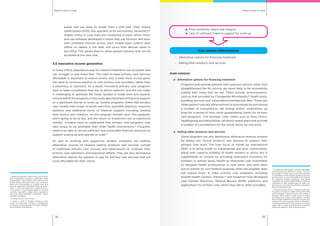
Scale catalysts (differentiators)
–	 Alternative options for financing treatment
–	 Selling other products and services
Scale catalysts:
	 Alternative options for financing treatment
	 Programs that provide patients with payment options, other than
straightforward fee for service, are more likely to be successfully
scaling than those that do not. These include: microinsurance,
such as that provided by Changamka Microhealth,53
health plans,
bundling services and subscription/membership fees. These last
three options typically allow patients to save money by purchasing
a number of consultations, lab testing and/or medications up
front for a period of time, while guaranteeing clients for primary
care programs. For example, clinic chains such as Ross Clinics,
Healthspring and NationWide, sell family health plans that provide
a number of consultations for the whole family for one price.
	 Selling other products and services
	 Some programs are also developing alternative revenue streams
by selling non clinical products and services to support their
primary care work. The core focus of Amref, an international
NGO, is to bring health to marginalized and poor communities,
along with capacity building of health workers in Africa. But it
supplements its income by providing evacuation insurance for
travelers in remote areas. Health by Motorbike uses motorbikes
to transport health professionals to rural areas, and rents them
out to women for non medical purposes when the program does
not require them. In India, primary care programs, including
Swasth Health Centres, Vishwas,54
and Sevamob have developed
user friendly Electronic Medical Record (EMR) platforms and
applications for primary care, which they sell to other providers.
50
Sevamob provides mobile clinic and primary
care subscription services in periurban areas
around Delhi, India. Mobile clinic teams led by
dental doctors and sales reps will visit house-
holds and communities to provide care, and
they are supported in backend offices by physi-
cians, a 24/7 call centre and a network of ser-
vice providers. The program began in 2011 and
currently has 5000 mobile clinic subscribers
and over 5000 telehealth subscribers. http://
sevamob.com/gaon/
51
Founder of Viva Afya, Kenya.
52
Cooley, L., Kohl, R. (2006) Scaling up: from
vision to large-scale change a management
framework for practitioners. Arlington: Manage-
ment Systems International.
53
Changamka Microhealth provides affordable
microinsurance for families in Kenya. The pro-
gram began in 2009, and it incentivizes Kenyans
to contribute to their health savings by provid-
ing discounts at partnered health care facilities
for achieving savings milestones, and allows
customers to use the mobile platform mPesa to
contribute to their savings plans on their mo-
bile phones. It currently has 37,000 subscribers.
http://changamka.co.ke/
54
Vishwas has been active in Mumbai since 2012.
Its goal is to empower Indian family physicians,
and it operates a model primary care centre in
Mumbai, which offers a wide range of health
promotion and chronic care programs. Vishwas
also provides leadership training to family phy-
sicians and brings together doctors, designers,
IT professionals and social scientists in an inno-
vation lab to create and implement innovative
healthcare solutions. http://vishwas.org.in/
Rapid routes to scaleRapid routes to scale
1716
3.6 Collaboration and partnerships
Many primary care programs work with other institutions and organizations,
including funders, NGO collaborators, financial institutions, and businesses,
to implement their projects.55, 56, 57, 58
Partnering with the government can
be particularly beneficial since the public sector often plays an important
role in provision and regulation of primary care, especially for poor
populations.59
Government partners can provide financial resources,
medical supplies, and access to health workers and a client base, activities
that can considerably facilitate primary care program scale up. Programs
in our study described working with partners, particularly the government
and strategic partners, as an important enabler of scale up, and they noted
several promising forms of these partnerships.
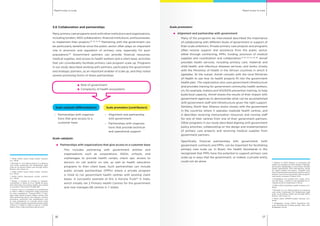
Role of government
Complexity of health ecosystems
Scale catalysts (differentiators) Scale promoters (contributors)
–	 Partnerships with organiza-
tions that give access to a
customer base
–	 Alignment and partnership
with government
–	 Partnerships with organiza-
tions that provide technical
and operational support
Scale catalysts:
	 Partnerships with organizations that give access to a customer base
	 This includes partnering with government entities and
organizations such as corporations, NGOs, schools, and
orphanages to provide health camps, check ups, access to
doctors on call and/or on site, as well as health education
programs to their client base. Such partnerships can include
public private partnerships (PPPs) where a private program
is hired to run government health centres with existing client
bases. A successful example of this is Karuna Trust60
in India,
which initially ran 2 Primary Health Centres for the government
and now manages 68 centres in 7 states.
Scale promoters:
	 Alignment and partnership with government
	 Many of the programs we interviewed described the importance
of collaborating with different levels of government in support of
their scale ambitions. Private primary care projects and programs
often receive support and assistance from the public sector,
either through contracting, PPPs, funding, provision of medical
supplies and coordination and collaboration.61, 62, 63, 64, 65, 66
Amref
provides health services, including primary care, maternal and
child health, and infectious diseases services, and works closely
with the Ministries of Health in the African countries in which it
operates. At the outset, Amref consults with the local Ministries
of Health to see how its health projects fit into the government
health plan. The organization also uses government infrastructure
and provides training for government community health workers,
on, for example, malaria and HIV/AIDS prevention training, to help
build local capacity. Amref shares the results of their impact with
government agencies to demonstrate what can be accomplished
with government staff and infrastructure given the right support.
Similarly, North Star Alliance works closely with the government
in the countries where it operates roadside health centres, and
it describes receiving immunization resources and nursing staff
for one of their centres from one of their government partners.
Other programs in our study described aligning with government
policy priorities, collaborating on the design and implementation
of primary care projects and receiving medical supplies from
government partners.
	 Specifically, financial partnerships with government, both
government contracts and PPPs, can be important for facilitating
primary care scale up. In Brazil, the Health Secretariat in Rio
recognized that PPPs have the potential to support primary care
scale up in ways that the government, or indeed, a private entity
could not do alone.
55
IPIHD (2013) Grand Aides profile. Durham,
N.C.: IPIHD.
56
Burleigh, E. (n.d.) Best practices in scaling up
case study: Guatemala: Pro RedesSalud: rapid
scale up of primary health care through NGOs.
Boston: John Snow, Inc.
57
IPIHD (2013) Grand Aides profile. Durham,
N.C.: IPIHD.
58
IPIHD (2013) NayaJeevan profile. Durham,
N.C.: IPIHD.
59
Rohde, J., Cousens, S., Chopra, M., Tangcha-
roensathien, V., Black, R. et al. (2008) 30 years
after Alma-Ata: has primary health care worked
in countries? The Lancet 372:950-961.
60
Karuna Trust is a charitable trust established
in India in 1986 to implement health programs
for poor populations. Through PPPs, it man-
ages state owned primary health centres that
were performing poorly, and delivers curative,
preventive, promotive and rehabilitative care
to rural populations. It currently serves more
than 1 million people through 68 primary health
centres in 7 states in India, as well as 7 mobile
health clinics. http://www.karunatrust.com/
61
Sultana, N. (2011) Kollyani; a community led
health care program at tribal villages of Bandar-
ban District, Bangladesh: A case study. ACCESS
Health International, RTM International, Center
for Health Market Innovations. Available from
http://healthmarketinnovations.org/document/
kollyani-community-led-health-care-program-
case-study. Accessed 15 March 2014.
62
Schellekens, O.P., Lindner, M.E., Lange, J.M.A.,
Van der Gaag, J. (2007) A new paradigm for in-
creased access to healthcare in Africa.
63
IPIHD (2013) ClickMedix profile. Durham, N.C.:
IPIHD.
64
Burleigh, E. (n.d.) Best practices in scaling up
case study: Guatemala: Pro RedesSalud: rapid
scale -up of primary health care through NGOs.
Boston. John Snow, Inc.
65
IPIHD (2012) APROFE profile. Durham, N.C.:
IPIHD.
66
Bridgespan Group (2007) Population Ser-
vices International: funding growth. New York:
Bridgespan Group.
Rapid routes to scaleRapid routes to scale
1918
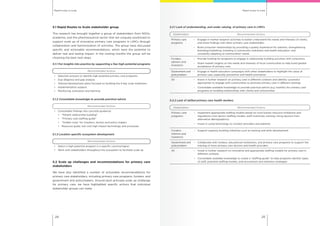
Box 1: Clínicas da Família – Innovating
to Scale Primary Care in Brazil
In 2008, the newly elected Mayor of Rio de Janeiro, Eduardo Paes,
increased primary care coverage in the city from 3% to over 45% in
less than 6 years to reach over 3 million people. To achieve this radical
reshaping of the primary care landscape, the local government
consulted extensively with other countries, adapting and adopting
processes as needed. The local government primary health budget was
increased by 400% and over 600 new family health teams (typically
including 1 general practitioner, 1 nurse, 1 nursing technician, and 4
to 6 community health workers, each responsible for approximately
3,450 people) were established. This astounding increase in primary
care provision was accomplished by taking an ecosystem approach
that included:
Educating patients about the value of primary care: A significant
investment has been made in community health workers, who are a
vital link between the family health teams and the community because
they are seen as community members who work for the health of
the community. They interact with patients, but also integrate the
clinic into the community by providing health outreach, meeting with
community members at schools, churches, and daycare centres. This
helps establish community acceptance of the clinics in new areas and
catalyzes initial use through word of mouth.
Partnering with NGOs to overcome municipal bureaucracy: NGOs
are used to help purchase equipment and contract staff, organizing
everything from hiring/firing to procuring and maintaining power,
infrastructure, IT systems, and general maintenance. The NGOs receive
a fixed price per health team from the government every month and
if the budget is not used, then it is returned, or the government pays
less for the next funding round.
Investing in primary care training: Health care curricula were modified
to meet the needs of the primary care system; a family medicine
residency program and nursing program were added, and incentives
were given for participating in family medicine training. The government
is also partnering with universities to increase interest in primary care
by giving medical students experiences in primary care clinics.
	 Partnerships with organizations that provide technical and
operational support
	 Changamka and Mediphone rely on partnerships with telecom
companies to deliver their services. Changamka provides
microinsurance that can be paid for using mobile money through
Safaricom’s mPesa in Kenya. Mediphone is a health hotline
and was developed through a partnership with AirTel, the
largest telecom provider in India. The Patan Academy of Health
Science trains medical students to work in rural Nepal, and has
developed partnerships with Canadian universities to train their
faculty members, while CHADIK has partnered with architectural
companies interested in helping to design and develop clinical
structures to help with patient flow.
4. PRIMARY CARE ECOSYSTEMS: INDIA AND KENYA
We conducted our field visits in India and Kenya as they have diverse
primary health sectors, with active for profit and non profit players, and
largely rural populations. However, the marked differences in their health
ecosystems highlight the importance of taking a holistic, ecosystem
approach when considering primary care scale up.
India is considered an “emerging economy”, whereas Kenya’s economy is
struggling, with high consumer prices and unemployment rate (40%).67
A greater proportion of Kenyans live under the poverty line than Indians,
limiting their ability to fund out of pocket health expenditures. India has a
greater supply of doctors and other trained health professionals, and India’s
technological infrastructure and tech industry are more advanced than in
Kenya. However, in Kenya, the government plays a greater role in health care
policymaking and provision than in India because there are fewer private
players in the sector. There are some similarities between the countries.
Both governments provide a range of no or low cost health services,
often at over crowded facilities. They both have mostly rural populations,
contributing to geographic and cultural access challenges. They both have
decentralized health governance (although decentralization in Kenya is
relatively new (2010), and the changes have created some turbulence
for health organizations). There is a long tradition of informal providers
in both countries, who, in many areas, have long delivered primary care,
although the quality of such care is variable.
67
Nation Master (2014) Country vs country:
India and Kenya compared: economy stats.
Available from  http://www.nationmaster.com/
country-info/compare/India/Kenya/Economy.
Accessed 15 August 2014.
Rapid routes to scaleRapid routes to scale
2120
4.1 India’s health ecosystem
India is home to numerous health innovations, and has a rich history of
traditional healing and wellness. India’s population of 1.2 billion (16% of the
world) lives in 29 diverse states. An estimated 22% live below the poverty
line.68
And although about 70% of the population lives in rural areas69
, 74%
of the 1.4 million qualified medical practitioners live in urban areas.70
India
has 0.7 doctors per 1,000 people.71
In 2012, public spending on health in India, as a percentage of GDP, was
1.3%, one of the lowest in the world.72
Although the government runs (or
contracts out) primary healthcare centres (1 per 25,000 population), which
receive an incredible volume of patients73
, the vast majority of healthcare
in India (about 70%), is paid for out of pocket, impoverishing an estimated
40 million every year.74
Non government sponsored primary care is provided by: unlicensed
providers, Ayurvedic doctors, MBBS (Bachelor of Medicine/Bachelor
of Surgery) doctors, some specialists (mainly paediatricians and
gynaecologists), a few MBBS doctors who have specialty training in
primary care (rare in India, because primary care specialty training is very
new), auxiliary nurse midwives, nurses and ASHAs (Accredited Social
Health Activist – community health workers who are accredited by the
Government of India).75
But these health human resources are unevenly
distributed in India; there is an oversupply of MBBS doctors and specialists
in many urban areas, driving down salaries; meanwhile, too few physicians
live and practice in rural areas.76
All of this contributes to a significant
unmet need for primary care.
4.2 Innovative approaches in the Indian health ecosystem
We interviewed 21 diverse programs77
operating in India, all of whom
want to strengthen what they consider to be a weak primary care system.
Successful programs are able to address the major ecosystem challenges
in India, primarily the low prestige and value of primary care, compared to
specialist care, given the historical emphasis on specialized care, and the
need to collaborate with government to achieve scale when focusing on
delivery to the poor. They are approaching this is a variety of ways:
	 By promoting primary care amongst physicians
-	 The Academy of Family Physicians of India (AFPI)78
is an academic
association of trained family physicians that focuses on supporting
and promoting family medicine. It is seeking to address the lack
of academic and professional growth opportunities available for
primary care physicians compared to their specialist counterparts.
AFPI encourages medical schools and universities in India to
provide training in family medicine to increase the number of
skilled family medicine providers and increase their integration
into the health system.
-	 NationWide hires MBBS doctors at its clinics and trains them in
generalist care.
-	 Vishwas aims to empower family physicians with tools and
technologies to increase their efficiency, make their clinics more
financially sustainable, and improve health outcomes.
	 By challenging perverse working practices
-	 Swasth Health Centres and Healthspring pay their doctors a
fixed salary and will not allow them to accept fees for specialist
referrals, which can result in unnecessary referrals.
	 By working with the government and supporting government
programs
-	 Swasth Health Centres operates a DOTS centre79
in Mumbai,
in support of the government’s Revised National Tuberculosis
Control Program, out of one of its clinics. This is more efficient
than the government setting up its own infrastructure.
-	 Mediphone, the healthcare hotline, is working with 2 Indian
state governments to provide improved non emergency
helplines.
-	 Karuna Trust has developed a PPP with state governments of India
to run some of their most remote and difficult to operate facilities.
Initially, Karuna took on the Primary Health Centre operations at a
very low price to show what could be done. Having revitalized the
Primary Health Centres, improved health outcomes and patient
satisfaction, all at lower cost, the government agreed to invest
more in their work.
	 By investing in technology
-	 India’s strong IT sector has contributed to innovation in primary
care. Of the 21 programs operating in India, 19 were using new
technologies, such as EMRs, telemedicine and heath hotlines in
their models.
4.3 Kenya’s health ecosystem
Only a quarter of Kenya’s 43 million people live in urban areas80
and about
46% of Kenyans live below the poverty line.81
There are 0.2 physicians per
1000 people, which is less than 1/3 that of India (0.7), and substantially
lower than the ratios in developed economies such as Canada (2.1), the
United States (2.4) and the United Kingdom (2.8).82
68
World Bank (2014) World development indi-
cators: India. Available from http://data.world-
bank.org/country/india. Accessed 15 August
2014.
69
WHO (2014) India. Available from http://www.
who.int/countries/ind/en/. Accessed 15 August
2014.
70
Sundararaman, T., Gupta, G. (2011) Indian ap-
proaches to retaining skilled health workers in
rural areas. Bulletin of the World Health Organi-
zation 89(1): 73-77.
71
  WHO (2014) Global health observa-
tory data repository. Available from
http://apps.who.int/gho/data/node.main.
A1444?lang=en&showonly=HWF. Accessed 2
September 2014.
72
World Bank (2014) Heath expenditure, public
(% of GDP). Available from http://data.world-
bank.org/indicator/SH.XPD.PUBL.ZS. Accessed
2 September 2014.
73
Johar, Z., Mor, N. (2012) The Lack of Prima-
ry Healthcare in India. The Economic Times.
Available from http://articles.economictimes.
indiatimes.com/2012-08-15/news/33216875_1_
primary-care-primary-healthcare-higher-levels.
Accessed 15 August 2014.
74
Balarajan Y., Selvaraj, S., Subramanian, S.V.
(2011) Health care and equity in India. The Lan-
cet 377:505-515.
75
ACCESS Health International (n.d.) Landscap-
ing of primary healthcare in India. New York:
ACCESS Health International.
76
Kumar, R. (2014) Why family medicine is a
good career choice for Indian medical gradu-
ates? Journal of Family Medicine and Primary
Care 3(1): 1–2.
77
Of the programs we spoke with: 17 were for
profit, 3 were non profit, and 1 was a PPP. 10
programs ran static clinic chains; 3 programs ran
mobile clinics; 7 programs provide a telehealth
line or telemedicine services; and 5 were pro-
grams that do not directly provide primary care,
but support primary care, through health edu-
cation, microinsurance, advocacy, or developing
health IT systems.
78
The Academy of Family Physicians of India
(AFPI) is a non profit organization that pro-
motes the training and education of primary
care doctors. Set up in 2010, it encourages the
government and medical regulators to institute
community (both rural and urban) based fam-
ily medicine residency training programs at In-
dian medical schools as a method for recruiting
and retaining family physicians. It also provides
guidance to young doctors and professionals,
and publishes the first peer reviewed journal on
family medicine in India, the Journal of Family
Medicine and Primary Care. http://www.afpion-
line.com; http://jfmpc.com/
79
   This is a tuberculosis treatment clinic, using
the Direct Observation and Treatment Short
course approach recommended by the WHO.
These centres oversee the diagnosis, treatment,
follow up and reporting of patients with tuber-
culosis. Disease monitoring and management
help prevent the spread of TB.
80
   WHO (2014) Kenya profile. Available from
http://www.who.int/gho/countries/ken.
pdf?ua=1. Accessed 15 August 2014.
81
   World Bank (2014) World development indi-
cators: Kenya. Available from http://data.world-
bank.org/country/kenya. Accessed 15 August
2014.
82
   WHO (2014) Global health observa-
tory data repository. Available from
http://apps.who.int/gho/data/node.main.
A1444?lang=en&showonly=HWF. Accessed 2
September 2014.
Rapid routes to scaleRapid routes to scale
2322
In 2012, public spending on health care as a percentage of national
GDP was 1.8%, higher than the 1.3% in India.83
The Kenyan government
spends about US $17 per person per year on health care, and the
Indian government spends around US $20.84
The government provides
many types of health care for Kenyans, and user fees at government
facilities were abolished in 2007.85, 86
However, due to long wait times,
geographic distance, and other access barriers and concerns about the
quality of government health care and drug supply, many Kenyans use
private (for profit and not for profit) health care. Of the 4,700 health
facilities across the country, only 51% of them are part of the public
system.87
In fact, about 40% of health expenditure in Kenya comes from
international (mostly not for profit) sources.88
Out of pocket comprises
45% of health care spending in Kenya89
and rural Kenyans spend more
on health care than their urban neighbors once the cost of travel is
considered.90
4.4 Innovative approaches in the Kenyan health ecosystem
We visited and/or interviewed 13 programs with operations in Kenya.91
Two major challenges in primary care in Kenya are the lack of trained
providers (about half of the physicians trained in Kenya leave the country)
and the accessibility and affordability of care (given that almost half of
Kenyans live below the poverty line and 3/4 quarters live in rural areas).
The innovative primary care programs we interviewed are overcoming
these challenges in a number of ways:
	 By using innovative staffing models
-	 Viva Afya compensates for a lack of qualified health workers by
employing an experienced, licensed medical doctor, pharmacist
and laboratory technician at its single hub location. Clinical
officers and registered nurses employed at satellite clinics can
refer to the hub office electronically for advice when providing
diagnostics and treatment services to patients.
	 By making primary care more accessible
-	 North Star Alliance now operates a number of static roadside
wellness centers providing basic health care services. Originally
the program used mobile clinics to provide health care services
to truck drivers travelling to remote areas via Kenya’s major
transportation corridors. It then expanded to provide care to
sex workers living in the communities those truck drivers often
stopped at, and emphasized treatment for sexually transmitted
diseases such as HIV/AIDS. By opening services to the surrounding
communities, North Star was able to encourage patients to seek
appropriate care, overcoming the widespread stigma associated
with HIV among the Kenyan population. The program continues
to run promotional campaigns to educate an increasing number
of Kenyans to use their services.
	 By introducing novel payment mechanisms
-	 Changamka MicroHealth has leveraged technology and the
widespread use of mobile phones in Kenya to create a platform for
the working poor to save, pay for and be insured for health care
services. Another microinsurance organization, MicroEnsure,92
is
entering the Kenyan market to provide primary care coverage for
poor communities. Both of these organizations seek to decrease
the financial burden associated with out of pocket payments for
thousands of Kenyans.
-	 Viva Afya also aims to limit out of pocket spending by partnering
with a number of micro-finance organizations to provide bundled
services for one affordable payment a year.
	 By developing technology for primary care
-	 MicroClinic Technologies93
has developed an EMR and IT platform
for primary care health centres that help to automate processes
and ensure standardized and efficient services.
Programs in India and Kenya are creatively addressing ecosystem barriers
to primary care through championing primary care, partnering with the
government to reach the very poor, finding creative staffing solutions,
and reducing operating costs. These approaches are strengthening
primary care in their respective ecosystems, helping achieve accessible
and comprehensive quality care by developing new models and business
solutions that are responsive and patient centred.
5. HARNESSING THE RESEARCH
Access to affordable, quality primary care is desperately needed in many
parts of the world, particularly in resource constrained settings where
basic curative and preventive services are severely lacking. Innovative
programs are emerging to address this gap, and this research provides
valuable insights on scaling up primary care in LMICs to serve more
populations in need. Based on these research findings, we have developed
a number of actionable recommendations for stakeholders in the primary
care ecosystem.
83
World Bank (2014) Heath expenditure, public
(% of GDP). Available from http://data.world-
bank.org/indicator/SH.XPD.PUBL.ZS. Accessed
2 September 2014.
84
World Bank (2014) Heath expenditure, public
(% of GDP). Available from http://data.world-
bank.org/indicator/SH.XPD.PUBL.ZS. Accessed
2 September 2014.
85
Chuma J., Okungu V. (2011) Viewing the Ke-
nyan health system through an equity lens: im-
plications for universal coverage. International
Journal for Equity In Health 10(22).
86
Toda, M., Opwora, A., Waweru, E., Noor, A.,
Edwards, T.,Fegan, G., Molyneux, C., Goodman,
C. (2012) Analyzing the equity of public primary
care provision in Kenya: variation in facility char-
acteristics by local poverty level. International
Journal for Equity in Health 11(75).
87
Ramana, G.,Chepkoech, R., Workie, N.W.
(2013) Improving universal primary health care
in Kenya: a case study of the health sector ser-
vices fund. UNICO Studies Series 5. Washing-
ton, D.C.: World Bank.
88
WHO (2014) Global health expenditure da-
tabase. Available from http://apps.who.int/nha/
database/ViewData/Indicators/en. Accessed 2
September 2014.
89
WHO (2010) Kenya fact sheet of health statis-
tics. WHO: Geneva.
90
Chuma, J., Okungu, V. (2011) Viewing the Ke-
nyan health system through an equity lens: im-
plications for universal coverage. International
Journal for Equity in Health 10(22).
91
Six of the 13 programs are for profit; 7 are non
profit. Two of the non profit organizations are
social franchises. Ten of the 13 programs di-
rectly provide primary care either through clinic
chains or mobile health camps. Two programs
provide microinsurance schemes; 1 is a health IT
company.
92
Launched in 2002, MicroEnsure is an insur-
ance intermediary with a focus on introducing
new forms of affordable insurance protection
for poor populations. It partners with organiza-
tions that serve the poor, such as rural banks,
microfinance organizations and humanitarian
organizations, and has developed a variety of
insurance and microinsurance products. It now
serves more than 10 million clients, with several
recent microinsurance products that focus on
primary care coverage. http://www.microen-
sure.com/
93
   MicroClinic Technologies, founded in 2011,
provides affordable technology for dispensaries
and health centres in the primary care sector.
ZiDi, its flagship project, is a software platform
that aggregates patient data through electronic
medical records, and automates financial man-
agement, stocktaking, personnel administra-
tion and service delivery, helping to standardize
quality health care. It is currently working with
the Ministry of Health to scale up adoption of
the technology by over 4000 clinics across Ke-
nya. http://www.microclinictech.com/
Rapid routes to scaleRapid routes to scale
2524
5.1 Rapid Routes to Scale stakeholder group
This research has brought together a group of stakeholders from NGOs,
academia, and the pharmaceutical sector that are uniquely positioned to
support scale up of innovative primary care programs in LMICs through
collaboration and harmonization of activities. The group have discussed
specific and actionable recommendations, which have the potential to
deliver real and lasting impact. In the coming months the group will be
choosing the best next steps.
5.1.1 Put insights into practice by supporting a few high potential programs
Recommended Actions
•	 Selection process to identify high potential primary care programs
•	 Due diligence and gap analysis
•	 Tailored development plans focused on building the 6 key scale mobilizers
•	 Implementation support
•	 Monitoring, evaluation and learning
5.1.2 Consolidate knowledge to provide practical advice
Recommended Actions
•	 Consolidate findings into concrete guidance:
•	 “Patient relationship building”
•	 “Primary care staffing guide”
•	 “Golden rules” for investors, donors and policy makers
•	 Resource guide: low cost high impact technology and processes
5.1.3 Location specific ecosystem development
Recommended Actions
•	 Select a high potential program in a specific country/region
•	 Work with stakeholders throughout the ecosystem to facilitate scale up
5.2 Scale up challenges and recommendations for primary care
stakeholders
We have also identified a number of actionable recommendations for
primary care stakeholders, including primary care programs, funders, and
government and policymakers. Around each principle scale up challenge
for primary care, we have highlighted specific actions that individual
stakeholder groups can make.
5.2.1 Lack of understanding, and under valuing, of primary care in LMICs
5.2.2 Lack of skilled primary care health workers
Stakeholders Recommended Actions
Primary care
programs
–	 Engage in market research activities to better understand the needs and interests of clients,
and share findings with other primary care stakeholders
–	 Build consumer relationships by providing a quality experience for patients, strengthening
branding/marketing, investing in community mobilizers and health education, and
constantly adapting to communities’ needs
Funders
(donors and
investors)
–	 Provide funding for programs to engage in relationship building activities with consumers
–	 Share market insights on the needs and interests of local communities to help build greater
acceptance of primary care
Government and
policymakers
–	 Engage in health education campaigns with other stakeholders to highlight the value of
primary care, especially prevention and health promotion
All –	 Invest in further research on primary care in different contexts and identify successful
approaches to engage with communities to promote primary care in different settings
–	 Consolidate available knowledge to provide practical advice (e.g. toolkits) for primary care
programs on building relationships with clients and communities
Stakeholders Recommended Actions
Primary care
programs
–	 Implement appropriate staffing models based on local human resource limitations and
regulations (non doctor staffing models, staff incentives, training, hiring doctors from
alternative demographics)
–	 Invest in using technology to connect providers and patients
Funders
(donors and
investors)
–	 Support capacity building initiatives such as training and skills development
Government and
policymakers
–	 Collaborate with funders, educational institutions, and primary care programs to support the
training of more primary care doctors and health providers
All –	 Invest in further research on innovative and appropriate staffing models for primary care in
different contexts
–	 Consolidate available knowledge to create a “staffing guide” to help programs identify types
of staff, potential staffing models, and recruitment and retention strategies
Rapid routes to scaleRapid routes to scale
2726
Stakeholders Recommended Actions
Primary care
programs
–	 Engage in business training and connect with scale experts
Funders
(donors and
investors)
–	 Invest in, and facilitate access to coaching, consulting support, research networks and
learning collaboratives
Government and
policymakers
–	 Support health provider training programs in primary care that include medical and
management/entrepreneurial components
All –	 Consolidate available knowledge to provide practical advice (e.g. toolkits) on practical
management activities to support primary care scale up
Stakeholders Recommended Actions
Primary care
programs
–	 Invest in standardizing non clinical processes, supply chain enhancements and new
technologies
Funders
(donors and
investors)
–	 Support primary care programs in implementing standardized processes to improve quality
and efficiency of services
–	 Support technology companies developing affordable healthcare tools for connecting
providers, managing data, standardizing processes and inventory management
Government and
policymakers
–	 Work with organizations throughout the health ecosystem to develop health infrastructure
and supply chains
All –	 Consolidate and share available information about low cost technology solutions that
support standardization and efficiency in primary care
5.2.3 Lack of expertise in primary care scale up
5.2.4 Increasing efficiency
5.2.5 Generating/accessing sufficient and sustained funding for scale up
Stakeholders Recommended Actions
Primary care
programs
–	 Consider income generating opportunities beyond fees from patient consultations and
medications
–	 Provide patients with alternative financing options such as health plans and microinsurance
Funders
(donors and
investors)
–	 Provide funding specifically for primary care scale up
–	 Fund and support smaller high potential primary care programs
Government and
policymakers
–	 Work with programs to have public insurance for the poor accepted by more private sector
programs
All –	 Consolidate available knowledge to create “Golden Rules” for investors, donors and policy
makers interested in primary care scale up
–	 Invest in further research on how primary care programs can be financed to support scale up
–	 Invest in further research to identify cost effective primary care models for specific settings
5.2.6 Developing beneficial partnerships
The Rapid Routes to Scale research provides invaluable insights on
scaling up primary care for LMIC populations. It is clear that an ecosystem
approach, which brings together relevant stakeholders to take collective
action, is needed for transformative change. Scaling up primary care
requires collaboration and commitment amongst the key actors in this
health area and we hope this research will play a part in improving the
health of millions in the developing world.
Stakeholders Recommended Actions
Primary care
programs
–	 Build partnerships with government to ensure alignment with government priorities, and to
access technical and operational support
–	 Build partnerships with organizations that can connect services with a client base
Funders
(donors and
investors)
–	 Facilitate and support partnerships between programs and organizations with similar aims
and mutually beneficial activities
Government and
policymakers
–	 Develop PPPs with programs able to serve poor patients effectively and efficiently in areas
where the government has been unable to do so
–	 Facilitate collaboration with other funders, primary care programs and government entities
to harmonize activities in primary care
All –	 Invest in further research on how the private sector can successfully collaborate with
government in primary care and how to develop and implement these partnerships
Rapid routes to scaleRapid routes to scale
2928
APPENDIX A: RESEARCH APPROACH
Figure 1: Overview of research process
Desk Based Research
Literature review
100 academic and grey
literature documents
CHMI database review
465 primary care programs
MAR-MAY JUNE-JULY AUG-OCT
Time
Target
Fieldwork
37 interviews with
programs in more than
25 countries
12 expert interviews
Analysis
Qualitative and
quantitative analysis
2 focus groups
Preparation of final report
Desk based activities:
Literature Review
Our team began with a review of the relevant literature on primary care
and scale up, performance measurement, ecosystems, and innovation.
We considered over 100 peer reviewed articles and reports from the grey
literature to identify the key factors that influence scale up of primary care
in LMICs, including investing in human resources, engaging in efficient
processes, adapting to local communities and seeking government support.
Database review
We then reviewed the 465 primary care programs in the CHMI database.94
Programs were coded according to 3 dimensions:
1. Type of primary care
provision
2. Evidence of scaling up over
time (increase in coverage
and/or impact)
3. Characteristics of
scalability
a.	 Comprehensive primary care a.	 Increase in number of clients
served
a.	 A clear theory of change
b.	 Selective primary care b.	 Increase in number of facilities b.	 Access to financial
resource
c.	 Strengthening primary care
systems
c.	 Increase in number of countries
in which the program operates
c.	 Partnerships
d.	 Increase in number of services
offered
d.	 A simple and standardized
design
e.	 Increase in number of employees e.	 Goals or targets for scale
up
f.	 Increase in clinical quality f.	 Replication from another
program
g.	 Increase in user satisfaction g.	 Sufficient staff supply
h.	 Increase in output h.	 Engaging with the local
community
i.	 Increase in geographic access/
availability
i.	 Franchise design
j.	 Increase in outcome j.	 Operating in the pilot or
expansion stage
k.	 Increase in efficiency
l.	 Increase in population coverage
m.	Increase in equity or pro-poor
targeting
n.	 Increase in affordability
Table 2: Coding factors for database review
Qualitative interviews and field visits
The CHMI database review confirmed that India and Kenya were the
top 2 countries of operation for primary care programs. We identified a
group of innovative primary care programs with evidence of scaling up or
promising scale up strategies in Kenya and India, which were selected for
field visits. In depth phone interviews were also conducted with programs
in other countries, such that we conducted a total of 37 interviews with
programs operating in more than 25 countries. We also conducted in
depth interviews with 12 experts in primary care and scale up, including
donors, investors, academics and individuals with scale up expertise in
other health areas.
94
CHMI, which is managed by the Results for
Development Institute, curates a database on
organizations dedicated to improving privately
delivered health care for the poor in LMICs. Over
1200 organizations operating 106 countries are
represented in this database.
Rapid routes to scaleRapid routes to scale
3130
Qualitative and quantitative analysis
Interviews were documented and coded for key themes identified by the
research team. Coder reliability was tested halfway through the coding
process and with 81% reliability, the remainder of the interviews were
coded with a high level of confidence. The research team met regularly to
discuss emerging ideas with ICSF, IPIHD and CHMI. To support the analysis,
we identified 4 program categories:
Table 3: Categorization of interviewed programs
Program category
Number of
Programs
Programs that are in the pilot/testing phase 7
Programs that are successfully scaling up 20
Programs that have had recent set backs/challenges in scaling up 8
Programs that are no longer active 2
We then looked at the key factors described as influencing primary care
scale up in the literature and in discussions with program and experts, and
assessed whether they were more likely to be associated with programs
in the successfully scaling group compared to those that are not (not
including those still in the pilot phase that have yet to focus on scaling up).
This allowed us to identify 6 mobilizers of primary care, each with factors
found to catalyze or promote scale up of primary care programs.
APPENDIX B: OVERVIEW OF PROGRAMS INTERVIEWED
Table 4. Primary care programs interviewed
Program Name Description Country of Operations Website
Academy of Family
Physicians of India
Non profit organization
promoting family medicine
and advocating for increased
opportunities for primary care
doctors.
India http://www.afpionline.com
Access Afya For profit clinic chain offering
basic clinical and prevention
services.
Kenya www.accessafya.com
Alchemist Clinics A chain of primary health
clinics and eye hospitals being
developed for rural areas.
India www.alchemistclinics.com
Amref Health
Africa
An international non profit that
provides health programs and
builds health worker capacity in
Africa.
International 95
http://amref.org/
Anonymous
program
For profit clinic chain. No longer
in operation.
India
Bangladesh
Second Urban
Primary Care
Project
PPP developed between
government and non profit
organizations to deliver primary
health care services through
clinics and health centres.
Bangladesh http://uphcp.gov.bd
Changamka
MicroHealth
Provides affordable
microinsurance and allows for
payment through the mobile
platform mPesa.
Kenya http://changamka.co.ke
Clínicas da Família PPP between the municipal
government and local non
profits involving a clinic chain
and family medicine residency
program.
Brazil www.rio.rj.gov.br/web/sms/
clinicas-da-familia1
Community
Health Africa Trust
(CHAT)
Non profit providing mobile
clinics to remote and poor
areas through backpack nurses,
medical teams traveling by truck,
and camel caravans.
Kenya www.chatafrica.org
Dimagi Social enterprise developing
low cost technologies such
as CommCare, a configurable
mobile data collection platform
for community health workers.
International www.commcarehq.org/home
95
International indicates a program operates in
more than 15 countries.
Rapid routes to scaleRapid routes to scale
3332
Program Name Description Country of Operations Website
Children’s Health
and Development
in Kenya (CHADIK)
Non profit providing outreach
clinics to remote and poor areas
with a focus on children and
mothers.
Kenya www.chadik.org.uk
Health by
Motorbike
Non profit health outreach
program that sends a local
health professional by motorbike
to remote communities.
Kenya, Tanzania http://healthbymotorbike.wix.
com/healthbymotorbike
Healthspring For profit clinic chain with
an emphasis on preventive
medicine.
India www.healthspring.in
Institute of Health
Management,
Pachod and Pune
(IHMP)
Non profit organization
providing health and
development programs with
village communities.
India www.ihmp.org/index.html
Karuna Trust A charitable trust serving poor
populations through PPPs.
India www.karunatrust.com
Kriti Arogya
Kendram
For profit clinic chain. No longer
in operation.
India
Lifebuoy
Friendship Hospital
Non profit providing primary and
secondary health care to remote
communities through floating
hospitals developed from retired
barges.
Bangladesh http://friendship-bd.org
LifeNet
International
Non profit that franchises local
clinics to improve population
health.
Burundi,
East Africa
www.lninternational.org
Living Goods Non profit franchise of
entrepreneurial community
health workers that sell health
products and provide health
information door to door.
Kenya, Uganda http://livinggoods.org
mDhil For profit that promotes health
awareness through online and
interactive digital content.
India www.mdhil.com
MediAngels For profit providing primary
and speciality care through
integrating telemedicine,
virtual healthcare, and patient
diagnostic devices.
International www.mediangels.com
Mediphone For profit health hotline service. India www.airtel.in/mediphone
MeraDoctor Health hotline and medical
discount service
India www.meradoctor.com
MicroClinic
Technologies
A technology company
developing affordable
technology for primary care
health centres.
Kenya www.microclinictech.com
Program Name Description Country of Operations Website
MicroEnsure An insurance intermediary that
develops affordable insurance
protection for poor populations.
Bangladesh, Burkino
Faso, Ghana, India,
Kenya, Malawi,
Malaysia, Mozambique,
Nigeria, Pakistan,
Philippines, Rwanda,
Tanzania and Zambia
www.microensure.com
NationWide
Primary Healthcare
Services
For profit clinic chain providing
services through general
practitioners, paediatricians and
gynaecologists.
India www.nationwidedocs.org
Neurosynaptic
Communications
A technology company
developing tools to support
healthcare for remote and rural
populations.
International www.neurosynaptic.com
North Star Alliance Non profit operating roadside
clinics along transport routes in
South, West and East Africa.
Botswana, Democratic
Republic of the
Congo, Kenya,
Malawi, Mozambique,
Namibia, South Africa,
Swaziland, Tanzania,
the Gambia, Uganda,
Zambia, Zimbabwe
www.northstar-alliance.org/
Patan Academy of
Health Sciences
Medical training program
focused on rural medicine.
Nepal www.pahs.edu.np
Penda Health For profit clinic chain with a
focus on serving women.
Kenya www.pendahealth.com
Ross Clinics For profit clinic chain providing
services through family
physicians, dentists and
physiotherapists.
India www.rossclinics.com
Sevamob For profit mobile clinic and
primary care subscription
service.
India http://sevamob.com/gaon
Swasth Health
Centres
For profit clinic chain serving
Mumbai’s slums.
India www.swasthindia.in
Vaatsalya
Healthcare
For profit hospital and clinic
chain providing affordable
healthcare to less served areas.
India www.vaatsalya.com/2014
Vishwas Primary care program focused
on leadership training for family
doctors.
India http://vishwas.org.in
Viva Afya For profit chain of primary
care clinics serving densely
populated, low income areas.
Kenya www.vivaafya.co.ke
World Health
Partners
Non profit that franchises
existing clinics in rural areas
and uses technology to connect
providers and patients.
India, Kenya http://worldhealthpartners.org
Rapid routes to scaleRapid routes to scale
3534
Table 5: Experts Interviewed
Expert Organization Description Website
ACCESS Health
International
Non profit think tank and consulting group
focused on health systems, health care finance
and medical processes.
http://accessh.org/
Acumen Fund Impact investor. http://acumen.org/
Africa Capacity Alliance African capacity building organization focused
on strengthening health and community systems.
http://africacapacityalliance.org/
Africa Medicines Impact
Investment Fund
Impact investment fund implemented by the
Southern African Regional Programme on
Access to Medicines and Diagnostics (SARPAM).
http://amiif.sarpam.net/
Bill & Melinda Gates
Foundation
Global health funder. www.gatesfoundation.org/
Excelsior Group Impact investor. http://excelsior-group.com/
Grand Challenges
Canada
Funder of health innovations in LMICs and
Canada.
www.grandchallenges.ca/
Mobile Telemedicine
Clinics Project
Telemedicine program to be developed in rural
Kenya.
www.medishareafrica.org/
Population Services
International - India
Non profit scaling health interventions in
infectious disease, reproductive health, and
child survival.
www.psi.org/india
SickKids Centre for
Global Child Health
Independent research centre engaged in
capacity building, advocacy and knowledge
translation in global child health.
www.sickkids.ca/globalchildhealth/
index.html
Swasti A health resource centre combining research
and practice to achieve improved health
outcomes for the socially excluded and poor.
www.swasti.org
University of Cape
Town Lung Institute:
Knowledge Translation
Unit - PALSA Plus
Guideline and training program developed
to assist nurses in diagnosing and managing
respiratory illnesses in primary care contexts.
http://knowledgetranslation.co.za/
programmes/palsa-plus/
Types of primary care
The primary care programs we interviewed are involved in a diverse range
of primary care activities: clinic chains, mobile clinics, microinsurance, policy
development, supply chain enhancements, training health workers, developing
health awareness, and developing and using new technologies in primary care.
Primary care programs can be engaged in directly providing services to
patients or they can support the primary care ecosystem by: training health
workers; developing technologies for primary care programs; developing
infrastructure and supply chains; engaging in advocacy and policy
around primary care; developing and disseminating health information;
or developing financial mechanisms that help patients pay for primary
care services. Nine programs were only strengthening and not involved
in direct delivery of services to patients. Twenty eight programs were
involved in direct provision of services. Of those directly providing care
to patients, 18 were providing comprehensive care, which involves a wide
range of preventive and curative health services, while 10 were providing
selective care, which involves a more limited offering of curative primary
care services with an emphasis on particular health areas.
Table 6: Types of primary care provided by programs
Total number of programs 37
Direct provision of care and strengthening primary care 28
Only strengthening primary care 9
Table 7: Types of direct provision of care by programs
Total number of programs directly providing care 28
Comprehensive care 18
Selective care 10
Legal Status
All programs interviewed operate in the private sector or in collaboration with
the private sector: 22 for profit, 12 non profit, and 3 programs operating as PPPs.
Geography Served
Almost half of the programs interviewed described serving populations in
more than one geographical area (15/37; 41%): 26 operate in rural areas, 25
operate in urban areas and 12 operate in periurban areas. Eleven programs
only operate in rural areas, while another 11 only operate in urban areas.
Population Served
Of the 31 programs providing data on income segments served, most in this
study (24/31; 77%) described serving populations in the 20%-40% income
quintile, while very few serve clients in the 80%-100% quintile group. More
than half (20/31; 65%) serve the bottom 20%. Almost all programs serve
multiple quintile groups (25/31; 81%), and half (17/31; 55%) serve clients in
both the 20%-40% and 40%-60% quintile income range.
Start Date
The programs we studied began their operations between 1957 and 2014,
with 76% (28/37) established in the last 10 years.
Rapid routes to scaleRapid routes to scale
3736
Results for Development Institute (R4D) is a non-
profit organization whose mission is to unlock so-
lutions to tough development challenges that pre-
vent people in low and middle income countries
from realizing their full potential. Using multiple
approaches in multiple sectors including, Global
Education, Global Health, Governance and Market
Dynamics, R4D supports the discovery and imple-
mentation of new ideas for reducing poverty and
improving lives around the world.
The Center for Health Market Innovations (CHMI),
a flagship program of R4D, promotes programs,
policies and practices that make quality health care
delivered by private organizations affordable and
accessible to the world’s poor. Managed by Results
for Development, CHMI works through regional
partners around the world. Details on more than
1,200 innovative health enterprises, nonprofits,
public private partnerships, and policies can be
found online at HealthMarketInnovations.org.
GSK make innovative medicines, vaccines and
consumer healthcare products that are used by
millions of people around the world, allowing them
to do more, feel better and live longer.
The products GSK develop and manufacture and
how they do this contributes directly to the health
of patients and consumers, and indirectly to the
wider well-being of the economy and society.
GSK has been fundamentally changing in recent
years to create a more balanced business to
address market challenges and deliver sustainable
performance and returns for shareholders.
GSK are committed to generating that
performance in a responsible way.
“Nearly every problem has been solved by
someone, somewhere. The frustration is that we
can’t seem to replicate (those solutions) anywhere
else.” Bill Clinton
The International Centre for Social Franchising
works with public, private sector and social pioneers
to tackle the issue of scale. Its mission is to help the
most successful social impact projects replicate.
We know organizations delivering community-
transforming work can spend a lot of time and
precious resources finding, and applying, the right
solutions. Many are reinventing the wheel. Our role
is to streamline this process, helping organizations
get replication right the first time and achieve
the change they want to see in the world. Using a
combination of successful and tested commercial
and social principles while drawing on extensive
expertise, we help organizations identify, design
and implement the right social replication model,
enabling them to solve social
The International Partnership for Innovative
Healthcare Delivery (IPIHD) is an impact driven
nonprofit dedicated to increasing access to cost-
effective and high quality healthcare around
the world. IPIHD supports a diverse and global
network of healthcare innovators, industry leaders,
funders, and governments. Founded in 2011 by the
World Economic Forum, McKinsey & Company, and
Duke University, and supported by corporations,
foundations, and governments, IPIHD works
directly with organizations bringing to market
transformative solutions that increase access
to affordable high quality care. IPIHD provides
targeted programming, connections, and resources
to help these innovators scale and replicate their
models. The knowledge that IPIHD gains from
research and working directly with the innovators is
translated into insights and reports used to increase
understanding of the potential of innovations
to transform health systems globally. The IPIHD
network includes more than 40 innovators and 15
corporate and foundation supporters.
Merck & Co., Inc., known as MSD outside of the
United States and Canada, is an innovative,
global healthcare leader that is committed
to improving health and well-being around
the world. Our product offering categories
include heart and respiratory health, infectious
diseases and women’s health. We continue to
focus our research on conditions that affect
millions of people around the world - diseases
like Alzheimer’s, diabetes and cancer - while
expanding our strengths in areas like vaccines
and biologics. We also devote extensive time
and energy to increasing access to medicines
and vaccines through far-reaching programs that
donate and deliver our products to the people
who need them. At Merck, we’re applying our
global reach, financial strength and scientific
excellence to do more of what we’re passionate
about: improving health and improving lives.
Merck is a leading company for innovative
and top-quality high-tech products in the
pharmaceutical and chemical sectors. Around
38,000 employees work in 66 countries to
improve the quality of life for patients, to
further the success of our customers and to
help meet global challenges. We operate our
businesses in four divisions: Merck Serono
(biopharmaceuticals), Consumer Health (over-the-
counter pharmaceuticals), Performance Materials
(high-tech chemicals) and Merck Millipore (life
science tools). Merck is the world’s oldest
pharmaceutical and chemical company. Since 1668
the Merck brand has stood for innovation, business
success and responsible entrepreneurship. Merck
is committed to expanding sustainable access
to high quality health solutions for underserved
populations in low and middle income countries
by leveraging Merck core competencies, expertise,
knowledge and experience across the health
value chain in order to address barriers in access
to health in developing countries. We aim to
achieve this goal through a strategic focus on
our Four As of Access: Availability, Affordability,
Awareness and Accessibility. Availability entails
R&D and refinement of health solutions to address
unmet needs tailored to local environments.
Affordability is assisting those who are unable
to pay for needed health solutions. Awareness
is the empowerment of people with appropriate
tools & knowledge to make informed decisions.
Accessibility entails the strengthening pf supply
chains and development of localized health
solutions. We recognize that we cannot work
alone to address all the access gaps. We believe
that partnerships, collaboration and dialogue are
key to delivering sustainable access results and
making great things happen.
Rapid routes to scaleRapid routes to scale
3938
Novo Nordisk is a global healthcare company with
90 years of innovation and leadership in diabetes
care. The company has also leading positions
within haemophilia care, growth hormone therapy
and hormone replacement therapy. Headquartered
in Denmark, Novo Nordisk employs approximately
40,700 employees in 75 countries, and markets its
products in more than 180 countries.
Novo Nordisk applies the Triple Bottom Line
business principle, and is accountable for the
social and environmental performance as well as
the financial performance. The Triple Bottom Line
approach ensures that Novo Nordisk considers
the impact of its actions on people, communities
and the environment. In this way Novo Nordisk
pursues business solutions that maximise value for
all of its stakeholders and engages with society at
large as it continues the work to prevent, treat and
defeat diabetes.
Changing Diabetes® is the Novo Nordisk
response to the global diabetes challenge. As
the world largest insulin producer Novo Nordisk
is committed to improving access to diabetes
care. We are working with partners around
the world to increase diabetes awareness
and improve access to care and treatment
options. For more information please visit www.
changingdiabetesaccess.com
Save the Children works in more than 120
countries. We save children’s lives. We fight for
their rights. We help them fulfil their potential.
Our vision is a world in which every child attains
the right to survival, protection, development
and participation. We’ve made dramatic progress
in the last ten years in reducing child deaths,
increasing the numbers of children in school
and lifting millions out of poverty. Our three tier
approach, known as our Theory of Change is our
strength by directly helping millions of children
through our world class programmes on the
ground, collecting the evidence of what works to
convince others to replicate this on an enormous
scale and mobilising millions of people around the
world to show they care and demand others fulfil
their responsibilities too.
To achieve our ambitious plans we need to
integrate our three strategic pillars so they
support each other and maximise our impact
by developing world class programmes; by
becoming the cause of millions and by building
an outstanding organisation. We need to find new
ways of working and try fresh approaches – be
collaborative, creative, ambitious, agile and open
to new ideas and possibilities.
Our mission is to inspire breakthroughs in the
way the world treats children, and to achieve
immediate and lasting change in their lives. If we
are successful we will have dramatically changed
the world for children.
Toronto Health Organization Performance
Evaluation (T-HOPE) is a research team composed
of a diverse group of medical, management, and
social science experts based at the University
of Toronto’s Rotman School of Management
and Department of Family and Community
Medicine. This interdisciplinary research team
combines health and management experience
and expertise with the aim of connecting
theory to practice in the field of global health
innovation and performance. Bringing together
MBA students and medical residents to solve real
world global heath challenges, this research group
is led by Dr. Onil Bhattacharyya, Frigon-Blau
Chair in Family Medicine Research at Women’s
College Hospital and Associate Professor in the
Department of Family and Community Medicine
at the University of Toronto, as well as Dr. Anita
McGahan, Associate Dean of Research at the
Rotman School of Management, University of
Toronto, and Dr. William Mitchell, Professor of
Strategic Management at the Rotman School. By
engaging in rigorous and responsive research, the
team strives to improve performance reporting
of innovative health programs, understand and
promote the scale up and sustainability of high-
impact health initiatives, and identify successful
innovations for improved health quality and access
in low and middle income countries (LMICs).
SCALING UP PRIMARY CARE

SCALING UP PRIMARY CARE

  • 1.
    RAPID ROUTES TO SCALE SCALINGUP PRIMARY CARE TO IMPROVE HEALTH IN LOW AND MIDDLE INCOME COUNTRIES December 2014
  • 2.
    Rapid routes toscaleRapid routes to scale About the Rapid Routes to Scale Group Rapid Routes to Scale is a unique group of stakeholders from the academic, social and private sectors, committed to ensuring poorer people have better health by understanding how primary care can be scaled and acting upon it. This report has been created and funded by: Bill and Melinda Gates Foundation Center for Health Market Innovations International Centre for Social Franchising GlaxoSmithKline International Partnership for Innovative Healthcare Delivery Merck & Co Merck Serono Novo Nordisk T-HOPE, University of Toronto Acknowledgements The authors would like to thank all those interviewed for being so generous with their time and insights. Particular thanks go to IPIHD and R4D for the extensive time, energy and expertise that they put into their advisory role. T-HOPE would also like to thank Daniela Graziano, Stephen Pomedli, Ilan Shahin, Raman Sohal, and Diane Wu for assisting with the research. Disclaimer Except where specifically attributed, all opinions, statements and conclusions are those of the authors and not of any interviewee. Due care has been taken in researching and analysing the information herein but does not assume any liability for the accuracy or completeness of the information. The material in this report may be quoted and used provided it is properly attributed. Authors Onil Bhattacharyya – Principal Investigator Will Mitchell – Principal Investigator Anita McGahan – Principal Investigator Kate Mossman – Research Coordinator Leigh Hayden – Research Manager Jason Sukhram – Research Associate David Leung – Research Associate Dan Berelowitz – CEO Jackie Horn – Project Director Martha Paren – Manager Matthew Towner – Consultant Foreword As Ebola ravages the west coast of Africa, almost never has there been a time when the failure of primary care health systems has been so starkly illustrated, and so devastating. The tragedy of poor primary care is not only impacting on health but also livelihoods, stopping millions contributing to the betterment of the societies they live in. This is not a failure of medicine, it is a failure of organization; an inability to scale primary care systems. Frustratingly, private, public and social sector organizations seem to have the ability to reinvent the wheel continuously, pouring time and money into new programs that meet a commercial and social need when so often this work has already been done. Yet there are examples of primary care scaling successfully that can be learnt from, developed, copied and/ or adapted. We know that no one primary care organisation can scale up alone. To successfully scale takes an ecosystem of support. This is why the Rapid Routes to Scale group have come together to understand what makes primary care scale, and to take action. I am proud to be working with such a uniquely placed and diverse group of organizations. The Rapid Routes to Scale group hope that this research will help you scale up primary care, no matter what your role in the ecosystem is, to make lives healthier and better for those who need it most. Dan Berelowitz, Chief Executive ICSF
  • 3.
    Rapid routes toscale 1 TABLE OF CONTENTS EXECUTIVE SUMMARY. . . . . . . . . . . . . . . . . . . . . . . . . . . . . . . . . . . . . . . 1 1. BACKGROUND. . . . . . . . . . . . . . . . . . . . . . . . . . . . . . . . . . . . . . . . . . . . . 2 2. RESEARCH APPROACH. . . . . . . . . . . . . . . . . . . . . . . . . . . . . . . . . . . . 3 3. MOBILIZERS OF PRIMARY CARE SCALE UP. . . . . . . . . . . . . . . . . . 3 3.1 Strong patient relationships. . . . . . . . . . . . . . . . . . . . . . . . . . . 4 3.2 Innovative staffing models. . . . . . . . . . . . . . . . . . . . . . . . . . . . 6 3.3 Leadership characteristics. . . . . . . . . . . . . . . . . . . . . . . . . . . . 9 3.4 Efficient and standardized processes . . . . . . . . . . . . . . . . . 11 3.5 Innovative income generation. . . . . . . . . . . . . . . . . . . . . . . . 14 3.6 Collaboration and partnerships. . . . . . . . . . . . . . . . . . . . . . . 16 4. PRIMARY CARE ECOSYSTEMS: INDIA AND KENYA . . . . . . . . . . 19 4.1 India’s health ecosystem. . . . . . . . . . . . . . . . . . . . . . . . . . . . 20 4.2 Innovative approaches in the Indian health ecosystem. . . 20 4.3 Kenya’s health ecosystem. . . . . . . . . . . . . . . . . . . . . . . . . . . . 21 4.4 Innovative approaches in the Kenyan health ecosystem. . . 22 5. HARNESSING THE RESEARCH. . . . . . . . . . . . . . . . . . . . . . . . . . . . . 23 5.1 Rapid Routes to Scale stakeholder group. . . . . . . . . . . . . 24 5.1.1 Put insights into practice by supporting a few high potential programs. . . . . . . . . . . . . . . . . . . . . 24 5.1.2 Consolidate knowledge to provide practical advice. . . . . . . . . . . . . . . . . . . . . . . . . . . . . . . . . . 24 5.1.3 Location specific ecosystem development . . . . . 24 5.2 Scale up challenges and recommendations for primary care stakeholders . . . . . . . . . . . . . . . . . . . . . . . . . . 24 5.2.1 Lack of understanding, and under valuing, of primary care in LMICs. . . . . . . . . . . . . . . . . . . . . . . . . . . 25 5.2.2 Lack of skilled primary care health workers. . . . . 25 5.2.3 Lack of expertise in primary care scale up. . . . . 26 5.2.4 Increasing efficiency . . . . . . . . . . . . . . . . . . . . . . . . 26 5.2.5 Generating/accessing sufficient and sustained funding for scale up. . . . . . . . . . . . . . . . . . . . . 26 5.2.6 Developing beneficial partnerships. . . . . . . . . . . . . 27 APPENDIX A: RESEARCH APPROACH . . . . . . . . . . . . . . . . . . . . . . . . 28 APPENDIX B: OVERVIEW OF PROGRAMS INTERVIEWED. . . . . . . 31 EXECUTIVE SUMMARY We know primary care is a core component of robust health systems and critical to delivering the benefits of universal health coverage. While many developing countries have made improvements in some disease specific areas, access to affordable, quality primary care services continues to be a significant challenge. Despite these challenges, there are emerging and quality programs that are not only bridging this primary care gap but are ambitiously scaling up. A unique group of stakeholders from academia, NGOs and the pharmaceutical sector, committed to ensuring that poor people have better health, have come together to understand how primary healthcare delivery can be scaled up in the developing world. This research uncovers a range of primary care programs, identifies what works, and what does not when scaling up, and makes recommendations with the potential to improve millions of lives. Most of the scale up literature on health focuses on disease specific areas such as HIV/AIDS and reproductive health so this research addresses a significant knowledge gap. It also takes the health ecosystem into consideration, with field visits into the Kenyan and Indian contexts, and provides insights into how the local conditions and stakeholders can shape the scale up of primary care. This deep dive approach has led to findings that substantiate, and refute, commonly held assumptions, as well as identifying new ones. Our review of primary care programs on the Centre for Health Market Innovation (CHMI) database, field visits and in depth interviews found these challenges to scaling up primary care: Lack of understanding, and under valuing, of primary care in low and middle income countries (LMICs) Lack of skilled primary care health workers Lack of expertise in primary care scale up Increasing efficiency Generating/accessing sufficient and sustained funding for scale up Developing beneficial partnerships As a result, this research identifies 6 key mobilizers of successful primary care models: Strong patient relationships Innovative staffing models Leadership characteristics Standardized and efficient processes Innovative income generation Collaboration and partnerships
  • 4.
    Rapid routes toscaleRapid routes to scale 32 This Rapid Routes to Scale stakeholder group was convened with the specific intention of turning research into action. For each of the primary care challenges, we have developed actionable recommendations for health ecosystem stakeholders to address collaboratively, such as building relationships with patients and relevant partners, developing appropriate staffing innovations, providing management support for leadership, facilitating the implementation of efficient processes and new technologies, and supporting innovative and impactful primary care programs. We have also identified a number of specific actions that the Rapid Routes to Scale stakeholder group can pursue to support the scale up of primary care programs, including putting insights into practice by selecting and supporting a few high potential programs, consolidating knowledge to provide practical advice, and location specific ecosystem development. While primary care scale up is complex and challenging, the research shows that with the right approach, donors, investors, policy makers, researchers, and programs themselves can harness their collective impact to help scale up primary care for those who need it most. 1. BACKGROUND Strong primary care systems are associated with improved health outcomes, increased access to appropriate services and reduced health inequities.1, 2, 3 Despite this, the delivery of primary care is poorly developed in many LMICs. Primary care works best when it is the first point of contact with the health system, is comprehensive, provides care across the life course and connects patients with other levels of care as required.4 Many innovative private primary care programs are emerging in LMICs with the potential to increase access to, and the quality of, health services.5 However, few have achieved substantial scale. Scale is the process of expanding coverage of primary care delivery to increase health impact. For our purposes, scale up involves increasing the number of people served, geographies covered, and/or services provided. Our research aimed to identify innovative primary care models in LMICs, identify critical factors that impact an innovative program’s ability to scale up, and examine the role of the health ecosystem, including local stakeholders and contextual factors, in shaping primary care scale up. 2. RESEARCH APPROACH The research involved a review of over 100 documents from the academic and grey literature on primary care and scale up, a review of 465 innovative primary care programs in the CHMI database and in depth interviews and field visits with 37 primary care programs and 12 primary care and scale up experts. A more detailed discussion of the research methods can be found in Appendix A. Appendix B provides an overview of programs interviewed for this study. 3. MOBILIZERS OF PRIMARY CARE SCALE UP While scaling up primary care is important for improving access to essential curative and preventative health services, our research found that there are characteristics of primary care that make it inherently difficult to scale. These include a lack of demand for primary care services from LMIC populations, difficulty attracting an already scarce supply of health workers, and low margins that make it challenging to sustain operations and expand. These are essentially management problems, pointing to the need for programs to successfully manage supply and demand within a health ecosystem to achieve scale. Through this study, we found a number of program activities that promote scale up of primary care programs. We have organized these factors into 6 key mobilizers that facilitate scale up. Within these 6 mobilizers, we found that specific scale up factors fall into 2 broad groupings: Scale catalysts (differentiators): Activities described as beneficial for scale up. Our analysis found that programs with these features, sometimes alone and sometimes in combination, are statistically more likely to be successfully scaling than programs without these features. Scale promoters (contributors): Activities described by programs as helpful for scale up. Programs that are scaling successfully, and some of those that are not, have these features. These activities contribute to the ability of a program to achieve its basic goals, but were not found to differentiate programs that are scaling successfully from those that are not. 1    Starfield, B., Shi, L., Macinko, J. (2005) Contri- bution of primary care to health systems and health. The Milbank Quarterly 83(3): 457-502. 2    Beasley, J.W., Starfield, B., van Weel, C., Rosser, W.W., Haq, C.L. (2007) Global health and prima- ry care research. Journal of the American Board of Family Medicine 20: 518 –526. 3    Kepp, M. (2008) Cracks appear in Bra- zil's primary health-care programme. Lancet 372(9642): 372. 4    Starfield, B., Shi, L., Macinko, J. (2005) Con- tribution of primary care to health systems and health. The Milbank Quarterly 83(3): 457-502. 5    Bloom, G., Ainsworth, P. (2010) Beyond scal- ing up: pathways to universal access to health services, STEPS Working Paper 40. Brighton: STEPS Centre.
  • 5.
    Rapid routes toscaleRapid routes to scale 54 Table 1: Summary of Mobilizers and Scale Factors 3.1 Strong patient relationships A number of the programs we spoke to noted that the lack of value attributed to, or understanding of, primary care by community members is a significant barrier to growth. In many communities, patients will often go to a chemist, a specialist or do nothing rather than seek care from a primary care provider. Programs are therefore engaging in a variety of innovative activities to address this and build provider patient relationships, which are the cornerstone of effective primary care. Category Scale catalysts (differentiators) Scale promoters (contributors) Strong patient relationships - Focus on patient experience - Branding and marketing - Health education campaigns to promote services - Community mobilizers - Adjusting offerings to meet patient demand Innovative staffing models - Non doctor staffing models - Doctors from “alternative” demographics - Selective hiring processes - Staff incentives - Staff training - Remote technology to connect patients with clinicians Leadership characteristics - Combination of medical and business skills - Coaching and support for scaling up Efficient and standardized processes - Standardizing non clinical practices - Franchising - Supply chain enhancements - Investing in new technologies Innovative income generation - Alternative options for financing treatment - Selling other products and services Collaboration and partnerships - Partnerships with organizations that give access to a customer base - Alignment and partnership with government - Partnerships with organizations that provide technical and operational support Scale catalysts (differentiators) Scale promoters (contributors) – Focus on patient experience – Community mobilizers – Branding and marketing – Adjusting offerings to meet patient demand – Health education campaigns to promote services – Coaching and support for scaling up Patients don’t value and understand primary care Patients tend to avoid or seek care elsewhere Scale catalysts: Focus on patient experience: Enhancing the patient experience and focusing on the patient’s perception of quality and value for money can significantly contribute to scale up. Poor populations are very price sensitive, but they are willing to pay for healthcare if they perceive that it provides value for their money.6 Healthspring7 , a clinic chain in Mumbai, describes customer experience as being critical, with one of the founders stating, “the act of coming to the centre should make you feel better, not worse. We put the emphasis on people.” The clinic staff are expected to be warm, friendly, and punctual, and focus on clear and thorough communication. Doctors are restricted to 4 appointments per hour so that patients do not feel rushed. The waiting area is tidy and clean with calming colours, comfortable sofas and free reading material. The objective is to create a positive impression and generate word of mouth recommendations to other community members. Branding and marketing Clear and visible messaging about an intervention’s advantages can be beneficial for scaling up.8 Unsurprisingly, our study found that investing in branding and marketing to position a program as affordable and high quality supports successful scale up. MeraDoctor9 , a health hotline operating in India, markets its services using radio, seminars, health camps, and a sales force that shares testimonies from existing patients. It positions its brand as patient focused, honest and providing compassionate care. Patients associate LifeNet International10 , a non profit that franchises church based health centres, with high quality care. This is a point of pride for franchisees, who benefit from real increases in patient volume because of this brand positioning. Health education campaigns to promote services A promising approach to attracting clients is to run health education campaigns with communities on topics such as malaria and diabetes. Penda Health11 , a clinic chain in Kenya, holds health education and awareness events with small businesses, churches, schools, and markets to share valuable health advice, and inform community members about clinic services, locations and timing. This helps to increase interest in the program and builds relationships with the community. Clínicas da Família12 in Rio de Janeiro uses community based strategies for engagement, visiting churches and schools. Meetings with school directors cover the types of health problems encountered in the school, and can result in the provision of a new service, often in the school itself. 6 Berelowtiz, D., Horn, J., Thornton, A., Leeds, I., Wong, D. (2013) Identifying replicable health- care delivery models with significant social ben- efit. London: The International Centre for Social Franchising. 7 Healthspring, started in 2011, provides primary care services through 7 health centres around Mumbai, each of which take approximately 1 year to break even. It provides access to cost effective and timely care, with an emphasis on preventive medicine. Its objective is to expand to other parts of India in the next 4-5 years. http://www.healthspring.in 8 Gilson, L., Schneider, H. (2010) Managing scal- ing up: what are the key issues? Health Policy and Planning 25(2): 97-98. 9 MeraDoctor, founded in 2011, provides a health hotline and medical discount service in over 19 states in India. Its doctors, psychologists and nutritionists are available by phone through a call centre 24 hours a day, 7 days a week. It has addressed over 400 different types of primary care ailments and currently has over 40,000 clients eligible to call the health hotline. http:// www.meradoctor.com 10 LifeNet International franchises local clinics in East Africa aiming to improve population health by increasing the quality of patient care. It pro- vides medical training, management training, pharmaceutical supply, and growth financing for its franchises. The current model was imple- mented in 2012 and has grown to include 51 partners. http://www.lninternational.org/ 11 Penda Health is a for profit social enterprise that began in 2012 and operates 2 health cen- tres and 1 clinic in Nairobi, Kenya. It provides accessible, affordable, high-quality primary care services for hard to reach populations, particu- larly women. It currently serves 25,000 patients a year. http://www.pendahealth.com/ 12 See Box 1 on Clínicas da Família. http://www. rio.rj.gov.br/web/sms/clinicas-da-familia1
  • 6.
    Rapid routes toscaleRapid routes to scale 76 Scale promoters: Community mobilizers A common approach among mobile clinics and some static clinic chains is to hire local people as “community mobilizers”. Children’s Health and Development in Kenya (CHADIK)13 , a mobile clinic provider in rural areas, employs community health workers to go door to door to let community members know when the mobile clinic will be arriving. This helps to bring in patients, and gives CHADIK information about the type of services that will be required. Using community mobilizers creates a personal connection with community members, which helps to build trust and awareness. Adjusting offerings to meet patient demand Successful scale up of primary care is supported by ensuring a programisabletoadapttotheneedsandinterestsofthepopulations they serve14 , as well as those of other stakeholders.15, 16, 17, 18, 19 Access Afya,20 a clinic chain in the slums of Nairobi, explored offering a health kiosk model providing triage, diagnostics, and health information. However, through focus groups with the community, the organization learned that wellness and prevention are not “pull products” that can make a bottom of the pyramid business sustainable. The focus groups highlighted needs such as authentic medication and first aid. Once patients are in the clinic environment and have had an interaction with an Access Afya provider, they are more likely to be responsive to discussions about family planning and immunizations. Several programs, including Meradoctor, mDhil21 and the Institute of Health Management: Pune and Pachod (IHMP)22 , describe translating their communications materials or providing services in local languages. When working in Ethiopia, Amref Health Africa23 , an international health organization, described using a traditional coffee ceremony – a gathering when women can discuss issues – to raise the topic of malaria and discuss its causes, symptoms and treatment. Health by Motorbike24 has tapped into the popularity of theatre in rural Kenya to develop health dramas with local health promoters to share information on relevant topics, such as malaria, maternal health, and reproductive health. 3.2. Innovative staffing models As for all kinds of health provision in LMICs, attracting and retaining qualified health workers is a challenge due to the overall shortage of physicians and nurses. Attracting health professionals, especially doctors, to primary care can be even more challenging given that the pay is lower than for specialty work and it has less prestige. This is amplified in rural areas, where living standards and pay are perceived to be even lower. Hiring and motivating qualified staff, who can contribute to building relationships and trust with local communities, is described by programs and the literature as one of the top enablers of scale up.25, 26, 27, 28 More than 3/4 of the programs contacted for this research referenced one or more innovative approach for recruiting and retaining staff, and while none of these specific approaches are scale catalysts that differentiate successfully scaling programs, they are important for the operations of the program in different contexts and help support program scale up. Lack of appropriately skilled staff Difficult to attract staff to primary care Scale promoters (contributors) – Non doctor staffing models – Doctors from “alternative” demographics – Selective hiring processes – Staff incentives – Staff training – Remote technology to connect patients with clinicians Scale promoters: Non doctor staffing models To address the lack of doctors available or interested in working in primary care, programs have pursued alternative staffing models recruiting nurses, community health workers29 , medical students and volunteers who are cheaper and in higher supply, to provide both preventative and curative services. Indeed, half of the programs directly providing care to patients, interviewed for this study, use non physicians to provide most of their health services. Vaatsalya Healthcare30 is a chain of primary care clinics and community hospitals in India where 80% of the staff are nurses who benefit from training and incentive programs to boost retention.31 Several clinic chains in Kenya, including Penda Health, Viva Afya32 and Access Afya, focus on hiring non physician “clinical officers”, mid level health workers with a restricted scope of practice. Viva Afya hire clinical officers because they are more readily available than physicians in Kenya where there are 0.2 physicians per 1000 people.33 Clinical officers can be paid lower salaries, and they are often recruited from local communities. Viva Afya provides professional development for employees, and their staffing approach helped fuel their growth to 12 clinics in 5 years. 13 CHADIK provides outreach clinics with doc- tors, nurses and social workers to remote and poor areas of Kenya. They focus on serving children and mothers that would otherwise lack health services. CHADIK began in 2008 and serves up to 120 patients a day through their program. http://www.chadik.org.uk 14 IPIHD (2012) APROFE profile. Durham, N.C.: IPIHD. 15 Walley, J., Lawn, J.E., de Francisco, A., Chopra, M., Rudan, I. et al. (2008) Primary health care: making Alma-Ata a reality. Lancet 372(9642): 1001-1007. 16 Burleigh, E. (n.d.) Best practices in scaling up case study: Guatemala: Pro RedesSalud: rapid scale -up of primary health care through NGOs. Boston. John Snow, Inc. 17 Sibthorpe, B.M., Glasgow, N.J., Wells, R.W. (2005) Emergent themes in the sustainability of primary health care innovation. The Medical Journal of Australia 183(10): 77-80. 18 Charles, L., Moe, J., Bartlett, R. (2012) One fam- ily health Rwanda: achievements and challenges 2012. Durham, N.C.: IPIHD. 19 Homer, C.J., Baron, R. (2010) How to scale up primary care transformation. Journal of General Internal Medicine 25(6): 625-9. 20 Access Afya is a social enterprise that pro- vides basic clinical and prevention services at 2 clinics and 2 field-based school sites in Nairobi’s slums. Their core offerings include consultation, pharmacy services, rapid diagnostic tests, fam- ily planning and immunizations. It began in 2012 and currently serves over 3000 clients. http:// www.accessafya.com 21 mDhil, launched in 2009, is a for-profit pro- gram that promotes health awareness in India through interactive digital content, mobile web browsers, and text messages. It consults with local groups and physicians to identify relevant health topics, and produces online medical and wellbeing content in multiple languages that is available for download on a variety of devices. Their 6 YouTube channels receive 40,000- 50,000 views per day, and have received 19.2 million views overall. http://www.mdhil.com/ 22 IHMP is a non profit organization that began in 1975 in India. It provides health and develop- ment programs with the aim of working closely with communities to increase demand and ac- cess to quality primary care services, particular- ly for women and children. It currently operates projects in 72 villages in Pachod and 27 slums in Pune. http://www.ihmp.org/index.html 23 Amref Health Africa is an international non profit founded in 1957. It helps to increase access to health care for marginalized African commu- nities by providing health programs, advocating for local communities, working with Ministries of Health and training local health workers. With program offices in 7 African countries, they now reach communities in over 40 African countries with their initiatives. http://amref.org/ 24 Health by Motorbike is a non profit health out- reach program that began in 2010 with the aim of serving isolated communities on the border of Kenya and Tanzania. The program sends a lo- cal health professional with basic medications by motorbike to visit remote communities, pro- viding medications, primary care services, and health education. The program currently serves 7 villages in Kenya. http://healthbymotorbike. wix.com/healthbymotorbike 25 De Maeseneer, J. (2013) Scaling up fam- ily medicine and primary health care in Africa: statement of the Primafamed network Victoria Falls, Zimbabwe. African Journal of Primary Health Care and Family Medicine 5(1). 26 Walley, J., Lawn, J.E., de Francisco, A., Chopra, M., Rudan, I. et al. (2008) Primary health care: making Alma-Ata a reality. Lancet 372(9642): 1001-1007. 27 Mackinco, J., de Souza, M.F.M., Guanais, F.C., Simoes, C.C.S. (2007) Going to scale with com- munity-based primary care: an analysis of the family health program and infant mortality in Brazil, 1999-2004. Social Science & Medicine 65: 2070-2080. 28 Sibthorpe, B.M., Glasgow, N.J., Wells, R.W. (2005) Emergent themes in the sustainability of primary health care innovation. The Medical Journal of Australia 183(10): 77-80. 29 The World Health Organization (WHO) has described community health workers as having shorter training than other health profession- als, who are ideally members of the community where they work and selected by and respon- sible to their communities (WHO (2010) Global experience of community health workers for de- livery of health related millennium development goals: a systematic review, country case studies, and recommendations for integration into na- tional health systems. Geneva: WHO). http://www.who.int/workforcealliance/knowl- edge/publications/CHW_FullReport_2010. pdf?ua=1 30 Vaatsalya Healthcare, founded in 2004, is a for profit hospital and clinic chain that serves semi urban and rural areas in India. It provides primary and secondary services, as well as di- agnostics and pharmacy services, bringing af- fordable healthcare to less served areas. It cur- rently serves 500,000 clients a year through its 9 health centres. http://www.vaatsalya. com/2014/ 31 By comparison, only a few of the other clinic chains we spoke to employ nurses, and of those that do, they represent less than 20% of the clinical staff. 32 Viva Afya is a for profit chain of primary care clinics, mostly operating in Nairobi, Kenya. Starting with its first clinic in 2009, it offers competitive prices for its consultation services, as well as diagnostics and pharmacy services for densely populated, low income areas. They are on track to serve 80,000 clients this year at 12 clinics. http://www.vivaafya.co.ke/ 33 World Bank (2014) Data: physicians (per 1,000 people). Available from http://data.world- bank.org/indicator/SH.MED.PHYS.ZS. Accessed 23 September 2014
  • 7.
    Rapid routes toscaleRapid routes to scale 98 Doctors from “alternative” demographics Programs that rely on physicians to provide patient services have turned their attention to recruiting doctors from backgrounds that may not traditionally be associated with primary care provision: – Traditional healers, such as experienced Ayurvedic doctors in India who already operate in rural areas and are familiar with the local community. For example, World Health Partners34 enters into franchise arrangements with providers such as Ayurveda, Yoga, Unani, Sidda & Homeopathy (AYUSH) doctors who have existing clinics in rural India. – New medical school graduates who want to gain experience and do not want the responsibility of opening up their own clinics. Vaatsalya, a primary care clinic and hospital chain in India, describes that part of its new recruitment strategy is to hire recent graduates rather than experienced doctors, and give them greater autonomy in their practices. – Retired doctors who are interested in continuing to provide medical services but who don’t want to run their own clinics and seek more stable work hours. Swasth Health Centres35 operates a clinic chain in Mumbai’s slums and hires retired government doctors who are motivated to help lower income populations. These doctors appreciate having a fixed salary and not having to deal with administrative issues or night shifts. Selective hiring processes Some programs emphasised the importance of hiring motivated and qualified staff that have a passion for primary care and are committed to serving the community. Getting the hiring right at the outset and for all roles within the organization can support scale up. Ross Clinics36 , in Delhi, has a rigorous hiring process for clinic managers, who are an integral part of the model since they help to run the clinics, manage patients, and assist the doctor. In their interview process, they look for applicants that are highly motivated, excellent multitaskers, quick learners, and have good people skills. Staff incentives In addition to hiring motivated staff with the right skills, programs are offering incentives to attract and retain staff. This includes providing manageable and set working hours, a comfortable working environment, market rate salaries, performance rewards and team building activities. NationWide Primary Healthcare Services37 , a clinic chain in India, pays its doctors a fixed salary, and gives them a performance bonus based on patient satisfaction surveys, protocol adherence, and clinical outcome, which helps to maintain quality standards, improve patient satisfaction and outcome, and attract and motivate staff. Staff training Programs are also investing in a range of staff training programs, including informal on the job training and mentoring, together with online and in person training. NationWide actively recruits medical school graduates who are unable to obtain one of the limited specialist residency spots available in India, and provides them with specific family medicine training. Staff are also given the opportunity to write UK examinations and obtain a UK recognized certification in family medicine. Penda Health uses online programs to train staff on clinical practices, as well as in person training on medical techniques such as IUD insertion. CHADIK also uses web conferencing to allow access to medical experts and trainers who provided training remotely to its health workers. The Patan Academy of Health Sciences38 strengthens the primary care ecosystem in Nepal by increasing the number of rural providers through its medical training program. It does this by giving preference to accepting, and providing scholarships to, students from rural areas, bringing rural medicine, such as an emphasis on certain infectious diseases, into the curriculum, and having students train in rural areas for 2-4 years. Remote technology to connect patients with clinicians Programs are using technology to connect patients (especially those in rural areas) with physicians located elsewhere. World Health Partners connects patients at their franchised providers in rural India with doctors at the Central Medical Facility in larger cities like Delhi and Patna using a video link supported by mobile phone, computer and Internet technology, and remote diagnostic tools designed by Neurosynaptic.39 Health hotlines are also being used to connect patients and providers efficiently and affordably, facilitating teletriage, where hotline doctors can let patients know if further investigation is needed and connect them with a static clinic, local labs and pharmacies, if necessary. Mediphone40 is a health hotline in India that allows clients to speak to doctors from a private hospital chain who can provide health information and prescriptions via SMS or email. 3.3 Leadership characteristics A quarter of the programs we interviewed described aspects of leadership as important facilitators of scale up. Leaders with business skills and expertise in implementation, as well as passion and commitment to the success of the program, are particularly relevant to primary care. 34 World Health Partners is a non profit health service delivery program that franchises exist- ing clinics run by rural providers and uses tech- nology to connect informal rural practitioners- SkyCare providers - with formal providers at their Central Medical Facilities in urban areas. It aims to provide quality, affordable health ser- vices, with an emphasis on infectious diseases, reproductive health and child health. The pro- gram began in 2009, and there are currently over 9,000 health centers in its network in Bihar and Uttar Pradesh, India. Recently, the program has expanded its operations into Kenya. http:// worldhealthpartners.org/?p=2 35 Swasth Health Centres operates a clinic chain in Mumbai’s slums. Beginning in 2011, they de- scribe their model as 5 D services (doctor, drugs, dental, daycare and diagnostics) at 50% of the market rate with 90% user satisfaction. In the last 3 years, Swasth has opened in 14 loca- tions and they have over 50,000 families regis- tered at their clinics. http://www.swasthindia.in/ 36 Ross Clinics is a for profit clinic chain in In- dia that provides health services through family physicians, dentists and physiotherapists, with the aim of serving the whole family at afford- able rates. Their clinics focus on primary care services, and provide vaccinations, dispense medications and conduct diagnostic tests. The program began in 2011 and currently operates 5 static clinics and 5 satellite clinics in India. http://www.rossclinics.com/ 37 NationWide Primary Healthcare Services is a chain of clinics in India that provides primary care services through general practitioners, pe- diatricians and gynecologists. It also provides laboratory, pharmacy, basic radiology and home health services and 24/7 on call telephone sup- port line for its subscribed members. Starting in 2010, they currently have 15 full service clinics and 21 satellite clinics in Bangalore and Delhi. http://www.nationwidedocs.org/ 38 The Patan Academy of Health Sciences in Ne- pal is dedicated to rural medicine and training physicians that will practice in rural areas where 80% of the population is located. It focuses on training students from rural areas on issues that are prevalent in rural areas, and much of the training takes place in rural locales. In the first year, 2011, there were 2200 applicants for 50 places, http://www.pahs.edu.np/ 39 Neurosynaptic Communications is a tech- nology company based in Bangalore, India founded in 2002 with the aim of developing technology to support healthcare for remote and rural populations. In 2008, it launched the Remote Medical Diagnostics (ReMeDi®) Medi- cal Data Acquisition Unit (MDAU), a device that facilitates remote diagnosis by measuring and transmitting vital patient parameters, such as blood pressure, body temperature, oxygen saturation, heart sounds, electrocardiograph, and heart and pulse rate. Further, the recently launched mobile Tablet based mDOC solution enables healthcare workers to provide a wide range of diagnostics and remote consultations at the doorsteps of masses. Today, Neurosynap- tic’s remote diagnostics indirectly serve almost 50 million people around the world. http://www. neurosynaptic.com/ 40 Mediphone, which began in 2011, is a for-prof- it health hotline service in India that provides health advice for non-acute and minor ailments over the phone. Callers are connected with ac- credited doctors and nurses and are provided medical advice through teletriage. Services include first level medical advice, family plan- ning, emergency referral, counseling, and nutri- tion guidance. The program now receives 2000 calls/day from its clients. http://www.airtel.in/ mediphone/
  • 8.
    Rapid routes toscaleRapid routes to scale 1110 Historically most low and medium income patients in less developed countries have been served by isolated primary care clinics set up by independent practitioners in individual communities. These (typically) small clinics run by country doctors are fairly simple to operate, but in the last 5-10 years more and more practitioners have recognized the need to scale up. Different approaches have emerged such as clinic chains, mobile clinics, health hotlines and telemedicine, but there are few established pathways for developing and expanding these operations, which are far more complex than running single clinics. Programs in the study noted the need for program leaders who have a combination of clinical and business experience, and the need for more help, and support, in meeting the challenges of scaling up primary care. As noted by the founder of one primary clinic chain: “there is not a lot of information out there on how to scale up a low margin business.”41 This is particularly the case for primary care, and our review found that much of the scale up literature focuses on scaling up vertical interventions on HIV/AIDS and reproductive health, with comparatively little guidance for primary care. Scale catalysts (differentiators) Scale promoters (contributors) – Combination of medical and business skills – Coaching and support for scaling up Limited business experience of program and clinic leadership Pathways for expanding primary care operations not established Scale catalysts: Combination of clinical and business skills Our research found that while programs with leaders with medical backgrounds were not necessarily more likely to be successfully scaling, those with physician leaders who had experience or training in business were more likely to be in the successfully scaling group. The founder of Ross Clinics in India had initially assumed that providing quality care at a good price would bring people in. Finding this wasn’t the case, he leveraged his business training to experiment with methods of generating demand, create client loyalty, and reduce costs, all of which facilitated program scale up. Similarly, the medically qualified founder of NationWide, another Indian clinic chain, holds an MBA, which focused on strategy and leadership. His business knowledge led him to recognize the importance of building a brand, and he hired a branding and marketing expert. He also developed a method of retaining family physicians to reduce operational risk and staff turnover. Scale promoters: Coaching and support for scaling up Some program leaders, realizing that they have limited business experience and unable to pursue management training, are seeking assistance from other organizations and consultants with expertise in scaling health care programs. Although access to expertise in this relatively new field is limited, some support is emerging. Organizations we interviewed are participating in programs such as the International Partnership for Innovative Healthcare Delivery (IPIHD) network, for which programs apply and are selected by IPIHD to receive assistance with scaling their models through peer learning, business and strategy support and targeted connections with the investor community. Penda Health is a member of IPIHD’s network, as well as the Social Entrepreneurship Accelerator at Duke (SEAD)42 (of which IPIHD is a partner) and describes benefiting from the support and connections with investors. Several programs also participate in the CHMI Primary Care Learning Collaborative, a forum for sharing insight and knowledge on scaling up their primary care models with other practitioners.43 At a recent meeting in India, 5 primary care programs were able to share innovative aspects of their operating models and explore together how to overcome challenges. The co-founder of Access Afya in Kenya told us that she had found this helpful, specifically the sharing of ideas on quality, facilities, and best practices in patient care, and that these programs now trust each other and work together to develop, improve and grow their services. And a Development Officer with LifeNet, a member of both IPIHD’s SEAD and CHMI’s Primary Care Learning Collaborative stated: “in my view, working with like minded organizations like CHMI and IPIHD have been really crucial to make LifeNet as strong as we are.”44 3.4 Efficient and standardized processes Developing efficient processes by standardizing procedures and ensuring access to medical supplies and drugs can be essential for scaling up healthcare services.45,46 In particular, primary care programs describe the use of new technologies and streamlined processes to deliver efficiency in resource constrained settings. 41 Founder of Viva Afya, Kenya. 42 http://www.ipihd.org/sead 43  http://healthmarketinnovations.org/docu- ment/chmi-primary-care-learning-collabora- tive-overview 44 Development Officer with LifeNet, East Africa. 45 Waddington, C. (2012) Scaling up health ser- vices: challenges and choices. HLSP Institute. 46 UNICEF (2012) Review of systematic chal- lenges to the scale up of integrated community case management emerging lessons & recom- mendations from the catalytic initiative (CI/ IHSS). New York: UNICEF.
  • 9.
    Rapid routes toscaleRapid routes to scale 1312 Cost management in resource constrained contexts Maintaining quality and customer service Scale catalysts (differentiators) Scale promoters (contributors) – Standardizing non clinical practices – supply chain enhancements – Franchising – Investing in new technologies Scale catalysts: Standardizing non clinical practices Programs that described standardizing clinical practices and using clinical protocols were not more likely to be scaling up successfully, nor were programs that described monitoring clinical protocol adherence. But, programs that described standardizing and measuring non clinical processes, such as basic clinic set up, staffing models, IT systems, time spent with clients, and branding, are more likely to be successfully scaling. For example, Swasth Health Centres in Mumbai has a standardized format and checklist, which helps in the complex process of starting up new clinics. Each 50-200 square foot clinic has the same branding, layout and staffing model - a doctor and a medical assistant, a dentist and a dental assistant and a receptionist. They offer the same basic services at each clinic, and have a standardized IT system. Franchising Franchising can provide a rapid way to scale up primary care models through standardized processes, quality monitoring, a support system, and clear implementation plans to assist franchisees that might otherwise be operating individual businesses without much experience or guidance. Living Goods47 recruits and trains community health workers to be ‘microfranchisees’ to provide some basic curative and prevention services, while also selling medical products door to door. Living Goods provides health and business training, branding, a “business in a bag” with a uniform, record books and consumer goods. They also monitor quality through regular field visits and testing the knowledge of their franchisees. Programs are using franchising to improve the quality of existing clinics. LifeNet franchises church based health centres with a focus on improving clinic performance through medical and management training, access to medical supplies and loans and professional branding. To track the progress of franchised clinics, it uses medical and management quality scorecards that are based on international healthcare standards and local Ministry of Health standards. The quality scorecards measure clinic performance at assessment visits that take place after each training module, which usually occur every 6 months. Scale promoters: Supply chain enhancements Programs are also finding ways to improve access to medications and supplies and ensure that they are available where and when needed. LifeNet International franchisees are able to order medications in advance of a monthly training visit from LifeNet staff, who then bring the orders with them. This helps to project needs, reduce stock outs, and avoid unnecessary long distance travel by clinicians attempting to access medications. World Health Partners in rural India hires local people with motorcycles to replenish supplies in their network of pharmacies, and have also developed their own brand of medications, Sky Meds, which are made available to their own network at a fixed cost and sold to third party pharmacies. Programs such as Living Goods and Health by Motorbike send health professionals on foot or motorbike to visit houses door to door in communities to provide medications, health supplies and services. Investing in new technologies Programs are developing and using technology to improve efficiency and quality. North Star Alliance48 uses Corridor Medical Transfer System (COMETS), a proprietary electronic passport system that transmits real time patient data to their clinics located along transport routes in Africa. COMETS uses biometrics to track patients and ensures that files and treatments are not duplicated. North Star also tracks disease patterns and collects demographic information, to help determine optimal locations for new centres. Programs are also developing and/or accessing novel technologies that address the challenges of unreliable electricity and connectivity. Dimagi’s CommCare49 tool is a cloud hosted, configurable mobile data collection platform that can be used by community health workers and others to efficiently gather patient data. Neurosynamptic’s ReMeDi®, a remote diagnostic tool, captures patient data electronically and requires very low bandwidth to transmit. The device also needs very little battery 47 Living Goods is a non profit social enterprise, operating a network of franchised entrepre- neurial community health workers. These work- ers support prevention and treatment for child health, nutrition, water, sanitation and hygiene, family planning and reproductive health while visiting door to door in poor communities. This support is provided through the sales of health products, provision of health education, and referrals to public and private health clinics. They sell treatments for malaria, diarrhoea, and pneumonia, as well as products like condoms, water filters and other health and personal care products at low prices, providing a modest liv- ing to these health workers. Started in 2007, Liv- ing Goods provides franchisees with business supplies, health and business training, mobile technology, monitoring and supervision. Their network currently includes 674 agents cover- ing approximately 539,200 persons and has re- cently expanded from Uganda to Kenya. http:// livinggoods.org/ 48 North Star Alliance is a non profit organiza- tion operating along transport routes in South, West and East Africa that focuses on serving truck drivers, sex workers and communities near these transport routes. It creates clinics out of shipping containers and focuses on treat- ment of STIs and HIV, as well as TB, malaria and primary care services. It currently operates 32 Roadside Wellness Centres in 13 countries, with a goal of having 100 of these centres operation- al by 2015. http://www.northstar-alliance.org/ 49 CommCare is an mHealth solution developed by Dimagi to assist community health work- ers in the collection of patient data. This mo- bile phone based application helps to expand the technical capacity of community health workers, improving quality of care and health worker accountability by replacing paper-based collection tools. Dimagi began in 2002, and its CommCare product is now being used in 40 countries across 190 projects. http://www.com- mcarehq.org/home/
  • 10.
    Rapid routes toscaleRapid routes to scale 1514 power and can draw on power from a USB port. Their mobile tablet based mDOC also operates on its own battery. Sevamob’s50 mobile clinics in rural India are connected to back office clinics and use software developed in house that can function well even with unreliable Internet access. Each mobile team collects data offline on tablets in the field, and syncs their devices when in the office. This allows them to share patient histories that can be accessed at the next visit. 3.5 Innovative income generation In many LMICs, populations pay for medical treatments out of pocket and can struggle to pay these fees. The need to keep primary care services affordable is important to ensure access, and is even more crucial given the need to convince patients to visit primary care providers, rather than a pharmacy or specialist. As a result, innovative primary care programs have to keep consultation fees low to attract patients, and this can make it challenging to generate the funds needed to break even and expand. Almost half of the programs in this study described lack of financial support as a significant barrier to scale up. Several programs noted that primary care models take longer to break even than specialist practices, requiring patience and additional forms of financial support, including funding from donors and investors. As one program founder said: “the paybacks aren’t going to be as fast, and the return on investment not as impressive initially.” Funders need to understand that primary care programs may take longer to be profitable than other health interventions.51 Programs need to be able to secure sufficient and sustainable financial resources to support scaling up and operate at scale.52 As well as working with supportive funders, programs are seeking alternative sources of revenue (selling products and services outside of traditional primary care services and medications) to underpin their primary care operations and expansion efforts. They are also developing alternative options for patients to pay for primary care services that are more affordable for their clients. Price sensitivity means low margins Lack of sufficient financial support for scale up Scale catalysts (differentiators) – Alternative options for financing treatment – Selling other products and services Scale catalysts: Alternative options for financing treatment Programs that provide patients with payment options, other than straightforward fee for service, are more likely to be successfully scaling than those that do not. These include: microinsurance, such as that provided by Changamka Microhealth,53 health plans, bundling services and subscription/membership fees. These last three options typically allow patients to save money by purchasing a number of consultations, lab testing and/or medications up front for a period of time, while guaranteeing clients for primary care programs. For example, clinic chains such as Ross Clinics, Healthspring and NationWide, sell family health plans that provide a number of consultations for the whole family for one price. Selling other products and services Some programs are also developing alternative revenue streams by selling non clinical products and services to support their primary care work. The core focus of Amref, an international NGO, is to bring health to marginalized and poor communities, along with capacity building of health workers in Africa. But it supplements its income by providing evacuation insurance for travelers in remote areas. Health by Motorbike uses motorbikes to transport health professionals to rural areas, and rents them out to women for non medical purposes when the program does not require them. In India, primary care programs, including Swasth Health Centres, Vishwas,54 and Sevamob have developed user friendly Electronic Medical Record (EMR) platforms and applications for primary care, which they sell to other providers. 50 Sevamob provides mobile clinic and primary care subscription services in periurban areas around Delhi, India. Mobile clinic teams led by dental doctors and sales reps will visit house- holds and communities to provide care, and they are supported in backend offices by physi- cians, a 24/7 call centre and a network of ser- vice providers. The program began in 2011 and currently has 5000 mobile clinic subscribers and over 5000 telehealth subscribers. http:// sevamob.com/gaon/ 51 Founder of Viva Afya, Kenya. 52 Cooley, L., Kohl, R. (2006) Scaling up: from vision to large-scale change a management framework for practitioners. Arlington: Manage- ment Systems International. 53 Changamka Microhealth provides affordable microinsurance for families in Kenya. The pro- gram began in 2009, and it incentivizes Kenyans to contribute to their health savings by provid- ing discounts at partnered health care facilities for achieving savings milestones, and allows customers to use the mobile platform mPesa to contribute to their savings plans on their mo- bile phones. It currently has 37,000 subscribers. http://changamka.co.ke/ 54 Vishwas has been active in Mumbai since 2012. Its goal is to empower Indian family physicians, and it operates a model primary care centre in Mumbai, which offers a wide range of health promotion and chronic care programs. Vishwas also provides leadership training to family phy- sicians and brings together doctors, designers, IT professionals and social scientists in an inno- vation lab to create and implement innovative healthcare solutions. http://vishwas.org.in/
  • 11.
    Rapid routes toscaleRapid routes to scale 1716 3.6 Collaboration and partnerships Many primary care programs work with other institutions and organizations, including funders, NGO collaborators, financial institutions, and businesses, to implement their projects.55, 56, 57, 58 Partnering with the government can be particularly beneficial since the public sector often plays an important role in provision and regulation of primary care, especially for poor populations.59 Government partners can provide financial resources, medical supplies, and access to health workers and a client base, activities that can considerably facilitate primary care program scale up. Programs in our study described working with partners, particularly the government and strategic partners, as an important enabler of scale up, and they noted several promising forms of these partnerships. Role of government Complexity of health ecosystems Scale catalysts (differentiators) Scale promoters (contributors) – Partnerships with organiza- tions that give access to a customer base – Alignment and partnership with government – Partnerships with organiza- tions that provide technical and operational support Scale catalysts: Partnerships with organizations that give access to a customer base This includes partnering with government entities and organizations such as corporations, NGOs, schools, and orphanages to provide health camps, check ups, access to doctors on call and/or on site, as well as health education programs to their client base. Such partnerships can include public private partnerships (PPPs) where a private program is hired to run government health centres with existing client bases. A successful example of this is Karuna Trust60 in India, which initially ran 2 Primary Health Centres for the government and now manages 68 centres in 7 states. Scale promoters: Alignment and partnership with government Many of the programs we interviewed described the importance of collaborating with different levels of government in support of their scale ambitions. Private primary care projects and programs often receive support and assistance from the public sector, either through contracting, PPPs, funding, provision of medical supplies and coordination and collaboration.61, 62, 63, 64, 65, 66 Amref provides health services, including primary care, maternal and child health, and infectious diseases services, and works closely with the Ministries of Health in the African countries in which it operates. At the outset, Amref consults with the local Ministries of Health to see how its health projects fit into the government health plan. The organization also uses government infrastructure and provides training for government community health workers, on, for example, malaria and HIV/AIDS prevention training, to help build local capacity. Amref shares the results of their impact with government agencies to demonstrate what can be accomplished with government staff and infrastructure given the right support. Similarly, North Star Alliance works closely with the government in the countries where it operates roadside health centres, and it describes receiving immunization resources and nursing staff for one of their centres from one of their government partners. Other programs in our study described aligning with government policy priorities, collaborating on the design and implementation of primary care projects and receiving medical supplies from government partners. Specifically, financial partnerships with government, both government contracts and PPPs, can be important for facilitating primary care scale up. In Brazil, the Health Secretariat in Rio recognized that PPPs have the potential to support primary care scale up in ways that the government, or indeed, a private entity could not do alone. 55 IPIHD (2013) Grand Aides profile. Durham, N.C.: IPIHD. 56 Burleigh, E. (n.d.) Best practices in scaling up case study: Guatemala: Pro RedesSalud: rapid scale up of primary health care through NGOs. Boston: John Snow, Inc. 57 IPIHD (2013) Grand Aides profile. Durham, N.C.: IPIHD. 58 IPIHD (2013) NayaJeevan profile. Durham, N.C.: IPIHD. 59 Rohde, J., Cousens, S., Chopra, M., Tangcha- roensathien, V., Black, R. et al. (2008) 30 years after Alma-Ata: has primary health care worked in countries? The Lancet 372:950-961. 60 Karuna Trust is a charitable trust established in India in 1986 to implement health programs for poor populations. Through PPPs, it man- ages state owned primary health centres that were performing poorly, and delivers curative, preventive, promotive and rehabilitative care to rural populations. It currently serves more than 1 million people through 68 primary health centres in 7 states in India, as well as 7 mobile health clinics. http://www.karunatrust.com/ 61 Sultana, N. (2011) Kollyani; a community led health care program at tribal villages of Bandar- ban District, Bangladesh: A case study. ACCESS Health International, RTM International, Center for Health Market Innovations. Available from http://healthmarketinnovations.org/document/ kollyani-community-led-health-care-program- case-study. Accessed 15 March 2014. 62 Schellekens, O.P., Lindner, M.E., Lange, J.M.A., Van der Gaag, J. (2007) A new paradigm for in- creased access to healthcare in Africa. 63 IPIHD (2013) ClickMedix profile. Durham, N.C.: IPIHD. 64 Burleigh, E. (n.d.) Best practices in scaling up case study: Guatemala: Pro RedesSalud: rapid scale -up of primary health care through NGOs. Boston. John Snow, Inc. 65 IPIHD (2012) APROFE profile. Durham, N.C.: IPIHD. 66 Bridgespan Group (2007) Population Ser- vices International: funding growth. New York: Bridgespan Group.
  • 12.
    Rapid routes toscaleRapid routes to scale 1918 Box 1: Clínicas da Família – Innovating to Scale Primary Care in Brazil In 2008, the newly elected Mayor of Rio de Janeiro, Eduardo Paes, increased primary care coverage in the city from 3% to over 45% in less than 6 years to reach over 3 million people. To achieve this radical reshaping of the primary care landscape, the local government consulted extensively with other countries, adapting and adopting processes as needed. The local government primary health budget was increased by 400% and over 600 new family health teams (typically including 1 general practitioner, 1 nurse, 1 nursing technician, and 4 to 6 community health workers, each responsible for approximately 3,450 people) were established. This astounding increase in primary care provision was accomplished by taking an ecosystem approach that included: Educating patients about the value of primary care: A significant investment has been made in community health workers, who are a vital link between the family health teams and the community because they are seen as community members who work for the health of the community. They interact with patients, but also integrate the clinic into the community by providing health outreach, meeting with community members at schools, churches, and daycare centres. This helps establish community acceptance of the clinics in new areas and catalyzes initial use through word of mouth. Partnering with NGOs to overcome municipal bureaucracy: NGOs are used to help purchase equipment and contract staff, organizing everything from hiring/firing to procuring and maintaining power, infrastructure, IT systems, and general maintenance. The NGOs receive a fixed price per health team from the government every month and if the budget is not used, then it is returned, or the government pays less for the next funding round. Investing in primary care training: Health care curricula were modified to meet the needs of the primary care system; a family medicine residency program and nursing program were added, and incentives were given for participating in family medicine training. The government is also partnering with universities to increase interest in primary care by giving medical students experiences in primary care clinics. Partnerships with organizations that provide technical and operational support Changamka and Mediphone rely on partnerships with telecom companies to deliver their services. Changamka provides microinsurance that can be paid for using mobile money through Safaricom’s mPesa in Kenya. Mediphone is a health hotline and was developed through a partnership with AirTel, the largest telecom provider in India. The Patan Academy of Health Science trains medical students to work in rural Nepal, and has developed partnerships with Canadian universities to train their faculty members, while CHADIK has partnered with architectural companies interested in helping to design and develop clinical structures to help with patient flow. 4. PRIMARY CARE ECOSYSTEMS: INDIA AND KENYA We conducted our field visits in India and Kenya as they have diverse primary health sectors, with active for profit and non profit players, and largely rural populations. However, the marked differences in their health ecosystems highlight the importance of taking a holistic, ecosystem approach when considering primary care scale up. India is considered an “emerging economy”, whereas Kenya’s economy is struggling, with high consumer prices and unemployment rate (40%).67 A greater proportion of Kenyans live under the poverty line than Indians, limiting their ability to fund out of pocket health expenditures. India has a greater supply of doctors and other trained health professionals, and India’s technological infrastructure and tech industry are more advanced than in Kenya. However, in Kenya, the government plays a greater role in health care policymaking and provision than in India because there are fewer private players in the sector. There are some similarities between the countries. Both governments provide a range of no or low cost health services, often at over crowded facilities. They both have mostly rural populations, contributing to geographic and cultural access challenges. They both have decentralized health governance (although decentralization in Kenya is relatively new (2010), and the changes have created some turbulence for health organizations). There is a long tradition of informal providers in both countries, who, in many areas, have long delivered primary care, although the quality of such care is variable. 67 Nation Master (2014) Country vs country: India and Kenya compared: economy stats. Available from  http://www.nationmaster.com/ country-info/compare/India/Kenya/Economy. Accessed 15 August 2014.
  • 13.
    Rapid routes toscaleRapid routes to scale 2120 4.1 India’s health ecosystem India is home to numerous health innovations, and has a rich history of traditional healing and wellness. India’s population of 1.2 billion (16% of the world) lives in 29 diverse states. An estimated 22% live below the poverty line.68 And although about 70% of the population lives in rural areas69 , 74% of the 1.4 million qualified medical practitioners live in urban areas.70 India has 0.7 doctors per 1,000 people.71 In 2012, public spending on health in India, as a percentage of GDP, was 1.3%, one of the lowest in the world.72 Although the government runs (or contracts out) primary healthcare centres (1 per 25,000 population), which receive an incredible volume of patients73 , the vast majority of healthcare in India (about 70%), is paid for out of pocket, impoverishing an estimated 40 million every year.74 Non government sponsored primary care is provided by: unlicensed providers, Ayurvedic doctors, MBBS (Bachelor of Medicine/Bachelor of Surgery) doctors, some specialists (mainly paediatricians and gynaecologists), a few MBBS doctors who have specialty training in primary care (rare in India, because primary care specialty training is very new), auxiliary nurse midwives, nurses and ASHAs (Accredited Social Health Activist – community health workers who are accredited by the Government of India).75 But these health human resources are unevenly distributed in India; there is an oversupply of MBBS doctors and specialists in many urban areas, driving down salaries; meanwhile, too few physicians live and practice in rural areas.76 All of this contributes to a significant unmet need for primary care. 4.2 Innovative approaches in the Indian health ecosystem We interviewed 21 diverse programs77 operating in India, all of whom want to strengthen what they consider to be a weak primary care system. Successful programs are able to address the major ecosystem challenges in India, primarily the low prestige and value of primary care, compared to specialist care, given the historical emphasis on specialized care, and the need to collaborate with government to achieve scale when focusing on delivery to the poor. They are approaching this is a variety of ways: By promoting primary care amongst physicians - The Academy of Family Physicians of India (AFPI)78 is an academic association of trained family physicians that focuses on supporting and promoting family medicine. It is seeking to address the lack of academic and professional growth opportunities available for primary care physicians compared to their specialist counterparts. AFPI encourages medical schools and universities in India to provide training in family medicine to increase the number of skilled family medicine providers and increase their integration into the health system. - NationWide hires MBBS doctors at its clinics and trains them in generalist care. - Vishwas aims to empower family physicians with tools and technologies to increase their efficiency, make their clinics more financially sustainable, and improve health outcomes. By challenging perverse working practices - Swasth Health Centres and Healthspring pay their doctors a fixed salary and will not allow them to accept fees for specialist referrals, which can result in unnecessary referrals. By working with the government and supporting government programs - Swasth Health Centres operates a DOTS centre79 in Mumbai, in support of the government’s Revised National Tuberculosis Control Program, out of one of its clinics. This is more efficient than the government setting up its own infrastructure. - Mediphone, the healthcare hotline, is working with 2 Indian state governments to provide improved non emergency helplines. - Karuna Trust has developed a PPP with state governments of India to run some of their most remote and difficult to operate facilities. Initially, Karuna took on the Primary Health Centre operations at a very low price to show what could be done. Having revitalized the Primary Health Centres, improved health outcomes and patient satisfaction, all at lower cost, the government agreed to invest more in their work. By investing in technology - India’s strong IT sector has contributed to innovation in primary care. Of the 21 programs operating in India, 19 were using new technologies, such as EMRs, telemedicine and heath hotlines in their models. 4.3 Kenya’s health ecosystem Only a quarter of Kenya’s 43 million people live in urban areas80 and about 46% of Kenyans live below the poverty line.81 There are 0.2 physicians per 1000 people, which is less than 1/3 that of India (0.7), and substantially lower than the ratios in developed economies such as Canada (2.1), the United States (2.4) and the United Kingdom (2.8).82 68 World Bank (2014) World development indi- cators: India. Available from http://data.world- bank.org/country/india. Accessed 15 August 2014. 69 WHO (2014) India. Available from http://www. who.int/countries/ind/en/. Accessed 15 August 2014. 70 Sundararaman, T., Gupta, G. (2011) Indian ap- proaches to retaining skilled health workers in rural areas. Bulletin of the World Health Organi- zation 89(1): 73-77. 71   WHO (2014) Global health observa- tory data repository. Available from http://apps.who.int/gho/data/node.main. A1444?lang=en&showonly=HWF. Accessed 2 September 2014. 72 World Bank (2014) Heath expenditure, public (% of GDP). Available from http://data.world- bank.org/indicator/SH.XPD.PUBL.ZS. Accessed 2 September 2014. 73 Johar, Z., Mor, N. (2012) The Lack of Prima- ry Healthcare in India. The Economic Times. Available from http://articles.economictimes. indiatimes.com/2012-08-15/news/33216875_1_ primary-care-primary-healthcare-higher-levels. Accessed 15 August 2014. 74 Balarajan Y., Selvaraj, S., Subramanian, S.V. (2011) Health care and equity in India. The Lan- cet 377:505-515. 75 ACCESS Health International (n.d.) Landscap- ing of primary healthcare in India. New York: ACCESS Health International. 76 Kumar, R. (2014) Why family medicine is a good career choice for Indian medical gradu- ates? Journal of Family Medicine and Primary Care 3(1): 1–2. 77 Of the programs we spoke with: 17 were for profit, 3 were non profit, and 1 was a PPP. 10 programs ran static clinic chains; 3 programs ran mobile clinics; 7 programs provide a telehealth line or telemedicine services; and 5 were pro- grams that do not directly provide primary care, but support primary care, through health edu- cation, microinsurance, advocacy, or developing health IT systems. 78 The Academy of Family Physicians of India (AFPI) is a non profit organization that pro- motes the training and education of primary care doctors. Set up in 2010, it encourages the government and medical regulators to institute community (both rural and urban) based fam- ily medicine residency training programs at In- dian medical schools as a method for recruiting and retaining family physicians. It also provides guidance to young doctors and professionals, and publishes the first peer reviewed journal on family medicine in India, the Journal of Family Medicine and Primary Care. http://www.afpion- line.com; http://jfmpc.com/ 79    This is a tuberculosis treatment clinic, using the Direct Observation and Treatment Short course approach recommended by the WHO. These centres oversee the diagnosis, treatment, follow up and reporting of patients with tuber- culosis. Disease monitoring and management help prevent the spread of TB. 80    WHO (2014) Kenya profile. Available from http://www.who.int/gho/countries/ken. pdf?ua=1. Accessed 15 August 2014. 81    World Bank (2014) World development indi- cators: Kenya. Available from http://data.world- bank.org/country/kenya. Accessed 15 August 2014. 82    WHO (2014) Global health observa- tory data repository. Available from http://apps.who.int/gho/data/node.main. A1444?lang=en&showonly=HWF. Accessed 2 September 2014.
  • 14.
    Rapid routes toscaleRapid routes to scale 2322 In 2012, public spending on health care as a percentage of national GDP was 1.8%, higher than the 1.3% in India.83 The Kenyan government spends about US $17 per person per year on health care, and the Indian government spends around US $20.84 The government provides many types of health care for Kenyans, and user fees at government facilities were abolished in 2007.85, 86 However, due to long wait times, geographic distance, and other access barriers and concerns about the quality of government health care and drug supply, many Kenyans use private (for profit and not for profit) health care. Of the 4,700 health facilities across the country, only 51% of them are part of the public system.87 In fact, about 40% of health expenditure in Kenya comes from international (mostly not for profit) sources.88 Out of pocket comprises 45% of health care spending in Kenya89 and rural Kenyans spend more on health care than their urban neighbors once the cost of travel is considered.90 4.4 Innovative approaches in the Kenyan health ecosystem We visited and/or interviewed 13 programs with operations in Kenya.91 Two major challenges in primary care in Kenya are the lack of trained providers (about half of the physicians trained in Kenya leave the country) and the accessibility and affordability of care (given that almost half of Kenyans live below the poverty line and 3/4 quarters live in rural areas). The innovative primary care programs we interviewed are overcoming these challenges in a number of ways: By using innovative staffing models - Viva Afya compensates for a lack of qualified health workers by employing an experienced, licensed medical doctor, pharmacist and laboratory technician at its single hub location. Clinical officers and registered nurses employed at satellite clinics can refer to the hub office electronically for advice when providing diagnostics and treatment services to patients. By making primary care more accessible - North Star Alliance now operates a number of static roadside wellness centers providing basic health care services. Originally the program used mobile clinics to provide health care services to truck drivers travelling to remote areas via Kenya’s major transportation corridors. It then expanded to provide care to sex workers living in the communities those truck drivers often stopped at, and emphasized treatment for sexually transmitted diseases such as HIV/AIDS. By opening services to the surrounding communities, North Star was able to encourage patients to seek appropriate care, overcoming the widespread stigma associated with HIV among the Kenyan population. The program continues to run promotional campaigns to educate an increasing number of Kenyans to use their services. By introducing novel payment mechanisms - Changamka MicroHealth has leveraged technology and the widespread use of mobile phones in Kenya to create a platform for the working poor to save, pay for and be insured for health care services. Another microinsurance organization, MicroEnsure,92 is entering the Kenyan market to provide primary care coverage for poor communities. Both of these organizations seek to decrease the financial burden associated with out of pocket payments for thousands of Kenyans. - Viva Afya also aims to limit out of pocket spending by partnering with a number of micro-finance organizations to provide bundled services for one affordable payment a year. By developing technology for primary care - MicroClinic Technologies93 has developed an EMR and IT platform for primary care health centres that help to automate processes and ensure standardized and efficient services. Programs in India and Kenya are creatively addressing ecosystem barriers to primary care through championing primary care, partnering with the government to reach the very poor, finding creative staffing solutions, and reducing operating costs. These approaches are strengthening primary care in their respective ecosystems, helping achieve accessible and comprehensive quality care by developing new models and business solutions that are responsive and patient centred. 5. HARNESSING THE RESEARCH Access to affordable, quality primary care is desperately needed in many parts of the world, particularly in resource constrained settings where basic curative and preventive services are severely lacking. Innovative programs are emerging to address this gap, and this research provides valuable insights on scaling up primary care in LMICs to serve more populations in need. Based on these research findings, we have developed a number of actionable recommendations for stakeholders in the primary care ecosystem. 83 World Bank (2014) Heath expenditure, public (% of GDP). Available from http://data.world- bank.org/indicator/SH.XPD.PUBL.ZS. Accessed 2 September 2014. 84 World Bank (2014) Heath expenditure, public (% of GDP). Available from http://data.world- bank.org/indicator/SH.XPD.PUBL.ZS. Accessed 2 September 2014. 85 Chuma J., Okungu V. (2011) Viewing the Ke- nyan health system through an equity lens: im- plications for universal coverage. International Journal for Equity In Health 10(22). 86 Toda, M., Opwora, A., Waweru, E., Noor, A., Edwards, T.,Fegan, G., Molyneux, C., Goodman, C. (2012) Analyzing the equity of public primary care provision in Kenya: variation in facility char- acteristics by local poverty level. International Journal for Equity in Health 11(75). 87 Ramana, G.,Chepkoech, R., Workie, N.W. (2013) Improving universal primary health care in Kenya: a case study of the health sector ser- vices fund. UNICO Studies Series 5. Washing- ton, D.C.: World Bank. 88 WHO (2014) Global health expenditure da- tabase. Available from http://apps.who.int/nha/ database/ViewData/Indicators/en. Accessed 2 September 2014. 89 WHO (2010) Kenya fact sheet of health statis- tics. WHO: Geneva. 90 Chuma, J., Okungu, V. (2011) Viewing the Ke- nyan health system through an equity lens: im- plications for universal coverage. International Journal for Equity in Health 10(22). 91 Six of the 13 programs are for profit; 7 are non profit. Two of the non profit organizations are social franchises. Ten of the 13 programs di- rectly provide primary care either through clinic chains or mobile health camps. Two programs provide microinsurance schemes; 1 is a health IT company. 92 Launched in 2002, MicroEnsure is an insur- ance intermediary with a focus on introducing new forms of affordable insurance protection for poor populations. It partners with organiza- tions that serve the poor, such as rural banks, microfinance organizations and humanitarian organizations, and has developed a variety of insurance and microinsurance products. It now serves more than 10 million clients, with several recent microinsurance products that focus on primary care coverage. http://www.microen- sure.com/ 93    MicroClinic Technologies, founded in 2011, provides affordable technology for dispensaries and health centres in the primary care sector. ZiDi, its flagship project, is a software platform that aggregates patient data through electronic medical records, and automates financial man- agement, stocktaking, personnel administra- tion and service delivery, helping to standardize quality health care. It is currently working with the Ministry of Health to scale up adoption of the technology by over 4000 clinics across Ke- nya. http://www.microclinictech.com/
  • 15.
    Rapid routes toscaleRapid routes to scale 2524 5.1 Rapid Routes to Scale stakeholder group This research has brought together a group of stakeholders from NGOs, academia, and the pharmaceutical sector that are uniquely positioned to support scale up of innovative primary care programs in LMICs through collaboration and harmonization of activities. The group have discussed specific and actionable recommendations, which have the potential to deliver real and lasting impact. In the coming months the group will be choosing the best next steps. 5.1.1 Put insights into practice by supporting a few high potential programs Recommended Actions • Selection process to identify high potential primary care programs • Due diligence and gap analysis • Tailored development plans focused on building the 6 key scale mobilizers • Implementation support • Monitoring, evaluation and learning 5.1.2 Consolidate knowledge to provide practical advice Recommended Actions • Consolidate findings into concrete guidance: • “Patient relationship building” • “Primary care staffing guide” • “Golden rules” for investors, donors and policy makers • Resource guide: low cost high impact technology and processes 5.1.3 Location specific ecosystem development Recommended Actions • Select a high potential program in a specific country/region • Work with stakeholders throughout the ecosystem to facilitate scale up 5.2 Scale up challenges and recommendations for primary care stakeholders We have also identified a number of actionable recommendations for primary care stakeholders, including primary care programs, funders, and government and policymakers. Around each principle scale up challenge for primary care, we have highlighted specific actions that individual stakeholder groups can make. 5.2.1 Lack of understanding, and under valuing, of primary care in LMICs 5.2.2 Lack of skilled primary care health workers Stakeholders Recommended Actions Primary care programs – Engage in market research activities to better understand the needs and interests of clients, and share findings with other primary care stakeholders – Build consumer relationships by providing a quality experience for patients, strengthening branding/marketing, investing in community mobilizers and health education, and constantly adapting to communities’ needs Funders (donors and investors) – Provide funding for programs to engage in relationship building activities with consumers – Share market insights on the needs and interests of local communities to help build greater acceptance of primary care Government and policymakers – Engage in health education campaigns with other stakeholders to highlight the value of primary care, especially prevention and health promotion All – Invest in further research on primary care in different contexts and identify successful approaches to engage with communities to promote primary care in different settings – Consolidate available knowledge to provide practical advice (e.g. toolkits) for primary care programs on building relationships with clients and communities Stakeholders Recommended Actions Primary care programs – Implement appropriate staffing models based on local human resource limitations and regulations (non doctor staffing models, staff incentives, training, hiring doctors from alternative demographics) – Invest in using technology to connect providers and patients Funders (donors and investors) – Support capacity building initiatives such as training and skills development Government and policymakers – Collaborate with funders, educational institutions, and primary care programs to support the training of more primary care doctors and health providers All – Invest in further research on innovative and appropriate staffing models for primary care in different contexts – Consolidate available knowledge to create a “staffing guide” to help programs identify types of staff, potential staffing models, and recruitment and retention strategies
  • 16.
    Rapid routes toscaleRapid routes to scale 2726 Stakeholders Recommended Actions Primary care programs – Engage in business training and connect with scale experts Funders (donors and investors) – Invest in, and facilitate access to coaching, consulting support, research networks and learning collaboratives Government and policymakers – Support health provider training programs in primary care that include medical and management/entrepreneurial components All – Consolidate available knowledge to provide practical advice (e.g. toolkits) on practical management activities to support primary care scale up Stakeholders Recommended Actions Primary care programs – Invest in standardizing non clinical processes, supply chain enhancements and new technologies Funders (donors and investors) – Support primary care programs in implementing standardized processes to improve quality and efficiency of services – Support technology companies developing affordable healthcare tools for connecting providers, managing data, standardizing processes and inventory management Government and policymakers – Work with organizations throughout the health ecosystem to develop health infrastructure and supply chains All – Consolidate and share available information about low cost technology solutions that support standardization and efficiency in primary care 5.2.3 Lack of expertise in primary care scale up 5.2.4 Increasing efficiency 5.2.5 Generating/accessing sufficient and sustained funding for scale up Stakeholders Recommended Actions Primary care programs – Consider income generating opportunities beyond fees from patient consultations and medications – Provide patients with alternative financing options such as health plans and microinsurance Funders (donors and investors) – Provide funding specifically for primary care scale up – Fund and support smaller high potential primary care programs Government and policymakers – Work with programs to have public insurance for the poor accepted by more private sector programs All – Consolidate available knowledge to create “Golden Rules” for investors, donors and policy makers interested in primary care scale up – Invest in further research on how primary care programs can be financed to support scale up – Invest in further research to identify cost effective primary care models for specific settings 5.2.6 Developing beneficial partnerships The Rapid Routes to Scale research provides invaluable insights on scaling up primary care for LMIC populations. It is clear that an ecosystem approach, which brings together relevant stakeholders to take collective action, is needed for transformative change. Scaling up primary care requires collaboration and commitment amongst the key actors in this health area and we hope this research will play a part in improving the health of millions in the developing world. Stakeholders Recommended Actions Primary care programs – Build partnerships with government to ensure alignment with government priorities, and to access technical and operational support – Build partnerships with organizations that can connect services with a client base Funders (donors and investors) – Facilitate and support partnerships between programs and organizations with similar aims and mutually beneficial activities Government and policymakers – Develop PPPs with programs able to serve poor patients effectively and efficiently in areas where the government has been unable to do so – Facilitate collaboration with other funders, primary care programs and government entities to harmonize activities in primary care All – Invest in further research on how the private sector can successfully collaborate with government in primary care and how to develop and implement these partnerships
  • 17.
    Rapid routes toscaleRapid routes to scale 2928 APPENDIX A: RESEARCH APPROACH Figure 1: Overview of research process Desk Based Research Literature review 100 academic and grey literature documents CHMI database review 465 primary care programs MAR-MAY JUNE-JULY AUG-OCT Time Target Fieldwork 37 interviews with programs in more than 25 countries 12 expert interviews Analysis Qualitative and quantitative analysis 2 focus groups Preparation of final report Desk based activities: Literature Review Our team began with a review of the relevant literature on primary care and scale up, performance measurement, ecosystems, and innovation. We considered over 100 peer reviewed articles and reports from the grey literature to identify the key factors that influence scale up of primary care in LMICs, including investing in human resources, engaging in efficient processes, adapting to local communities and seeking government support. Database review We then reviewed the 465 primary care programs in the CHMI database.94 Programs were coded according to 3 dimensions: 1. Type of primary care provision 2. Evidence of scaling up over time (increase in coverage and/or impact) 3. Characteristics of scalability a. Comprehensive primary care a. Increase in number of clients served a. A clear theory of change b. Selective primary care b. Increase in number of facilities b. Access to financial resource c. Strengthening primary care systems c. Increase in number of countries in which the program operates c. Partnerships d. Increase in number of services offered d. A simple and standardized design e. Increase in number of employees e. Goals or targets for scale up f. Increase in clinical quality f. Replication from another program g. Increase in user satisfaction g. Sufficient staff supply h. Increase in output h. Engaging with the local community i. Increase in geographic access/ availability i. Franchise design j. Increase in outcome j. Operating in the pilot or expansion stage k. Increase in efficiency l. Increase in population coverage m. Increase in equity or pro-poor targeting n. Increase in affordability Table 2: Coding factors for database review Qualitative interviews and field visits The CHMI database review confirmed that India and Kenya were the top 2 countries of operation for primary care programs. We identified a group of innovative primary care programs with evidence of scaling up or promising scale up strategies in Kenya and India, which were selected for field visits. In depth phone interviews were also conducted with programs in other countries, such that we conducted a total of 37 interviews with programs operating in more than 25 countries. We also conducted in depth interviews with 12 experts in primary care and scale up, including donors, investors, academics and individuals with scale up expertise in other health areas. 94 CHMI, which is managed by the Results for Development Institute, curates a database on organizations dedicated to improving privately delivered health care for the poor in LMICs. Over 1200 organizations operating 106 countries are represented in this database.
  • 18.
    Rapid routes toscaleRapid routes to scale 3130 Qualitative and quantitative analysis Interviews were documented and coded for key themes identified by the research team. Coder reliability was tested halfway through the coding process and with 81% reliability, the remainder of the interviews were coded with a high level of confidence. The research team met regularly to discuss emerging ideas with ICSF, IPIHD and CHMI. To support the analysis, we identified 4 program categories: Table 3: Categorization of interviewed programs Program category Number of Programs Programs that are in the pilot/testing phase 7 Programs that are successfully scaling up 20 Programs that have had recent set backs/challenges in scaling up 8 Programs that are no longer active 2 We then looked at the key factors described as influencing primary care scale up in the literature and in discussions with program and experts, and assessed whether they were more likely to be associated with programs in the successfully scaling group compared to those that are not (not including those still in the pilot phase that have yet to focus on scaling up). This allowed us to identify 6 mobilizers of primary care, each with factors found to catalyze or promote scale up of primary care programs. APPENDIX B: OVERVIEW OF PROGRAMS INTERVIEWED Table 4. Primary care programs interviewed Program Name Description Country of Operations Website Academy of Family Physicians of India Non profit organization promoting family medicine and advocating for increased opportunities for primary care doctors. India http://www.afpionline.com Access Afya For profit clinic chain offering basic clinical and prevention services. Kenya www.accessafya.com Alchemist Clinics A chain of primary health clinics and eye hospitals being developed for rural areas. India www.alchemistclinics.com Amref Health Africa An international non profit that provides health programs and builds health worker capacity in Africa. International 95 http://amref.org/ Anonymous program For profit clinic chain. No longer in operation. India Bangladesh Second Urban Primary Care Project PPP developed between government and non profit organizations to deliver primary health care services through clinics and health centres. Bangladesh http://uphcp.gov.bd Changamka MicroHealth Provides affordable microinsurance and allows for payment through the mobile platform mPesa. Kenya http://changamka.co.ke Clínicas da Família PPP between the municipal government and local non profits involving a clinic chain and family medicine residency program. Brazil www.rio.rj.gov.br/web/sms/ clinicas-da-familia1 Community Health Africa Trust (CHAT) Non profit providing mobile clinics to remote and poor areas through backpack nurses, medical teams traveling by truck, and camel caravans. Kenya www.chatafrica.org Dimagi Social enterprise developing low cost technologies such as CommCare, a configurable mobile data collection platform for community health workers. International www.commcarehq.org/home 95 International indicates a program operates in more than 15 countries.
  • 19.
    Rapid routes toscaleRapid routes to scale 3332 Program Name Description Country of Operations Website Children’s Health and Development in Kenya (CHADIK) Non profit providing outreach clinics to remote and poor areas with a focus on children and mothers. Kenya www.chadik.org.uk Health by Motorbike Non profit health outreach program that sends a local health professional by motorbike to remote communities. Kenya, Tanzania http://healthbymotorbike.wix. com/healthbymotorbike Healthspring For profit clinic chain with an emphasis on preventive medicine. India www.healthspring.in Institute of Health Management, Pachod and Pune (IHMP) Non profit organization providing health and development programs with village communities. India www.ihmp.org/index.html Karuna Trust A charitable trust serving poor populations through PPPs. India www.karunatrust.com Kriti Arogya Kendram For profit clinic chain. No longer in operation. India Lifebuoy Friendship Hospital Non profit providing primary and secondary health care to remote communities through floating hospitals developed from retired barges. Bangladesh http://friendship-bd.org LifeNet International Non profit that franchises local clinics to improve population health. Burundi, East Africa www.lninternational.org Living Goods Non profit franchise of entrepreneurial community health workers that sell health products and provide health information door to door. Kenya, Uganda http://livinggoods.org mDhil For profit that promotes health awareness through online and interactive digital content. India www.mdhil.com MediAngels For profit providing primary and speciality care through integrating telemedicine, virtual healthcare, and patient diagnostic devices. International www.mediangels.com Mediphone For profit health hotline service. India www.airtel.in/mediphone MeraDoctor Health hotline and medical discount service India www.meradoctor.com MicroClinic Technologies A technology company developing affordable technology for primary care health centres. Kenya www.microclinictech.com Program Name Description Country of Operations Website MicroEnsure An insurance intermediary that develops affordable insurance protection for poor populations. Bangladesh, Burkino Faso, Ghana, India, Kenya, Malawi, Malaysia, Mozambique, Nigeria, Pakistan, Philippines, Rwanda, Tanzania and Zambia www.microensure.com NationWide Primary Healthcare Services For profit clinic chain providing services through general practitioners, paediatricians and gynaecologists. India www.nationwidedocs.org Neurosynaptic Communications A technology company developing tools to support healthcare for remote and rural populations. International www.neurosynaptic.com North Star Alliance Non profit operating roadside clinics along transport routes in South, West and East Africa. Botswana, Democratic Republic of the Congo, Kenya, Malawi, Mozambique, Namibia, South Africa, Swaziland, Tanzania, the Gambia, Uganda, Zambia, Zimbabwe www.northstar-alliance.org/ Patan Academy of Health Sciences Medical training program focused on rural medicine. Nepal www.pahs.edu.np Penda Health For profit clinic chain with a focus on serving women. Kenya www.pendahealth.com Ross Clinics For profit clinic chain providing services through family physicians, dentists and physiotherapists. India www.rossclinics.com Sevamob For profit mobile clinic and primary care subscription service. India http://sevamob.com/gaon Swasth Health Centres For profit clinic chain serving Mumbai’s slums. India www.swasthindia.in Vaatsalya Healthcare For profit hospital and clinic chain providing affordable healthcare to less served areas. India www.vaatsalya.com/2014 Vishwas Primary care program focused on leadership training for family doctors. India http://vishwas.org.in Viva Afya For profit chain of primary care clinics serving densely populated, low income areas. Kenya www.vivaafya.co.ke World Health Partners Non profit that franchises existing clinics in rural areas and uses technology to connect providers and patients. India, Kenya http://worldhealthpartners.org
  • 20.
    Rapid routes toscaleRapid routes to scale 3534 Table 5: Experts Interviewed Expert Organization Description Website ACCESS Health International Non profit think tank and consulting group focused on health systems, health care finance and medical processes. http://accessh.org/ Acumen Fund Impact investor. http://acumen.org/ Africa Capacity Alliance African capacity building organization focused on strengthening health and community systems. http://africacapacityalliance.org/ Africa Medicines Impact Investment Fund Impact investment fund implemented by the Southern African Regional Programme on Access to Medicines and Diagnostics (SARPAM). http://amiif.sarpam.net/ Bill & Melinda Gates Foundation Global health funder. www.gatesfoundation.org/ Excelsior Group Impact investor. http://excelsior-group.com/ Grand Challenges Canada Funder of health innovations in LMICs and Canada. www.grandchallenges.ca/ Mobile Telemedicine Clinics Project Telemedicine program to be developed in rural Kenya. www.medishareafrica.org/ Population Services International - India Non profit scaling health interventions in infectious disease, reproductive health, and child survival. www.psi.org/india SickKids Centre for Global Child Health Independent research centre engaged in capacity building, advocacy and knowledge translation in global child health. www.sickkids.ca/globalchildhealth/ index.html Swasti A health resource centre combining research and practice to achieve improved health outcomes for the socially excluded and poor. www.swasti.org University of Cape Town Lung Institute: Knowledge Translation Unit - PALSA Plus Guideline and training program developed to assist nurses in diagnosing and managing respiratory illnesses in primary care contexts. http://knowledgetranslation.co.za/ programmes/palsa-plus/ Types of primary care The primary care programs we interviewed are involved in a diverse range of primary care activities: clinic chains, mobile clinics, microinsurance, policy development, supply chain enhancements, training health workers, developing health awareness, and developing and using new technologies in primary care. Primary care programs can be engaged in directly providing services to patients or they can support the primary care ecosystem by: training health workers; developing technologies for primary care programs; developing infrastructure and supply chains; engaging in advocacy and policy around primary care; developing and disseminating health information; or developing financial mechanisms that help patients pay for primary care services. Nine programs were only strengthening and not involved in direct delivery of services to patients. Twenty eight programs were involved in direct provision of services. Of those directly providing care to patients, 18 were providing comprehensive care, which involves a wide range of preventive and curative health services, while 10 were providing selective care, which involves a more limited offering of curative primary care services with an emphasis on particular health areas. Table 6: Types of primary care provided by programs Total number of programs 37 Direct provision of care and strengthening primary care 28 Only strengthening primary care 9 Table 7: Types of direct provision of care by programs Total number of programs directly providing care 28 Comprehensive care 18 Selective care 10 Legal Status All programs interviewed operate in the private sector or in collaboration with the private sector: 22 for profit, 12 non profit, and 3 programs operating as PPPs. Geography Served Almost half of the programs interviewed described serving populations in more than one geographical area (15/37; 41%): 26 operate in rural areas, 25 operate in urban areas and 12 operate in periurban areas. Eleven programs only operate in rural areas, while another 11 only operate in urban areas. Population Served Of the 31 programs providing data on income segments served, most in this study (24/31; 77%) described serving populations in the 20%-40% income quintile, while very few serve clients in the 80%-100% quintile group. More than half (20/31; 65%) serve the bottom 20%. Almost all programs serve multiple quintile groups (25/31; 81%), and half (17/31; 55%) serve clients in both the 20%-40% and 40%-60% quintile income range. Start Date The programs we studied began their operations between 1957 and 2014, with 76% (28/37) established in the last 10 years.
  • 21.
    Rapid routes toscaleRapid routes to scale 3736 Results for Development Institute (R4D) is a non- profit organization whose mission is to unlock so- lutions to tough development challenges that pre- vent people in low and middle income countries from realizing their full potential. Using multiple approaches in multiple sectors including, Global Education, Global Health, Governance and Market Dynamics, R4D supports the discovery and imple- mentation of new ideas for reducing poverty and improving lives around the world. The Center for Health Market Innovations (CHMI), a flagship program of R4D, promotes programs, policies and practices that make quality health care delivered by private organizations affordable and accessible to the world’s poor. Managed by Results for Development, CHMI works through regional partners around the world. Details on more than 1,200 innovative health enterprises, nonprofits, public private partnerships, and policies can be found online at HealthMarketInnovations.org. GSK make innovative medicines, vaccines and consumer healthcare products that are used by millions of people around the world, allowing them to do more, feel better and live longer. The products GSK develop and manufacture and how they do this contributes directly to the health of patients and consumers, and indirectly to the wider well-being of the economy and society. GSK has been fundamentally changing in recent years to create a more balanced business to address market challenges and deliver sustainable performance and returns for shareholders. GSK are committed to generating that performance in a responsible way. “Nearly every problem has been solved by someone, somewhere. The frustration is that we can’t seem to replicate (those solutions) anywhere else.” Bill Clinton The International Centre for Social Franchising works with public, private sector and social pioneers to tackle the issue of scale. Its mission is to help the most successful social impact projects replicate. We know organizations delivering community- transforming work can spend a lot of time and precious resources finding, and applying, the right solutions. Many are reinventing the wheel. Our role is to streamline this process, helping organizations get replication right the first time and achieve the change they want to see in the world. Using a combination of successful and tested commercial and social principles while drawing on extensive expertise, we help organizations identify, design and implement the right social replication model, enabling them to solve social The International Partnership for Innovative Healthcare Delivery (IPIHD) is an impact driven nonprofit dedicated to increasing access to cost- effective and high quality healthcare around the world. IPIHD supports a diverse and global network of healthcare innovators, industry leaders, funders, and governments. Founded in 2011 by the World Economic Forum, McKinsey & Company, and Duke University, and supported by corporations, foundations, and governments, IPIHD works directly with organizations bringing to market transformative solutions that increase access to affordable high quality care. IPIHD provides targeted programming, connections, and resources to help these innovators scale and replicate their models. The knowledge that IPIHD gains from research and working directly with the innovators is translated into insights and reports used to increase understanding of the potential of innovations to transform health systems globally. The IPIHD network includes more than 40 innovators and 15 corporate and foundation supporters. Merck & Co., Inc., known as MSD outside of the United States and Canada, is an innovative, global healthcare leader that is committed to improving health and well-being around the world. Our product offering categories include heart and respiratory health, infectious diseases and women’s health. We continue to focus our research on conditions that affect millions of people around the world - diseases like Alzheimer’s, diabetes and cancer - while expanding our strengths in areas like vaccines and biologics. We also devote extensive time and energy to increasing access to medicines and vaccines through far-reaching programs that donate and deliver our products to the people who need them. At Merck, we’re applying our global reach, financial strength and scientific excellence to do more of what we’re passionate about: improving health and improving lives. Merck is a leading company for innovative and top-quality high-tech products in the pharmaceutical and chemical sectors. Around 38,000 employees work in 66 countries to improve the quality of life for patients, to further the success of our customers and to help meet global challenges. We operate our businesses in four divisions: Merck Serono (biopharmaceuticals), Consumer Health (over-the- counter pharmaceuticals), Performance Materials (high-tech chemicals) and Merck Millipore (life science tools). Merck is the world’s oldest pharmaceutical and chemical company. Since 1668 the Merck brand has stood for innovation, business success and responsible entrepreneurship. Merck is committed to expanding sustainable access to high quality health solutions for underserved populations in low and middle income countries by leveraging Merck core competencies, expertise, knowledge and experience across the health value chain in order to address barriers in access to health in developing countries. We aim to achieve this goal through a strategic focus on our Four As of Access: Availability, Affordability, Awareness and Accessibility. Availability entails R&D and refinement of health solutions to address unmet needs tailored to local environments. Affordability is assisting those who are unable to pay for needed health solutions. Awareness is the empowerment of people with appropriate tools & knowledge to make informed decisions. Accessibility entails the strengthening pf supply chains and development of localized health solutions. We recognize that we cannot work alone to address all the access gaps. We believe that partnerships, collaboration and dialogue are key to delivering sustainable access results and making great things happen.
  • 22.
    Rapid routes toscaleRapid routes to scale 3938 Novo Nordisk is a global healthcare company with 90 years of innovation and leadership in diabetes care. The company has also leading positions within haemophilia care, growth hormone therapy and hormone replacement therapy. Headquartered in Denmark, Novo Nordisk employs approximately 40,700 employees in 75 countries, and markets its products in more than 180 countries. Novo Nordisk applies the Triple Bottom Line business principle, and is accountable for the social and environmental performance as well as the financial performance. The Triple Bottom Line approach ensures that Novo Nordisk considers the impact of its actions on people, communities and the environment. In this way Novo Nordisk pursues business solutions that maximise value for all of its stakeholders and engages with society at large as it continues the work to prevent, treat and defeat diabetes. Changing Diabetes® is the Novo Nordisk response to the global diabetes challenge. As the world largest insulin producer Novo Nordisk is committed to improving access to diabetes care. We are working with partners around the world to increase diabetes awareness and improve access to care and treatment options. For more information please visit www. changingdiabetesaccess.com Save the Children works in more than 120 countries. We save children’s lives. We fight for their rights. We help them fulfil their potential. Our vision is a world in which every child attains the right to survival, protection, development and participation. We’ve made dramatic progress in the last ten years in reducing child deaths, increasing the numbers of children in school and lifting millions out of poverty. Our three tier approach, known as our Theory of Change is our strength by directly helping millions of children through our world class programmes on the ground, collecting the evidence of what works to convince others to replicate this on an enormous scale and mobilising millions of people around the world to show they care and demand others fulfil their responsibilities too. To achieve our ambitious plans we need to integrate our three strategic pillars so they support each other and maximise our impact by developing world class programmes; by becoming the cause of millions and by building an outstanding organisation. We need to find new ways of working and try fresh approaches – be collaborative, creative, ambitious, agile and open to new ideas and possibilities. Our mission is to inspire breakthroughs in the way the world treats children, and to achieve immediate and lasting change in their lives. If we are successful we will have dramatically changed the world for children. Toronto Health Organization Performance Evaluation (T-HOPE) is a research team composed of a diverse group of medical, management, and social science experts based at the University of Toronto’s Rotman School of Management and Department of Family and Community Medicine. This interdisciplinary research team combines health and management experience and expertise with the aim of connecting theory to practice in the field of global health innovation and performance. Bringing together MBA students and medical residents to solve real world global heath challenges, this research group is led by Dr. Onil Bhattacharyya, Frigon-Blau Chair in Family Medicine Research at Women’s College Hospital and Associate Professor in the Department of Family and Community Medicine at the University of Toronto, as well as Dr. Anita McGahan, Associate Dean of Research at the Rotman School of Management, University of Toronto, and Dr. William Mitchell, Professor of Strategic Management at the Rotman School. By engaging in rigorous and responsive research, the team strives to improve performance reporting of innovative health programs, understand and promote the scale up and sustainability of high- impact health initiatives, and identify successful innovations for improved health quality and access in low and middle income countries (LMICs).