Subject : Enterprenurship and Ethics
Topic: Management Teachings of Valmikee
Ramayana
Submitted To Submitted By
Dr. Anupama Paliwal Ashi Mathur
Krati Chopra
Ruchi Vyas
Supriya Singh
Index
 Introduction to Ramayana
 Ramayana- What does the title mean?
 Qualities of Lord Rama-As a Leader
 Management lessons
 Values taught in Ramayana
 Conclusion
Introduction to Ramayana
• Two great epics of India , one is the Ramayana
and other being the Mahabharata
• Originally composed in Sanskrit by Valmiki
around 1500 BCE or earlier
• Considered the first great poetical work.
Ramayana- what does the title mean?
 Ramayana literally means Rama’s journey
(‘Ayana’= Journey; Rama+ayana= Ramayana).
 The word ‘journey’ here refers to his wanderings in the
forest when he is banished from the kingdom of
Ayodhya for 14 years.
 Rama’s journey also includes Rama’s march to far off
Lanka to battle king Ravana who had abducted Rama’s
wife, Sita, and his journey back to Ayodhya after he
recovers her.
Qualities of Lord Rama - As a leader
Tyagavira = famous for his sacrifice
Vidyavira = famous for his wisdom
Consulting subordinate for their opinion
Clarity in vision
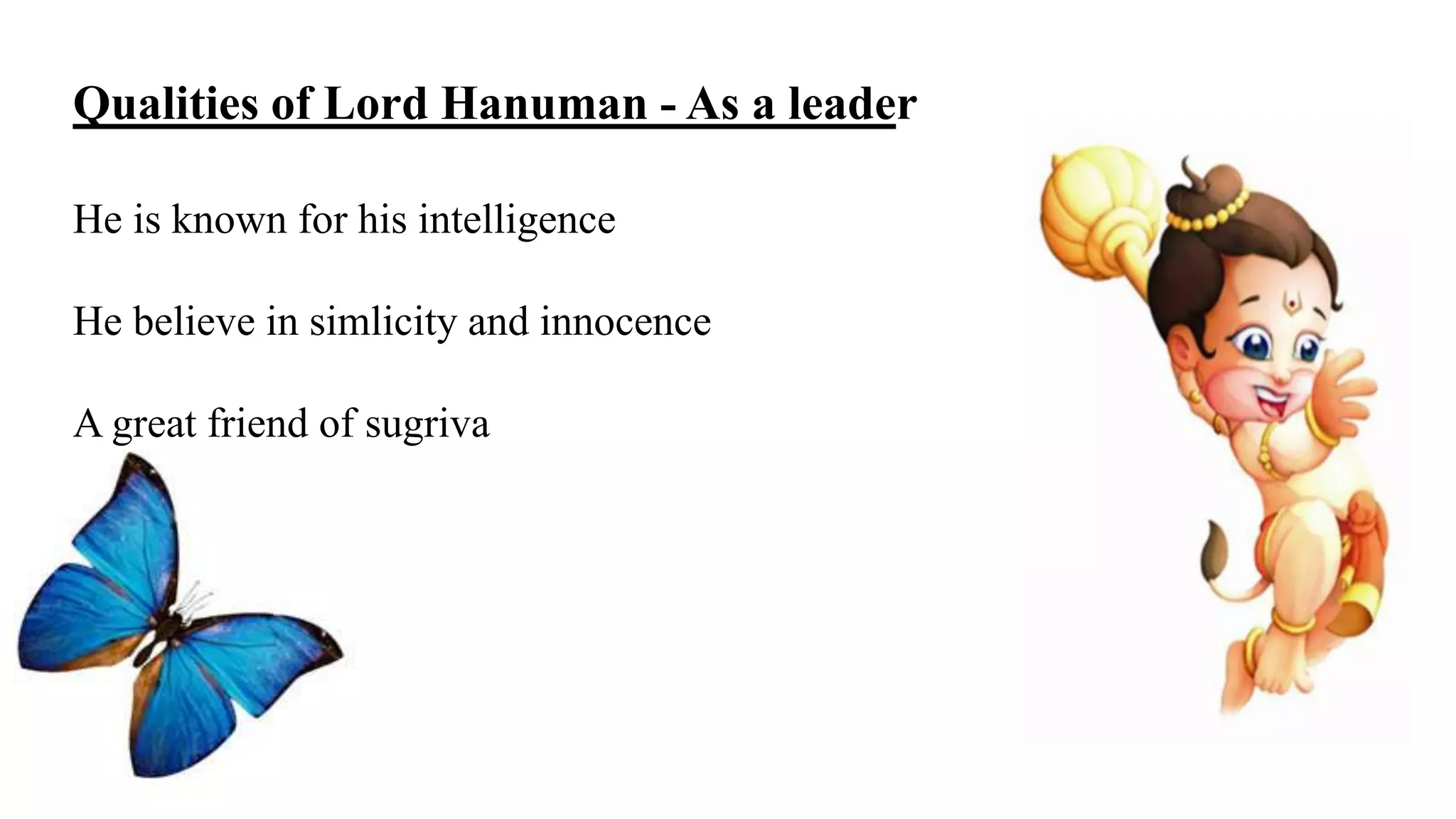
Qualities of Lord Hanuman - As a leader
He is known for his intelligence
He believe in simlicity and innocence
A great friend of sugriva
Management Lessons
 Provide a concrete vision to followers.
 Believe in the ability of subordinates to achieve an aim and
inspire them to do so.
 Treat all people equally.
 Stand courageously in the face of great adversity.
 Consult subordinate on important matters and allow them to
give their opinion freely
 Follow a code of ethics and be ready to sacrifice to follow
it.
Values taught
in Ramayana
 Relationship V/S Money
 Forgiveness
 Protecting the weak
 Equality of race and creed
 Humanity
Conclusion
Your soul is Rama, your mind is Sita, your breath or life-force (prana) is
Hanuman, your awareness is Laxmana and your ego is Ravana.
When the mind was stolen by ravana (the ego) then the soul got restless.
Now the soul cannot reach the mind on its own, it has to take the help of
the breathe – the prana. With the help of the prana, the mind got reunited
with the soul, and the ego vanished.
Ramayana and its management lesson

Ramayana and its management lesson

  • 1.
    Subject : Enterprenurshipand Ethics Topic: Management Teachings of Valmikee Ramayana Submitted To Submitted By Dr. Anupama Paliwal Ashi Mathur Krati Chopra Ruchi Vyas Supriya Singh
  • 3.
    Index  Introduction toRamayana  Ramayana- What does the title mean?  Qualities of Lord Rama-As a Leader  Management lessons  Values taught in Ramayana  Conclusion
  • 4.
    Introduction to Ramayana •Two great epics of India , one is the Ramayana and other being the Mahabharata • Originally composed in Sanskrit by Valmiki around 1500 BCE or earlier • Considered the first great poetical work.
  • 5.
    Ramayana- what doesthe title mean?  Ramayana literally means Rama’s journey (‘Ayana’= Journey; Rama+ayana= Ramayana).  The word ‘journey’ here refers to his wanderings in the forest when he is banished from the kingdom of Ayodhya for 14 years.  Rama’s journey also includes Rama’s march to far off Lanka to battle king Ravana who had abducted Rama’s wife, Sita, and his journey back to Ayodhya after he recovers her.
  • 6.
    Qualities of LordRama - As a leader Tyagavira = famous for his sacrifice Vidyavira = famous for his wisdom Consulting subordinate for their opinion Clarity in vision
  • 7.
    Qualities of LordHanuman - As a leader He is known for his intelligence He believe in simlicity and innocence A great friend of sugriva
  • 9.
    Management Lessons  Providea concrete vision to followers.  Believe in the ability of subordinates to achieve an aim and inspire them to do so.  Treat all people equally.  Stand courageously in the face of great adversity.  Consult subordinate on important matters and allow them to give their opinion freely  Follow a code of ethics and be ready to sacrifice to follow it.
  • 10.
    Values taught in Ramayana Relationship V/S Money  Forgiveness  Protecting the weak  Equality of race and creed  Humanity
  • 11.
    Conclusion Your soul isRama, your mind is Sita, your breath or life-force (prana) is Hanuman, your awareness is Laxmana and your ego is Ravana. When the mind was stolen by ravana (the ego) then the soul got restless. Now the soul cannot reach the mind on its own, it has to take the help of the breathe – the prana. With the help of the prana, the mind got reunited with the soul, and the ego vanished.