Ramayana:
The Epic of Entrepreneurial Lessons
• Ramayana, the sacred book is read at most of the houses
  during the Dussehra and Diwali festival.

• This month is celebrated as Ramayana month and Ramleela is
  played in northern part of the country.

• The book describes the heroic efforts of Lord Rama to kill the
  evil demon Ravana.

• Though it is a religious book, it also teaches us management
  and leadership lessons.

• An entrepreneur can implement these lessons to see his startup
  grow as a successful enterprise.
• 10. Make sure you have a clear vision and cause
  Ravana‟s brother Vibhishan, who had come to
  Rama‟s side questioned him, “How will you defeat
  this huge army with your limited resources?” The
  reply which Rama gave is the greatest lesson ever
  for a leader. He said, “You have to make sure you
  have a clear vision, and a cause worth fighting for.”
  In the case of Ramayana, Rama‟s cause was to
  rescue his beloved Sita and the vision was to defeat
  the evil forces.
9. 4 foremost ingredients of Entrepreneurship:
            Character, Courage, Ethics, Valor

Rama told to Vibhishan that the four wheels of the chariot
are character, courage, ethics, and valor. Character is the
most essential thing for a leader. As an entrepreneur, you
must know who you are and what you stand for and
communicate the same to your people through actions rather
than words. Leadership and respect doesn‟t come from a
business card. It is the ethics, the value system you embody
that does the needful. Courage is the ability to take
unpopular decisions, while valor is the courage to defend
those very decisions.
• 8. Be a storehouse of strength, energy, and
  passion

 Rama said that the horses of the chariot are
 strength, energy, and passion. In a battle and so in
 your entrepreneurial venture, you must have the
 strength to discriminate between the right and
 wrong, and the zeal and perseverance to keep
 working towards your goal.
7.Brand is bigger than the "owner" of the
                       brand
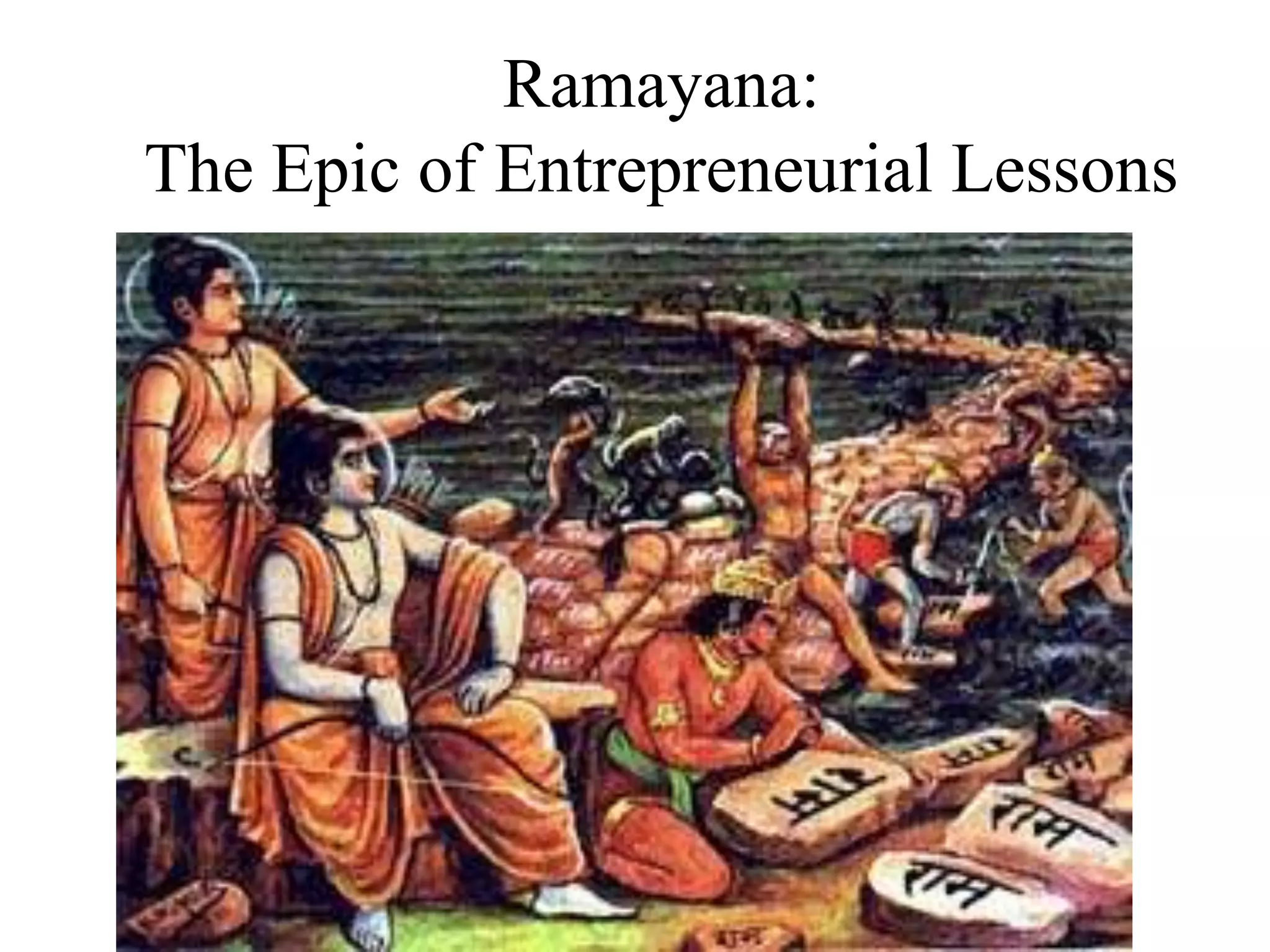
• A big challenge on the way to Lanka was to cross the southern sea.
  People suggested inscribing the name “Rama” on the stone and
  then throwing it. Surprisingly it worked and a construction of the
  bridge started by monkeys „Nal‟ and „Neel‟. After sometime Rama
  decided to help and he threw a stone in the ocean. To everyone‟s
  amazement, it sank. Everyone realized that it happened because the
  stone was not inscribed with “Rama”.

• Lord Rama was confident that he does not need to use his "brand"
  as he was THE "brand" and tried to repeat the magic. But it did not
  work. It was not "branded" with "Rama".

• This explains that a brand is always bigger than the owner of the
  brand. An entrepreneur should feel good when people recognize
  him by the name his company. He should feel happy that his brand
  is becoming bigger than him.
                                 •
6. Be armed with
knowledge, strategy, intelligence, skills, commitmen
                           t
  These are the weapons that helped Rama win the
 mammoth battle and would help you in this exciting
 and demanding journey.
  Rama said to his army before entering into the
 battle, “Arm yourself with these and no war will be
 lost.” After the battle, his army—the group of men
 and monkeys defeated the heavily equipped Ravana
 and his forces.
5. Consult subordinates on important matters and
       allow them to give their opinions freely
When Vibhishan defected, Rama took him under his
protection. He then had a talk with the various army
chiefs some of whom disagreed with Rama. Instead
of punishing them, Rama got them to accept his
decision.
Everybody felt that their opinions had been heard
and that their objections had been clarified.
Empowerment of subordinates to question his
decisions was a key and unique quality of Rama
which contrasted with Ravana who never allowed
anybody to contradict him.
4. Treat everyone equally
• Rama was a prince who interacted freely with the
  people. Rama did not have any biases regarding
  developing relationships with people of a lower
  social status. Thus he accepted the hospitality of the
  chief of the fisher folk and allied with the forest
  tribes who were out of the light of normal society. In
  fact, Rama gave them positions of equality.
• This was not only due to the war conditions since he
  maintained the same relationship when he won the
  war. Not surprisingly, he received great loyalty from
  all.
3. Stand courageously in the face of great
                      adversity
Following Sita's kidnap, Rama wandered poor and
ruined in the forests searching for Sita.
 The Ramayana is full of touching details of Rama's
sadness and his memory of Sita. Yet this grief did
not prevent him from searching for partners even
when the enemy was unknown.
Rama maintained his courage even at the darkest
hours and in doing so inspired his army to not only
continue the unequal fight, but also win it.
2. Have a future oriented plan

• The objective of Rama was future oriented. He was
  ordered to stay away from Ayodhya for 14 years in a
  forest. This long term actions gave Rama enough
  time to plan, organize resource and strike against
  Ravana at an apt time so that mission could be
  completed without failure.
1. Follow a code of ethics and be ready to
              sacrifice to follow it
Rama brought ethical decision making in all areas of
his life. There are many leaders who make a sacrifice
once in order to build credibility and then use it to
make unethical decisions later relying on the
knowledge that their initial sacrifice would make
them immune to attacks.
When Ravana paraded to battle on the first day
without sufficient preparations and was rendered
weaponless by Rama, he was allowed to return to his
fort because Rama followed the code of loyalty that
an unarmed enemy should not be attacked.

Ramayana

  • 1.
    Ramayana: The Epic ofEntrepreneurial Lessons
  • 2.
    • Ramayana, thesacred book is read at most of the houses during the Dussehra and Diwali festival. • This month is celebrated as Ramayana month and Ramleela is played in northern part of the country. • The book describes the heroic efforts of Lord Rama to kill the evil demon Ravana. • Though it is a religious book, it also teaches us management and leadership lessons. • An entrepreneur can implement these lessons to see his startup grow as a successful enterprise.
  • 3.
    • 10. Makesure you have a clear vision and cause Ravana‟s brother Vibhishan, who had come to Rama‟s side questioned him, “How will you defeat this huge army with your limited resources?” The reply which Rama gave is the greatest lesson ever for a leader. He said, “You have to make sure you have a clear vision, and a cause worth fighting for.” In the case of Ramayana, Rama‟s cause was to rescue his beloved Sita and the vision was to defeat the evil forces.
  • 4.
    9. 4 foremostingredients of Entrepreneurship: Character, Courage, Ethics, Valor Rama told to Vibhishan that the four wheels of the chariot are character, courage, ethics, and valor. Character is the most essential thing for a leader. As an entrepreneur, you must know who you are and what you stand for and communicate the same to your people through actions rather than words. Leadership and respect doesn‟t come from a business card. It is the ethics, the value system you embody that does the needful. Courage is the ability to take unpopular decisions, while valor is the courage to defend those very decisions.
  • 5.
    • 8. Bea storehouse of strength, energy, and passion Rama said that the horses of the chariot are strength, energy, and passion. In a battle and so in your entrepreneurial venture, you must have the strength to discriminate between the right and wrong, and the zeal and perseverance to keep working towards your goal.
  • 6.
    7.Brand is biggerthan the "owner" of the brand • A big challenge on the way to Lanka was to cross the southern sea. People suggested inscribing the name “Rama” on the stone and then throwing it. Surprisingly it worked and a construction of the bridge started by monkeys „Nal‟ and „Neel‟. After sometime Rama decided to help and he threw a stone in the ocean. To everyone‟s amazement, it sank. Everyone realized that it happened because the stone was not inscribed with “Rama”. • Lord Rama was confident that he does not need to use his "brand" as he was THE "brand" and tried to repeat the magic. But it did not work. It was not "branded" with "Rama". • This explains that a brand is always bigger than the owner of the brand. An entrepreneur should feel good when people recognize him by the name his company. He should feel happy that his brand is becoming bigger than him. •
  • 7.
    6. Be armedwith knowledge, strategy, intelligence, skills, commitmen t These are the weapons that helped Rama win the mammoth battle and would help you in this exciting and demanding journey. Rama said to his army before entering into the battle, “Arm yourself with these and no war will be lost.” After the battle, his army—the group of men and monkeys defeated the heavily equipped Ravana and his forces.
  • 8.
    5. Consult subordinateson important matters and allow them to give their opinions freely When Vibhishan defected, Rama took him under his protection. He then had a talk with the various army chiefs some of whom disagreed with Rama. Instead of punishing them, Rama got them to accept his decision. Everybody felt that their opinions had been heard and that their objections had been clarified. Empowerment of subordinates to question his decisions was a key and unique quality of Rama which contrasted with Ravana who never allowed anybody to contradict him.
  • 9.
    4. Treat everyoneequally • Rama was a prince who interacted freely with the people. Rama did not have any biases regarding developing relationships with people of a lower social status. Thus he accepted the hospitality of the chief of the fisher folk and allied with the forest tribes who were out of the light of normal society. In fact, Rama gave them positions of equality. • This was not only due to the war conditions since he maintained the same relationship when he won the war. Not surprisingly, he received great loyalty from all.
  • 10.
    3. Stand courageouslyin the face of great adversity Following Sita's kidnap, Rama wandered poor and ruined in the forests searching for Sita. The Ramayana is full of touching details of Rama's sadness and his memory of Sita. Yet this grief did not prevent him from searching for partners even when the enemy was unknown. Rama maintained his courage even at the darkest hours and in doing so inspired his army to not only continue the unequal fight, but also win it.
  • 11.
    2. Have afuture oriented plan • The objective of Rama was future oriented. He was ordered to stay away from Ayodhya for 14 years in a forest. This long term actions gave Rama enough time to plan, organize resource and strike against Ravana at an apt time so that mission could be completed without failure.
  • 12.
    1. Follow acode of ethics and be ready to sacrifice to follow it Rama brought ethical decision making in all areas of his life. There are many leaders who make a sacrifice once in order to build credibility and then use it to make unethical decisions later relying on the knowledge that their initial sacrifice would make them immune to attacks. When Ravana paraded to battle on the first day without sufficient preparations and was rendered weaponless by Rama, he was allowed to return to his fort because Rama followed the code of loyalty that an unarmed enemy should not be attacked.