Radiotherapy
Content
Definition
Epidemiology
Purpose of chemotherapy
Classification
Mechanism of action
Complications
Oral manifestation
 Management
 References
Radiotherapy
 Radiation is one of the most common treatments for
cancer that uses beams of intense energy to kill
cancer cells.
 Other names for radiation treatment are radiation
therapy, radiotherapy, irradiation, or x-ray therapy.
Epidemiology
Types of oral complications vary in pattern, duration, and
intensity for each individual patient and depending on the
cancer therapy regimen and dose intensity: for example, cancer
chemotherapy, head and neck radiation therapy, targeted
cancer therapies, and HSCT.5–8 The Oral Care Study Group
and the Mucositis Study Group of the Multinational Association
of Supportive Care in Cancer/International Society of Oral
Oncology (MASCC/ISOO) have performed systematic reviews
of the most common oral complications of cancer therapies and
provided prevalence of oral mucositis,9,10 oral pain,11 oral
fungal infection,12 oral viral infection,13 salivary gland hypo
function and xerostomia,14 dysgeusia,15 trismus,16 dental
disease,17 osteoradionecrosis (ORN),18 and bisphosphonate
osteonecrosis19 in relation to various regimens of cancer
therapy
Of Oral Complication
Purpose of Radiotherapy
Radiation therapy is an important tool for treating
cancer and is often used in conjunction with other
therapies, such as chemotherapy or tumor removal
surgery. The main goals of radiation therapy are to
shrink tumors and kill cancer cells
Type of Radiotherapy
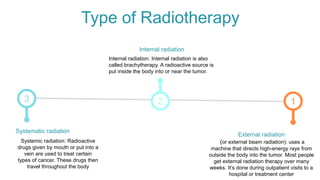
3 2 1
Systematic radiation
Systemic radiation: Radioactive
drugs given by mouth or put into a
vein are used to treat certain
types of cancer. These drugs then
travel throughout the body
Internal radiation
Internal radiation: Internal radiation is also
called brachytherapy. A radioactive source is
put inside the body into or near the tumor.
External radiation
(or external beam radiation): uses a
machine that directs high-energy rays from
outside the body into the tumor. Most people
get external radiation therapy over many
weeks. It’s done during outpatient visits to a
hospital or treatment center
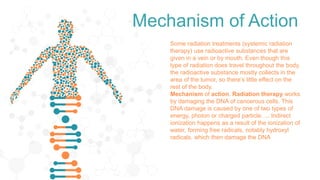
Mechanism of Action
Some radiation treatments (systemic radiation
therapy) use radioactive substances that are
given in a vein or by mouth. Even though this
type of radiation does travel throughout the body,
the radioactive substance mostly collects in the
area of the tumor, so there’s little effect on the
rest of the body.
Mechanism of action. Radiation therapy works
by damaging the DNA of cancerous cells. This
DNA damage is caused by one of two types of
energy, photon or charged particle. ... Indirect
ionization happens as a result of the ionization of
water, forming free radicals, notably hydroxyl
radicals, which then damage the DNA
 Difficulty swallowing
 Shortness of breath
 Shoulder stiffness
 Cough, fever, and fullness of the chest,
known as radiation pneumonitis. This
happens between 2 weeks and 6
months after radiation therapy.
 Nausea and vomiting
 Radiation fibrosis, which causes
permanent lung scars from untreated
radiation pneumonitis. The radiation
oncologist knows how to lower the risk
of fibrosis.
 Rectal bleeding
 Diarrhea
 Bladder irritation
 Incontinence, which is when a person
is not able to control his or her bladder
Complication
Oral Manifestation
 Mucositis (Head and neck
radiation therapy, chemotherapy)
 Mucous membrane
lesions/stomatitis (All cancer
therapies)
 Fungal infection (All cancer
therapies)
 Viral infection (All cancer
therapies)
 Bacterial infection (All cancer
therapies)
 Salivary gland hypo function/
xerostomia (All cancer therapies*)
 Dysgeusia (All cancer therapies)
 Halitosis (All cancer therapies)
 Trismus (radiation therapy)
 Osteoradionecrosis (radiation
therapy)
O
R
A
L
Oral Management
BEFORE STARTING RADIOTHERAPY
DURING RADIOTHERAPY
AFTER COMPLETION OF TREATMENT
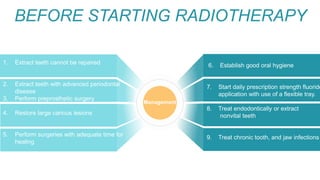
BEFORE STARTING RADIOTHERAPY
1. Extract teeth cannot be repaired
2. Extract teeth with advanced periodontal
disease
3. Perform preprosthetic surgery
4. Restore large carious lesions
5. Perform surgeries with adequate time for
healing
Management
6. Establish good oral hygiene
7. Start daily prescription strength fluoride
application with use of a flexible tray.
8. Treat endodontically or extract
nonvital teeth
9. Treat chronic tooth, and jaw infections
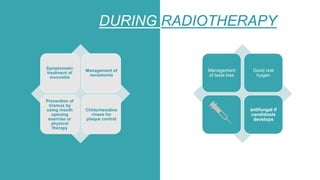
DURING RADIOTHERAPY
Symptomatic
treatment of
mucositis
Management of
xerostomia
Prevention of
trismus by
using mouth
opening
exercise or
physical
therapy
Chhlorhexidine
rinses for
plaque control
Management
of taste loss
Good oral
hyigen
antifungal if
candidosis
develops
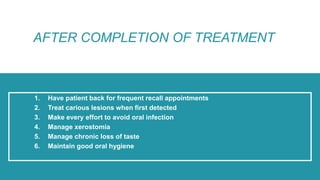
1. Have patient back for frequent recall appointments
2. Treat carious lesions when first detected
3. Make every effort to avoid oral infection
4. Manage xerostomia
5. Manage chronic loss of taste
6. Maintain good oral hygiene
AFTER COMPLETION OF TREATMENT
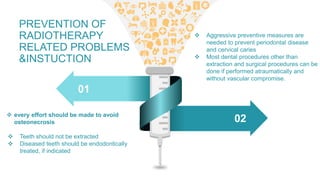
01
02 every effort should be made to avoid
osteonecrosis
 Teeth should not be extracted
 Diseased teeth should be endodontically
treated, if indicated
 Aggressive preventive measures are
needed to prevent periodontal disease
and cervical caries
 Most dental procedures other than
extraction and surgical procedures can be
done if performed atraumatically and
without vascular compromise.
PREVENTION OF
RADIOTHERAPY
RELATED PROBLEMS
&INSTUCTION
https://www.cancer.net/navigating-cancer-care/how-cancer-treated/radiation-therapy/side-eff
ects-radiation-therapy
https://www.foxchase.org/clinical-care/departments-programs/clinical-departments/radiation-
oncology/preparing-radiation-therapy/managing-side-effects
https://www.ncbi.nlm.nih.gov/pmc/articles/PMC4405951/
burket of oral medicine
Medical compromised patient
Refrence
Thank You
Any question

radiotherapy

  • 1.
  • 2.
    Content Definition Epidemiology Purpose of chemotherapy Classification Mechanismof action Complications Oral manifestation  Management  References
  • 3.
    Radiotherapy  Radiation isone of the most common treatments for cancer that uses beams of intense energy to kill cancer cells.  Other names for radiation treatment are radiation therapy, radiotherapy, irradiation, or x-ray therapy.
  • 4.
    Epidemiology Types of oralcomplications vary in pattern, duration, and intensity for each individual patient and depending on the cancer therapy regimen and dose intensity: for example, cancer chemotherapy, head and neck radiation therapy, targeted cancer therapies, and HSCT.5–8 The Oral Care Study Group and the Mucositis Study Group of the Multinational Association of Supportive Care in Cancer/International Society of Oral Oncology (MASCC/ISOO) have performed systematic reviews of the most common oral complications of cancer therapies and provided prevalence of oral mucositis,9,10 oral pain,11 oral fungal infection,12 oral viral infection,13 salivary gland hypo function and xerostomia,14 dysgeusia,15 trismus,16 dental disease,17 osteoradionecrosis (ORN),18 and bisphosphonate osteonecrosis19 in relation to various regimens of cancer therapy Of Oral Complication
  • 5.
    Purpose of Radiotherapy Radiationtherapy is an important tool for treating cancer and is often used in conjunction with other therapies, such as chemotherapy or tumor removal surgery. The main goals of radiation therapy are to shrink tumors and kill cancer cells
  • 6.
    Type of Radiotherapy 32 1 Systematic radiation Systemic radiation: Radioactive drugs given by mouth or put into a vein are used to treat certain types of cancer. These drugs then travel throughout the body Internal radiation Internal radiation: Internal radiation is also called brachytherapy. A radioactive source is put inside the body into or near the tumor. External radiation (or external beam radiation): uses a machine that directs high-energy rays from outside the body into the tumor. Most people get external radiation therapy over many weeks. It’s done during outpatient visits to a hospital or treatment center
  • 7.
    Mechanism of Action Someradiation treatments (systemic radiation therapy) use radioactive substances that are given in a vein or by mouth. Even though this type of radiation does travel throughout the body, the radioactive substance mostly collects in the area of the tumor, so there’s little effect on the rest of the body. Mechanism of action. Radiation therapy works by damaging the DNA of cancerous cells. This DNA damage is caused by one of two types of energy, photon or charged particle. ... Indirect ionization happens as a result of the ionization of water, forming free radicals, notably hydroxyl radicals, which then damage the DNA
  • 8.
     Difficulty swallowing Shortness of breath  Shoulder stiffness  Cough, fever, and fullness of the chest, known as radiation pneumonitis. This happens between 2 weeks and 6 months after radiation therapy.  Nausea and vomiting  Radiation fibrosis, which causes permanent lung scars from untreated radiation pneumonitis. The radiation oncologist knows how to lower the risk of fibrosis.  Rectal bleeding  Diarrhea  Bladder irritation  Incontinence, which is when a person is not able to control his or her bladder Complication
  • 9.
    Oral Manifestation  Mucositis(Head and neck radiation therapy, chemotherapy)  Mucous membrane lesions/stomatitis (All cancer therapies)  Fungal infection (All cancer therapies)  Viral infection (All cancer therapies)  Bacterial infection (All cancer therapies)  Salivary gland hypo function/ xerostomia (All cancer therapies*)  Dysgeusia (All cancer therapies)  Halitosis (All cancer therapies)  Trismus (radiation therapy)  Osteoradionecrosis (radiation therapy) O R A L
  • 10.
    Oral Management BEFORE STARTINGRADIOTHERAPY DURING RADIOTHERAPY AFTER COMPLETION OF TREATMENT
  • 11.
    BEFORE STARTING RADIOTHERAPY 1.Extract teeth cannot be repaired 2. Extract teeth with advanced periodontal disease 3. Perform preprosthetic surgery 4. Restore large carious lesions 5. Perform surgeries with adequate time for healing Management 6. Establish good oral hygiene 7. Start daily prescription strength fluoride application with use of a flexible tray. 8. Treat endodontically or extract nonvital teeth 9. Treat chronic tooth, and jaw infections
  • 12.
    DURING RADIOTHERAPY Symptomatic treatment of mucositis Managementof xerostomia Prevention of trismus by using mouth opening exercise or physical therapy Chhlorhexidine rinses for plaque control Management of taste loss Good oral hyigen antifungal if candidosis develops
  • 13.
    1. Have patientback for frequent recall appointments 2. Treat carious lesions when first detected 3. Make every effort to avoid oral infection 4. Manage xerostomia 5. Manage chronic loss of taste 6. Maintain good oral hygiene AFTER COMPLETION OF TREATMENT
  • 14.
    01 02 every effortshould be made to avoid osteonecrosis  Teeth should not be extracted  Diseased teeth should be endodontically treated, if indicated  Aggressive preventive measures are needed to prevent periodontal disease and cervical caries  Most dental procedures other than extraction and surgical procedures can be done if performed atraumatically and without vascular compromise. PREVENTION OF RADIOTHERAPY RELATED PROBLEMS &INSTUCTION
  • 15.
  • 16.