Seminar topic
REDIOACTIVE POLLUTION IN AQUATIC ENVIRONMENT
Course Title
AQUATIC POLLUTION AND WASTE WATER MANAGEMENT
Presented by:
Narendra Kumar Maurya
Department of AEM
RADIOACTIVE POLLUTION
INTRODUTION
Radiation And Radioactivity:
 The application of radioactive elements in nuclear weapons, X-rays, MRI and other
medical equipment causes their exposure to human beings.
 The deposition of these radioactive gases in water bodies also cause radioactive
contamination.
 Radiation is the transport of energy through space.
 Two types of radiation. - Ionizing radiation
- Non ionizing radiation
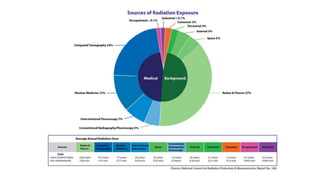
Sources of radioactive pollution
1. Natural sources of radiation: Natural sources of radiation are mentioned below:
 In natural sources of radioactive pollution, atomic radioactive minerals are one
among them.
 Cosmic rays possess high energy ionizing electromagnetic radiation.
 Another source of radioactive radiation is naturally occurring radioisotopes.
Radioisotopes are found in soil in small quantity.
 Radioactive elements like radium, thorium, uranium, isotopes of potassium and
carbon occur in lithosphere
2. Anthropogenic sources of radiation
Human activities mentioned below include in sources of radioactive pollution:
• Nuclear tests
• Nuclear reactors
• Diagnostic medical applications
• Nuclear Wastes
• Nuclear explosions
• Nuclear metal processing
Almost 99 such nuclear accidents have been occur through out
worldwide. 56 of 99,have been occurred only in USA.
Nuclear Reactor Accidents
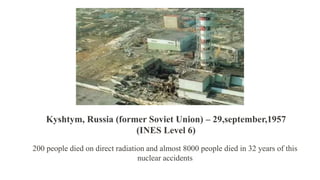
200 people died on direct radiation and almost 8000 people died in 32 years of this
nuclear accidents
Kyshtym, Russia (former Soviet Union) – 29,september,1957
(INES Level 6)
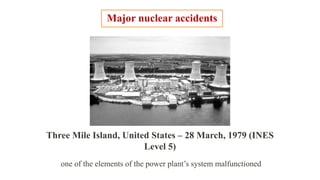
one of the elements of the power plant’s system malfunctioned
Major nuclear accidents
Three Mile Island, United States – 28 March, 1979 (INES
Level 5)
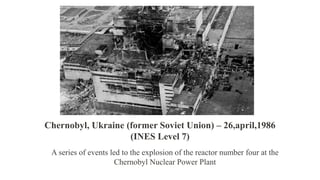
A series of events led to the explosion of the reactor number four at the
Chernobyl Nuclear Power Plant
Chernobyl, Ukraine (former Soviet Union) – 26,april,1986
(INES Level 7)
9.0 magnitude earthquake struck off the coast of Japan. The resulting tsunami (49 feet
tall) hit the Fukushima I Nuclear Power Plant 51 and experienced meltdown
Fukushima, Japan –11,march 2011 (INES Level 7)
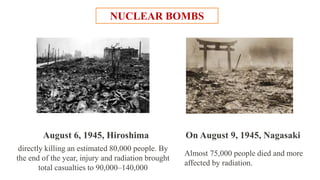
NUCLEAR BOMBS
directly killing an estimated 80,000 people. By
the end of the year, injury and radiation brought
total casualties to 90,000–140,000
August 6, 1945, Hiroshima
Almost 75,000 people died and more
affected by radiation.
On August 9, 1945, Nagasaki
Radiation Health Effects
 Radionuclides are carcinogens and at high doses can also cause rapid sickness and
death.
 The health effects of exposure to radiation depend on many factors.
 the amount of energy it deliver
 the length of exposure time
 the organs and tissues exposed
 characteristics of the exposed person
How does radiation injure people?
 High energy radiation breaks chemical bonds.
 This creates free radicals, like those produced by other insults as well as by normal
cellular processes in the body.
 The free radicals can change chemicals in the body.
 These changes can disrupt cell function and may kill cells.
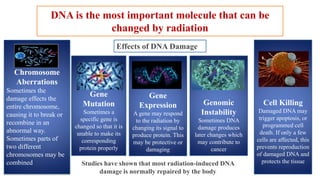
DNA is the most important molecule that can be
changed by radiation
Effects of DNA Damage
Chromosome
Aberrations
Sometimes the
damage effects the
entire chromosome,
causing it to break or
recombine in an
abnormal way.
Sometimes parts of
two different
chromosomes may be
combined
Gene
Mutation
Sometimes a
specific gene is
changed so that it is
unable to make its
corresponding
protein properly
Gene
Expression
A gene may respond
to the radiation by
changing its signal to
produce protein. This
may be protective or
damaging
Genomic
Instability
Sometimes DNA
damage produces
later changes which
may contribute to
cancer
Cell Killing
Damaged DNA may
trigger apoptosis, or
programmed cell
death. If only a few
cells are affected, this
prevents reproduction
of damaged DNA and
protects the tissue
Studies have shown that most radiation-induced DNA
damage is normally repaired by the body
Prevention
• Nuclear devices should be exploded under ground.
• Contaminants may be employed to decrease the radioactive emissions.
• Production of radio isotopes should be minimized.
• Extreme care should be exercised in the disposal of industrial wastes contained with
radionuclide's.
• Use of high chimney and ventilations at the working
place where radioactive contamination is high
• In nuclear reactors, closed cycle coolant system with gaseous coolants of very high
purity may be used to prevent extraneous activation products.
• Fission reactions should be minimized.
• In nuclear mines, wet drilling may be employed along with underground drainage.
• Nuclear medicines and radiation therapy should be applied when absolutely
necessary and earth minimum doses.
We Create Nature For Future

radio active pollution.pptx

  • 1.
    Seminar topic REDIOACTIVE POLLUTIONIN AQUATIC ENVIRONMENT Course Title AQUATIC POLLUTION AND WASTE WATER MANAGEMENT Presented by: Narendra Kumar Maurya Department of AEM
  • 2.
    RADIOACTIVE POLLUTION INTRODUTION Radiation AndRadioactivity:  The application of radioactive elements in nuclear weapons, X-rays, MRI and other medical equipment causes their exposure to human beings.  The deposition of these radioactive gases in water bodies also cause radioactive contamination.  Radiation is the transport of energy through space.  Two types of radiation. - Ionizing radiation - Non ionizing radiation
  • 3.
    Sources of radioactivepollution 1. Natural sources of radiation: Natural sources of radiation are mentioned below:  In natural sources of radioactive pollution, atomic radioactive minerals are one among them.  Cosmic rays possess high energy ionizing electromagnetic radiation.  Another source of radioactive radiation is naturally occurring radioisotopes. Radioisotopes are found in soil in small quantity.  Radioactive elements like radium, thorium, uranium, isotopes of potassium and carbon occur in lithosphere
  • 4.
    2. Anthropogenic sourcesof radiation Human activities mentioned below include in sources of radioactive pollution: • Nuclear tests • Nuclear reactors • Diagnostic medical applications • Nuclear Wastes • Nuclear explosions • Nuclear metal processing
  • 6.
    Almost 99 suchnuclear accidents have been occur through out worldwide. 56 of 99,have been occurred only in USA. Nuclear Reactor Accidents
  • 7.
    200 people diedon direct radiation and almost 8000 people died in 32 years of this nuclear accidents Kyshtym, Russia (former Soviet Union) – 29,september,1957 (INES Level 6)
  • 8.
    one of theelements of the power plant’s system malfunctioned Major nuclear accidents Three Mile Island, United States – 28 March, 1979 (INES Level 5)
  • 9.
    A series ofevents led to the explosion of the reactor number four at the Chernobyl Nuclear Power Plant Chernobyl, Ukraine (former Soviet Union) – 26,april,1986 (INES Level 7)
  • 10.
    9.0 magnitude earthquakestruck off the coast of Japan. The resulting tsunami (49 feet tall) hit the Fukushima I Nuclear Power Plant 51 and experienced meltdown Fukushima, Japan –11,march 2011 (INES Level 7)
  • 11.
    NUCLEAR BOMBS directly killingan estimated 80,000 people. By the end of the year, injury and radiation brought total casualties to 90,000–140,000 August 6, 1945, Hiroshima Almost 75,000 people died and more affected by radiation. On August 9, 1945, Nagasaki
  • 12.
    Radiation Health Effects Radionuclides are carcinogens and at high doses can also cause rapid sickness and death.  The health effects of exposure to radiation depend on many factors.  the amount of energy it deliver  the length of exposure time  the organs and tissues exposed  characteristics of the exposed person
  • 13.
    How does radiationinjure people?  High energy radiation breaks chemical bonds.  This creates free radicals, like those produced by other insults as well as by normal cellular processes in the body.  The free radicals can change chemicals in the body.  These changes can disrupt cell function and may kill cells.
  • 14.
    DNA is themost important molecule that can be changed by radiation Effects of DNA Damage Chromosome Aberrations Sometimes the damage effects the entire chromosome, causing it to break or recombine in an abnormal way. Sometimes parts of two different chromosomes may be combined Gene Mutation Sometimes a specific gene is changed so that it is unable to make its corresponding protein properly Gene Expression A gene may respond to the radiation by changing its signal to produce protein. This may be protective or damaging Genomic Instability Sometimes DNA damage produces later changes which may contribute to cancer Cell Killing Damaged DNA may trigger apoptosis, or programmed cell death. If only a few cells are affected, this prevents reproduction of damaged DNA and protects the tissue Studies have shown that most radiation-induced DNA damage is normally repaired by the body
  • 15.
    Prevention • Nuclear devicesshould be exploded under ground. • Contaminants may be employed to decrease the radioactive emissions. • Production of radio isotopes should be minimized. • Extreme care should be exercised in the disposal of industrial wastes contained with radionuclide's. • Use of high chimney and ventilations at the working place where radioactive contamination is high
  • 16.
    • In nuclearreactors, closed cycle coolant system with gaseous coolants of very high purity may be used to prevent extraneous activation products. • Fission reactions should be minimized. • In nuclear mines, wet drilling may be employed along with underground drainage. • Nuclear medicines and radiation therapy should be applied when absolutely necessary and earth minimum doses.
  • 17.
    We Create NatureFor Future