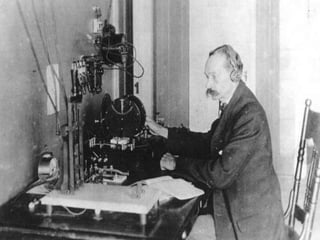
Guglielmo Marconi  (25 April 1874 – 20 July 1937) was an Italian inventor, best known for his development of a radiotelegraph system, which served as the foundation for the establishment of numerous affiliated companies worldwide. He shared the 1909 Nobel Prize in Physics with Karl Ferdinand Braun, "in recognition of their contributions to the development of wireless telegraphy".  Marconi
The Radio  Invention During his early years, Marconi had an interest in science and electricity. One of the scientific developments during this era came from Heinrich Hertz, who, beginning in 1888, demonstrated that one could produce and detect electromagnetic radiation—now generally known as "radio waves", at the time more commonly called "Hertzian waves" or "aetheric waves". Hertz's death in 1894 brought published reviews of his earlier discoveries, and a renewed interest on the part of Marconi. He was permitted to briefly study the subject under Augusto Righi, a University of Bologna physicist and neighbor of Marconi who had done research on Hertz's work.
The meaning of Radio The meaning and usage of the word "radio" has developed in parallel with developments within the field and can be seen to have three distinct phases: electromagnetic waves and experimentation; wireless communication and technical development; and radio broadcasting and commercialization.  Many individuals - inventors, engineers, developers, businessmen - contributed to produce the modern idea of radio and thus the origins and 'invention' are multiple and controversial. Early radio could not transmit sound or speech and was called the "wireless telegraph".  http://en.wikipedia.org/wiki/Radio#History
FM broadcasting is a broadcast technology invented by Edwin Howard Armstrong that uses frequency modulation (FM) to provide high-fidelity sound over broadcast radio The term ‘FM band’ is effectively shorthand for ‘frequency band in which FM is used for broadcasting’. It can upset purists, because it conflates a modulation scheme with a range of frequencies. In most of the world, the FM broadcast band, used for broadcasting FM radio stations, goes from 87.5 to 108.0 MHz's. In Japan the FM broadcast band is 76–90 MHz, unlike any other country in the world.  http://en.wikipedia.org/wiki/FM_broadcast_band FM Broadcasting
Radio Programs We can listen in the radio programs about: Weather Forecast Traffic Information Music Entertainment News Sports Games Debates Interviews Running commentaries
Radio is a greater potential in mass communication than the other mass media for two reasons. Firstly, it reaches even the remote corners of the country and has no physical impediments. Secondly, it imparts language education and provides entertainment and disseminates information to both literate and illiterate listeners. Radio is under government control for fear of its misuse and powerful influence.  http://www.languageinindia.com/april2003/massmedia.html Radio - Mass Media
Advantages of Radio Radio is a universal medium enjoyed by people at one time or another during the day, at home, at work, and even in the car.   Is the least expensive of all means of communication Gives your business personality through the creation of campaigns using sounds and voices   Free creative help is often available   Rates can generally be negotiated   During the past ten years, radio rates have seen less inflation than those for other media  http://www.powerhomebiz.com/vol118/admediums.htm
Disadvantages of Radio Because radio listeners are spread over many stations, you may have to advertise simultaneously on several stations to reach your target audience   Listeners cannot go back to your ads to go over important points   Ads are an interruption in the entertainment. Because of this, a radio ad may require multiple exposure to break through the listener's "tune-out" factor and ensure message retention   Radio is a background medium. Most listeners are doing something else while listening, which means that your ad has to work hard to get their attention  http://www.powerhomebiz.com/vol118/admediums.htm
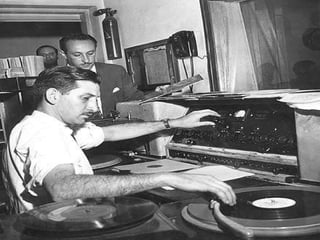
Some old pictures about the history of the Radio


“ Over and Out” Thanks

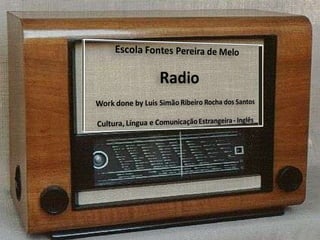
Radio

  • 1.
  • 2.
    Guglielmo Marconi (25 April 1874 – 20 July 1937) was an Italian inventor, best known for his development of a radiotelegraph system, which served as the foundation for the establishment of numerous affiliated companies worldwide. He shared the 1909 Nobel Prize in Physics with Karl Ferdinand Braun, "in recognition of their contributions to the development of wireless telegraphy". Marconi
  • 3.
    The Radio Invention During his early years, Marconi had an interest in science and electricity. One of the scientific developments during this era came from Heinrich Hertz, who, beginning in 1888, demonstrated that one could produce and detect electromagnetic radiation—now generally known as "radio waves", at the time more commonly called "Hertzian waves" or "aetheric waves". Hertz's death in 1894 brought published reviews of his earlier discoveries, and a renewed interest on the part of Marconi. He was permitted to briefly study the subject under Augusto Righi, a University of Bologna physicist and neighbor of Marconi who had done research on Hertz's work.
  • 4.
    The meaning ofRadio The meaning and usage of the word "radio" has developed in parallel with developments within the field and can be seen to have three distinct phases: electromagnetic waves and experimentation; wireless communication and technical development; and radio broadcasting and commercialization. Many individuals - inventors, engineers, developers, businessmen - contributed to produce the modern idea of radio and thus the origins and 'invention' are multiple and controversial. Early radio could not transmit sound or speech and was called the "wireless telegraph". http://en.wikipedia.org/wiki/Radio#History
  • 5.
    FM broadcasting isa broadcast technology invented by Edwin Howard Armstrong that uses frequency modulation (FM) to provide high-fidelity sound over broadcast radio The term ‘FM band’ is effectively shorthand for ‘frequency band in which FM is used for broadcasting’. It can upset purists, because it conflates a modulation scheme with a range of frequencies. In most of the world, the FM broadcast band, used for broadcasting FM radio stations, goes from 87.5 to 108.0 MHz's. In Japan the FM broadcast band is 76–90 MHz, unlike any other country in the world. http://en.wikipedia.org/wiki/FM_broadcast_band FM Broadcasting
  • 6.
    Radio Programs Wecan listen in the radio programs about: Weather Forecast Traffic Information Music Entertainment News Sports Games Debates Interviews Running commentaries
  • 7.
    Radio is agreater potential in mass communication than the other mass media for two reasons. Firstly, it reaches even the remote corners of the country and has no physical impediments. Secondly, it imparts language education and provides entertainment and disseminates information to both literate and illiterate listeners. Radio is under government control for fear of its misuse and powerful influence. http://www.languageinindia.com/april2003/massmedia.html Radio - Mass Media
  • 8.
    Advantages of RadioRadio is a universal medium enjoyed by people at one time or another during the day, at home, at work, and even in the car.  Is the least expensive of all means of communication Gives your business personality through the creation of campaigns using sounds and voices  Free creative help is often available  Rates can generally be negotiated  During the past ten years, radio rates have seen less inflation than those for other media http://www.powerhomebiz.com/vol118/admediums.htm
  • 9.
    Disadvantages of RadioBecause radio listeners are spread over many stations, you may have to advertise simultaneously on several stations to reach your target audience  Listeners cannot go back to your ads to go over important points  Ads are an interruption in the entertainment. Because of this, a radio ad may require multiple exposure to break through the listener's "tune-out" factor and ensure message retention  Radio is a background medium. Most listeners are doing something else while listening, which means that your ad has to work hard to get their attention http://www.powerhomebiz.com/vol118/admediums.htm
  • 10.
    Some old picturesabout the history of the Radio
  • 11.
  • 12.
  • 13.
  • 14.
    “ Over andOut” Thanks