RABIES VIRUS
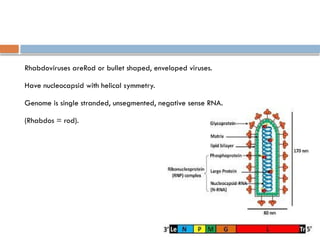
Rhabdoviruses areRod or bullet shaped, enveloped viruses.
Have nucleocapsid with helical symmetry.
Genome is single stranded, unsegmented, negative sense RNA.
(Rhabdos = rod).
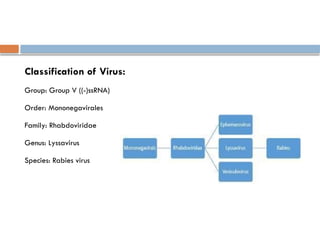
Classification of Virus:
Group: Group V ((-)ssRNA)
Order: Mononegavirales
Family: Rhabdoviridae
Genus: Lyssavirus
Species: Rabies virus
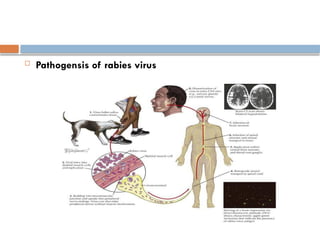
 Pathogensis of rabies virus
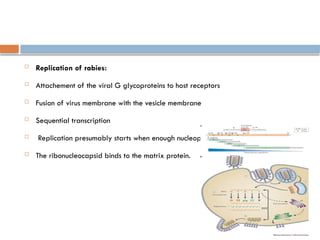
 Replication of rabies:
 Attachement of the viral G glycoproteins to host receptors
 Fusion of virus membrane with the vesicle membrane
 Sequential transcription
 Replication presumably starts when enough nucleoprotein is present
 The ribonucleocapsid binds to the matrix protein.
 Viral diseases:
Rabies is a viral disease that affects the central nervous system (CNS).
The genus lyssavirus contains more than 80 viruses. Classic rabies.
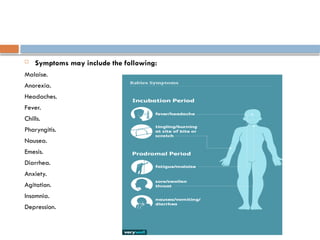
 Symptoms may include the following:
Malaise.
Anorexia.
Headaches.
Fever.
Chills.
Pharyngitis.
Nausea.
Emesis.
Diarrhea.
Anxiety.
Agitation.
Insomnia.
Depression.
 Treatments:
Washing the wound with copious amounts of soap and water.
Apply 1% quaternary ammonium compounds after all traces of soap have been
removed.
Apply antirabies serum ( human rabies immunoglobulin)(HRIG) into the wound and by
infiltration around the wound.
By:
Selina Al-Halayqa.
Duha Sider.

rabies viruse replication and mechanisms

  • 1.
  • 2.
    Rhabdoviruses areRod orbullet shaped, enveloped viruses. Have nucleocapsid with helical symmetry. Genome is single stranded, unsegmented, negative sense RNA. (Rhabdos = rod).
  • 3.
    Classification of Virus: Group:Group V ((-)ssRNA) Order: Mononegavirales Family: Rhabdoviridae Genus: Lyssavirus Species: Rabies virus
  • 4.
     Pathogensis ofrabies virus
  • 5.
     Replication ofrabies:  Attachement of the viral G glycoproteins to host receptors  Fusion of virus membrane with the vesicle membrane  Sequential transcription  Replication presumably starts when enough nucleoprotein is present  The ribonucleocapsid binds to the matrix protein.
  • 6.
     Viral diseases: Rabiesis a viral disease that affects the central nervous system (CNS). The genus lyssavirus contains more than 80 viruses. Classic rabies.
  • 7.
     Symptoms mayinclude the following: Malaise. Anorexia. Headaches. Fever. Chills. Pharyngitis. Nausea. Emesis. Diarrhea. Anxiety. Agitation. Insomnia. Depression.
  • 8.
     Treatments: Washing thewound with copious amounts of soap and water. Apply 1% quaternary ammonium compounds after all traces of soap have been removed. Apply antirabies serum ( human rabies immunoglobulin)(HRIG) into the wound and by infiltration around the wound.
  • 9.