Environmental Engineering (P23CET05)
2024-25
II B Tech I Semester
Civil Engineering
Topics:
 Surface sources
 Subsurface sources
 Physical, chemical and biological characteristics
 Estimation of water demand.
 Water consumption rate
 Fluctuations in rate of demand
 Design period.
 Population forecasting methods
Unit-1: Sources, Quality and Quantity Perspectives of
Water
Introduction to Environmental Engineering
Environmental engineering focuses
on the protection of human health
and the environment.
It involves the design of systems
that manage water, air, and land
resources sustainably.
Understanding surface and
subsurface sources is fundamental for
effective environmental
management.
What Are Surface Sources?
Surface sources refer to water bodies such as rivers, lakes, and
reservoirs.
They are vital for providing drinking water, irrigation, and recreational
opportunities.
Pollution in surface sources can significantly impact ecosystems and
human health.
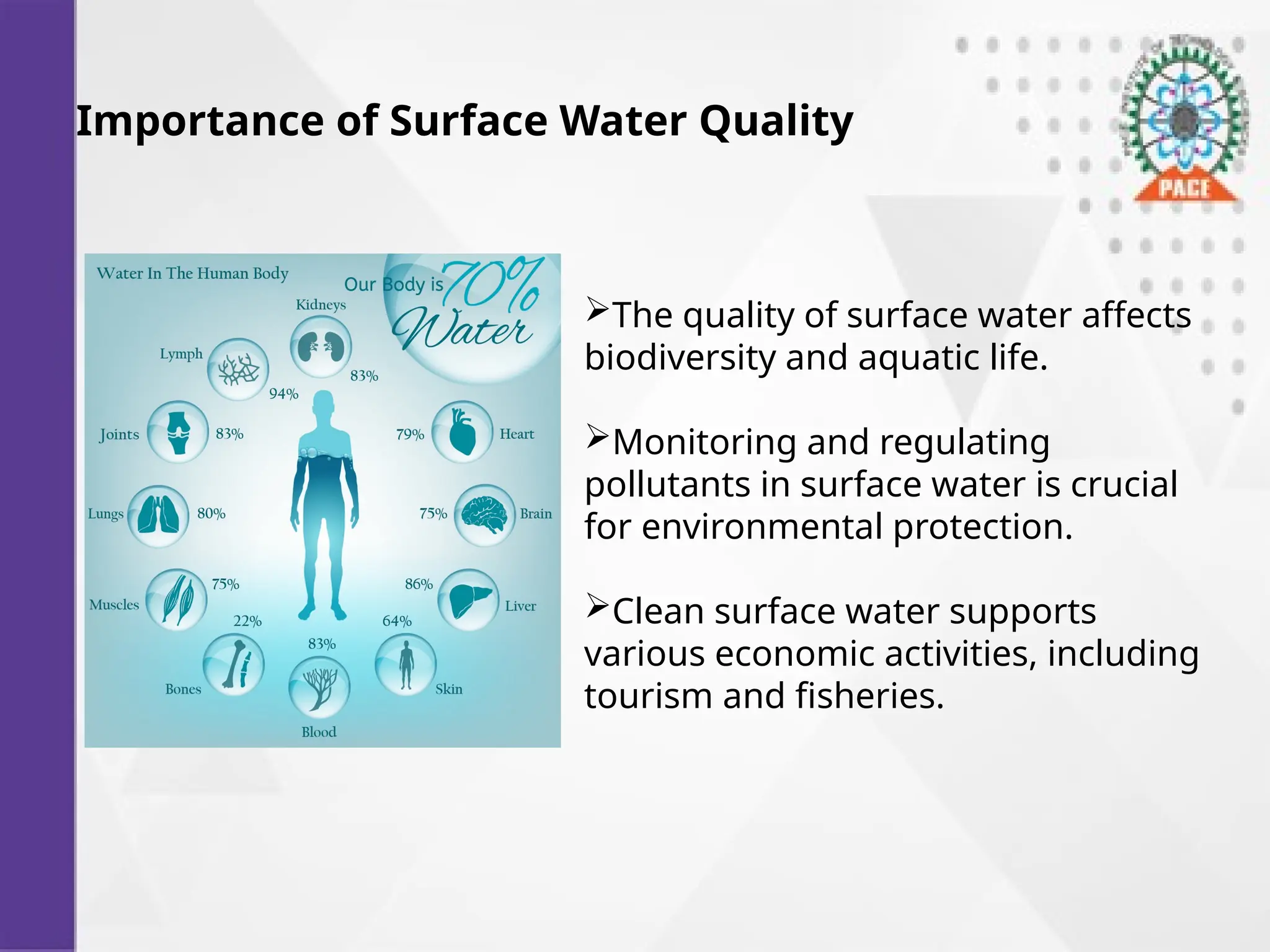
Importance of Surface Water Quality
The quality of surface water affects
biodiversity and aquatic life.
Monitoring and regulating
pollutants in surface water is crucial
for environmental protection.
Clean surface water supports
various economic activities, including
tourism and fisheries.
Common Surface Water Pollutants
Nutrients like nitrogen and
phosphorus can lead to harmful
algal blooms.
Sediments from erosion can impair
water quality and aquatic habitats.
Heavy metals and chemicals from
industrial runoff pose serious health
risks.
What Are Subsurface Sources?
Subsurface sources refer to
groundwater stored in aquifers
beneath the earth's surface.
Groundwater is a critical resource
for drinking water and irrigation
globally.
Understanding subsurface flow
dynamics is essential for sustainable
water management.
Groundwater Quality and Contamination
Groundwater can be contaminated by
agricultural runoff, industrial waste,
and septic systems.
Contaminants can travel long
distances underground, making
remediation challenging.
Protecting groundwater resources is
vital for ensuring safe drinking water
supplies.
Groundwater Recharge and Sustainability
Groundwater recharge occurs
when precipitation infiltrates the
soil and replenishes aquifers.
Sustainable management
practices are necessary to maintain
groundwater levels.
Over-extraction can lead to issues
like land subsidence and reduced
water quality.
Physical Aspects of Environmental Engineering
Physical aspects include the study
of fluid dynamics, hydrology, and
soil mechanics.
Engineers utilize physical
principles to design systems for
water treatment and waste
management.
Understanding these principles is
crucial for addressing
environmental challenges
effectively.
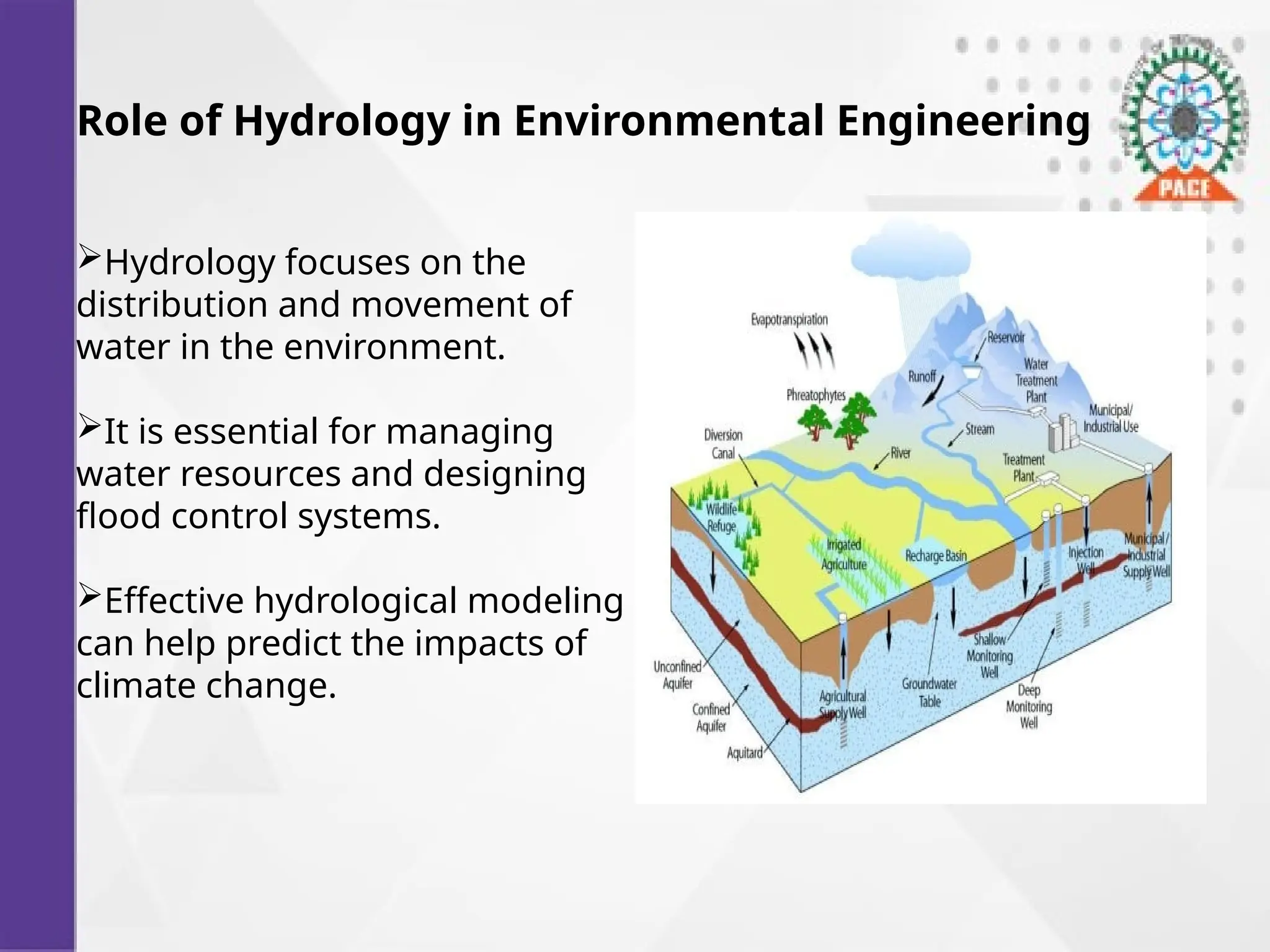
Role of Hydrology in Environmental Engineering
Hydrology focuses on the
distribution and movement of
water in the environment.
It is essential for managing
water resources and designing
flood control systems.
Effective hydrological modeling
can help predict the impacts of
climate change.
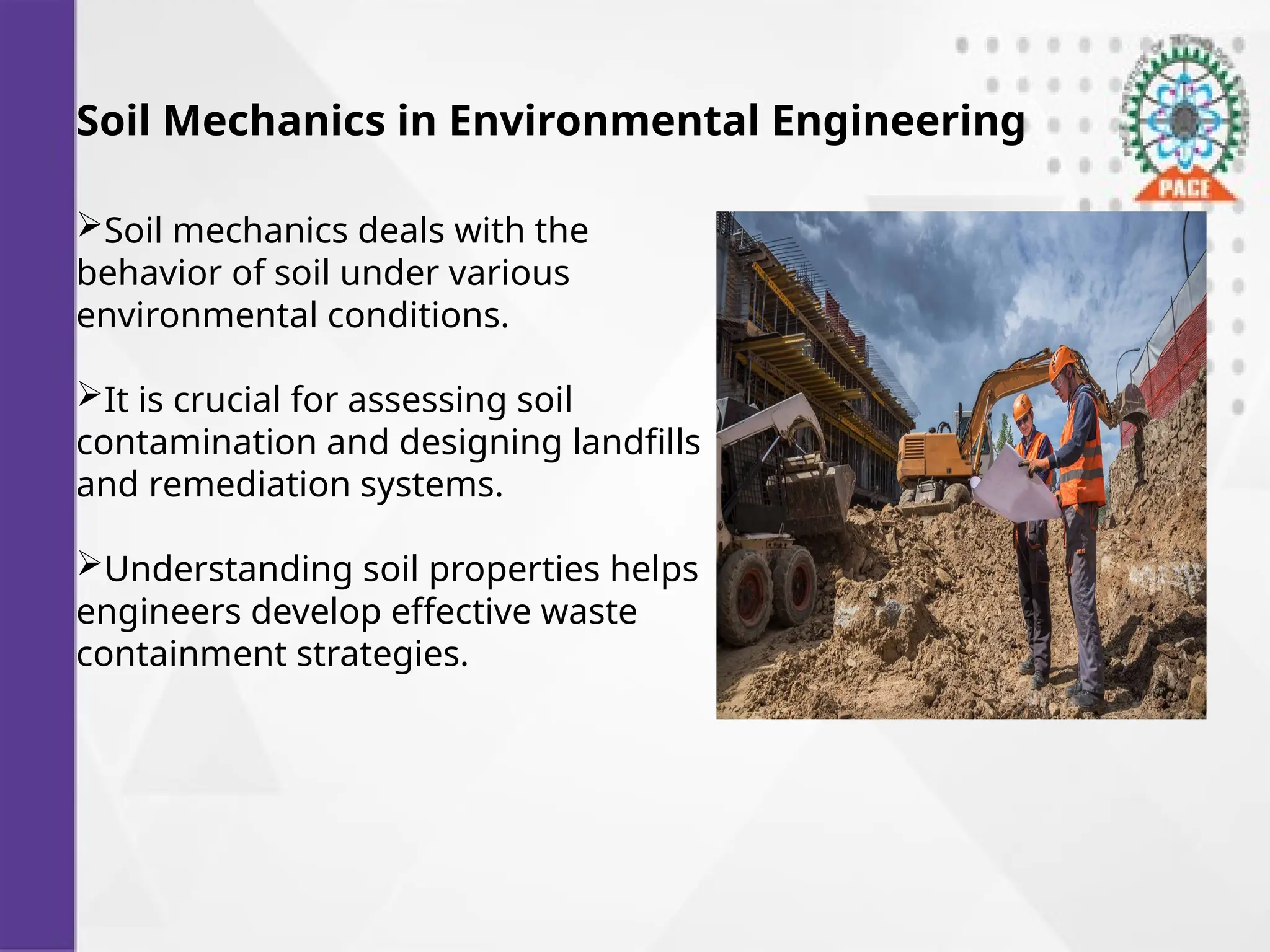
Soil Mechanics in Environmental Engineering
Soil mechanics deals with the
behavior of soil under various
environmental conditions.
It is crucial for assessing soil
contamination and designing landfills
and remediation systems.
Understanding soil properties helps
engineers develop effective waste
containment strategies.
Engineering Solutions for Surface Water
Management
Solutions include the construction of retention basins and
wetlands for stormwater management.
Water quality treatment technologies can help remove
pollutants from surface sources.
Sustainable urban design can minimize runoff and protect
surface water bodies.
Groundwater Management Techniques
Techniques include aquifer recharge,
monitoring wells, and contamination
remediation.
Sustainable practices, such as rainwater
harvesting, support groundwater
replenishment.
Community involvement is crucial for
effective groundwater management
strategies.
Integrated Water Resources Management (IWRM)
IWRM promotes the coordinated
management of water, land, and
related resources.
This approach addresses the
interconnectedness of surface and
subsurface water sources.
Stakeholder participation is
essential for successful IWRM
implementation.
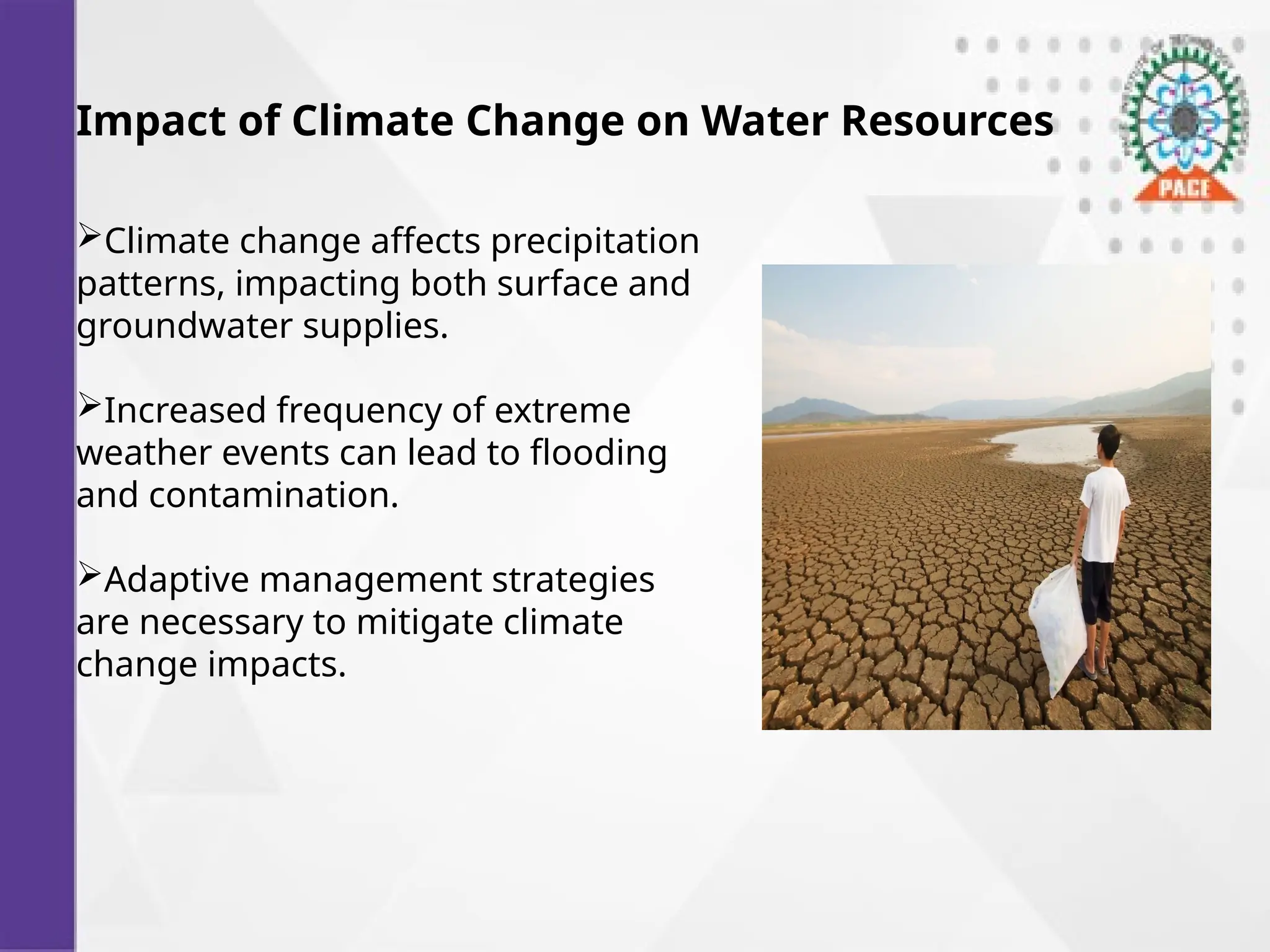
Impact of Climate Change on Water Resources
Climate change affects precipitation
patterns, impacting both surface and
groundwater supplies.
Increased frequency of extreme
weather events can lead to flooding
and contamination.
Adaptive management strategies
are necessary to mitigate climate
change impacts.
Future Trends in Environmental Engineering
Innovations in technology, such as
remote sensing and data analytics,
enhance resource management.
Green infrastructure solutions are
gaining popularity for their holistic
benefits.
Continued research is needed to
address emerging contaminants and
environmental challenges.
Case Studies in Surface and Subsurface Management
Successful case studies provide
insights into effective water resource
management practices.
They highlight the importance of
stakeholder collaboration and
community engagement.
Learning from these examples can
inform future environmental
engineering projects.
Chemical And Biological Characteristics,
Estimation Of Water Demand, Water
Consumption Rate On EE
Introduction to Water Demand in EE
Water demand is crucial for
sustainable environmental
management.
Understanding water demand
helps in planning and resource
allocation.
This presentation will explore
chemical and biological
characteristics, estimation methods,
and consumption rates.
Chemical Characteristics of Water
The chemical properties of water
include pH, conductivity, and
hardness.
These characteristics influence
water quality and its suitability for
various uses.
Understanding chemical properties
is vital for effective water treatment
processes.
Biological Characteristics of Water
Biological characteristics
encompass the presence of
microorganisms in water.
Common microorganisms include
bacteria, algae, and protozoa.
Monitoring biological parameters is
essential for maintaining water
safety.
Importance of Water Quality
Water quality directly impacts
human health and environmental
ecosystems.
Polluted water can lead to serious
health issues and ecological damage.
Regular assessment of water
quality ensures compliance with
safety standards.
Estimation of Water Demand
Estimating water demand involves
assessing current and future needs.
Factors influencing demand include
population growth, industrial usage,
and climate change.
Accurate estimation supports the
sustainable management of water
resources.
Methods for Estimating Water Demand
Common methods include statistical
analysis, simulation models, and
historical data review.
Each method has its strengths and
weaknesses depending on data
availability.
Combining multiple methods often
yields more reliable estimates.
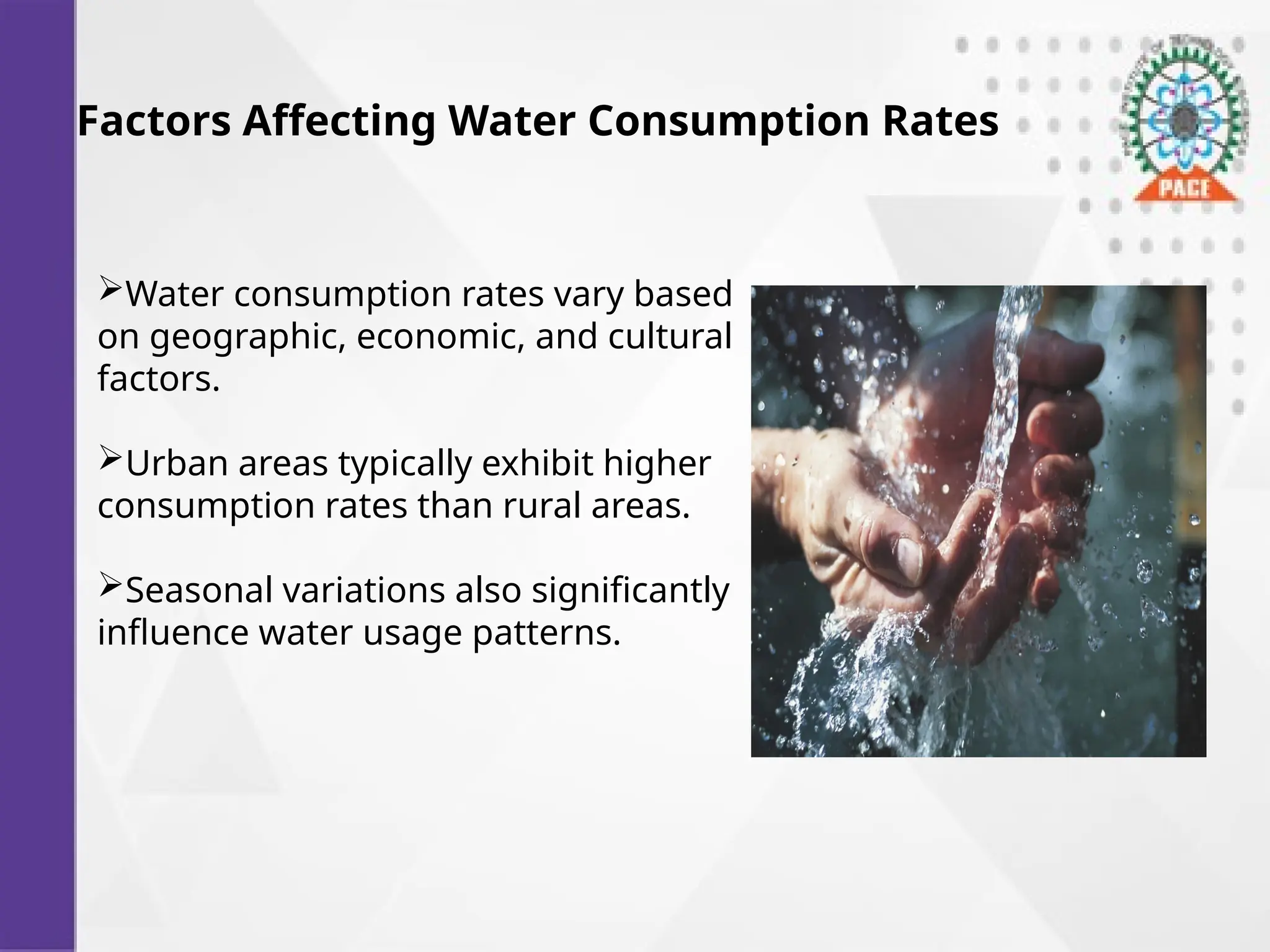
Factors Affecting Water Consumption Rates
Water consumption rates vary based
on geographic, economic, and cultural
factors.
Urban areas typically exhibit higher
consumption rates than rural areas.
Seasonal variations also significantly
influence water usage patterns.
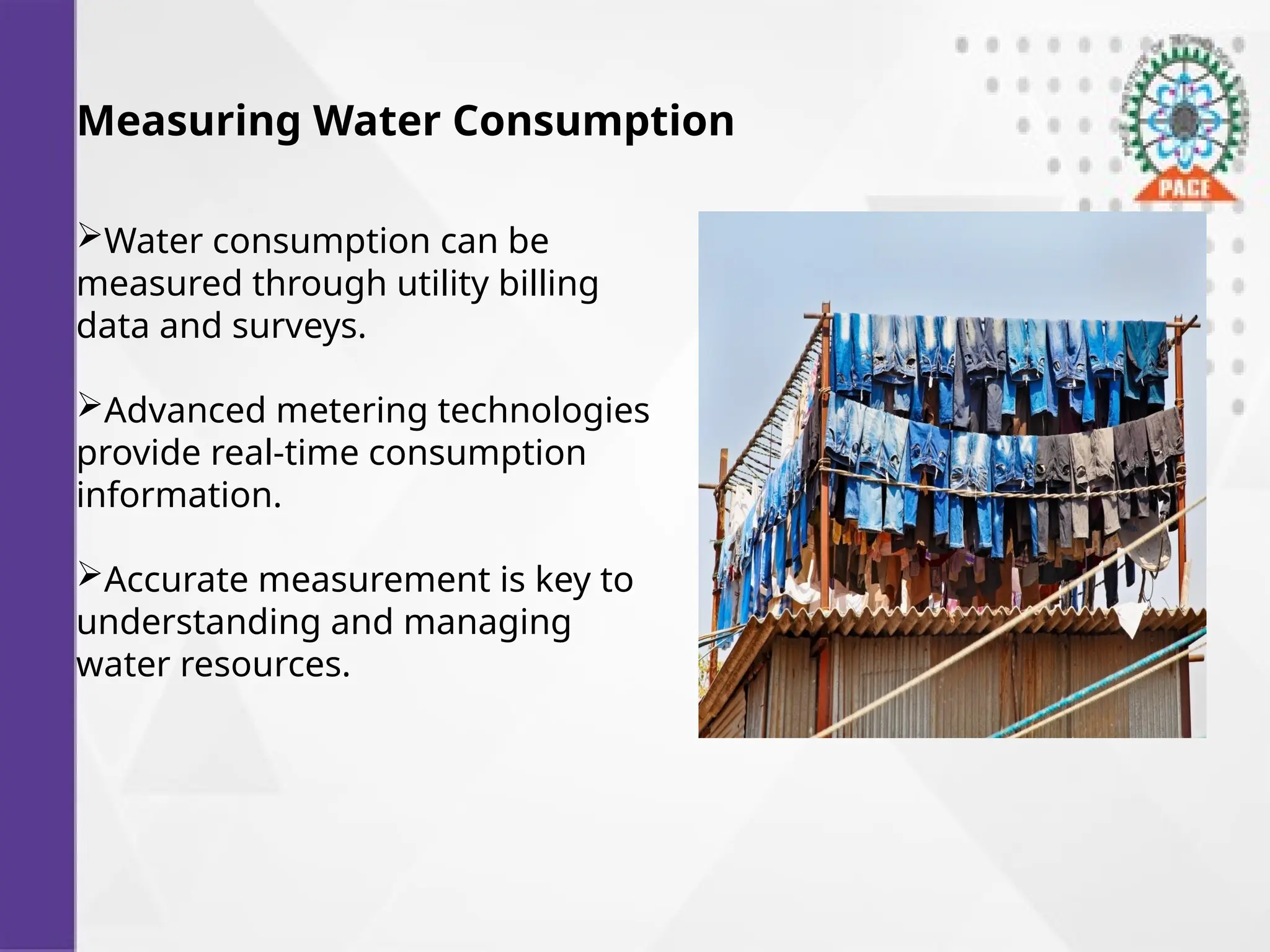
Measuring Water Consumption
Water consumption can be
measured through utility billing
data and surveys.
Advanced metering technologies
provide real-time consumption
information.
Accurate measurement is key to
understanding and managing
water resources.
Water Demand Management Strategies
Effective management strategies include water conservation
campaigns and pricing policies.
Implementing technology solutions can lead to significant
reductions in demand.
Community engagement is crucial for the success of water
demand management efforts.
Role of Regulations
Government regulations play a significant role in managing
water demand.
Policies often mandate water quality standards and
conservation measures.
Compliance with regulations ensures the protection of water
resources.
Impact of Climate Change
Climate change poses a significant threat to water availability
and quality.
Changes in precipitation patterns can lead to increased demand
and reduced supply.
Adapting to climate impacts is essential for sustainable water
management.
Case Studies in Water Demand Estimation
Various case studies illustrate
successful water demand estimation
techniques.
Analyzing different regions provides
insights into best practices and
challenges.
Lessons learned can inform future
water management strategies.
Water Consumption in Agriculture
Agriculture is a major consumer of freshwater resources
globally.
Efficient irrigation practices can significantly reduce
water consumption.
Sustainable agricultural practices are essential for long-
term water availability.
Industrial Water Use
Industries contribute to high water
consumption rates, impacting local
resources.
Implementing water recycling and
reuse strategies can mitigate demand.
Industry stakeholders must
collaborate to improve water efficiency.
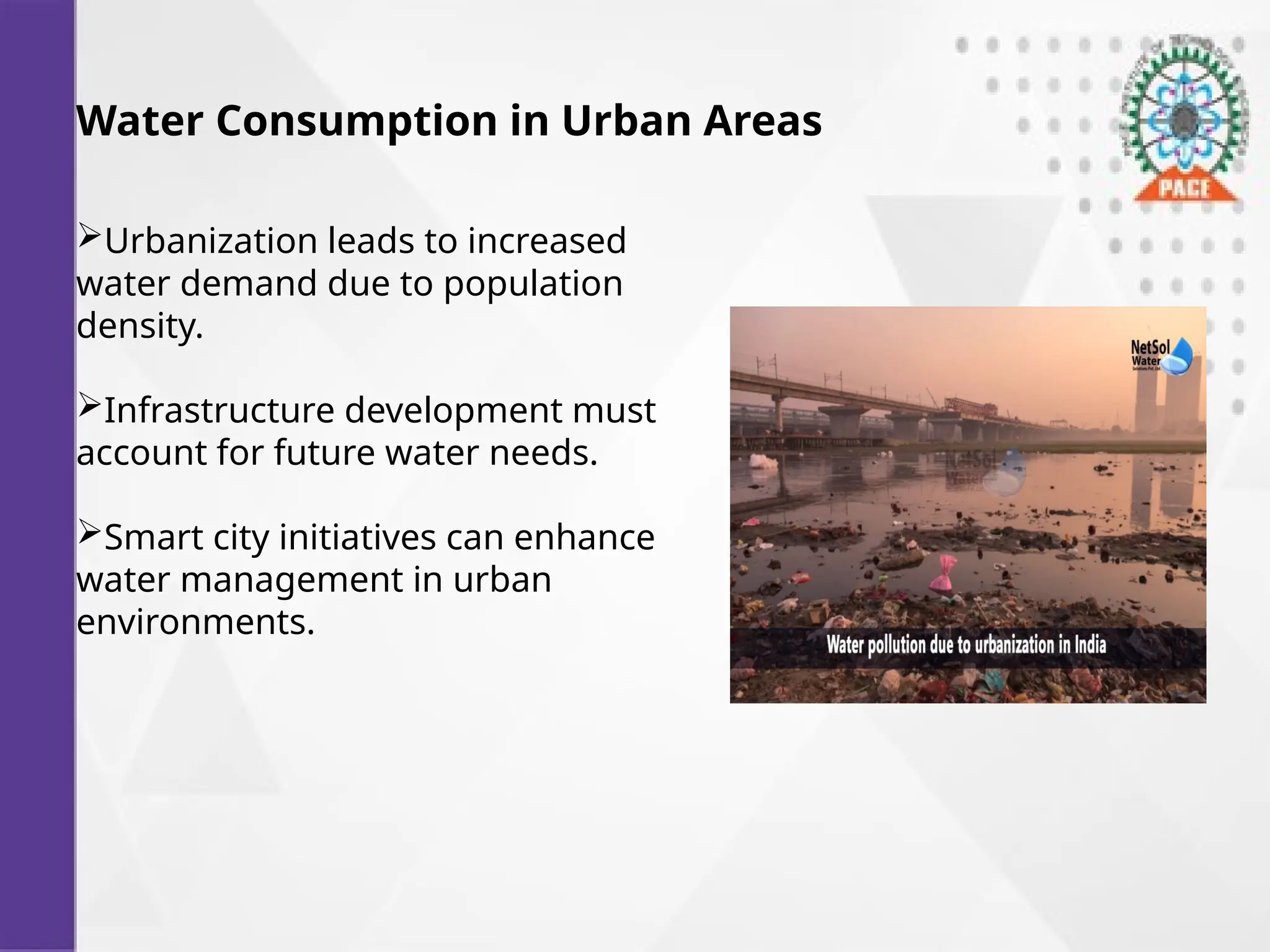
Water Consumption in Urban Areas
Urbanization leads to increased
water demand due to population
density.
Infrastructure development must
account for future water needs.
Smart city initiatives can enhance
water management in urban
environments.
Future Trends in Water Demand
Anticipating future water demand involves considering
population growth and climate factors.
Technological advancements can improve efficiency and
reduce consumption rates.
Strategic planning is needed to ensure water security for
future generations.
Fluctuations In Rate Of Demand, Design
Period, Population Forecasting Methods
On EnvironmentalEngineering
Introduction to Demand Fluctuations
Fluctuations in demand occur
due to various factors, including
economic conditions and
seasonal variations.
Understanding these
fluctuations is crucial for effective
energy management and
planning.
This presentation will explore
the causes, implications, and
forecasting methods related to
demand fluctuations.
Factors Influencing Demand Fluctuations
Economic trends, such as
recessions and booms,
significantly impact energy
consumption rates.
Seasonal changes can lead to
predictable spikes in demand,
particularly in heating and
cooling.
Technological advancements,
such as smart grids, also
influence how demand is
monitored and managed.
Understanding Design Period
The design period refers to the
timeframe over which demand
forecasts are made and systems
are planned.
A well-defined design period
helps in aligning infrastructure
development with anticipated
needs.
The choice of design period
can affect the cost and scalability
of energy systems.
Importance of Design Period in EE
Selecting an appropriate
design period is critical for
ensuring reliability in energy
supply.
A short design period may lead
to insufficient capacity, while an
overly long period may result in
overcapacity.
Design periods are influenced
by factors such as technological
change, population growth, and
regulatory frameworks.
Overview of Population Forecasting Methods
Population forecasting
methods estimate future
demand based on demographic
trends.
Common techniques include
cohort-component models,
trend extrapolation, and
econometric models.
Accurate population forecasts
are essential for anticipating
future energy needs.
Cohort-Component Model
The cohort-component model breaks down the population
into age and sex groups for detailed analysis.
This method allows for more precise projections by
considering birth, death, and migration rates.
It is particularly useful in regions with significant
demographic shifts.
Trend Extrapolation Method
Trend extrapolation uses historical data to predict future
demand based on observed patterns.
This method is relatively simple but may not account for sudden
changes in external factors.
It is best used in stable environments with predictable demand
trends.
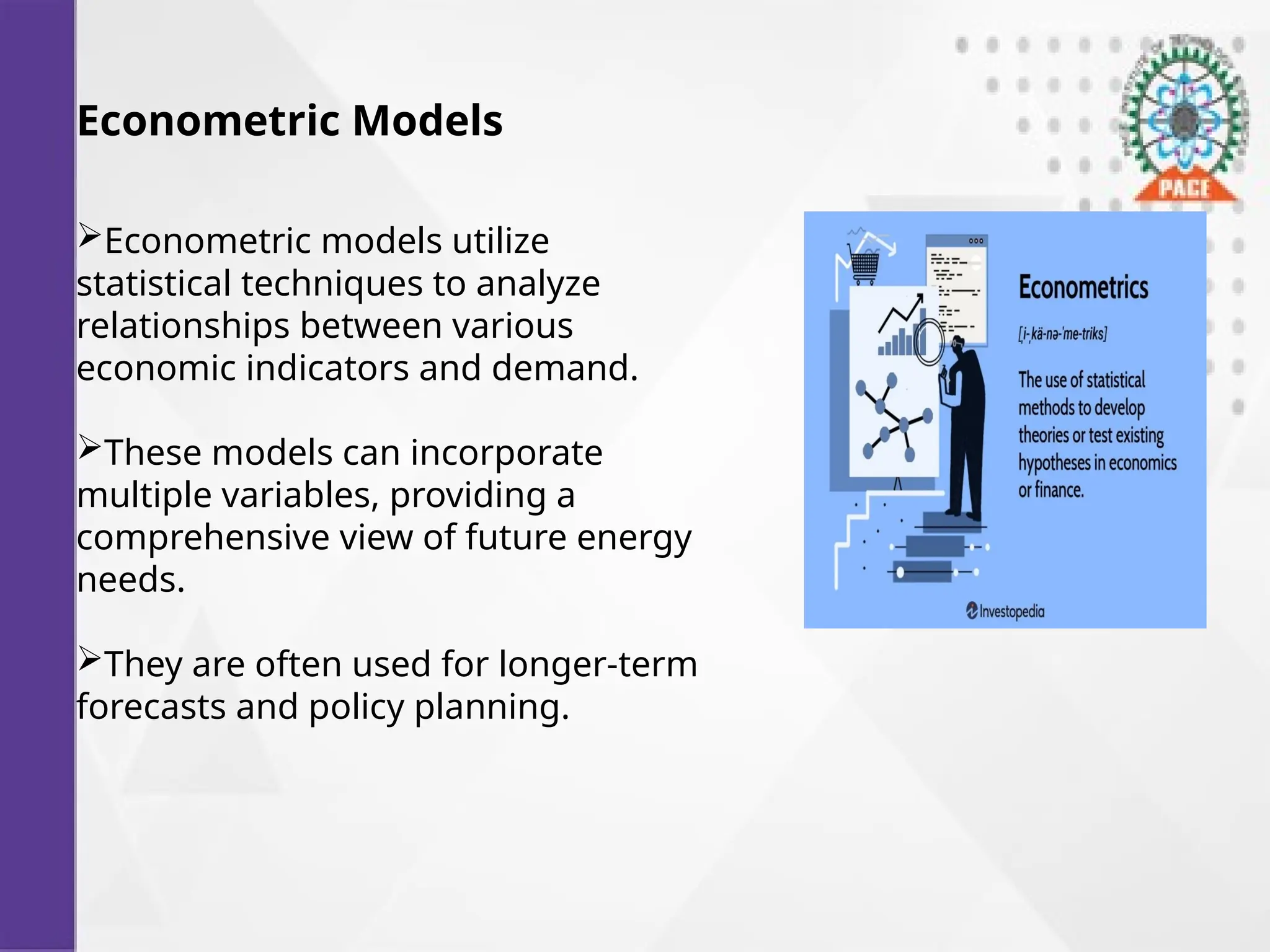
Econometric Models
Econometric models utilize
statistical techniques to analyze
relationships between various
economic indicators and demand.
These models can incorporate
multiple variables, providing a
comprehensive view of future energy
needs.
They are often used for longer-term
forecasts and policy planning.
Implications of Demand Fluctuations
Fluctuations in demand can lead to challenges in energy supply
and grid stability.
Utilities must develop flexible strategies to manage peak loads
and reduce wastage.
Understanding these fluctuations helps in designing more
resilient energy systems.
Strategies for Managing Demand Fluctuations
Demand response programs encourage consumers to reduce
or shift their energy usage during peak times.
Investing in energy storage technologies can help balance
supply and demand effectively.
Enhanced forecasting techniques and real-time data analytics
are essential for proactive management.

R23 ENVIRONMENTAL ENGINEERING UNIT-1.pptx

  • 1.
    Environmental Engineering (P23CET05) 2024-25 IIB Tech I Semester Civil Engineering Topics:  Surface sources  Subsurface sources  Physical, chemical and biological characteristics  Estimation of water demand.  Water consumption rate  Fluctuations in rate of demand  Design period.  Population forecasting methods Unit-1: Sources, Quality and Quantity Perspectives of Water
  • 2.
    Introduction to EnvironmentalEngineering Environmental engineering focuses on the protection of human health and the environment. It involves the design of systems that manage water, air, and land resources sustainably. Understanding surface and subsurface sources is fundamental for effective environmental management.
  • 3.
    What Are SurfaceSources? Surface sources refer to water bodies such as rivers, lakes, and reservoirs. They are vital for providing drinking water, irrigation, and recreational opportunities. Pollution in surface sources can significantly impact ecosystems and human health.
  • 4.
    Importance of SurfaceWater Quality The quality of surface water affects biodiversity and aquatic life. Monitoring and regulating pollutants in surface water is crucial for environmental protection. Clean surface water supports various economic activities, including tourism and fisheries.
  • 5.
    Common Surface WaterPollutants Nutrients like nitrogen and phosphorus can lead to harmful algal blooms. Sediments from erosion can impair water quality and aquatic habitats. Heavy metals and chemicals from industrial runoff pose serious health risks.
  • 6.
    What Are SubsurfaceSources? Subsurface sources refer to groundwater stored in aquifers beneath the earth's surface. Groundwater is a critical resource for drinking water and irrigation globally. Understanding subsurface flow dynamics is essential for sustainable water management.
  • 7.
    Groundwater Quality andContamination Groundwater can be contaminated by agricultural runoff, industrial waste, and septic systems. Contaminants can travel long distances underground, making remediation challenging. Protecting groundwater resources is vital for ensuring safe drinking water supplies.
  • 8.
    Groundwater Recharge andSustainability Groundwater recharge occurs when precipitation infiltrates the soil and replenishes aquifers. Sustainable management practices are necessary to maintain groundwater levels. Over-extraction can lead to issues like land subsidence and reduced water quality.
  • 9.
    Physical Aspects ofEnvironmental Engineering Physical aspects include the study of fluid dynamics, hydrology, and soil mechanics. Engineers utilize physical principles to design systems for water treatment and waste management. Understanding these principles is crucial for addressing environmental challenges effectively.
  • 10.
    Role of Hydrologyin Environmental Engineering Hydrology focuses on the distribution and movement of water in the environment. It is essential for managing water resources and designing flood control systems. Effective hydrological modeling can help predict the impacts of climate change.
  • 11.
    Soil Mechanics inEnvironmental Engineering Soil mechanics deals with the behavior of soil under various environmental conditions. It is crucial for assessing soil contamination and designing landfills and remediation systems. Understanding soil properties helps engineers develop effective waste containment strategies.
  • 12.
    Engineering Solutions forSurface Water Management Solutions include the construction of retention basins and wetlands for stormwater management. Water quality treatment technologies can help remove pollutants from surface sources. Sustainable urban design can minimize runoff and protect surface water bodies.
  • 13.
    Groundwater Management Techniques Techniquesinclude aquifer recharge, monitoring wells, and contamination remediation. Sustainable practices, such as rainwater harvesting, support groundwater replenishment. Community involvement is crucial for effective groundwater management strategies.
  • 14.
    Integrated Water ResourcesManagement (IWRM) IWRM promotes the coordinated management of water, land, and related resources. This approach addresses the interconnectedness of surface and subsurface water sources. Stakeholder participation is essential for successful IWRM implementation.
  • 15.
    Impact of ClimateChange on Water Resources Climate change affects precipitation patterns, impacting both surface and groundwater supplies. Increased frequency of extreme weather events can lead to flooding and contamination. Adaptive management strategies are necessary to mitigate climate change impacts.
  • 16.
    Future Trends inEnvironmental Engineering Innovations in technology, such as remote sensing and data analytics, enhance resource management. Green infrastructure solutions are gaining popularity for their holistic benefits. Continued research is needed to address emerging contaminants and environmental challenges.
  • 17.
    Case Studies inSurface and Subsurface Management Successful case studies provide insights into effective water resource management practices. They highlight the importance of stakeholder collaboration and community engagement. Learning from these examples can inform future environmental engineering projects.
  • 18.
    Chemical And BiologicalCharacteristics, Estimation Of Water Demand, Water Consumption Rate On EE
  • 19.
    Introduction to WaterDemand in EE Water demand is crucial for sustainable environmental management. Understanding water demand helps in planning and resource allocation. This presentation will explore chemical and biological characteristics, estimation methods, and consumption rates.
  • 20.
    Chemical Characteristics ofWater The chemical properties of water include pH, conductivity, and hardness. These characteristics influence water quality and its suitability for various uses. Understanding chemical properties is vital for effective water treatment processes.
  • 21.
    Biological Characteristics ofWater Biological characteristics encompass the presence of microorganisms in water. Common microorganisms include bacteria, algae, and protozoa. Monitoring biological parameters is essential for maintaining water safety.
  • 22.
    Importance of WaterQuality Water quality directly impacts human health and environmental ecosystems. Polluted water can lead to serious health issues and ecological damage. Regular assessment of water quality ensures compliance with safety standards.
  • 23.
    Estimation of WaterDemand Estimating water demand involves assessing current and future needs. Factors influencing demand include population growth, industrial usage, and climate change. Accurate estimation supports the sustainable management of water resources.
  • 24.
    Methods for EstimatingWater Demand Common methods include statistical analysis, simulation models, and historical data review. Each method has its strengths and weaknesses depending on data availability. Combining multiple methods often yields more reliable estimates.
  • 25.
    Factors Affecting WaterConsumption Rates Water consumption rates vary based on geographic, economic, and cultural factors. Urban areas typically exhibit higher consumption rates than rural areas. Seasonal variations also significantly influence water usage patterns.
  • 26.
    Measuring Water Consumption Waterconsumption can be measured through utility billing data and surveys. Advanced metering technologies provide real-time consumption information. Accurate measurement is key to understanding and managing water resources.
  • 27.
    Water Demand ManagementStrategies Effective management strategies include water conservation campaigns and pricing policies. Implementing technology solutions can lead to significant reductions in demand. Community engagement is crucial for the success of water demand management efforts.
  • 28.
    Role of Regulations Governmentregulations play a significant role in managing water demand. Policies often mandate water quality standards and conservation measures. Compliance with regulations ensures the protection of water resources.
  • 29.
    Impact of ClimateChange Climate change poses a significant threat to water availability and quality. Changes in precipitation patterns can lead to increased demand and reduced supply. Adapting to climate impacts is essential for sustainable water management.
  • 30.
    Case Studies inWater Demand Estimation Various case studies illustrate successful water demand estimation techniques. Analyzing different regions provides insights into best practices and challenges. Lessons learned can inform future water management strategies.
  • 31.
    Water Consumption inAgriculture Agriculture is a major consumer of freshwater resources globally. Efficient irrigation practices can significantly reduce water consumption. Sustainable agricultural practices are essential for long- term water availability.
  • 32.
    Industrial Water Use Industriescontribute to high water consumption rates, impacting local resources. Implementing water recycling and reuse strategies can mitigate demand. Industry stakeholders must collaborate to improve water efficiency.
  • 33.
    Water Consumption inUrban Areas Urbanization leads to increased water demand due to population density. Infrastructure development must account for future water needs. Smart city initiatives can enhance water management in urban environments.
  • 34.
    Future Trends inWater Demand Anticipating future water demand involves considering population growth and climate factors. Technological advancements can improve efficiency and reduce consumption rates. Strategic planning is needed to ensure water security for future generations.
  • 35.
    Fluctuations In RateOf Demand, Design Period, Population Forecasting Methods On EnvironmentalEngineering
  • 36.
    Introduction to DemandFluctuations Fluctuations in demand occur due to various factors, including economic conditions and seasonal variations. Understanding these fluctuations is crucial for effective energy management and planning. This presentation will explore the causes, implications, and forecasting methods related to demand fluctuations.
  • 37.
    Factors Influencing DemandFluctuations Economic trends, such as recessions and booms, significantly impact energy consumption rates. Seasonal changes can lead to predictable spikes in demand, particularly in heating and cooling. Technological advancements, such as smart grids, also influence how demand is monitored and managed.
  • 38.
    Understanding Design Period Thedesign period refers to the timeframe over which demand forecasts are made and systems are planned. A well-defined design period helps in aligning infrastructure development with anticipated needs. The choice of design period can affect the cost and scalability of energy systems.
  • 39.
    Importance of DesignPeriod in EE Selecting an appropriate design period is critical for ensuring reliability in energy supply. A short design period may lead to insufficient capacity, while an overly long period may result in overcapacity. Design periods are influenced by factors such as technological change, population growth, and regulatory frameworks.
  • 40.
    Overview of PopulationForecasting Methods Population forecasting methods estimate future demand based on demographic trends. Common techniques include cohort-component models, trend extrapolation, and econometric models. Accurate population forecasts are essential for anticipating future energy needs.
  • 41.
    Cohort-Component Model The cohort-componentmodel breaks down the population into age and sex groups for detailed analysis. This method allows for more precise projections by considering birth, death, and migration rates. It is particularly useful in regions with significant demographic shifts.
  • 42.
    Trend Extrapolation Method Trendextrapolation uses historical data to predict future demand based on observed patterns. This method is relatively simple but may not account for sudden changes in external factors. It is best used in stable environments with predictable demand trends.
  • 43.
    Econometric Models Econometric modelsutilize statistical techniques to analyze relationships between various economic indicators and demand. These models can incorporate multiple variables, providing a comprehensive view of future energy needs. They are often used for longer-term forecasts and policy planning.
  • 44.
    Implications of DemandFluctuations Fluctuations in demand can lead to challenges in energy supply and grid stability. Utilities must develop flexible strategies to manage peak loads and reduce wastage. Understanding these fluctuations helps in designing more resilient energy systems.
  • 45.
    Strategies for ManagingDemand Fluctuations Demand response programs encourage consumers to reduce or shift their energy usage during peak times. Investing in energy storage technologies can help balance supply and demand effectively. Enhanced forecasting techniques and real-time data analytics are essential for proactive management.

Editor's Notes

  • #2 Image source: https://socialdhara.com
  • #3 Image source: https://www.slidemake.com
  • #4 Image source: https://epa-water.com
  • #5 Image source: https://www.vaniperen.com
  • #6 Image source: https://cdn.britannica.com
  • #7 Image source: https://blog.jencoi.com
  • #8 Image source: https://d3hnfqimznafg0.cloudfront.net
  • #9 Image source: https://i1.rgstatic.net
  • #10 Image source: https://dreamcivil.com
  • #11 Image source: https://www.twi-global.com
  • #12 Image source: https://hsr.ca.gov
  • #13 Image source: https://worldarchitecture.org
  • #14 Image source: https://www.wateryouthnetwork.org
  • #15 Image source: https://www.worldatlas.com
  • #16 Image source: https://devtechnosys.com
  • #17 Image source: https://peachyessay.com
  • #19 Image source: https://www.smsfoundation.org
  • #20 Image source: https://i.pinimg.com
  • #21 Image source: https://ecx.images-amazon.com
  • #22 Image source: https://www.meflow.com
  • #23 Image source: https://i0.wp.com
  • #24 Image source: https://statswork.com
  • #25 Image source: https://dreamcivil.com
  • #26 Image source: https://i.pinimg.com
  • #27 Image source: https://www.slidemake.com
  • #28 Image source: https://www.slidemake.com
  • #29 Image source: https://scx2.b-cdn.net
  • #30 Image source: https://peachyessay.com
  • #31 Image source: https://fdp.com.pk
  • #32 Image source: https://www.beltecno-global.com
  • #33 Image source: https://www.netsolwater.com
  • #34 Image source: https://www.slidemake.com
  • #36 Image source: https://foundersguide.com
  • #37 Image source: https://i0.wp.com
  • #38 Image source: https://theinvestorschronicle.com
  • #39 Image source: https://researchmethod.net
  • #40 Image source: https://cdn.statcdn.com
  • #41 Image source: https://www.researchgate.net
  • #42 Image source: https://www.slidemake.com
  • #43 Image source: https://www.investopedia.com
  • #44 Image source: https://theinvestorschronicle.com
  • #45 Image source: https://www.slidemake.com