Quick tests for
determining Cr y Cl-
Inde
x
1.Introduction. What are our objectives? What
we pretend?
2.Analytical process to determine Cr
3.Analytical process to determine Cl-
4.How can we package our product?
5.Roles of the members of group
objectives?
What we pretend?
QUICK TEST
➔ Quick cinetic reaction
➔ Known analytical process
➔ None heating requirement
➔ A limit value known
➔ Known the expiration of the components and the
requirements of this
Introduction. What are our
objectives?
What we pretend?
Sample with our
analyte with
unknown
concentration
A specific quantity
of moles that are
the necessary to
react with the
limit value
An indicator that
indicates qualitatively,
if you are above or below
the limit value
1 2 3
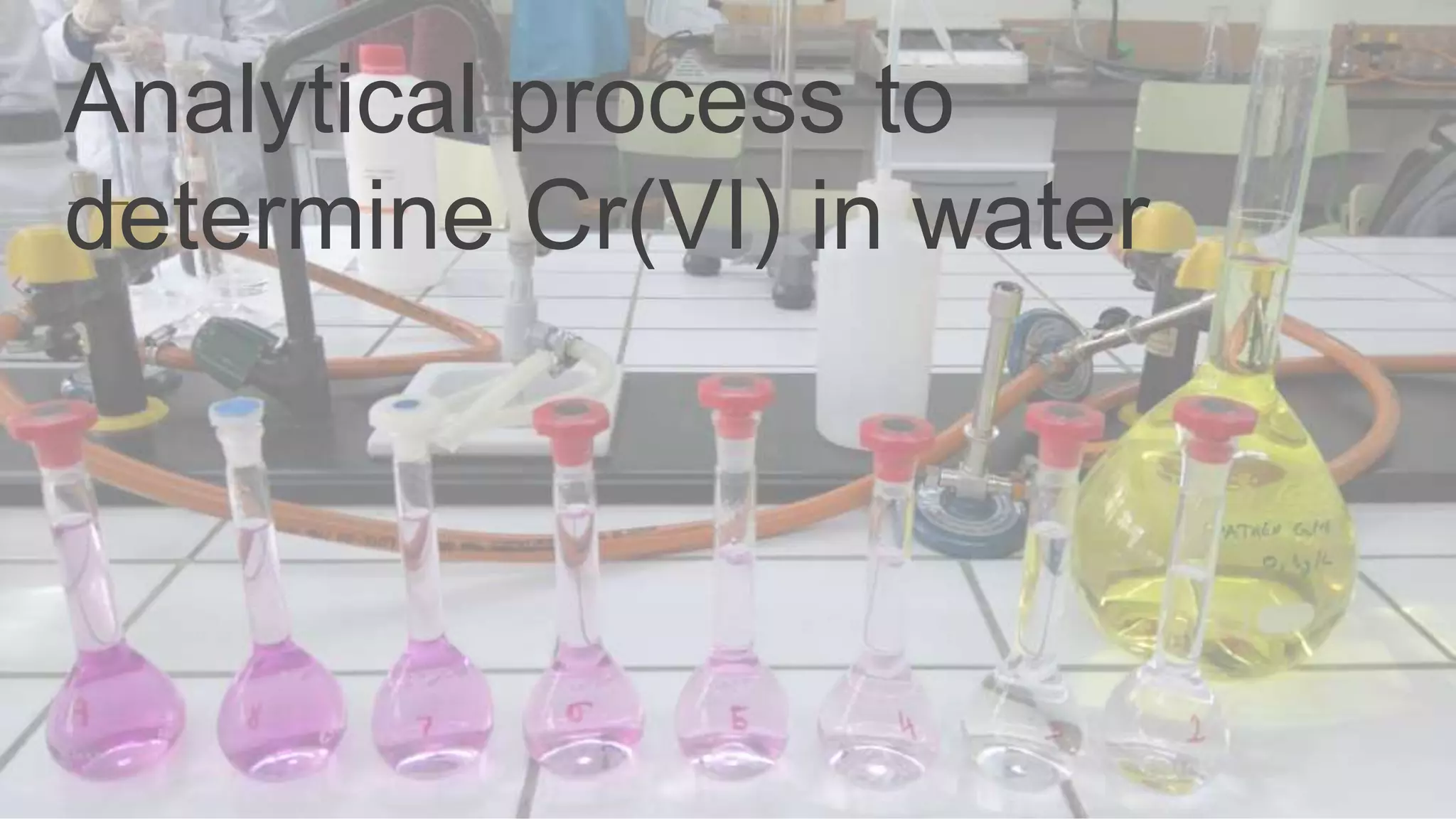
Analytical process to
determine Cr(VI) in water
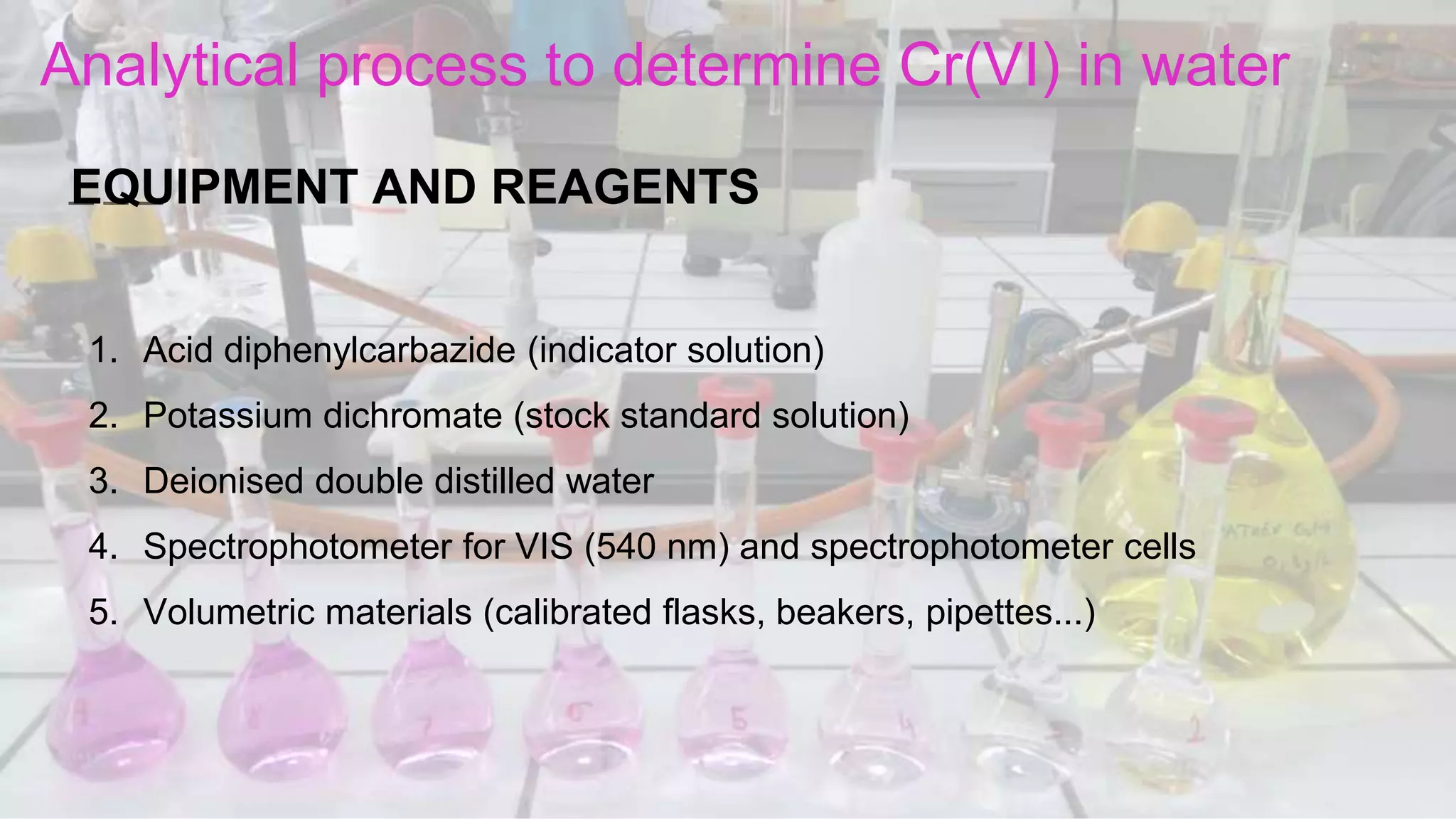
EQUIPMENT AND REAGENTS
1. Acid diphenylcarbazide (indicator solution)
2. Potassium dichromate (stock standard solution)
3. Deionised double distilled water
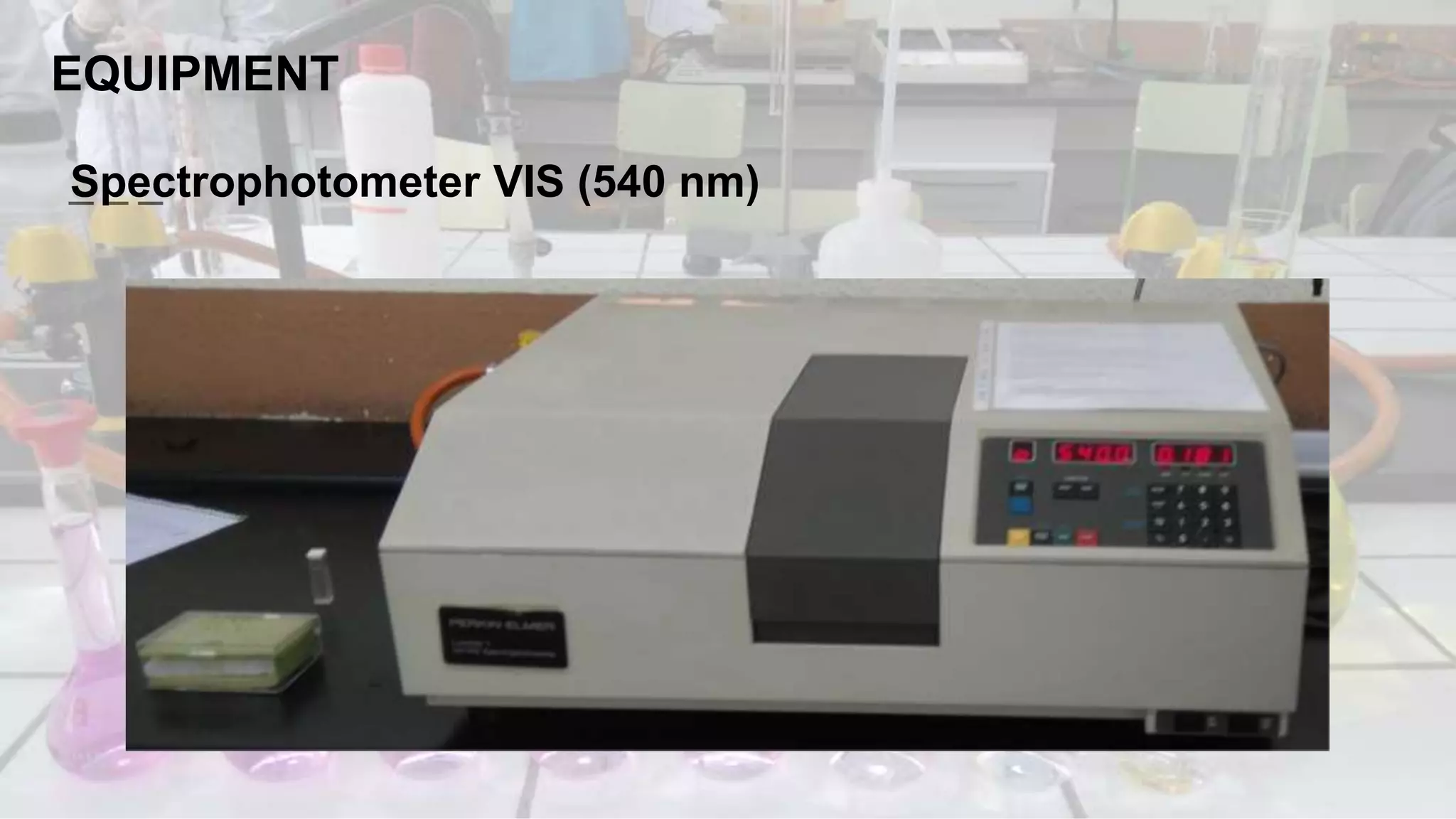
4. Spectrophotometer for VIS (540 nm) and spectrophotometer cells
5. Volumetric materials (calibrated flasks, beakers, pipettes...)
Analytical process to determine Cr(VI) in water
REAGENTS
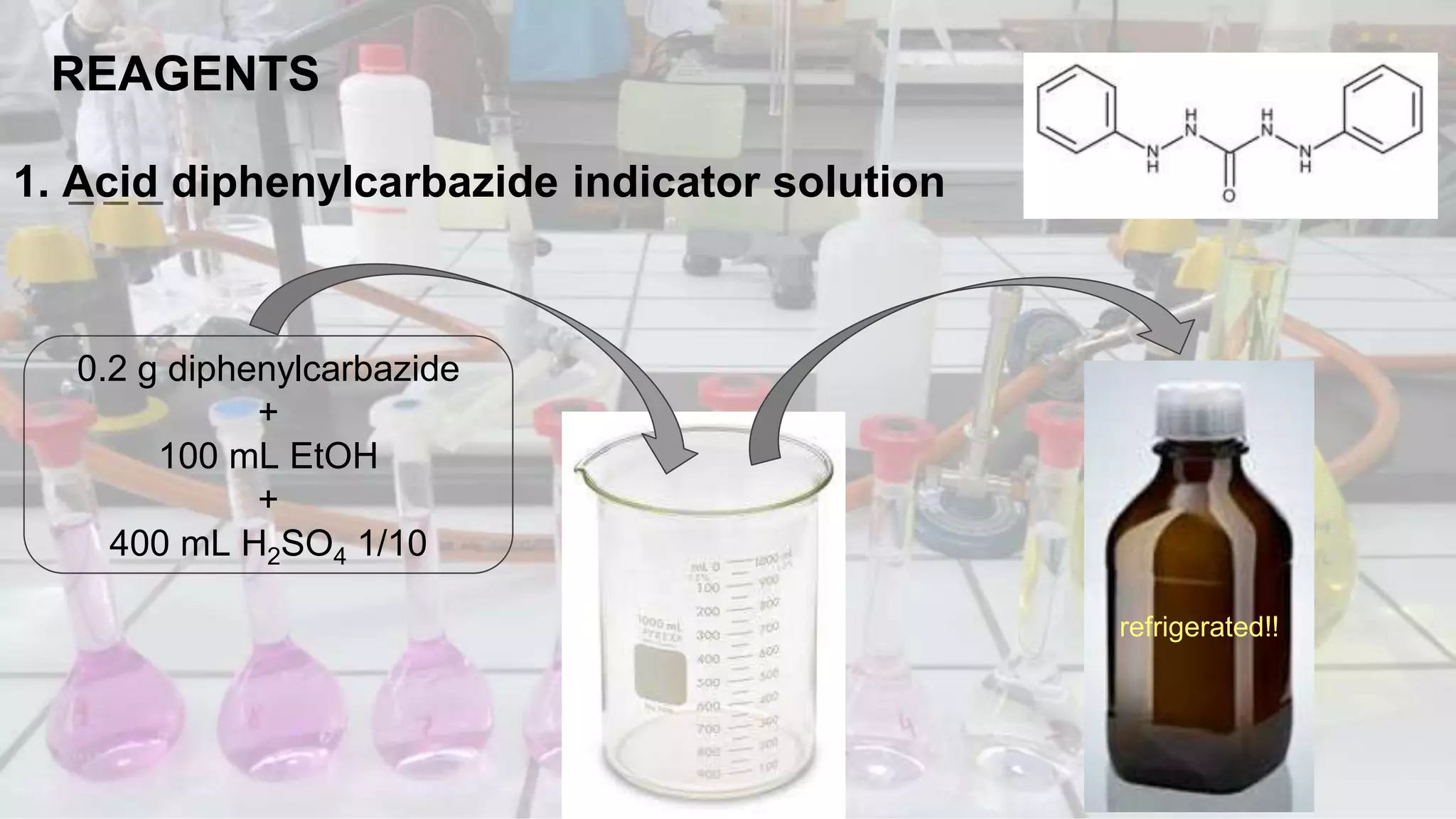
1. Acid diphenylcarbazide indicator solution
0.2 g diphenylcarbazide
+
100 mL EtOH
+
400 mL H2SO4 1/10
refrigerated!!
REAGENTS
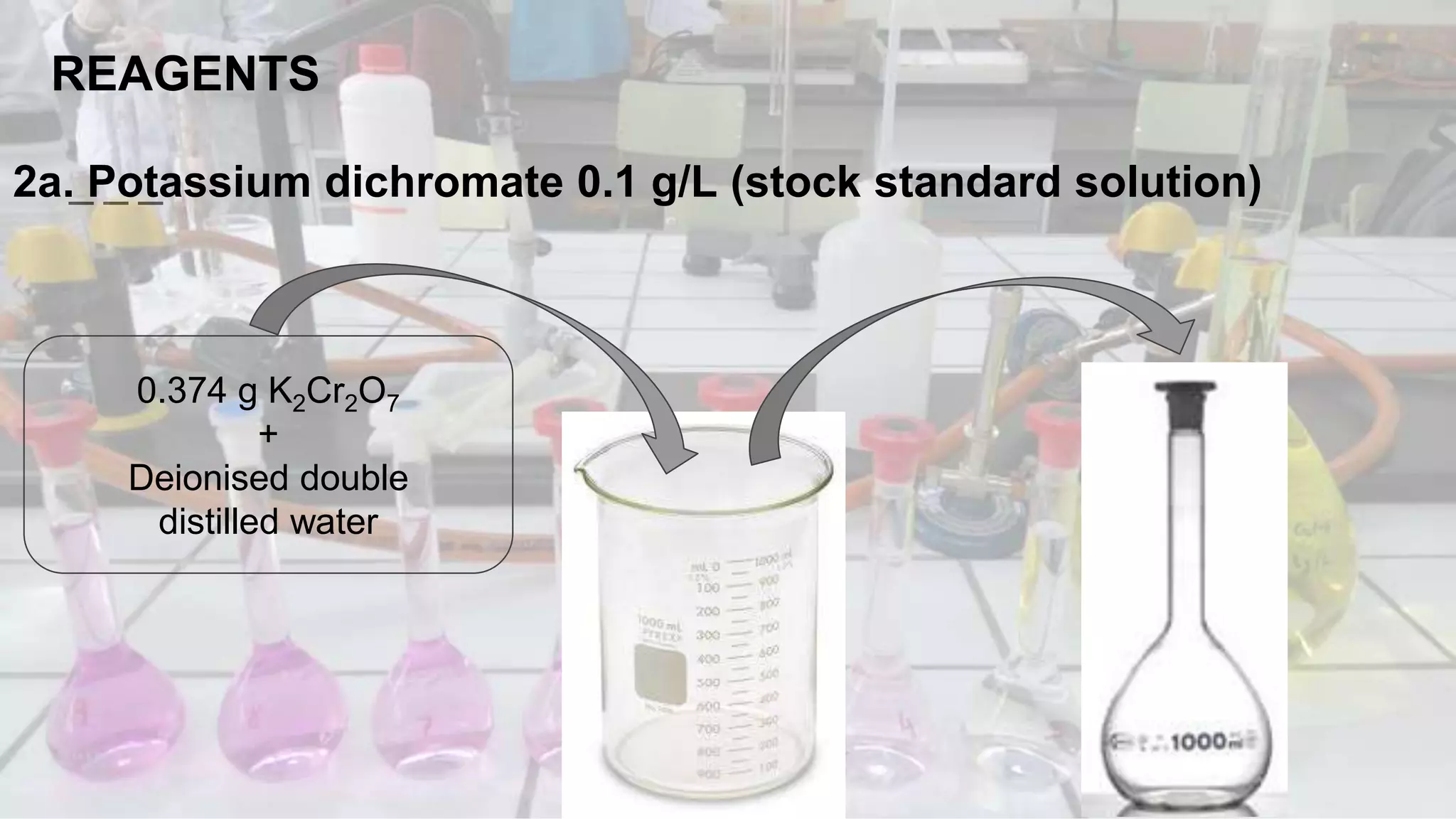
2a. Potassium dichromate 0.1 g/L (stock standard solution)
0.374 g K2Cr2O7
+
Deionised double
distilled water
REAGENTS
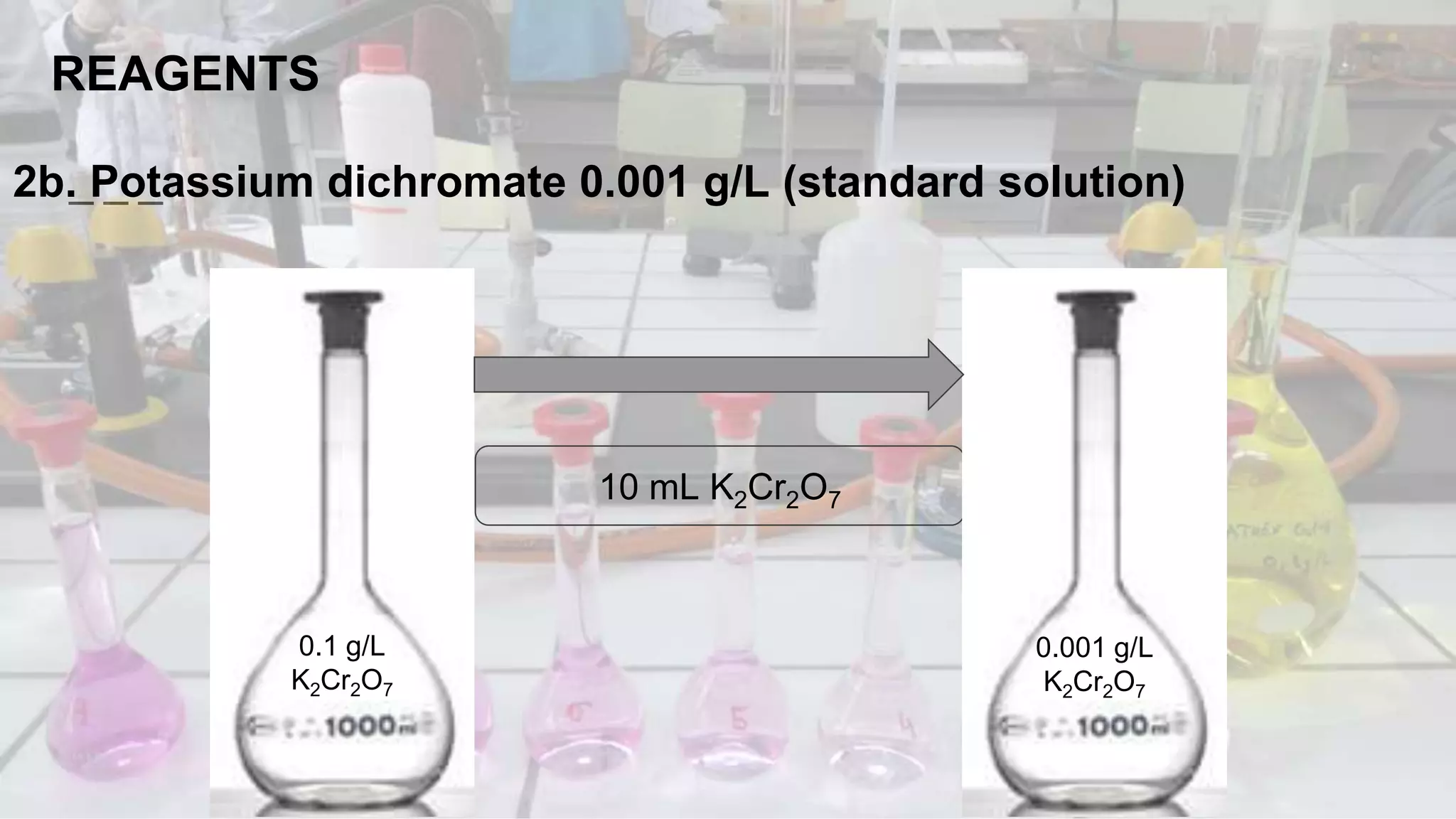
2b. Potassium dichromate 0.001 g/L (standard solution)
10 mL K2Cr2O7
0.1 g/L
K2Cr2O7
0.001 g/L
K2Cr2O7
EQUIPMENT
Spectrophotometer VIS (540 nm)
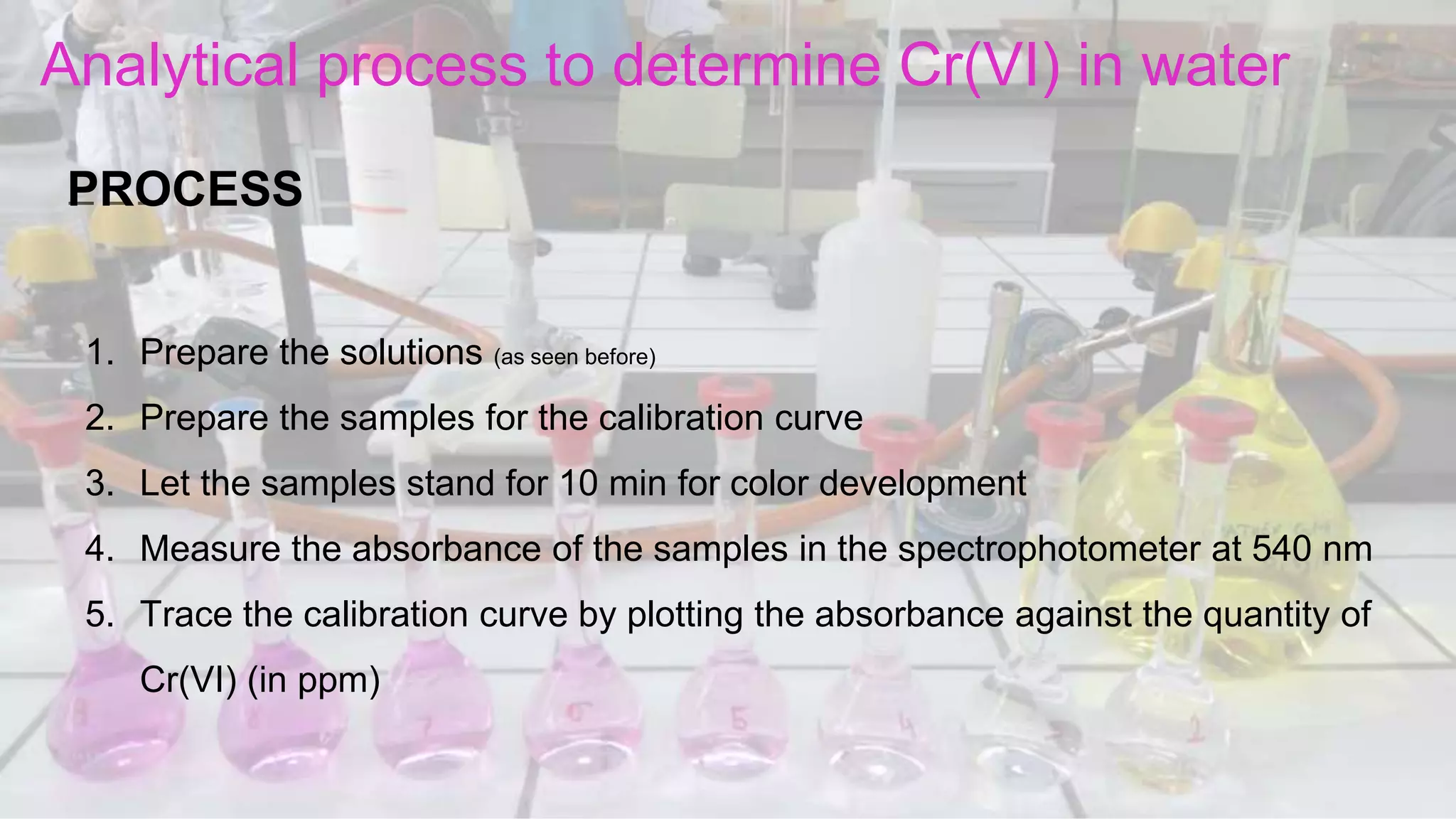
PROCESS
1. Prepare the solutions (as seen before)
2. Prepare the samples for the calibration curve
3. Let the samples stand for 10 min for color development
4. Measure the absorbance of the samples in the spectrophotometer at 540 nm
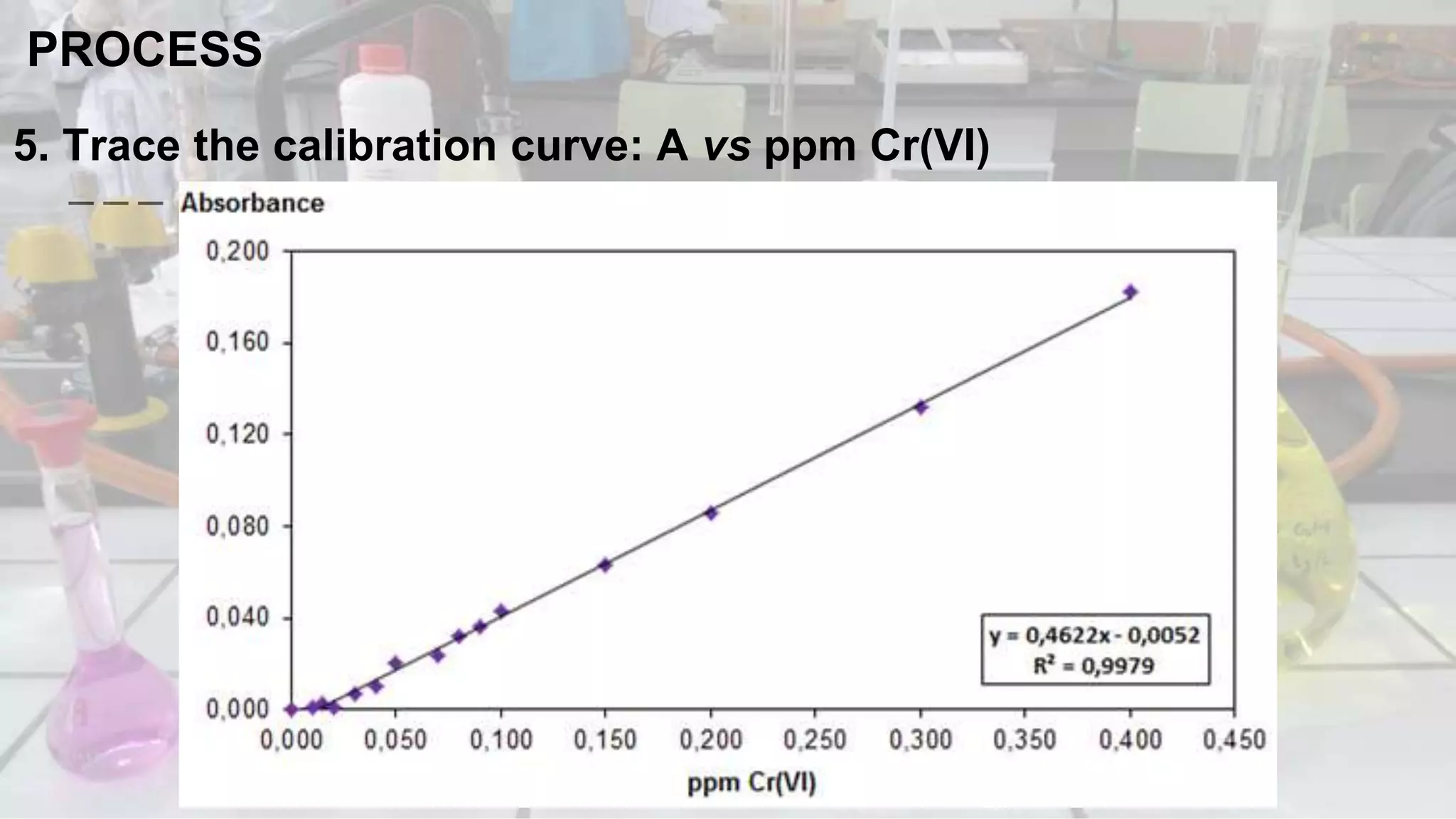
5. Trace the calibration curve by plotting the absorbance against the quantity of
Cr(VI) (in ppm)
Analytical process to determine Cr(VI) in water
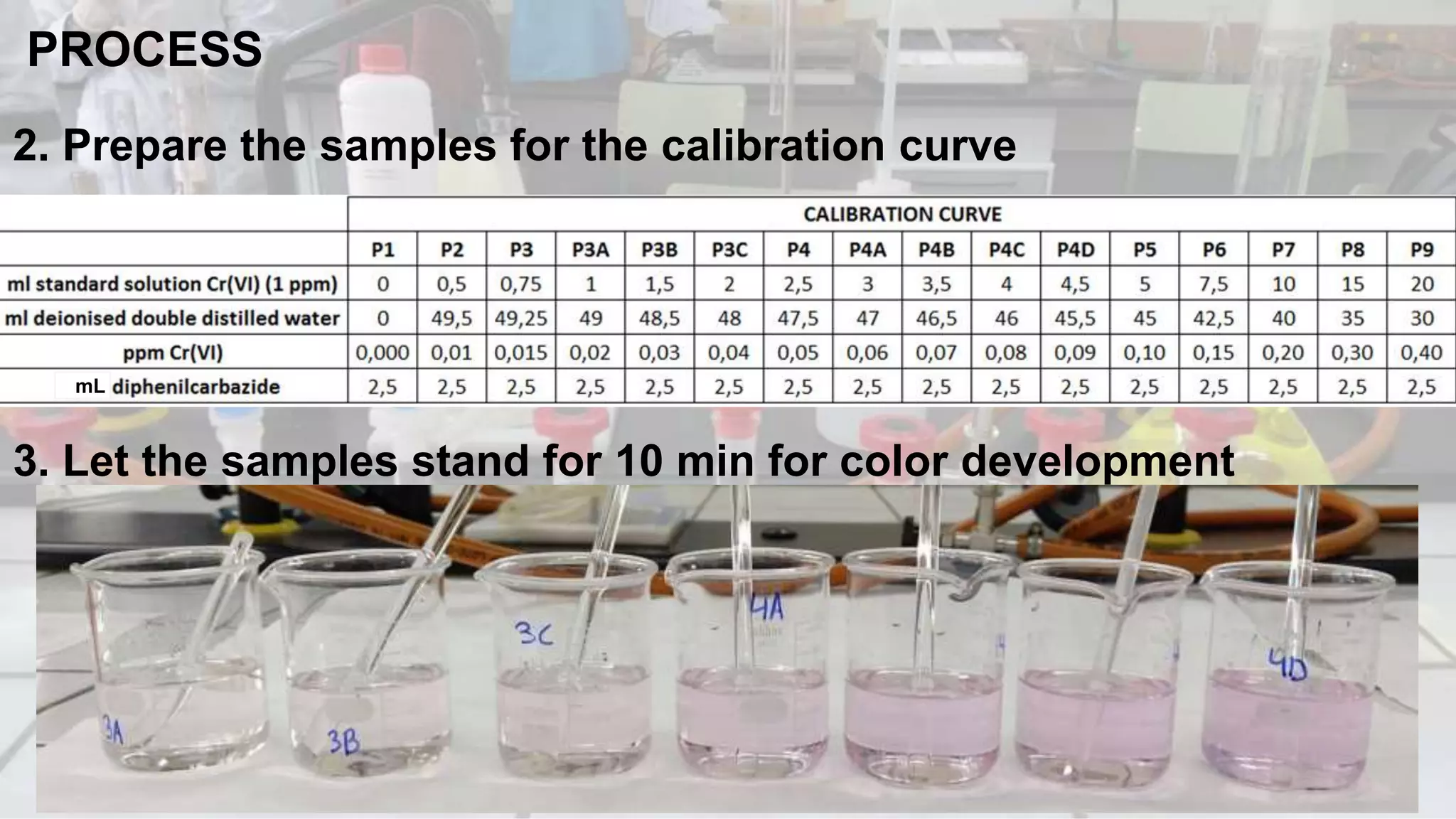
PROCESS
2. Prepare the samples for the calibration curve
3. Let the samples stand for 10 min for color development
mL
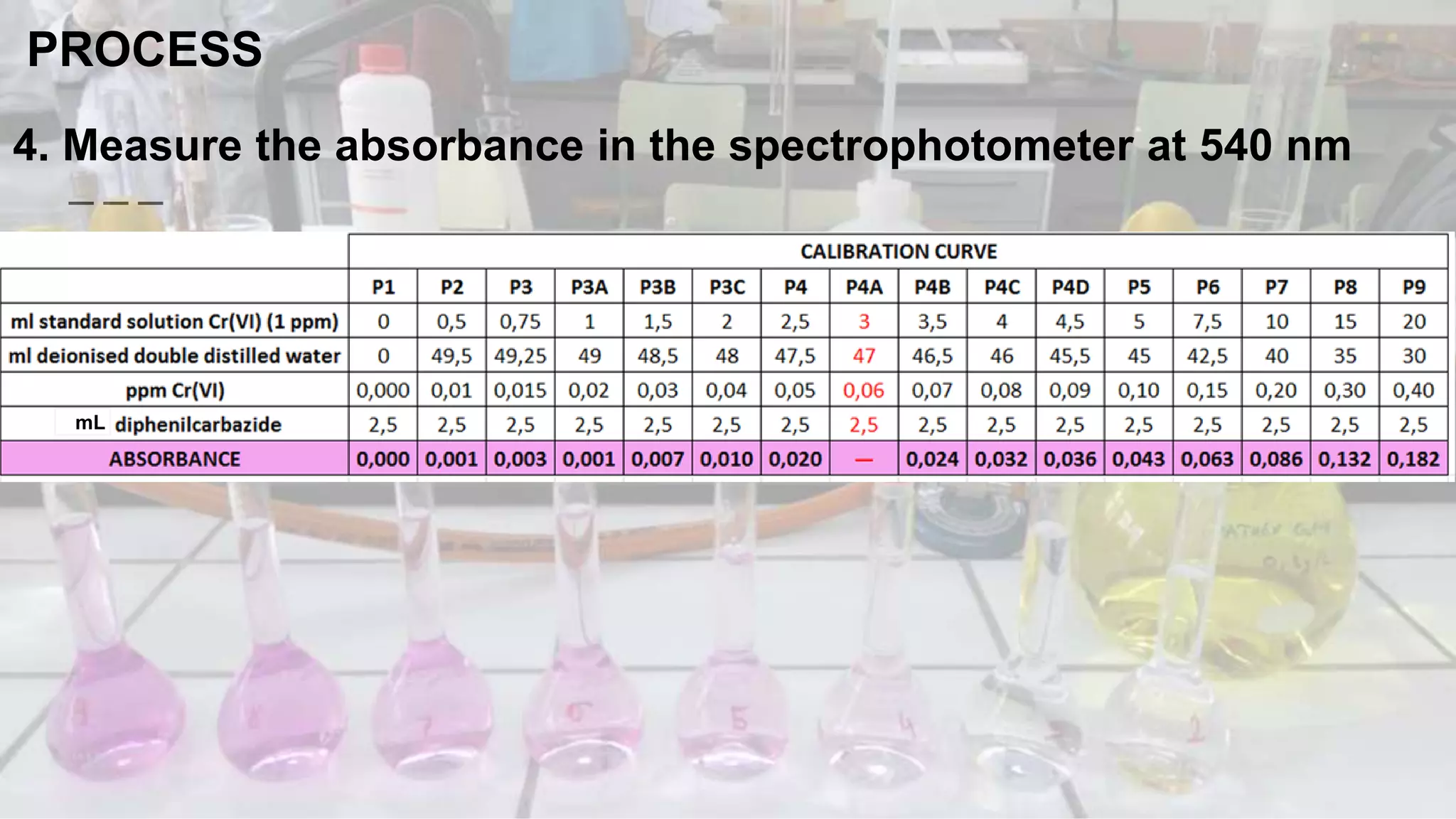
PROCESS
4. Measure the absorbance in the spectrophotometer at 540 nm
mL
PROCESS
5. Trace the calibration curve: A vs ppm Cr(VI)
Analytical
process to
determine Cl-
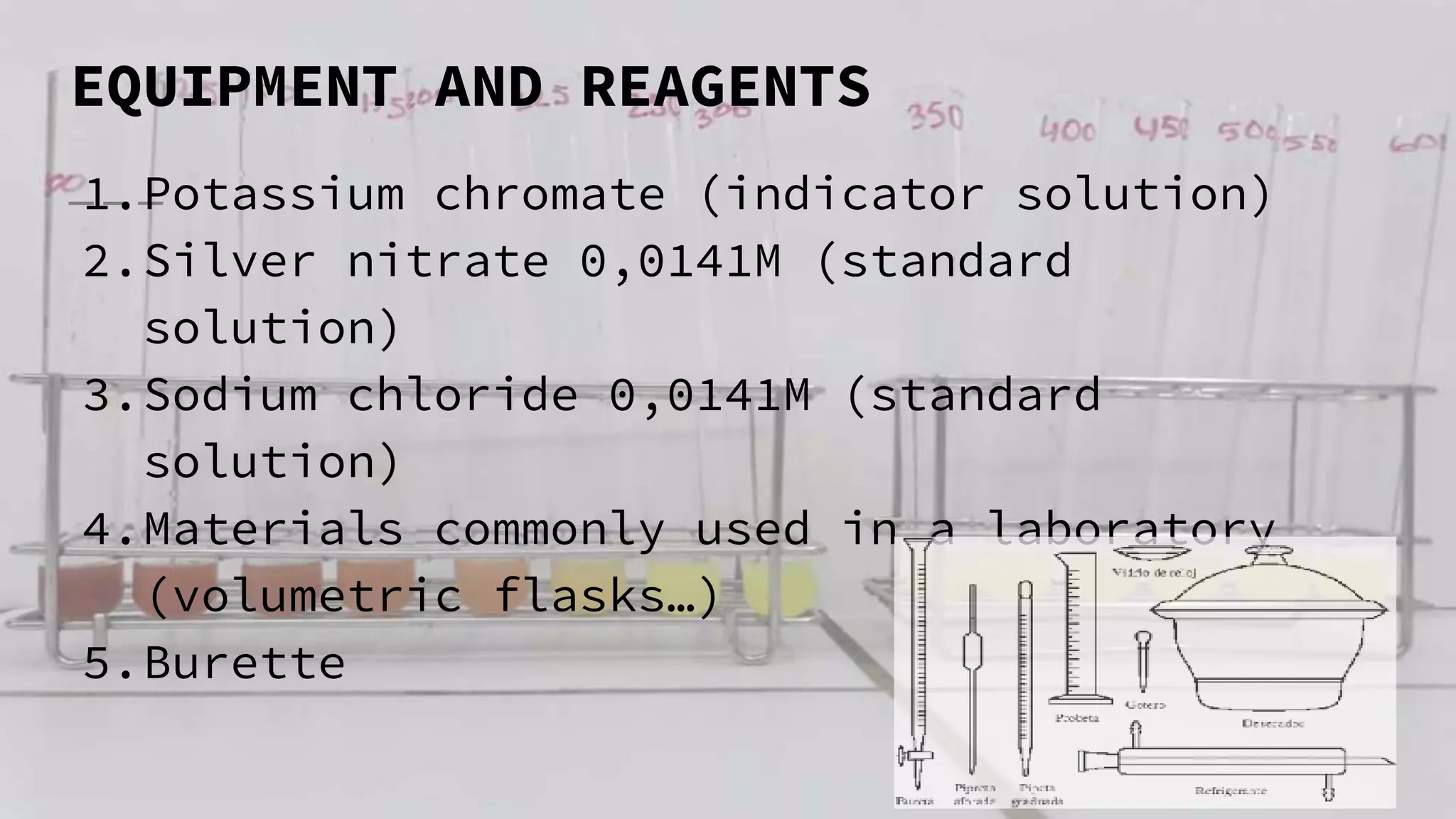
EQUIPMENT AND REAGENTS
1.Potassium chromate (indicator solution)
2.Silver nitrate 0,0141M (standard
solution)
3.Sodium chloride 0,0141M (standard
solution)
4.Materials commonly used in a laboratory
(volumetric flasks…)
5.Burette
REAGENTS
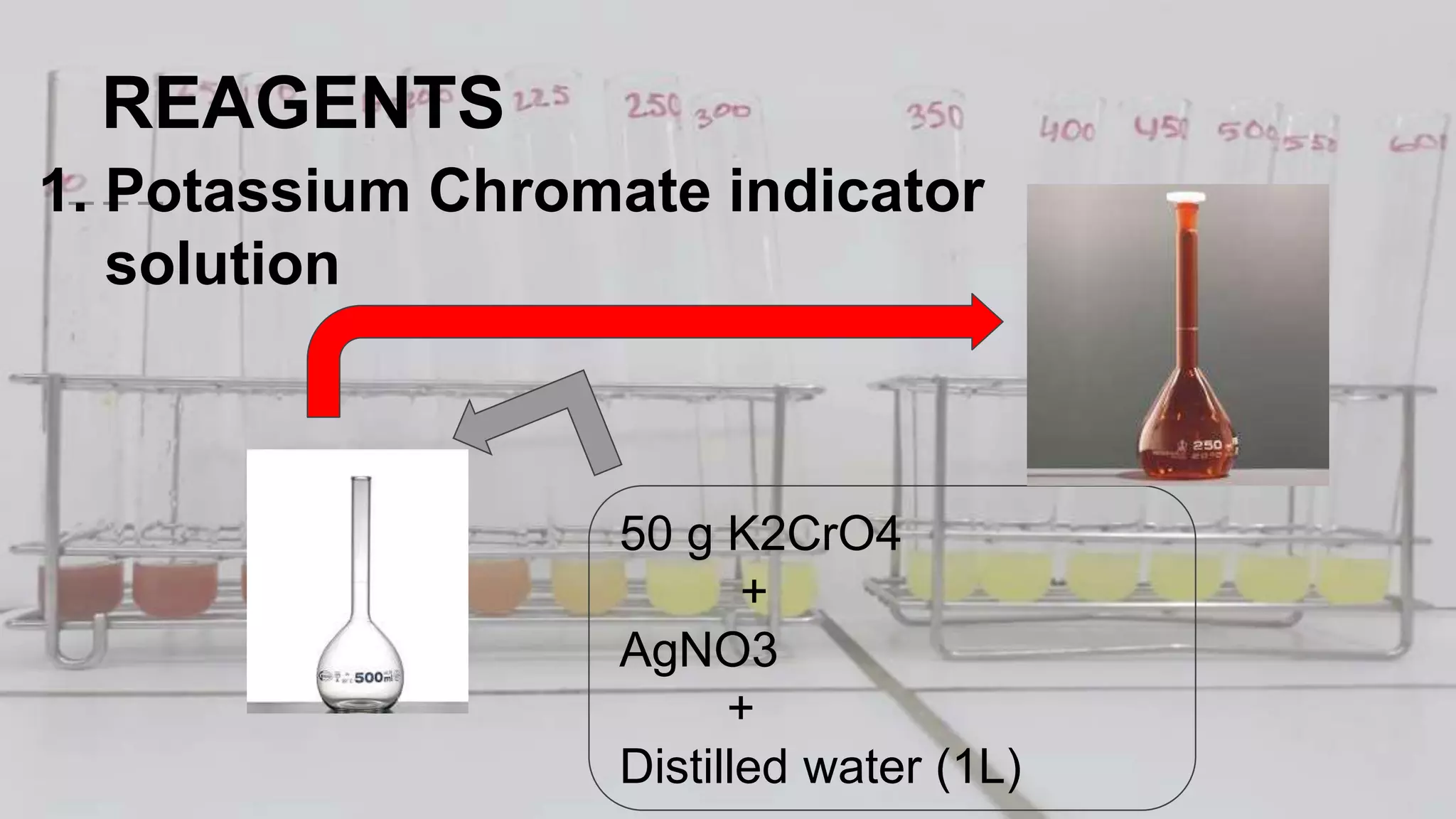
1. Potassium Chromate indicator
solution
50 g K2CrO4
+
AgNO3
+
Distilled water (1L)
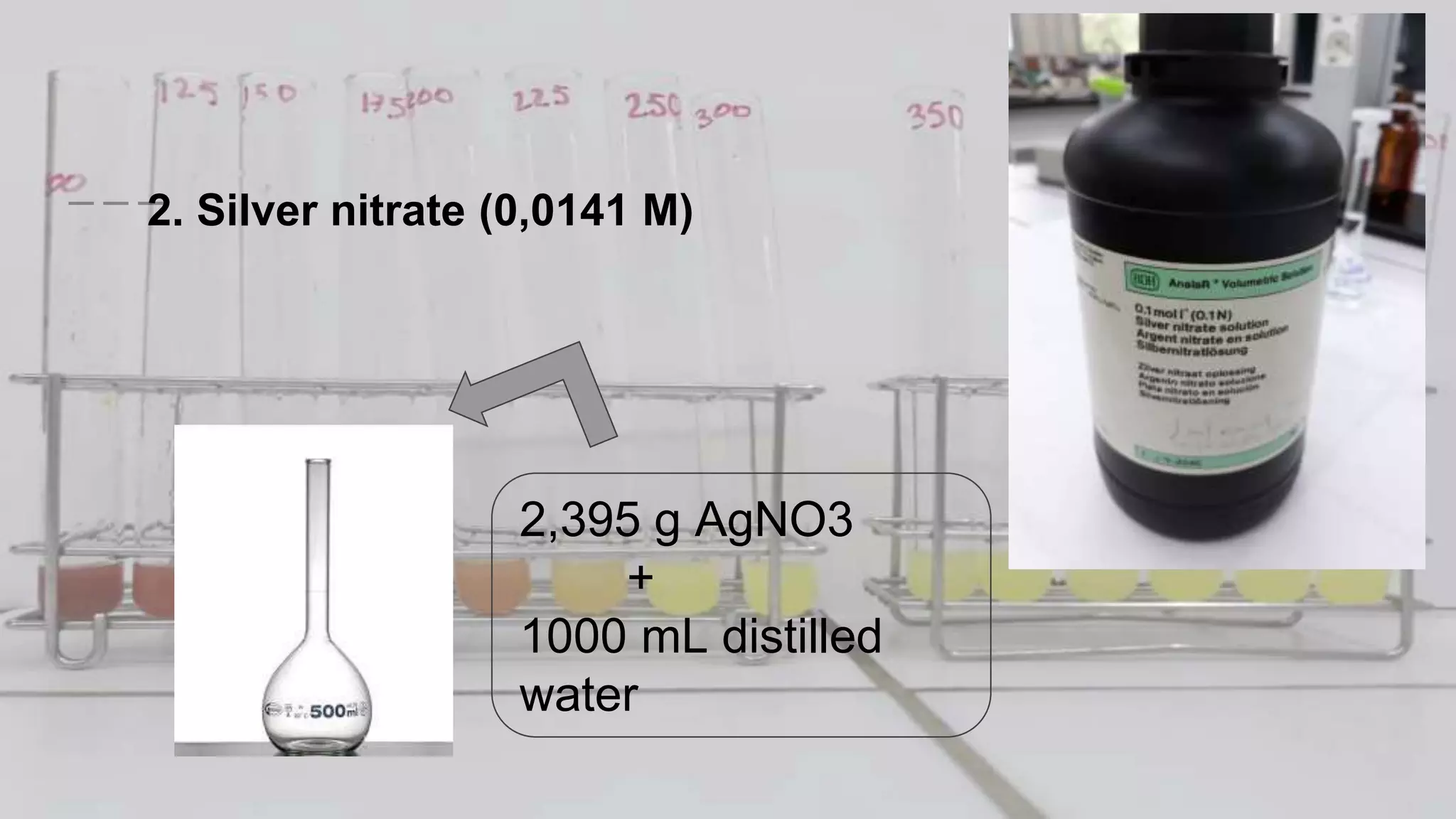
2. Silver nitrate (0,0141 M)
2,395 g AgNO3
+
1000 mL distilled
water
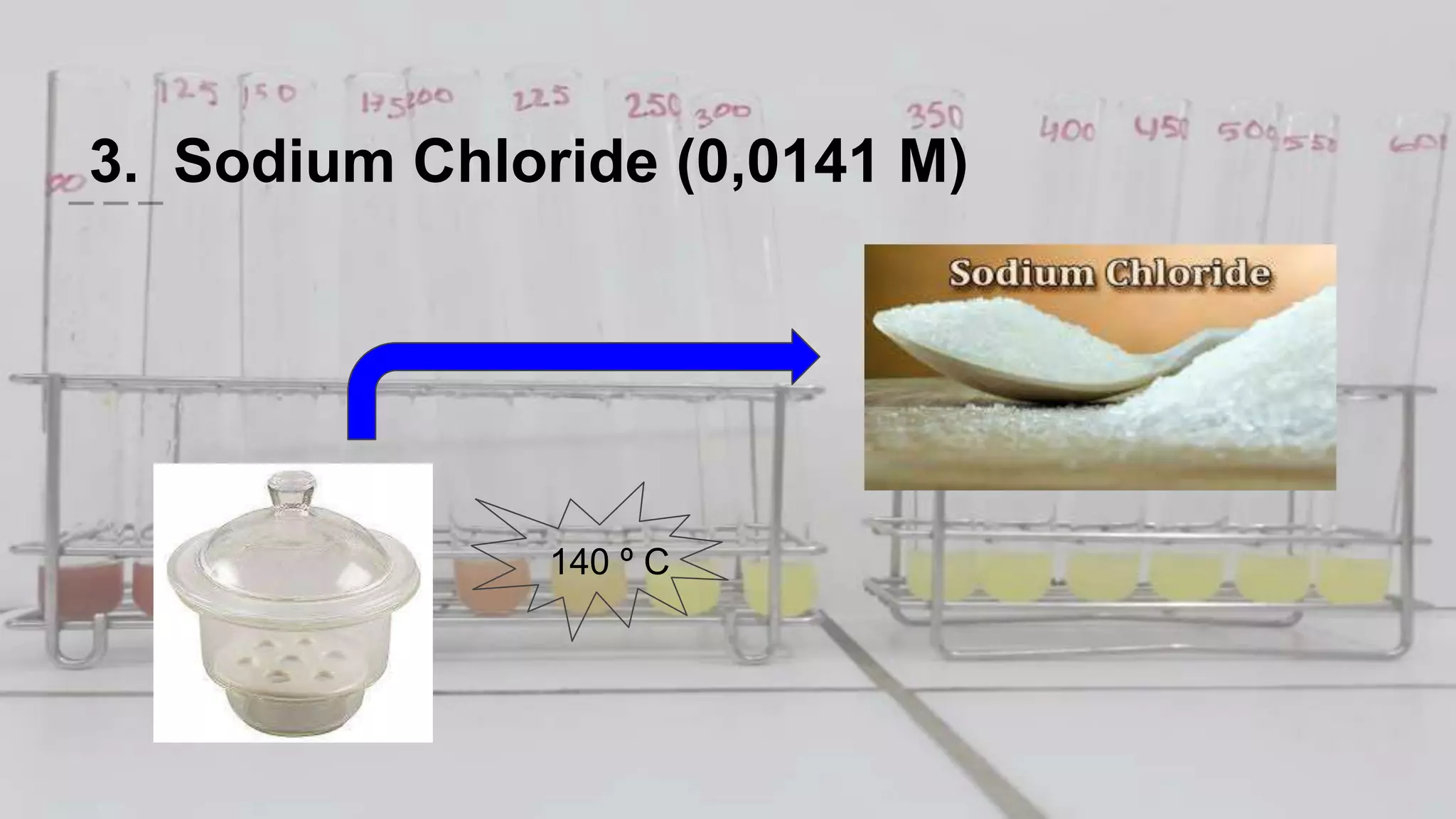
3. Sodium Chloride (0,0141 M)
140 º C
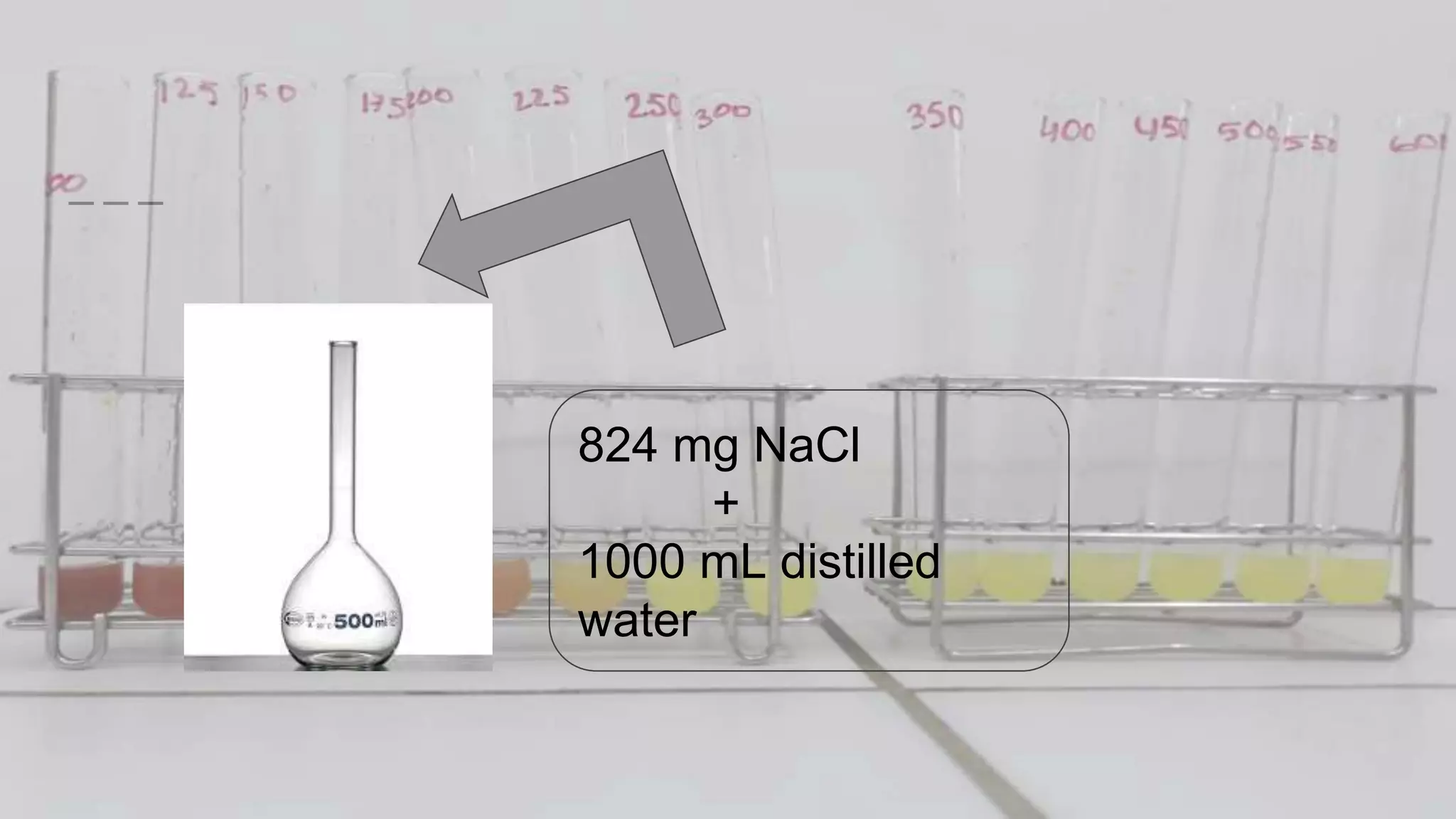
824 mg NaCl
+
1000 mL distilled
water
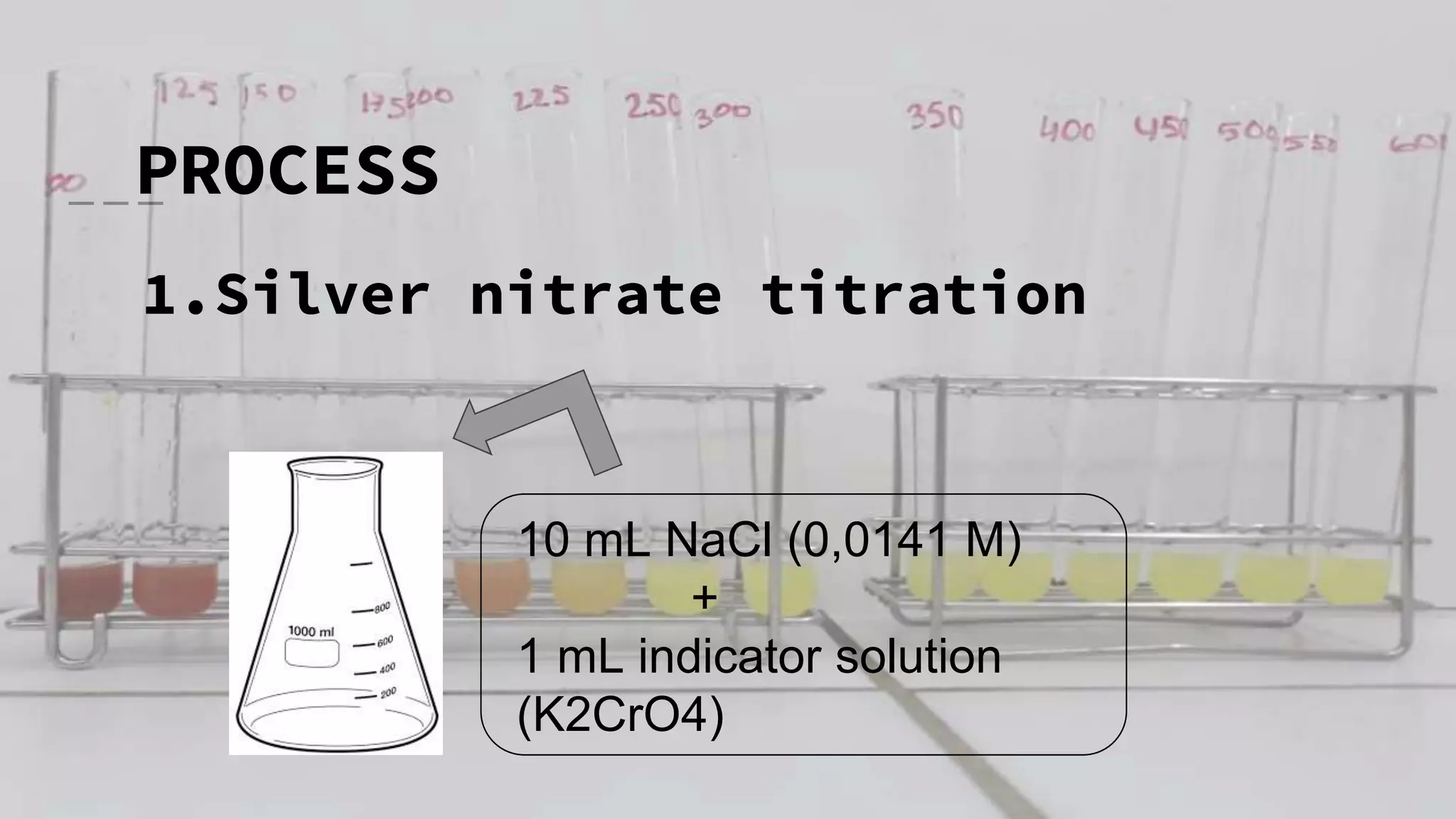
PROCESS
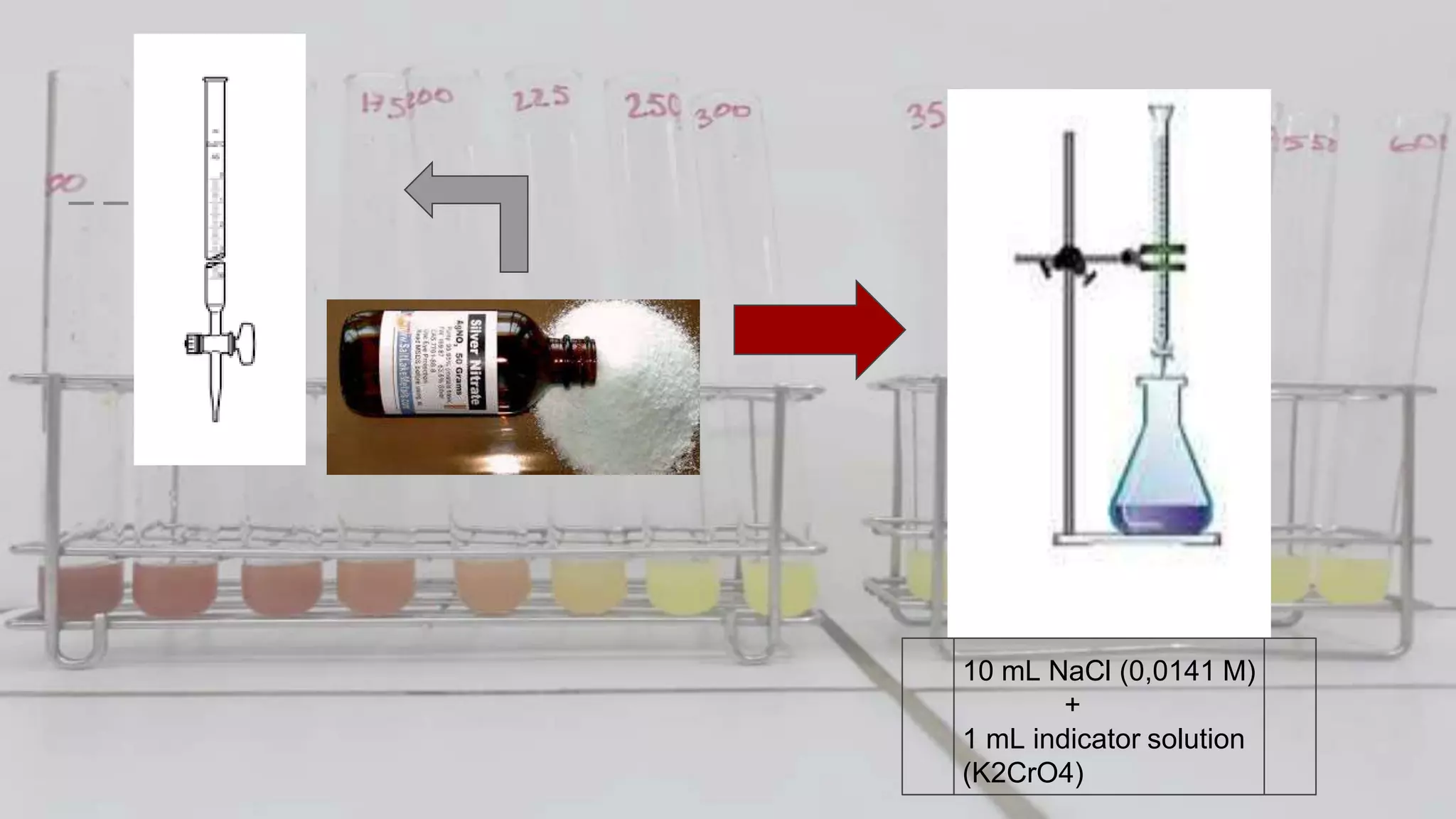
1.Silver nitrate titration
10 mL NaCl (0,0141 M)
+
1 mL indicator solution
(K2CrO4)
10 mL NaCl (0,0141 M)
+
1 mL indicator solution
(K2CrO4)
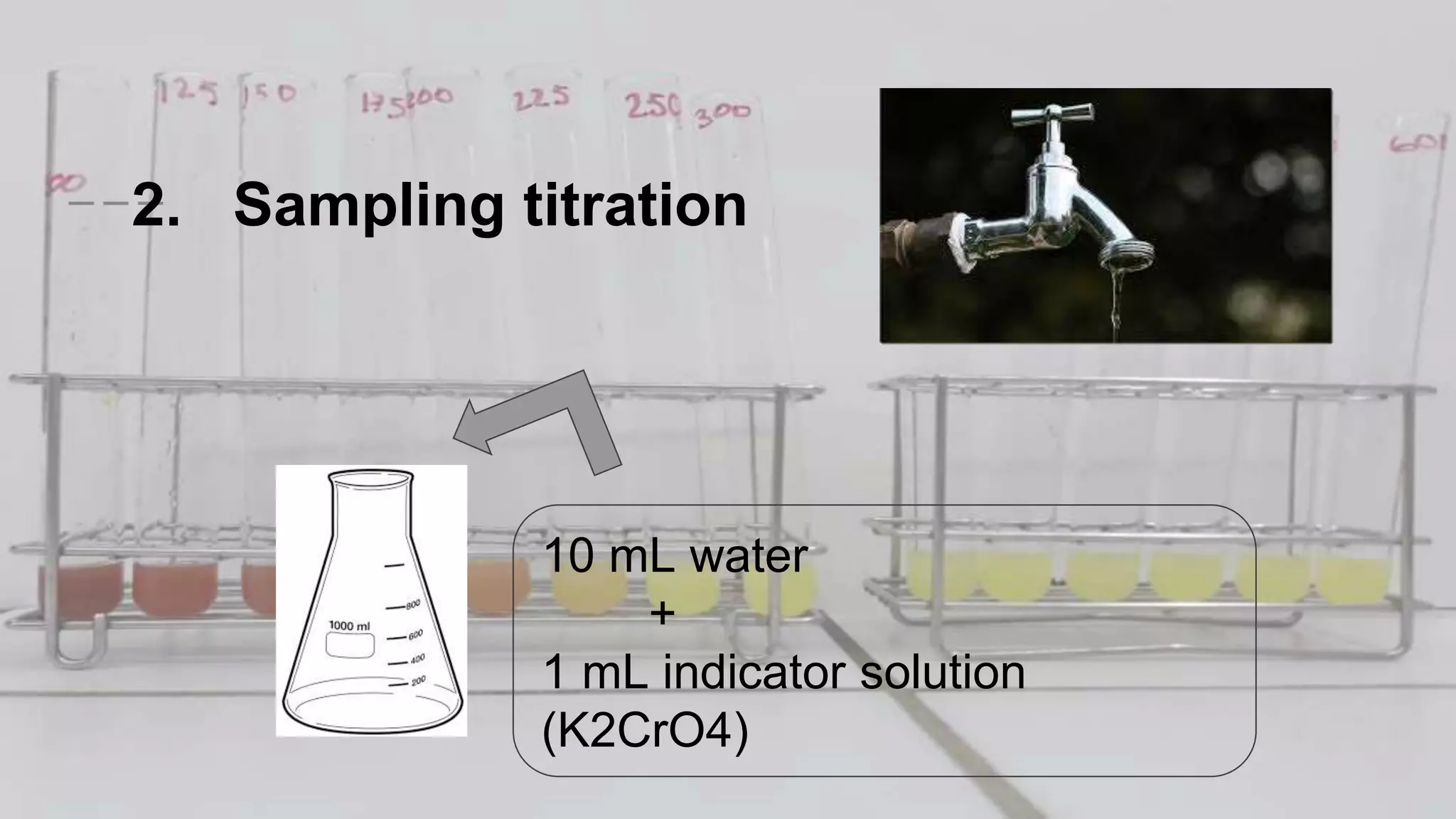
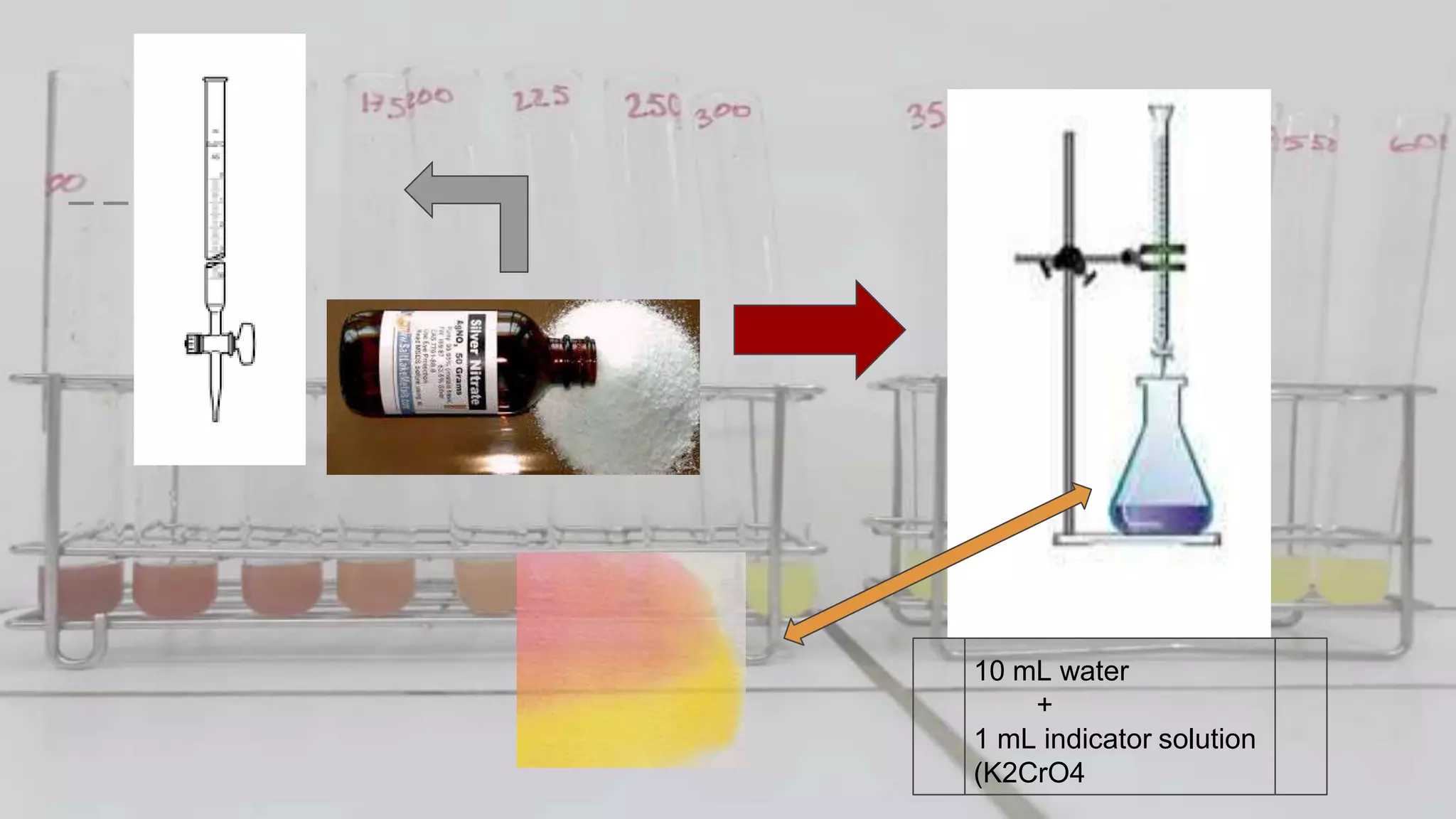
2. Sampling titration
10 mL water
+
1 mL indicator solution
(K2CrO4)
10 mL water
+
1 mL indicator solution
(K2CrO4
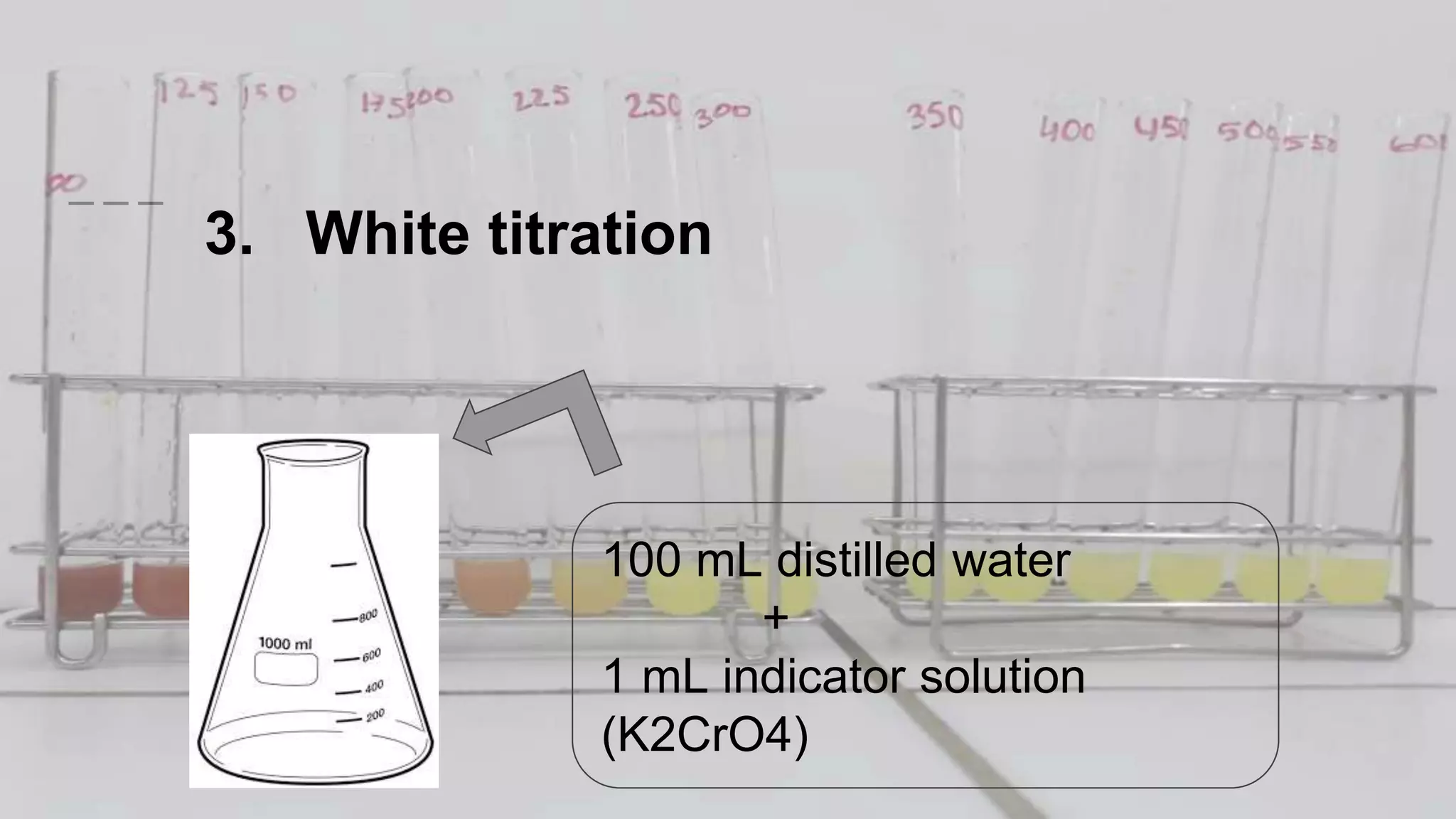
3. White titration
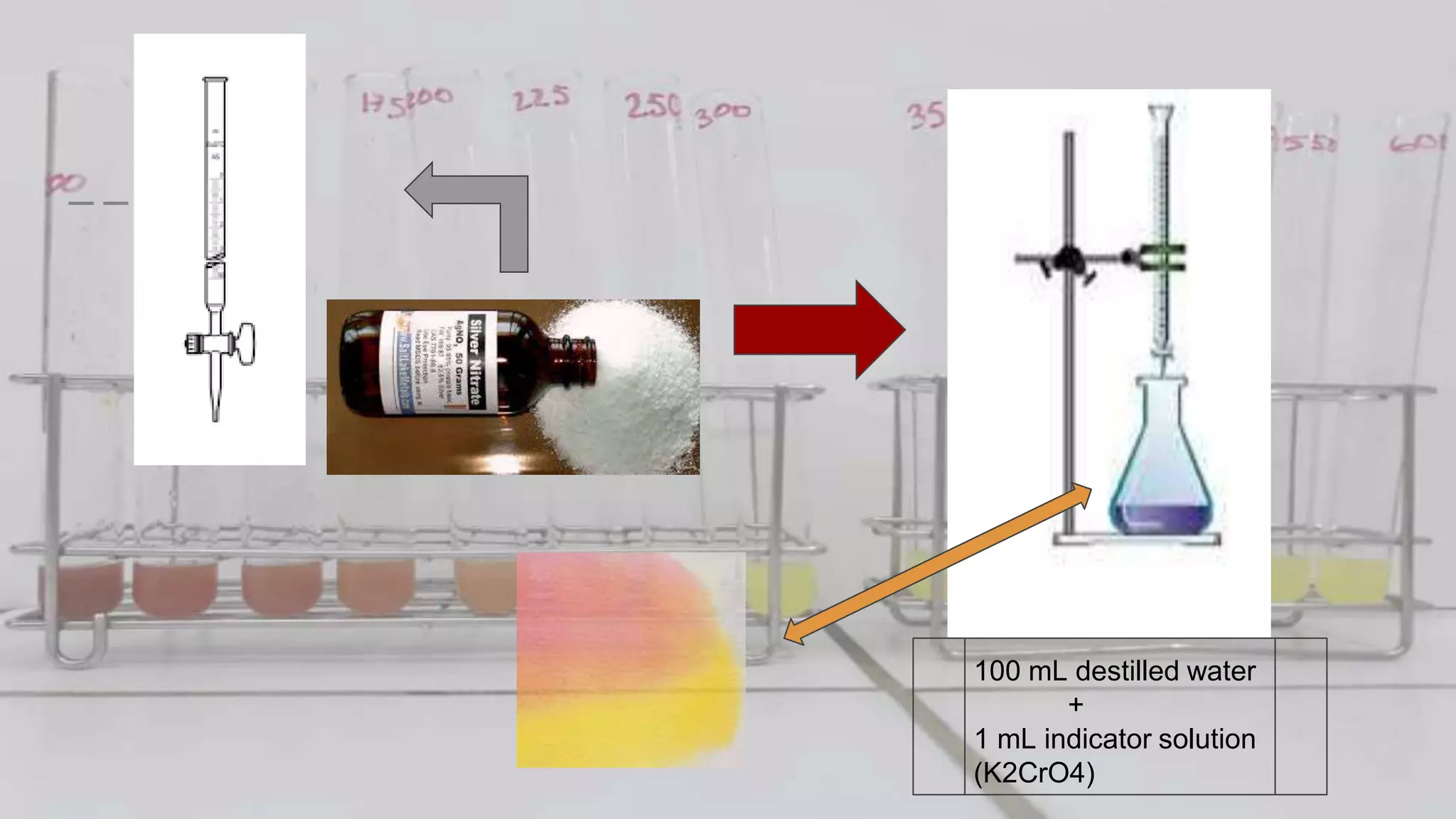
100 mL distilled water
+
1 mL indicator solution
(K2CrO4)
100 mL destilled water
+
1 mL indicator solution
(K2CrO4)
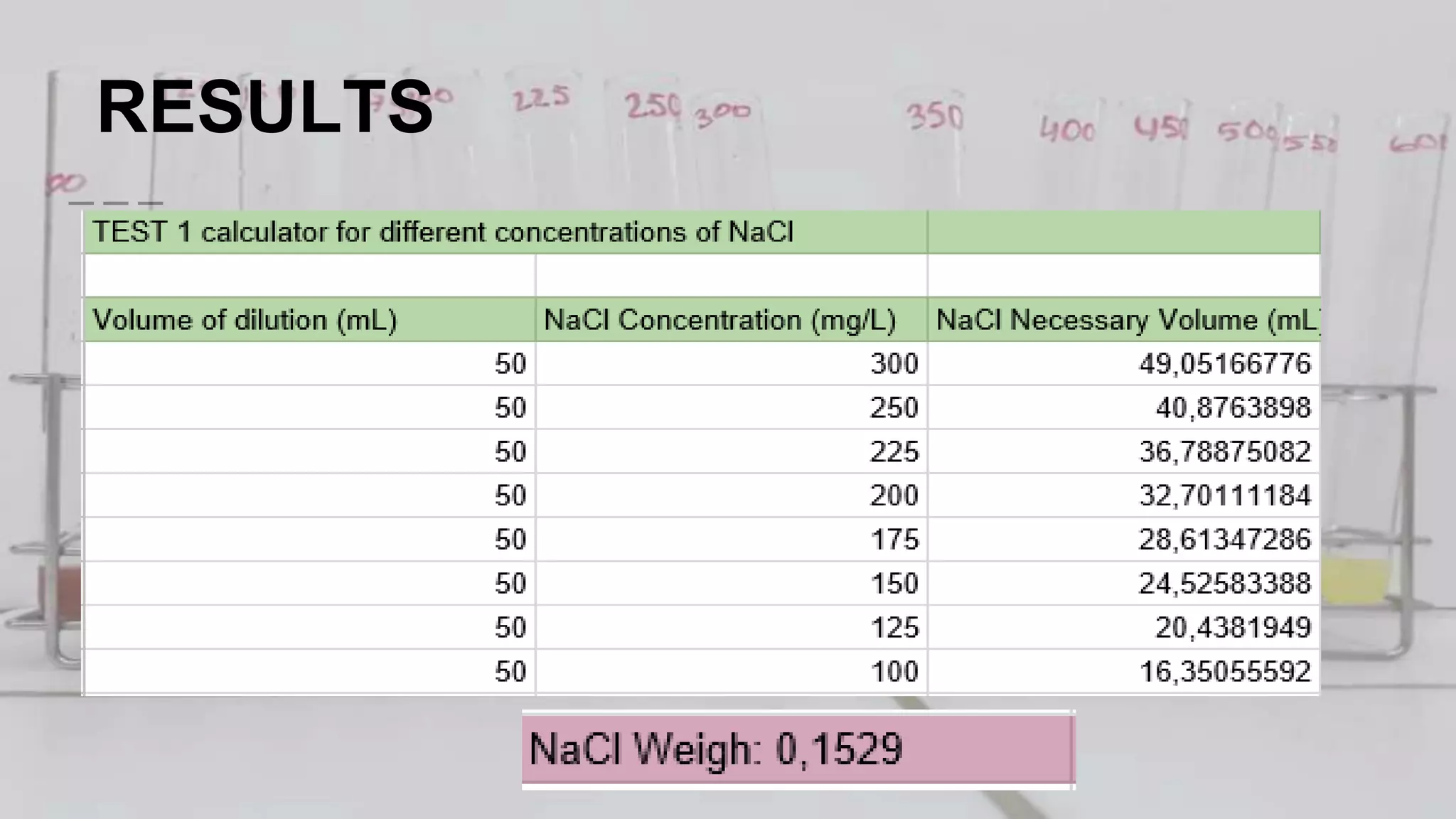
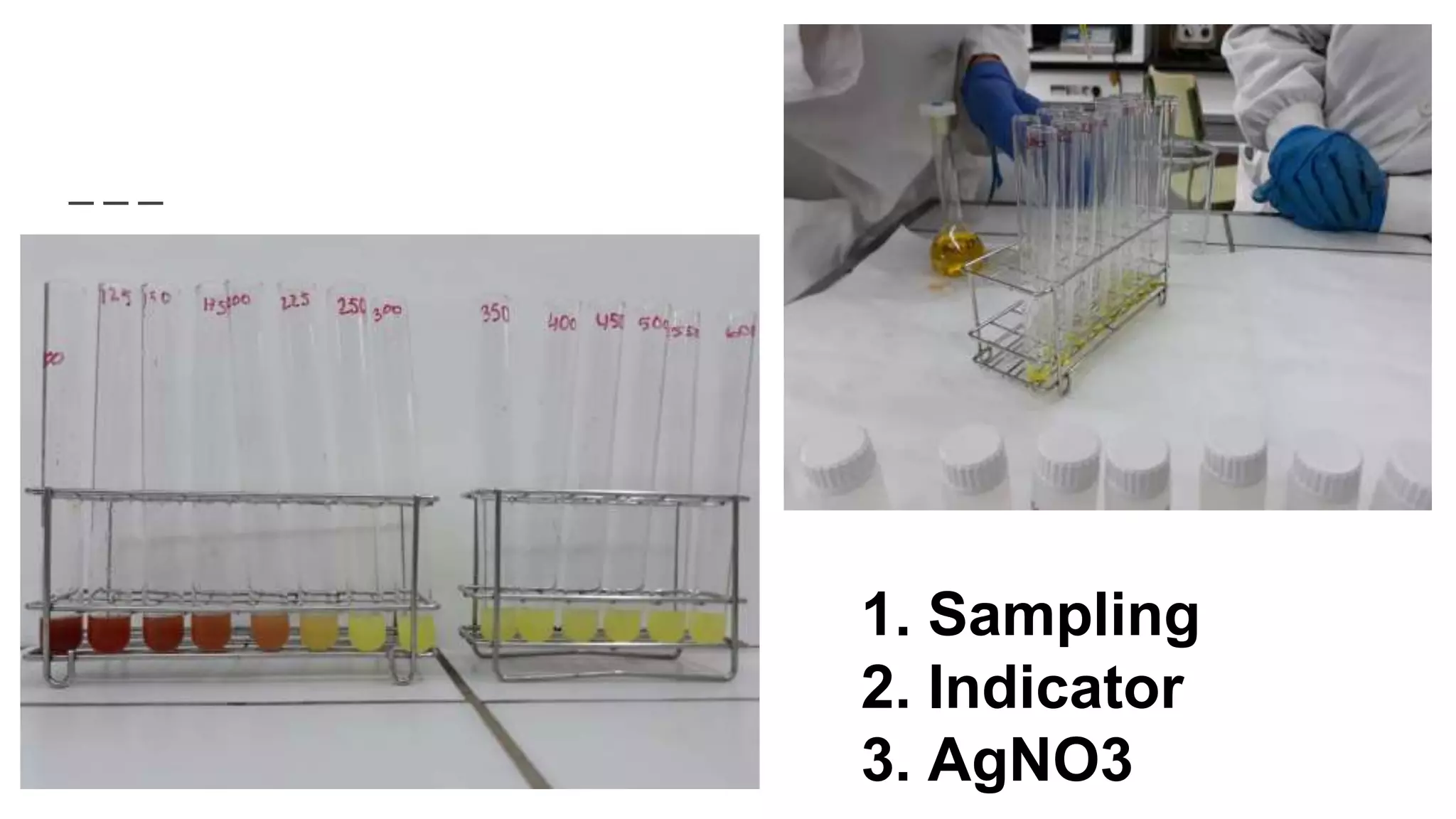
RESULTS
1. Sampling
2. Indicator
3. AgNO3
How can we package our
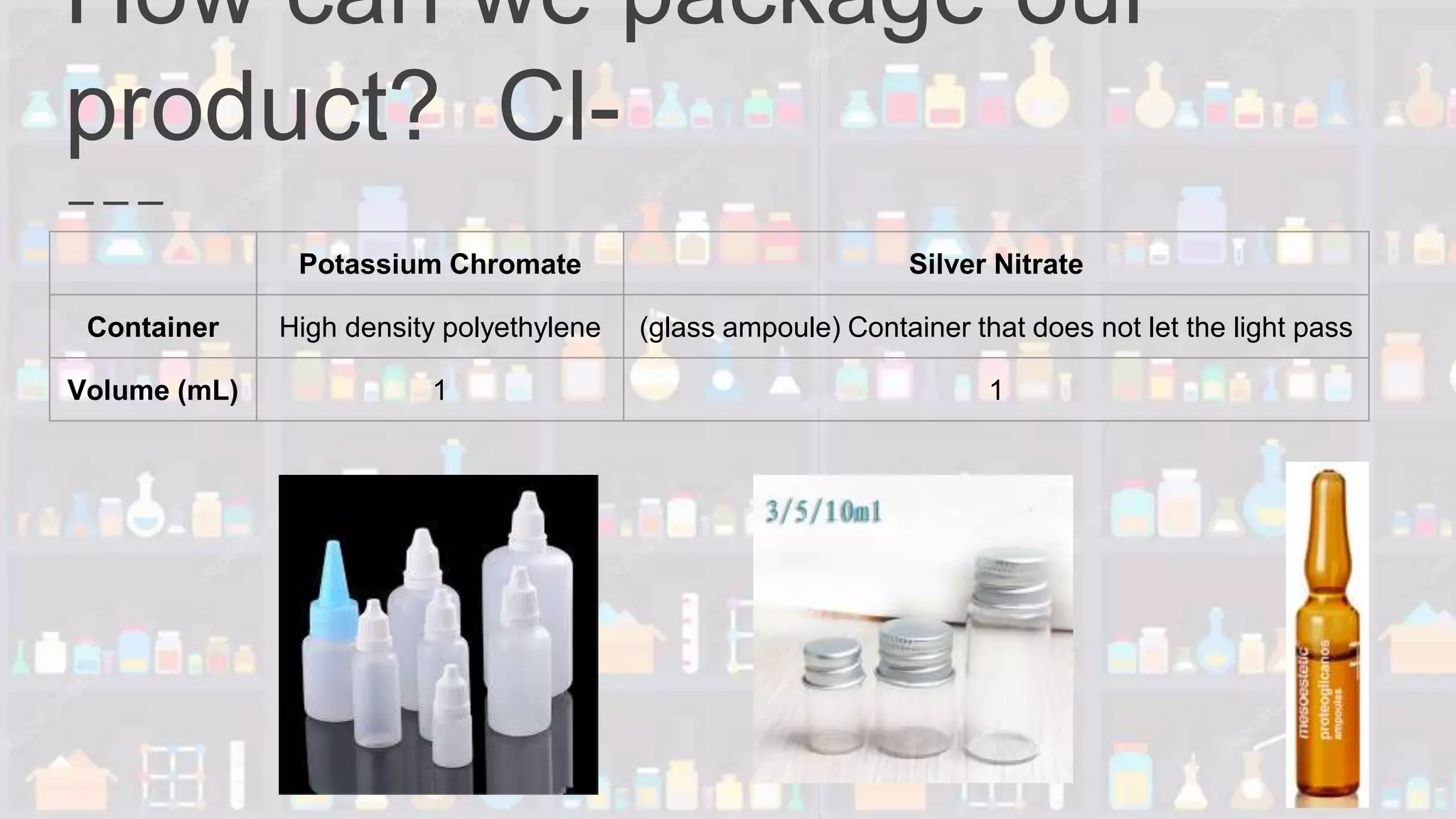
product? Cl-
Potassium Chromate Silver Nitrate
Container High density polyethylene (glass ampoule) Container that does not let the light pass
Volume (mL) 1 1
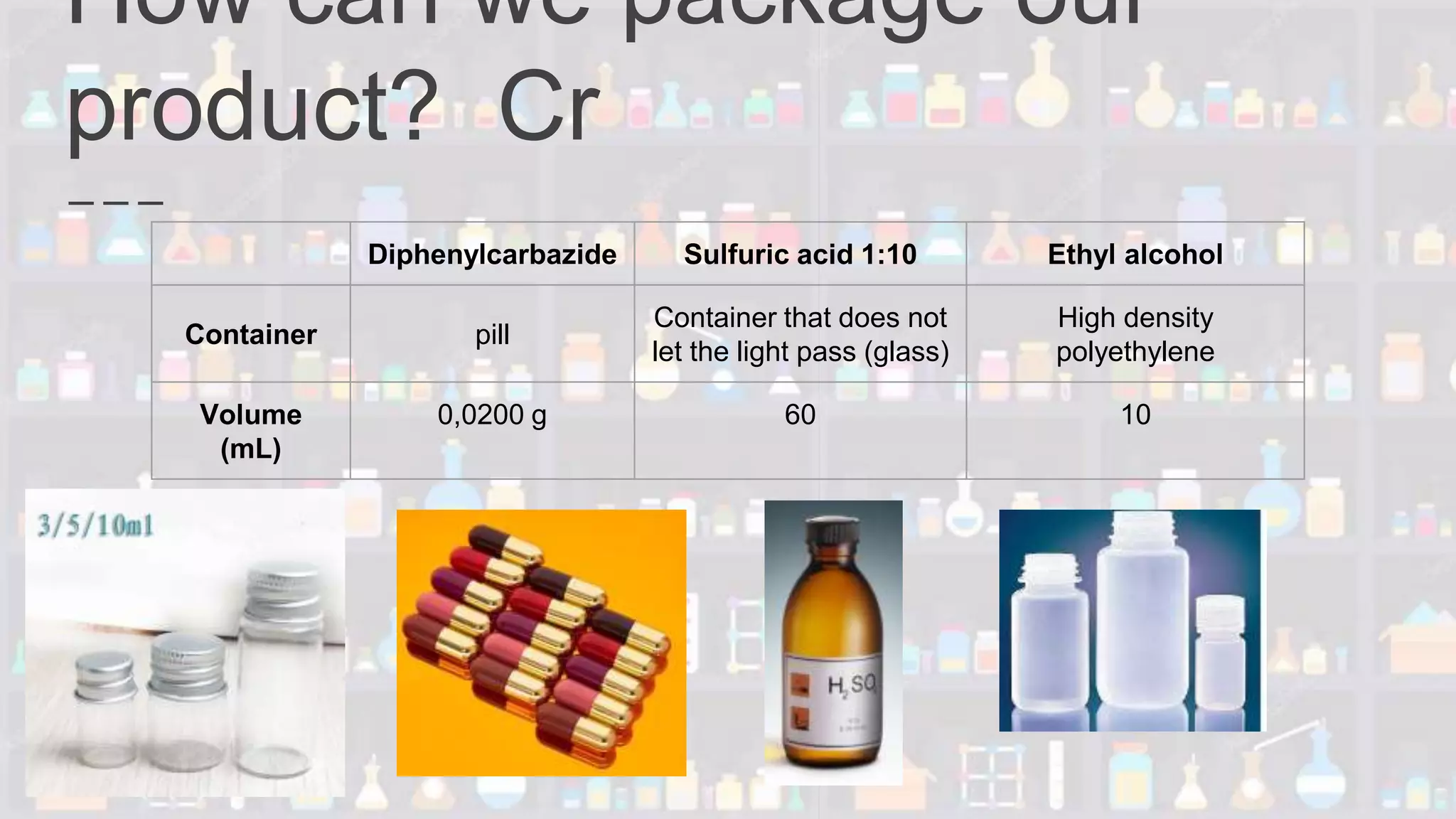
How can we package our
product? Cr
Diphenylcarbazide Sulfuric acid 1:10 Ethyl alcohol
Container pill
Container that does not
let the light pass (glass)
High density
polyethylene
Volume
(mL)
0,0200 g 60 10
Qualitative results but we can
do more…
We can use the technology
Our smartphones… apps
What we need for that?
● Good illumination
● A camera
● Database that have a relation between
colours and concentration
● A program that make it automatically
[Cl-]
mg/L
R G B
100 63 7 3
125 81 18 3
150 83 25 13
175 94 40 12
200 109 63 30
225 139 117 60
250 146 146 58
300 151 146 61
350 136 144 51
400 147 146 62
450 144 142 65
500 148 146 63
550 148 146 61
600 152 146 58
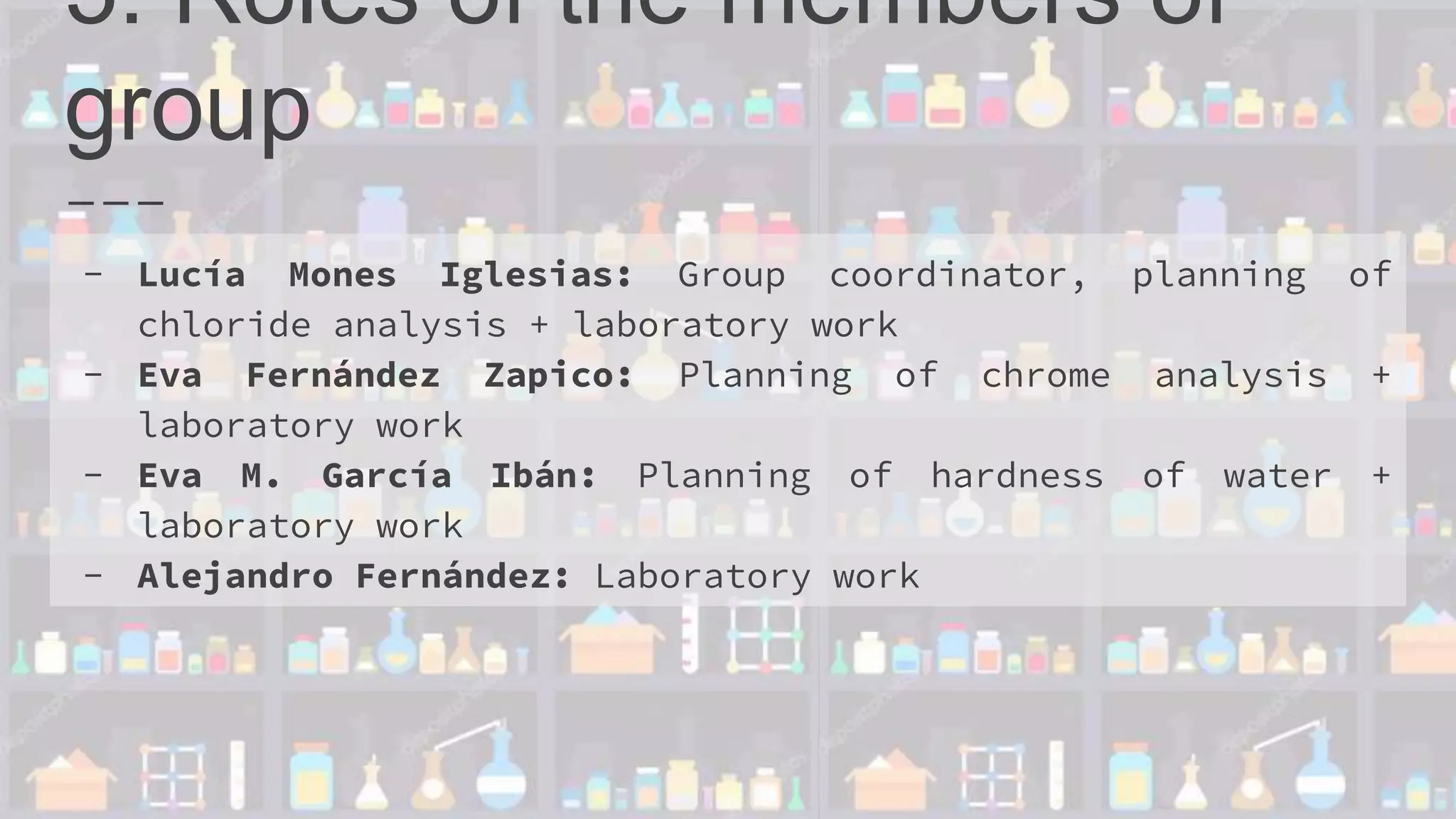
5. Roles of the members of
group
- Lucía Mones Iglesias: Group coordinator, planning of
chloride analysis + laboratory work
- Eva Fernández Zapico: Planning of chrome analysis +
laboratory work
- Eva M. García Ibán: Planning of hardness of water +
laboratory work
- Alejandro Fernández: Laboratory work
The End

Quick tests for determining Cr(VI) y Cl-

  • 1.
  • 2.
    Inde x 1.Introduction. What areour objectives? What we pretend? 2.Analytical process to determine Cr 3.Analytical process to determine Cl- 4.How can we package our product? 5.Roles of the members of group
  • 3.
    objectives? What we pretend? QUICKTEST ➔ Quick cinetic reaction ➔ Known analytical process ➔ None heating requirement ➔ A limit value known ➔ Known the expiration of the components and the requirements of this
  • 4.
    Introduction. What areour objectives? What we pretend? Sample with our analyte with unknown concentration A specific quantity of moles that are the necessary to react with the limit value An indicator that indicates qualitatively, if you are above or below the limit value 1 2 3
  • 5.
  • 6.
    EQUIPMENT AND REAGENTS 1.Acid diphenylcarbazide (indicator solution) 2. Potassium dichromate (stock standard solution) 3. Deionised double distilled water 4. Spectrophotometer for VIS (540 nm) and spectrophotometer cells 5. Volumetric materials (calibrated flasks, beakers, pipettes...) Analytical process to determine Cr(VI) in water
  • 7.
    REAGENTS 1. Acid diphenylcarbazideindicator solution 0.2 g diphenylcarbazide + 100 mL EtOH + 400 mL H2SO4 1/10 refrigerated!!
  • 8.
    REAGENTS 2a. Potassium dichromate0.1 g/L (stock standard solution) 0.374 g K2Cr2O7 + Deionised double distilled water
  • 9.
    REAGENTS 2b. Potassium dichromate0.001 g/L (standard solution) 10 mL K2Cr2O7 0.1 g/L K2Cr2O7 0.001 g/L K2Cr2O7
  • 10.
  • 11.
    PROCESS 1. Prepare thesolutions (as seen before) 2. Prepare the samples for the calibration curve 3. Let the samples stand for 10 min for color development 4. Measure the absorbance of the samples in the spectrophotometer at 540 nm 5. Trace the calibration curve by plotting the absorbance against the quantity of Cr(VI) (in ppm) Analytical process to determine Cr(VI) in water
  • 12.
    PROCESS 2. Prepare thesamples for the calibration curve 3. Let the samples stand for 10 min for color development mL
  • 13.
    PROCESS 4. Measure theabsorbance in the spectrophotometer at 540 nm mL
  • 14.
    PROCESS 5. Trace thecalibration curve: A vs ppm Cr(VI)
  • 15.
  • 16.
    EQUIPMENT AND REAGENTS 1.Potassiumchromate (indicator solution) 2.Silver nitrate 0,0141M (standard solution) 3.Sodium chloride 0,0141M (standard solution) 4.Materials commonly used in a laboratory (volumetric flasks…) 5.Burette
  • 17.
    REAGENTS 1. Potassium Chromateindicator solution 50 g K2CrO4 + AgNO3 + Distilled water (1L)
  • 18.
    2. Silver nitrate(0,0141 M) 2,395 g AgNO3 + 1000 mL distilled water
  • 19.
    3. Sodium Chloride(0,0141 M) 140 º C
  • 20.
    824 mg NaCl + 1000mL distilled water
  • 21.
    PROCESS 1.Silver nitrate titration 10mL NaCl (0,0141 M) + 1 mL indicator solution (K2CrO4)
  • 22.
    10 mL NaCl(0,0141 M) + 1 mL indicator solution (K2CrO4)
  • 23.
    2. Sampling titration 10mL water + 1 mL indicator solution (K2CrO4)
  • 24.
    10 mL water + 1mL indicator solution (K2CrO4
  • 25.
    3. White titration 100mL distilled water + 1 mL indicator solution (K2CrO4)
  • 26.
    100 mL destilledwater + 1 mL indicator solution (K2CrO4)
  • 27.
  • 29.
  • 30.
    How can wepackage our product? Cl- Potassium Chromate Silver Nitrate Container High density polyethylene (glass ampoule) Container that does not let the light pass Volume (mL) 1 1
  • 31.
    How can wepackage our product? Cr Diphenylcarbazide Sulfuric acid 1:10 Ethyl alcohol Container pill Container that does not let the light pass (glass) High density polyethylene Volume (mL) 0,0200 g 60 10
  • 32.
    Qualitative results butwe can do more… We can use the technology Our smartphones… apps
  • 33.
    What we needfor that? ● Good illumination ● A camera ● Database that have a relation between colours and concentration ● A program that make it automatically
  • 34.
    [Cl-] mg/L R G B 10063 7 3 125 81 18 3 150 83 25 13 175 94 40 12 200 109 63 30 225 139 117 60 250 146 146 58 300 151 146 61 350 136 144 51 400 147 146 62 450 144 142 65 500 148 146 63 550 148 146 61 600 152 146 58
  • 35.
    5. Roles ofthe members of group - Lucía Mones Iglesias: Group coordinator, planning of chloride analysis + laboratory work - Eva Fernández Zapico: Planning of chrome analysis + laboratory work - Eva M. García Ibán: Planning of hardness of water + laboratory work - Alejandro Fernández: Laboratory work
  • 36.