

RFP: Quick Guide to
Effective RFP
Shilpa P. Viswambharan
Courtesy
 I aim to provide a quick guide to writing effective
RFPs via this presentation. It is mainly based on
the Bud Porter-Roth’s book - “Request for
Proposal, A Guide to Effective RFP Development”
and my experience as a relationship manager.
 As this book has helped me in my success, I hope
it helps many others.
Request For Proposal,
Defined
 RFP is a vehicle for establishing a dialogue
between buyer and suppliers, based on agreed
upon set of rules, requirements, schedules and
other information.
Initial Stage
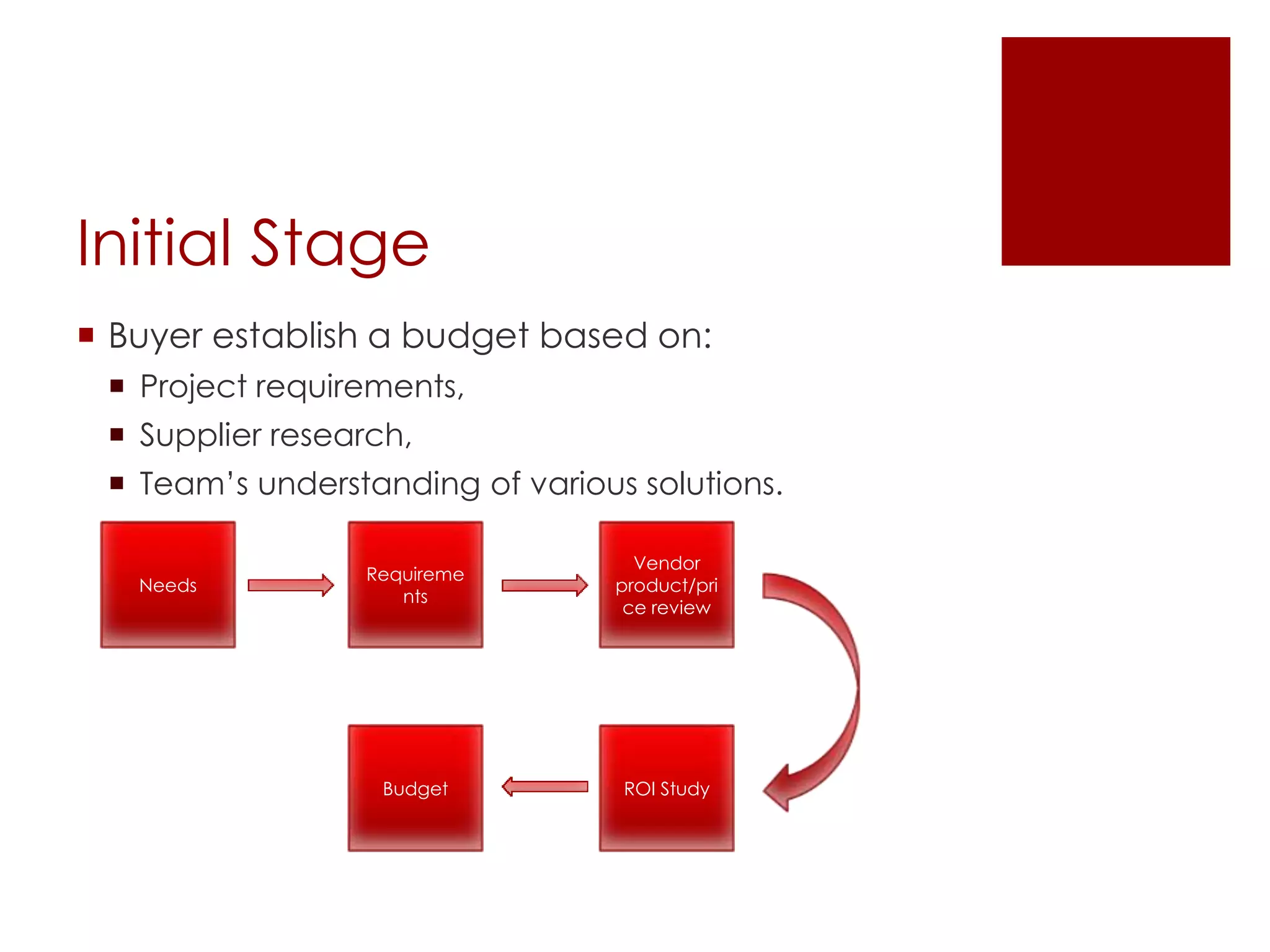
 Buyer establish a budget based on:
 Project requirements,
 Supplier research,
 Team’s understanding of various solutions.
Needs
Requireme
nts
Vendor
product/pri
ce review
Budget ROI Study
Best Practices
 Need assessment and formal statement of
problem and the required solution.
 Mention the requirements clearly and in
measurable terms.
 Internal acceptance.
 Not limiting available solutions
 Rigorous evaluation criteria
 Define project budget, schedule and personnel
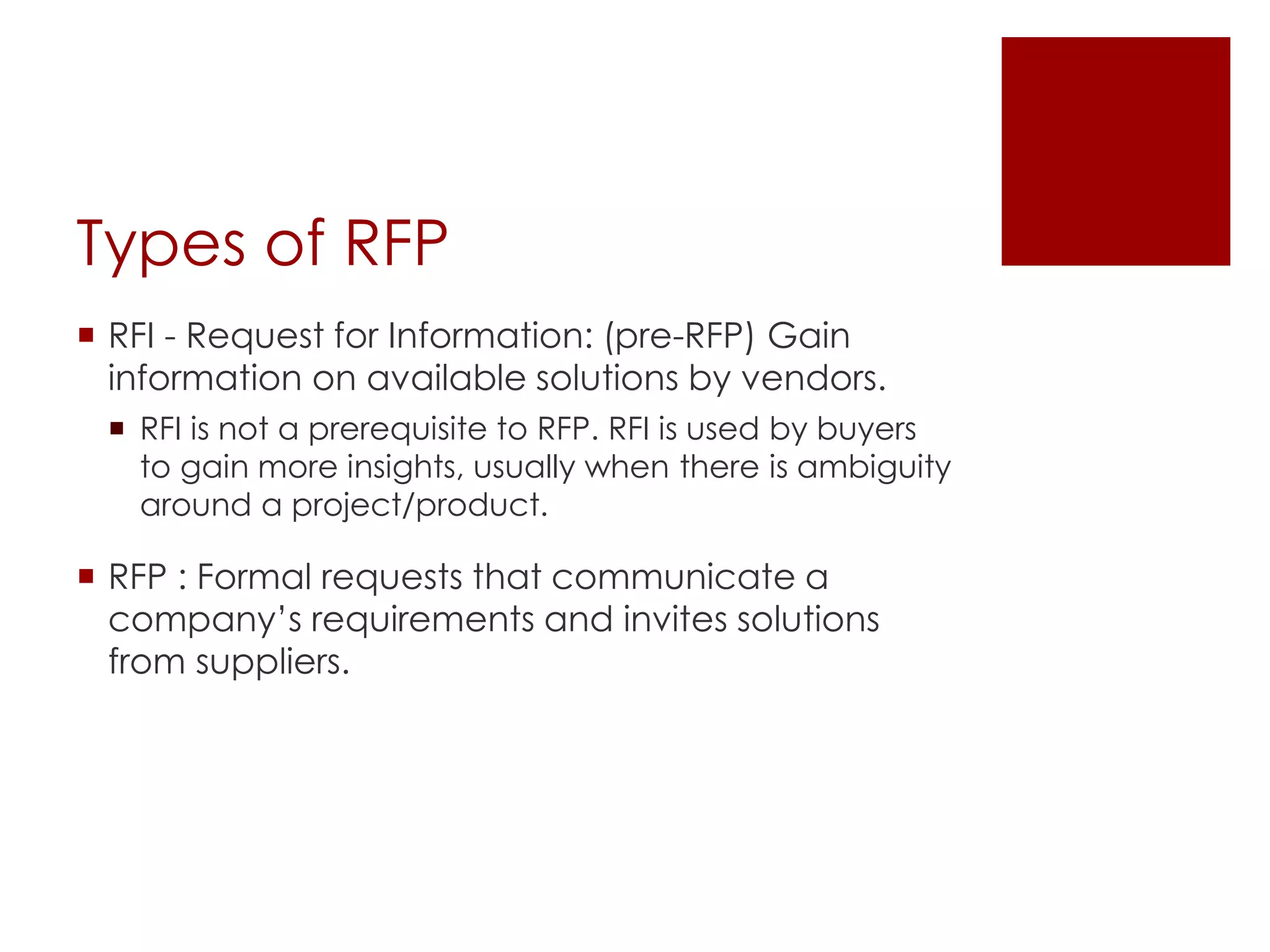
Types of RFP
 RFI - Request for Information: (pre-RFP) Gain
information on available solutions by vendors.
 RFI is not a prerequisite to RFP. RFI is used by buyers
to gain more insights, usually when there is ambiguity
around a project/product.
 RFP : Formal requests that communicate a
company’s requirements and invites solutions
from suppliers.
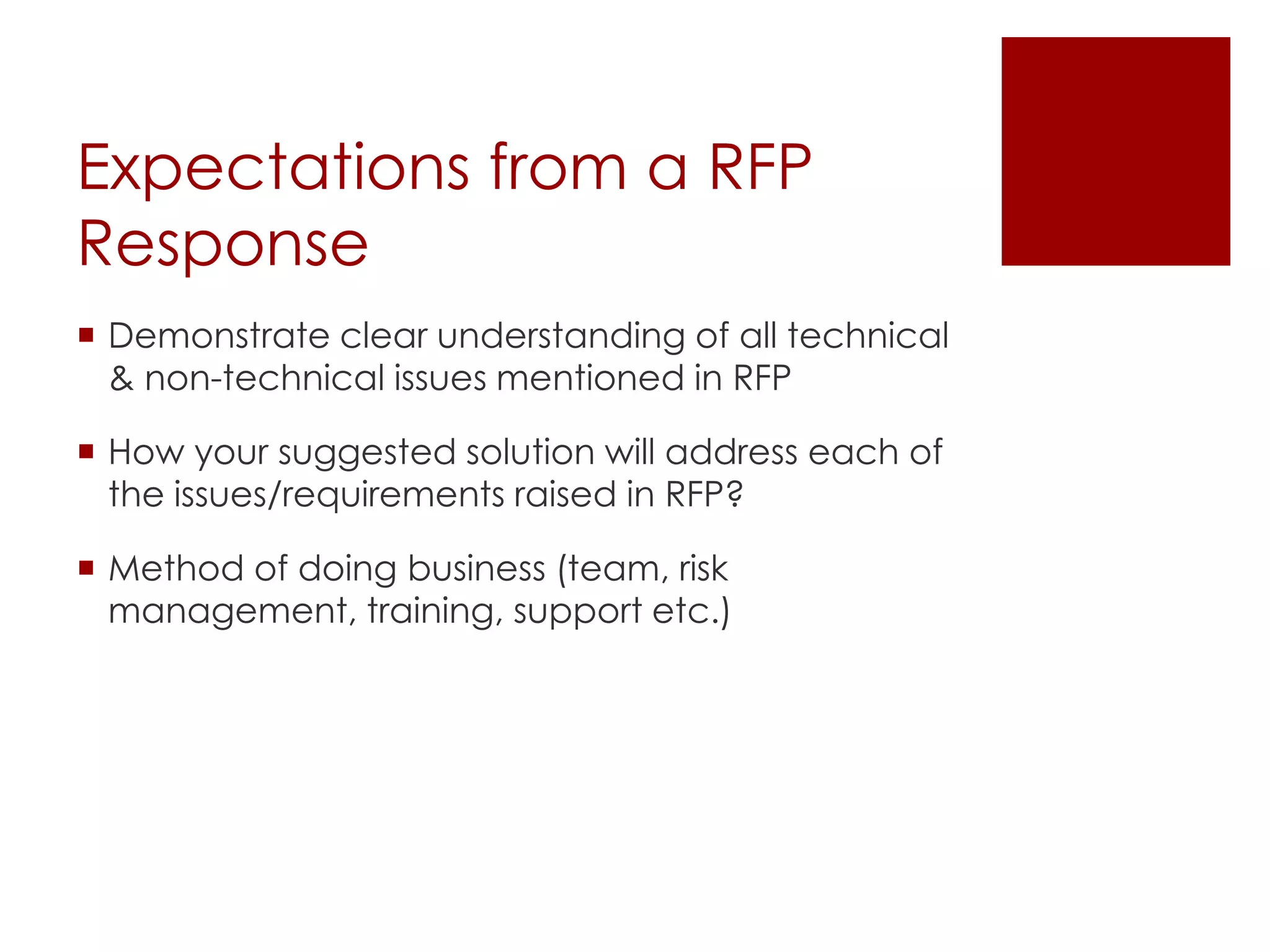
Expectations from a RFP
Response
 Demonstrate clear understanding of all technical
& non-technical issues mentioned in RFP
 How your suggested solution will address each of
the issues/requirements raised in RFP?
 Method of doing business (team, risk
management, training, support etc.)
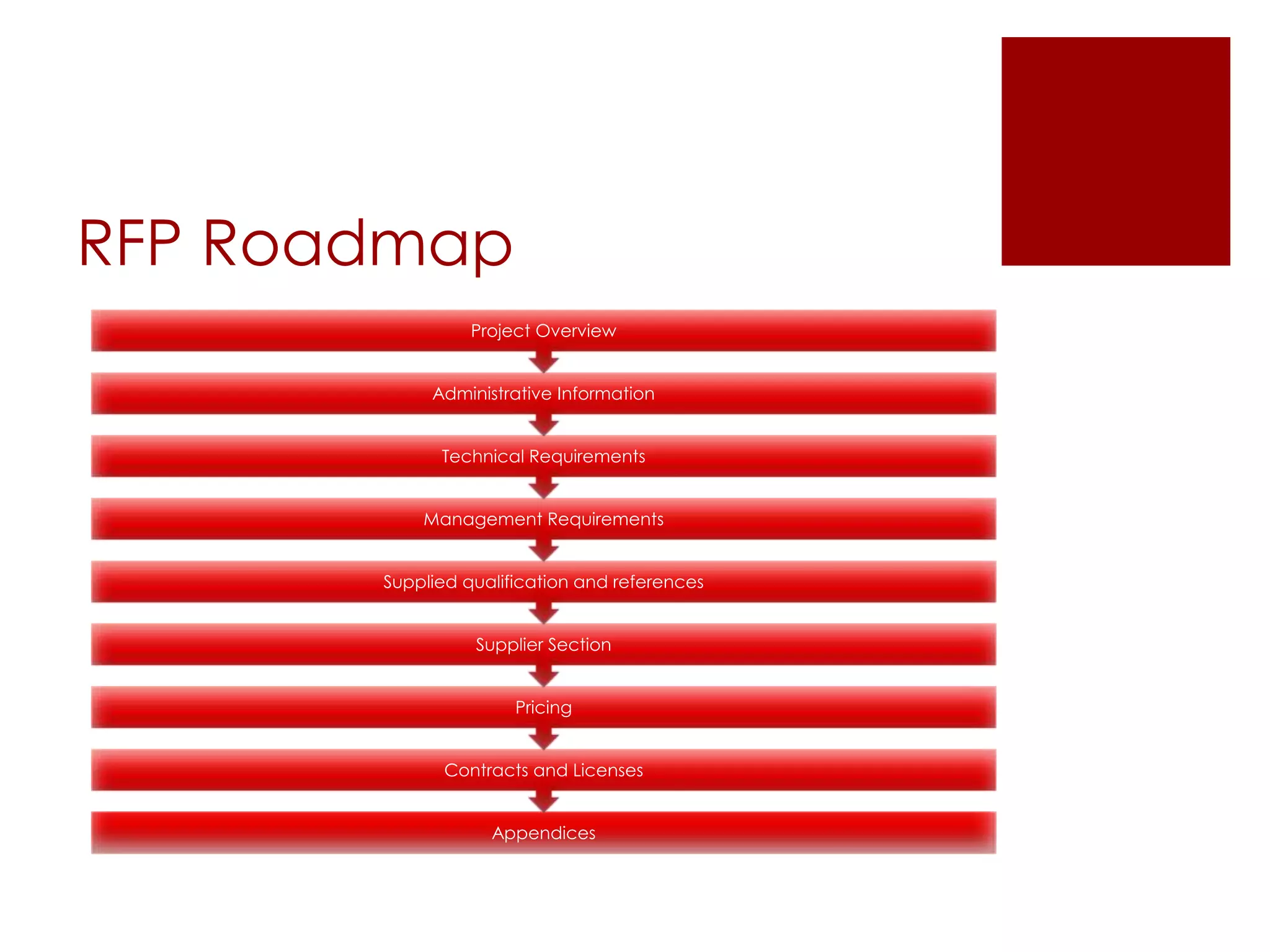
RFP Roadmap
Appendices
Contracts and Licenses
Pricing
Supplier Section
Supplied qualification and references
Management Requirements
Technical Requirements
Administrative Information
Project Overview
Administrative Info.
 Evaluation criteria,
 Deadlines,
 Method of submitting proposal,
 Contact names & address,
 Requirements for preparing,
 Other relevant information.
Technical Requirements
 Goal & objective of project,
 Critical Success Factors,
 Functional specification of current system,
 Func. Spec. of desired system,
 Performance Specs.,
 Hardware & software requirements,
 Communication requirements.
Management Requirements
 Functional project requirements,
 Staffing,
 Site preparation responsibilities,
 Delivery & installation schedule & plan,
 System acceptance test requirements,
 System maintenance & training requirements,
 Documentation requirements.
Supplier Qualification &
References
 Brief history,
 Capabilities & Offerings,
 Evidence of capability & offerings,
 References,
 Case Studies,
 Sample list of clients.
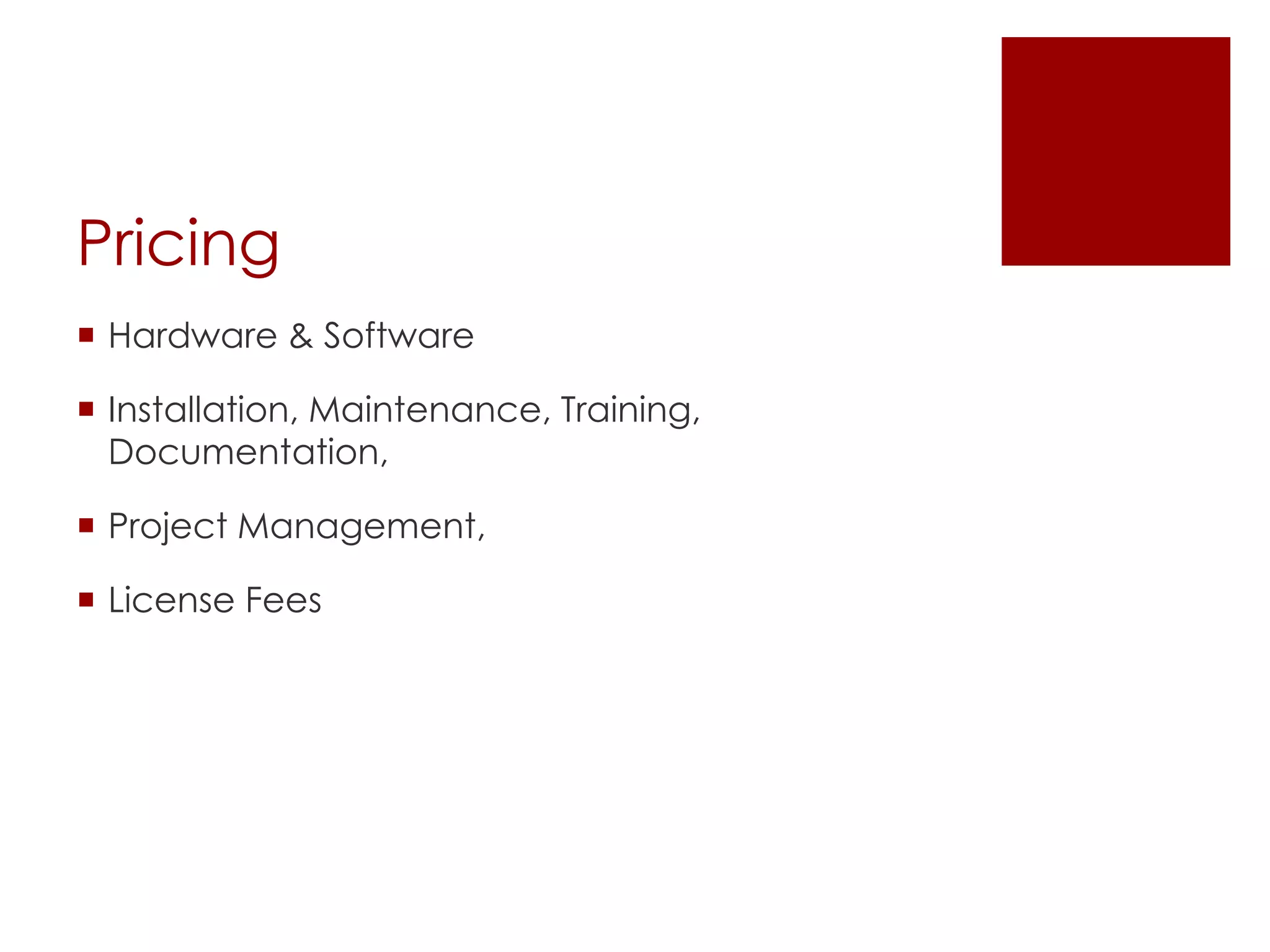
Pricing
 Hardware & Software
 Installation, Maintenance, Training,
Documentation,
 Project Management,
 License Fees
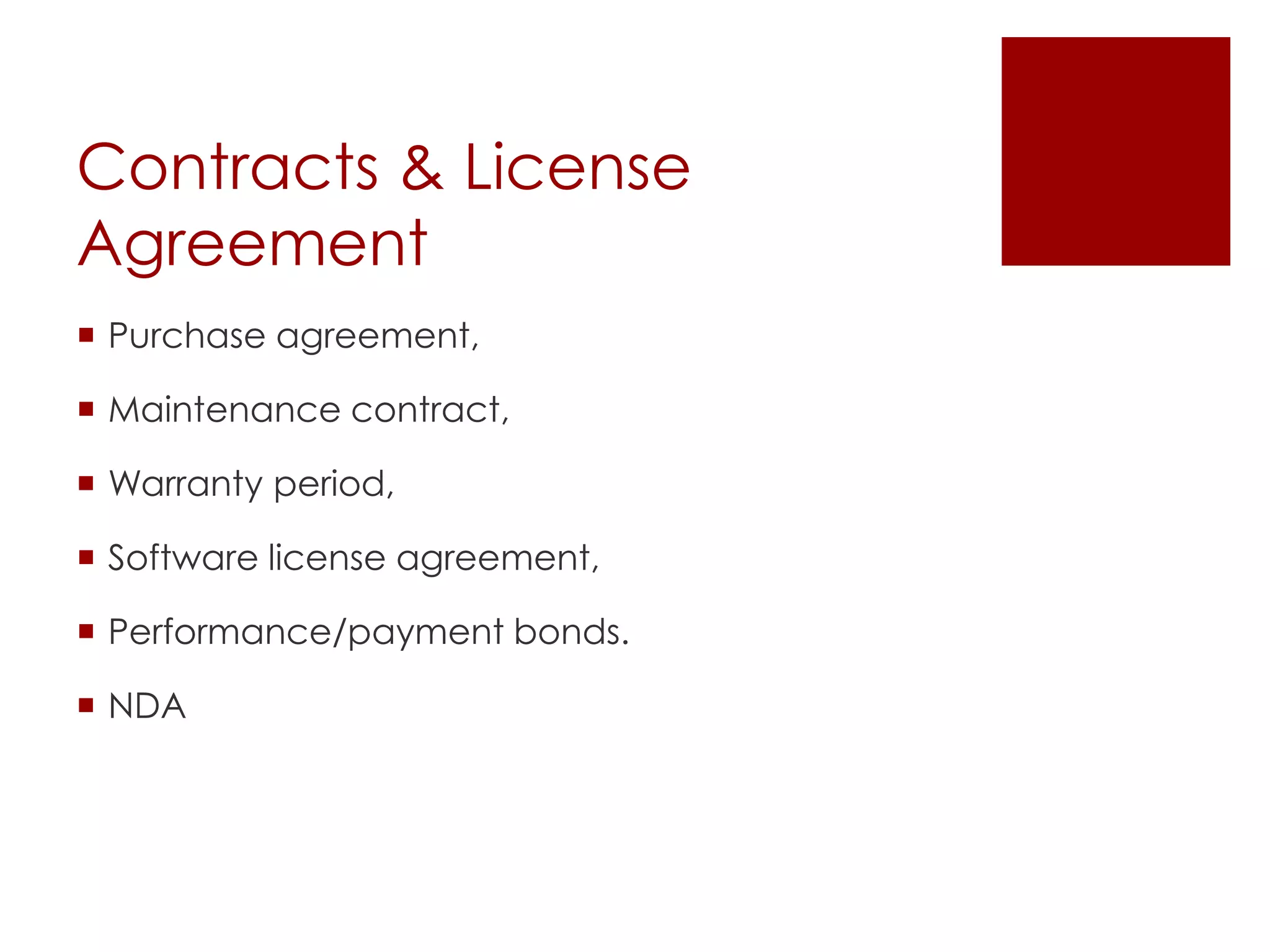
Contracts & License
Agreement
 Purchase agreement,
 Maintenance contract,
 Warranty period,
 Software license agreement,
 Performance/payment bonds.
 NDA
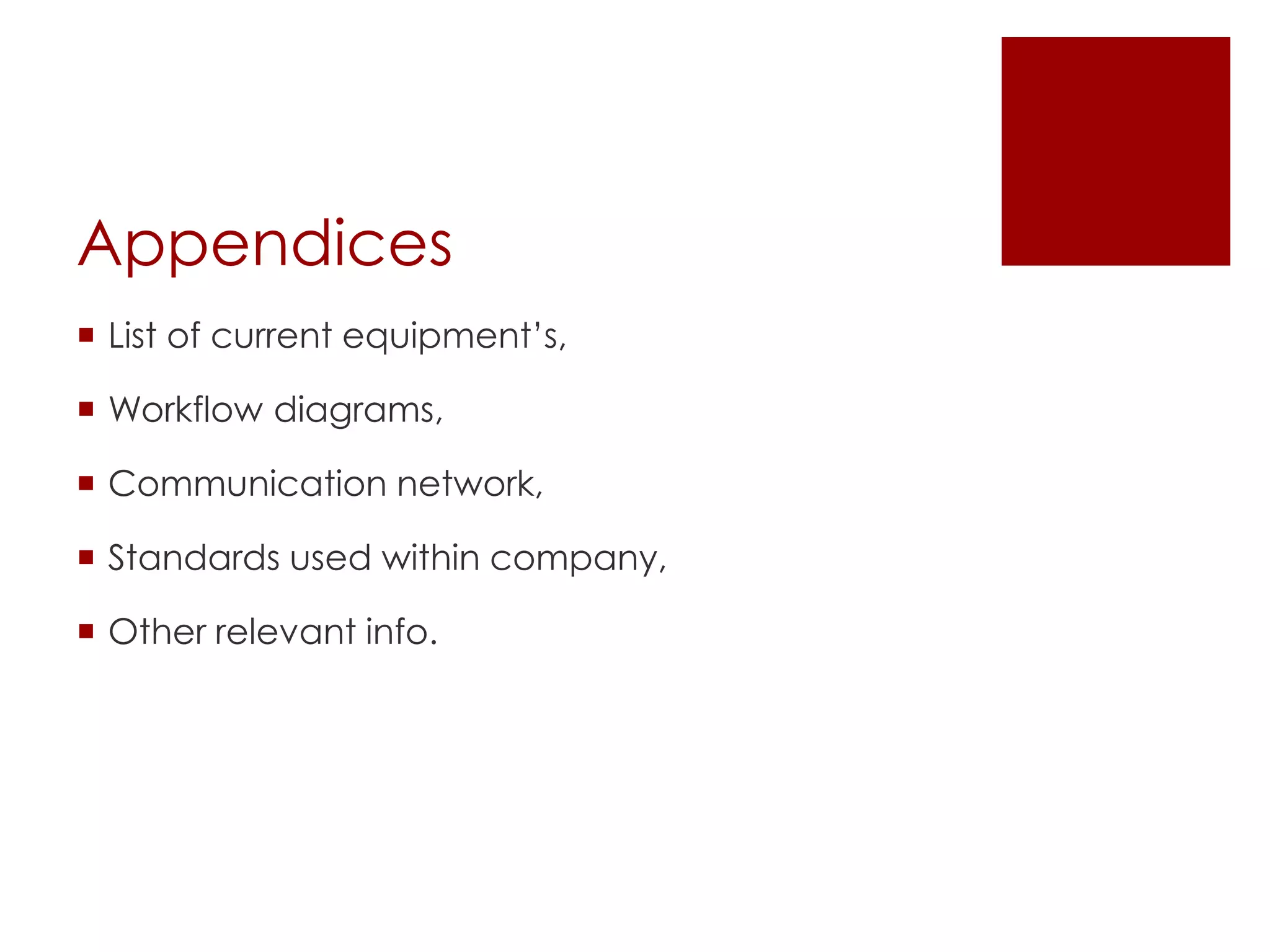
Appendices
 List of current equipment’s,
 Workflow diagrams,
 Communication network,
 Standards used within company,
 Other relevant info.
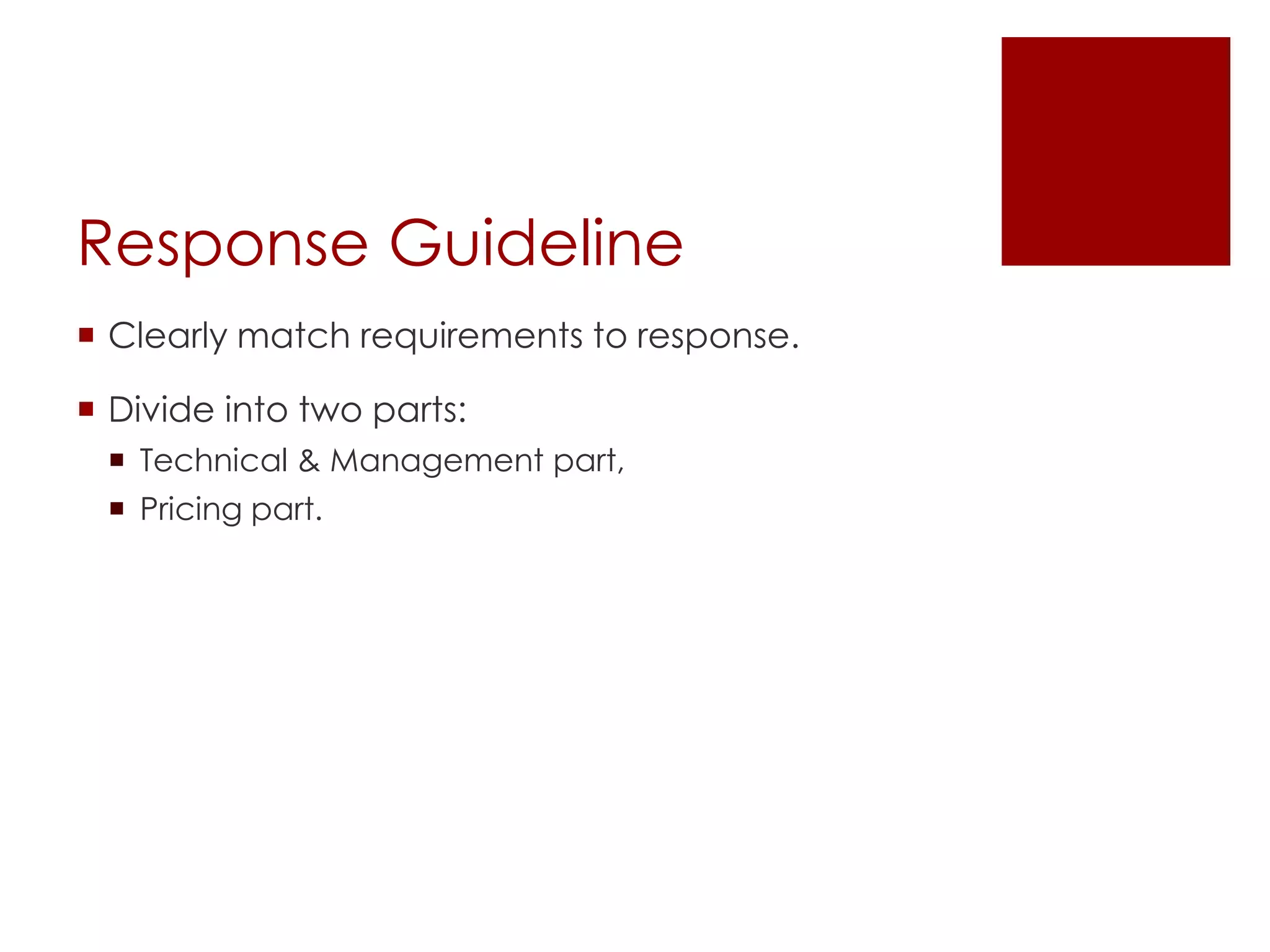
Response Guideline
 Clearly match requirements to response.
 Divide into two parts:
 Technical & Management part,
 Pricing part.
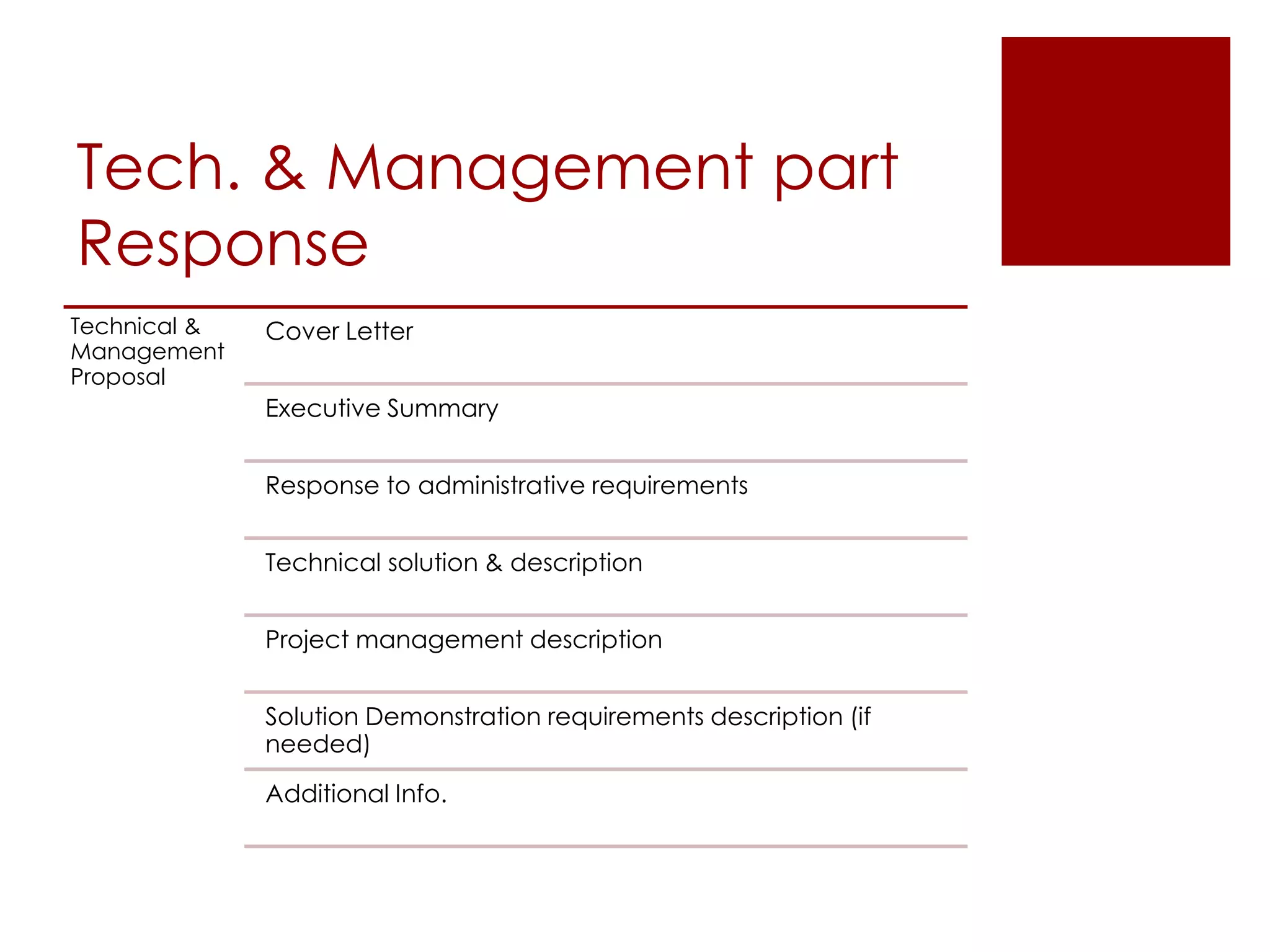
Tech. & Management part
Response
Technical &
Management
Proposal
Cover Letter
Executive Summary
Response to administrative requirements
Technical solution & description
Project management description
Solution Demonstration requirements description (if
needed)
Additional Info.
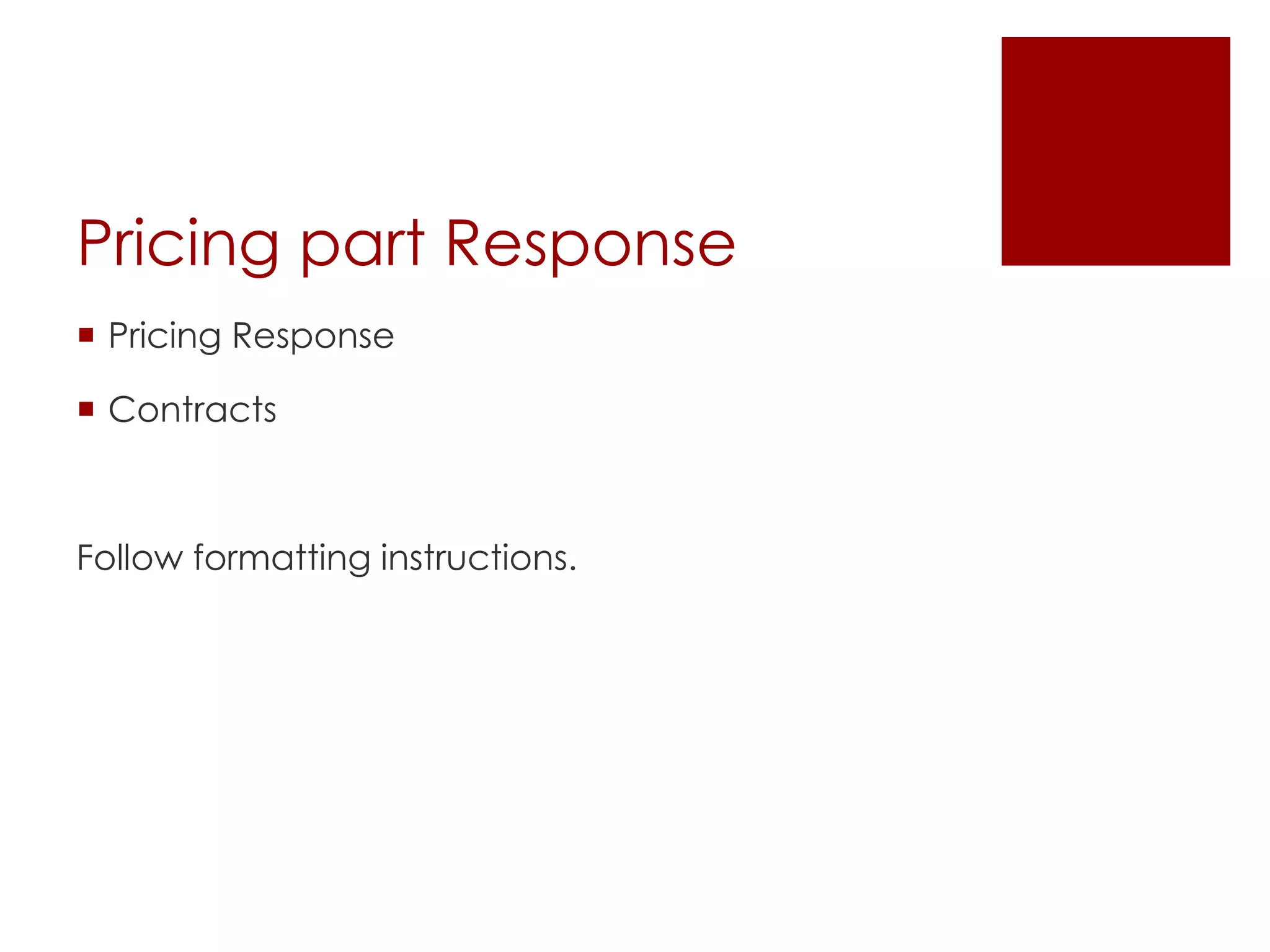
Pricing part Response
 Pricing Response
 Contracts
Follow formatting instructions.
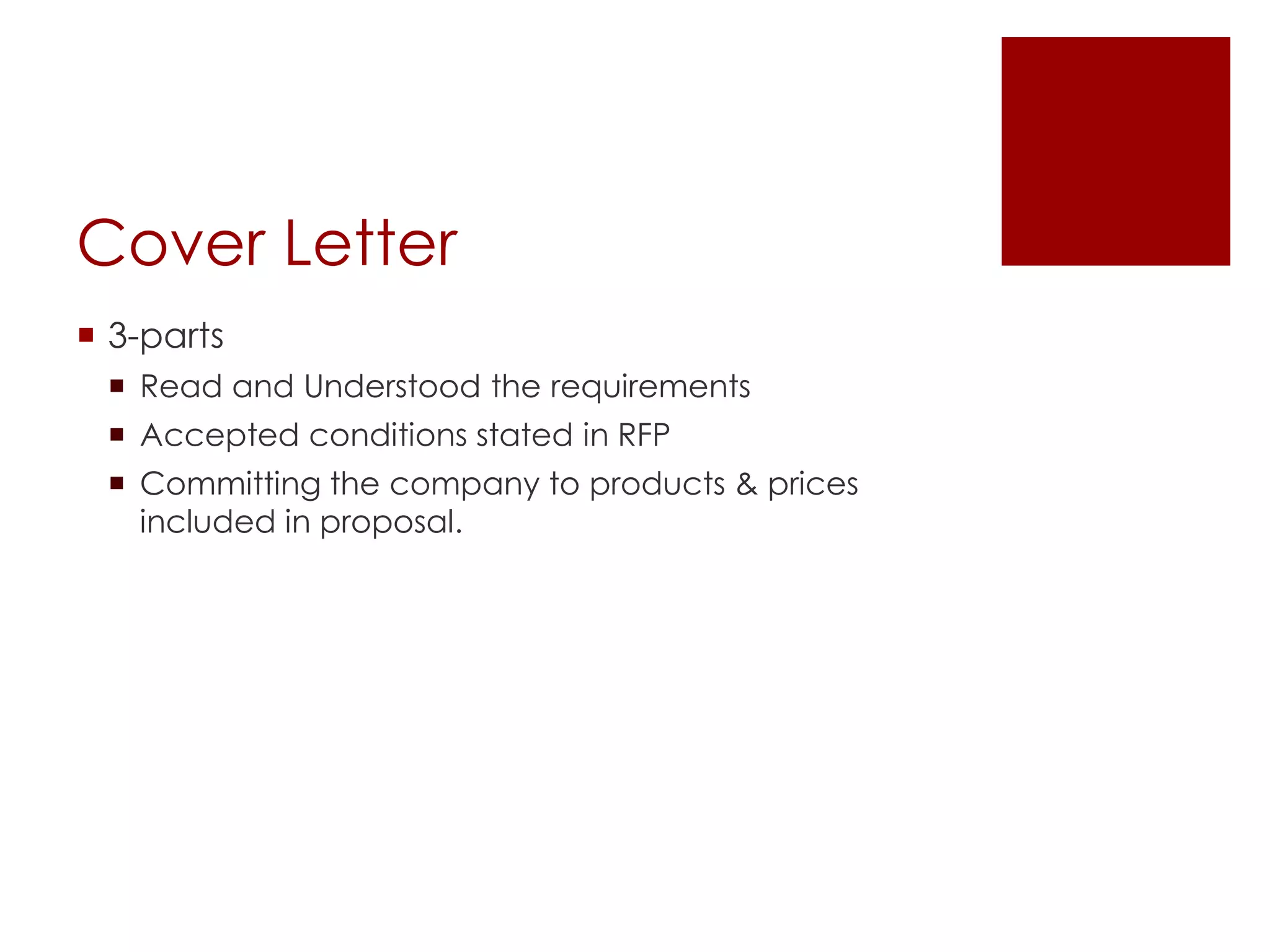
Cover Letter
 3-parts
 Read and Understood the requirements
 Accepted conditions stated in RFP
 Committing the company to products & prices
included in proposal.
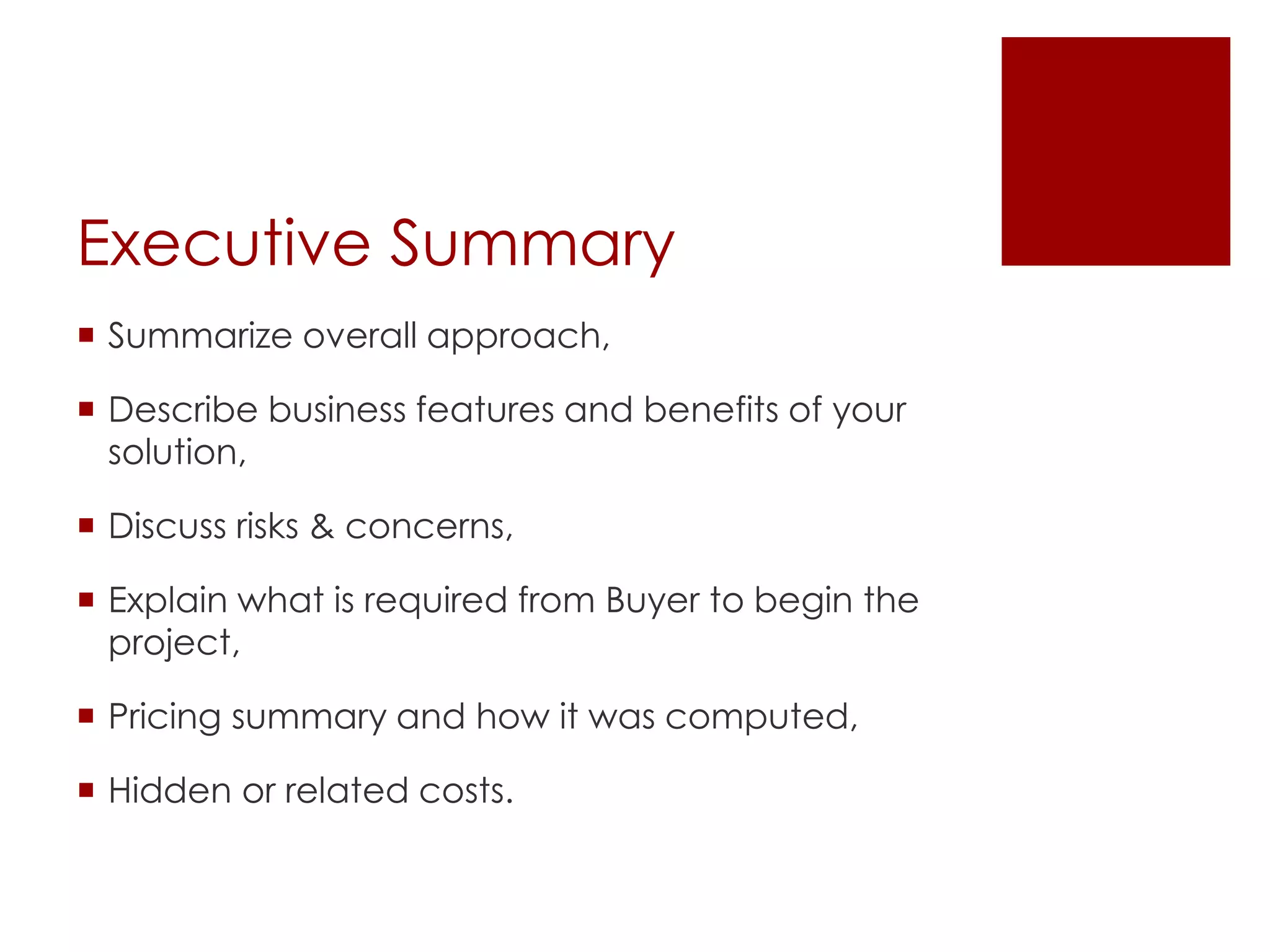
Executive Summary
 Summarize overall approach,
 Describe business features and benefits of your
solution,
 Discuss risks & concerns,
 Explain what is required from Buyer to begin the
project,
 Pricing summary and how it was computed,
 Hidden or related costs.
Shall, Should &Will
How to recognize elements in an RFP:
 Shall: indicates a requirement
 Should: describes project Goals. Informational
statement
 Will: denotes statements of intent
Specification vs.
Requirements
 Specification is a sum of a group of requirements.
 Eg: specifications for a smartphone
All the Best!
And, Thank You!

Quick guide to effective RFP creation

  • 1.
    RFP: Quick Guideto Effective RFP Shilpa P. Viswambharan
  • 2.
    Courtesy  I aimto provide a quick guide to writing effective RFPs via this presentation. It is mainly based on the Bud Porter-Roth’s book - “Request for Proposal, A Guide to Effective RFP Development” and my experience as a relationship manager.  As this book has helped me in my success, I hope it helps many others.
  • 3.
    Request For Proposal, Defined RFP is a vehicle for establishing a dialogue between buyer and suppliers, based on agreed upon set of rules, requirements, schedules and other information.
  • 4.
    Initial Stage  Buyerestablish a budget based on:  Project requirements,  Supplier research,  Team’s understanding of various solutions. Needs Requireme nts Vendor product/pri ce review Budget ROI Study
  • 5.
    Best Practices  Needassessment and formal statement of problem and the required solution.  Mention the requirements clearly and in measurable terms.  Internal acceptance.  Not limiting available solutions  Rigorous evaluation criteria  Define project budget, schedule and personnel
  • 6.
    Types of RFP RFI - Request for Information: (pre-RFP) Gain information on available solutions by vendors.  RFI is not a prerequisite to RFP. RFI is used by buyers to gain more insights, usually when there is ambiguity around a project/product.  RFP : Formal requests that communicate a company’s requirements and invites solutions from suppliers.
  • 7.
    Expectations from aRFP Response  Demonstrate clear understanding of all technical & non-technical issues mentioned in RFP  How your suggested solution will address each of the issues/requirements raised in RFP?  Method of doing business (team, risk management, training, support etc.)
  • 8.
    RFP Roadmap Appendices Contracts andLicenses Pricing Supplier Section Supplied qualification and references Management Requirements Technical Requirements Administrative Information Project Overview
  • 9.
    Administrative Info.  Evaluationcriteria,  Deadlines,  Method of submitting proposal,  Contact names & address,  Requirements for preparing,  Other relevant information.
  • 10.
    Technical Requirements  Goal& objective of project,  Critical Success Factors,  Functional specification of current system,  Func. Spec. of desired system,  Performance Specs.,  Hardware & software requirements,  Communication requirements.
  • 11.
    Management Requirements  Functionalproject requirements,  Staffing,  Site preparation responsibilities,  Delivery & installation schedule & plan,  System acceptance test requirements,  System maintenance & training requirements,  Documentation requirements.
  • 12.
    Supplier Qualification & References Brief history,  Capabilities & Offerings,  Evidence of capability & offerings,  References,  Case Studies,  Sample list of clients.
  • 13.
    Pricing  Hardware &Software  Installation, Maintenance, Training, Documentation,  Project Management,  License Fees
  • 14.
    Contracts & License Agreement Purchase agreement,  Maintenance contract,  Warranty period,  Software license agreement,  Performance/payment bonds.  NDA
  • 15.
    Appendices  List ofcurrent equipment’s,  Workflow diagrams,  Communication network,  Standards used within company,  Other relevant info.
  • 16.
    Response Guideline  Clearlymatch requirements to response.  Divide into two parts:  Technical & Management part,  Pricing part.
  • 17.
    Tech. & Managementpart Response Technical & Management Proposal Cover Letter Executive Summary Response to administrative requirements Technical solution & description Project management description Solution Demonstration requirements description (if needed) Additional Info.
  • 18.
    Pricing part Response Pricing Response  Contracts Follow formatting instructions.
  • 19.
    Cover Letter  3-parts Read and Understood the requirements  Accepted conditions stated in RFP  Committing the company to products & prices included in proposal.
  • 20.
    Executive Summary  Summarizeoverall approach,  Describe business features and benefits of your solution,  Discuss risks & concerns,  Explain what is required from Buyer to begin the project,  Pricing summary and how it was computed,  Hidden or related costs.
  • 21.
    Shall, Should &Will Howto recognize elements in an RFP:  Shall: indicates a requirement  Should: describes project Goals. Informational statement  Will: denotes statements of intent
  • 22.
    Specification vs. Requirements  Specificationis a sum of a group of requirements.  Eg: specifications for a smartphone
  • 24.