Contracting for
Technical Solutions

  www.olivetech.com
Why Outsource?

     Focus on core functions       Best practices
     Lower operational costs       Superior technology
     Budget control                Flexibility and speed
     Fixed to variable costs       Platform agnostic
     Lower ongoing investment      Control delivery dates
     Avoid internal hiring         Acquire innovative ideas
     Transfer of assets            Lower risk
     Suspend or delay project      Credibility and image
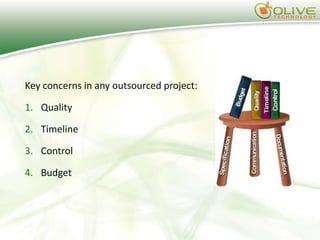
Key concerns in any outsourced project:

1. Quality

2. Timeline

3. Control

4. Budget
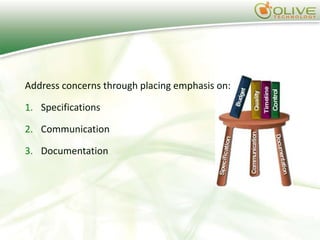
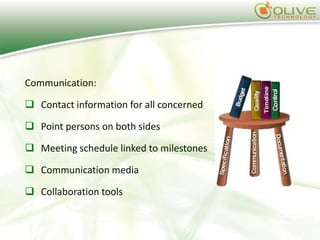
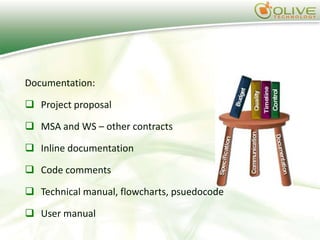
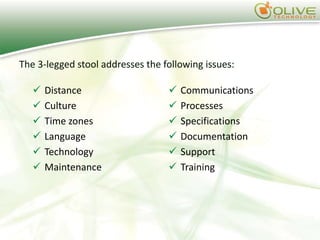
Address concerns through placing emphasis on:

1. Specifications

2. Communication

3. Documentation
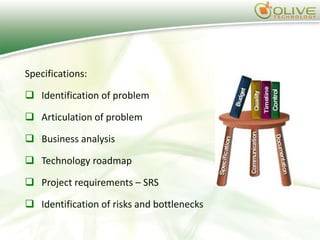
Specifications:

 Identification of problem

 Articulation of problem

 Business analysis

 Technology roadmap

 Project requirements – SRS

 Identification of risks and bottlenecks
Communication:

 Contact information for all concerned

 Point persons on both sides

 Meeting schedule linked to milestones

 Communication media

 Collaboration tools
Documentation:

 Project proposal

 MSA and WS – other contracts

 Inline documentation

 Code comments

 Technical manual, flowcharts, psuedocode

 User manual
The 3-legged stool addresses the following issues:

      Distance                      Communications
      Culture                       Processes
      Time zones                    Specifications
      Language                      Documentation
      Technology                    Support
      Maintenance                   Training
Purpose of an RFP:

          Provides clearly defined set of requirements
          Demonstrates buyer’s commitment to project
          Allows vendor to interact with buyer
          Expedites project completion
          Provides platform for describing the business
           processes, products and services
What goes into the RFP:

          Description of the business
          Description of the problem
          Description of current environment
          Project and/or IT roadmap
          Expected service level
          Evaluation criteria and process
          Contact person(s)
What needs to happen before the RFP:

          Gain internal visibility for the project
          Determine project budget
          Establish project schedule
          Identify project stakeholders
          Identify project owner or champion
          Compile project requirements
          Contact potential suppliers
Anatomy of an RFP:

       1.   Business overview
       2.   Project overview
       3.   Technical requirements
       4.   Management requirements
       5.   Pricing section
       6.   Supplier section - qualifications
       7.   Contracts and licenses
       8.   Appendices
Supplier Selection Criteria:

          Matching Values
          Right People
          Right Methods
          Project and communication tools
          Project or technology specific experience
          Proven Track Record
          Competitive Pricing
Post RFP Activities:

        1.   Evaluate proposals
        2.   Establish short list of suppliers
        3.   Call references
        4.   Host demonstrations
        5.   Select supplier
        6.   Execute NDAs, contracts
        7.   Debrief suppliers who did not win
Join Our Communities


        Connect with Olive Technology:


   How can we help you harness technology to
            engage your customers?

Contracting fortechsolutions

  • 1.
  • 2.
    Why Outsource?  Focus on core functions  Best practices  Lower operational costs  Superior technology  Budget control  Flexibility and speed  Fixed to variable costs  Platform agnostic  Lower ongoing investment  Control delivery dates  Avoid internal hiring  Acquire innovative ideas  Transfer of assets  Lower risk  Suspend or delay project  Credibility and image
  • 3.
    Key concerns inany outsourced project: 1. Quality 2. Timeline 3. Control 4. Budget
  • 4.
    Address concerns throughplacing emphasis on: 1. Specifications 2. Communication 3. Documentation
  • 5.
    Specifications:  Identification ofproblem  Articulation of problem  Business analysis  Technology roadmap  Project requirements – SRS  Identification of risks and bottlenecks
  • 6.
    Communication:  Contact informationfor all concerned  Point persons on both sides  Meeting schedule linked to milestones  Communication media  Collaboration tools
  • 7.
    Documentation:  Project proposal MSA and WS – other contracts  Inline documentation  Code comments  Technical manual, flowcharts, psuedocode  User manual
  • 8.
    The 3-legged stooladdresses the following issues:  Distance  Communications  Culture  Processes  Time zones  Specifications  Language  Documentation  Technology  Support  Maintenance  Training
  • 9.
    Purpose of anRFP:  Provides clearly defined set of requirements  Demonstrates buyer’s commitment to project  Allows vendor to interact with buyer  Expedites project completion  Provides platform for describing the business processes, products and services
  • 10.
    What goes intothe RFP:  Description of the business  Description of the problem  Description of current environment  Project and/or IT roadmap  Expected service level  Evaluation criteria and process  Contact person(s)
  • 11.
    What needs tohappen before the RFP:  Gain internal visibility for the project  Determine project budget  Establish project schedule  Identify project stakeholders  Identify project owner or champion  Compile project requirements  Contact potential suppliers
  • 12.
    Anatomy of anRFP: 1. Business overview 2. Project overview 3. Technical requirements 4. Management requirements 5. Pricing section 6. Supplier section - qualifications 7. Contracts and licenses 8. Appendices
  • 13.
    Supplier Selection Criteria:  Matching Values  Right People  Right Methods  Project and communication tools  Project or technology specific experience  Proven Track Record  Competitive Pricing
  • 14.
    Post RFP Activities: 1. Evaluate proposals 2. Establish short list of suppliers 3. Call references 4. Host demonstrations 5. Select supplier 6. Execute NDAs, contracts 7. Debrief suppliers who did not win
  • 15.
    Join Our Communities Connect with Olive Technology: How can we help you harness technology to engage your customers?