Quality in the new delivery
paradigm of digital and
automation
[The Skewed Triangle]
Raja Mohapatra @ Infosys Ltd
The Skewed Triangle
Technology is consuming the process and making it a part of itself
Process
People
Technology
Q
Process
People
Technology
Q+
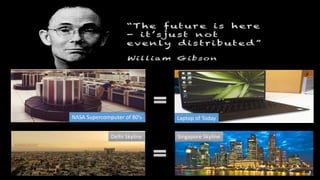
NASA Supercomputer of 80’s Laptop of Today
Delhi Skyline Singapore Skyline
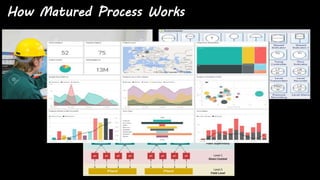
How Matured Process Works
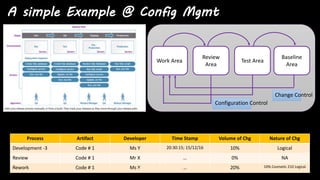
A simple Example @ Config Mgmt
Work Area
Review
Area
Test Area
Baseline
Area
Change Control
Configuration Control
Process Artifact Developer Time Stamp Volume of Chg Nature of Chg
Development -3 Code # 1 Ms Y 20:30:15; 15/12/16 10% Logical
Review Code # 1 Mr X … 0% NA
Rework Code # 1 Ms Y … 20% 10% Cosmetic 210 Logical
People and Technology Interaction [Control + Insight + Forecast]
40%
30% 25% 20%
10%
20% 30% 35%
50% 50% 45% 45%
0%
20%
40%
60%
80%
100%
120%
Dev.1 Dev.2 Dev.3 Dev.4
Defect Distribution
Logical Cosmetic GUI
30%
60%
50%
40%
50%
0% 0% 0%
20%
40%
50%
60%
0%
10%
20%
30%
40%
50%
60%
70%
CODE REVIEW UT IT ST
Stage wise Defect Distribution
Logical Cosmetic Others
2.6
3.2
2.4
2.6
3.3
2.3
2.7
3.5
2.5
2.9
3.7
2.9
0.0
0.5
1.0
1.5
2.0
2.5
3.0
3.5
4.0
0
10
20
30
40
50
60
70
80
90
Rework Effort
No of Defects Rework Effort (Hrs) Effort / Defect
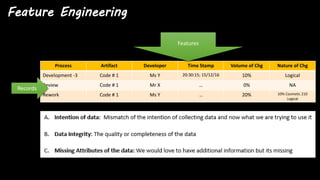
Feature Engineering
Process Artifact Developer Time Stamp Volume of Chg Nature of Chg
Development -3 Code # 1 Ms Y 20:30:15; 15/12/16 10% Logical
Review Code # 1 Mr X … 0% NA
Rework Code # 1 Ms Y … 20% 10% Cosmetic 210
Logical
Records
Features
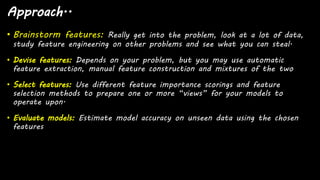
Approach..
• Brainstorm features: Really get into the problem, look at a lot of data,
study feature engineering on other problems and see what you can steal.
• Devise features: Depends on your problem, but you may use automatic
feature extraction, manual feature construction and mixtures of the two
• Select features: Use different feature importance scorings and feature
selection methods to prepare one or more “views” for your models to
operate upon.
• Evaluate models: Estimate model accuracy on unseen data using the chosen
features
Quality in the new delivery paradigm

Quality in the new delivery paradigm

  • 1.
    Quality in thenew delivery paradigm of digital and automation [The Skewed Triangle] Raja Mohapatra @ Infosys Ltd
  • 2.
    The Skewed Triangle Technologyis consuming the process and making it a part of itself Process People Technology Q Process People Technology Q+
  • 3.
    NASA Supercomputer of80’s Laptop of Today Delhi Skyline Singapore Skyline
  • 4.
  • 5.
    A simple Example@ Config Mgmt Work Area Review Area Test Area Baseline Area Change Control Configuration Control Process Artifact Developer Time Stamp Volume of Chg Nature of Chg Development -3 Code # 1 Ms Y 20:30:15; 15/12/16 10% Logical Review Code # 1 Mr X … 0% NA Rework Code # 1 Ms Y … 20% 10% Cosmetic 210 Logical
  • 6.
    People and TechnologyInteraction [Control + Insight + Forecast] 40% 30% 25% 20% 10% 20% 30% 35% 50% 50% 45% 45% 0% 20% 40% 60% 80% 100% 120% Dev.1 Dev.2 Dev.3 Dev.4 Defect Distribution Logical Cosmetic GUI 30% 60% 50% 40% 50% 0% 0% 0% 20% 40% 50% 60% 0% 10% 20% 30% 40% 50% 60% 70% CODE REVIEW UT IT ST Stage wise Defect Distribution Logical Cosmetic Others 2.6 3.2 2.4 2.6 3.3 2.3 2.7 3.5 2.5 2.9 3.7 2.9 0.0 0.5 1.0 1.5 2.0 2.5 3.0 3.5 4.0 0 10 20 30 40 50 60 70 80 90 Rework Effort No of Defects Rework Effort (Hrs) Effort / Defect
  • 7.
    Feature Engineering Process ArtifactDeveloper Time Stamp Volume of Chg Nature of Chg Development -3 Code # 1 Ms Y 20:30:15; 15/12/16 10% Logical Review Code # 1 Mr X … 0% NA Rework Code # 1 Ms Y … 20% 10% Cosmetic 210 Logical Records Features
  • 8.
    Approach.. • Brainstorm features:Really get into the problem, look at a lot of data, study feature engineering on other problems and see what you can steal. • Devise features: Depends on your problem, but you may use automatic feature extraction, manual feature construction and mixtures of the two • Select features: Use different feature importance scorings and feature selection methods to prepare one or more “views” for your models to operate upon. • Evaluate models: Estimate model accuracy on unseen data using the chosen features