Quality Education
through
Innovation and
Technology
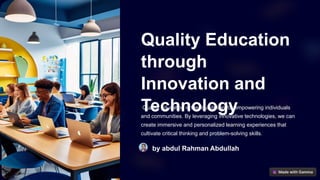
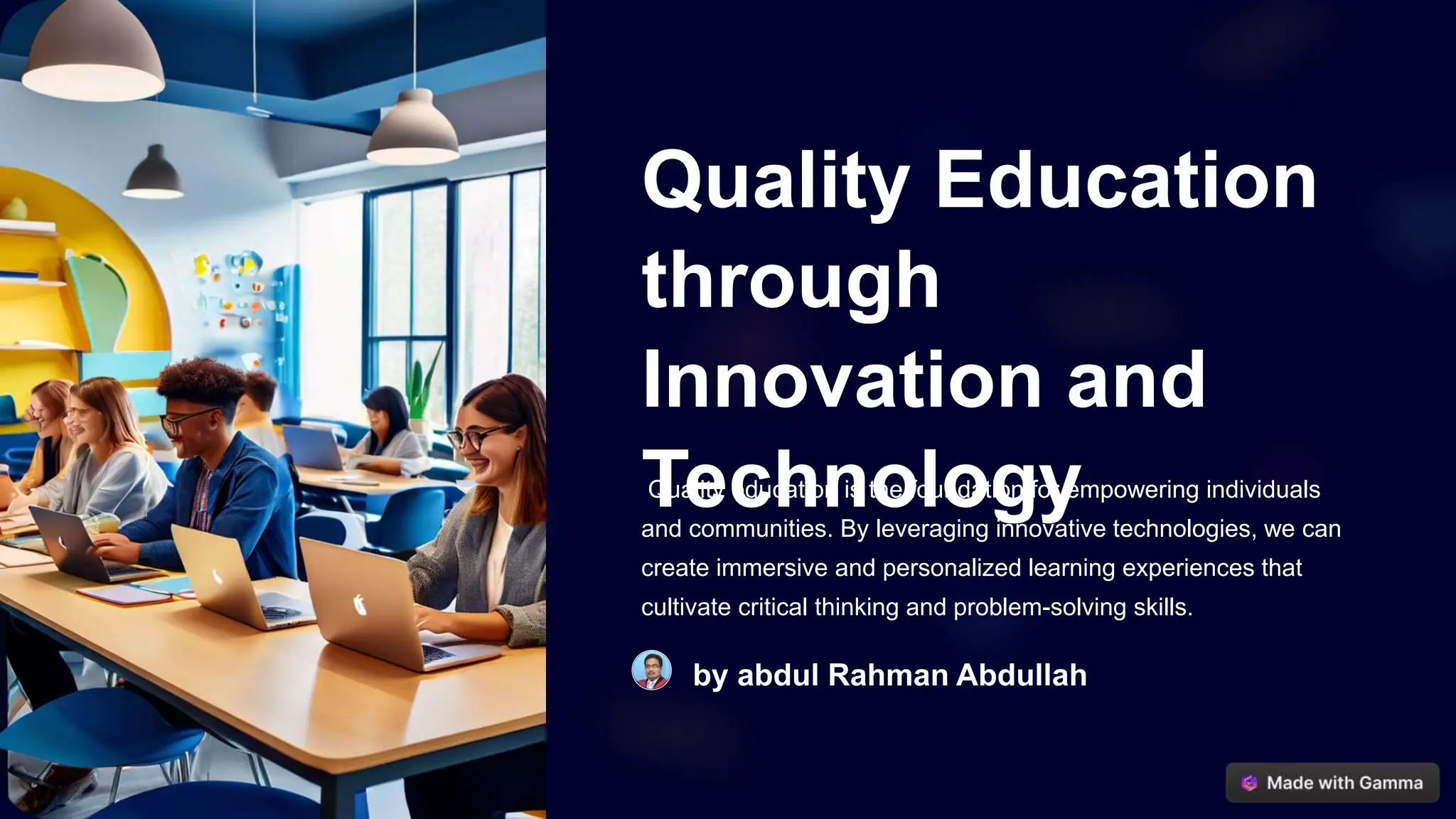
Quality education is the foundation for empowering individuals
and communities. By leveraging innovative technologies, we can
create immersive and personalized learning experiences that
cultivate critical thinking and problem-solving skills.
by abdul Rahman Abdullah
The Importance of Technology in Education
Enhancing Engagement
Interactive digital tools and
multimedia can make learning
more engaging and exciting for
students of all ages.
Accessibility
Technology can bridge gaps and
provide equal access to
educational resources, especially
for underserved communities.
Personalized Pathways
Adaptive learning platforms can
tailor instruction to individual
needs, allowing students to
progress at their own pace.
Innovative Teaching Strategies
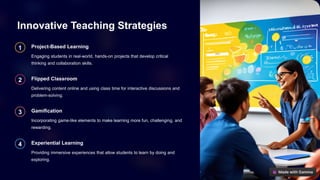
1 Project-Based Learning
Engaging students in real-world, hands-on projects that develop critical
thinking and collaboration skills.
2 Flipped Classroom
Delivering content online and using class time for interactive discussions and
problem-solving.
3 Gamification
Incorporating game-like elements to make learning more fun, challenging, and
rewarding.
4 Experiential Learning
Providing immersive experiences that allow students to learn by doing and
exploring.
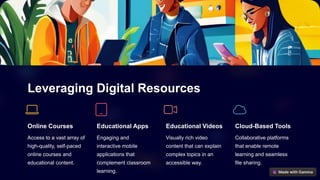
Leveraging Digital Resources
Online Courses
Access to a vast array of
high-quality, self-paced
online courses and
educational content.
Educational Apps
Engaging and
interactive mobile
applications that
complement classroom
learning.
Educational Videos
Visually rich video
content that can explain
complex topics in an
accessible way.
Cloud-Based Tools
Collaborative platforms
that enable remote
learning and seamless
file sharing.
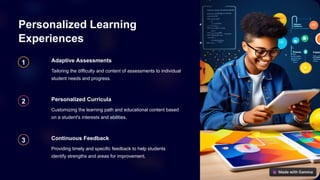
Personalized Learning
Experiences
1 Adaptive Assessments
Tailoring the difficulty and content of assessments to individual
student needs and progress.
2 Personalized Curricula
Customizing the learning path and educational content based
on a student's interests and abilities.
3 Continuous Feedback
Providing timely and specific feedback to help students
identify strengths and areas for improvement.
Fostering Critical Thinking and Problem-
Solving
Inquiry-Based Learning
Encouraging students to ask questions, explore,
and discover solutions through hands-on
activities.
Design Thinking
Empowering students to tackle complex
challenges by applying a structured, user-
centered approach.
Collaborative Problem-Solving
Fostering teamwork and communication skills as
students work together to solve real-world
problems.
Computational Thinking
Developing the ability to break down problems,
identify patterns, and create algorithmic
solutions.
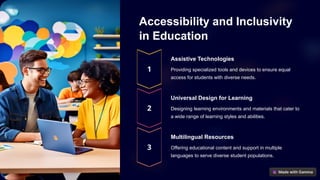
Accessibility and Inclusivity
in Education
Assistive Technologies
Providing specialized tools and devices to ensure equal
access for students with diverse needs.
Universal Design for Learning
Designing learning environments and materials that cater to
a wide range of learning styles and abilities.
Multilingual Resources
Offering educational content and support in multiple
languages to serve diverse student populations.
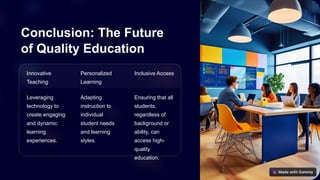
Conclusion: The Future
of Quality Education
Innovative
Teaching
Personalized
Learning
Inclusive Access
Leveraging
technology to
create engaging
and dynamic
learning
experiences.
Adapting
instruction to
individual
student needs
and learning
styles.
Ensuring that all
students,
regardless of
background or
ability, can
access high-
quality
education.

Quality-Education-through-Innovation-and-Technology.pptx

  • 1.
    Quality Education through Innovation and Technology Qualityeducation is the foundation for empowering individuals and communities. By leveraging innovative technologies, we can create immersive and personalized learning experiences that cultivate critical thinking and problem-solving skills. by abdul Rahman Abdullah
  • 2.
    The Importance ofTechnology in Education Enhancing Engagement Interactive digital tools and multimedia can make learning more engaging and exciting for students of all ages. Accessibility Technology can bridge gaps and provide equal access to educational resources, especially for underserved communities. Personalized Pathways Adaptive learning platforms can tailor instruction to individual needs, allowing students to progress at their own pace.
  • 3.
    Innovative Teaching Strategies 1Project-Based Learning Engaging students in real-world, hands-on projects that develop critical thinking and collaboration skills. 2 Flipped Classroom Delivering content online and using class time for interactive discussions and problem-solving. 3 Gamification Incorporating game-like elements to make learning more fun, challenging, and rewarding. 4 Experiential Learning Providing immersive experiences that allow students to learn by doing and exploring.
  • 4.
    Leveraging Digital Resources OnlineCourses Access to a vast array of high-quality, self-paced online courses and educational content. Educational Apps Engaging and interactive mobile applications that complement classroom learning. Educational Videos Visually rich video content that can explain complex topics in an accessible way. Cloud-Based Tools Collaborative platforms that enable remote learning and seamless file sharing.
  • 5.
    Personalized Learning Experiences 1 AdaptiveAssessments Tailoring the difficulty and content of assessments to individual student needs and progress. 2 Personalized Curricula Customizing the learning path and educational content based on a student's interests and abilities. 3 Continuous Feedback Providing timely and specific feedback to help students identify strengths and areas for improvement.
  • 6.
    Fostering Critical Thinkingand Problem- Solving Inquiry-Based Learning Encouraging students to ask questions, explore, and discover solutions through hands-on activities. Design Thinking Empowering students to tackle complex challenges by applying a structured, user- centered approach. Collaborative Problem-Solving Fostering teamwork and communication skills as students work together to solve real-world problems. Computational Thinking Developing the ability to break down problems, identify patterns, and create algorithmic solutions.
  • 7.
    Accessibility and Inclusivity inEducation Assistive Technologies Providing specialized tools and devices to ensure equal access for students with diverse needs. Universal Design for Learning Designing learning environments and materials that cater to a wide range of learning styles and abilities. Multilingual Resources Offering educational content and support in multiple languages to serve diverse student populations.
  • 8.
    Conclusion: The Future ofQuality Education Innovative Teaching Personalized Learning Inclusive Access Leveraging technology to create engaging and dynamic learning experiences. Adapting instruction to individual student needs and learning styles. Ensuring that all students, regardless of background or ability, can access high- quality education.