NADYA SAFITRI DONGORAN
SISTEM INFORMASI
UNIVERSITAS ISLAM NEGERI SULTAN
SYARIF KASIM RIAU
As a starting point, a management team is likely to discuss the potential costs and benefits of a
project, and the team may create a list of screening questions that are used to structure this
discussion. These questions might be organized into categories such as the role of the customer,
the role of the firm’s capabilities, and the project’s timing and cost. Some examples are provided
below:
Role of Customer
Market
 Who are the most likely customers of the new product?
 How big is this market? Are there other likely markets for the product?
 What type of marketing will be required to create customer awareness?
Use
 How will customers use the product?
 What new benefits will the product provide the customer?
 What other products are customers likely to consider as substitutes for this product?
Compatibility and Ease of Use
 Will the product be compatible with the customer’s existing complements?
 Will the product require significant new learning on the part of the customer?
 How will the customer perceive the product’s ease of use?
 Will the product require the customer to bear other costs?
Distribution and Pricing
 Where will the customer buy the product?
 Will the product require installation or assembly?
 ∙How much are customers likely to be willing to pay for the product?
Role of Capabilities
Existing Capabilities
 Does the new project leverage the firm’s core competencies or sources of sustainable
competitive advantage?
 Will the project render some of the firm’s existing competencies obsolete or cannibalize
existing products? If so, does the firm have a transition strategy to handle possible cash-
flow implications?
 Does the firm have the necessary manufacturing capabilities, and if not, will those
capabilities be developed in-house or acquired externally (e.g., outsourcing)?
 Will the firm need to hire employees with new skills?
Competitors’ Capabilities
 Do one or more competitors have better capabilities for developing this project?
 If the company does not develop this technology, are competitors likely to?
 Will the company be able to protect its intellectual property through patents, copyright,
trademarks, or trade secrets?
 Should the firm seek to form a collaboration with a potential competitor?
Future Capabilities
 Will the project help the firm build new capabilities that will allow it to achieve its strategic
intent?
 What other products/markets will the new capabilities enable the firm to develop?
 Is this project a platform that will lead to a family of new products?
Project Timing and Cost
Timing
 How long will the project take to complete?
 Is the firm likely to be first to market? Is pioneering the technology a
desirable strategy?
 Is the market ready for the product? (For example, are enabling and
complementary technologies well developed? Will customers perceive the
value of the technology?)
 If the firm misses its target deadlines, what impact will this have on the
potential value of the project?
 Are there already appropriate suppliers and distribution channels?
Cost Factors
 How much will the project cost? What is the potential variability in these
costs?
 What will the manufacturing costs be? At what rate are these costs
expected to decline with experience?
 Will the firm need to bear other costs related to customer adoption (e.g.,
production of complements, installation, technical support, etc.)?
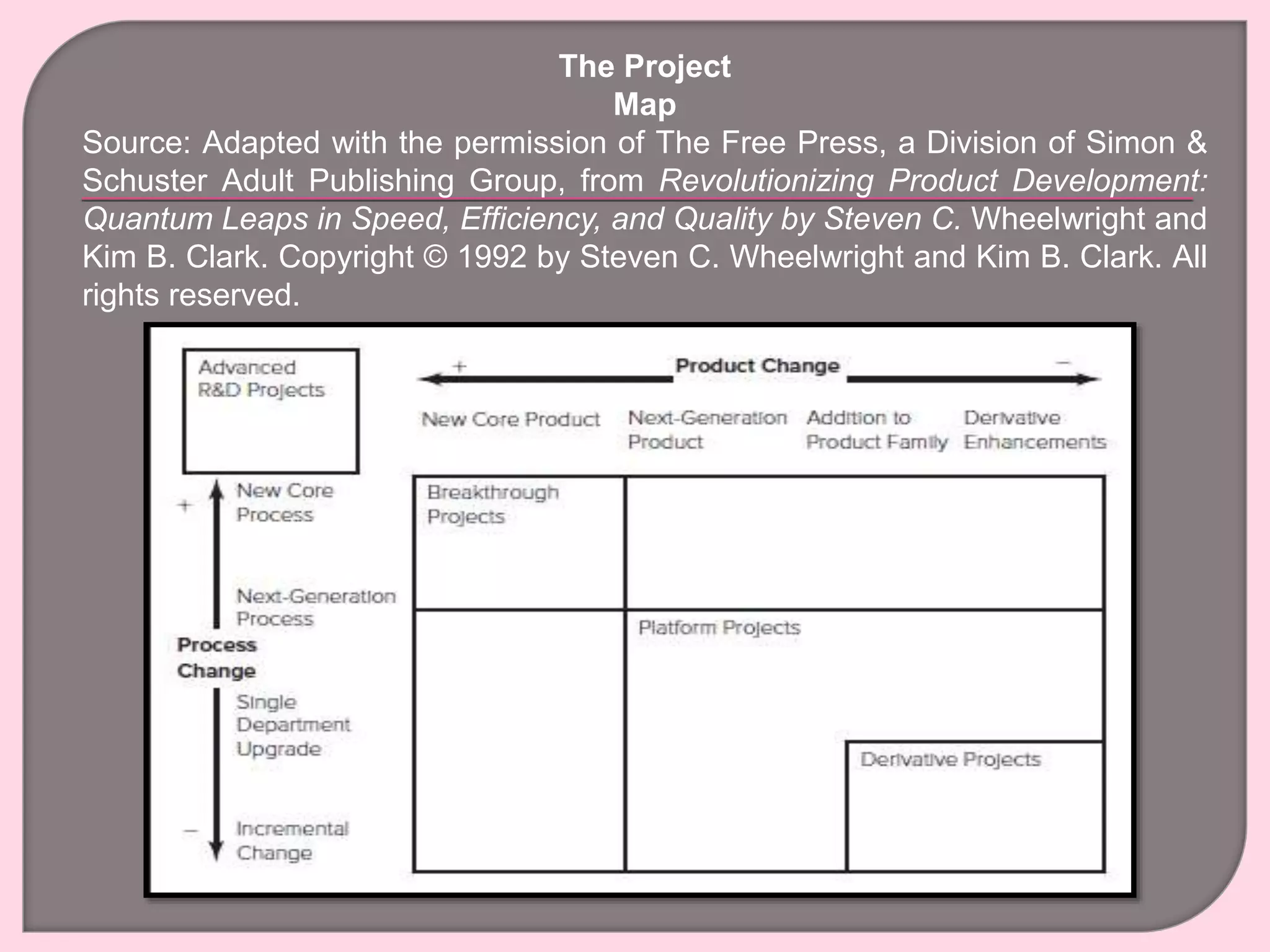
The Project
Map
Source: Adapted with the permission of The Free Press, a Division of Simon &
Schuster Adult Publishing Group, from Revolutionizing Product Development:
Quantum Leaps in Speed, Efficiency, and Quality by Steven C. Wheelwright and
Kim B. Clark. Copyright © 1992 by Steven C. Wheelwright and Kim B. Clark. All
rights reserved.
 Adapted with the permission of The Free Press, a Division of Simon & Schuster Adult
Publishing Group, from Revolutionizing Product Development: Quantum Leaps in
Speed, Efficiency, and Quality by Steven C. Wheelwright and Kim B. Clark. Copyright
© 1992 by Steven C. Wheelwright and Kim B. Clark. All rights reserved.

Qualitative methods for choosing projects

  • 1.
    NADYA SAFITRI DONGORAN SISTEMINFORMASI UNIVERSITAS ISLAM NEGERI SULTAN SYARIF KASIM RIAU
  • 2.
    As a startingpoint, a management team is likely to discuss the potential costs and benefits of a project, and the team may create a list of screening questions that are used to structure this discussion. These questions might be organized into categories such as the role of the customer, the role of the firm’s capabilities, and the project’s timing and cost. Some examples are provided below: Role of Customer Market  Who are the most likely customers of the new product?  How big is this market? Are there other likely markets for the product?  What type of marketing will be required to create customer awareness? Use  How will customers use the product?  What new benefits will the product provide the customer?  What other products are customers likely to consider as substitutes for this product? Compatibility and Ease of Use  Will the product be compatible with the customer’s existing complements?  Will the product require significant new learning on the part of the customer?  How will the customer perceive the product’s ease of use?  Will the product require the customer to bear other costs? Distribution and Pricing  Where will the customer buy the product?  Will the product require installation or assembly?  ∙How much are customers likely to be willing to pay for the product?
  • 3.
    Role of Capabilities ExistingCapabilities  Does the new project leverage the firm’s core competencies or sources of sustainable competitive advantage?  Will the project render some of the firm’s existing competencies obsolete or cannibalize existing products? If so, does the firm have a transition strategy to handle possible cash- flow implications?  Does the firm have the necessary manufacturing capabilities, and if not, will those capabilities be developed in-house or acquired externally (e.g., outsourcing)?  Will the firm need to hire employees with new skills? Competitors’ Capabilities  Do one or more competitors have better capabilities for developing this project?  If the company does not develop this technology, are competitors likely to?  Will the company be able to protect its intellectual property through patents, copyright, trademarks, or trade secrets?  Should the firm seek to form a collaboration with a potential competitor? Future Capabilities  Will the project help the firm build new capabilities that will allow it to achieve its strategic intent?  What other products/markets will the new capabilities enable the firm to develop?  Is this project a platform that will lead to a family of new products?
  • 4.
    Project Timing andCost Timing  How long will the project take to complete?  Is the firm likely to be first to market? Is pioneering the technology a desirable strategy?  Is the market ready for the product? (For example, are enabling and complementary technologies well developed? Will customers perceive the value of the technology?)  If the firm misses its target deadlines, what impact will this have on the potential value of the project?  Are there already appropriate suppliers and distribution channels? Cost Factors  How much will the project cost? What is the potential variability in these costs?  What will the manufacturing costs be? At what rate are these costs expected to decline with experience?  Will the firm need to bear other costs related to customer adoption (e.g., production of complements, installation, technical support, etc.)?
  • 5.
    The Project Map Source: Adaptedwith the permission of The Free Press, a Division of Simon & Schuster Adult Publishing Group, from Revolutionizing Product Development: Quantum Leaps in Speed, Efficiency, and Quality by Steven C. Wheelwright and Kim B. Clark. Copyright © 1992 by Steven C. Wheelwright and Kim B. Clark. All rights reserved.
  • 6.
     Adapted withthe permission of The Free Press, a Division of Simon & Schuster Adult Publishing Group, from Revolutionizing Product Development: Quantum Leaps in Speed, Efficiency, and Quality by Steven C. Wheelwright and Kim B. Clark. Copyright © 1992 by Steven C. Wheelwright and Kim B. Clark. All rights reserved.