Q1a Revision
Only spend 30 minutes on this question.

The focus is skills development in the following
areas:

• Research & Planning
• Using conventions of real media texts
• Digital technology
• Post-production
• Creativity

You are asked to describe and evaluate your skills.
Research and Planning
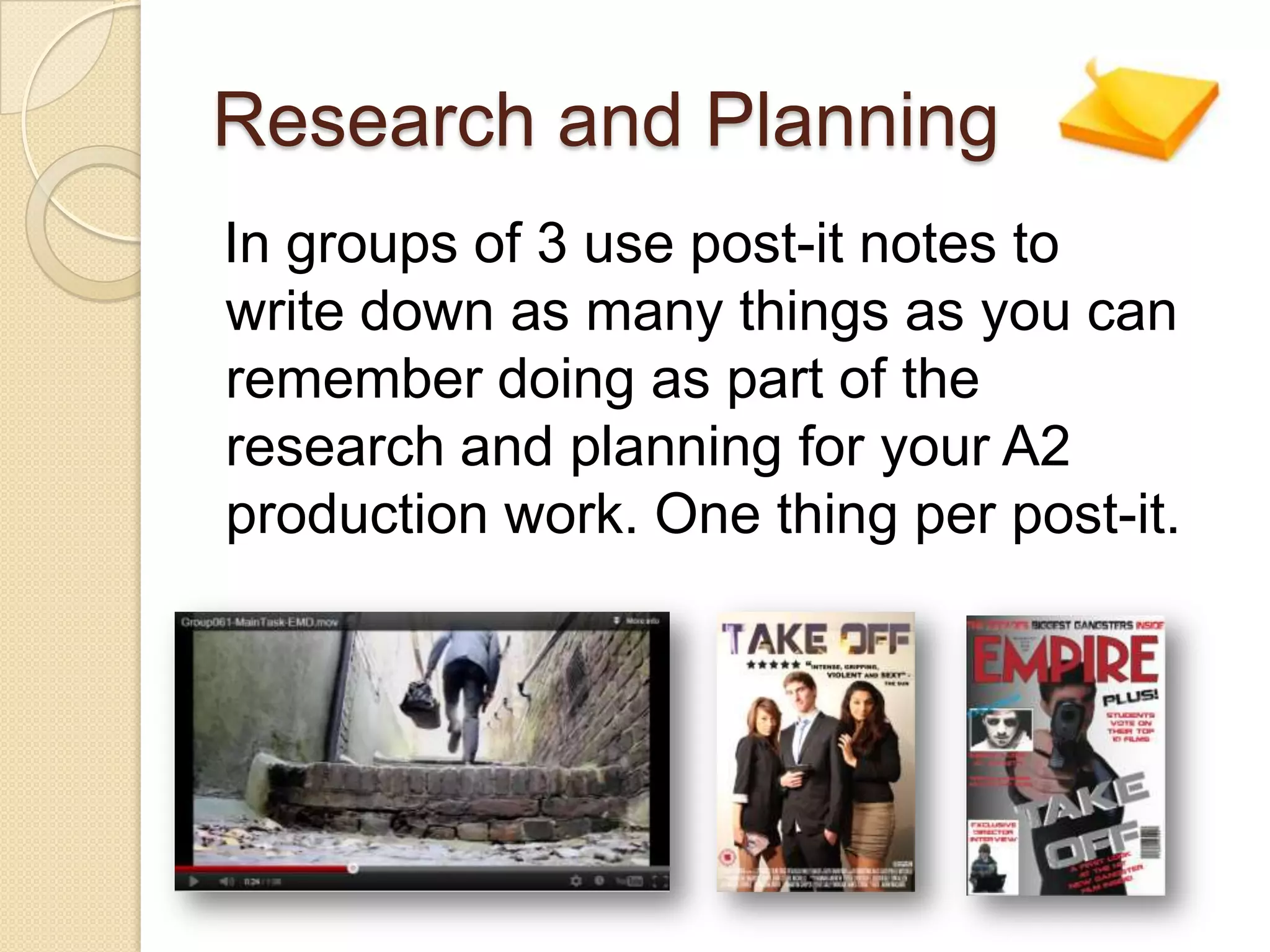
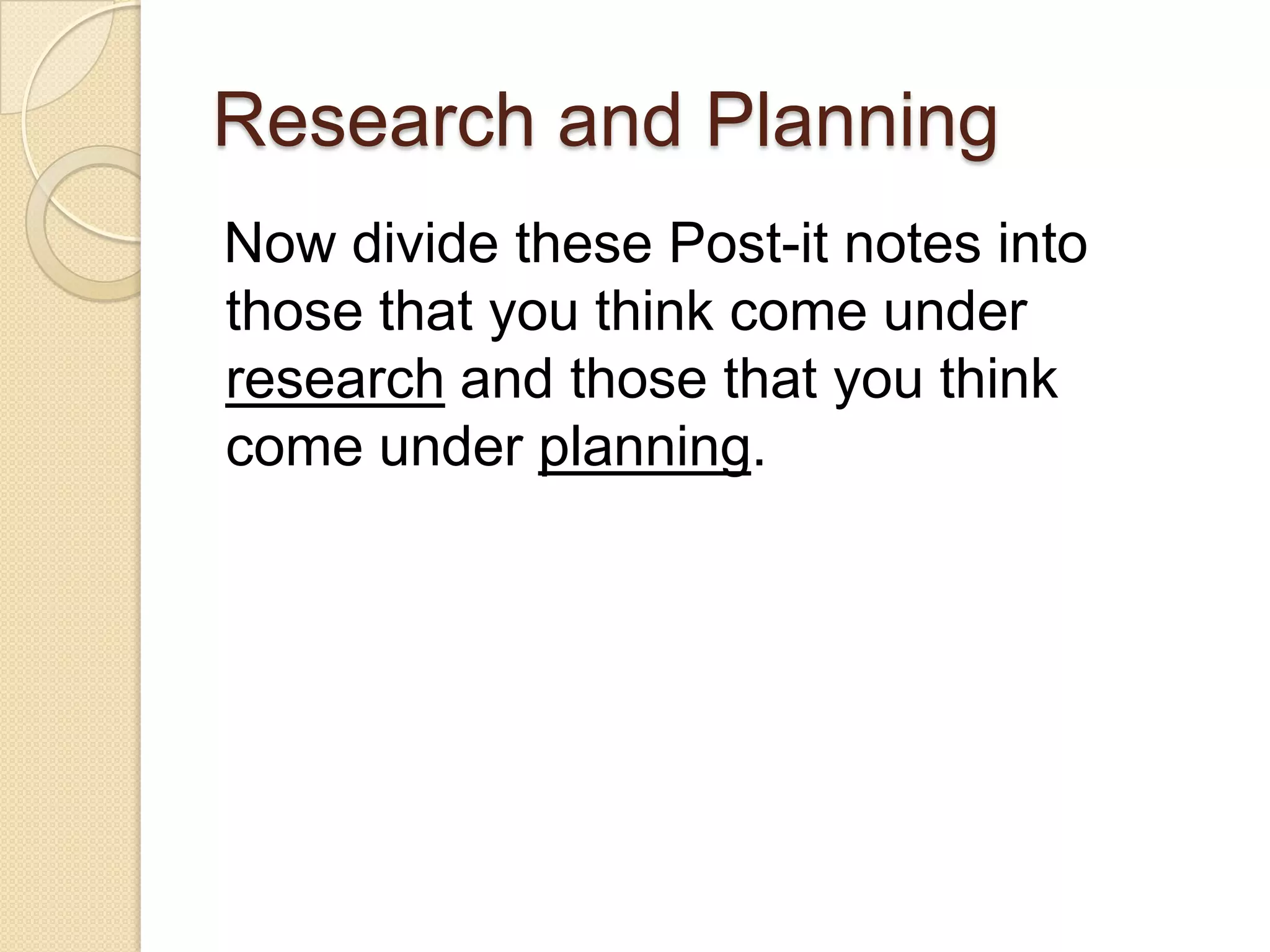
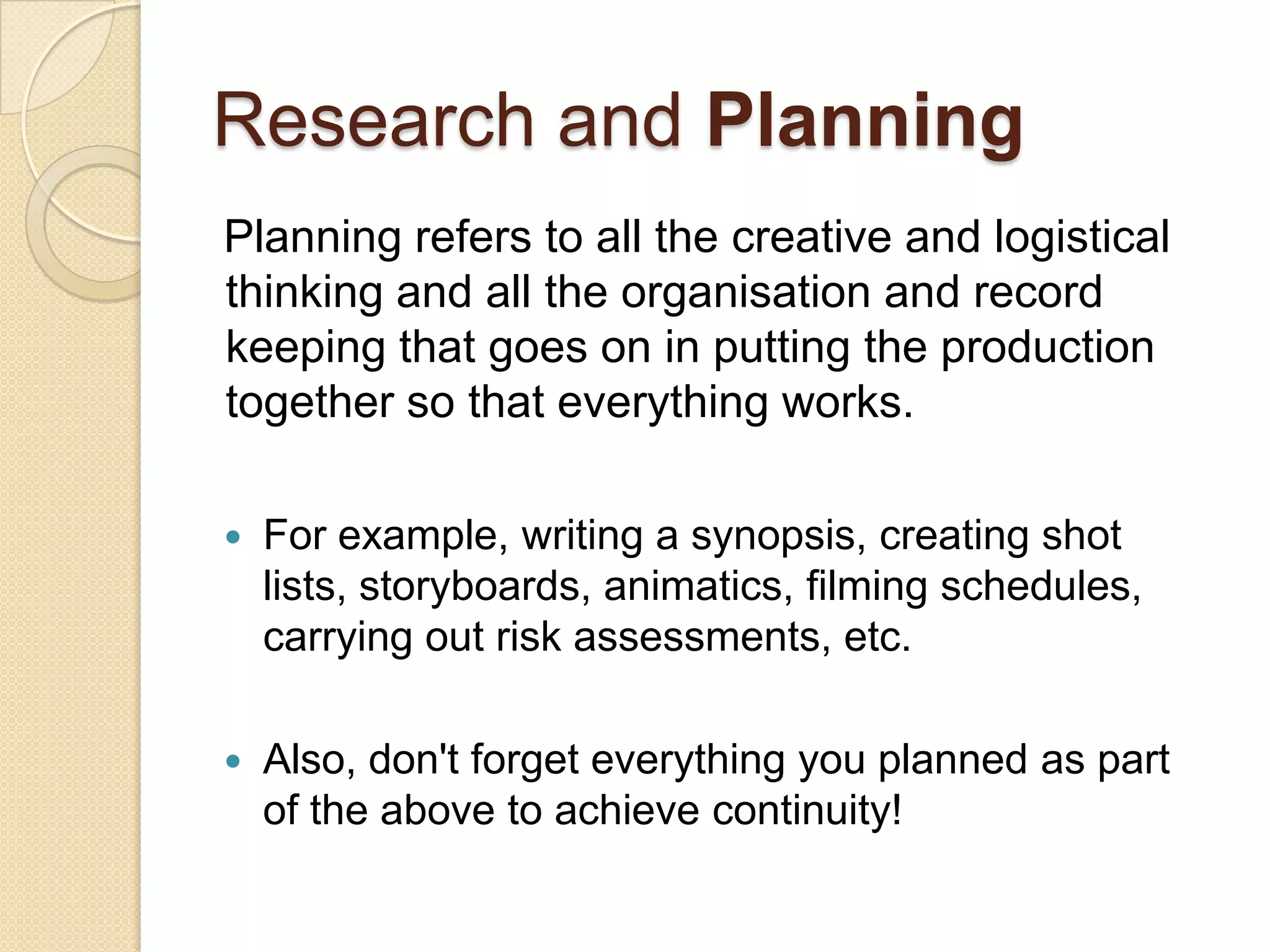
In groups of 3 use post-it notes to
write down as many things as you can
remember doing as part of the
research and planning for your A2
production work. One thing per post-it.
Research and Planning
Now divide these Post-it notes into
those that you think come under
research and those that you think
come under planning.
Research and Planning
Research refers to looking at real media and also audiences
to inform your thinking about a media production.

   Institutional research (such as on how titles work in film
    openings)

   Research into conventions of media texts (layout, fonts,
    camera shots, soundtracks, everything!)

   Audience research (before you made your products and
    after you finished for feedback),

   You can also consider logistical research - recce shots of
    your locations, research into costume, actors, etc
Research and Planning
Planning refers to all the creative and logistical
thinking and all the organisation and record
keeping that goes on in putting the production
together so that everything works.

   For example, writing a synopsis, creating shot
    lists, storyboards, animatics, filming schedules,
    carrying out risk assessments, etc.

   Also, don't forget everything you planned as part
    of the above to achieve continuity!
Research and Planning
   Now try to add some more Post-its
    to each section.
Research and Planning
Research involves both primary and
secondary research.

 What is Primary research?
 What is Secondary research?


   Can you further divide your research
    and planning sections into primary
    and secondary research?
Research and Planning
   Access your coursework blog and look
    back at what skills you said you had at
    the end of AS. Have you improved
    any of your skills in research and
    planning?

   Is this demonstrated in the work you
    produced?
Research and Planning
   Pick at least two aspects of research
    and two aspects of planning that you
    think you have developed over the
    last two years.

   On different colour Post-it notes, and
    for each aspect selected, write an
    example from your AS and A2 work
    that demonstrates this improvement.
Research and Planning
Write an essay plan for Q1a:

Q: Describe how you developed
   research and planning skills for
   media production and evaluate how
   these skills contributed to creative
   decision making. Refer to a range of
   examples in your answer to show
   how these skills developed over
   time.
Research and Planning
Paragraph 1should be an introduction which explains which projects
you did. It can be quite short.

Paragraph 2 should pick up the skill area and perhaps suggest
something about your starting point with it- what skills did you have
already and how were these illustrated. Use an example.

Paragraph 3 should talk through your use of that skill in early projects
and what you learned and developed through these. Again there
should be examples to support all that you say.

Paragraph 4 should go on to demonstrate how the skill developed in
later projects, again backed by examples, and reflecting back on how
this represents moves forward for you from your early position did the
development of these skills enable you to be more creative?

Paragraph 5 short conclusion
Q1a
You need to be able to do this for the following areas
as well to ensure you are fully prepared for this
section of the exam:

•   Using conventions of real media texts
•   Digital technology
•   Post-production

•   Homework – Work through the essay plan for
    using conventions of real media texts. See
    next slide for guidance.
Using Conventions of Real
Media Texts
Use of real media conventions involves consideration of other
texts that you looked at and how skilfully you were able to
weave their conventions into your work or ways in which you
might have challenged them. You could consider:

Institutional
             conventions, e.g. what you would expect a media product from a
certain type of organisation to be like/include.
Format  conventions, e.g. what elements you would expect a film opening,
teaser trailer, poster or magazine cover to include
Genre  conventions, e.g. what kind of narrative, characters, setting and
location, iconography, style (camerawork, mise-en-scene, editing and sound)
you would expect from a product in that genre.


Tip: Your AS and A2 coursework evaluations required you to
consider if you reinforced or challenged conventions of real
media, so look back at these to help you.
Using Conventions of Real
Media Texts
Advice on this section from the Chief Examiner:
 ‘You need to do more than just say ‘I looked on
 YouTube’ for conventions of real media, but
 actually name specific videos you looked at, what
 you gained from them and how they influenced
 your work.’

Tip: Your AS and A2 coursework evaluations required
you to consider if you reinforced or challenged
conventions of real media, so look back at these to help
you.
Using Digital Technology
Digital technology refers to hardware,
software and online technology, so the
digital cameras, the computers, the
packages you used and the programs
online that you have worked with.

Tip: Your AS and A2 coursework evaluations required
you to consider how you used digital technology so
look back at these on your blogs.
Using Digital Technology
Now plan which skills and examples you would use to
answer to the following question (see help on essay
structure on the last slide):

Q: Describe how you developed your skills in the
use of digital technology for media production and
evaluate how these skills contributed to your
creative decision making. Refer to a range of
examples in your answer to show how these skills
developed over time.
Post-production
Post-production is about everything you do after
filming to complete your media product;
- Image manipulation
- Video editing (from cutting the shots and placing
   them on the timeline to special effects)
- Creating and editing titles and graphics
- Sound production
- Sound & Video mixing

(So, post-production skills could include isolating a character
image from the background in Photoshop, organising clips on
the timeline in FCE, using the razor blade, adding transitions,
using particular effects, adjusting sound levels,
looping/layering sound clips, etc.)
Post-production
Now plan which skills and examples you would use to
answer to the following question (see help on essay
structure on the last slide):

Q: Describe how you developed your post-
production skills for media production and evaluate
how these skills contributed to your creative
decision making. Refer to a range of examples in
your answer to show how these skills developed
over time.
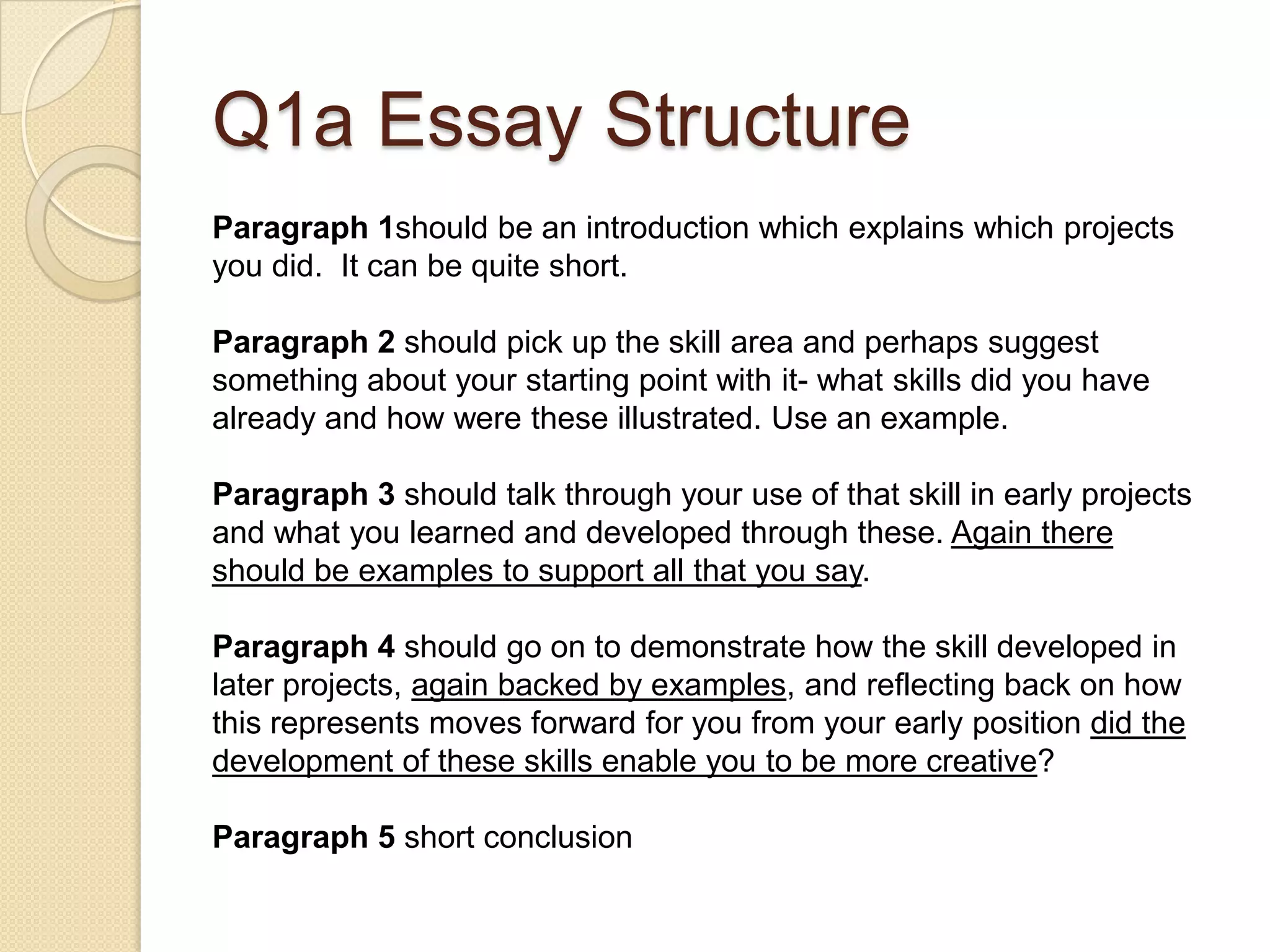
Q1a Essay Structure
Paragraph 1should be an introduction which explains which projects
you did. It can be quite short.

Paragraph 2 should pick up the skill area and perhaps suggest
something about your starting point with it- what skills did you have
already and how were these illustrated. Use an example.

Paragraph 3 should talk through your use of that skill in early projects
and what you learned and developed through these. Again there
should be examples to support all that you say.

Paragraph 4 should go on to demonstrate how the skill developed in
later projects, again backed by examples, and reflecting back on how
this represents moves forward for you from your early position did the
development of these skills enable you to be more creative?

Paragraph 5 short conclusion

Q1a revision

  • 1.
    Q1a Revision Only spend30 minutes on this question. The focus is skills development in the following areas: • Research & Planning • Using conventions of real media texts • Digital technology • Post-production • Creativity You are asked to describe and evaluate your skills.
  • 2.
    Research and Planning Ingroups of 3 use post-it notes to write down as many things as you can remember doing as part of the research and planning for your A2 production work. One thing per post-it.
  • 3.
    Research and Planning Nowdivide these Post-it notes into those that you think come under research and those that you think come under planning.
  • 4.
    Research and Planning Researchrefers to looking at real media and also audiences to inform your thinking about a media production.  Institutional research (such as on how titles work in film openings)  Research into conventions of media texts (layout, fonts, camera shots, soundtracks, everything!)  Audience research (before you made your products and after you finished for feedback),  You can also consider logistical research - recce shots of your locations, research into costume, actors, etc
  • 5.
    Research and Planning Planningrefers to all the creative and logistical thinking and all the organisation and record keeping that goes on in putting the production together so that everything works.  For example, writing a synopsis, creating shot lists, storyboards, animatics, filming schedules, carrying out risk assessments, etc.  Also, don't forget everything you planned as part of the above to achieve continuity!
  • 6.
    Research and Planning  Now try to add some more Post-its to each section.
  • 7.
    Research and Planning Researchinvolves both primary and secondary research.  What is Primary research?  What is Secondary research?  Can you further divide your research and planning sections into primary and secondary research?
  • 8.
    Research and Planning  Access your coursework blog and look back at what skills you said you had at the end of AS. Have you improved any of your skills in research and planning?  Is this demonstrated in the work you produced?
  • 9.
    Research and Planning  Pick at least two aspects of research and two aspects of planning that you think you have developed over the last two years.  On different colour Post-it notes, and for each aspect selected, write an example from your AS and A2 work that demonstrates this improvement.
  • 10.
    Research and Planning Writean essay plan for Q1a: Q: Describe how you developed research and planning skills for media production and evaluate how these skills contributed to creative decision making. Refer to a range of examples in your answer to show how these skills developed over time.
  • 11.
    Research and Planning Paragraph1should be an introduction which explains which projects you did. It can be quite short. Paragraph 2 should pick up the skill area and perhaps suggest something about your starting point with it- what skills did you have already and how were these illustrated. Use an example. Paragraph 3 should talk through your use of that skill in early projects and what you learned and developed through these. Again there should be examples to support all that you say. Paragraph 4 should go on to demonstrate how the skill developed in later projects, again backed by examples, and reflecting back on how this represents moves forward for you from your early position did the development of these skills enable you to be more creative? Paragraph 5 short conclusion
  • 12.
    Q1a You need tobe able to do this for the following areas as well to ensure you are fully prepared for this section of the exam: • Using conventions of real media texts • Digital technology • Post-production • Homework – Work through the essay plan for using conventions of real media texts. See next slide for guidance.
  • 13.
    Using Conventions ofReal Media Texts Use of real media conventions involves consideration of other texts that you looked at and how skilfully you were able to weave their conventions into your work or ways in which you might have challenged them. You could consider: Institutional conventions, e.g. what you would expect a media product from a certain type of organisation to be like/include. Format conventions, e.g. what elements you would expect a film opening, teaser trailer, poster or magazine cover to include Genre conventions, e.g. what kind of narrative, characters, setting and location, iconography, style (camerawork, mise-en-scene, editing and sound) you would expect from a product in that genre. Tip: Your AS and A2 coursework evaluations required you to consider if you reinforced or challenged conventions of real media, so look back at these to help you.
  • 14.
    Using Conventions ofReal Media Texts Advice on this section from the Chief Examiner: ‘You need to do more than just say ‘I looked on YouTube’ for conventions of real media, but actually name specific videos you looked at, what you gained from them and how they influenced your work.’ Tip: Your AS and A2 coursework evaluations required you to consider if you reinforced or challenged conventions of real media, so look back at these to help you.
  • 15.
    Using Digital Technology Digitaltechnology refers to hardware, software and online technology, so the digital cameras, the computers, the packages you used and the programs online that you have worked with. Tip: Your AS and A2 coursework evaluations required you to consider how you used digital technology so look back at these on your blogs.
  • 16.
    Using Digital Technology Nowplan which skills and examples you would use to answer to the following question (see help on essay structure on the last slide): Q: Describe how you developed your skills in the use of digital technology for media production and evaluate how these skills contributed to your creative decision making. Refer to a range of examples in your answer to show how these skills developed over time.
  • 17.
    Post-production Post-production is abouteverything you do after filming to complete your media product; - Image manipulation - Video editing (from cutting the shots and placing them on the timeline to special effects) - Creating and editing titles and graphics - Sound production - Sound & Video mixing (So, post-production skills could include isolating a character image from the background in Photoshop, organising clips on the timeline in FCE, using the razor blade, adding transitions, using particular effects, adjusting sound levels, looping/layering sound clips, etc.)
  • 18.
    Post-production Now plan whichskills and examples you would use to answer to the following question (see help on essay structure on the last slide): Q: Describe how you developed your post- production skills for media production and evaluate how these skills contributed to your creative decision making. Refer to a range of examples in your answer to show how these skills developed over time.
  • 19.
    Q1a Essay Structure Paragraph1should be an introduction which explains which projects you did. It can be quite short. Paragraph 2 should pick up the skill area and perhaps suggest something about your starting point with it- what skills did you have already and how were these illustrated. Use an example. Paragraph 3 should talk through your use of that skill in early projects and what you learned and developed through these. Again there should be examples to support all that you say. Paragraph 4 should go on to demonstrate how the skill developed in later projects, again backed by examples, and reflecting back on how this represents moves forward for you from your early position did the development of these skills enable you to be more creative? Paragraph 5 short conclusion