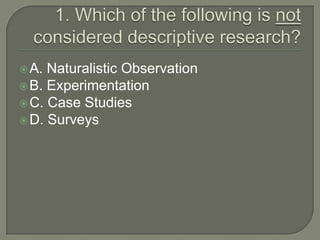
 A. Naturalistic Observation
 B. Experimentation
 C. Case Studies
 D. Surveys
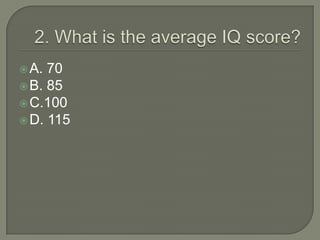
 A. 70
 B. 85
 C.100
 D. 115
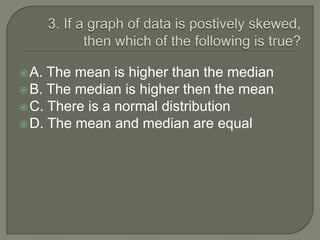
 A. The mean is higher than the median
 B. The median is higher then the mean
 C. There is a normal distribution
 D. The mean and median are equal
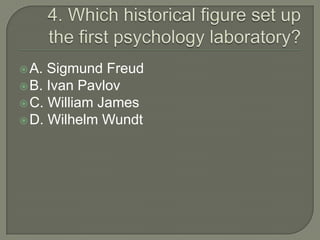
 A. Sigmund Freud
 B. Ivan Pavlov
 C. William James
 D. Wilhelm Wundt
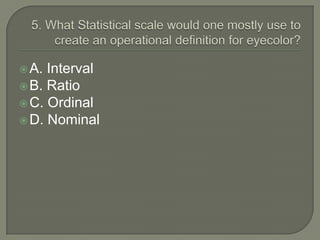
 A. Interval
 B. Ratio
 C. Ordinal
 D. Nominal
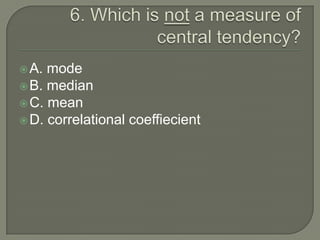
 A. mode
 B. median
 C. mean
 D. correlational coeffiecient
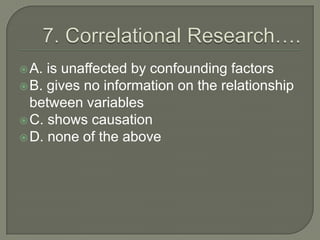
 A. is unaffected by confounding factors
 B. gives no information on the relationship
  between variables
 C. shows causation
 D. none of the above
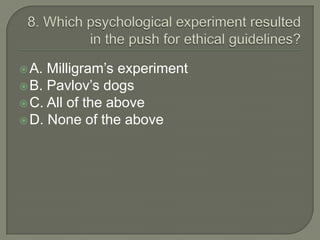
 A. Milligram’s experiment
 B. Pavlov’s dogs
 C. All of the above
 D. None of the above
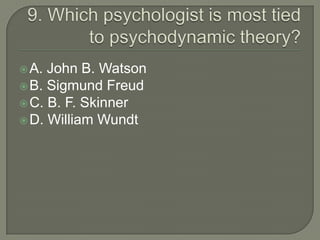
 A. John B. Watson
 B. Sigmund Freud
 C. B. F. Skinner
 D. William Wundt
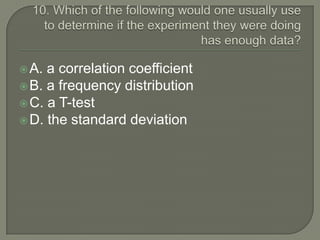
 A. a correlation coefficient
 B. a frequency distribution
 C. a T-test
 D. the standard deviation
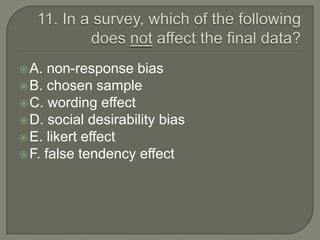
 A.  non-response bias
 B. chosen sample
 C. wording effect
 D. social desirability bias
 E. likert effect
 F. false tendency effect

Pysch ch.1 pre-test

  • 2.
     A. NaturalisticObservation  B. Experimentation  C. Case Studies  D. Surveys
  • 3.
     A. 70 B. 85  C.100  D. 115
  • 4.
     A. Themean is higher than the median  B. The median is higher then the mean  C. There is a normal distribution  D. The mean and median are equal
  • 5.
     A. SigmundFreud  B. Ivan Pavlov  C. William James  D. Wilhelm Wundt
  • 6.
     A. Interval B. Ratio  C. Ordinal  D. Nominal
  • 7.
     A. mode B. median  C. mean  D. correlational coeffiecient
  • 8.
     A. isunaffected by confounding factors  B. gives no information on the relationship between variables  C. shows causation  D. none of the above
  • 9.
     A. Milligram’sexperiment  B. Pavlov’s dogs  C. All of the above  D. None of the above
  • 10.
     A. JohnB. Watson  B. Sigmund Freud  C. B. F. Skinner  D. William Wundt
  • 11.
     A. acorrelation coefficient  B. a frequency distribution  C. a T-test  D. the standard deviation
  • 12.
     A. non-response bias  B. chosen sample  C. wording effect  D. social desirability bias  E. likert effect  F. false tendency effect