Impact of osteitis and biofilm formation and
correlation between both in diffuse sinonasal
polyposis in Egyptian adults; a prospective
clinical and histopathologic study
Ayman Moustafa Al-Madani a
, Suzan Mohamed Helal b
, Hoda Mahmoud Khalifa c
,
Moustafa Mohamed Abdelnaby a,*
a
Department of Otorhinolaryngology, Faculty of Medicine, Alexandria University, Egypt
b
Department of Histology and Cell Biology, Faculty of Medicine, Alexandria University, Egypt
c
Department of Pathology, Faculty of Medicine, Alexandria University, Egypt
Received 7 July 2015; accepted 17 September 2015
KEYWORDS
Chronic rhinosinusitis;
Diffuse sinonasal polyposis;
Biofilm;
Osteitis
Abstract Background: The pathogenesis of diffuse sinonasal polyposis is still not completely
established, possible explanations are osteitis, aeroallergens, fungal sinusitis and biofilms. There
are no reports in Egypt about osteitis and biofilms in those patients.
Purpose: To study the incidence and impact of osteitis and biofilms in Egyptian patients on diffuse
sinonasal polyposis patients.
Patients and methods: Fifty patients (22 males, mean age of 30.68 ± 7.24 years) submitted to surgery
for diffuse sinonasal polyposis. Computerized scan on sinuses ordered and scored by Lund–Mackay
staging protocol, severity of Osteitis using the Global Osteitis Scoring Scale. Tissue samples were
taken from diseased sinuses to be analyzed histopathologically for osteitis, and with scanning electron
microscopy to detect bacterial biofilms. Another ten patients as a control scheduled for septoplasty or
turbinectomy with no evidence of sinusitis, and tissue specimens were obtained 1 cm behind the ante-
rior end of inferior turbinate and processed in the same manner for biofilm comparison.
Study design: Contemporary prospective cross-sectional cohort study.
Results: In 70% (35/50) of the polyposis patients, histopathology was positive for osteitis. Biofilms
were detected by electron microscope in 39 (78%). Two of controls (20%) were biofilm positive with a
significant difference (p = 0.035). The mean Lund–Mackay was 19.08 ± 3.67 and mean osteitis score
was 18.68 ± 11.99. There was a significant correlation between Lund–Mackay and osteitis score
(p < 0.001) and between both and histopathologically proven osteitis (p = 0.049), biofilms
(p = 0.005) and postoperative endoscopic healing (p = 0.046) where increased soft tissue disease
and osteitis and biofilm were associated with bad healing and vice versa.
* Corresponding author.
E-mail address: mostafanaby@gmail.com (M.M. Abdelnaby).
Peer review under responsibility of Alexandria University Faculty of
Medicine.
Alexandria Journal of Medicine (2015) xxx, xxx–xxx
HOSTED BY
Alexandria University Faculty of Medicine
Alexandria Journal of Medicine
http://www.elsevier.com/locate/ajme
http://dx.doi.org/10.1016/j.ajme.2015.09.006
2090-5068 Ó 2015 The Authors. Alexandria University Faculty of Medicine. Production and hosting by Elsevier B.V.
This is an open access article under the CC BY-NC-ND license (http://creativecommons.org/licenses/by-nc-nd/4.0/).
Please cite this article in press as: Al-Madani AM et al. Impact of osteitis and biofilm formation and correlation between both in diffuse sinonasal polyposis in Egyp-
tian adults; a prospective clinical and histopathologic study, Alex J Med (2015), http://dx.doi.org/10.1016/j.ajme.2015.09.006
Conclusion: Osteitis and bacterial biofilms underlie the majority of Polypoidal chronic rhinosinusitis
and both correlated significantly. Scanning electron microscope is a good tool for detecting bacterial
biofilms. Sinus surgery with surgical ventilation, mechanical disruption of biofilms and osteitis is a
mandatory therapeutic choice with prolonged treatment with antibiotics and nasal wash.
Ó 2015 The Authors. Alexandria University Faculty of Medicine. Production and hosting by Elsevier B.V.
This is an open access article under the CC BY-NC-ND license (http://creativecommons.org/licenses/by-nc-
nd/4.0/).
1. Introduction
Rhinosinusitis is classified according to time into acute cases
(lasting up to 12 weeks), subacute (4–12 weeks), chronic (last-
ing over 12 weeks) and recurrent acute. Chronic rhinosinusitis
includes a group without nasal polyps and another with nasal
polyps i.e. diffuse sinonasal polyposis (DSNP).1
DSNP
prevalence varies from 1% to 5% and is one of the common
complaints in medical visits, and one of the main reasons for
antibiotic prescriptions and leave of work.2
Diffuse sinonasal polyposis represents a chronic inflamma-
tory condition of unknown definitive etiology till now. It is
often associated with systemic diseases and is characterized
by nasal obstruction, reduction in sense of smell, recurrent
infection, and impaired quality of life. Several factors have been
raised to explain the pathophysiology of DSNP as immunolog-
ical defects, intrinsic airway factors, autonomic imbalance,
abnormal transepithelial ion transport, mucopolysaccharide
abnormality, enzyme abnormality, allergic and nonallergic
rhinitis, Staphylococcus aureus superantigen, fungal coloniza-
tion that induces and maintains eosinophilic inflammation,
aspirin hypersensitivity and persistent insult by biofilms and/
or osteitis.3
The initial traditional approach is medical management.
Medical therapy consists of administration of intranasal
steroids or a short course of systemic steroids. Other medical
treatments considered are use of antibiotics, leukotriene
modifiers, and acetylsalicylic acid avoidance.4
Surgical removal is performed for non-responders to med-
ical management. The purpose of surgery is to restore the nasal
physiology by making the nose mechanically free from nasal
polyps and allowing drainage of the infected sinuses and allow-
ing drug delivery to the sinuses. Prolonged medical therapy
after surgery is essential for preventing recurrence.5
Biofilm consists of grouped microorganism cells anchored
irreversibly to a live or inert surface, wrapped in a self-
produced extracellular polymer matrix consisting mostly of
polysaccharides, which comprises over 90% of the biofilm
mass.6
This condition makes biofilms highly resistant to
changes in pH, temperature, and antibiotic action, which pos-
sibly explains persistent chronic infections that resist clinical
therapy, such as DSNP.6
Biofilms have also been demonstrated by scanning electron
microscopy (EM) in cholesteatomas, chronic tonsillitis,
adenoids of patients with chronic sinusitis, and infections
associated with biomaterials such as voice prostheses.7
Several studies confirmed the presence of biofilms on the
mucosa of patients with chronic rhinosinusitis, which could
explain why such patients improved after a course of antibi-
otics and relapsed after stopping medications.8
Other studies
applying transmission EM and confocal laser microscopy with
fluorescence in situ hybridization have confirmed the presence
of bacteria inside biofilms.9
All current biofilm diagnostic
modalities require invasive mucosal biopsies, which limit their
use to the operating theater.10
Chronic rhinosinusitis (CRS) with Osteitis is often associ-
ated with recalcitrant disease. The osteitic bones potentially
serve as a nidus for inflammation and may explain failures
of typical medical and surgical treatment. Osteitis is more asso-
ciated with previous surgery and the incidence increases with
increasing number of previous operations.11
However, non-
operated patients also experience osteitis with an incidence of
5–33% and thus mucosal loss from surgery is not the sole
answer to the origins and implication of osteitis.12
Patients
undergoing revision surgery, mucosal eosinophilia and higher
serum eosinophils recorded higher osteitis scores.13
The significance of osteitis in the management of recalci-
trant chronic rhinosinusitis has yet to be clearly understood
and clinical outcome data for these patients are lacking. No
papers have been published in Egypt about impact of osteitis
and biofilms and correlation between both in DSNP or chronic
rhinosinusitis. The purpose of this study was to show the
incidence of biofilms and/or osteitis in DSNP and its impact
on patient’s symptoms and post-operative course, also to
correlate between osteitis and biofilm presence in DSNP
patients.
2. Patients
This was a prospective cohort cross-sectional study. The study
group included fifty patients (22 males, 28 females with mean
age of 30.68 ± 7.24 years) undergoing FESS for DSNP that
did not respond to medical therapy.
Nonresponders are the group of patients who did not
respond adequately to medical treatment in the form of short
course corticosteroids (15 days), intranasal corticosteroids
spray and nasal wash and antibiotics for a period of three
months while still having the same symptoms and signs of
Polypoidal CRS.7,30
Chronic polypoidal rhinosinusitis was defined based on
clinical, CT and endoscopic criteria, as follows: a clinical his-
tory with two or more of the following symptoms lasting over
12 weeks, one of the symptoms being any of the first two of
nasal block or congestion, anterior nasal discharge or pos-
nasal drip, facial pain or sense of pressure, and decreased or
absent olfaction; endoscopy revealing bilateral nasal polyps.1,5
Those patients with non-polypoidal CRS or with systemic
illness were excluded.
The controls were ten patients scheduled for septoplasty for
nasal obstruction and/or inferior turbinate reduction with no
evidence or history of sinusitis or polyposis, neither clinically
nor radiologically.
A full informed consent was signed from all participants
and this study was formally approved by the Ethics Committee
2 A.M. Al-Madani et al.
Please cite this article in press as: Al-Madani AM et al. Impact of osteitis and biofilm formation and correlation between both in diffuse sinonasal polyposis in Egyp-
tian adults; a prospective clinical and histopathologic study, Alex J Med (2015), http://dx.doi.org/10.1016/j.ajme.2015.09.006
of the Faculty of Medicine, Alexandria University with the fol-
lowing ID: [IRB No. 00007555-FWA No. 0015712, June 2013].
3. Methods
All patients were subjected to the following. (1) Full History
taking about DSNP including history of bronchial asthma,
allergic rhinitis, aspirin intolerance, previous FESS, topical
and systemic steroid treatment and systemic antimicrobial
therapy, smoking, family history of polyposis and systemic dis-
eases. Subjective assessment of symptoms2
:
Major symptoms:
– Facial painnpressure (not considered if no other CRS com-
plaints present)
– Facial congestionnfullness
– Nasal obstructionnblockage
– Nasal dischargenpurulencendiscolored postnasal discharge
– Hyposmiananosmia
– Purulence of nasal cavity during examination
Minor symptoms:
Headache, fever, halitosis, fatigue, dental pain, cough and
ear painnpressure fullness.
Symptoms were scored by the visual analogue scale (0–4
scale) for the major and minor symptoms (0 = absent,
1 = mild, 2 = moderate, 3 = moderately severe, 4 = severe).
(2) Complete general Otorhinolarnygoscopic examination.
(3) Nasal endoscopy and reporting the extent of polyposis
by using Johansen endoscopic grading system.3
(4) Multislice CT scan with no contrast on the nose and
paranasal sinuses; coronal, axial, and sagittal CT scans were
examined and scored by the Lund–Mackay staging protocol
(maximum score is 24) and Global Osteitis Scoring scale.14
(Table 1)
(5) Complete blood count to record eosinophilia and for
preparation for surgery.
(6) During FESS a tissue biopsy was taken from the eth-
moid polypoidal tissue and divided into two samples as
follows:
1. Histopathology for detection of osteitis: The samples of tis-
sue biopsy were fixed in 10% formol saline and sent to the
laboratory then prepared with xylon; Paraffin blocks will be
prepared and 5l sections will be stained using routine
hematoxylin and eosin (H&E) stain. Bony biopsy was pro-
cessed in acids then after softening and decalcification, the
bony specimen was processed as for soft tissue.
2. Biofilm detection by scanning EM: The specimens were
examined and photographed with JEOL, JSM-53009 scan-
ning electron microscope in EM unit, Faculty of Science,
Alexandria University. All specimens were prepared for
SEM using the following techniques. Tissue was initially
fixed for 2 h in 2.5% glutaraldehyde in phosphate-
buffered saline (PBS, pH 7.4) at 4–8 °C. Two rinses of
15 min each were then carried out using PBS. Next, the
specimens were fixed with 1% osmium tetroxide for 1 h.
They were then dehydrated through a graded ethanol series
as follows: 50% for 15 min, 70% for 15 min, 80% for
15 min, 90% for 15 min, and 100% twice for 15 min each
time. The tissue was immersed in 100% acetone for
15 min and washed in 100% isoamyl acetate for 15 min, fol-
lowed by critical point drying. Finally, specimens were
mounted on metal stubs and subsequently sputter coated
with gold preparation for imaging.
Structures categorized by water channels, 3D structure, and
matrix set in spherical or elliptical bodies were identified as evi-
dence of biofilms. It differs from viscous mucus, the latter is a
flat blanket, under which sometimes the comparative orderly
cilia could be seen, and irregular foreign granule might be
found. The entire area of each specimen was scanned for the
presence of biofilm structures. Images were taken at various
angles to effectively display the specimens and to minimize
errors and artifacts.
In the control group: Tissue specimens of approximately
0.5 cm3
were obtained 1 cm behind the anterior end of the infe-
rior turbinate and processed in the same manner for detection
of biofilm on the surface of mucosa.
(7) Postoperative follow-up: The patients were followed for
subjective satisfaction and objective healing of the cavity clin-
ically by endoscopy after surgery. A well healed cavity had
healthy mucosal lining with no evidence of inflammation,
mucosal swelling, polyposis or scarring.15
Data were analyzed using the Statistical Package for Social
Sciences (SPSS ver. 20, Chicago, IL, USA). The data were
reported as mean and standard deviation. T-tests and chi-
square tests were used to compare differences in means and
proportions where appropriate. The data were compared
between the patients and controls using paired t-test. Compar-
ison between two independent changes was done using inde-
pendent two-sample t-test. Statistical significance level was
set at 0.05.
4. Results
The patients group included 22 males (44%) and 28 females
with age ranged from 14 to 50 years with an average of
30.68 ± 7.24 years. Out of fifty patients, 15 (30%) had a
family history of DSNP, 18 (36%) were smokers, 25
(50%) had a history of aspirin intolerance, 29 (58%) had
Table 1 Determination of the severity of Osteitis in patients
with chronic rhinosinusitis using a new Global Osteitis Scoring
Scale.
Score Global Osteitis Scoring Scale
1 Less than 50% of sinus walls involved less than 3 mm thick
2 Less than 50% of sinus walls involved 3–5 mm thick
3 Less than 50% of sinus walls involved more than 5 mm
thick or more than 50% less than 3 mm thick
4 More than 50% of sinus walls involved 3–5 mm thick
5 More than 50% of sinus walls involved more than 5 mm
thick
The maximum thickness from each sinus wall is measured either by
the computer program on the computerized scan or from the scale
on the side of each cut. Each sinus to be given 0–5 score of 10
paranasal sinuses, 2 maxillary, 2 anterior ethmoid, 2 posterior
ethmoid, 2 frontal, 2 sphenoid. Total score from 0 to 50.
Non-significant less than 5, mild 5–20, moderate 21–35, severe
more than 35.
Impact of osteitis and biofilm formation and correlation between them 3
Please cite this article in press as: Al-Madani AM et al. Impact of osteitis and biofilm formation and correlation between both in diffuse sinonasal polyposis in Egyp-
tian adults; a prospective clinical and histopathologic study, Alex J Med (2015), http://dx.doi.org/10.1016/j.ajme.2015.09.006
bronchial asthma, 22 (44%) had eosinophilia in their blood
and 17 (34%) had a history of previous FESS.
Regarding the symptoms, ten patients had grade 1, nine
patients had grade 2, ten patients had grade 3, and 21 patients
had grade 4. The mean VAS was 2.84 ± 1.18. There was a sig-
nificant relation between the VAS and osteitis proven histolog-
ically, where presence of osteitis was associated with a higher
VAS (P < 0.001) and with biofilm, where presence of biofilm
was associated with a higher VAS (P < 0.001).
The mean endoscopic polyposis grading for the patients
was 4.62 ± 1.52; eight patients had grade 2, four had grade
3, ten had grade 4, five had grade 5 and 23 had grade 6. There
was a significant relation between nasal polyposis grading and
histopathologically proven osteitis (p = 0.012) but not with
bacterial biofilm presence (p = 0.065) nor post-operative
endoscopic healing (p = 0.445).
There was a statistically significant relation between eosino-
philia and osteitis and bacterial biofilm presence, while there is
a insignificant relation between eosinophilia and post-
operative healing outcome.
The mean LM staging was 19.08 ± 3.67 and there was a
statistically significant correlation between LM staging and
the GOSS where increasing the extent and severity of mucosal
disease is associated with severe osteitis and vice versa
(p=<0.001).
There was a significant relation between LM staging and
histopathologically proven osteitis, biofilm and postoperative
endoscopic healing where increase of soft tissue disease is asso-
ciated with bad healing and vice versa. (Tables 2–5)
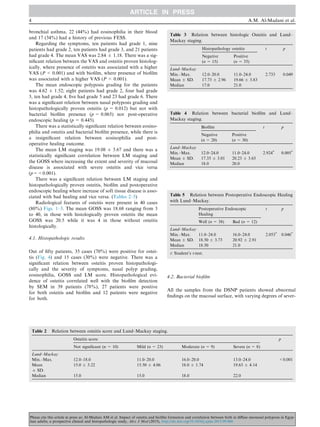
Radiological features of osteitis were present in 40 cases
(80%) Figs. 1–3. The mean GOSS was 18.68 ranging from 3
to 40, in those with histologically proven osteitis the mean
GOSS was 20.5 while it was 4 in those without osteitis
histologically.
4.1. Histopathologic results
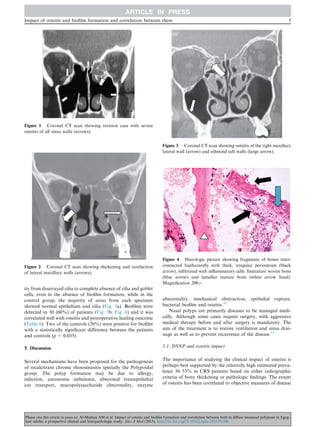
Out of fifty patients, 35 cases (70%) were positive for ostei-
tis (Fig. 4) and 15 cases (30%) were negative. There was a
significant relation between osteitis proven histopathologi-
cally and the severity of symptoms, nasal polyp grading,
eosinophilia, GOSS and LM score. Histopathological evi-
dence of osteitis correlated well with the biofilm detection
by SEM in 39 patients (78%), 27 patients were positive
for both osteitis and biofilm and 12 patients were negative
for both.
4.2. Bacterial biofilm
All the samples from the DSNP patients showed abnormal
findings on the mucosal surface, with varying degrees of sever-
Table 2 Relation between osteitis score and Lund–Mackay staging.
Osteitis score p
Not significant (n = 10) Mild (n = 23) Moderate (n = 9) Severe (n = 8)
Lund–Mackay
Min.–Max. 12.0–18.0 11.0–20.0 16.0–20.0 13.0–24.0 <0.001
Mean
± SD.
15.0 ± 3.22 15.50 ± 4.06 18.0 ± 1.74 19.63 ± 4.14
Median 15.0 15.0 18.0 22.0
Table 3 Relation between histologic Osteitis and Lund–
Mackay staging.
Histopathology osteitis t p
Negative
(n = 15)
Positive
(n = 35)
Lund–Mackay
Min.–Max. 12.0–20.0 11.0–24.0 2.733 0.049
Mean ± SD. 17.73 ± 2.96 19.66 ± 3.83
Median 17.0 21.0
Table 4 Relation between bacterial biofilm and Lund–
Mackay staging.
Biofilm t p
Negative
(n = 20)
Positive
(n = 30)
Lund–Mackay
Min.–Max. 12.0–24.0 11.0–24.0 2.924*
0.005*
Mean ± SD. 17.35 ± 3.01 20.23 ± 3.65
Median 18.0 20.0
Table 5 Relation between Postoperative Endoscopic Healing
with Lund–Mackay.
Postoperative Endoscopic
Healing
t p
Well (n = 38) Bad (n = 12)
Lund–Mackay
Min.–Max. 11.0–24.0 16.0–24.0 2.053*
0.046*
Mean ± SD. 18.50 ± 3.73 20.92 ± 2.91
Median 18.50 21.0
t: Student’s t-test.
4 A.M. Al-Madani et al.
Please cite this article in press as: Al-Madani AM et al. Impact of osteitis and biofilm formation and correlation between both in diffuse sinonasal polyposis in Egyp-
tian adults; a prospective clinical and histopathologic study, Alex J Med (2015), http://dx.doi.org/10.1016/j.ajme.2015.09.006
ity from disarrayed cilia to complete absence of cilia and goblet
cells, even in the absence of biofilm formation, while in the
control group, the majority of areas from each specimen
showed normal epithelium and cilia (Fig. 5a). Biofilms were
detected in 30 (60%) of patients (Fig. 5b, Fig. 6) and it was
correlated well with osteitis and postoperative healing outcome
(Table 6). Two of the controls (20%) were positive for biofilm
with a statistically significant difference between the patients
and controls (p = 0.035).
5. Discussion
Several mechanisms have been proposed for the pathogenesis
of recalcitrant chronic rhinosinusitis specially the Polypoidal
group. The polyp formation may be due to allergy,
infection, autonomic imbalance, abnormal transepithelial
ion transport, mucopolysaccharide abnormality, enzyme
abnormality, mechanical obstruction, epithelial rupture,
bacterial biofilm and osteitis.16
Nasal polyps are primarily diseases to be managed medi-
cally. Although some cases require surgery, with aggressive
medical therapy before and after surgery is mandatory. The
aim of the treatment is to restore ventilation and sinus drai-
nage as well as to prevent recurrence of the disease.12
5.1. DSNP and osteitis impact
The importance of studying the clinical impact of osteitis is
perhaps best supported by the relatively high estimated preva-
lence 36–53% in CRS patients based on either radiographic
criteria of bony thickening or pathologic findings. The extent
of osteitis has been correlated to objective measures of disease
Figure 3 Coronal CT scan showing osteitis of the right maxillary
lateral wall (arrow) and ethmoid cell walls (large arrow).
Figure 2 Coronal CT scan showing thickening and rarefaction
of lateral maxillary walls (arrows).
Figure 1 Coronal CT scan showing revision case with severe
osteitis of all sinus walls (arrows).
Figure 4 Histologic picture showing fragments of bones inter-
connected haphazardly with thick, irregular periosteum (black
arrow), infiltrated with inflammatory cells. Immature woven bone
(blue arrow) and lamellar mature bone (white arrow head).
Magnification 200Â.
Impact of osteitis and biofilm formation and correlation between them 5
Please cite this article in press as: Al-Madani AM et al. Impact of osteitis and biofilm formation and correlation between both in diffuse sinonasal polyposis in Egyp-
tian adults; a prospective clinical and histopathologic study, Alex J Med (2015), http://dx.doi.org/10.1016/j.ajme.2015.09.006
severity such as higher Lund–Mackay CT scores, and has a
negative impact on quality of life (QOL) outcomes.17
The presence of osteitis was associated with a higher VAS
than that without and this explains the recalcitrant course of
disease in those with osteitis, similarly a significant relation
between severity of symptoms and biofilm presence, where bio-
film increases the severity of symptoms in CRS and explains
the continuous discharge and bad healing postoperatively.
This was in agreement with Bhandarkar et al., who found that
Osteitis is associated with more recalcitrant CRS. Osteitis is
associated with worsened measures of disease severity such
as CT, endoscopy polyposis grading and olfactory scores,
and affects the degree of improvement in QOL measures after
both medical and surgical treatments.18
Similarly, Jang et al. discussed 99Tc-MDP bone isotope sin-
gle photon emission CT in CRS patients to characterize sever-
ity of osteitis. Increased isotope uptake was found to correlate
to both increased baseline LM scores and worse outcomes fol-
lowing FESS, as assessed by postoperative endoscopy findings
of purulence, persistent edema, and recurrence of polyps. Also
they found higher baseline CT scores and higher postoperative
endoscopy scores in patients with osteitis.17
Lee et al. performed a study on 121 patients undergoing
FESS for CRS. They found that 53% had pathological
evidence of osteitis on histological analysis of surgical
specimens.12
On the other hand, Sacks et al., found that osteitis is a de
novo feature in patients with DSNP even without prior inter-
ventions. In these patients, osteitis is associated with high tis-
sue and serum eosinophilia. The study was conducted on un-
operated patients with CRS undergoing FESS. Fifty-three
patients were included, 42.9% of which had radiologic osteitis.
There was no significant association between the presence or
severity of osteitis at the time of surgery and symptoms, out-
come measures, or endoscopy scores.19
Current evidence supporting surgical removal of osteitic
bone is anecdotal, suggesting that active inflammation in the
underlying bone leads to persistence in overlying mucosal dis-
ease which does not resolve until the inflamed bony partitions
are removed. FESS plays a critical role in improving treatment
outcomes in patients with osteitis.17
5.2. DSNP and bacterial biofilm impact
It is now believed that 99% of all bacteria exist in biofilms and
only 1% lives in a free-floating or planktonic state at any given
time. Recent publications by the Centers for Disease Control
and Prevention estimate that at least 65% of all human bacte-
rial infectious processes involve biofilms. Biofilm-positive
patients tend to have a greater severity of disease preopera-
tively and also have persistent and more severe symptoms
post-FESS. This study supports the role of biofilms in main-
taining the chronic and recalcitrant nature of CRS.20
Figure 5 (a) EM picture of normal microvilli sweeping in one direction of mucociliary clearance. (b) EM picture showing bacterial
biofilm on the surface of a polyp.
Table 6 Relation between bacterial biofilm and Histopathol-
ogy osteitis, Postoperative Endoscopic Healing.
Biofilm v2
p
Negative
(n = 20)
Positive
(n = 30)
No. % No. %
Histopathology osteitis
Negative 12 60.0 3 10.0 14.286 <0.001
Positive 8 40.0 27 90.0
Postoperative Endoscopic Healing
Well 19 95.0 19 63.3 6.597 FE
p = 0.016
Bad 1 5.0 11 36.7
v2
: value for Chi square.
FE: Fisher’s exact test.
t: Student’s t-test.
Figure 6 EM picture showing bacterial biofilm on the surface of
a polyp.
6 A.M. Al-Madani et al.
Please cite this article in press as: Al-Madani AM et al. Impact of osteitis and biofilm formation and correlation between both in diffuse sinonasal polyposis in Egyp-
tian adults; a prospective clinical and histopathologic study, Alex J Med (2015), http://dx.doi.org/10.1016/j.ajme.2015.09.006
Zhang et al. studied the question how much CRS patients
with bacterial biofilms can benefit from FESS. It was found
that patients with biofilm-forming bacteria had significantly
worse preoperative Sino-Nasal Outcome Test-22 scores com-
pared to those without. Both groups had clinically significant
QOL improvement after FESS.21
Difficulties in demonstrating biofilms in cultures of patients
with CRS may be explained by the presence of bacterial genes
that become active in response to specific environmental
conditions; in common culture media, the bacteria do not form
biofilms and are susceptible to antibiotics.22
Biofilms demonstrated by scanning EM in the present study
were confirmed with images that are similar to those published
in previous studies. Biofilms were identified in 30 (60%) of
patients. This highlights the importance of reevaluating the
current treatments of CRS, because antibiotics have already
been shown to be ineffective against biofilms. Surgical ventila-
tion, mechanical disruption of biofilms and detergents may
become a mandatory therapeutic choice. Surgery may be
effective because it causes the infected cavity to be ventilated,
thus increasing the oxygen tension in the ambience around
biofilms.8
The reported incidence rates of biofilms in CRS patients
range from 25% to 100%, with most studies showing rates
of 70–80%.23
This may be due to different populations, selec-
tion of materials for testing which represent only a small frac-
tion of the total sinus mucosa, and also the technique used.
Many studies have correlated the presence of biofilms with
a poorer prognosis in patients with CRS.24
Other studies have
tried alternative methods for removing biofilms, such as using
children’s shampoo.25
Surgical failure may be accredited to
biofilms when these are not eradicated. Biofilm persistence in
the folds of edematous chronically inflamed mucosa with
absent cilia may lead to rapid reinfection.17
Further studies,
however, are needed to define whether biofilms are the cause
or consequence in DSNP patients. Relevant organisms in
otorhinolaryngological diseases have been shown to form bio-
films, such as Pseudomonas aeruginosa, Haemophilus influen-
zae, Streptococcus pneumoniae and Staphylococcus aureus.26
In fact, the role of bacteria in the pathophysiology of CRS
itself is not certain. An inflammatory infiltrate is known to be
present in the mucosa of those patients, and serves as the cri-
teria for the mucosal staging systems recommended by
Biedlingmaier and others. The release of inflammatory media-
tors, particularly those of the arachidonic acid pathway, has
been postulated by many studies to be the stimulus for bone
remodeling in sinusitis.11,13
In the control group biopsy taken from the mucosa of the
inferior turbinate in cases submitted for septal and/or turbi-
nate surgery and in this group only 2 out of 10 (20%) were
positive for biofilm with a statistically significant difference
between the study group and control group (p = 0.035).
Sanclement et al., reported that with use of strict SEM mor-
phologic criteria as described in the literature as well as by
using hundreds of biofilm photographs, examination of the
30 CRS patients’ samples revealed evidence of biofilms in 24
(80%) of the subjects. The control cases had healthy appearing
cilia and goblet cells without evidence of biofilms.23
In the current study, all of the samples from the CRS group
showed abnormal findings on the mucosal surface, with vary-
ing degrees of severity from disarrayed cilia to complete
absence of cilia and goblet cells, even in the absence of biofilm
formation, while in the control group, the majority of areas
from each specimen showed normal epithelium and cilia. Sim-
ilarly many studies reported also disarrayed cilia and disorga-
nized mucociliary clearance in cases of CRS even in the cases
where there were no biofilms detected but none of the healthy
control group.23,27
In this study, Histopathological evidence of osteitis corre-
lated well with the biofilm detection by the scanning EM in
39 patients out of 50 (78%), 27 patients were positive for both
osteitis and biofilm and 12 patients were negative for both.
This was in agreement with, Dong et al. who conducted study
on 84 CRS patients undergoing FESS and 22 control patients
were enrolled in this study. Mucosal and bony samples from
ethmoid sinus were obtained for confocal scanning laser
microscopy and microscopic examination. A total of 84.8%
of the bone underlying mucosa with BBF had some form of
osteitis in ethmoid sinus, and approximately 46.4% of CRS
patients were from a subgroup with both BBF and osteitis.
In his study, the volume of BBF correlated well with severity
of osteitis in CRS patients.28
5.3. Postoperative healing
Snidvongs et al., defined a well healing cavity after FESS as a
patent cavity with healthy mucosa without edema, polyps,
purulence, adhesions or synechia. He found a statistically sig-
nificant association between worse healing and osteitis.29
In this study, biofilm and osteitis had a significant relation
with postoperative healing where biofilm and osteitis are asso-
ciated with worse healing than those without. Similarly other
studies found that Osteitis and neo-osteogenesis may also
affect the success rate after sinus surgery. They studied the cor-
relation between pre-operative bony changes detected in CT
scan and postoperative endoscopic signs of healed sinus cavi-
ties in 81 patients. Patients with no radiological signs of bony
changes showed better healing mucosa compared to those with
bony changes.28
6. Conclusion
This study evidences the presence of biofilms in DSNP Egyp-
tian patients using scanning EM, showing their 3-D structure,
spherical structures surrounded by an amorphous matrix and
its water channels. Osteitis of the sinus walls underlies the
pathology in the majority of those patients. FESS with surgical
ventilation, mechanical disruption of biofilms and osteitis is a
mandatory therapeutic choice with continuation of the medical
treatment postoperatively. Osteitis and biofilm coexist together
so multimodality therapy is required with both intravenous
antibiotics and strong jet nasal wash with high concentration
of local antibiotics.
Conflict of interest
Authors state that there is no conflict interest statement.
References
1. Meltzer E, Hamilos D, Hadley J, et al. Rhinosinusitis: establishing
definitions for clinical research and patient care. Otolaryngol Head
Neck Surg 2004;131(6):S1–S62.
Impact of osteitis and biofilm formation and correlation between them 7
Please cite this article in press as: Al-Madani AM et al. Impact of osteitis and biofilm formation and correlation between both in diffuse sinonasal polyposis in Egyp-
tian adults; a prospective clinical and histopathologic study, Alex J Med (2015), http://dx.doi.org/10.1016/j.ajme.2015.09.006
2. Fokkens W, Lund V, Mullol J. European Position Paper on
Rhinosinusitis and Nasal Polyps Group. EP3OS: European
position paper on rhinosinusitis and nasal polyps. A summary
for otorhinolaryngologists. Rhinology 2007;45(2):97–101.
3. Johansen VL, Illum P, Kristensen S, et al. The effect of
Budesonide (RhinocortÒ) in the treatment of small and medium
sized nasal polyps. ClinOtolaryngol 1993;18:524–7.
4. Mackay IS, Lund VJ. Imaging and staging. In: Mygind N,
Lildholdt T, editors. Nasal polyposis: an inflammatory disease and
its treatment. Copenhagen: Munksgaard; 1997. p. 137–44.
5. Chen Y, Dales R, Lin M. The epidemiology of chronic rhinos-
inusitis in Canadians. Laryngoscope 2003;113:1199–205.
6. Costerton W, Veeh R, Shirtliff M, Pasmore M, Post C, Ehrlich G.
The application of biofilm science to the study and control of
chronic bacterial infections. J Clin Invest 2003;112(10):1466–77.
7. Zuliani G, Carron M, Gurrola J, et al. Identification of adenoid
biofilms in chronic rhinosinusitis. Int J PediatrOtorhinolaryngol
2006;70(9):1613–7.
8. Cryer J, Schipor I, Perloff J, Palmer J. Evidence of bacterial
biofilms in human chronic sinusitis. ORL J Otorhinolaryngol Relat
Spec 2004;66(3):155–8.
9. Sanderson A, Leid J, Hunsaker D. Bacterial biofilms on the sinus
mucosa of human subjects with chronic rhinosinusitis. Laryngo-
scope 2006;116(7):1121–6.
10. Sun Y, Zhou B, Wang C, et al. Clinical and histopathologic
features of biofilm-associated chronic rhinosinusitis with nasal
polyps in Chinese patients. Eur Arch Otorhinolaryngol 2012;
13:155–202.
11. Videler W, Georgalas C, Menger D, Freling N, Drunen C,
Fokkens W. Osteitic bone in recalcitrant chronic rhinosinusitis.
Rhinology 2011;49(2):139–45.
12. Lee J, Kennedy D, Palmer J, Feldman M, Chiu A. The incidence
of concurrent osteitis in patients with chronic rhinosinusitis: a
clinicopathological study. Am J Rhinol 2006;20:278–82.
13. Bhandarkar N, Mace J, Smith T. The impact of osteitis on disease
severity measures and quality of life outcomes in chronic rhinos-
inusitis. Rhinology 2011;49(2):139–47.
14. Georgalas C, Videler W, Freling W. Global Osteitis Scoring Scale
and chronic rhinosinusitis: a marker of revision surgery. Eur Arch
Otorhinolaryngol 2010;267(5):721–4.
15. Snidvongs K, McLachlan R, Chin D, Pratt E, Sacks R, Earls P,
et al. Osteitic bone: a surrogate marker of eosinophilia in chronic
rhinosinusitis. Rhinology 2012;50(3):299–305.
16. Costerton J, Stewart P, Greenberg E. Bacterial biofilms: a
common cause of persistent infections. Science 1999;284(5418):
1318–22.
17. Jang Y, Koo T, Chung S, et al. Bone involvement in chronic
rhinosinusitis assessed by 99mTc-MDP bone SPECT. ClinOto-
laryngol 2002;27:156–61.
18. Bhandarkar N, Sautter N, Kennedy D, Smith T. Osteitis in
chronic rhinosinusitis: a review of the literature. Int Forum Allergy
Rhinol 2013 May;3(5):355–63.
19. Sacks P, Snidvongs K, Rom D, Earls P, Sacks R, Harvey R. The
impact of neo-osteogenesis on disease control in chronic rhinos-
inusitis after primary surgery. Int Forum Allergy Rhinol 2013 Oct;3
(10):823–7.
20. Głowacki R, Tomaszewski K, Strezk P, et al. The influence of
bacterial biofilm on the clinical outcome of chronic rhinosinusitis:
a prospective, double-blind, scanning electron microscopy study.
Eur Arch Otorhinolaryngol 2014 May;271(5):1015–21.
21. Zhang Z, Adappa N, Chiu A, et al. Biofilm-forming bacteria and
quality of life improvement after sinus surgery. Int Forum Allergy
Rhinol. 2015.
22. Foreman A, Jervis-Bardy J, Boase S, Tan L, Wormald P. Noninva-
sive Staphylococcus aureus biofilm determination in chronic
rhinosinusitis by detecting the exopolysaccharide matrix component
poly-N-acetylglucosamine. Laryngoscope 2012;8:145–53.
23. Sanclement J, Ramadan H, Thomas J. Chronic rhinosinusitis and
biofilms. Otolaryngol Head Neck Surg 2005;132(3):414–7.
24. Flook E, Kumar B. Is there evidence to link acid reflux with
chronic sinusitis or anynasal symptoms? A review of the evidence.
Rhinology 2011;49(1):11–6.
25. Chiu A, Palmer J, Woodworth B, et al. Baby shampoo nasal
irrigations for the symptomatic post-functional endoscopic sinus
surgery patient. Am J Rhinol 2008;22(1):34–7.
26. Post J, Stoodley P, Hall-Stoodley L, Ehrlich G. The role of
biofilms in otolaryngologic infections. Curr Opin Otolaryngol
Head Neck Surg 2004;12(3):185–90.
27. Psaltis A, Weitzel E, Ha K, Wormald P. The effect of bacterial
biofilms on post-sinus surgical outcomes. Am J Rhinol 2008;22
(1):1–6.
28. Dong D, Yulin Z, Xiao W, Hongyan Z, Jia L, Yan X, et al.
Correlation between bacterial biofilms and osteitis in patients with
chronic rhinosinusitis. Laryngoscope 2014 May;124(5):1071–7.
29. Snidvongs K, McLachlan R, Sacks R, Earls P, Harvey R.
Correlation of the Kennedy Osteitis Score to clinicohistologic
features of chronic rhinosinusitis. Int Forum Allergy Rhinol
2013;3:369–75.
30. Young Lee C, Stow Nicholas W, Zhou Lifeng. Efficacy of medical
therapy in treatment of chronic rhinosinusitis. Allergy Rhinol
(Providence) 2012;3(1):e8–e12.
8 A.M. Al-Madani et al.
Please cite this article in press as: Al-Madani AM et al. Impact of osteitis and biofilm formation and correlation between both in diffuse sinonasal polyposis in Egyp-
tian adults; a prospective clinical and histopathologic study, Alex J Med (2015), http://dx.doi.org/10.1016/j.ajme.2015.09.006

puplished paper

  • 1.
    Impact of osteitisand biofilm formation and correlation between both in diffuse sinonasal polyposis in Egyptian adults; a prospective clinical and histopathologic study Ayman Moustafa Al-Madani a , Suzan Mohamed Helal b , Hoda Mahmoud Khalifa c , Moustafa Mohamed Abdelnaby a,* a Department of Otorhinolaryngology, Faculty of Medicine, Alexandria University, Egypt b Department of Histology and Cell Biology, Faculty of Medicine, Alexandria University, Egypt c Department of Pathology, Faculty of Medicine, Alexandria University, Egypt Received 7 July 2015; accepted 17 September 2015 KEYWORDS Chronic rhinosinusitis; Diffuse sinonasal polyposis; Biofilm; Osteitis Abstract Background: The pathogenesis of diffuse sinonasal polyposis is still not completely established, possible explanations are osteitis, aeroallergens, fungal sinusitis and biofilms. There are no reports in Egypt about osteitis and biofilms in those patients. Purpose: To study the incidence and impact of osteitis and biofilms in Egyptian patients on diffuse sinonasal polyposis patients. Patients and methods: Fifty patients (22 males, mean age of 30.68 ± 7.24 years) submitted to surgery for diffuse sinonasal polyposis. Computerized scan on sinuses ordered and scored by Lund–Mackay staging protocol, severity of Osteitis using the Global Osteitis Scoring Scale. Tissue samples were taken from diseased sinuses to be analyzed histopathologically for osteitis, and with scanning electron microscopy to detect bacterial biofilms. Another ten patients as a control scheduled for septoplasty or turbinectomy with no evidence of sinusitis, and tissue specimens were obtained 1 cm behind the ante- rior end of inferior turbinate and processed in the same manner for biofilm comparison. Study design: Contemporary prospective cross-sectional cohort study. Results: In 70% (35/50) of the polyposis patients, histopathology was positive for osteitis. Biofilms were detected by electron microscope in 39 (78%). Two of controls (20%) were biofilm positive with a significant difference (p = 0.035). The mean Lund–Mackay was 19.08 ± 3.67 and mean osteitis score was 18.68 ± 11.99. There was a significant correlation between Lund–Mackay and osteitis score (p < 0.001) and between both and histopathologically proven osteitis (p = 0.049), biofilms (p = 0.005) and postoperative endoscopic healing (p = 0.046) where increased soft tissue disease and osteitis and biofilm were associated with bad healing and vice versa. * Corresponding author. E-mail address: mostafanaby@gmail.com (M.M. Abdelnaby). Peer review under responsibility of Alexandria University Faculty of Medicine. Alexandria Journal of Medicine (2015) xxx, xxx–xxx HOSTED BY Alexandria University Faculty of Medicine Alexandria Journal of Medicine http://www.elsevier.com/locate/ajme http://dx.doi.org/10.1016/j.ajme.2015.09.006 2090-5068 Ó 2015 The Authors. Alexandria University Faculty of Medicine. Production and hosting by Elsevier B.V. This is an open access article under the CC BY-NC-ND license (http://creativecommons.org/licenses/by-nc-nd/4.0/). Please cite this article in press as: Al-Madani AM et al. Impact of osteitis and biofilm formation and correlation between both in diffuse sinonasal polyposis in Egyp- tian adults; a prospective clinical and histopathologic study, Alex J Med (2015), http://dx.doi.org/10.1016/j.ajme.2015.09.006
  • 2.
    Conclusion: Osteitis andbacterial biofilms underlie the majority of Polypoidal chronic rhinosinusitis and both correlated significantly. Scanning electron microscope is a good tool for detecting bacterial biofilms. Sinus surgery with surgical ventilation, mechanical disruption of biofilms and osteitis is a mandatory therapeutic choice with prolonged treatment with antibiotics and nasal wash. Ó 2015 The Authors. Alexandria University Faculty of Medicine. Production and hosting by Elsevier B.V. This is an open access article under the CC BY-NC-ND license (http://creativecommons.org/licenses/by-nc- nd/4.0/). 1. Introduction Rhinosinusitis is classified according to time into acute cases (lasting up to 12 weeks), subacute (4–12 weeks), chronic (last- ing over 12 weeks) and recurrent acute. Chronic rhinosinusitis includes a group without nasal polyps and another with nasal polyps i.e. diffuse sinonasal polyposis (DSNP).1 DSNP prevalence varies from 1% to 5% and is one of the common complaints in medical visits, and one of the main reasons for antibiotic prescriptions and leave of work.2 Diffuse sinonasal polyposis represents a chronic inflamma- tory condition of unknown definitive etiology till now. It is often associated with systemic diseases and is characterized by nasal obstruction, reduction in sense of smell, recurrent infection, and impaired quality of life. Several factors have been raised to explain the pathophysiology of DSNP as immunolog- ical defects, intrinsic airway factors, autonomic imbalance, abnormal transepithelial ion transport, mucopolysaccharide abnormality, enzyme abnormality, allergic and nonallergic rhinitis, Staphylococcus aureus superantigen, fungal coloniza- tion that induces and maintains eosinophilic inflammation, aspirin hypersensitivity and persistent insult by biofilms and/ or osteitis.3 The initial traditional approach is medical management. Medical therapy consists of administration of intranasal steroids or a short course of systemic steroids. Other medical treatments considered are use of antibiotics, leukotriene modifiers, and acetylsalicylic acid avoidance.4 Surgical removal is performed for non-responders to med- ical management. The purpose of surgery is to restore the nasal physiology by making the nose mechanically free from nasal polyps and allowing drainage of the infected sinuses and allow- ing drug delivery to the sinuses. Prolonged medical therapy after surgery is essential for preventing recurrence.5 Biofilm consists of grouped microorganism cells anchored irreversibly to a live or inert surface, wrapped in a self- produced extracellular polymer matrix consisting mostly of polysaccharides, which comprises over 90% of the biofilm mass.6 This condition makes biofilms highly resistant to changes in pH, temperature, and antibiotic action, which pos- sibly explains persistent chronic infections that resist clinical therapy, such as DSNP.6 Biofilms have also been demonstrated by scanning electron microscopy (EM) in cholesteatomas, chronic tonsillitis, adenoids of patients with chronic sinusitis, and infections associated with biomaterials such as voice prostheses.7 Several studies confirmed the presence of biofilms on the mucosa of patients with chronic rhinosinusitis, which could explain why such patients improved after a course of antibi- otics and relapsed after stopping medications.8 Other studies applying transmission EM and confocal laser microscopy with fluorescence in situ hybridization have confirmed the presence of bacteria inside biofilms.9 All current biofilm diagnostic modalities require invasive mucosal biopsies, which limit their use to the operating theater.10 Chronic rhinosinusitis (CRS) with Osteitis is often associ- ated with recalcitrant disease. The osteitic bones potentially serve as a nidus for inflammation and may explain failures of typical medical and surgical treatment. Osteitis is more asso- ciated with previous surgery and the incidence increases with increasing number of previous operations.11 However, non- operated patients also experience osteitis with an incidence of 5–33% and thus mucosal loss from surgery is not the sole answer to the origins and implication of osteitis.12 Patients undergoing revision surgery, mucosal eosinophilia and higher serum eosinophils recorded higher osteitis scores.13 The significance of osteitis in the management of recalci- trant chronic rhinosinusitis has yet to be clearly understood and clinical outcome data for these patients are lacking. No papers have been published in Egypt about impact of osteitis and biofilms and correlation between both in DSNP or chronic rhinosinusitis. The purpose of this study was to show the incidence of biofilms and/or osteitis in DSNP and its impact on patient’s symptoms and post-operative course, also to correlate between osteitis and biofilm presence in DSNP patients. 2. Patients This was a prospective cohort cross-sectional study. The study group included fifty patients (22 males, 28 females with mean age of 30.68 ± 7.24 years) undergoing FESS for DSNP that did not respond to medical therapy. Nonresponders are the group of patients who did not respond adequately to medical treatment in the form of short course corticosteroids (15 days), intranasal corticosteroids spray and nasal wash and antibiotics for a period of three months while still having the same symptoms and signs of Polypoidal CRS.7,30 Chronic polypoidal rhinosinusitis was defined based on clinical, CT and endoscopic criteria, as follows: a clinical his- tory with two or more of the following symptoms lasting over 12 weeks, one of the symptoms being any of the first two of nasal block or congestion, anterior nasal discharge or pos- nasal drip, facial pain or sense of pressure, and decreased or absent olfaction; endoscopy revealing bilateral nasal polyps.1,5 Those patients with non-polypoidal CRS or with systemic illness were excluded. The controls were ten patients scheduled for septoplasty for nasal obstruction and/or inferior turbinate reduction with no evidence or history of sinusitis or polyposis, neither clinically nor radiologically. A full informed consent was signed from all participants and this study was formally approved by the Ethics Committee 2 A.M. Al-Madani et al. Please cite this article in press as: Al-Madani AM et al. Impact of osteitis and biofilm formation and correlation between both in diffuse sinonasal polyposis in Egyp- tian adults; a prospective clinical and histopathologic study, Alex J Med (2015), http://dx.doi.org/10.1016/j.ajme.2015.09.006
  • 3.
    of the Facultyof Medicine, Alexandria University with the fol- lowing ID: [IRB No. 00007555-FWA No. 0015712, June 2013]. 3. Methods All patients were subjected to the following. (1) Full History taking about DSNP including history of bronchial asthma, allergic rhinitis, aspirin intolerance, previous FESS, topical and systemic steroid treatment and systemic antimicrobial therapy, smoking, family history of polyposis and systemic dis- eases. Subjective assessment of symptoms2 : Major symptoms: – Facial painnpressure (not considered if no other CRS com- plaints present) – Facial congestionnfullness – Nasal obstructionnblockage – Nasal dischargenpurulencendiscolored postnasal discharge – Hyposmiananosmia – Purulence of nasal cavity during examination Minor symptoms: Headache, fever, halitosis, fatigue, dental pain, cough and ear painnpressure fullness. Symptoms were scored by the visual analogue scale (0–4 scale) for the major and minor symptoms (0 = absent, 1 = mild, 2 = moderate, 3 = moderately severe, 4 = severe). (2) Complete general Otorhinolarnygoscopic examination. (3) Nasal endoscopy and reporting the extent of polyposis by using Johansen endoscopic grading system.3 (4) Multislice CT scan with no contrast on the nose and paranasal sinuses; coronal, axial, and sagittal CT scans were examined and scored by the Lund–Mackay staging protocol (maximum score is 24) and Global Osteitis Scoring scale.14 (Table 1) (5) Complete blood count to record eosinophilia and for preparation for surgery. (6) During FESS a tissue biopsy was taken from the eth- moid polypoidal tissue and divided into two samples as follows: 1. Histopathology for detection of osteitis: The samples of tis- sue biopsy were fixed in 10% formol saline and sent to the laboratory then prepared with xylon; Paraffin blocks will be prepared and 5l sections will be stained using routine hematoxylin and eosin (H&E) stain. Bony biopsy was pro- cessed in acids then after softening and decalcification, the bony specimen was processed as for soft tissue. 2. Biofilm detection by scanning EM: The specimens were examined and photographed with JEOL, JSM-53009 scan- ning electron microscope in EM unit, Faculty of Science, Alexandria University. All specimens were prepared for SEM using the following techniques. Tissue was initially fixed for 2 h in 2.5% glutaraldehyde in phosphate- buffered saline (PBS, pH 7.4) at 4–8 °C. Two rinses of 15 min each were then carried out using PBS. Next, the specimens were fixed with 1% osmium tetroxide for 1 h. They were then dehydrated through a graded ethanol series as follows: 50% for 15 min, 70% for 15 min, 80% for 15 min, 90% for 15 min, and 100% twice for 15 min each time. The tissue was immersed in 100% acetone for 15 min and washed in 100% isoamyl acetate for 15 min, fol- lowed by critical point drying. Finally, specimens were mounted on metal stubs and subsequently sputter coated with gold preparation for imaging. Structures categorized by water channels, 3D structure, and matrix set in spherical or elliptical bodies were identified as evi- dence of biofilms. It differs from viscous mucus, the latter is a flat blanket, under which sometimes the comparative orderly cilia could be seen, and irregular foreign granule might be found. The entire area of each specimen was scanned for the presence of biofilm structures. Images were taken at various angles to effectively display the specimens and to minimize errors and artifacts. In the control group: Tissue specimens of approximately 0.5 cm3 were obtained 1 cm behind the anterior end of the infe- rior turbinate and processed in the same manner for detection of biofilm on the surface of mucosa. (7) Postoperative follow-up: The patients were followed for subjective satisfaction and objective healing of the cavity clin- ically by endoscopy after surgery. A well healed cavity had healthy mucosal lining with no evidence of inflammation, mucosal swelling, polyposis or scarring.15 Data were analyzed using the Statistical Package for Social Sciences (SPSS ver. 20, Chicago, IL, USA). The data were reported as mean and standard deviation. T-tests and chi- square tests were used to compare differences in means and proportions where appropriate. The data were compared between the patients and controls using paired t-test. Compar- ison between two independent changes was done using inde- pendent two-sample t-test. Statistical significance level was set at 0.05. 4. Results The patients group included 22 males (44%) and 28 females with age ranged from 14 to 50 years with an average of 30.68 ± 7.24 years. Out of fifty patients, 15 (30%) had a family history of DSNP, 18 (36%) were smokers, 25 (50%) had a history of aspirin intolerance, 29 (58%) had Table 1 Determination of the severity of Osteitis in patients with chronic rhinosinusitis using a new Global Osteitis Scoring Scale. Score Global Osteitis Scoring Scale 1 Less than 50% of sinus walls involved less than 3 mm thick 2 Less than 50% of sinus walls involved 3–5 mm thick 3 Less than 50% of sinus walls involved more than 5 mm thick or more than 50% less than 3 mm thick 4 More than 50% of sinus walls involved 3–5 mm thick 5 More than 50% of sinus walls involved more than 5 mm thick The maximum thickness from each sinus wall is measured either by the computer program on the computerized scan or from the scale on the side of each cut. Each sinus to be given 0–5 score of 10 paranasal sinuses, 2 maxillary, 2 anterior ethmoid, 2 posterior ethmoid, 2 frontal, 2 sphenoid. Total score from 0 to 50. Non-significant less than 5, mild 5–20, moderate 21–35, severe more than 35. Impact of osteitis and biofilm formation and correlation between them 3 Please cite this article in press as: Al-Madani AM et al. Impact of osteitis and biofilm formation and correlation between both in diffuse sinonasal polyposis in Egyp- tian adults; a prospective clinical and histopathologic study, Alex J Med (2015), http://dx.doi.org/10.1016/j.ajme.2015.09.006
  • 4.
    bronchial asthma, 22(44%) had eosinophilia in their blood and 17 (34%) had a history of previous FESS. Regarding the symptoms, ten patients had grade 1, nine patients had grade 2, ten patients had grade 3, and 21 patients had grade 4. The mean VAS was 2.84 ± 1.18. There was a sig- nificant relation between the VAS and osteitis proven histolog- ically, where presence of osteitis was associated with a higher VAS (P < 0.001) and with biofilm, where presence of biofilm was associated with a higher VAS (P < 0.001). The mean endoscopic polyposis grading for the patients was 4.62 ± 1.52; eight patients had grade 2, four had grade 3, ten had grade 4, five had grade 5 and 23 had grade 6. There was a significant relation between nasal polyposis grading and histopathologically proven osteitis (p = 0.012) but not with bacterial biofilm presence (p = 0.065) nor post-operative endoscopic healing (p = 0.445). There was a statistically significant relation between eosino- philia and osteitis and bacterial biofilm presence, while there is a insignificant relation between eosinophilia and post- operative healing outcome. The mean LM staging was 19.08 ± 3.67 and there was a statistically significant correlation between LM staging and the GOSS where increasing the extent and severity of mucosal disease is associated with severe osteitis and vice versa (p=<0.001). There was a significant relation between LM staging and histopathologically proven osteitis, biofilm and postoperative endoscopic healing where increase of soft tissue disease is asso- ciated with bad healing and vice versa. (Tables 2–5) Radiological features of osteitis were present in 40 cases (80%) Figs. 1–3. The mean GOSS was 18.68 ranging from 3 to 40, in those with histologically proven osteitis the mean GOSS was 20.5 while it was 4 in those without osteitis histologically. 4.1. Histopathologic results Out of fifty patients, 35 cases (70%) were positive for ostei- tis (Fig. 4) and 15 cases (30%) were negative. There was a significant relation between osteitis proven histopathologi- cally and the severity of symptoms, nasal polyp grading, eosinophilia, GOSS and LM score. Histopathological evi- dence of osteitis correlated well with the biofilm detection by SEM in 39 patients (78%), 27 patients were positive for both osteitis and biofilm and 12 patients were negative for both. 4.2. Bacterial biofilm All the samples from the DSNP patients showed abnormal findings on the mucosal surface, with varying degrees of sever- Table 2 Relation between osteitis score and Lund–Mackay staging. Osteitis score p Not significant (n = 10) Mild (n = 23) Moderate (n = 9) Severe (n = 8) Lund–Mackay Min.–Max. 12.0–18.0 11.0–20.0 16.0–20.0 13.0–24.0 <0.001 Mean ± SD. 15.0 ± 3.22 15.50 ± 4.06 18.0 ± 1.74 19.63 ± 4.14 Median 15.0 15.0 18.0 22.0 Table 3 Relation between histologic Osteitis and Lund– Mackay staging. Histopathology osteitis t p Negative (n = 15) Positive (n = 35) Lund–Mackay Min.–Max. 12.0–20.0 11.0–24.0 2.733 0.049 Mean ± SD. 17.73 ± 2.96 19.66 ± 3.83 Median 17.0 21.0 Table 4 Relation between bacterial biofilm and Lund– Mackay staging. Biofilm t p Negative (n = 20) Positive (n = 30) Lund–Mackay Min.–Max. 12.0–24.0 11.0–24.0 2.924* 0.005* Mean ± SD. 17.35 ± 3.01 20.23 ± 3.65 Median 18.0 20.0 Table 5 Relation between Postoperative Endoscopic Healing with Lund–Mackay. Postoperative Endoscopic Healing t p Well (n = 38) Bad (n = 12) Lund–Mackay Min.–Max. 11.0–24.0 16.0–24.0 2.053* 0.046* Mean ± SD. 18.50 ± 3.73 20.92 ± 2.91 Median 18.50 21.0 t: Student’s t-test. 4 A.M. Al-Madani et al. Please cite this article in press as: Al-Madani AM et al. Impact of osteitis and biofilm formation and correlation between both in diffuse sinonasal polyposis in Egyp- tian adults; a prospective clinical and histopathologic study, Alex J Med (2015), http://dx.doi.org/10.1016/j.ajme.2015.09.006
  • 5.
    ity from disarrayedcilia to complete absence of cilia and goblet cells, even in the absence of biofilm formation, while in the control group, the majority of areas from each specimen showed normal epithelium and cilia (Fig. 5a). Biofilms were detected in 30 (60%) of patients (Fig. 5b, Fig. 6) and it was correlated well with osteitis and postoperative healing outcome (Table 6). Two of the controls (20%) were positive for biofilm with a statistically significant difference between the patients and controls (p = 0.035). 5. Discussion Several mechanisms have been proposed for the pathogenesis of recalcitrant chronic rhinosinusitis specially the Polypoidal group. The polyp formation may be due to allergy, infection, autonomic imbalance, abnormal transepithelial ion transport, mucopolysaccharide abnormality, enzyme abnormality, mechanical obstruction, epithelial rupture, bacterial biofilm and osteitis.16 Nasal polyps are primarily diseases to be managed medi- cally. Although some cases require surgery, with aggressive medical therapy before and after surgery is mandatory. The aim of the treatment is to restore ventilation and sinus drai- nage as well as to prevent recurrence of the disease.12 5.1. DSNP and osteitis impact The importance of studying the clinical impact of osteitis is perhaps best supported by the relatively high estimated preva- lence 36–53% in CRS patients based on either radiographic criteria of bony thickening or pathologic findings. The extent of osteitis has been correlated to objective measures of disease Figure 3 Coronal CT scan showing osteitis of the right maxillary lateral wall (arrow) and ethmoid cell walls (large arrow). Figure 2 Coronal CT scan showing thickening and rarefaction of lateral maxillary walls (arrows). Figure 1 Coronal CT scan showing revision case with severe osteitis of all sinus walls (arrows). Figure 4 Histologic picture showing fragments of bones inter- connected haphazardly with thick, irregular periosteum (black arrow), infiltrated with inflammatory cells. Immature woven bone (blue arrow) and lamellar mature bone (white arrow head). Magnification 200Â. Impact of osteitis and biofilm formation and correlation between them 5 Please cite this article in press as: Al-Madani AM et al. Impact of osteitis and biofilm formation and correlation between both in diffuse sinonasal polyposis in Egyp- tian adults; a prospective clinical and histopathologic study, Alex J Med (2015), http://dx.doi.org/10.1016/j.ajme.2015.09.006
  • 6.
    severity such ashigher Lund–Mackay CT scores, and has a negative impact on quality of life (QOL) outcomes.17 The presence of osteitis was associated with a higher VAS than that without and this explains the recalcitrant course of disease in those with osteitis, similarly a significant relation between severity of symptoms and biofilm presence, where bio- film increases the severity of symptoms in CRS and explains the continuous discharge and bad healing postoperatively. This was in agreement with Bhandarkar et al., who found that Osteitis is associated with more recalcitrant CRS. Osteitis is associated with worsened measures of disease severity such as CT, endoscopy polyposis grading and olfactory scores, and affects the degree of improvement in QOL measures after both medical and surgical treatments.18 Similarly, Jang et al. discussed 99Tc-MDP bone isotope sin- gle photon emission CT in CRS patients to characterize sever- ity of osteitis. Increased isotope uptake was found to correlate to both increased baseline LM scores and worse outcomes fol- lowing FESS, as assessed by postoperative endoscopy findings of purulence, persistent edema, and recurrence of polyps. Also they found higher baseline CT scores and higher postoperative endoscopy scores in patients with osteitis.17 Lee et al. performed a study on 121 patients undergoing FESS for CRS. They found that 53% had pathological evidence of osteitis on histological analysis of surgical specimens.12 On the other hand, Sacks et al., found that osteitis is a de novo feature in patients with DSNP even without prior inter- ventions. In these patients, osteitis is associated with high tis- sue and serum eosinophilia. The study was conducted on un- operated patients with CRS undergoing FESS. Fifty-three patients were included, 42.9% of which had radiologic osteitis. There was no significant association between the presence or severity of osteitis at the time of surgery and symptoms, out- come measures, or endoscopy scores.19 Current evidence supporting surgical removal of osteitic bone is anecdotal, suggesting that active inflammation in the underlying bone leads to persistence in overlying mucosal dis- ease which does not resolve until the inflamed bony partitions are removed. FESS plays a critical role in improving treatment outcomes in patients with osteitis.17 5.2. DSNP and bacterial biofilm impact It is now believed that 99% of all bacteria exist in biofilms and only 1% lives in a free-floating or planktonic state at any given time. Recent publications by the Centers for Disease Control and Prevention estimate that at least 65% of all human bacte- rial infectious processes involve biofilms. Biofilm-positive patients tend to have a greater severity of disease preopera- tively and also have persistent and more severe symptoms post-FESS. This study supports the role of biofilms in main- taining the chronic and recalcitrant nature of CRS.20 Figure 5 (a) EM picture of normal microvilli sweeping in one direction of mucociliary clearance. (b) EM picture showing bacterial biofilm on the surface of a polyp. Table 6 Relation between bacterial biofilm and Histopathol- ogy osteitis, Postoperative Endoscopic Healing. Biofilm v2 p Negative (n = 20) Positive (n = 30) No. % No. % Histopathology osteitis Negative 12 60.0 3 10.0 14.286 <0.001 Positive 8 40.0 27 90.0 Postoperative Endoscopic Healing Well 19 95.0 19 63.3 6.597 FE p = 0.016 Bad 1 5.0 11 36.7 v2 : value for Chi square. FE: Fisher’s exact test. t: Student’s t-test. Figure 6 EM picture showing bacterial biofilm on the surface of a polyp. 6 A.M. Al-Madani et al. Please cite this article in press as: Al-Madani AM et al. Impact of osteitis and biofilm formation and correlation between both in diffuse sinonasal polyposis in Egyp- tian adults; a prospective clinical and histopathologic study, Alex J Med (2015), http://dx.doi.org/10.1016/j.ajme.2015.09.006
  • 7.
    Zhang et al.studied the question how much CRS patients with bacterial biofilms can benefit from FESS. It was found that patients with biofilm-forming bacteria had significantly worse preoperative Sino-Nasal Outcome Test-22 scores com- pared to those without. Both groups had clinically significant QOL improvement after FESS.21 Difficulties in demonstrating biofilms in cultures of patients with CRS may be explained by the presence of bacterial genes that become active in response to specific environmental conditions; in common culture media, the bacteria do not form biofilms and are susceptible to antibiotics.22 Biofilms demonstrated by scanning EM in the present study were confirmed with images that are similar to those published in previous studies. Biofilms were identified in 30 (60%) of patients. This highlights the importance of reevaluating the current treatments of CRS, because antibiotics have already been shown to be ineffective against biofilms. Surgical ventila- tion, mechanical disruption of biofilms and detergents may become a mandatory therapeutic choice. Surgery may be effective because it causes the infected cavity to be ventilated, thus increasing the oxygen tension in the ambience around biofilms.8 The reported incidence rates of biofilms in CRS patients range from 25% to 100%, with most studies showing rates of 70–80%.23 This may be due to different populations, selec- tion of materials for testing which represent only a small frac- tion of the total sinus mucosa, and also the technique used. Many studies have correlated the presence of biofilms with a poorer prognosis in patients with CRS.24 Other studies have tried alternative methods for removing biofilms, such as using children’s shampoo.25 Surgical failure may be accredited to biofilms when these are not eradicated. Biofilm persistence in the folds of edematous chronically inflamed mucosa with absent cilia may lead to rapid reinfection.17 Further studies, however, are needed to define whether biofilms are the cause or consequence in DSNP patients. Relevant organisms in otorhinolaryngological diseases have been shown to form bio- films, such as Pseudomonas aeruginosa, Haemophilus influen- zae, Streptococcus pneumoniae and Staphylococcus aureus.26 In fact, the role of bacteria in the pathophysiology of CRS itself is not certain. An inflammatory infiltrate is known to be present in the mucosa of those patients, and serves as the cri- teria for the mucosal staging systems recommended by Biedlingmaier and others. The release of inflammatory media- tors, particularly those of the arachidonic acid pathway, has been postulated by many studies to be the stimulus for bone remodeling in sinusitis.11,13 In the control group biopsy taken from the mucosa of the inferior turbinate in cases submitted for septal and/or turbi- nate surgery and in this group only 2 out of 10 (20%) were positive for biofilm with a statistically significant difference between the study group and control group (p = 0.035). Sanclement et al., reported that with use of strict SEM mor- phologic criteria as described in the literature as well as by using hundreds of biofilm photographs, examination of the 30 CRS patients’ samples revealed evidence of biofilms in 24 (80%) of the subjects. The control cases had healthy appearing cilia and goblet cells without evidence of biofilms.23 In the current study, all of the samples from the CRS group showed abnormal findings on the mucosal surface, with vary- ing degrees of severity from disarrayed cilia to complete absence of cilia and goblet cells, even in the absence of biofilm formation, while in the control group, the majority of areas from each specimen showed normal epithelium and cilia. Sim- ilarly many studies reported also disarrayed cilia and disorga- nized mucociliary clearance in cases of CRS even in the cases where there were no biofilms detected but none of the healthy control group.23,27 In this study, Histopathological evidence of osteitis corre- lated well with the biofilm detection by the scanning EM in 39 patients out of 50 (78%), 27 patients were positive for both osteitis and biofilm and 12 patients were negative for both. This was in agreement with, Dong et al. who conducted study on 84 CRS patients undergoing FESS and 22 control patients were enrolled in this study. Mucosal and bony samples from ethmoid sinus were obtained for confocal scanning laser microscopy and microscopic examination. A total of 84.8% of the bone underlying mucosa with BBF had some form of osteitis in ethmoid sinus, and approximately 46.4% of CRS patients were from a subgroup with both BBF and osteitis. In his study, the volume of BBF correlated well with severity of osteitis in CRS patients.28 5.3. Postoperative healing Snidvongs et al., defined a well healing cavity after FESS as a patent cavity with healthy mucosa without edema, polyps, purulence, adhesions or synechia. He found a statistically sig- nificant association between worse healing and osteitis.29 In this study, biofilm and osteitis had a significant relation with postoperative healing where biofilm and osteitis are asso- ciated with worse healing than those without. Similarly other studies found that Osteitis and neo-osteogenesis may also affect the success rate after sinus surgery. They studied the cor- relation between pre-operative bony changes detected in CT scan and postoperative endoscopic signs of healed sinus cavi- ties in 81 patients. Patients with no radiological signs of bony changes showed better healing mucosa compared to those with bony changes.28 6. Conclusion This study evidences the presence of biofilms in DSNP Egyp- tian patients using scanning EM, showing their 3-D structure, spherical structures surrounded by an amorphous matrix and its water channels. Osteitis of the sinus walls underlies the pathology in the majority of those patients. FESS with surgical ventilation, mechanical disruption of biofilms and osteitis is a mandatory therapeutic choice with continuation of the medical treatment postoperatively. Osteitis and biofilm coexist together so multimodality therapy is required with both intravenous antibiotics and strong jet nasal wash with high concentration of local antibiotics. Conflict of interest Authors state that there is no conflict interest statement. References 1. Meltzer E, Hamilos D, Hadley J, et al. Rhinosinusitis: establishing definitions for clinical research and patient care. Otolaryngol Head Neck Surg 2004;131(6):S1–S62. Impact of osteitis and biofilm formation and correlation between them 7 Please cite this article in press as: Al-Madani AM et al. Impact of osteitis and biofilm formation and correlation between both in diffuse sinonasal polyposis in Egyp- tian adults; a prospective clinical and histopathologic study, Alex J Med (2015), http://dx.doi.org/10.1016/j.ajme.2015.09.006
  • 8.
    2. Fokkens W,Lund V, Mullol J. European Position Paper on Rhinosinusitis and Nasal Polyps Group. EP3OS: European position paper on rhinosinusitis and nasal polyps. A summary for otorhinolaryngologists. Rhinology 2007;45(2):97–101. 3. Johansen VL, Illum P, Kristensen S, et al. The effect of Budesonide (RhinocortÒ) in the treatment of small and medium sized nasal polyps. ClinOtolaryngol 1993;18:524–7. 4. Mackay IS, Lund VJ. Imaging and staging. In: Mygind N, Lildholdt T, editors. Nasal polyposis: an inflammatory disease and its treatment. Copenhagen: Munksgaard; 1997. p. 137–44. 5. Chen Y, Dales R, Lin M. The epidemiology of chronic rhinos- inusitis in Canadians. Laryngoscope 2003;113:1199–205. 6. Costerton W, Veeh R, Shirtliff M, Pasmore M, Post C, Ehrlich G. The application of biofilm science to the study and control of chronic bacterial infections. J Clin Invest 2003;112(10):1466–77. 7. Zuliani G, Carron M, Gurrola J, et al. Identification of adenoid biofilms in chronic rhinosinusitis. Int J PediatrOtorhinolaryngol 2006;70(9):1613–7. 8. Cryer J, Schipor I, Perloff J, Palmer J. Evidence of bacterial biofilms in human chronic sinusitis. ORL J Otorhinolaryngol Relat Spec 2004;66(3):155–8. 9. Sanderson A, Leid J, Hunsaker D. Bacterial biofilms on the sinus mucosa of human subjects with chronic rhinosinusitis. Laryngo- scope 2006;116(7):1121–6. 10. Sun Y, Zhou B, Wang C, et al. Clinical and histopathologic features of biofilm-associated chronic rhinosinusitis with nasal polyps in Chinese patients. Eur Arch Otorhinolaryngol 2012; 13:155–202. 11. Videler W, Georgalas C, Menger D, Freling N, Drunen C, Fokkens W. Osteitic bone in recalcitrant chronic rhinosinusitis. Rhinology 2011;49(2):139–45. 12. Lee J, Kennedy D, Palmer J, Feldman M, Chiu A. The incidence of concurrent osteitis in patients with chronic rhinosinusitis: a clinicopathological study. Am J Rhinol 2006;20:278–82. 13. Bhandarkar N, Mace J, Smith T. The impact of osteitis on disease severity measures and quality of life outcomes in chronic rhinos- inusitis. Rhinology 2011;49(2):139–47. 14. Georgalas C, Videler W, Freling W. Global Osteitis Scoring Scale and chronic rhinosinusitis: a marker of revision surgery. Eur Arch Otorhinolaryngol 2010;267(5):721–4. 15. Snidvongs K, McLachlan R, Chin D, Pratt E, Sacks R, Earls P, et al. Osteitic bone: a surrogate marker of eosinophilia in chronic rhinosinusitis. Rhinology 2012;50(3):299–305. 16. Costerton J, Stewart P, Greenberg E. Bacterial biofilms: a common cause of persistent infections. Science 1999;284(5418): 1318–22. 17. Jang Y, Koo T, Chung S, et al. Bone involvement in chronic rhinosinusitis assessed by 99mTc-MDP bone SPECT. ClinOto- laryngol 2002;27:156–61. 18. Bhandarkar N, Sautter N, Kennedy D, Smith T. Osteitis in chronic rhinosinusitis: a review of the literature. Int Forum Allergy Rhinol 2013 May;3(5):355–63. 19. Sacks P, Snidvongs K, Rom D, Earls P, Sacks R, Harvey R. The impact of neo-osteogenesis on disease control in chronic rhinos- inusitis after primary surgery. Int Forum Allergy Rhinol 2013 Oct;3 (10):823–7. 20. Głowacki R, Tomaszewski K, Strezk P, et al. The influence of bacterial biofilm on the clinical outcome of chronic rhinosinusitis: a prospective, double-blind, scanning electron microscopy study. Eur Arch Otorhinolaryngol 2014 May;271(5):1015–21. 21. Zhang Z, Adappa N, Chiu A, et al. Biofilm-forming bacteria and quality of life improvement after sinus surgery. Int Forum Allergy Rhinol. 2015. 22. Foreman A, Jervis-Bardy J, Boase S, Tan L, Wormald P. Noninva- sive Staphylococcus aureus biofilm determination in chronic rhinosinusitis by detecting the exopolysaccharide matrix component poly-N-acetylglucosamine. Laryngoscope 2012;8:145–53. 23. Sanclement J, Ramadan H, Thomas J. Chronic rhinosinusitis and biofilms. Otolaryngol Head Neck Surg 2005;132(3):414–7. 24. Flook E, Kumar B. Is there evidence to link acid reflux with chronic sinusitis or anynasal symptoms? A review of the evidence. Rhinology 2011;49(1):11–6. 25. Chiu A, Palmer J, Woodworth B, et al. Baby shampoo nasal irrigations for the symptomatic post-functional endoscopic sinus surgery patient. Am J Rhinol 2008;22(1):34–7. 26. Post J, Stoodley P, Hall-Stoodley L, Ehrlich G. The role of biofilms in otolaryngologic infections. Curr Opin Otolaryngol Head Neck Surg 2004;12(3):185–90. 27. Psaltis A, Weitzel E, Ha K, Wormald P. The effect of bacterial biofilms on post-sinus surgical outcomes. Am J Rhinol 2008;22 (1):1–6. 28. Dong D, Yulin Z, Xiao W, Hongyan Z, Jia L, Yan X, et al. Correlation between bacterial biofilms and osteitis in patients with chronic rhinosinusitis. Laryngoscope 2014 May;124(5):1071–7. 29. Snidvongs K, McLachlan R, Sacks R, Earls P, Harvey R. Correlation of the Kennedy Osteitis Score to clinicohistologic features of chronic rhinosinusitis. Int Forum Allergy Rhinol 2013;3:369–75. 30. Young Lee C, Stow Nicholas W, Zhou Lifeng. Efficacy of medical therapy in treatment of chronic rhinosinusitis. Allergy Rhinol (Providence) 2012;3(1):e8–e12. 8 A.M. Al-Madani et al. Please cite this article in press as: Al-Madani AM et al. Impact of osteitis and biofilm formation and correlation between both in diffuse sinonasal polyposis in Egyp- tian adults; a prospective clinical and histopathologic study, Alex J Med (2015), http://dx.doi.org/10.1016/j.ajme.2015.09.006