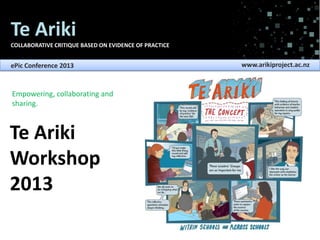
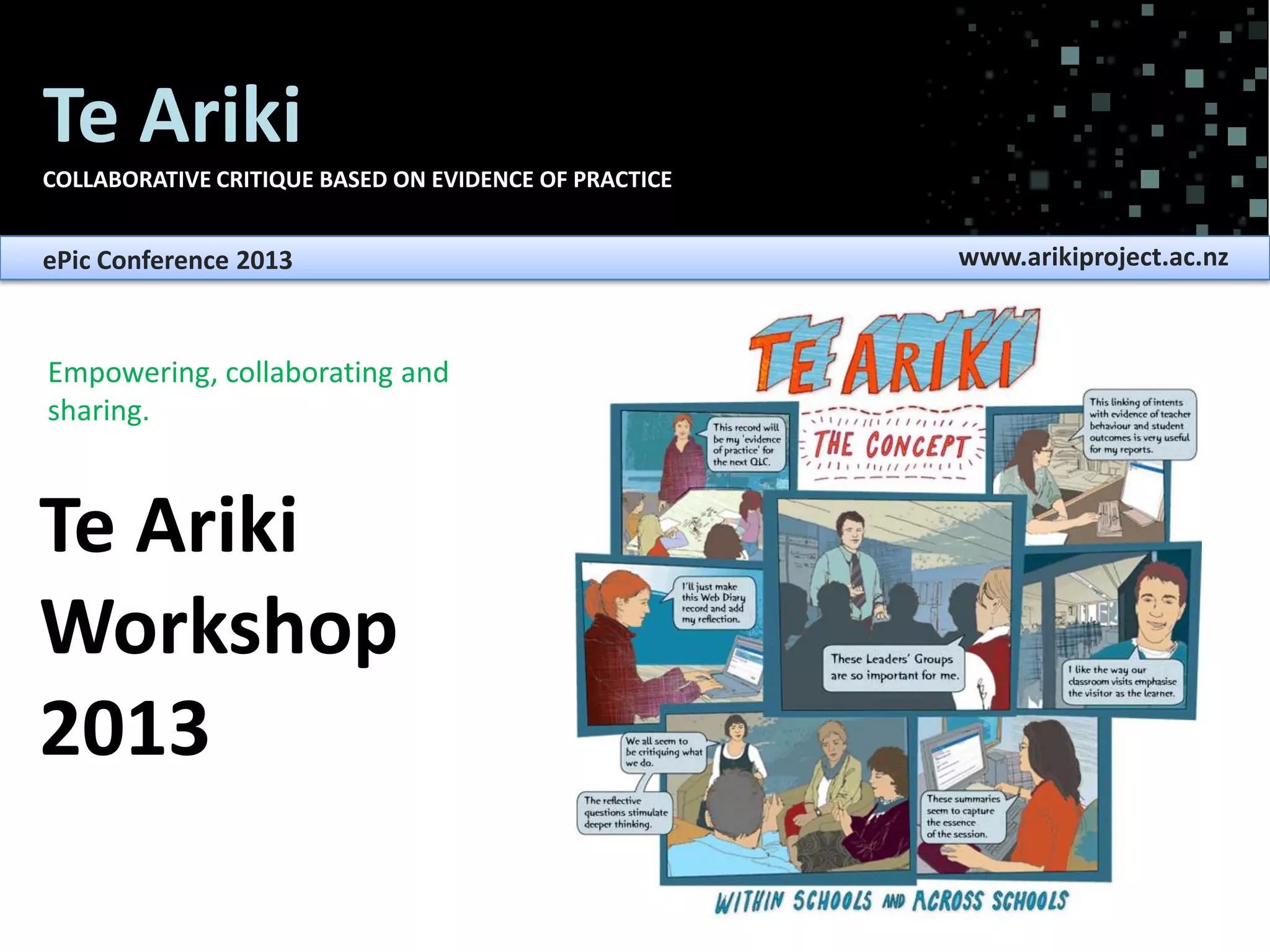
Te Ariki
COLLABORATIVE CRITIQUE BASED ON EVIDENCE OF PRACTICE

ePic Conference 2013

Empowering, collaborating and
sharing.

Te Ariki
Workshop
2013

www.arikiproject.ac.nz
The Ariki Project
COLLABORATIVE CRITIQUE BASED ON EVIDENCE OF PRACTICE

ePic Conference 2013

www.arikiproject.ac.nz

TE ARIKI - History…
• 56 schools - 650 teachers and principals

• Supported by Te Ariki Charitable trust
• Regional director/ group facilitators -current
principals
• Small fee based on size to participate- reduced
cost after first year
The Ariki Project
COLLABORATIVE CRITIQUE BASED ON EVIDENCE OF PRACTICE

ePic Conference 2013

www.arikiproject.ac.nz

TE ARIKI - Values…
• Collegial obligations
• Reflective inquiry and discussion
• Professional discretion
• Evidenced informed professional practice
The Ariki Projectit?
What is
COLLABORATIVE CRITIQUE BASED ON EVIDENCE OF PRACTICE
•

school leadership and school development initiative

•

demonstrates the connection between principal intentions and teacher behaviours and
student outcomes.

•

Processes and protocols offered are based around
– collecting evidence of practice
– exposure to collaborative critique.

(Digital tools and resources are available, on line, and direct facilitation of the project is provided
regionally by practicing principals).
•

It is a stand-alone programme supported by NZPF and NZEI Te Riu Roa for New Zealand's
school leaders:
• who wish to add depth and meaning to teachers’ group meetings;
• who believe that there is more than one way to reach a goal;
• who wish to encourage teachers to talk about what they do and why;
• who wish to demonstrate trust within their leadership practices; and
• who wish to be able to link their intents with teacher behaviour and student outcomes
The Ariki Project
COLLABORATIVE CRITIQUE BASED ON EVIDENCE OF PRACTICE

ePic Conference 2013

www.arikiproject.ac.nz

TE ARIKI - How it works…

• Two groups
- Principals with principals across schools
- Teacher with colleagues in school
• All enter evidence of practice into e portfolio
personal web diary (based on foundation concept map linked to RTC)

• Present to colleagues at an agreed date
The Ariki Project
COLLABORATIVE CRITIQUE BASED ON EVIDENCE OF PRACTICE

ePic Conference 2013

www.arikiproject.ac.nz

TE ARIKI - How it works…

• Using reflective questioning to explore meaning,
lateral links, validity and data
• Opportunity for classroom visits and leaders
inter-school visits
The Ariki Project
COLLABORATIVE CRITIQUE BASED ON EVIDENCE OF PRACTICE

ePic conference 2013

www.arikiproject.ac.nz
The Ariki Project
COLLABORATIVE CRITIQUE BASED ON EVIDENCE OF PRACTICE

ePic Conference 2013

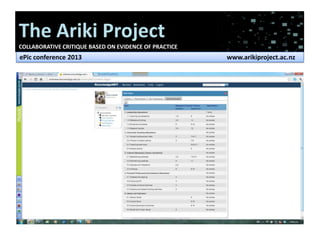
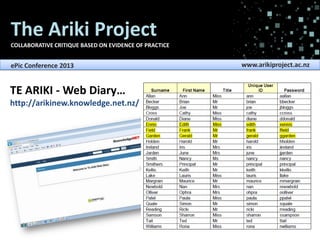
TE ARIKI - Web Diary…
http://arikinew.knowledge.net.nz/

www.arikiproject.ac.nz
The Ariki ProjectPrincipals
Advantages for
COLLABORATIVE CRITIQUE BASED ON EVIDENCE OF PRACTICEADVANTAGES FOR SCHOOL LEADERS
•

This development introduces a rigor and focus which can also be employed when working with the
Kiwi Leadership for Principals initiative.

•

Enable knowledge of current teacher thinking to be enhanced and supported to allow the principal
to know what to do next in setting school wide goals and professional development

•

It makes clear links (tangibly) from their main annual goals (their intent) to a change in teacher
practice to improved outcomes for students.

•

It offers a school wide approach to improving professional judgment around leadership and
teaching practices

•

Direct influence on teaching and learning

•

Principal and teacher appraisals are aligned and inextricably interwoven

•

Builds capacity in staff internally using staff strengths

•

Builds a true learning community
The Ariki Project teachers
Advantages for
COLLABORATIVE CRITIQUE BASED ON EVIDENCE OF PRACTICEADVANTAGES FOR TEACHERS
•

Greater professional collaboration and a sense of worthiness in knowing they are contributing to
principal and other teachers development.

•

Utilisation of internal strengths.

•

Develops respect & collegiality as well as a sense of accountability.

•

It recognises and builds on the richness and complexity of teachers and principals professional
identities

•

It gives whole school PD robustness as the level of dialogue and articulation around teacher
practice is deep and meaningful.

•

Capacity building for all.

•

On going record of their own development and inquiry into teaching

•

Direct link and alignment to school goals and principal intentions.
The Ariki Project
COLLABORATIVE CRITIQUE BASED ON EVIDENCE OF PRACTICE

ePic Conference 2013

TE ARIKI – Contact Details…
www.arikiproject.ac.nz
ariki@nzpf.ac.nz

www.arikiproject.ac.nz

Te Ariki Collaborative - Critique based on Evidence of Practice

  • 1.
    Te Ariki COLLABORATIVE CRITIQUEBASED ON EVIDENCE OF PRACTICE ePic Conference 2013 Empowering, collaborating and sharing. Te Ariki Workshop 2013 www.arikiproject.ac.nz
  • 2.
    The Ariki Project COLLABORATIVECRITIQUE BASED ON EVIDENCE OF PRACTICE ePic Conference 2013 www.arikiproject.ac.nz TE ARIKI - History… • 56 schools - 650 teachers and principals • Supported by Te Ariki Charitable trust • Regional director/ group facilitators -current principals • Small fee based on size to participate- reduced cost after first year
  • 3.
    The Ariki Project COLLABORATIVECRITIQUE BASED ON EVIDENCE OF PRACTICE ePic Conference 2013 www.arikiproject.ac.nz TE ARIKI - Values… • Collegial obligations • Reflective inquiry and discussion • Professional discretion • Evidenced informed professional practice
  • 4.
    The Ariki Projectit? Whatis COLLABORATIVE CRITIQUE BASED ON EVIDENCE OF PRACTICE • school leadership and school development initiative • demonstrates the connection between principal intentions and teacher behaviours and student outcomes. • Processes and protocols offered are based around – collecting evidence of practice – exposure to collaborative critique. (Digital tools and resources are available, on line, and direct facilitation of the project is provided regionally by practicing principals). • It is a stand-alone programme supported by NZPF and NZEI Te Riu Roa for New Zealand's school leaders: • who wish to add depth and meaning to teachers’ group meetings; • who believe that there is more than one way to reach a goal; • who wish to encourage teachers to talk about what they do and why; • who wish to demonstrate trust within their leadership practices; and • who wish to be able to link their intents with teacher behaviour and student outcomes
  • 5.
    The Ariki Project COLLABORATIVECRITIQUE BASED ON EVIDENCE OF PRACTICE ePic Conference 2013 www.arikiproject.ac.nz TE ARIKI - How it works… • Two groups - Principals with principals across schools - Teacher with colleagues in school • All enter evidence of practice into e portfolio personal web diary (based on foundation concept map linked to RTC) • Present to colleagues at an agreed date
  • 6.
    The Ariki Project COLLABORATIVECRITIQUE BASED ON EVIDENCE OF PRACTICE ePic Conference 2013 www.arikiproject.ac.nz TE ARIKI - How it works… • Using reflective questioning to explore meaning, lateral links, validity and data • Opportunity for classroom visits and leaders inter-school visits
  • 7.
    The Ariki Project COLLABORATIVECRITIQUE BASED ON EVIDENCE OF PRACTICE ePic conference 2013 www.arikiproject.ac.nz
  • 8.
    The Ariki Project COLLABORATIVECRITIQUE BASED ON EVIDENCE OF PRACTICE ePic Conference 2013 TE ARIKI - Web Diary… http://arikinew.knowledge.net.nz/ www.arikiproject.ac.nz
  • 9.
    The Ariki ProjectPrincipals Advantagesfor COLLABORATIVE CRITIQUE BASED ON EVIDENCE OF PRACTICEADVANTAGES FOR SCHOOL LEADERS • This development introduces a rigor and focus which can also be employed when working with the Kiwi Leadership for Principals initiative. • Enable knowledge of current teacher thinking to be enhanced and supported to allow the principal to know what to do next in setting school wide goals and professional development • It makes clear links (tangibly) from their main annual goals (their intent) to a change in teacher practice to improved outcomes for students. • It offers a school wide approach to improving professional judgment around leadership and teaching practices • Direct influence on teaching and learning • Principal and teacher appraisals are aligned and inextricably interwoven • Builds capacity in staff internally using staff strengths • Builds a true learning community
  • 10.
    The Ariki Projectteachers Advantages for COLLABORATIVE CRITIQUE BASED ON EVIDENCE OF PRACTICEADVANTAGES FOR TEACHERS • Greater professional collaboration and a sense of worthiness in knowing they are contributing to principal and other teachers development. • Utilisation of internal strengths. • Develops respect & collegiality as well as a sense of accountability. • It recognises and builds on the richness and complexity of teachers and principals professional identities • It gives whole school PD robustness as the level of dialogue and articulation around teacher practice is deep and meaningful. • Capacity building for all. • On going record of their own development and inquiry into teaching • Direct link and alignment to school goals and principal intentions.
  • 11.
    The Ariki Project COLLABORATIVECRITIQUE BASED ON EVIDENCE OF PRACTICE ePic Conference 2013 TE ARIKI – Contact Details… www.arikiproject.ac.nz ariki@nzpf.ac.nz www.arikiproject.ac.nz