Region Cadet Leadership School
2015 MN Leadership Academy
 Public speaking is anytime you have to
speak in public.
 Speaking in public scares Americans
more than going to the dentist, falling, or
death!
 This presentation will give you public
speaking basics.
 While most people fear
public speaking there
are some very simple
ways to get around it…
 Practice
 Practice
 Practice
 By practicing you get
around the reason for
the fear: saying
something stupid or
messing up in front of
people.
 Preparation is key!
 Figure out a thesis for
your paper.
 Write down the structure
for your presentation.
 Introduction, body, and
conclusion.
 Organization is Key
 Read it out loud.
 Edit your writing.
 Read it out loud again.
 Put it into your
presentation.
 Practice again.
 Know your topic
 Know your audience
 Find a hook
 Be yourself
 Stay on point
 Keep Attention
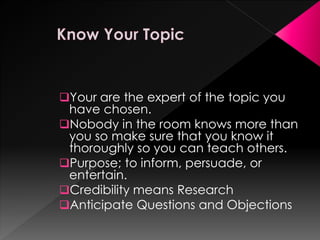
Your are the expert of the topic you
have chosen.
Nobody in the room knows more than
you so make sure that you know it
thoroughly so you can teach others.
Purpose; to inform, persuade, or
entertain.
Credibility means Research
Anticipate Questions and Objections
What are they interested
in?
What would they like to
hear about your topic?
What is their experience
level?
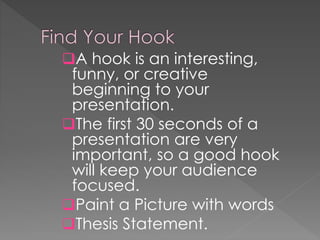
A hook is an interesting,
funny, or creative
beginning to your
presentation.
The first 30 seconds of a
presentation are very
important, so a good hook
will keep your audience
focused.
Paint a Picture with words
Thesis Statement.
If you try to do what your
friends would do, you will
mess up. Just be yourself and
you will feel the most
comfortable!
Make Sense
 Do not discuss topics that are not important to your
presentation. They will distract your audience and
you will lose your focus.
 Use clear and specific language
 Do not repeat yourself. Repeating a point more
than a few times sounds as if you do not have
anything else to say. So avoid repetition.
•Project a calm,
confident tone while
speaking.
•You are the expert on
the topic, so you have
nothing to worry about!
•Audience members
can tell when you are
nervous or do not know
what you are talking
about.
•Confidence can be
gained through good
preparation and
effective practicing.
 Attitude is everything!
 Preparation is key
 Confidence comes with practice
 Refer to sources correctly
 You will need to have outside sources for your
information in the presentation. Make sure to know
how to pronounce names and the author’s main
idea correctly.
 First 30 seconds are the most important!
 This is the hook.
 If you have a creative, witty, or interesting
introduction, you can hold the audience’s attention
for the rest of the presentation.
 Strong conclusion
 Just like the introduction, have a strong message the
audience can take away from your presentation.
 Avoid just repeating your introduction and your thesis
statement.
 Action statements make good conclusions.
PublicSpeaking
PublicSpeaking

PublicSpeaking

  • 1.
    Region Cadet LeadershipSchool 2015 MN Leadership Academy
  • 3.
     Public speakingis anytime you have to speak in public.  Speaking in public scares Americans more than going to the dentist, falling, or death!  This presentation will give you public speaking basics.
  • 4.
     While mostpeople fear public speaking there are some very simple ways to get around it…  Practice  Practice  Practice  By practicing you get around the reason for the fear: saying something stupid or messing up in front of people.
  • 5.
     Preparation iskey!  Figure out a thesis for your paper.  Write down the structure for your presentation.  Introduction, body, and conclusion.  Organization is Key  Read it out loud.  Edit your writing.  Read it out loud again.  Put it into your presentation.  Practice again.
  • 6.
     Know yourtopic  Know your audience  Find a hook  Be yourself  Stay on point  Keep Attention
  • 7.
    Your are theexpert of the topic you have chosen. Nobody in the room knows more than you so make sure that you know it thoroughly so you can teach others. Purpose; to inform, persuade, or entertain. Credibility means Research Anticipate Questions and Objections
  • 8.
    What are theyinterested in? What would they like to hear about your topic? What is their experience level?
  • 9.
    A hook isan interesting, funny, or creative beginning to your presentation. The first 30 seconds of a presentation are very important, so a good hook will keep your audience focused. Paint a Picture with words Thesis Statement.
  • 10.
    If you tryto do what your friends would do, you will mess up. Just be yourself and you will feel the most comfortable! Make Sense
  • 11.
     Do notdiscuss topics that are not important to your presentation. They will distract your audience and you will lose your focus.  Use clear and specific language
  • 12.
     Do notrepeat yourself. Repeating a point more than a few times sounds as if you do not have anything else to say. So avoid repetition.
  • 15.
    •Project a calm, confidenttone while speaking. •You are the expert on the topic, so you have nothing to worry about! •Audience members can tell when you are nervous or do not know what you are talking about. •Confidence can be gained through good preparation and effective practicing.
  • 16.
     Attitude iseverything!  Preparation is key  Confidence comes with practice  Refer to sources correctly  You will need to have outside sources for your information in the presentation. Make sure to know how to pronounce names and the author’s main idea correctly.  First 30 seconds are the most important!  This is the hook.  If you have a creative, witty, or interesting introduction, you can hold the audience’s attention for the rest of the presentation.  Strong conclusion  Just like the introduction, have a strong message the audience can take away from your presentation.  Avoid just repeating your introduction and your thesis statement.  Action statements make good conclusions.