Introduction to Public
Health Administration
in India
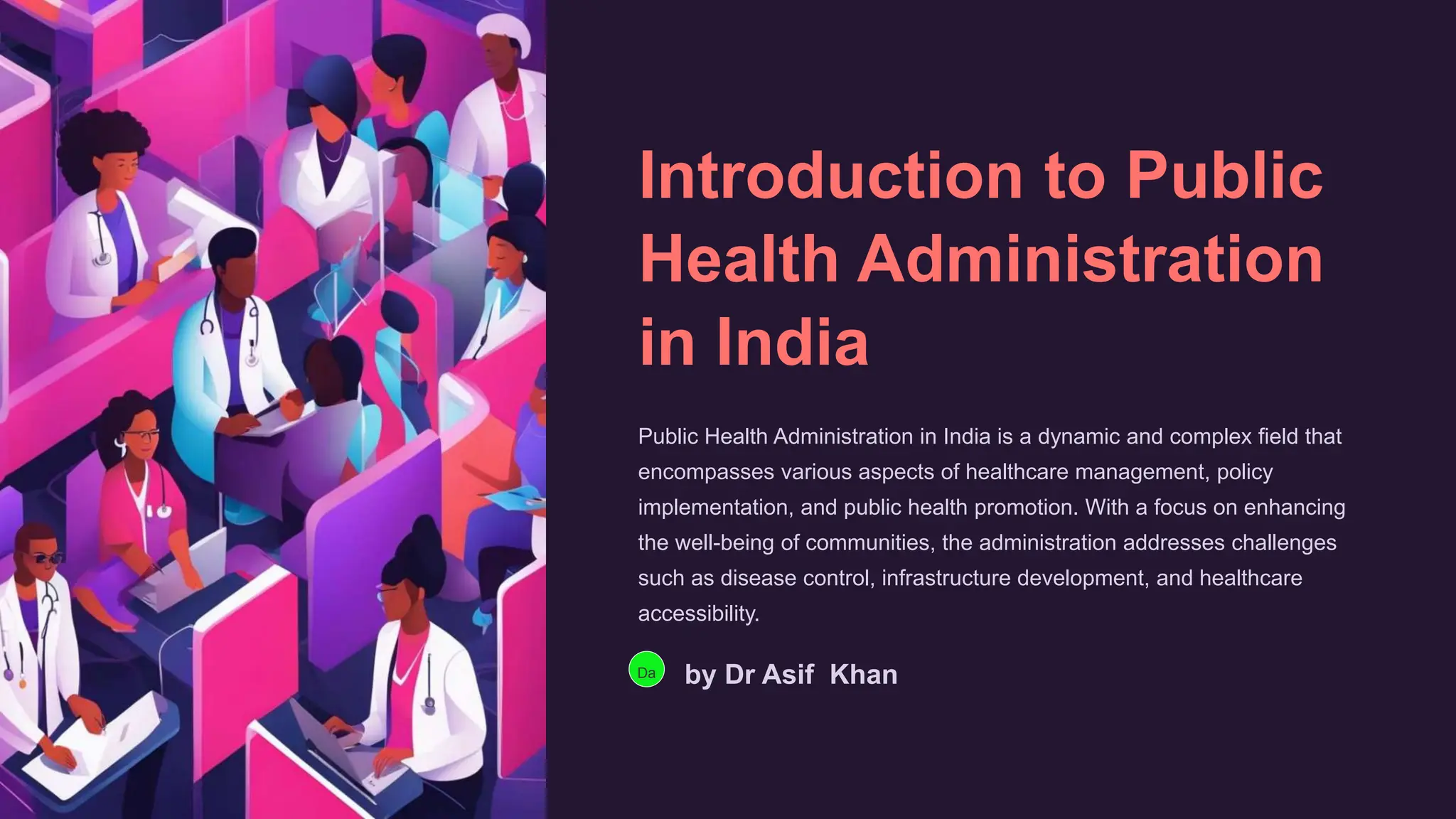
Public Health Administration in India is a dynamic and complex field that
encompasses various aspects of healthcare management, policy
implementation, and public health promotion. With a focus on enhancing
the well-being of communities, the administration addresses challenges
such as disease control, infrastructure development, and healthcare
accessibility.
Da by Dr Asif Khan
Public Health Challenges in
India
• Infectious Diseases: High prevalence of infectious diseases like
tuberculosis, malaria, and dengue
• Malnutrition: Pervasive malnutrition among children and adults,
leading to stunted growth and other health issues
• Access to Healthcare: Limited access to healthcare services,
especially in rural areas, resulting in inadequate treatment
Government Initiatives and Policies
1
National Health Policy
The government's framework for better
public healthcare and disease
prevention. 2 Swachh Bharat Abhiyan
A nationwide campaign to improve
sanitation and cleanliness for public
health.
3
Ayushman Bharat
An initiative to provide affordable
healthcare and insurance coverage for
the population.
Healthcare Infrastructure and
Resources
India's healthcare infrastructure encompasses a
network of hospitals, clinics, and medical
facilities across urban and rural areas. The
resources include advanced medical technology,
well-equipped laboratories, and skilled
healthcare professionals.
Moreover, the government is focused on
developing telemedicine and mobile health units
to reach remote communities, ensuring equitable
access to healthcare services.
Disease Prevention and Control
Programs
Immunization Campaigns
Nationwide programs targeting various age
groups to enhance immunity against
preventable diseases.
Sanitation and Hygiene Promotion
Initiatives promoting clean water, proper
waste disposal, and hygiene practices to
prevent spread of infectious diseases.
Epidemic Surveillance and
Response
Monitoring, early detection, and rapid
response to outbreaks of diseases to
prevent widespread transmission.
Education and Awareness
Campaigns
Public awareness programs to educate
communities about disease prevention
measures and healthy practices.
Maternal and Child Health
Services
Maternal and child health services in India prioritize creating a warm and
caring atmosphere. Natural light fills the clinics, creating a soothing
environment. Comprehensive care is provided to ensure the well-being of
both mothers and children.
Communicable and Non-
Communicable Disease Management
Public Health Approach
Addressing infectious diseases like malaria,
tuberculosis, and HIV through preventive
measures and treatment programs.
Implementing vaccination campaigns and
promoting hygiene to reduce the spread of
communicable diseases.
Non-Communicable Disease Control
Focusing on lifestyle-related diseases such as
diabetes, cardiovascular diseases, and cancer
through awareness and lifestyle modification
programs.
Promoting healthy habits and regular check-ups
to prevent and manage non-communicable
diseases.
Public Health Education and Awareness
Community Engagement
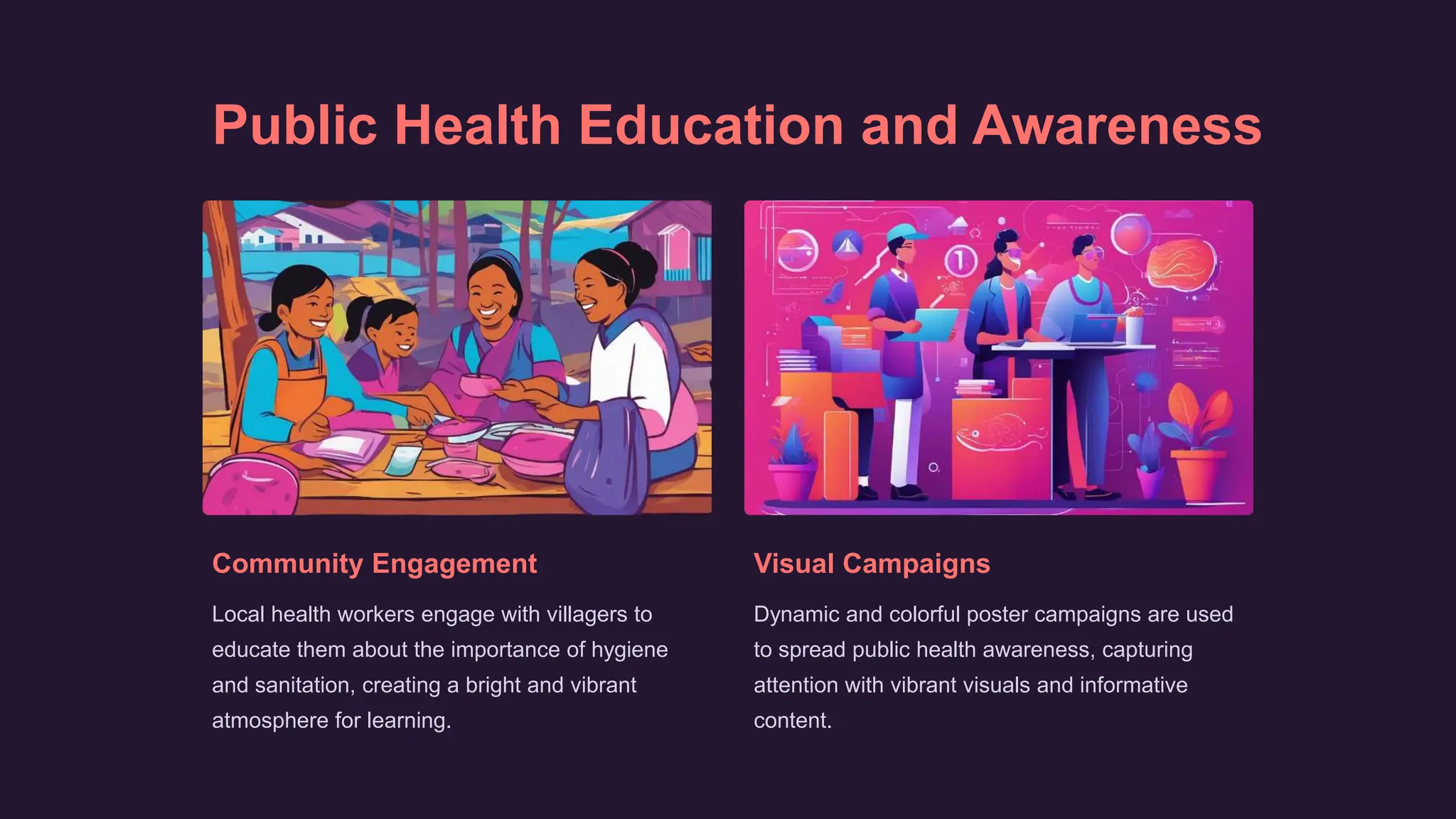
Local health workers engage with villagers to
educate them about the importance of hygiene
and sanitation, creating a bright and vibrant
atmosphere for learning.
Visual Campaigns
Dynamic and colorful poster campaigns are used
to spread public health awareness, capturing
attention with vibrant visuals and informative
content.
Role of NGOs and International
Organizations
Charitable Work
NGOs and international
organizations contribute to
charitable efforts, offering
support to underprivileged
communities.
Global Collaboration
Collaboration with international
organizations facilitates the
global impact of public health
initiatives.
Partnerships
Forming partnerships with
NGOs enhances the reach and
effectiveness of public health
programs.
Future of Public Health Administration
in India
1
Technology Integration
Incorporating digital solutions for efficient healthcare management
2
Community Empowerment
Engaging local communities for sustainable health outcomes
3
Policy Innovation
Continuous adaptation to evolving public health
needs
4
Collaborative Partnerships
Working with global, national, and local
organizations for shared impact

Public-Health-Administration-in-India.pptx

  • 1.
    Introduction to Public HealthAdministration in India Public Health Administration in India is a dynamic and complex field that encompasses various aspects of healthcare management, policy implementation, and public health promotion. With a focus on enhancing the well-being of communities, the administration addresses challenges such as disease control, infrastructure development, and healthcare accessibility. Da by Dr Asif Khan
  • 2.
    Public Health Challengesin India • Infectious Diseases: High prevalence of infectious diseases like tuberculosis, malaria, and dengue • Malnutrition: Pervasive malnutrition among children and adults, leading to stunted growth and other health issues • Access to Healthcare: Limited access to healthcare services, especially in rural areas, resulting in inadequate treatment
  • 3.
    Government Initiatives andPolicies 1 National Health Policy The government's framework for better public healthcare and disease prevention. 2 Swachh Bharat Abhiyan A nationwide campaign to improve sanitation and cleanliness for public health. 3 Ayushman Bharat An initiative to provide affordable healthcare and insurance coverage for the population.
  • 4.
    Healthcare Infrastructure and Resources India'shealthcare infrastructure encompasses a network of hospitals, clinics, and medical facilities across urban and rural areas. The resources include advanced medical technology, well-equipped laboratories, and skilled healthcare professionals. Moreover, the government is focused on developing telemedicine and mobile health units to reach remote communities, ensuring equitable access to healthcare services.
  • 5.
    Disease Prevention andControl Programs Immunization Campaigns Nationwide programs targeting various age groups to enhance immunity against preventable diseases. Sanitation and Hygiene Promotion Initiatives promoting clean water, proper waste disposal, and hygiene practices to prevent spread of infectious diseases. Epidemic Surveillance and Response Monitoring, early detection, and rapid response to outbreaks of diseases to prevent widespread transmission. Education and Awareness Campaigns Public awareness programs to educate communities about disease prevention measures and healthy practices.
  • 6.
    Maternal and ChildHealth Services Maternal and child health services in India prioritize creating a warm and caring atmosphere. Natural light fills the clinics, creating a soothing environment. Comprehensive care is provided to ensure the well-being of both mothers and children.
  • 7.
    Communicable and Non- CommunicableDisease Management Public Health Approach Addressing infectious diseases like malaria, tuberculosis, and HIV through preventive measures and treatment programs. Implementing vaccination campaigns and promoting hygiene to reduce the spread of communicable diseases. Non-Communicable Disease Control Focusing on lifestyle-related diseases such as diabetes, cardiovascular diseases, and cancer through awareness and lifestyle modification programs. Promoting healthy habits and regular check-ups to prevent and manage non-communicable diseases.
  • 8.
    Public Health Educationand Awareness Community Engagement Local health workers engage with villagers to educate them about the importance of hygiene and sanitation, creating a bright and vibrant atmosphere for learning. Visual Campaigns Dynamic and colorful poster campaigns are used to spread public health awareness, capturing attention with vibrant visuals and informative content.
  • 9.
    Role of NGOsand International Organizations Charitable Work NGOs and international organizations contribute to charitable efforts, offering support to underprivileged communities. Global Collaboration Collaboration with international organizations facilitates the global impact of public health initiatives. Partnerships Forming partnerships with NGOs enhances the reach and effectiveness of public health programs.
  • 10.
    Future of PublicHealth Administration in India 1 Technology Integration Incorporating digital solutions for efficient healthcare management 2 Community Empowerment Engaging local communities for sustainable health outcomes 3 Policy Innovation Continuous adaptation to evolving public health needs 4 Collaborative Partnerships Working with global, national, and local organizations for shared impact