Binhammer Social Business
Social Business & Communications Consulting
Communications:
Innovation
Adoption
Disruption
& the Dreaded “S”
Curve
Spin Sucks Webinar, July 7, 2014
2Binhammer Social Business
Social Business & Communications Consulting
Business
Stakeholders
=
Legitimacy
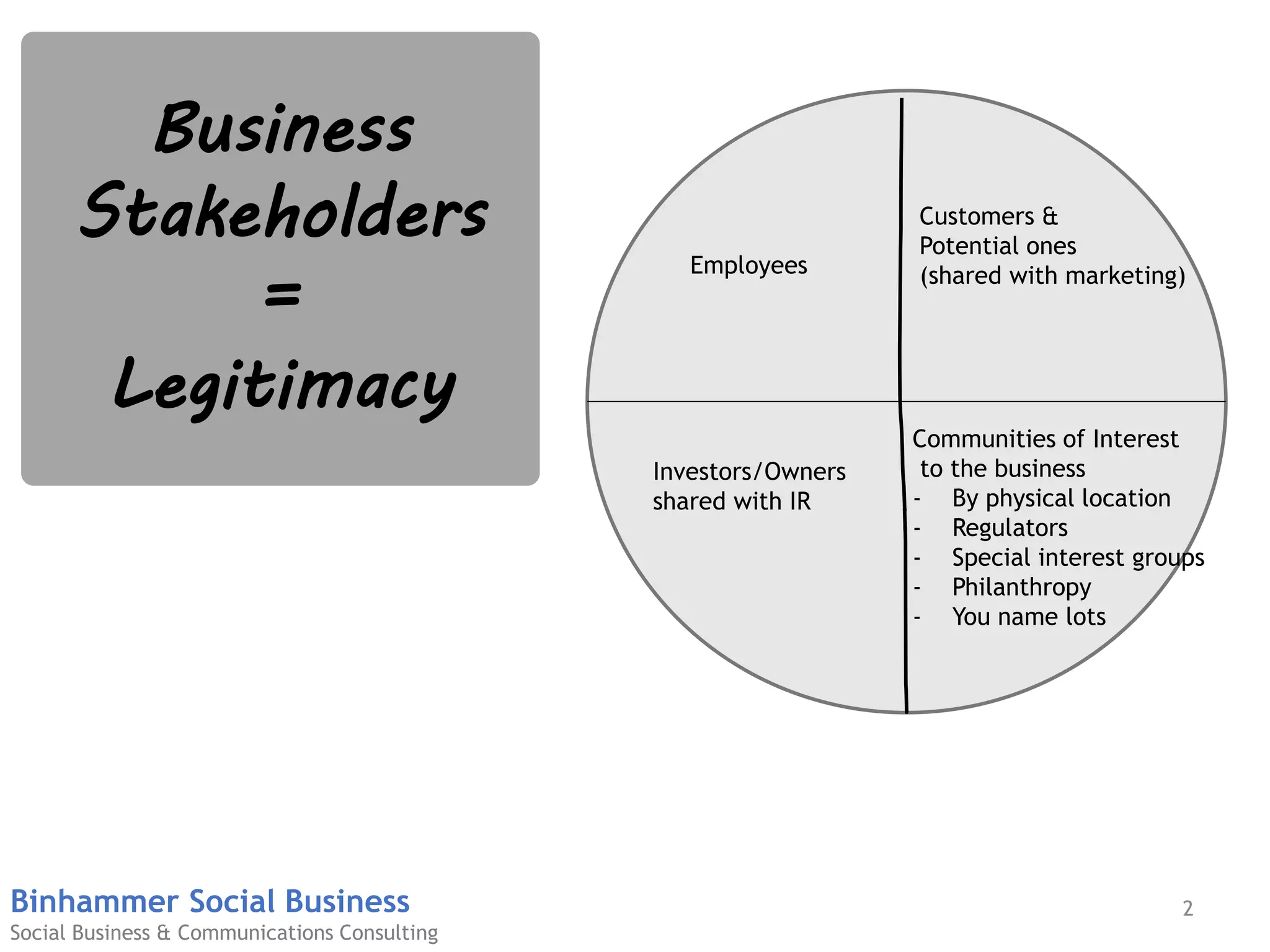
Employees
Customers &
Potential ones
(shared with marketing)
Investors/Owners
shared with IR
Communities of Interest
to the business
- By physical location
- Regulators
- Special interest groups
- Philanthropy
- You name lots
Binhammer Social Business
Social Business & Communications Consulting
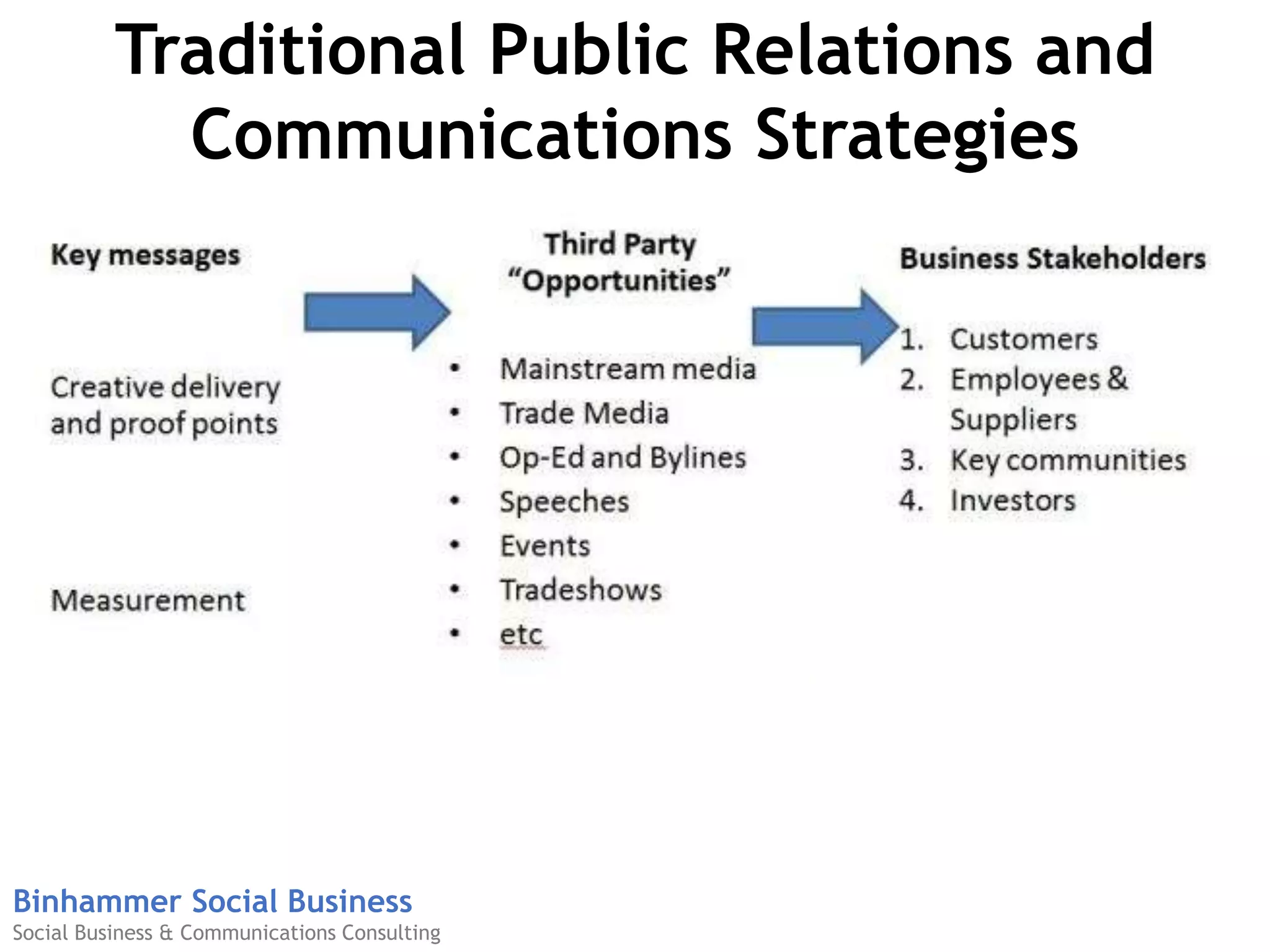
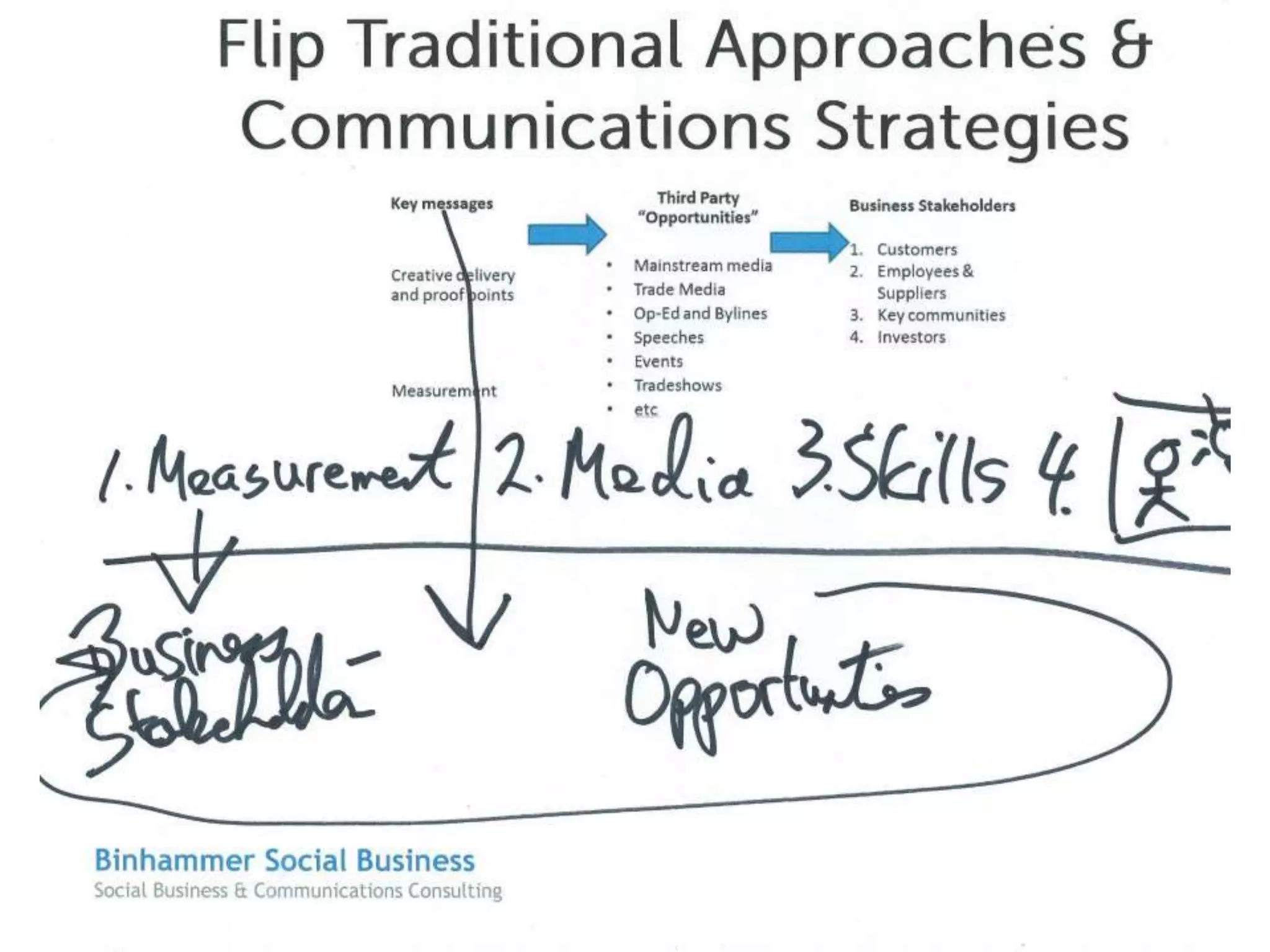
Traditional Public Relations and
Communications Strategies
4Binhammer Social Business
Social Business & Communications Consulting
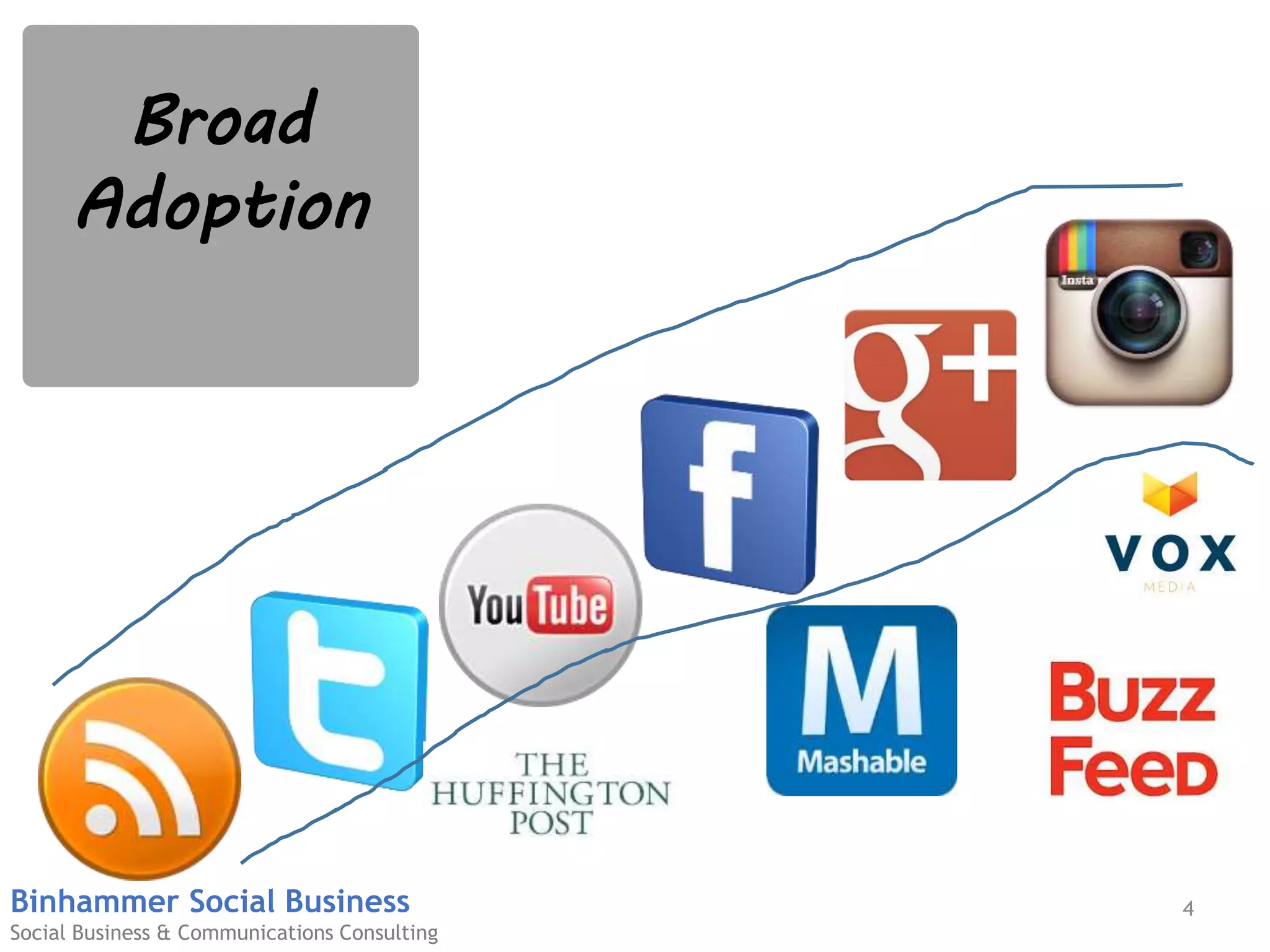
Broad
Adoption
5Binhammer Social Business
Social Business & Communications Consulting
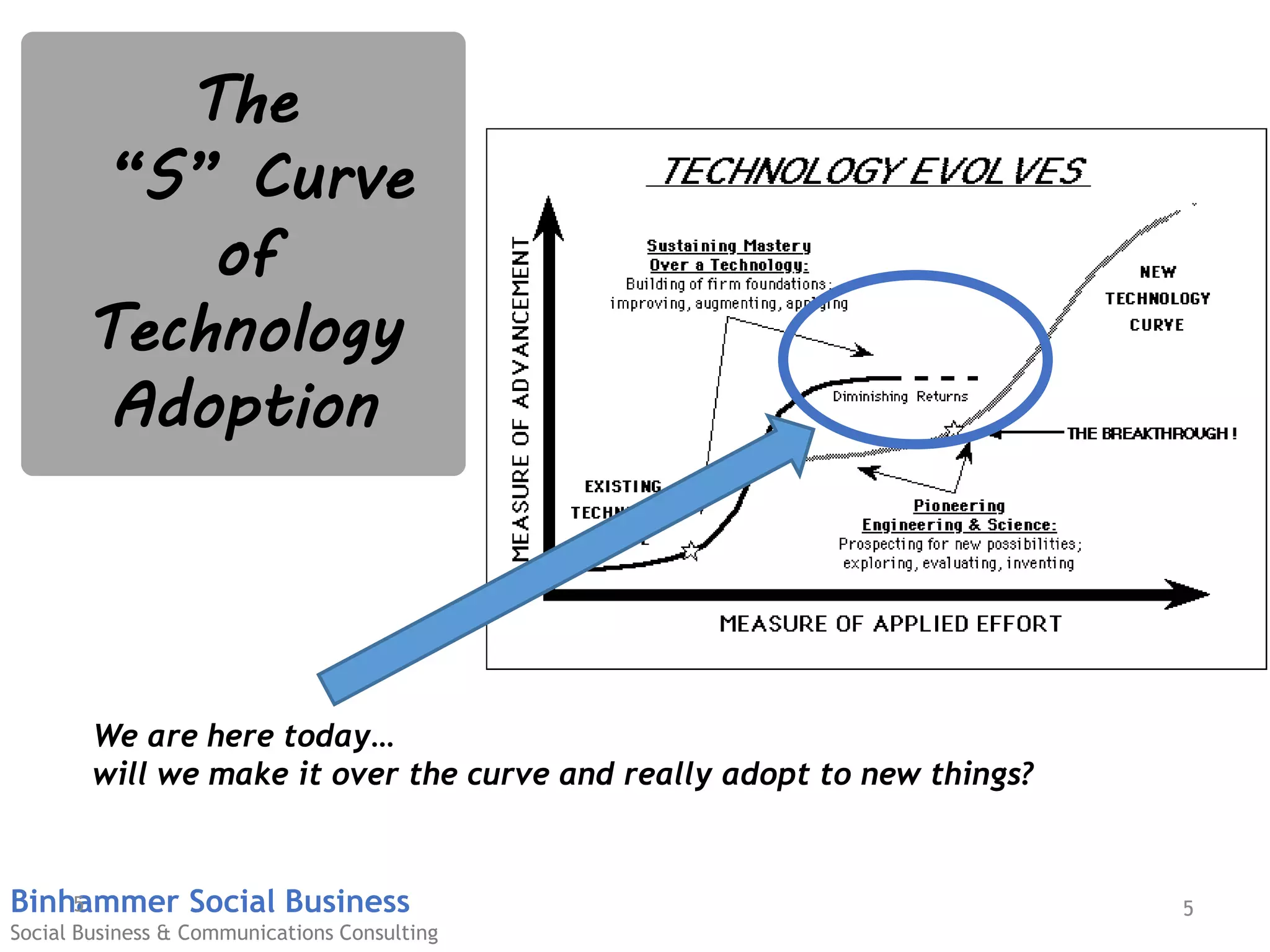
The
“S” Curve
of
Technology
Adoption
5
We are here today…
will we make it over the curve and really adopt to new things?
6Binhammer Social Business
Social Business & Communications Consulting
Four
Factors
Forcing
More
10Binhammer Social Business
Social Business & Communications Consulting
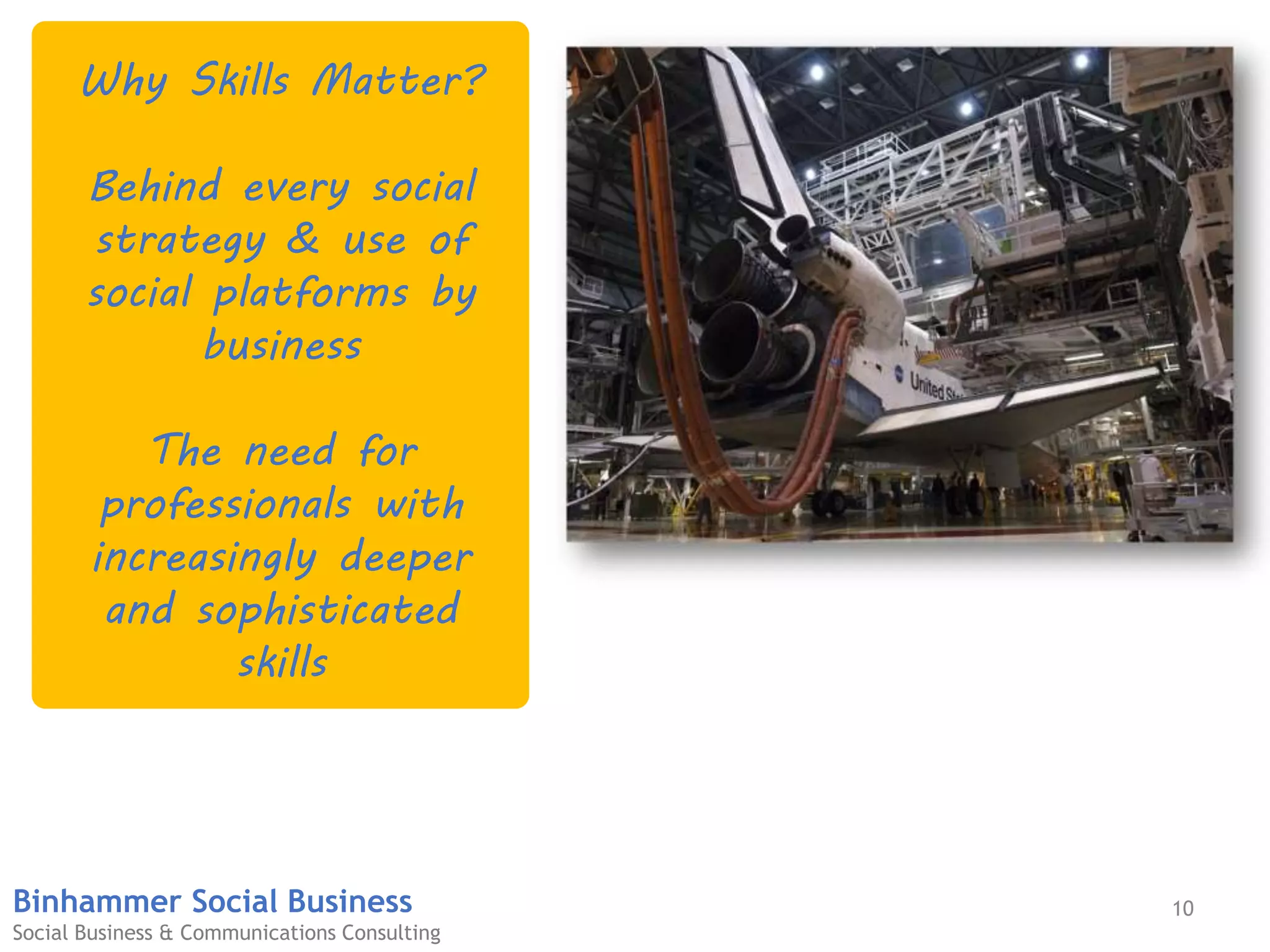
Why Skills Matter?
Behind every social
strategy & use of
social platforms by
business
The need for
professionals with
increasingly deeper
and sophisticated
skills
Binhammer Social Business
Social Business & Communications Consulting
Rapid Change & Adoption: Pressure Points
On Skills, Impacting Business and Success
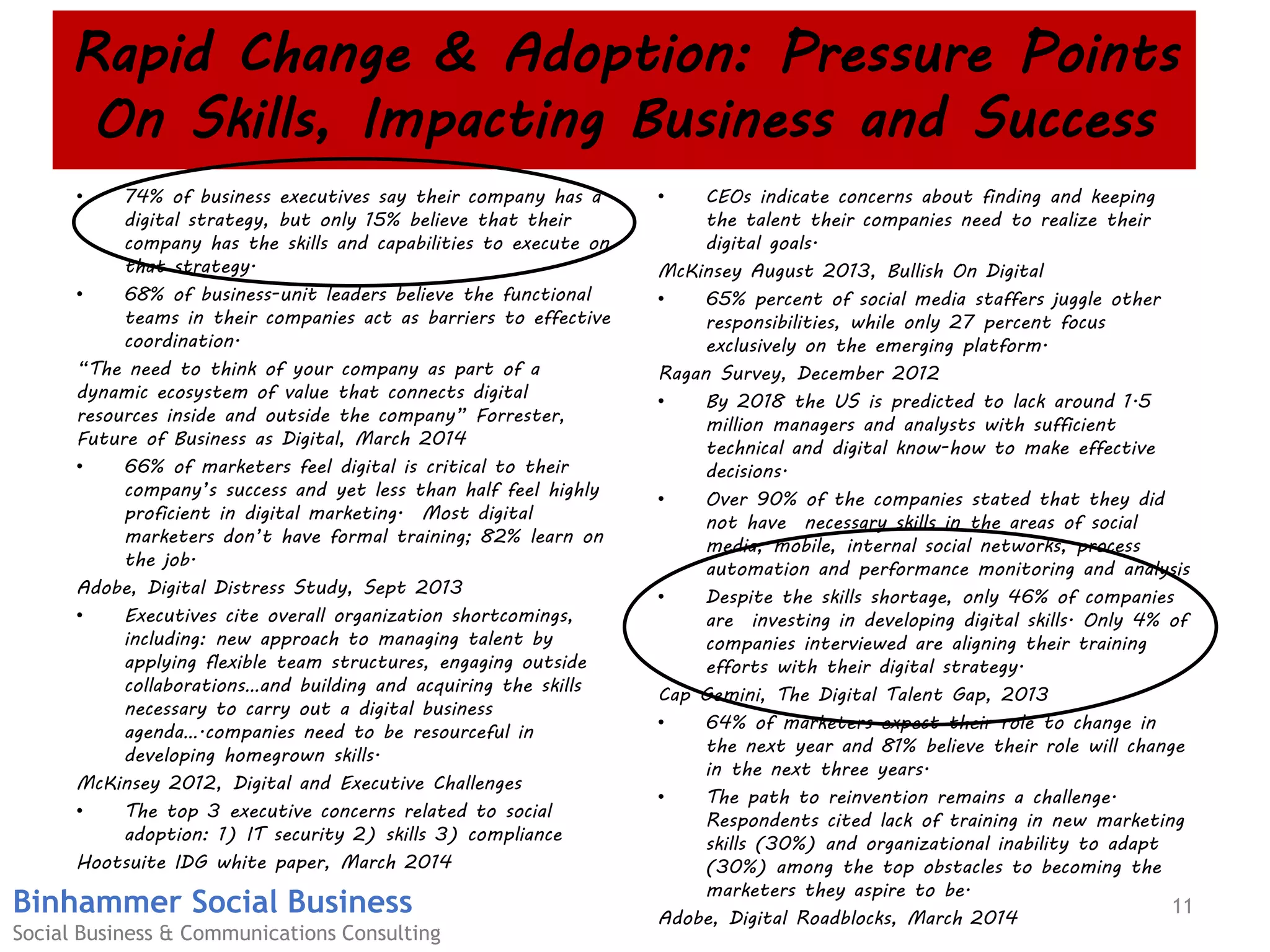
• 74% of business executives say their company has a
digital strategy, but only 15% believe that their
company has the skills and capabilities to execute on
that strategy.
• 68% of business-unit leaders believe the functional
teams in their companies act as barriers to effective
coordination.
“The need to think of your company as part of a
dynamic ecosystem of value that connects digital
resources inside and outside the company” Forrester,
Future of Business as Digital, March 2014
• 66% of marketers feel digital is critical to their
company’s success and yet less than half feel highly
proficient in digital marketing. Most digital
marketers don’t have formal training; 82% learn on
the job.
Adobe, Digital Distress Study, Sept 2013
• Executives cite overall organization shortcomings,
including: new approach to managing talent by
applying flexible team structures, engaging outside
collaborations…and building and acquiring the skills
necessary to carry out a digital business
agenda….companies need to be resourceful in
developing homegrown skills.
McKinsey 2012, Digital and Executive Challenges
• The top 3 executive concerns related to social
adoption: 1) IT security 2) skills 3) compliance
Hootsuite IDG white paper, March 2014
• CEOs indicate concerns about finding and keeping
the talent their companies need to realize their
digital goals.
McKinsey August 2013, Bullish On Digital
• 65% percent of social media staffers juggle other
responsibilities, while only 27 percent focus
exclusively on the emerging platform.
Ragan Survey, December 2012
• By 2018 the US is predicted to lack around 1.5
million managers and analysts with sufficient
technical and digital know-how to make effective
decisions.
• Over 90% of the companies stated that they did
not have necessary skills in the areas of social
media, mobile, internal social networks, process
automation and performance monitoring and analysis
• Despite the skills shortage, only 46% of companies
are investing in developing digital skills. Only 4% of
companies interviewed are aligning their training
efforts with their digital strategy.
Cap Gemini, The Digital Talent Gap, 2013
• 64% of marketers expect their role to change in
the next year and 81% believe their role will change
in the next three years.
• The path to reinvention remains a challenge.
Respondents cited lack of training in new marketing
skills (30%) and organizational inability to adapt
(30%) among the top obstacles to becoming the
marketers they aspire to be.
Adobe, Digital Roadblocks, March 2014
11
12Binhammer Social Business
Social Business & Communications Consulting
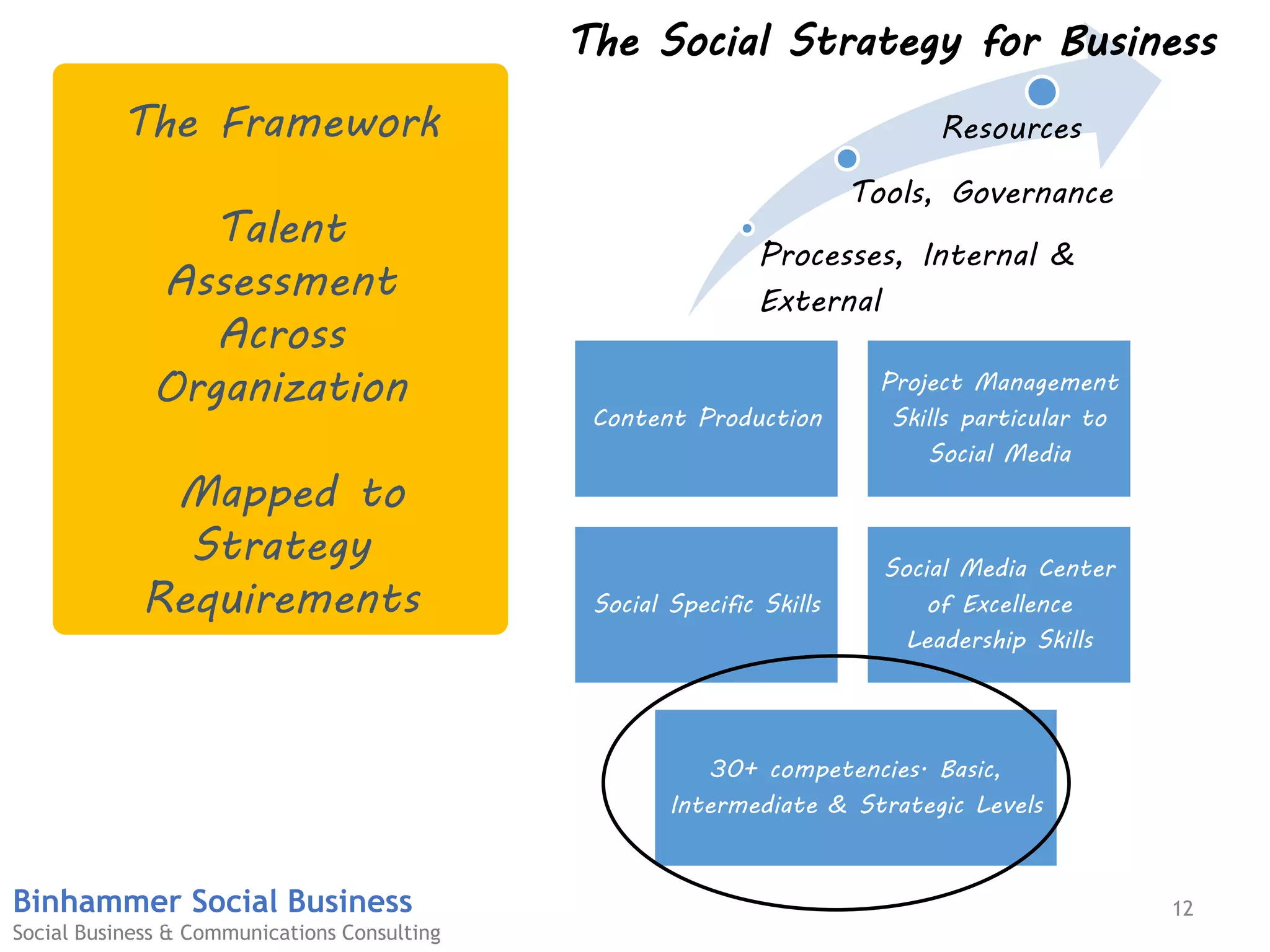
The Framework
Talent
Assessment
Across
Organization
Mapped to
Strategy
Requirements
Content Production
Project Management
Skills particular to
Social Media
Social Specific Skills
Social Media Center
of Excellence
Leadership Skills
30+ competencies. Basic,
Intermediate & Strategic Levels
Processes, Internal &
External
Tools, Governance
Resources
The Social Strategy for Business
13Binhammer Social Business
Social Business & Communications Consulting
How it Works
Focused on social
skills across
business
departments
Integration of
social skills into
various business
functions
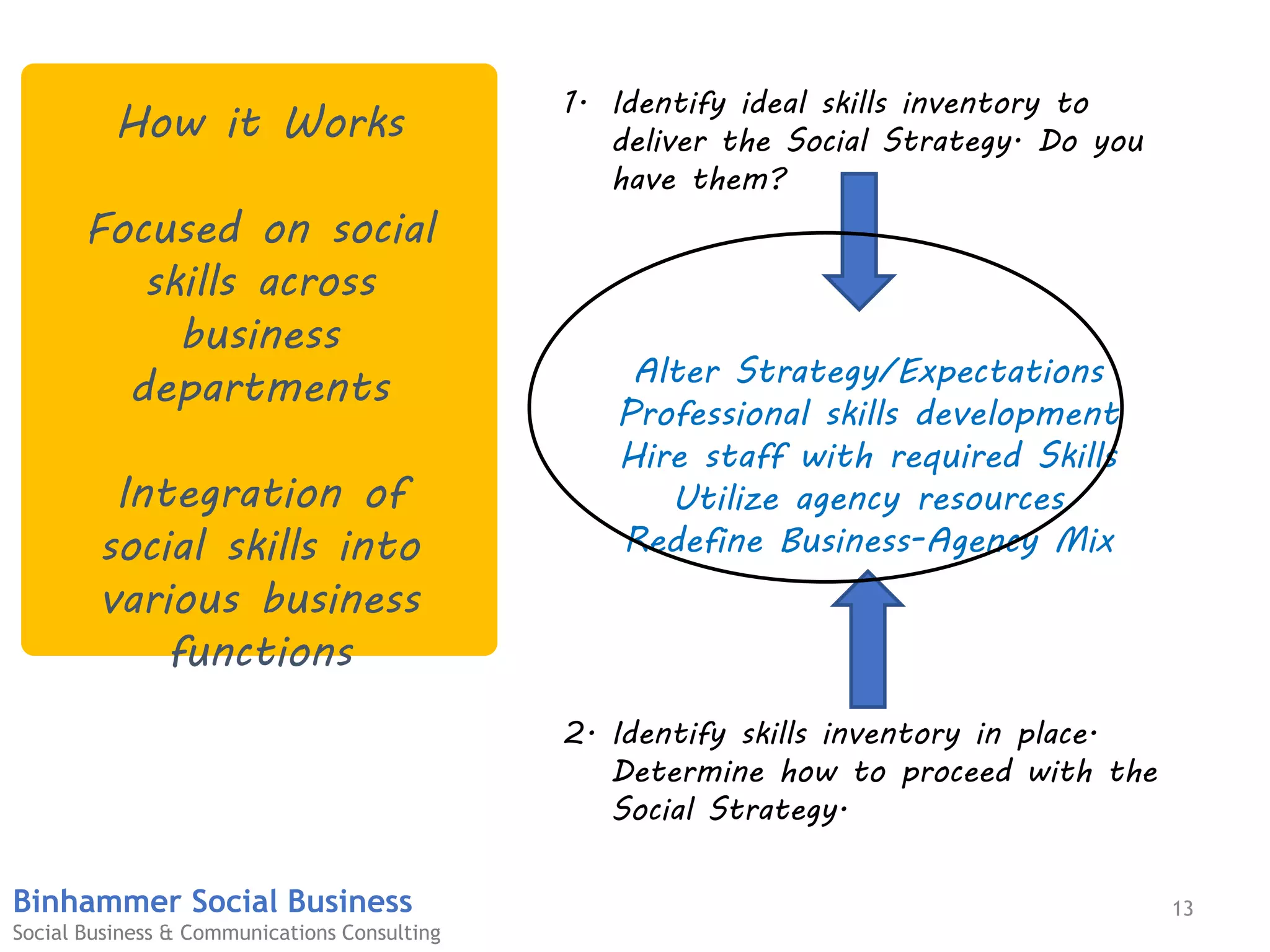
1. Identify ideal skills inventory to
deliver the Social Strategy. Do you
have them?
Alter Strategy/Expectations
Professional skills development
Hire staff with required Skills
Utilize agency resources
Redefine Business-Agency Mix
2. Identify skills inventory in place.
Determine how to proceed with the
Social Strategy.
14Binhammer Social Business
Social Business & Communications Consulting
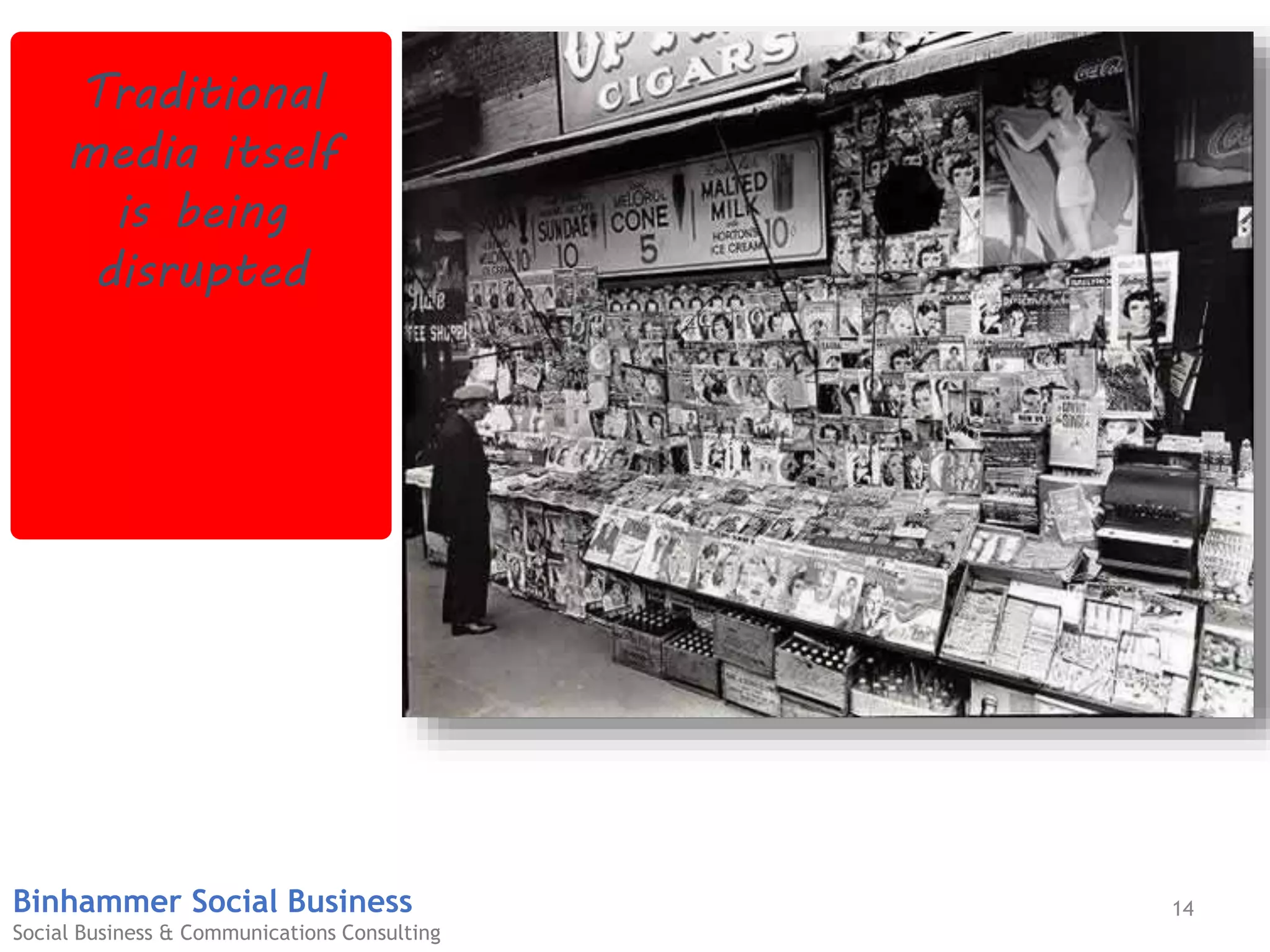
Traditional
media itself
is being
disrupted
15Binhammer Social Business
Social Business & Communications Consulting
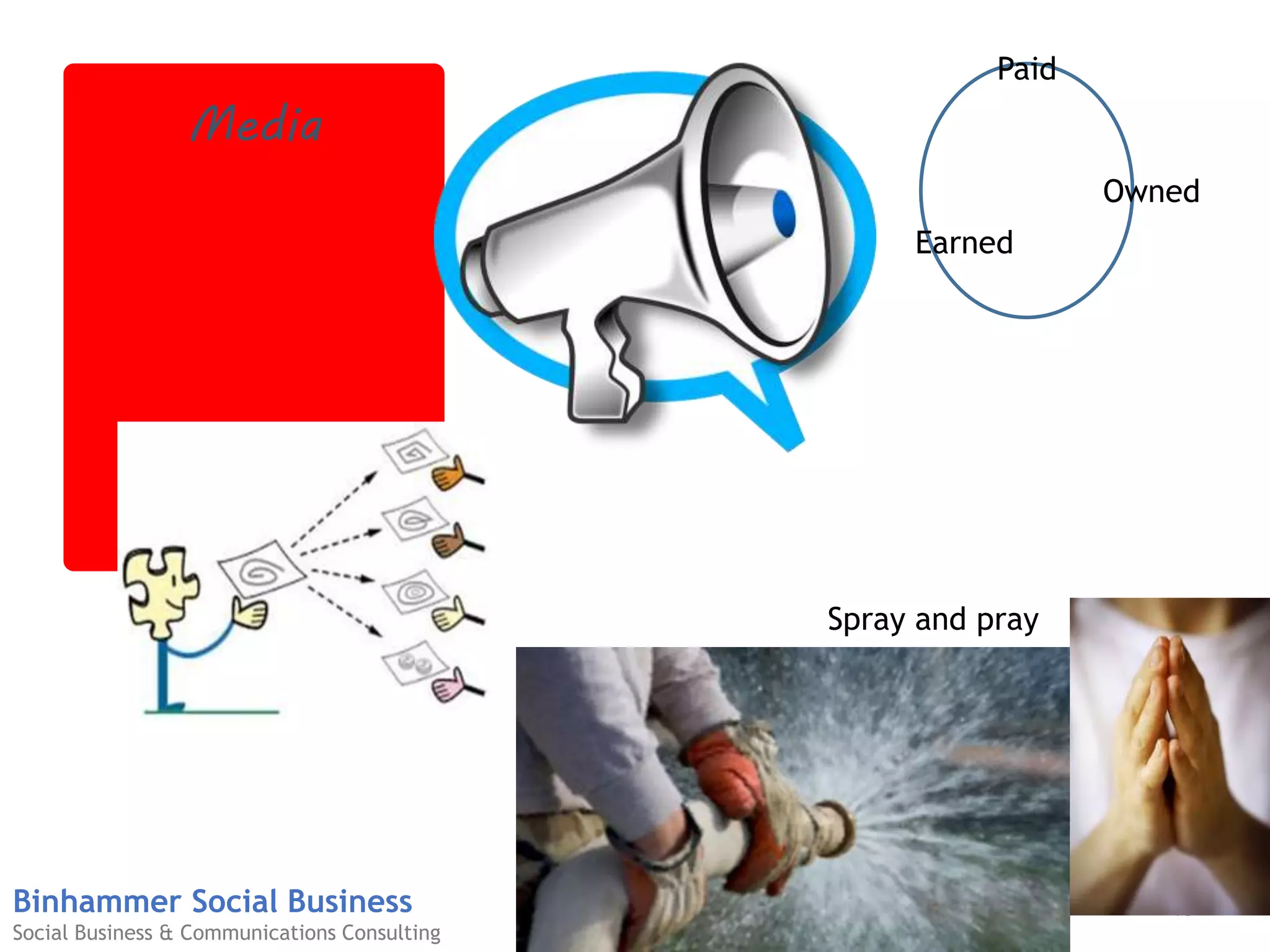
Media
Paid
Owned
Earned
Spray and pray
16Binhammer Social Business
Social Business & Communications Consulting
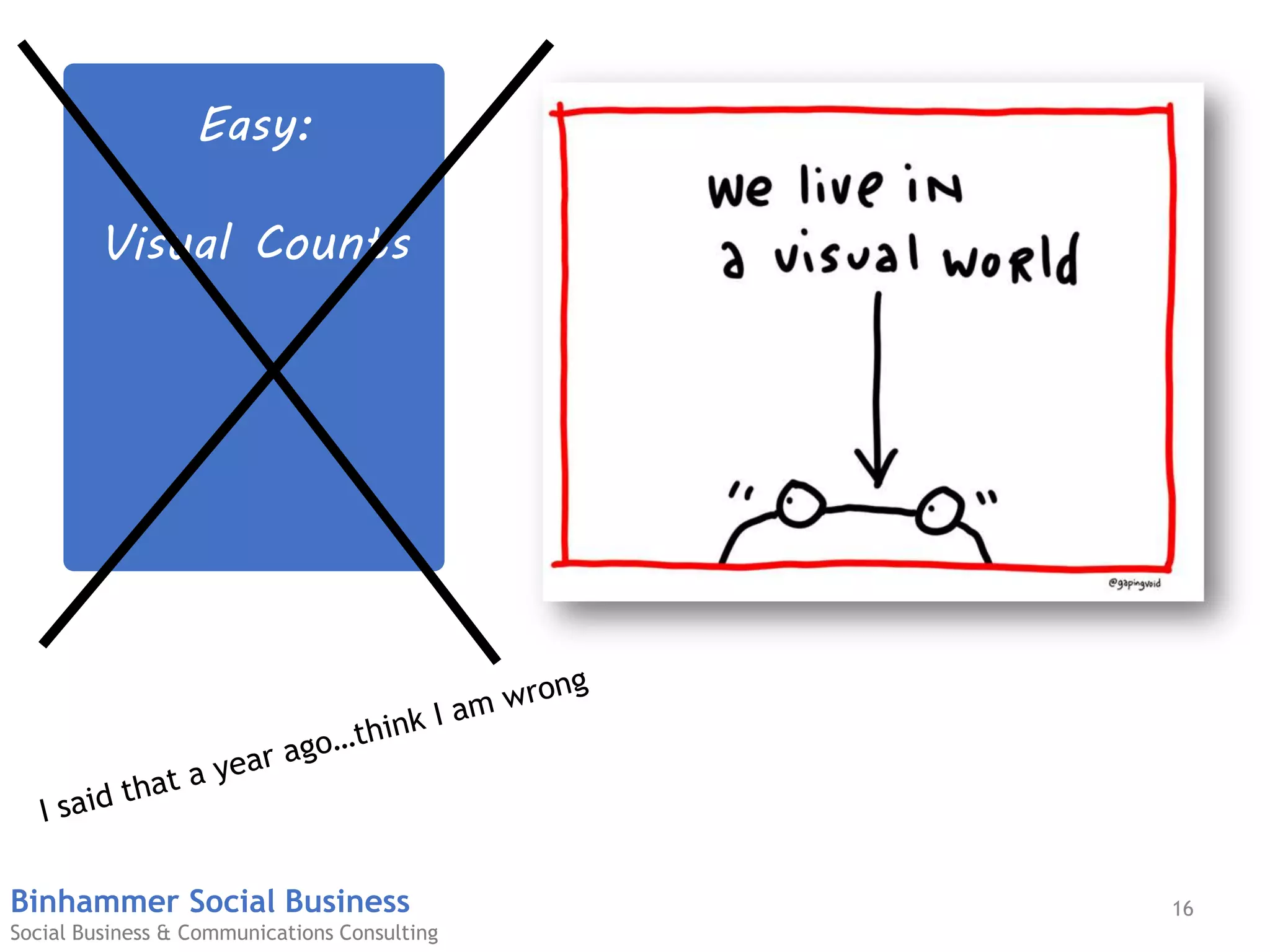
Easy:
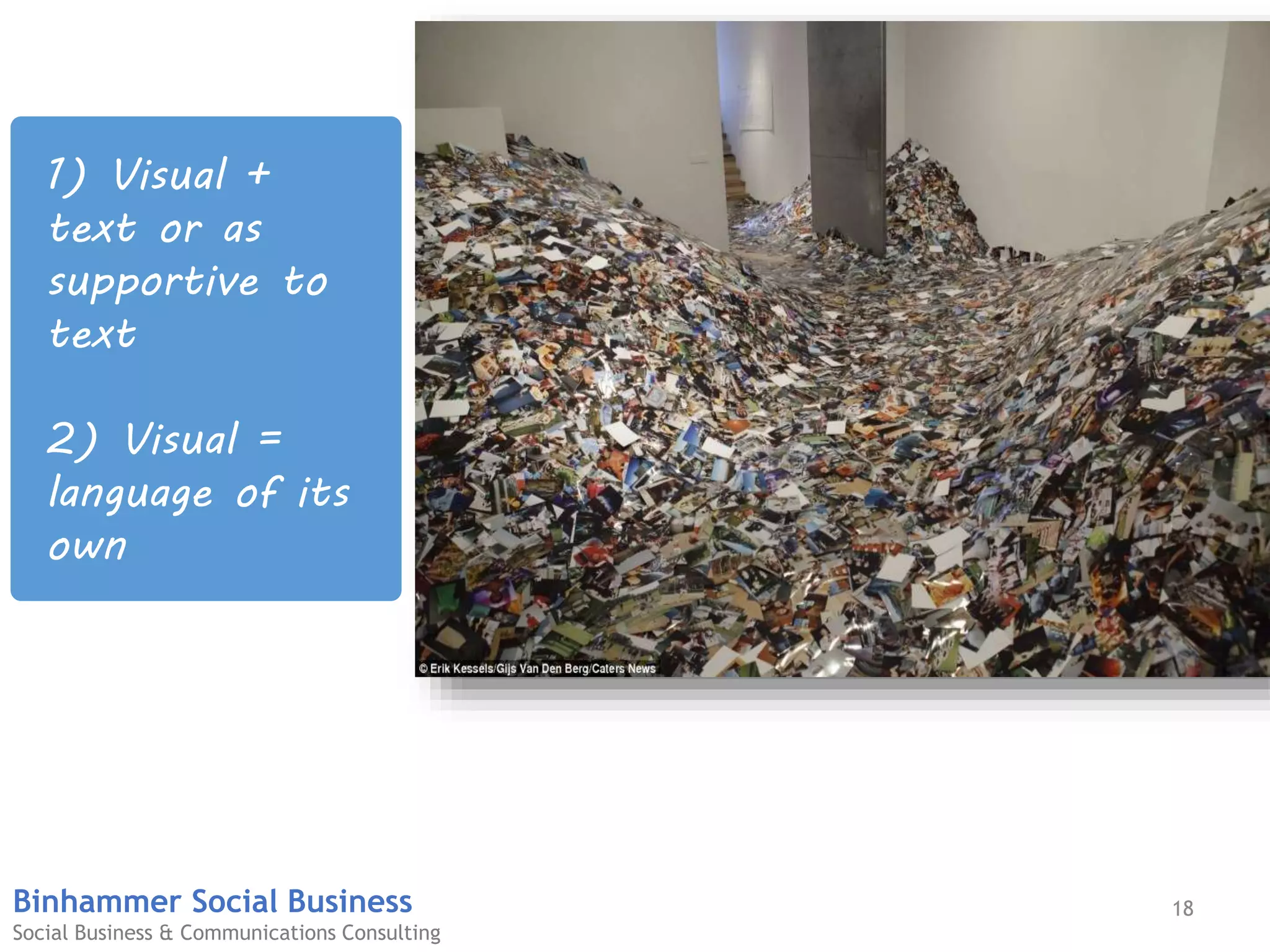
Visual Counts
18Binhammer Social Business
Social Business & Communications Consulting
1) Visual +
text or as
supportive to
text
2) Visual =
language of its
own
19Binhammer Social Business
Social Business & Communications Consulting
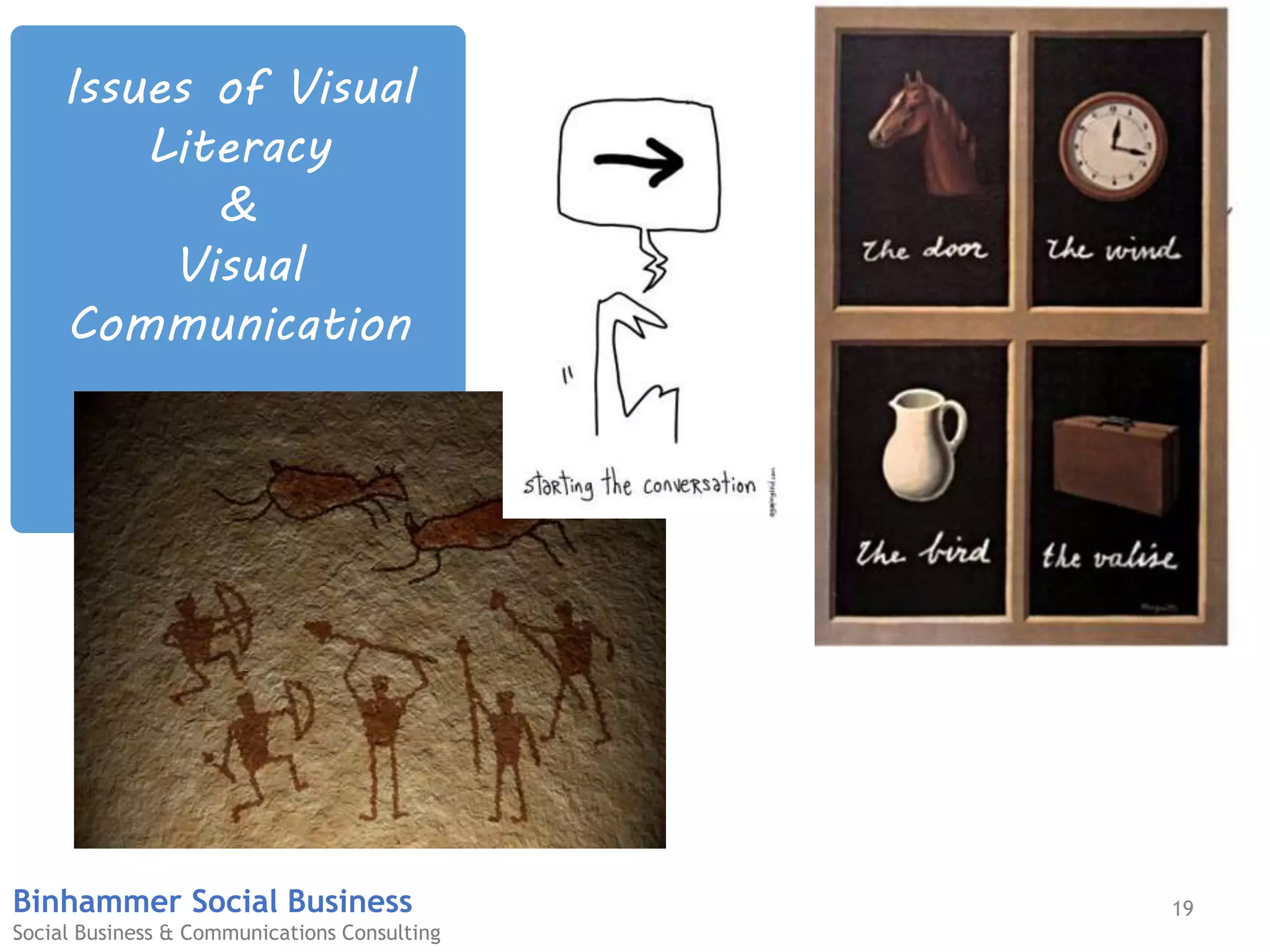
Issues of Visual
Literacy
&
Visual
Communication
Website & Blog: http://richardbinhammer.com
Twitter: https://twitter.com/RBinhammer
Linkedin: http://www.linkedin.com/in/richardbinhammer
Facebook: https://www.facebook.com/richardbinhammer
Google+: https://plus.google.com/u/0/+RichardBinhammer/posts
Flickr: http://www.flickr.com/photos/richardbin/
Email: Rbinhammer@gmail.com
Thank You
Binhammer Social Business
Social Business & Communications Consulting

Public Relations and the "S" Curve: adoption, innovation and moving forward

  • 1.
    Binhammer Social Business SocialBusiness & Communications Consulting Communications: Innovation Adoption Disruption & the Dreaded “S” Curve Spin Sucks Webinar, July 7, 2014
  • 2.
    2Binhammer Social Business SocialBusiness & Communications Consulting Business Stakeholders = Legitimacy Employees Customers & Potential ones (shared with marketing) Investors/Owners shared with IR Communities of Interest to the business - By physical location - Regulators - Special interest groups - Philanthropy - You name lots
  • 3.
    Binhammer Social Business SocialBusiness & Communications Consulting Traditional Public Relations and Communications Strategies
  • 4.
    4Binhammer Social Business SocialBusiness & Communications Consulting Broad Adoption
  • 5.
    5Binhammer Social Business SocialBusiness & Communications Consulting The “S” Curve of Technology Adoption 5 We are here today… will we make it over the curve and really adopt to new things?
  • 6.
    6Binhammer Social Business SocialBusiness & Communications Consulting Four Factors Forcing More
  • 10.
    10Binhammer Social Business SocialBusiness & Communications Consulting Why Skills Matter? Behind every social strategy & use of social platforms by business The need for professionals with increasingly deeper and sophisticated skills
  • 11.
    Binhammer Social Business SocialBusiness & Communications Consulting Rapid Change & Adoption: Pressure Points On Skills, Impacting Business and Success • 74% of business executives say their company has a digital strategy, but only 15% believe that their company has the skills and capabilities to execute on that strategy. • 68% of business-unit leaders believe the functional teams in their companies act as barriers to effective coordination. “The need to think of your company as part of a dynamic ecosystem of value that connects digital resources inside and outside the company” Forrester, Future of Business as Digital, March 2014 • 66% of marketers feel digital is critical to their company’s success and yet less than half feel highly proficient in digital marketing. Most digital marketers don’t have formal training; 82% learn on the job. Adobe, Digital Distress Study, Sept 2013 • Executives cite overall organization shortcomings, including: new approach to managing talent by applying flexible team structures, engaging outside collaborations…and building and acquiring the skills necessary to carry out a digital business agenda….companies need to be resourceful in developing homegrown skills. McKinsey 2012, Digital and Executive Challenges • The top 3 executive concerns related to social adoption: 1) IT security 2) skills 3) compliance Hootsuite IDG white paper, March 2014 • CEOs indicate concerns about finding and keeping the talent their companies need to realize their digital goals. McKinsey August 2013, Bullish On Digital • 65% percent of social media staffers juggle other responsibilities, while only 27 percent focus exclusively on the emerging platform. Ragan Survey, December 2012 • By 2018 the US is predicted to lack around 1.5 million managers and analysts with sufficient technical and digital know-how to make effective decisions. • Over 90% of the companies stated that they did not have necessary skills in the areas of social media, mobile, internal social networks, process automation and performance monitoring and analysis • Despite the skills shortage, only 46% of companies are investing in developing digital skills. Only 4% of companies interviewed are aligning their training efforts with their digital strategy. Cap Gemini, The Digital Talent Gap, 2013 • 64% of marketers expect their role to change in the next year and 81% believe their role will change in the next three years. • The path to reinvention remains a challenge. Respondents cited lack of training in new marketing skills (30%) and organizational inability to adapt (30%) among the top obstacles to becoming the marketers they aspire to be. Adobe, Digital Roadblocks, March 2014 11
  • 12.
    12Binhammer Social Business SocialBusiness & Communications Consulting The Framework Talent Assessment Across Organization Mapped to Strategy Requirements Content Production Project Management Skills particular to Social Media Social Specific Skills Social Media Center of Excellence Leadership Skills 30+ competencies. Basic, Intermediate & Strategic Levels Processes, Internal & External Tools, Governance Resources The Social Strategy for Business
  • 13.
    13Binhammer Social Business SocialBusiness & Communications Consulting How it Works Focused on social skills across business departments Integration of social skills into various business functions 1. Identify ideal skills inventory to deliver the Social Strategy. Do you have them? Alter Strategy/Expectations Professional skills development Hire staff with required Skills Utilize agency resources Redefine Business-Agency Mix 2. Identify skills inventory in place. Determine how to proceed with the Social Strategy.
  • 14.
    14Binhammer Social Business SocialBusiness & Communications Consulting Traditional media itself is being disrupted
  • 15.
    15Binhammer Social Business SocialBusiness & Communications Consulting Media Paid Owned Earned Spray and pray
  • 16.
    16Binhammer Social Business SocialBusiness & Communications Consulting Easy: Visual Counts
  • 18.
    18Binhammer Social Business SocialBusiness & Communications Consulting 1) Visual + text or as supportive to text 2) Visual = language of its own
  • 19.
    19Binhammer Social Business SocialBusiness & Communications Consulting Issues of Visual Literacy & Visual Communication
  • 20.
    Website & Blog:http://richardbinhammer.com Twitter: https://twitter.com/RBinhammer Linkedin: http://www.linkedin.com/in/richardbinhammer Facebook: https://www.facebook.com/richardbinhammer Google+: https://plus.google.com/u/0/+RichardBinhammer/posts Flickr: http://www.flickr.com/photos/richardbin/ Email: Rbinhammer@gmail.com Thank You Binhammer Social Business Social Business & Communications Consulting

Editor's Notes

  • #7 The shape of the online universe. This image shows the hierarchical structure of the Internet, based on the connections between individual nodes (such as service providers). Three distinct regions are apparent: an inner core of highly connected nodes, an outer periphery of isolated networks, and a mantle-like mass of peer-connected nodes. The bigger the node, the more connections it has. Those nodes that are closest to the center are connected to more well-connected nodes than are those on the periphery. The core: At the center of the Internet are about 80 core nodes through which most traffic flows. Remove the core, and 70 percent of the other nodes are still able to function through peer-to-peer connections.
  • #11  Talent decisions have often been driven by the need of the moment, not a longer-term strategic discipline. The Social media and community competencies have not been developed, detailed or applied in ways that drive results and are thoughtfully integrated and built into our traditional business hierarchies. An example of a social skill representing the kind of change we face: a community manager who has responsibilities for a brand facebook page and related community of advocates. That community manager /Facebook page manager may not have the authority and/or budget to sponsor a post --give a little extra oomph – when they see it resonating with the community. And actually that Community manager is now also in effect the media buyer…and the ad media buying agency is not in touch with the FB community in order to be this agile Why is there a shortage of skill sets ( there may be lots of hiring focused on specialized skill sets, such as a social media person) …but the real issue is how do individual departments that are being tasked to leverage talent in more integrated ways build out their social capabilities. In some cases that means they have no choice but to retool - expand skill sets and grow from within -- and connect that skill development process with external resources. And as for the SM Leadership and overall business strategy how do you ensure that the skills are available and aligned to strategy right across business units and functions
  • #12 Ill leave you with this slide to digest on your own…it is not pretty…..either the slide or the findings. Couple highlights: 74% of business executives say their company has a digital strategy, but only 15% believe that their company has the skills and capabilities to execute on that strategy. Over 90% of the companies stated that they did not have necessary skills in the areas of social media, mobile, internal social networks, process automation and performance monitoring and analysis. The same survey notes Despite the skills shortage, only 46% of companies are investing in developing digital skills. Only 4% of companies interviewed are aligning their training efforts with their digital strategy. Ill let you read the rest
  • #14 1. In the first case, you can create a customized baseline that identifies specific skills/levels based on reviewing the social strategy….sort of a blind skill test forget our actual people for a second, to achieve this strategy I will need……x skill at base level and x skill at strategic level in customer support; in marketing I need ABC Now a formal assess actual skills in the org – by managers or employees themselves Map the skills you have against the dream to achieve strategy. Result: identifies skill and operational gaps. Options to alter course for success or change social strategy. 2. The Straightforward Skill Assessment Model involves simply take a current skills inventory. Now you know the skills, build social strategy around the skills so you know you succeed or show gaps to identify needs for resources to do more. The Social Strategy and program options developed against capabilities -- adjust skills or strategy. Offers a sound Basis for cross department/function collaboration about how to move forward. The base result is actually measured and quantified skill inventory…..you have real data about the skills in and across the organization (and mapped to what you need or want). The gaps are clear. In either case: cross department understanding of skills and needs for success enhance program effectiveness and delivery avoid misaligned roles, responsibilities and ineffective programs Avoid people who feel unable to perform responsibilities or overwhelmed by a new task